




Some Weistec toys for Mr. PERTPLUS - Supercharged Mercedes C63 by ACG San Diego

Thread Starter
Banned
Joined: Apr 2010
Posts: 2,914
Likes: 8
From: San Diego, CA
a car
 Some Weistec toys for Mr. PERTPLUS - Supercharged Mercedes C63 by ACG San Diego
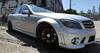
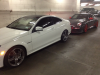
We have been quiet about this on the forum but its time to share. Our good friend and a forum member Pertplus has finally boosted his already impressive C63. The car features the following performance modifications:
Weistec Stage 1+ Supercharger
Weistec Oil separator
MBH Try-Y Longtube Headers w/HFC
Akrapovic Slip-On titanium Exhaust
Carbonio Airbox Covers


I wish I had a picture with new orange caliper paint. feel free to ask the questions.
Weistec Stage 1+ Supercharger
Weistec Oil separator
MBH Try-Y Longtube Headers w/HFC
Akrapovic Slip-On titanium Exhaust
Carbonio Airbox Covers
I wish I had a picture with new orange caliper paint. feel free to ask the questions.

MBWorld Fanatic!
Joined: Aug 2009
Posts: 3,974
Likes: 2
From: NY
See Sig
You sneaky devil. Congrats on your new build Pertplus! Nice pics too!
Very nice gains on a Mustang Dyno. Hopefully you are a track guy and we get to see a few passes. Enjoy it!
Very nice gains on a Mustang Dyno. Hopefully you are a track guy and we get to see a few passes. Enjoy it!
Last edited by propain; Jun 12, 2012 at 08:35 PM.

MBWorld Fanatic!
Joined: Dec 2008
Posts: 2,169
Likes: 75
From: San Diego
Hyperion's Candy-Coated 4 x 4
The car is scary fun to drive. No other shop would I entrust my car to like I do with ACG. Not once have they steered me wrong and that is especially true with the supercharger!
Trending Topics
MB World Stories
The Best of Mercedes & AMG

6 Mercedes Models That Did NOT Age Well (But Are Somehow Still Cool)
Verdad Gallardo
Manual Mercedes? 6 Times Sindelfingen Let Drivers Have All The Fun
Verdad Gallardo
Mercedes SLR McLaren 722 S Is Extremely Rare Example Modified by McLaren
Verdad Gallardo
8 Classic Boxy Mercedes Designs That Have Aged Like Fine Wine
Verdad Gallardo
Flawlessly Restored Mercedes 190E Evo II Heads to Auction
Verdad Gallardo
Electric Mercedes C-Class Unveiled: 11 Things You Need to Know
Verdad Gallardo
Mercedes EQS Gets A Major Update: Everything You Need to Know
Verdad Gallardo
5 Underrated Mercedes-Benz Models That Don't Get the Love They Deserve
Verdad Gallardo
Mercedes 300D Has Pushed Well Past 1 Million Miles and It Ain't Stopping
Verdad Gallardo




MBWorld Fanatic!
Joined: Dec 2008
Posts: 2,169
Likes: 75
From: San Diego
Hyperion's Candy-Coated 4 x 4

MBWorld Fanatic!
Joined: Aug 2010
Posts: 2,493
Likes: 3
MB
Congrats on the build. The car looks great and the work looks very clean.
I have a question... This is something I always wonder when I see such low reading dynos: I understand that Mustang dynos can read lower than Dynojets. I, myself, have dynoed a couple cars on Mustangs. Why does a dyno like ACG's record power figures that are lower than the car actually produces.
For instance, if you use the 18% correction factor to the 380 rwhp baseline (header, tune car) the dyno shows the car makes around 463 bhp, which is like 12 bhp over the SAE figure provided by MB/AMG for a stock C63.
I understand we're interested in the delta here and dynos are just a tool... yada yada. But, why doesn't this dyno and many others like it actually record a more accurate hp figure? Does it have to do with software settings in the dyno equipment? The way the dyno was installed?
I know that my experience on a Mustang dyno was different. The results were more reflective of the actual hp being produced by the motor.
Please know, I'm not trying to start any argument. I'm just genuinely curious. There must be a reason, and I haven't learned what that is yet.
I have a question... This is something I always wonder when I see such low reading dynos: I understand that Mustang dynos can read lower than Dynojets. I, myself, have dynoed a couple cars on Mustangs. Why does a dyno like ACG's record power figures that are lower than the car actually produces.
For instance, if you use the 18% correction factor to the 380 rwhp baseline (header, tune car) the dyno shows the car makes around 463 bhp, which is like 12 bhp over the SAE figure provided by MB/AMG for a stock C63.
I understand we're interested in the delta here and dynos are just a tool... yada yada. But, why doesn't this dyno and many others like it actually record a more accurate hp figure? Does it have to do with software settings in the dyno equipment? The way the dyno was installed?
I know that my experience on a Mustang dyno was different. The results were more reflective of the actual hp being produced by the motor.
Please know, I'm not trying to start any argument. I'm just genuinely curious. There must be a reason, and I haven't learned what that is yet.
Thread Starter
Banned
Joined: Apr 2010
Posts: 2,914
Likes: 8
From: San Diego, CA
a car
Not to get into depth on this:
Dynojet is an inertia dyno where the roller has a fixed mass. Once you do a run, your result gets corrected for the weather and you have your result. Due to the fact that the mass is fixed, it doesn't reflect the true road conditions and load.
Mustang and DynoDynamics are load chassis dynomometers. The rollers are small; however, the dynomometer applies the load to the rollers in order to simulate realistic driving conditions. On average, there is 8-13% difference between Dynojet and the load bearing dynomometers.
Dynojet is an inertia dyno where the roller has a fixed mass. Once you do a run, your result gets corrected for the weather and you have your result. Due to the fact that the mass is fixed, it doesn't reflect the true road conditions and load.
Mustang and DynoDynamics are load chassis dynomometers. The rollers are small; however, the dynomometer applies the load to the rollers in order to simulate realistic driving conditions. On average, there is 8-13% difference between Dynojet and the load bearing dynomometers.
Last edited by Girard@ACGautomotive; Jun 13, 2012 at 03:23 PM.
MBWorld Fanatic!
Joined: Aug 2010
Posts: 2,493
Likes: 3
MB
Not to get into depth on this:
Dynojet is an inertia dyno where the roller has a fixed mass. Once you do a run, your result gets corrected for the weather and you have your result. Due to the fact that the mass is fixed, it doesn't reflect the true road conditions and load.
Mustang and DynoDynamics are load chassis dynomometers. The rollers are small; however, the dynomometer applies the load to the rollers in order to simulate realistic driving conditions. On average, there is 8-13% difference between Dynojet and the load bearing dynomometers.
Dynojet is an inertia dyno where the roller has a fixed mass. Once you do a run, your result gets corrected for the weather and you have your result. Due to the fact that the mass is fixed, it doesn't reflect the true road conditions and load.
Mustang and DynoDynamics are load chassis dynomometers. The rollers are small; however, the dynomometer applies the load to the rollers in order to simulate realistic driving conditions. On average, there is 8-13% difference between Dynojet and the load bearing dynomometers.

MBWorld Fanatic!
Joined: Jun 2007
Posts: 2,949
Likes: 0
From: Philadelphia, PA
2008 A8L, 2002 996TT X50, 2009 X5
In my opinion, Dynojet are usually more repeatable results, because the load-based dynos can vary so greatly with calibrations and correction factors.
MBWorld Fanatic!
Joined: Aug 2010
Posts: 2,493
Likes: 3
MB
It's an interesting topic. Another important distinction is that Mustang and DD actually attempt to measure torque, and then extrapolate HP. Dynojet does the opposite and attempts to measure HP, since the fixed mass of the large drum enables one to calculate work (times rotated) in relation to the time required.
In my opinion, Dynojet are usually more repeatable results, because the load-based dynos can vary so greatly with calibrations and correction factors.
In my opinion, Dynojet are usually more repeatable results, because the load-based dynos can vary so greatly with calibrations and correction factors.
Thread Starter
Banned
Joined: Apr 2010
Posts: 2,914
Likes: 8
From: San Diego, CA
a car
The bumper had to be taken off in order to install the intercooler. Because of that we had to make some custom brackets for the radar detector sensors. Those brackets were installed after the dyno runs.
MBWorld Fanatic!
Joined: Oct 2008
Posts: 3,317
Likes: 3
From: Northport N.Y.
2013 f250 6.7 diesel

Member
Joined: Oct 2009
Posts: 201
Likes: 1
C63
Looks like a great build, if you do not mind sharing, where did you guys mount the Oil separator? I am having a tought time finding a location other than dad's method of creating a bracket since weistec's original location obsturcts access to the dipstick, maybe I missed in the photos you shared but please share if possible, thanks


