




AMG3.2's DIY Headbolt Adventure

Super Member
Joined: May 2007
Posts: 570
Likes: 8
From: Ontario, Canada
W204 C63 R171
Do the heads separate easy?
on stud blocks that have limited work room in the bay, to separate the heads it can be hours and hours of work, the studs "cement" the heads into position.
Also, Andrew, I thought Mercedes antifreeze was blue. Did your car have green antifreeze in the first place?
on stud blocks that have limited work room in the bay, to separate the heads it can be hours and hours of work, the studs "cement" the heads into position.
Also, Andrew, I thought Mercedes antifreeze was blue. Did your car have green antifreeze in the first place?
Also Mercedes does not use studs in these engines, there is one aftermarket solution weistec/arp stud they are about 4 times the cost of the bolts alone. They are good insurance but for my usage not worth the additional money. even if I was running a blower I might trust these new bolts but then again maybe not given the situation with the old poorly designed bolts.
The problem with these bolts doesn't seem to be a mileage related issues to me its a time frame thing they are just interesting that 2016 seems to be the year of the head bolt most of these cars are roughly 6-8 years old and they fail. Mercedes knows the cause it's more then just poor design as the bolts are coming out of most engines rusty... there is more going on then we know.
Last edited by andrew c230k; Sep 28, 2016 at 10:11 AM.

Thread Starter
MBWorld Fanatic!


Joined: Jun 2011
Posts: 3,318
Likes: 171
From: Silicon Valley, CA
C63 AMG, P30
Take it back and have the shop listen. Mine are pretty dang quiet at this point.

MBWorld Fanatic!


Joined: Sep 2016
Posts: 1,175
Likes: 130
From: NY
2010 C63 2019 GLA45
I'm aware that the M156 has bolts only, never studs for the heads, except for aftermarket.
The background of my question regarding the heads is that I only separated non Mercedes stud fastened heads. I wonder if bolt fastened heads like the M156 are easy to separate once the bolts are out of the way, as they don't wedge into the studs.
I thought that separating the heads is hard work, as you have to convince them to move, but not damage them at the same time.
The background of my question regarding the heads is that I only separated non Mercedes stud fastened heads. I wonder if bolt fastened heads like the M156 are easy to separate once the bolts are out of the way, as they don't wedge into the studs.
I thought that separating the heads is hard work, as you have to convince them to move, but not damage them at the same time.
MBWorld Fanatic!
Joined: Sep 2016
Posts: 1,175
Likes: 130
From: NY
2010 C63 2019 GLA45
MBWorld Fanatic!

Joined: Aug 2011
Posts: 5,351
Likes: 1,677
From: Kitchener, ON
2010 C63 AMG
Unless you can load up a 3D model of the head and block in some sort of stress analysis software to verify, we won't really know if 1 bolt removed will do anything.
Thread Starter
MBWorld Fanatic!
Joined: Jun 2011
Posts: 3,318
Likes: 171
From: Silicon Valley, CA
C63 AMG, P30
Even though with 9 other bolts holding things in place with tremendous force, I still let my imagination wander.
MB World Stories
The Best of Mercedes & AMG

6 Mercedes Models That Did NOT Age Well (But Are Somehow Still Cool)
Verdad Gallardo
Manual Mercedes? 6 Times Sindelfingen Let Drivers Have All The Fun
Verdad Gallardo
Mercedes SLR McLaren 722 S Is Extremely Rare Example Modified by McLaren
Verdad Gallardo
8 Classic Boxy Mercedes Designs That Have Aged Like Fine Wine
Verdad Gallardo
Flawlessly Restored Mercedes 190E Evo II Heads to Auction
Verdad Gallardo
Electric Mercedes C-Class Unveiled: 11 Things You Need to Know
Verdad Gallardo
Mercedes EQS Gets A Major Update: Everything You Need to Know
Verdad Gallardo
5 Underrated Mercedes-Benz Models That Don't Get the Love They Deserve
Verdad Gallardo
Mercedes 300D Has Pushed Well Past 1 Million Miles and It Ain't Stopping
Verdad Gallardo
MBWorld Fanatic!
Joined: Sep 2016
Posts: 1,175
Likes: 130
From: NY
2010 C63 2019 GLA45
This is something more often done in the Duramax diesel forums.
The diesel has quite a higher compression ratio, but I see one instance of blown head gasket after a bolt by bolt like 2000 miles later.
Many seem to be fine.
Again, much higher compression ratio and force fed with really high pressure.
The supra people look like they are doing this too.
The diesel has quite a higher compression ratio, but I see one instance of blown head gasket after a bolt by bolt like 2000 miles later.
Many seem to be fine.
Again, much higher compression ratio and force fed with really high pressure.
The supra people look like they are doing this too.


MBWorld Fanatic!
Joined: Aug 2011
Posts: 5,351
Likes: 1,677
From: Kitchener, ON
2010 C63 AMG
Winner!
http://i77.photobucket.com/albums/j4...ps5suyliym.jpg
Fluid would change color to yellow/green if exhaust vapor was entering cooling system. This is the fluid after about 4 minutes of testing. Directions state to test for 2 mins.
http://i77.photobucket.com/albums/j4...ps5suyliym.jpg
Fluid would change color to yellow/green if exhaust vapor was entering cooling system. This is the fluid after about 4 minutes of testing. Directions state to test for 2 mins.
I want to give it another go with my mitty vac connected to draw more air through (don't want to mess with a vac line). Did yours bubble this slowly as well? I'm just concerned about a false positive.

Thread Starter
MBWorld Fanatic!
Joined: Jun 2011
Posts: 3,318
Likes: 171
From: Silicon Valley, CA
C63 AMG, P30
So mine actually have a little pump thing at the top to suck up air from the resevoir. Basically a turkey baster design like this. http://contentinfo.autozone.com/znet...27145/image/3/
Also, what do you mean false positive? Is blue considered exhaust vapor for your tester fluid?
I didn't see anything change...
Also, what do you mean false positive? Is blue considered exhaust vapor for your tester fluid?
I didn't see anything change...
MBWorld Fanatic!
Joined: Aug 2011
Posts: 5,351
Likes: 1,677
From: Kitchener, ON
2010 C63 AMG
So mine actually have a little pump thing at the top to suck up air from the resevoir. Basically a turkey baster design like this. http://contentinfo.autozone.com/znet...27145/image/3/
Also, what do you mean false positive? Is blue considered exhaust vapor for your tester fluid?
I didn't see anything change...
Also, what do you mean false positive? Is blue considered exhaust vapor for your tester fluid?
I didn't see anything change...
False positive, as in, not enough gasses passing through to change the fluid colour even if there's combustion gasses in the cooling system. No idea how sensitive that fluid is.
Without negative pressure in the cylinder tube it was bubbling slowly which is why I want to give it another try with my mittyvac connected.
Thread Starter
MBWorld Fanatic!
Joined: Jun 2011
Posts: 3,318
Likes: 171
From: Silicon Valley, CA
C63 AMG, P30
I have the 7550 that you connect to a vac line. http://www.lislecorp.com/divisions/p...s/?product=406
False positive, as in, not enough gasses passing through to change the fluid colour even if there's combustion gasses in the cooling system. No idea how sensitive that fluid is.
Without negative pressure in the cylinder tube it was bubbling slowly which is why I want to give it another try with my mittyvac connected.
False positive, as in, not enough gasses passing through to change the fluid colour even if there's combustion gasses in the cooling system. No idea how sensitive that fluid is.
Without negative pressure in the cylinder tube it was bubbling slowly which is why I want to give it another try with my mittyvac connected.
This is the one I used in the video. Around the 6:18 mark, you can see a good amount of air coming through each pass. This is what I did for 4 minutes as opposed to just sitting it on top. To your point, I could probably see that being less thorough
Thread Starter
MBWorld Fanatic!
Joined: Jun 2011
Posts: 3,318
Likes: 171
From: Silicon Valley, CA
C63 AMG, P30

MBWorld Fanatic!
Joined: Sep 2016
Posts: 1,175
Likes: 130
From: NY
2010 C63 2019 GLA45
Nah, I'm working on replacing the intake manifold gaskets and did not even disconnect the battery, just so that I don't bump into this problem, but got the same outcome, no ABS, VDC.
Thread Starter
MBWorld Fanatic!
Joined: Jun 2011
Posts: 3,318
Likes: 171
From: Silicon Valley, CA
C63 AMG, P30



MBWorld Fanatic!
Joined: Aug 2011
Posts: 5,351
Likes: 1,677
From: Kitchener, ON
2010 C63 AMG
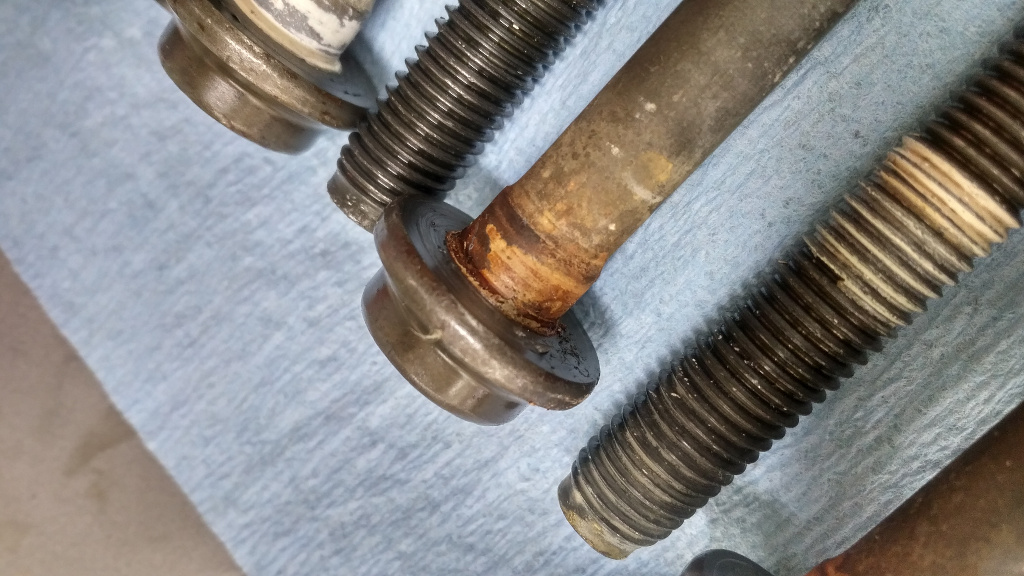
Nope, they were all fine. The closeups above are of the worst ones. A couple of them looked good enough to resell lol.


