I am moving soon and will have the "privilege" of living about five minutes away from the Autobahn with no speed limit.
Now I'm a bit worried about damaging my engine while it's not warmed up yet.
How do you properly warm up your car in a short time/distance? Are you only supposed to go low revs or also go normal speed?
For example if I accelerate slowly on the autobahn and stay below 3-4k revs while shifting up to 9th gear going 160 - 180 km/h will it still be bad for my engine?
Just as a note.. I hate you and I hate the autobahn.. I hate everybody who drives on the autobahn.. I enjoy doing 33 miles an hour in heavy traffic in my amg..
If your engine is turbocharged, warm it up at idle for 2 minutes. This will allow the turbine to spin up to speed, and not exceed the lubrication capacity of the oil, as it warms up to operating temperature.
My car idles at more than 1,000 rpm, in neutral, after I start it.
In gear, the rpm goes down to about 700-800 rpm. Therefore, I put it in gear, and let it idle for 2 minutes, before allowing any rpm above 1000rpm.
also let the hot turbos cool for 2 minutes prior to shutdown, while the rpm is 1,000 or less.
I am moving soon and will have the "privilege" of living about five minutes away from the Autobahn with no speed limit.
Now I'm a bit worried about damaging my engine while it's not warmed up yet.
How do you properly warm up your car in a short time/distance? Are you only supposed to go low revs or also go normal speed?
For example if I accelerate slowly on the autobahn and stay below 3-4k revs while shifting up to 9th gear going 160 - 180 km/h will it still be bad for my engine?
Thanks in advance.
Quote:
Originally Posted by miamiboy
Wait until the temperatures arent blue anymore on the AMG screen of your dash.
I am going to add that more shifting activity heats up the transmission quicker like in stop and go traffic, for example if you are constantly in 7th gear on the highway, the transmission doesn't warm up as quick, especially in the winter. Some C 63 S owners for this reason put it in the sport mode and shift manually below 4K rpm to warm it up quicker although it is risky because what if you forgot to shift before 4K when the engine is cold?
Basically the answer is in your post. As you said, take it easy accelerating, no WOT while the engine is still cold. I don't live in Germany, but I've driven mine in Germany for 2 months after taking delivery in Sindelfingen. I live in California and with the mild climate all year, it doesn't take long for everything to reach operating temperature. The nice thing about the 9-speed is that you can drive quite fast while the revs stay fairly low. So during the break-in period, I was still able to drive fast on the Autobahn and keeping the revs low. I also mostly drive in manual mode, especially on the highway, so I control the gears and the revs. In automatic mode if you accelerate, it may rev higher than you really want to with a cold engine, or suddenly drop too many gears. I live less than 5 minutes from the highway, so shifting manually allows me to merge fairly briskly, but still keep the revs low. This engine has plenty of torque, even at partial throttle.
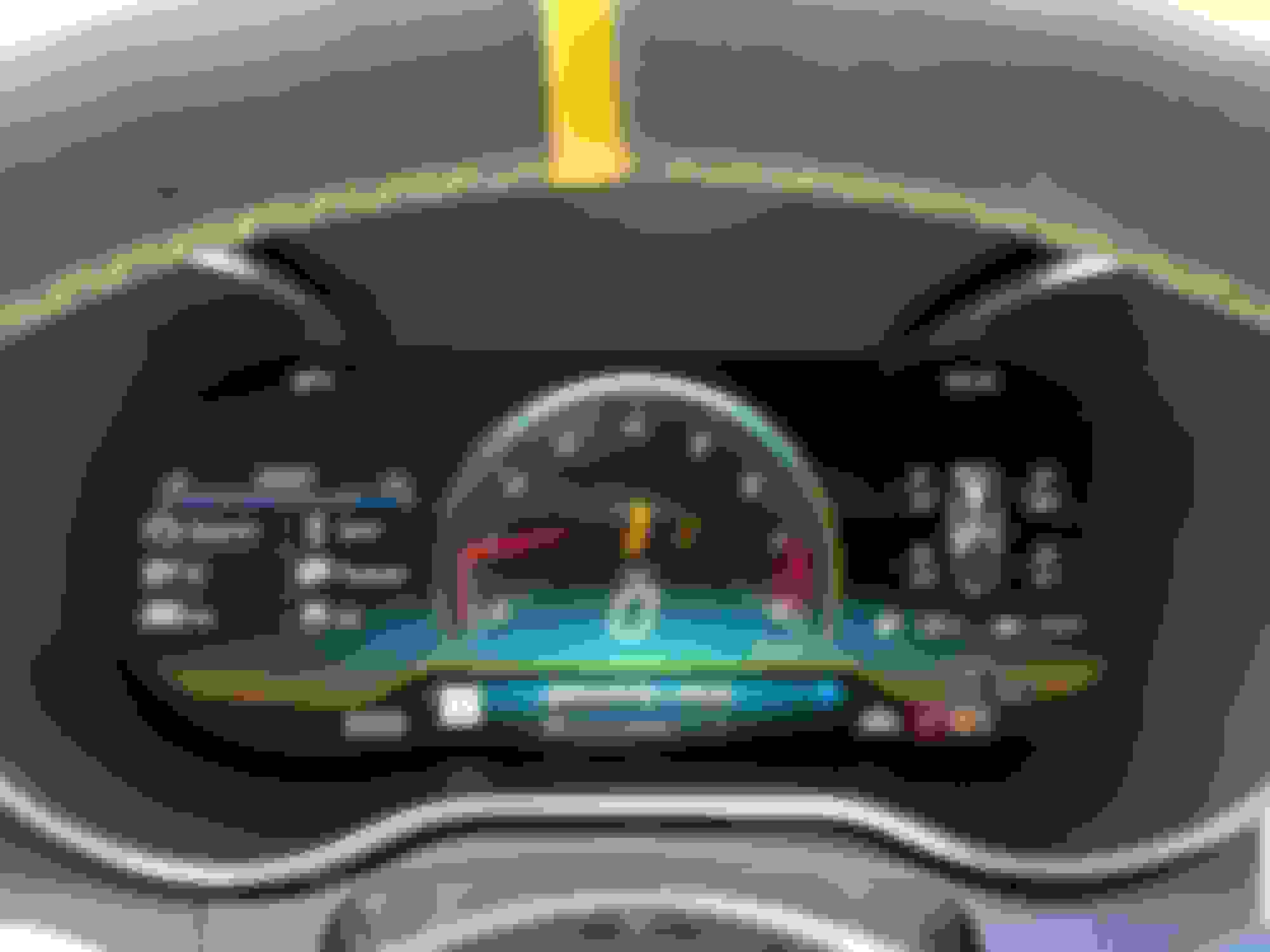
Having said that, keep in mind that it's not just about the engine. The transmission and especially the tires need to warm up as well. You don't want to go fast on the Autobahn with cold tires, and the brakes don't particularly like it if you end up having to make a highspeed stop with them being cold, so you should always warm up everything before getting on it. I pretty much always have the temperature/tire pressure display up in the instrument cluster as shown below. As long as either the engine or transmission is still showing blue, I take it easy. Then once it goes white, I keep an eye on the tire temperatures to gauge their grip level. I know at what temperatures they start to stick.
Living in Germany means it gets cold at times, so then the tires etc. will take much longer to warm up. Even here during the winter months I have to take it easier as the tires just don't have the same level of grip. It gets cool and wet around here during the winter, but nothing that summer performance tires can't handle, so I don't need to change tires twice a year, but always a good idea to not start hooning it until you've got some heat in the tires. The tires are the only thing that keeps you on the road.
If your engine is turbocharged, warm it up at idle for 2 minutes. This will allow the turbine to spin up to speed, and not exceed the lubrication capacity of the oil, as it warms up to operating temperature.
My car idles at more than 1,000 rpm, in neutral, after I start it.
In gear, the rpm goes down to about 700-800 rpm. Therefore, I put it in gear, and let it idle for 2 minutes, before allowing any rpm above 1000rpm.
also let the hot turbos cool for 2 minutes prior to shutdown, while the rpm is 1,000 or less.
Not really how you are supposed to do it. Let it idle for 30 seconds until the revs drop, then put it in gear and start driving. The initial higher revs heat up the cats quicker and also circulates the oil quickly. As for shutting it down with the hot engine, yes, that's kinda on the money. But instead of idling the engine at standstill, you should take it easy for the last mile or so to have plenty of airflow and let the turbos, brakes and tires cool down. That's why folks do a cool down lap when driving it hard on the track. But even if you shut it down with the turbos still hot, it will keep running the fan and cooling them for up to 10 minutes.
Basically the answer is in your post. As you said, take it easy accelerating, no WOT while the engine is still cold. I don't live in Germany, but I've driven mine in Germany for 2 months after taking delivery in Sindelfingen. I live in California and with the mild climate all year, it doesn't take long for everything to reach operating temperature. The nice thing about the 9-speed is that you can drive quite fast while the revs stay fairly low. So during the break-in period, I was still able to drive fast on the Autobahn and keeping the revs low. I also mostly drive in manual mode, especially on the highway, so I control the gears and the revs. In automatic mode if you accelerate, it may rev higher than you really want to with a cold engine, or suddenly drop too many gears. I live less than 5 minutes from the highway, so shifting manually allows me to merge fairly briskly, but still keep the revs low. This engine has plenty of torque, even at partial throttle.
Having said that, keep in mind that it's not just about the engine. The transmission and especially the tires need to warm up as well. You don't want to go fast on the Autobahn with cold tires, and the brakes don't particularly like it if you end up having to make a highspeed stop with them being cold, so you should always warm up everything before getting on it. I pretty much always have the temperature/tire pressure display up in the instrument cluster as shown below. As long as either the engine or transmission is still showing blue, I take it easy. Then once it goes white, I keep an eye on the tire temperatures to gauge their grip level. I know at what temperatures they start to stick.
Living in Germany means it gets cold at times, so then the tires etc. will take much longer to warm up. Even here during the winter months I have to take it easier as the tires just don't have the same level of grip. It gets cool and wet around here during the winter, but nothing that summer performance tires can't handle, so I don't need to change tires twice a year, but always a good idea to not start hooning it until you've got some heat in the tires. The tires are the only thing that keeps you on the road.
Not really how you are supposed to do it. Let it idle for 30 seconds until the revs drop, then put it in gear and start driving. The initial higher revs heat up the cats quicker and also circulates the oil quickly. As for shutting it down with the hot engine, yes, that's kinda on the money. But instead of idling the engine at standstill, you should take it easy for the last mile or so to have plenty of airflow and let the turbos, brakes and tires cool down. That's why folks do a cool down lap when driving it hard on the track. But even if you shut it down with the turbos still hot, it will keep running the fan and cooling them for up to 10 minutes.
Solid advice and I am going to also add that OP should inflate the tires to cold pressures such that matches autobahn speeds shown on the fuel cap door.
Solid advice and I am going to also add that OP should inflate the tires to cold pressures such that matches autobahn speeds shown on the fuel cap door.
Yes and no. The higher pressure is only necessary/recommended for speeds above 155 mph/250 kph. Even on the German Autobahn it's somewhat infrequent to go above those speeds unless you drive at night with nobody else on the road. So I ended up running the lower pressure. The ride gets brutal with the higher pressure. Running the higher pressure is all about not overheating the tires at higher speeds due to the deflection. Occasional spurts above 250 kph are no problem even with the lower pressure. I just kept an eye on the tire temperature and lowered the speed to 250 and below when I saw the temperatures creep up. They'll go orange, then red if they start to get hot, so that gives you plenty of time to slow down and let them cool. Also, even on the German Autobahn there are restricted sections more often than you want, so it's not like one drives at extremely high speeds forever.
Yes and no. The higher pressure is only necessary/recommended for speeds above 155 mph/250 kph. Even on the German Autobahn it's somewhat infrequent to go above those speeds unless you drive at night with nobody else on the road. So I ended up running the lower pressure. The ride gets brutal with the higher pressure. Running the higher pressure is all about not overheating the tires at higher speeds due to the deflection. Occasional spurts above 250 kph are no problem even with the lower pressure. I just kept an eye on the tire temperature and lowered the speed to 250 and below when I saw the temperatures creep up. They'll go orange, then red if they start to get hot, so that gives you plenty of time to slow down and let them cool. Also, even on the German Autobahn there are restricted sections more often than you want, so it's not like one drives at extremely high speeds forever.
I wait till engine and gearbox are warm .
I noticed that my 2021 has this symbol and a sticker on the windscreen to say that image on dashboard
full power is not available until the symbol is extinguished.
I wait till engine and gearbox are warm .
I noticed that my 2021 has this symbol and a sticker on the windscreen to say that
image on dashboard
full power is not available until the symbol is extinguished.
Interesting. I've never seen this. Wondering if that has to do with emissions regulations in Europe. Since the engine runs rich when driven hard to cool the combustion chamber, the emissions are much higher while the cats are not warmed up. It may also not be good for the OPF, so it could be related to that. Our US spec cars don't have the OPF.
Interesting. I've never seen this. Wondering if that has to do with emissions regulations in Europe. Since the engine runs rich when driven hard to cool the combustion chamber, the emissions are much higher while the cats are not warmed up. It may also not be good for the OPF, so it could be related to that. Our US spec cars don't have the OPF.
Ya no I don't think those are on North American cars either, I never see them either.
Interesting. I've never seen this. Wondering if that has to do with emissions regulations in Europe. Since the engine runs rich when driven hard to cool the combustion chamber, the emissions are much higher while the cats are not warmed up. It may also not be good for the OPF, so it could be related to that. Our US spec cars don't have the OPF.
I never had this symbol with my 2019 MY.
I had to call Mercedes assistance when I saw it as I thought it was an engine fault.
It was later on, that I saw the sticker in the windscreen, silly me for not paying attention.
Awesome thanks a lot for the advice. I also always keep the temperatures of the oil and tires in my dashboard. The motor oil temperature turns white at 70°C but most mechanics say to wait until 80-90°C before going full throttle. How do you feel about it? And the transmission oil temperature turns white at already 50°C which I also feel is a bit low, just my feeling though.
Wait until the temperatures arent blue anymore on the AMG screen of your dash.
THIS
There are lots of things that need to warm up to prevent excessive wear / warping. Pistons in turbo charged cars are intentionally undersized because they incur more heat than a naturally aspirated car. The pistons are literally wobbling / rocking more in the cylinder bore until they warm up and expand to their intended operating dimension. The same goes for piston ring end gaps. The ring end gaps are wider in forced induction cars to allow room for the additional heat to let them expand without the ends of the rings butting and breaking... So when the engine is cold there is more blow-by than when the engine is warmed. Warming up the oil is important for overall lubrication and flow to all the little orifices that feed turbo bearings, valvetrain, rotating assembly bearings, etc.. Not to mention warming a turbo charged engine gradually helps to ward off warping of exhaust manifolds. Throwing a ton of heat into the exhaust manifolds from cold is a good way to cause warping. Many Ford EcoBoost engines had this problem and popped / broke exhaust manifold studs from warpage causing the tell tale tick tick tick exhaust leak. So for a variety of reasons... YES... warm up your turbo-charged AMG before pushing it, and take it easy for a few miles to return to "normal temps" before shutting it down. For those that just turn the key in the morning (or push the button) and then drive it like they stole it... good luck.
THIS
There are lots of things that need to warm up to prevent excessive wear / warping. Pistons in turbo charged cars are intentionally undersized because they incur more heat than a naturally aspirated car. The pistons are literally wobbling / rocking more in the cylinder bore until they warm up and expand to their intended operating dimension. The same goes for piston ring end gaps. The ring end gaps are wider in forced induction cars to allow room for the additional heat to let them expand without the ends of the rings butting and breaking... So when the engine is cold there is more blow-by than when the engine is warmed. Warming up the oil is important for overall lubrication and flow to all the little orifices that feed turbo bearings, valvetrain, rotating assembly bearings, etc.. Not to mention warming a turbo charged engine gradually helps to ward off warping of exhaust manifolds. Throwing a ton of heat into the exhaust manifolds from cold is a good way to cause warping. Many Ford EcoBoost engines had this problem and popped / broke exhaust manifold studs from warpage causing the tell tale tick tick tick exhaust leak. So for a variety of reasons... YES... warm up your turbo-charged AMG before pushing it, and take it easy for a few miles to return to "normal temps" before shutting it down. For those that just turn the key in the morning (or push the button) and then drive it like they stole it... good luck.
Yes, all of the above. Again, even though someone has stated 30 seconds of warmup for the turbos(at idle rpm), 2 minutes is a minimum. Remote start would take care of all that and then some.
I noticed there are two stages, first it idles down a little within 10 seconds but takes the full minute to idle to the normal idling speed. I assume putting it in drive before this is not good for the transmission?
I put my transmission in drive right after start. It’s probably not perfect for the transmission, but I want to limit the rpms so that will limit the speed that the turbo spins during warmup. In my mind, I am slightly prioritizing turbo longevity over transmission longevity. The initial idle rpm is maybe 2-300 rpm higher, than a minute or two later when the idle speed automatically lowers. I am estimating that any additional wear to the transmission on a percentage basis is less than the additional wear on the turbo.
I put my transmission in drive right after start. It’s probably not perfect for the transmission, but I want to limit the rpms so that will limit the speed that the turbo spins during warmup. In my mind, I am slightly prioritizing turbo longevity over transmission longevity. The initial idle rpm is maybe 2-300 rpm higher, than a minute or two later when the idle speed automatically lowers. I am estimating that any additional wear to the transmission on a percentage basis is less than the additional wear on the turbo.
Interesting point. Hopefully there is more data that actually supports both arguments (wear on transmission vs turbo).
I have had many many folks tell me to not do that. You end up with a warm engine, cold trans, cold transfer cases, cold bearings and on and on and on....
This is from AMG, Porsche and many other folks who are smarter than I am.
Slideshow: A one-of-one U.S.-spec Mercedes-Benz SLR McLaren Roadster became even rarer after a factory-backed transformation at McLaren's headquarters.