When you click on links to various merchants on this site and make a purchase, this can result in this site earning a commission. Affiliate programs and affiliations include, but are not limited to, the eBay Partner Network.
Here at Dime Racing, we pride ourselves on track tested performance, and proven results. We take no shortcuts in the engineering department, and we strive to give our customers the best possible parts and the highest level of support.
We are proud to release items from our street legal Dime Racing Edition AMG GT for all AMG GT owners to own and enjoy.
One of the main concerns with the M178 equipped AMG GT is maintaining cool intake temperatures. Due to constant high RPM's on the track, and low wind speeds through turns, intake air temperatures start to increase far beyond ambient temperatures, thus dropping horsepower and creating inconsistencies in lap times.
To make matters worse, the factory design of the cooling system interconnects the cooling system for the intercoolers and the cooling system of the transmission. As transmission temperatures start to increase, so do your intake air temperatures. We have fixed this problem.
We have effectively tripled the cooling capacity by means of a high density heat exchanger that is double the thickness of that from the factory. We have also separated or divorced the intercooler circuit from the transmission cooling circuit. Intake air temperatures are no longer affected by transmission temperatures, and you feel consistent results weather on the street or track.
Please feel free to contact us for further information and pricing and please be sure to check us out at http://dimeracing.com/. Thank you all.
How long does it take to do the install for a one-off, not done it before?
Thank you for your interest. It takes an experienced technician about 4 hours to install the cooling system. We would recommend about 6-7 hours if you have not done it before. The bulk of the labor is removal of the front bumper. Thanks again and please feel free to let us know if you have any questions.
The transmission and differential both have indpendant fluid to fluid heat exchangers. Does this system affect both those coolers as are they not both cooled from the radiator fluid?
The transmission and differential both have indpendant fluid to fluid heat exchangers. Does this system affect both those coolers as are they not both cooled from the radiator fluid?
Great question. Per the documentation the low-temperature coolant circuit has the cooler and an auxiliary cooler in the right wheel arch. The fluid is pumped by two pumps.
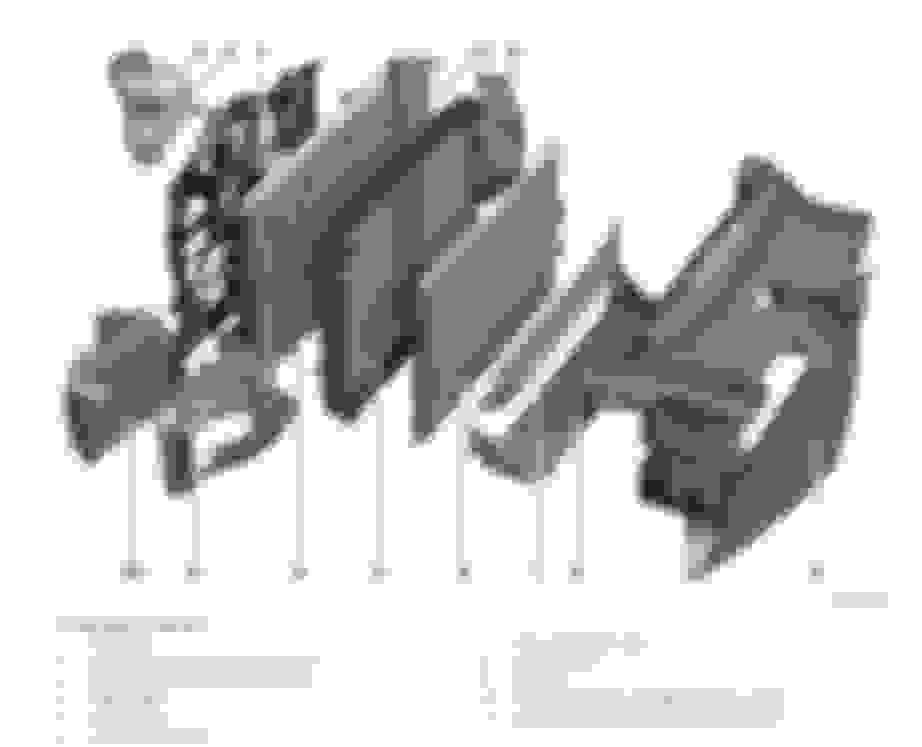
Dime, can you please comment on how you separate the primary cooler from the rest of the circuit. Attached is a diagram.
Last edited by 300blackout; Oct 26, 2016 at 01:24 PM.
Great question. Per the documentation the low-temperature coolant circuit has the cooler and an auxiliary cooler in the right wheel arch. The fluid is pumped by two pumps.
Dime, can you please comment on how you separate the primary cooler from the rest of the circuit. Attached is a diagram.
Thank you very much for this. The intercooler cooling circuit consists of two pumps and the transmission coolant cooling circuit consists of one pump.
The diagram you posted does not show the cooling circuit for the transmission however it does show the letter E and D which are the lines that run back to the Oil to Water coolers in the rear of the car.
We completely separate this system and add an additional cooler just for the transmission. We also also add a much high efficiency heat exchanger for the turbo cooling system. Please let us know if this helps.
Thank you very much for this. The intercooler cooling circuit consists of two pumps and the transmission coolant cooling circuit consists of one pump.
The diagram you posted does not show the cooling circuit for the transmission however it does show the letter E and D which are the lines that run back to the Oil to Water coolers in the rear of the car.
We completely separate this system and add an additional cooler just for the transmission. We also also add a much high efficiency heat exchanger for the turbo cooling system. Please let us know if this helps.
Dime Racing
Great diagram. Thanks for the info. So what's the damage?
Are the fluid to fluid coolers at the rear of the car not split into one for the transmission and one for the differential?
Also where is the engine coolant radiator in the diagram. I did not recall seeing a heat exchange core in the fender well. There is the horizontal cooler in front of the radiator, a pair of fluid to fluid intercooler cores each side of the radiator, and I am not seeing that in your diagram. Is that diagram for a GT-S?
Are the fluid to fluid coolers at the rear of the car not split into one for the transmission and one for the differential?
Also where is the engine coolant radiator in the diagram. I did not recall seeing a heat exchange core in the fender well. There is the horizontal cooler in front of the radiator, a pair of fluid to fluid intercooler cores each side of the radiator, and I am not seeing that in your diagram. Is that diagram for a GT-S?
There are two oils in the transmission. One is for the differential and transmission moving parts, the other for the clutch system. Each one has individual oil to water cooler, however the same coolant fluid cools both of these coolers.
The main engine radiator system is located in the center duct (behind the larger heat exchanger in our diagram) and an auxilary cooler on the driver side duct. These remain untouched by our system. These are specifically for engine cooling.
The horizontal cooler you mention is actually in front of the main heat exchanger. That is the engine oil cooler. Lots of coolers!
There are two oils in the transmission. One is for the differential and transmission moving parts, the other for the clutch system. Each one has individual oil to water cooler, however the same coolant fluid cools both of these coolers.
That's what I was saying about both those fluid/fluid coolers being for different functions. I had my car on my lift and I had looked at the coolers and plumbing back there.
The main engine radiator system is located in the center duct (behind the larger heat exchanger in our diagram) and an auxilary cooler on the driver side duct. These remain untouched by our system. These are specifically for engine cooling.
The horizontal cooler you mention is actually in front of the main heat exchanger. That is the engine oil cooler. Lots of coolers!
I knew that was the engine cooler
We hope this makes more sense. Thanks.
What I am not clear on is the two vertical coolers below the headlights, one each side of the centre duct that has the engine coolant radiator from your comment above. Are those two coolers not fluid/fluid coolers to cool the actual air/fluid turbo intercoolers?
I know there are 4 coolers in the front of the car, 2 on the side and two in the centre (not counting the A/C condenser), and then two coolers in the rear. Is there an additional cooler in one of the fender wells? Then are your two coolers added to those existing OEM coolers or do they replace any of the coolers? Reason I ask is because I do lots of track, and cooling is always a big issue, so I'm interested. However I don't have a manual for the car so It's hard to figure out the coolant routing from looking under the car or in the hood. So any more explanation you can provide on the OEM system and your system changes/additions would be appreciated.
DIME RACING
The vertical cooler below the driver side head light is an additional heat exchanger for the intercooler system. The vertical cooler below the passenger side head light is an additional engine radiator.
2008 CLK63 Black Series 2012 C63 Black Series 2014 SLS Black Series
Originally Posted by descartesfool
See below.
This system that Dime is describing here actually looks to be somewhat similar to the cooling set-up on the AMG GT3 factory race cars so in theory it should work much better than the stock cooling system. I tracked my GT-S a couple times and while it didn't have any of the cooling issues of the old M156/M159 motors the engine and trans temps still got very high. While I didn't get any limp mode or CEL warnings I am sure the ECU was still backing out timing and fuel(aka cutting hp)l trying self-preserve itself. Cooling upgrades are never a bad thing.
This system that Dime is describing here actually looks to be somewhat similar to the cooling set-up on the AMG GT3 factory race cars so in theory it should work much better than the stock cooling system. I tracked my GT-S a couple times and while it didn't have any of the cooling issues of the old M156/M159 motors the engine and trans temps still got very high. While I didn't get any limp mode or CEL warnings I am sure the ECU was still backing out timing and fuel(aka cutting hp)l trying self-preserve itself. Cooling upgrades are never a bad thing.
Dunno why folks would think a street car should/could be driven aggressively in a race-track environment without cooling mods. One fast lap, yes; 25-30 minute hot-lap sessions, no. GM's cute tag-line for the current iteration of the Z06, "most track-capable..." does NOT mean 'track-ready'. As a few hot-shoe weekend warriors have discovered. The same applies to the GT S.
Dunno why folks would think a street car should/could be driven aggressively in a race-track environment without cooling mods. One fast lap, yes; 25-30 minute hot-lap sessions, no. GM's cute tag-line for the current iteration of the Z06, "most track-capable..." does NOT mean 'track-ready'. As a few hot-shoe weekend warriors have discovered. The same applies to the GT S.
In the AMG Driving Academy we were driving GTSs for 25-30 minutes fast as hell. No problems. Those cars are not modified as far as I know.
To my knowledge, most track schools' [non-mfr. ones] cars have been modded, cooling and brakes.
Mfrs.' 'academies' typically run slower pace than open track days. It's a more controlled environment for good and valid reasons. Also, the cars are not shod with sticky MP II's or slicks so cannot in any event keep a race or near-race pace.
That has been my experience, but as is often said, 'your experience may be different'.
2008 CLK63 Black Series 2012 C63 Black Series 2014 SLS Black Series
Originally Posted by California John
In the AMG Driving Academy we were driving GTSs for 25-30 minutes fast as hell. No problems. Those cars are not modified as far as I know.
The way I understand it ADA cars do get some tuning modifications and some parameters are changed in the ECU to compensate for things such as higher IAT's and trans temps to keep cars out of limp mode. This topic came up a few years ago over on the PL and some MB/AMG people chimed in.
I have run 3.5 days of open lapping with about 6 to 7 30 minute sessions per day in my GT-S with zero overheating issues. With the dash set to the AMG mode, one can see all the temps and no system overheats at all. No mods are required to keep this car cool. Now it is certainly possible that the IAT's are getting high and that the engine is pulling timing as you cannot see that on the dash, but I cannot say I felt any power drop.
When I drove the Montreal F1 track with Mercedes AMG event this summer, I met up with Berndt Mylander who drives the F1 safety car, and when I asked him about mods he told me the GTS safety car is unmodified except for seats, a belt bar and some added brake cooling, and the F1 electronic communications stuff. He also said he liked the car so much he bought one for himself, but with iron brakes unlike the safety car which is the Edition 1 with carbon brakes.
When I asked Danny who runs the Canadian AMG driving school about any system in the GT-S overheating at their driving schools, he said nothing overheats and the cars are indeed unmodified except that they run their sponsor PZero tires by Pirelli.
The vertical cooler below the driver side head light is an additional heat exchanger for the intercooler system. The vertical cooler below the passenger side head light is an additional engine radiator.
Below is the factory diagram. Thank you.
DIME RACING
and thank you! That diagram is just what I needed to understand the factory cooling system, and now how your IAT cooling system fits in. My impression that both cheek coolers were for the intercooler was off the mark.
Mercedes SLR McLaren 722 S Is Extremely Rare Example Modified by McLaren
Slideshow: A one-of-one U.S.-spec Mercedes-Benz SLR McLaren Roadster became even rarer after a factory-backed transformation at McLaren's headquarters.