




Has anyone a V6 320CDI without DPF here?

Thread Starter
Member

Joined: Oct 2010
Posts: 118
Likes: 2
Chrysler 300C CRD srt
Depends, how easy are you ? 

I need the file from the ECU from a non DPF V6 320 CDI. That way we can compare the software with a DPF one & we will be able to locate the map for the DPF in the software so we can turn it off ...
There now you know
I need the file from the ECU from a non DPF V6 320 CDI. That way we can compare the software with a DPF one & we will be able to locate the map for the DPF in the software so we can turn it off ...
There now you know

MBWorld Fanatic!


Joined: May 2006
Posts: 1,319
Likes: 251
From: Virginia
W212 M276 DELA 30 ; W211 M113k, W126 M117, W126 OM617, W211 OM642 ; R107 M117 X2, Sierra 1500 LZ0
Unless it was modified, there are no V6 OM642 engines in the United States that came without the DPF. Additionally, because the engine only reached this area in 2006, there's likely very few examples that have made their way to the junk yard.
MBWorld Fanatic!
Joined: May 2004
Posts: 1,482
Likes: 4
From: Portugal
'13 E500 Coupe AMG// '17 E350d // '24 E53 AMG
I already did this search, the only car that could help you is the C/CLK 320CDI (mine) but there where so few without the DPF that it's not easy.
Also some of the first's W204 c320cdi but also rare in Europe.
The v6 engine was designed for the use with the DPF.
Also some of the first's W204 c320cdi but also rare in Europe.
The v6 engine was designed for the use with the DPF.
MBWorld Fanatic!
Joined: May 2006
Posts: 1,319
Likes: 251
From: Virginia
W212 M276 DELA 30 ; W211 M113k, W126 M117, W126 OM617, W211 OM642 ; R107 M117 X2, Sierra 1500 LZ0

Banned
Joined: Feb 2012
Posts: 62
Likes: 1
1985 300DT
Seriously? You don't even know the basics of Mercedes' nomenclature? Why do you bother even posting if you don't know what you're talking about?
CDI is basic diesel, catalysts only.
BlueTec includes a DPF
BlueTec with AdBlue is a DPF with an SCR.
CDI is basic diesel, catalysts only.
BlueTec includes a DPF
BlueTec with AdBlue is a DPF with an SCR.
Trending Topics

Member
Joined: Jan 2010
Posts: 86
Likes: 1
From: San Antonio, TX, USA
98 E300
MB World Stories
The Best of Mercedes & AMG

Manual Mercedes? 6 Times Sindelfingen Let Drivers Have All The Fun
Verdad Gallardo
Mercedes SLR McLaren 722 S Is Extremely Rare Example Modified by McLaren
Verdad Gallardo
8 Classic Boxy Mercedes Designs That Have Aged Like Fine Wine
Verdad Gallardo
Flawlessly Restored Mercedes 190E Evo II Heads to Auction
Verdad Gallardo
Electric Mercedes C-Class Unveiled: 11 Things You Need to Know
Verdad Gallardo
Mercedes EQS Gets A Major Update: Everything You Need to Know
Verdad Gallardo
5 Underrated Mercedes-Benz Models That Don't Get the Love They Deserve
Verdad Gallardo
Mercedes 300D Has Pushed Well Past 1 Million Miles and It Ain't Stopping
Verdad Gallardo
10 Most Reliable Mercedes-Benz Models You Can Buy Used
Verdad Gallardo
Senior Member

Joined: Nov 2011
Posts: 326
Likes: 2
300D Turbo 1984
This is a CUT/PASTE From here http://en.wikipedia.org/wiki/Diesel_particulate_filter
"A diesel particulate filter (or DPF) is a device designed to remove diesel particulate matter or soot from the exhaust gas of a diesel engine. Wall-flow diesel particulate filters usually remove 85% or more of the soot, and under certain conditions can attain soot removal efficiencies of close to 100%. Some filters are single-use, intended for disposal and replacement once full of accumulated ash. Others are designed to burn off the accumulated particulate either passively through the use of a catalyst or by active means such as a fuel burner which heats the filter to soot combustion temperatures; engine programming to run when the filter is full in a manner that elevates exhaust temperature or produces high amounts of NOx to oxidize the accumulated ash, or through other methods. This is known as "filter regeneration". Cleaning is also required as part of periodic maintenance, and it must be done carefully to avoid damaging the filter. Failure of fuel injectors or turbochargers resulting in contamination of the filter with raw diesel or engine oil can also necessitate cleaning.[1] The regeneration process occurs at road speeds higher than can generally be attained on city streets; vehicles driven exclusively at low speeds in urban traffic can require periodic trips at higher speeds to clean out the DPF.[2] If the driver ignores the warning light and waits too long to operate the vehicle above 40 miles per hour (64 km/h), the DPF may not regenerate properly, and continued operation past that point may spoil the DPF completely so it must be replaced.[3]"
- seems really complex for a passenger vehicle? but i can tell you i have yet to get the beautiful black plume of smoke out the back end of the ml350blt, even at 4K RPM
- seems really complex for a passenger vehicle? but i can tell you i have yet to get the beautiful black plume of smoke out the back end of the ml350blt, even at 4K RPM
Banned
Joined: Feb 2012
Posts: 62
Likes: 1
1985 300DT
The EPC shows model-generic lists to cover multiple configurations available in many nations.
FYI, at 4krpm you're far LESS likely to see any smoke due to the higher available airflow both naturally from the engine's displacement and the turbo giving boost.
MBWorld Fanatic!
Joined: May 2006
Posts: 1,319
Likes: 251
From: Virginia
W212 M276 DELA 30 ; W211 M113k, W126 M117, W126 OM617, W211 OM642 ; R107 M117 X2, Sierra 1500 LZ0
OelMotor, OM642 was still labeled as a CDI in the SUVs for some reason, but it was very much a bluetec with the DPF. In Europe, OM642 was referred to as CDI UNTIL they added urea. I wouldn't expect you to know much about these modern diesels since you're a recently fired Big Rig truck mechanic who salvaged a 240D from the junkyard and now think you're the world's number one diesel mechanic.
Banned
Joined: Feb 2012
Posts: 62
Likes: 1
1985 300DT
In Europe, OM642 was referred to as CDI UNTIL they added urea.
BlueTec has nothing to do with urea. BlueTec had been around for years before they ever used SCR technology on any vehicle.
SCR (AKA, urea) is unrelated to BlueTec, thats why its called "with AdBlue".
Also, the engine itself has no relation to the emissions systems specified. Its entirely up to the vehicle and market its being sold in. The ML and R vehicles are classified as light trucks, a different and dirtier category to cars.
Please return when you have learned at least the basics of the subject being discussed.
MBWorld Fanatic!
Joined: May 2006
Posts: 1,319
Likes: 251
From: Virginia
W212 M276 DELA 30 ; W211 M113k, W126 M117, W126 OM617, W211 OM642 ; R107 M117 X2, Sierra 1500 LZ0
Sorry, that is incorrect.
Also incorrect.
BlueTec has nothing to do with urea. BlueTec had been around for years before they ever used SCR technology on any vehicle.
SCR (AKA, urea) is unrelated to BlueTec, thats why its called "with AdBlue".
Please return when you have learned at least the basics of the subject being discussed.
Also incorrect.
BlueTec has nothing to do with urea. BlueTec had been around for years before they ever used SCR technology on any vehicle.
SCR (AKA, urea) is unrelated to BlueTec, thats why its called "with AdBlue".
Please return when you have learned at least the basics of the subject being discussed.
Member
Joined: Jan 2010
Posts: 86
Likes: 1
From: San Antonio, TX, USA
98 E300
MBWorld Fanatic!
Joined: May 2006
Posts: 1,319
Likes: 251
From: Virginia
W212 M276 DELA 30 ; W211 M113k, W126 M117, W126 OM617, W211 OM642 ; R107 M117 X2, Sierra 1500 LZ0
From a PM from Cran/Zedd/240d/Whargoul/ForcedInduction/etc
How difficult is it for you to get along with other humans? Do you act like this in real life, is that why you were dismissed from Swift as well?
Only two things come to mind when taking your actions into consideration:
1) You're just a guy who likes to troll and rile people up by taking contrarian viewpoints that you can't possibly back
2) You're just an insignificant ******* who can't admit that he's wrong, so you continue to be wrong and pound sand. You have nothing going on in your life so winning message board arguments (in your mind) is the only thing making you happy.
If it were number 1, you'd eventually get your kicks and move on, but it must be number 2, because you've repeated this behavior at car forums all across the internet. Unless you're really a glutton for punishment, you wouldn't bother with the numerous aliases after your first banning.
I feel sorry for you, and I feel as though your attitude and stubbornness do not bode well for your future happiness.
Originally Posted by Whargoul
Sorry, your pathetic trolling attempts do not affect me.
Only two things come to mind when taking your actions into consideration:
1) You're just a guy who likes to troll and rile people up by taking contrarian viewpoints that you can't possibly back
2) You're just an insignificant ******* who can't admit that he's wrong, so you continue to be wrong and pound sand. You have nothing going on in your life so winning message board arguments (in your mind) is the only thing making you happy.
If it were number 1, you'd eventually get your kicks and move on, but it must be number 2, because you've repeated this behavior at car forums all across the internet. Unless you're really a glutton for punishment, you wouldn't bother with the numerous aliases after your first banning.
I feel sorry for you, and I feel as though your attitude and stubbornness do not bode well for your future happiness.
Senior Member
Joined: Mar 2009
Posts: 430
Likes: 6
From: USA, EU
06 E320 CDI (GONE), 14 Jeep GC EcoDiesel, 01 Disco II (GONE), 09 BMW X3 3.0 Si Xdrive
He is right this time, not that I like to admit it. This is from Daimler web site:
What is BLUETEC?
The name BLUETEC covers diesel engines with exhaust emission treatment systems which meet even the strictest emission regulations on the US market. The systems employed by BLUETEC serve in particular to reduce nitrogen oxides (NOx) the only constituent part of the exhaust gases which, due to the design of the diesel, inherently lies above the value for petrol engines. In this way it will in future also be possible to meet the strict limits imposed by the State of California.
Depending on the vehicle class concerned, various NOx treatment systems can be used. In one version, for instance, an oxidising catalytic converter and a particulate filter are combined with a further improved, particularly long-life NOx storage converter. Another way of cutting NOx emissions is even more effective. In this case for example AdBlue, a water-based additive, is injected into the exhaust gas. This causes ammonia to be released, which in turn reduces the nitrogen oxides almost completely to harmless nitrogen and water in a downstream SCR catalytic converter.
BLUETEC is a brand of DaimlerChrysler which is already being used by the corporation’s Mercedes-Benz cars and commercial vehicles. In future the name BLUETEC will also stand for clean diesel engines from Audi, Volkswagen and Jeep® in the United States.
BLUETEC - a modular technology
BLUETEC is a modular concept that utilizes various coordinated technical measures that both minimize engine-out emissions within the engine and also provide for effective exhaust gas treatment downstream. The process involves gradually but consistently reducing all relevant emission components to a minimum. The system for passenger cars includes an oxidizing catalytic converter and a particulate filter in addition to effective techniques for reducing nitrogen oxide emissions. BLUETEC technology is particularly important for lowering nitrogen oxide emissions, which are the final component of exhaust gas and are higher in diesel vehicles than in cars equipped with gasoline engines due to the diesel’s principle of operation. Up until recently, the only real remaining disadvantage of diesel engines as compared to gasoline engines was in the area of specific emissions, especially of particulates and nitrogen oxides. However, Mercedes-Benz set the standard for modern diesel drive systems in the fall of 2003, when it introduced the maintenance-free particulate filter in combination with the EU4 emission. The brand is still not letting up here, despite having achieved an approximately 75 percent reduction in emissions through engine-internal measures over the past 15 years. The mission is clear: Through the use of innovative BLUETEC technology, diesel engines from Mercedes-Benz have the potential to comply with the world’s most stringent emission standards. When this has been achieved, Mercedes-Benz will be able to offer the world’s cleanest diesels in every vehicle class.
The key aspect of the innovative BLUETEC technology involves lowering levels of nitrogen oxides (denoxification) in an effective and economical manner. In order to combine all technical solutions for emission reduction into an optimized package, Mercedes-Benz is implementing a multi-staged plan consisting of the following measures:
In future models, BLUETEC will be used in conjunction with the even more effective method of AdBlue injection, which involves the application of the selective catalytic reduction (SCR) technique. This is currently the most effective method for exhaust gas treatment, enabling nitrogen oxide emissions to be reduced by up to 80 percent. The combination with AdBlue is currently being developed for series production and will be used primarily in large vehicles and SUVs. The Mercedes Vision GL 320 BLUETEC concept car, for example, is currently the worlds cleanest and most fuel efficient SUV in its class. Regardless of the vehicles in which it is used, the technology enables compliance with the world’s most stringent emission limits, including the BIN 5 norm that will go into effect in the U.S. in 2009.
The SCR process involves adding the reducing agent AdBlue to the exhaust flow. AdBlue is an aqueous carbamide solution that is stored in an extra tank. Because only around 0.1 liters of AdBlue is needed on average for every 100 kilometers driven (the equivalent of one to three percent of diesel consumption), its tank can be designed in such a way that it only needs to be refilled during regular maintenance checks. Injecting AdBlue into the exhaust gas releases ammonia (NH3), which causes the reduction of nitrogen oxides into harmless nitrogen and water in the downstream SCR catalytic converter. Achieving the high efficiency here requires adding precisely the amount of AdBlue needed for the respective particular engine operating state.
BLUETEC technology has been used successfully in more than 25,000 commercial vehicles from Mercedes-Benz since 2005. In fact, BLUETEC has decreased nitrogen oxide emissions to such an extent that the trucks in question already produce lower emissions than required by the new limits set to go into effect in 2009. Euro 5 trucks are also entitled to pay reduced road tolls in Germany up until 2009. Three thousand locations in Europe now offer AdBlue.
DaimlerChrysler decided at an early stage to use SCR-based BLUETEC technology to meet the Euro 4 and Euro 5 limits for commercial vehicles, and also to employ it as a basis for meeting even more stringent European emissions standards in the future. All European manufacturers have since followed suit and are now developing technologies based on SCR to ensure compliance with Euro 5.
What is BLUETEC?
The name BLUETEC covers diesel engines with exhaust emission treatment systems which meet even the strictest emission regulations on the US market. The systems employed by BLUETEC serve in particular to reduce nitrogen oxides (NOx) the only constituent part of the exhaust gases which, due to the design of the diesel, inherently lies above the value for petrol engines. In this way it will in future also be possible to meet the strict limits imposed by the State of California.
Depending on the vehicle class concerned, various NOx treatment systems can be used. In one version, for instance, an oxidising catalytic converter and a particulate filter are combined with a further improved, particularly long-life NOx storage converter. Another way of cutting NOx emissions is even more effective. In this case for example AdBlue, a water-based additive, is injected into the exhaust gas. This causes ammonia to be released, which in turn reduces the nitrogen oxides almost completely to harmless nitrogen and water in a downstream SCR catalytic converter.
BLUETEC is a brand of DaimlerChrysler which is already being used by the corporation’s Mercedes-Benz cars and commercial vehicles. In future the name BLUETEC will also stand for clean diesel engines from Audi, Volkswagen and Jeep® in the United States.
BLUETEC - a modular technology
BLUETEC is a modular concept that utilizes various coordinated technical measures that both minimize engine-out emissions within the engine and also provide for effective exhaust gas treatment downstream. The process involves gradually but consistently reducing all relevant emission components to a minimum. The system for passenger cars includes an oxidizing catalytic converter and a particulate filter in addition to effective techniques for reducing nitrogen oxide emissions. BLUETEC technology is particularly important for lowering nitrogen oxide emissions, which are the final component of exhaust gas and are higher in diesel vehicles than in cars equipped with gasoline engines due to the diesel’s principle of operation. Up until recently, the only real remaining disadvantage of diesel engines as compared to gasoline engines was in the area of specific emissions, especially of particulates and nitrogen oxides. However, Mercedes-Benz set the standard for modern diesel drive systems in the fall of 2003, when it introduced the maintenance-free particulate filter in combination with the EU4 emission. The brand is still not letting up here, despite having achieved an approximately 75 percent reduction in emissions through engine-internal measures over the past 15 years. The mission is clear: Through the use of innovative BLUETEC technology, diesel engines from Mercedes-Benz have the potential to comply with the world’s most stringent emission standards. When this has been achieved, Mercedes-Benz will be able to offer the world’s cleanest diesels in every vehicle class.
The key aspect of the innovative BLUETEC technology involves lowering levels of nitrogen oxides (denoxification) in an effective and economical manner. In order to combine all technical solutions for emission reduction into an optimized package, Mercedes-Benz is implementing a multi-staged plan consisting of the following measures:
- Optimization of engines and combustion processes in order to reduce engine-out emissions as much as possible. This includes the use of electronic engine control systems, four-valve technology, third-generation common-rail direct injection with piezo injectors, variable-geometry turbochargers and exhaust gas recirculation.
- Use of oxidizing catalytic converters to minimize emissions of carbon monoxide (CO) and unburned hydrocarbons (HC).
- Use of the particulate filter, which has been standard equipment in all Mercedes-Benz diesel passenger cars in many countries since the summer of 2005, cuts particulate emissions by up to 98%. This filter has led to particulate emissions significantly lower than the current EU4 limit of 0.025 grams/kilometer. Currently valid emission standards in the U.S. are thus also being met.
- The diesel principle makes concentrations of nitrogen oxides higher in diesel engine-out emissions than in those of gasoline engines. However, nitrogen oxides are reduced to such an extent by BLUETEC as to enable compliance with the most stringent exhaust gas limits worldwide in the future.
In future models, BLUETEC will be used in conjunction with the even more effective method of AdBlue injection, which involves the application of the selective catalytic reduction (SCR) technique. This is currently the most effective method for exhaust gas treatment, enabling nitrogen oxide emissions to be reduced by up to 80 percent. The combination with AdBlue is currently being developed for series production and will be used primarily in large vehicles and SUVs. The Mercedes Vision GL 320 BLUETEC concept car, for example, is currently the worlds cleanest and most fuel efficient SUV in its class. Regardless of the vehicles in which it is used, the technology enables compliance with the world’s most stringent emission limits, including the BIN 5 norm that will go into effect in the U.S. in 2009.
The SCR process involves adding the reducing agent AdBlue to the exhaust flow. AdBlue is an aqueous carbamide solution that is stored in an extra tank. Because only around 0.1 liters of AdBlue is needed on average for every 100 kilometers driven (the equivalent of one to three percent of diesel consumption), its tank can be designed in such a way that it only needs to be refilled during regular maintenance checks. Injecting AdBlue into the exhaust gas releases ammonia (NH3), which causes the reduction of nitrogen oxides into harmless nitrogen and water in the downstream SCR catalytic converter. Achieving the high efficiency here requires adding precisely the amount of AdBlue needed for the respective particular engine operating state.
BLUETEC technology has been used successfully in more than 25,000 commercial vehicles from Mercedes-Benz since 2005. In fact, BLUETEC has decreased nitrogen oxide emissions to such an extent that the trucks in question already produce lower emissions than required by the new limits set to go into effect in 2009. Euro 5 trucks are also entitled to pay reduced road tolls in Germany up until 2009. Three thousand locations in Europe now offer AdBlue.
DaimlerChrysler decided at an early stage to use SCR-based BLUETEC technology to meet the Euro 4 and Euro 5 limits for commercial vehicles, and also to employ it as a basis for meeting even more stringent European emissions standards in the future. All European manufacturers have since followed suit and are now developing technologies based on SCR to ensure compliance with Euro 5.
Last edited by isstay; May 21, 2012 at 11:37 AM.
Member
Joined: Jan 2010
Posts: 86
Likes: 1
From: San Antonio, TX, USA
98 E300
He is not right about the particulate filter not being on any of the pre-Blutec MB diesels. That's what I was disputing.
Originally Posted by above doc
...Use of the particulate filter, which has been standard equipment in all Mercedes-Benz diesel passenger cars in many countries since the summer of 2005...
Senior Member
Joined: Mar 2009
Posts: 430
Likes: 6
From: USA, EU
06 E320 CDI (GONE), 14 Jeep GC EcoDiesel, 01 Disco II (GONE), 09 BMW X3 3.0 Si Xdrive
Actually since autumn 2003, or 2 years before launching BlueTec in late 2005 early 2006. I said that he is right about BlueTec and the info I posted was supporting this. From same site:
However, since the introduction of the maintenance-free particulate filter for its diesel passenger cars in autumn 2003, Mercedes-Benz has also brought about a substantial reduction in particulate matter. And although it has succeeded in cutting nitrogen oxide emissions by some 75 percent through engine modifications alone in the past 15 years, Mercedes-Benz wants to go even further still. The objectives are clear: innovative exhaust gas after treatment methods give Mercedes Benz diesel engines the potential to comply with the world's most stringent emission standards and to be available in all 50 US states. In other words, Mercedes Benz will be able to offer the cleanest diesel in the world in every vehicle category. BLUETEC is the name for this new generation of high-tech diesel drives that will initially be launched in the US.
However, since the introduction of the maintenance-free particulate filter for its diesel passenger cars in autumn 2003, Mercedes-Benz has also brought about a substantial reduction in particulate matter. And although it has succeeded in cutting nitrogen oxide emissions by some 75 percent through engine modifications alone in the past 15 years, Mercedes-Benz wants to go even further still. The objectives are clear: innovative exhaust gas after treatment methods give Mercedes Benz diesel engines the potential to comply with the world's most stringent emission standards and to be available in all 50 US states. In other words, Mercedes Benz will be able to offer the cleanest diesel in the world in every vehicle category. BLUETEC is the name for this new generation of high-tech diesel drives that will initially be launched in the US.
Super Member
Joined: Dec 2007
Posts: 898
Likes: 9
From: Woodstock, IL
His 2019 RAM Cummins Turbo Diesel Laramie; Her's 2007 ML320 CDI P3; Mine BMW R1200R
All V6 MB diesels in the US from 07 on has the DPF regardless of what "Whargoul" tries to claim.
From Mercedes parts catalog:
2007 MERCEDES / ML /EXHAUST SYSTEM / EXHAUST SYSTEM / EXHAUST SYSTEM / FILTER
FILTER DIESEL PARTICULATE FILTER; ML320 CDI
MSRP Core ? Online Price
$3,090.00 $0.00 $2,317.50
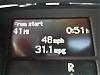
From under the hood of my 2007 ML. Note the last 3 letters under Emission Control System.
From Mercedes parts catalog:
2007 MERCEDES / ML /EXHAUST SYSTEM / EXHAUST SYSTEM / EXHAUST SYSTEM / FILTER
FILTER DIESEL PARTICULATE FILTER; ML320 CDI
MSRP Core ? Online Price
$3,090.00 $0.00 $2,317.50
From under the hood of my 2007 ML. Note the last 3 letters under Emission Control System.
MBWorld Fanatic!
Joined: May 2004
Posts: 1,482
Likes: 4
From: Portugal
'13 E500 Coupe AMG// '17 E350d // '24 E53 AMG
All V6 MB diesels in the US from 07 on has the DPF regardless of what "Whargoul" tries to claim.
From Mercedes parts catalog:
2007 MERCEDES / ML /EXHAUST SYSTEM / EXHAUST SYSTEM / EXHAUST SYSTEM / FILTER
FILTER DIESEL PARTICULATE FILTER; ML320 CDI
MSRP Core ? Online Price
$3,090.00 $0.00 $2,317.50
From under the hood of my 2007 ML. Note the last 3 letters under Emission Control System.
From Mercedes parts catalog:
2007 MERCEDES / ML /EXHAUST SYSTEM / EXHAUST SYSTEM / EXHAUST SYSTEM / FILTER
FILTER DIESEL PARTICULATE FILTER; ML320 CDI
MSRP Core ? Online Price
$3,090.00 $0.00 $2,317.50
From under the hood of my 2007 ML. Note the last 3 letters under Emission Control System.
All V6 CDI since 2004 (in Europe) use DPF or was an option.

MBWorld Fanatic!
Joined: May 2006
Posts: 1,319
Likes: 251
From: Virginia
W212 M276 DELA 30 ; W211 M113k, W126 M117, W126 OM617, W211 OM642 ; R107 M117 X2, Sierra 1500 LZ0


