When you click on links to various merchants on this site and make a purchase, this can result in this site earning a commission. Affiliate programs and affiliations include, but are not limited to, the eBay Partner Network.
My light just stopped working on the glovebox. I tried changing the bulb and it didn't do anything so i'm assuming its a switch or something. Does anyone have any part number for the glove box lighting switch or wiring harness.
Thanks. I found issue it was actually the little switch that creates a connection when you open the glovebox. I can’t believe they use such a flimsy design. I ended up just connecting the two ground wires so the light remains on when the car is running. I don’t know if they make a replacement for this sort of part… it is basically a piece of metal that gets pushed to separate when the glovebox closes then rejoins once you open. Mine is different from the one pictured with the broken wires I think that is the newer design.
My glove box light wasn't working. Tried replacing the bulb. Checked the fuse. Knew it has to be the switch.
Apparently E class W212 is different than C207 W207 E class coupe
You can see that here https://mbworld.org/forums/e-class-w...ent-light.html
I don't know if C Class C204 has the same as the C207 Coupe
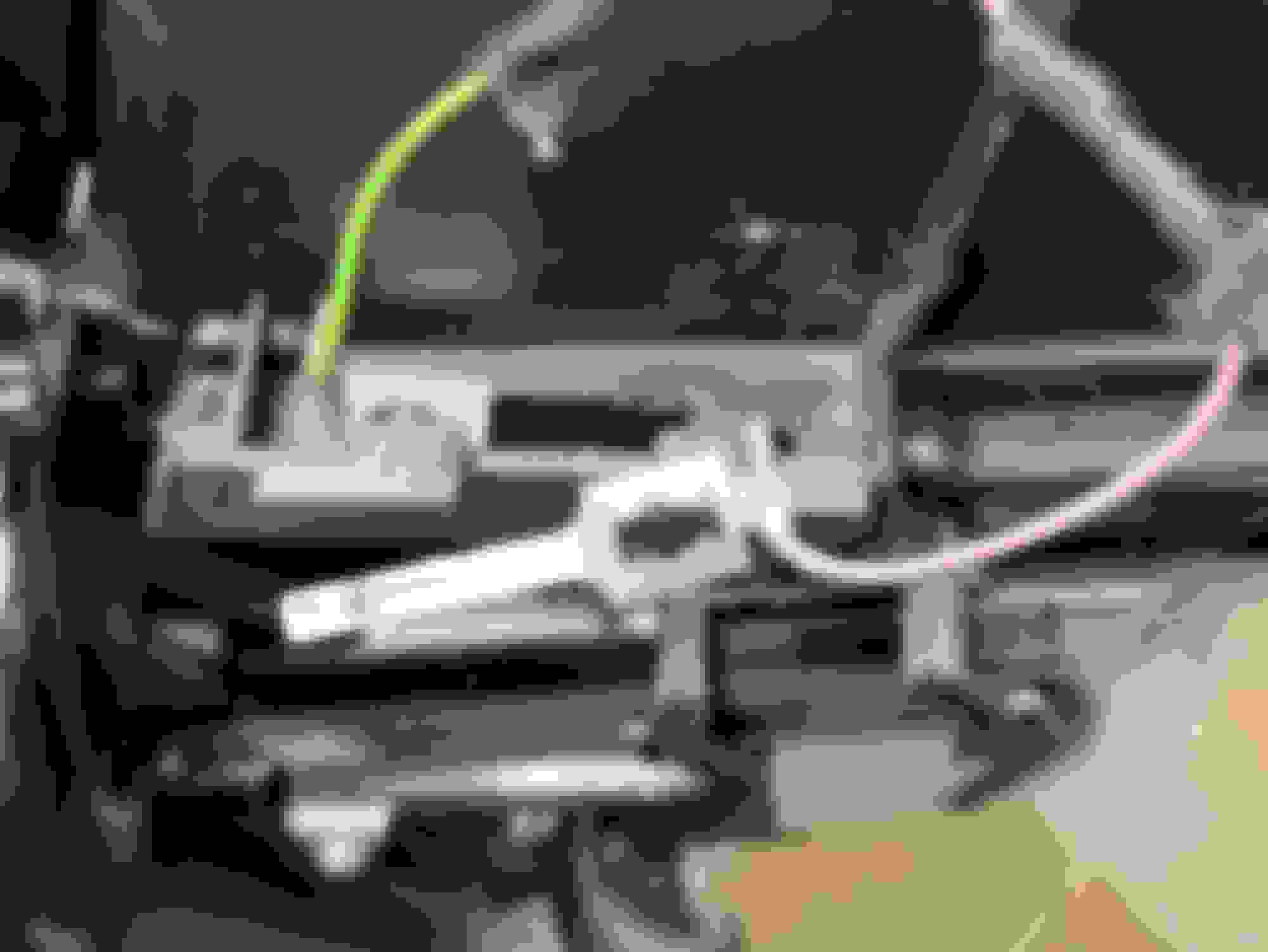
Anyway, in the C207 coupe, you pull the glove box and this is what the switch looks like.
What is happening here is that the two metal plates are pushed apart by a plastic arm when the glove box is closed. So, most of the time the metal parts are being pushed apart because most of the time the door is closed. Eventually, the metal pieces do not contact each other at all. Furthermore, the metal pieces are mounted to the glove box in a very cheap heat welded type way.
I pulled the bending one out and then bent it extra so that it was through the rectangular hole, on the other side of the non-bending plate. I put 2-part epoxy on the place where it mounts and then put more on top of it. After the epoxy cured for a day, I pushed the metal arm back through the hole so that it makes contact as it should.
I then plugged the blue electricity plug back in, turned the ignition on, and opened the glove box, and the light works and turns on and off when the door is closed.
If it was not possible to repair this, I was going to solder a wire to the exposed ends of the green and purple wires, as user Dnasty suggested, so that the glove box light would remain on when the ignition is on.
Hope this helps someone.
Also, while you are at it, you should replace the light with one of these LED courtesy light replacements. It is way better than putting a t10 LED into the oem light.
They are usually sold in pairs, and you can put the second one in the trunk.
I guess while we're talking about it, the ones under the C207 doors are the different, rectangular shaped ones. Also a must-upgrade item.
Ok so after a day or so, it stopped working again. I thought maybe I'd solder a wire in, but decided to give it another shot
I didn't take a picture, but the flexible metal arm was not touching the static plate when the door was open. I don't know if there wasn't enough glue in that area or what. The glue was pretty solid and stiff.
I could have glued it again, but decided to use a screw/bolt and nut to hold the flexible arm to the plastic.
Do not ask me what size screw/bolt I used, because I just used some stuff I had lying around and made it fit.
First, I removed all of the epoxy.
Second, I ground down the middle plastic part that goes through the hole in the flexible metal arm.
Then, I drilled a hole through the plastic mounting surface, using a drill bit just slightly larger than the screw I had selected.
I then cut the screw to the length I needed. And, because the screw I had found was slightly too wide for the hole through the metal arm, I had to widen that hole.
I then attempted to bend the metal arm, and then screwed it down.
After this, I paid attention to how much the arm moves when the door is closed vs open.
The weird part is that you need to play around with bending the arm so that you get: 1. good contact when the door is open, and 2. good separation when the door is closed.
I could have tried to do this with glue again, but not only is the screw more secure, but I was able to do a better job of bending the arm since I could screw it down in a way where I was sure that the arm was applying pretty firm pressure.
here, you see the central plastic part ground down, and a hole has been drilled for the screw I used, this hole had to be enlarged slightly good separation between plates when door is closed good contact when door is open
Ok so after a day or so, it stopped working again. I thought maybe I'd solder a wire in, but decided to give it another shot
I didn't take a picture, but the flexible metal arm was not touching the static plate when the door was open. I don't know if there wasn't enough glue in that area or what. The glue was pretty solid and stiff.
I could have glued it again, but decided to use a screw/bolt and nut to hold the flexible arm to the plastic.
Do not ask me what size screw/bolt I used, because I just used some stuff I had lying around and made it fit.
First, I removed all of the epoxy.
Second, I ground down the middle plastic part that goes through the hole in the flexible metal arm.
Then, I drilled a hole through the plastic mounting surface, using a drill bit just slightly larger than the screw I had selected.
I then cut the screw to the length I needed. And, because the screw I had found was slightly too wide for the hole through the metal arm, I had to widen that hole.
I then attempted to bend the metal arm, and then screwed it down.
After this, I paid attention to how much the arm moves when the door is closed vs open.
The weird part is that you need to play around with bending the arm so that you get: 1. good contact when the door is open, and 2. good separation when the door is closed.
I could have tried to do this with glue again, but not only is the screw more secure, but I was able to do a better job of bending the arm since I could screw it down in a way where I was sure that the arm was applying pretty firm pressure.
here, you see the central plastic part ground down, and a hole has been drilled for the screw I used, this hole had to be enlarged slightly good separation between plates when door is closed good contact when door is open
Mercedes SLR McLaren 722 S Is Extremely Rare Example Modified by McLaren
Slideshow: A one-of-one U.S.-spec Mercedes-Benz SLR McLaren Roadster became even rarer after a factory-backed transformation at McLaren's headquarters.