


91 vs. 87 Octane?

MBWorld Fanatic!
Joined: Mar 2006
Posts: 3,254
Likes: 15
From: Louisiana
03 E500 and Corvette
For 25 cents a gallon, you will be relying on the knock sensors retarding the ignition enough to keep you from destroying your engine. Not only that but you will be sacrificing fuel economy, power and a better additive package by using lower octane fuel.
I suggest that you stick to 91 octane which is borderline as it is.
I suggest that you stick to 91 octane which is borderline as it is.
 Correct
However my diesel 7.3 ltr truck can run biodiesel which is much cheaper so why not just put that in the mercedes engine. It has a lower octane rating but the cetane rating might get a few knocks out of it before it dies.


Ok,, now did we at least get a laugh of the bio diesel part. My son is moving to Germany and what I have heard fuel for the MB is only about $9.00/gal. So what's the issue with driving a mercedes and using the correct fuel/oil.
Penny wise and dollar foolish is what my dad would have said.
When I go to the pump while traveling if it is 92 octane I look for 93 unless I am out of gas. Then I consider 92 emergency fuel but at least it does meet the spec. And yes I have paid up to $3.65/gal to get the correct fuel
Jim

MBWorld Fanatic!


Joined: Jun 2007
Posts: 1,936
Likes: 350
From: Huntington NY
S560
My Esclalade would run like crap on regular. I would get heavy pinging and my mileage and power both dropped. If a car calls for premium why on earth would you put anything else in? The whopping $2 you would save on gas when put together with 400 other tankfuls would get you a whole lease payment???
I bet it is almost a breakeven cost wise b/c by pure definition gas mileage is negatively impacted when the engine has to retard its' curves for lower octane.
You should also save a few dollars by using used cooking oil instead of synthetic motor oil...
I bet it is almost a breakeven cost wise b/c by pure definition gas mileage is negatively impacted when the engine has to retard its' curves for lower octane.
You should also save a few dollars by using used cooking oil instead of synthetic motor oil...

MBWorld Fanatic!
Joined: Jul 2002
Posts: 2,677
Likes: 3
From: California
i535
European cars usually ask for 91 because 93 is the lowest grade there. However all American car run fine on 87. You can use 87 I think, at least manual tells that you can, however not recommended, because can not keep stated in manual performance. I think this question similar how often you should change oil, as stated in manual or keep longer intervals.

MBWorld Fanatic!

Joined: Dec 2005
Posts: 1,690
Likes: 3
From: Irvine, CA
2008 E550, 2012 GL450, 2014 GLK350, 2015 S550, 2020 GLC350e
Yes, your car will run just fine with 87 octane. I know this because our E-Class in India runs on whatever fuel they sell in India, which is as close to **** as you can get.
HOWEVER -- you will lose power and milage. Our car in India runs just fine, no pinging or knocking, but the milage is about 15%-20% off estimates.
The computer in the car can compensate for a range of octanes, however, the engine is built to run its best with premium fuel. Its not worth it to put 87 or 89 octane. You won't save money.
HOWEVER -- you will lose power and milage. Our car in India runs just fine, no pinging or knocking, but the milage is about 15%-20% off estimates.
The computer in the car can compensate for a range of octanes, however, the engine is built to run its best with premium fuel. Its not worth it to put 87 or 89 octane. You won't save money.

MBWorld Fanatic!
Joined: May 2004
Posts: 1,093
Likes: 0
From: California
2014 C250 sport
I have heard our E350's engine ping even using premium 91 octane gas. All of the C230 V6 loaners Ive had obviously get regular gas put into them as they ping BADLY. I would only use premium in a car that requires it....if it says it requires it on the gas door...USE IT! It's required for a reason.

Senior Member
Joined: Apr 2007
Posts: 343
Likes: 0
From: Palm Beach Gardens, Fl
‘08 E-350 Sport, C6 Vette & Harley Davidson

Super Member
Joined: Aug 2005
Posts: 822
Likes: 0
From: Oregon
Harley-Davidson
Originally Posted by akbro93704
I have heard our E350's engine ping even using premium 91 octane gas. . .
MB World Stories
The Best of Mercedes & AMG

8 Oddball Mercedes Ideas That Actually Made it to Production
Verdad Gallardo
Dubai Tuner Gives the Mercedes G-Class An Entirely New Look
Verdad Gallardo
Six Gift Ideas Your AMG Loving Dad or Grad Will Cherish

7 Craziest Things AMG Gas Ever Built
Verdad Gallardo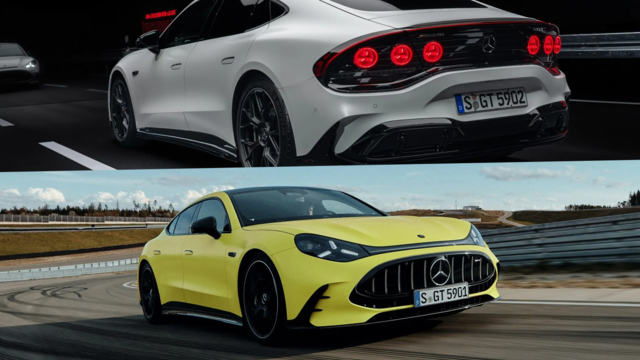
New Electric Mercedes-AMG GT 4-Door Coupe Unveiled: 10 Things You Need to Know
Verdad Gallardo
6 Mercedes Models That Did NOT Age Well (But Are Somehow Still Cool)
Verdad Gallardo
Manual Mercedes? 6 Times Sindelfingen Let Drivers Have All The Fun
Verdad Gallardo
Mercedes SLR McLaren 722 S Is Extremely Rare Example Modified by McLaren
Verdad Gallardo
8 Classic Boxy Mercedes Designs That Have Aged Like Fine Wine
Verdad Gallardo
Senior Member
Joined: Jan 2002
Posts: 429
Likes: 1
From: New York Area
'14 E350 wagon; BMW G12 (2020) G01 (2019)
Let me try some simple artihmetic and someone tell me why its wrong. Lets assume regular costs 0.25 per gallon less than premium, and that the average price of premium is $3.75, regular 3.50. That calculates to a 6.6% difference in price. Now let's assume there's a 10% difference in fuel economy, which is conservative. Let's assume 20,000 miles driven per year. Finally, lets assume that the average fuel economy is 22 mpg with premium. That would make it 19.8 mpg with regular. Over the 20000 miles the premium driver would use 909 gallons at a cost of $3409.09. The regular driver would use 1010 gallons at a cost of $3535.35. The inescapable conclusion is that using regular is false economy even without considering performance and without considering the possibility of damage to the engine (even if this is remote). Even if my numbers are off by a bit, I suspect strongly that at best it is a wash between regular and premium at that price differential. So you pay the price in using more gas, run the risk of damage, degrade performance, and you do NOT get to eat one more hamburger.
MBWorld Fanatic!
Joined: Jul 2002
Posts: 2,677
Likes: 3
From: California
i535
Yes, your car will run just fine with 87 octane. I know this because our E-Class in India runs on whatever fuel they sell in India, which is as close to **** as you can get.
HOWEVER -- you will lose power and milage. Our car in India runs just fine, no pinging or knocking, but the milage is about 15%-20% off estimates.
HOWEVER -- you will lose power and milage. Our car in India runs just fine, no pinging or knocking, but the milage is about 15%-20% off estimates.
Senior Member
Joined: Apr 2007
Posts: 343
Likes: 0
From: Palm Beach Gardens, Fl
‘08 E-350 Sport, C6 Vette & Harley Davidson
and it’s on your right.
The owner of the Hindo Ling Hung Lo Topless Bar has a blue one.
Show your MB key and get a 10% discount on Lap dances.
jimm
Last edited by jimm; Jun 15, 2007 at 04:01 PM.

Senior Member


Joined: Apr 2007
Posts: 352
Likes: 91
You will NOT get any better performance or fuel mileage with premium fuel. The octane rating basically translates the volatility of the fuel into a number. The higher the number, the less volatile the fuel or the slower it burns. The lower the octane the higher rate of burn and more volatility. Theorectically speaking you should make MORE power with a lower octane fuel. The only reason higher performance engines require high octane fuel is due to the higher compression ratio. This makes the fuel charge more unstable and possible that a pre-ignited charge will be initiated within the combustion chamber causing the spark "knock" when the two flame fronts collide.
My opinion is if you drive normally and under light load premium fuel is not required. Benz tells you to only use premium to cover all drivers under all conditions. The ignition management can retard ignition substantially if knock is detected. Summer driving and supercharged engines will make it more likely that you made need this intervention. In cold weather you may actually benefit running low octane fuel to help with cold starts.
If you drive sensibly run the lower octane. If you drive like a kid run the expensive stuff. You people know who you are.
My opinion is if you drive normally and under light load premium fuel is not required. Benz tells you to only use premium to cover all drivers under all conditions. The ignition management can retard ignition substantially if knock is detected. Summer driving and supercharged engines will make it more likely that you made need this intervention. In cold weather you may actually benefit running low octane fuel to help with cold starts.
If you drive sensibly run the lower octane. If you drive like a kid run the expensive stuff. You people know who you are.
MBWorld Fanatic!
Joined: Jun 2007
Posts: 1,936
Likes: 350
From: Huntington NY
S560
I can only speak from experience, EVERY car I have ever owned that 'required' premium fuel suffered a loss of mpg when filled with regular gas (not to mention annoying pings under NORMAL driving such as going up hills or merging on a parkway).
Lets face it you are talking about $10 a month, is it even worth talking about? If money is that tight don't buy a Benz.
Lets face it you are talking about $10 a month, is it even worth talking about? If money is that tight don't buy a Benz.
Newbie
Joined: Apr 2007
Posts: 19
Likes: 0
From: Cupertino, CA
07 E350, 07 Tahoe LTZ
I recently experimented with Shell's 87, there's a noticeable difference when I switched down to 87, the car is sluggish and hesitates when I'm accelerating. I did notice a drop on the computer mpg read out. I suspect that's due to the fact that I have to press down on the accelerator a little more or longer to get the car to move.
With this data it clearly doesn't make sense to use 87, the performance degradation is not worth the $1.5-2.0 savings every fill up at the gas station.
With this data it clearly doesn't make sense to use 87, the performance degradation is not worth the $1.5-2.0 savings every fill up at the gas station.

Member
Joined: Oct 2006
Posts: 83
Likes: 0
From: Oklahoma City, OK
2007 E550
Gasoline in Germany was always sold in three grades with RON 91, 95, 98. Over the past couple of years, 91 is being phased out or offered at fewer pumps because of diminshing demand (most cars require at least 95, some even 98 min like MB V12 and AMG). Also, Shell and Aral (BP) have eliminated 98 in favor of 100 octane. In summary, when buying gasoline, you will always see 95, and either 98 or 100, maybe 91.
The higher the octane rating, the harder it is for the gas to explode, especially under compression, it is not that it explodes any bigger or hotter. You want the gas to ignite with the spark, not compression detonation, aka the knock. It is also due to this very reason that until you really run the engine, almost full throttle, that you actually do not see that much better gas mileage with higher octane. If you are constantly flooring the car, the higher the octane the better.
Both the 350 and 550 engines have a 10.7:1 compression ratio. For this reason alone, 91 is a minimum, and all you will need, unless the engine is ran full throttle often.

Out Of Control!

Joined: Nov 2001
Posts: 21,014
Likes: 2
From: CA, NV, CO
1) Currently running 101 with a mixture of 104.
2) 104 with a mixture of 109
3) straight 109
Senior Member
Joined: Apr 2007
Posts: 343
Likes: 0
From: Palm Beach Gardens, Fl
‘08 E-350 Sport, C6 Vette & Harley Davidson
Senior Member
Joined: Apr 2007
Posts: 352
Likes: 91
RON (Research Octane Number) is the not the same as the US (R+M)/2 method (R=RON and M=MON (Motor Octane Number)). RON is typically 4-5 points higher than the US counterpart. A 95 RON is our 90-91 octane, also called Pump Octane.
The higher the octane rating, the harder it is for the gas to explode, especially under compression, it is not that it explodes any bigger or hotter. You want the gas to ignite with the spark, not compression detonation, aka the knock. It is also due to this very reason that until you really run the engine, almost full throttle, that you actually do not see that much better gas mileage with higher octane. If you are constantly flooring the car, the higher the octane the better.
Both the 350 and 550 engines have a 10.7:1 compression ratio. For this reason alone, 91 is a minimum, and all you will need, unless the engine is ran full throttle often.
The higher the octane rating, the harder it is for the gas to explode, especially under compression, it is not that it explodes any bigger or hotter. You want the gas to ignite with the spark, not compression detonation, aka the knock. It is also due to this very reason that until you really run the engine, almost full throttle, that you actually do not see that much better gas mileage with higher octane. If you are constantly flooring the car, the higher the octane the better.
Both the 350 and 550 engines have a 10.7:1 compression ratio. For this reason alone, 91 is a minimum, and all you will need, unless the engine is ran full throttle often.
There are too many other factors in the real world that will effect fuel mileage like road conditions, air temperature and density, A/C usage, etc. than to say I got this MPG with this fuel and this MPG with this fuel and so on. Who cares about about splitting hairs. We are talking about engine requirements and engine damage.
And yes I meet people that are rich and stupid everyday it seems and it's at my dealership.

Member
Joined: Oct 2006
Posts: 83
Likes: 0
From: Oklahoma City, OK
2007 E550
Depends on your engine, compression ratio and what type of gas it is. With different additives in gases by different companies, all equal octanes are not the same. When you are not accelerating hard, the manifold pressure is lower than atmospheric pressure and you could run 80 octane and it would not make a difference. Only when you open it up and increase the pressure, do you see the full benefits. If you have a turbo or a supercharger, the benefits are even more pronounced.
Out Of Control!
Joined: Nov 2001
Posts: 21,014
Likes: 2
From: CA, NV, CO
Member
Joined: Oct 2006
Posts: 83
Likes: 0
From: Oklahoma City, OK
2007 E550
[QUOTE=bicylindrico;2271619]I say we are on the same page here. I would only disagree with your term "explode." Fuel burns and releases heat. An explosion is heat contained to a point it is suddenly pressure released.
True, ignition is more correct. The main thing I'm trying to get across is that Octane is a rating of the point that the gas can ignite under compression. Most people think of Octane as the energy the gas can produce or something along those lines.
True, ignition is more correct. The main thing I'm trying to get across is that Octane is a rating of the point that the gas can ignite under compression. Most people think of Octane as the energy the gas can produce or something along those lines.

MBWorld Fanatic!
Joined: Mar 2007
Posts: 2,408
Likes: 3
The world if full of half truths and misinformed people.
Yes, the octane rating is a measurement of "resistance to detonation" in common terms. Chemically, this is called the activation energy, the enengy required to initiate combustion of any substance.
Most importantly, the energy released by combustion is correlated fairly universally with the activation energy. This also resounds quite well with the laws of energy conservation.
What this means: all things being equal, higher octane fuel should burn hotter and deliver greater energy upon detonation, and no, in theory, lower octane will not deliver more power.
Yes, the octane rating is a measurement of "resistance to detonation" in common terms. Chemically, this is called the activation energy, the enengy required to initiate combustion of any substance.
Most importantly, the energy released by combustion is correlated fairly universally with the activation energy. This also resounds quite well with the laws of energy conservation.
What this means: all things being equal, higher octane fuel should burn hotter and deliver greater energy upon detonation, and no, in theory, lower octane will not deliver more power.
Member
Joined: Oct 2006
Posts: 83
Likes: 0
From: Oklahoma City, OK
2007 E550
The world if full of half truths and misinformed people.
Yes, the octane rating is a measurement of "resistance to detonation" in common terms. Chemically, this is called the activation energy, the enengy required to initiate combustion of any substance.
Most importantly, the energy released by combustion is correlated fairly universally with the activation energy. This also resounds quite well with the laws of energy conservation.
What this means: all things being equal, higher octane fuel should burn hotter and deliver greater energy upon detonation, and no, in theory, lower octane will not deliver more power.
Yes, the octane rating is a measurement of "resistance to detonation" in common terms. Chemically, this is called the activation energy, the enengy required to initiate combustion of any substance.
Most importantly, the energy released by combustion is correlated fairly universally with the activation energy. This also resounds quite well with the laws of energy conservation.
What this means: all things being equal, higher octane fuel should burn hotter and deliver greater energy upon detonation, and no, in theory, lower octane will not deliver more power.


