When you click on links to various merchants on this site and make a purchase, this can result in this site earning a commission. Affiliate programs and affiliations include, but are not limited to, the eBay Partner Network.
Now I experimented with a simpler faster method to perform the pistons "parking" position calibration and it works
The working concept is this :
01. The piston seal is the one which will suck back or retract your pistons and hence your brake pad from the rotor, nothing else.
02. Whenever you pressed the brake pedal hard and then bleed , aka when doing air bubble removal, and then you release the brake pedal ....that is the final parking position of your brake pad/pistons.
The amount of lift up of brake pad or pistons is very little.
Looking at my 2022 archive , I was using 0.20mm to 0.25mm gap. This time I am using only a 0.13mm gap.
The gap is from 3M aluminum foil tape. I forgot the P/N, but its on the floor and I measure its thickness with a caliper and I got 0.13mm thickness.
So I pasted on both side of the rotors, the ALU foil tape a bit bigger foot print than the brake pad.
The brake pads first needed to be distanced from the rotor by bleeding the brake fluid and using a suitable tool to "squeeze-out" the brake pads.
When enough gap between rotor and brake pads achieved.......
I then spin the rotor to make those ALU foil be at the brake pad contact area and I got my driver to pump the brake pedal and hold, while I bleed the brake fluid. I done this twice.
By doing this, the seal of the pistons will have a "memory" that my brake rotor is 0.13mm x 2 extra thickness, or 0.26mm at maximum brake pedal pressure.
Thus when the ALU foil tape is removed, I gain approx 0.13mm extra lift-up of brake pad from the rotor...well, that is my theory
The good thing about this ALU foil method is, compared to the one in 2022.... is that the ALU foil created an equal 0.13mm gap on the entire brake pad surface.
The 2022 method I can only squeeze the brake pad from the top, hence 0.20 to 0.25mm gap was needed, if less than this.... the brake pad closer to the wheel hub, will still touch the rotor.
This Brembo brake pad only sit on the two alignment pins and at the top/outer ( away from wheel hub ) and the OE thin double side tape sticking it to the pistons.
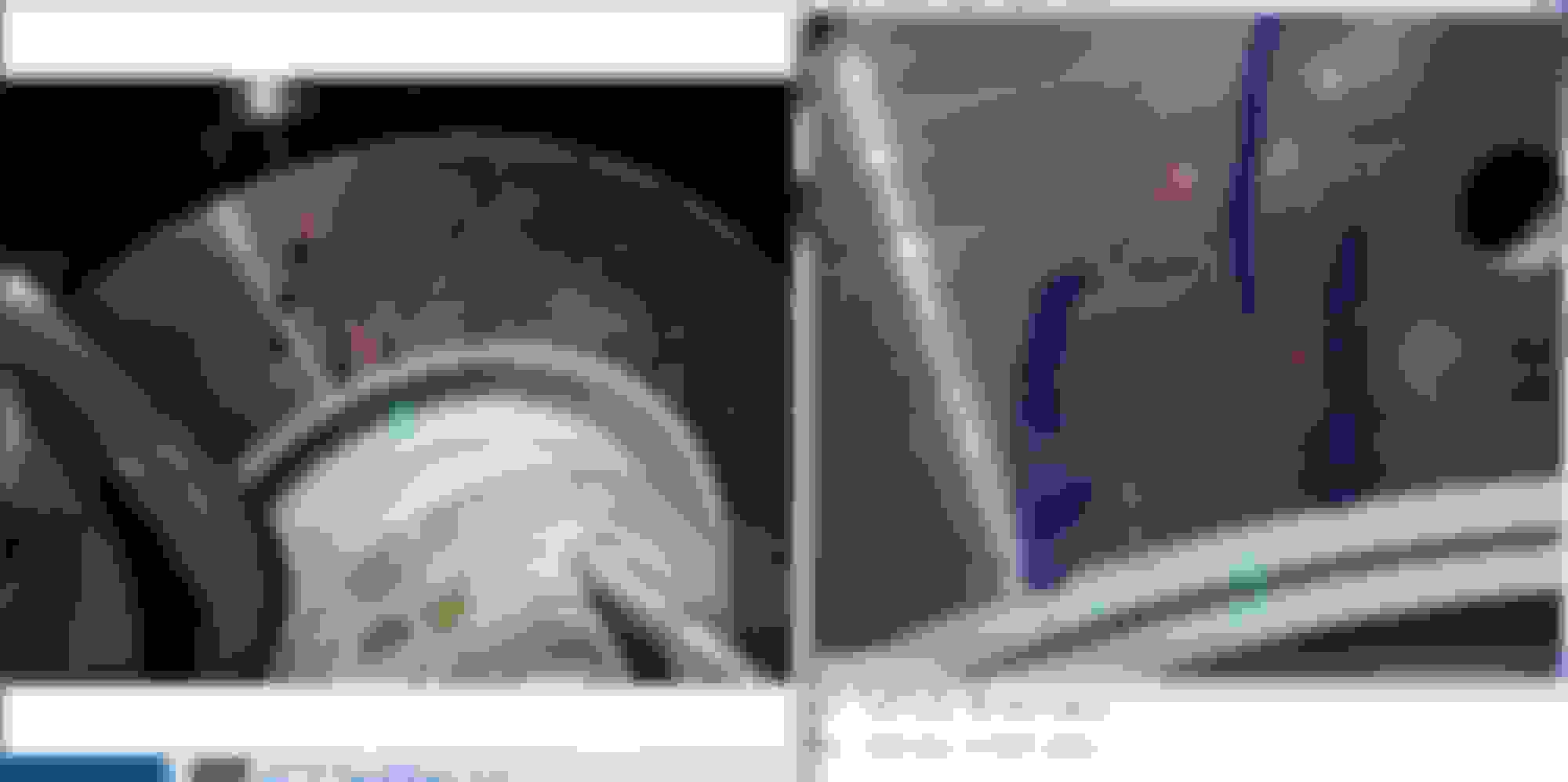
So I guess perfect lift up of entire brake pad is not happening evenly. Thus the zone B below is the one always touching..... unless the gap is made 0.20 to 0.25mm measured at the top side.
I also tried this time using anti seize paste as a mild touch up lubricant on ONLY the pin to brake pad alignment hole.
Usually I use CRC brake caliper grease which is rubber compatible, this one : https://www.crcindustries.com/synthe...ase-2-5-wt-oz/
But for metal to metal, its not that great. For the rear caliper rubber bushings, it is great.
Below is initial application of the Loctite Anti-Seize, which later I clean them off a bit to make sure no excess to drip off to brake pad friction surface.
This is the result of zero touch adjustment. Front right wheel. This wheel is a bit bent, see it well and you can see while it is spinning.