When you click on links to various merchants on this site and make a purchase, this can result in this site earning a commission. Affiliate programs and affiliations include, but are not limited to, the eBay Partner Network.
My prediction is that Tesla will have to make their stations available to all brands over time to keep the preferred pricing for electricity from municipalities & power companies. This has already come up in some locations...
I don't think so. First power companies can't charge Tesla more than they charge competing charging networks, and as long as there is price parity, it makes sense for Tesla to keep their competitive advantage. Second they are installing Tesla Solar and battery arrays in more supercharger locations, which reduces peak demand and gives them an edge over third party charging networks.
If was Musk, I would hold out, and I would litigate any action to force them to share. I doubt they could be forced to share their infrastructure. It isn't a monopoly - they have a small share of the market for automobiles and automotive fuel.
I don't think so. First power companies can't charge Tesla more than they charge competing charging networks, and as long as there is price parity, it makes sense for Tesla to keep their competitive advantage. Second they are installing Tesla Solar and battery arrays in more supercharger locations, which reduces peak demand and gives them an edge over third party charging networks.
If was Musk, I would hold out, and I would litigate any action to force them to share. I doubt they could be forced to share their infrastructure. It isn't a monopoly - they have a small share of the market for automobiles and automotive fuel.
AFAIK Tesla is paying not competitive but preferred pricing for electricity. This obviously may vary by location, etc. I read a few articles where Tesla was told they would loose their preferred pricing if they wouldn't start sharing their stations. Not sure what became of that but if that's the case, Tesla really has no standing and would eventually have to pay higher prices.
I'll look for those articles again...
AFAIK Tesla is paying not competitive but preferred pricing for electricity. This obviously may vary by location, etc. I read a few articles where Tesla was told they would loose their preferred pricing if they wouldn't start sharing their stations. Not sure what became of that but if that's the case, Tesla really has no standing and would eventually have to pay higher prices.
I'll look for those articles again...
If Supercharging were free what you say would be true, but it isn’t free. People pay to use superchargers.
So the question is really would paying market rates put them at a financial disadvantage to Electrify America? If so they might be better off giving up their strategic advantage (of exclusive superchargers) to ensure they can offer charging at a competitive rate.
I think they would still have a cost advantage over electrify America even if they had to pay market rates. The reason is the cost per watt is a function of the allocated fixed cost (real estate, maintenance) per watt and the price of the electricity. Even if they pay market rate for the electricity, they are will still have an advantage on fixed cost per watt because they have 75% of the car market so they have more volume through their superchargers than anyone else.
If Supercharging were free what you say would be true, but it isn’t free. People pay to use superchargers.
So the question is really would paying market rates put them at a financial disadvantage to Electrify America? If so they might be better off giving up their strategic advantage (of exclusive superchargers) to ensure they can offer charging at a competitive rate.
I think they would still have a cost advantage over electrify America even if they had to pay market rates. The reason is the cost per watt is a function of the allocated fixed cost (real estate, maintenance) per watt and the price of the electricity. Even if they pay market rate for the electricity, they are will still have an advantage on fixed cost per watt because they have 75% of the car market so they have more volume through their superchargers than anyone else.
Agree with your rationale. I still remembered the free charging for life aspect but realize that this must now amount to just to a small percentage of Tesla drivers.
Also have to admit that none of that really matters to me as we would use an EV solely for city driving and would simply charge it overnight in the garage.
2019 SL450, 2019 E450 Luxury Trim Wagon, 2024 BMW I7 xDrive60
It looks nice, but it is SO spread out. What kind of a distraction will all that be? I know, I’m supposed to “talk” to my car or communicate with hand movements, both of which I find ridiculous. Is the passenger in the front seat going to be watching a movie while the car is being driven? What happens when Sharon Stone uncrosses her legs at the exact same moment someone cuts you off?
It looks nice, but it is SO spread out. What kind of a distraction will all that be? I know, I’m supposed to “talk” to my car or communicate with hand movements, both of which I find ridiculous. Is the passenger in the front seat going to be watching a movie while the car is being driven? What happens when Sharon Stone uncrosses her legs at the exact same moment someone cuts you off?
I actually think layout is better than the W223.
The screen on right is purely for the passenger, so really you only need to consider the instrument panel screen and the center screen. The center screen is positioned higher on dash than the one in the W223 which makes it far more convenient to use in my opinion. I think the standard non hyper screen setup with the low mounted center screen (as seen in the W223) is more of a distraction.
It looks nice, but it is SO spread out. What kind of a distraction will all that be? I know, I’m supposed to “talk” to my car or communicate with hand movements, both of which I find ridiculous. Is the passenger in the front seat going to be watching a movie while the car is being driven? What happens when Sharon Stone uncrosses her legs at the exact same moment someone cuts you off?
Driver cannot see the what is on the passenger screen. They had the same technology on the CL model code 867 – SPLITIVEW
Driver cannot see the what is on the passenger screen. They had the same technology on the CL model code 867 – SPLITIVEW
I was wondering about that. I have seen anything about split view. I assumed that it didn’t have it because if it did I am sure that they would have mentioned that fact several times.
The car definitely looks better in a dark paint with the 22" wheels. If you then imagine the front and rear light bars, and the black grill with back-lit stars, it is going to look great.
Mercedes-Benz has only offered modified combustion-engined vehicles with a battery pack so far. Calling them EVs shows how much the company that invented cars as we know them was lagging behind Tesla and Lucid. It seems the EQS will finally end that, putting Mercedes-Benz back in the electric car game. With the lowest drag coefficient for a production car, it will achieve an energy efficiency of 4 mi/kWh.
That’s comparable to the 4.5 mi/kWh Lucid promises the Air will achieve. Tesla and EPA state the Model S Long Range can achieve 402 miles with its 100 kWh battery pack. That translates into a 4.02 mi/kWh energy efficiency if you run your car past the 0 percent warning and until it stops, according to Tesla engineers.
The EQS beats that: with more than 435 miles of range – probably according to WLTP standards – for its 108 kWh battery pack, it reaches 4.03 mi/kWh. It’s close to what Tesla offers, but it means more than just that in Mercedes-Benz's case.
The new electric Mercedes-Benz gets there with a drag coefficient of 0.20. The Lucid Air would present 0.21. Both cars will be beaten by the Aptera, which will present a drag coefficient of 0.13. Until Aptera delivers the first unit, the EQS shall hold the most aerodynamic production car's title.
Aerodynamics is crucial for reaching more energy efficiency. Aptera tackles that and mass – being extremely light, allowing it to reach 10 mi/kWh. The EQS is yet to tell us how it got there, but it has certainly not done by adding "dumb range," as Peter Rawlinson often refers to that. Its 108-kWh battery pack is smaller than that in the Lucid Air, for example, which holds 113 kWh.
It is not clear if the EQS will also be a light vehicle, but its luxurious interior tells otherwise. Despite that, it is impressive to see the world's oldest car company prove that it can compete with the newcomers. We’ll follow the world presentation closely to learn Mercedes-Benz’s recipe to get there beyond aerodynamics.
2019 SL450, 2019 E450 Luxury Trim Wagon, 2024 BMW I7 xDrive60
For me, the potential attraction of this car will be just how quiet it is and how well it rides. I don’t care for the styling, I’m not dying to get an electric car, but if it blows me away with quiet and comfort, I just may go with it.
Thats a bit like saying you get Beetle vibes from a 911. The EQS is a lot lower and sleeker.
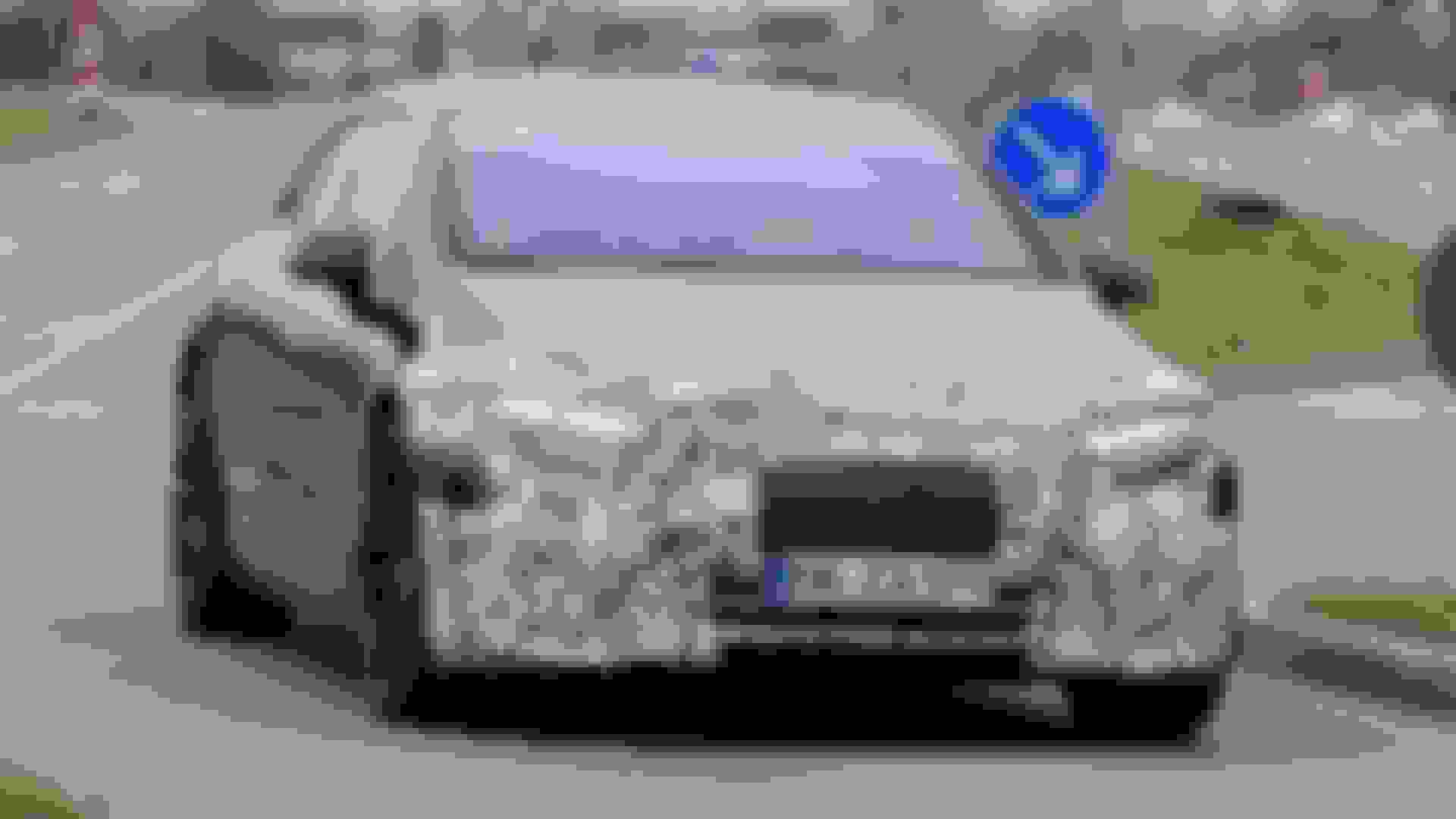
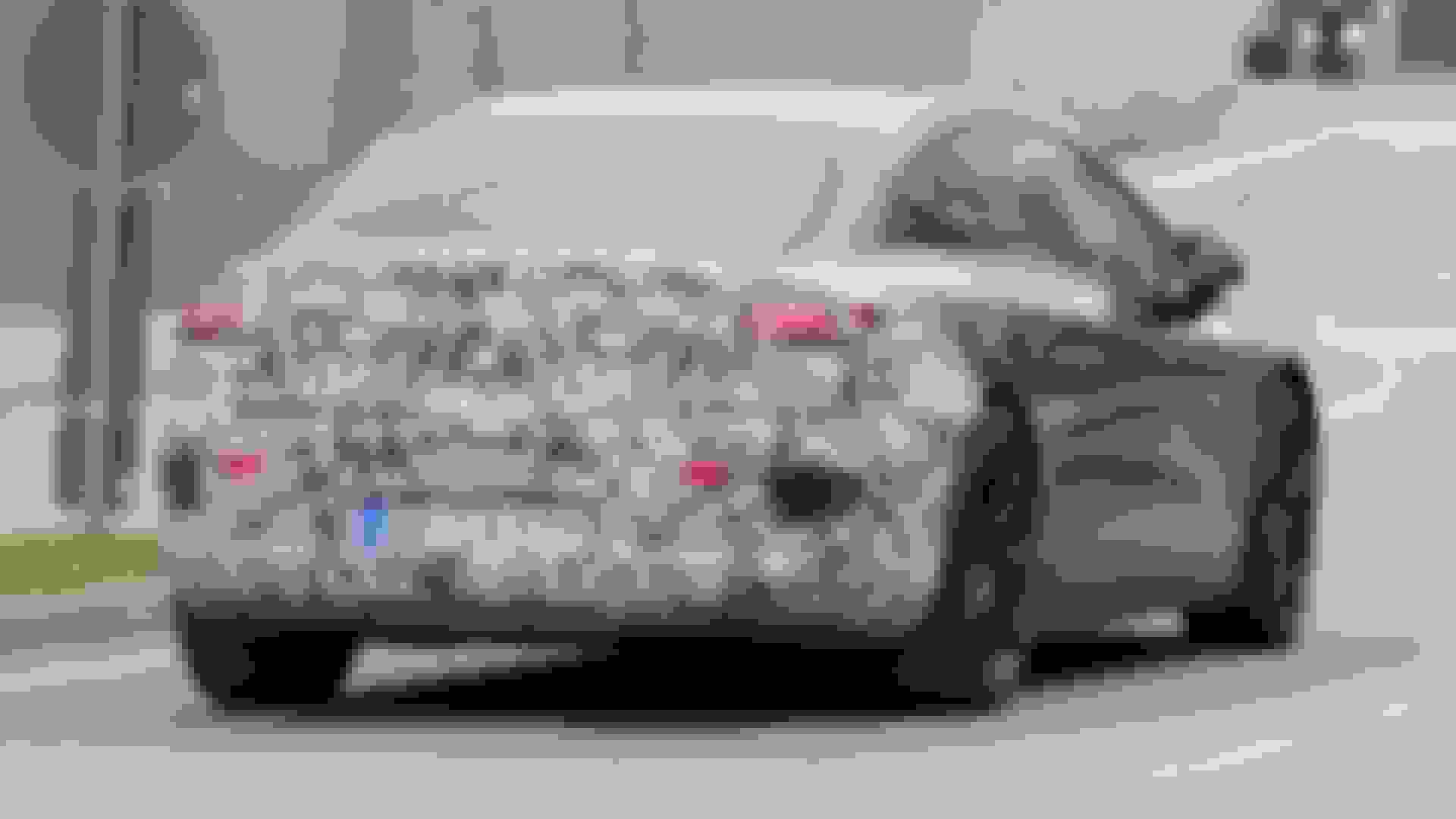
It is lower, but it still is very reminiscent of the GLE coupe. It uses very similar design themes from the short rear deck and hatch styling of the roofline, to the window silhouette, just lower and with a shorter cab-forward design.
anyone getting this vibe? Or maybe I’m thinking new Honda Accord or Toyota Camry. I’m hoping the car is great because I’d like to have one but the styling is really bad.
Mercedes SLR McLaren 722 S Is Extremely Rare Example Modified by McLaren
Slideshow: A one-of-one U.S.-spec Mercedes-Benz SLR McLaren Roadster became even rarer after a factory-backed transformation at McLaren's headquarters.