


Level 2 Charger

MBWorld Fanatic!


Joined: Oct 2014
Posts: 4,524
Likes: 1,181
From: WI
17 E43; 21 GLS580
I think you overpaid. That Ford charger does not look worth $500. That is a $300 charger with a Ford badge on it. Typically a $500 charger would be one equipped with WiFi with the ability to control it remotely and program it (Chargepoint, Jukebox, Porsche Mobile Charger Connect). A $300 charger would be a very high quality non-connected charger (similar to the one that came with my Tesla, or the Porsche Mobile Charger Plus that comes with the Taycan)
MBWorld Fanatic!
Joined: Oct 2014
Posts: 4,524
Likes: 1,181
From: WI
17 E43; 21 GLS580
I think you overpaid. That Ford charger does not look worth $500. That is a $300 charger with a Ford badge on it. Typically a $500 charger would be one equipped with WiFi with the ability to control it remotely and program it (Chargepoint, Jukebox, Porsche Mobile Charger Connect). A $300 charger would be a very high quality non-connected charger (similar to the one that came with my Tesla, or the Porsche Mobile Charger Plus that comes with the Taycan)

MBWorld Fanatic!

Joined: Jun 2010
Posts: 2,757
Likes: 958
From: Atlanta
2022 Mercedes EQS 580
Its not like I could haggle, its an OEM part. It looks well built and its a 110 or 220 32 amp. Perfect for "destination" charging. I have a home on lake Superior, an area severely underserved by EV infrastructure, as is all of mid to north Wisconsin. Having a portable 220 charger that can be used at home or pretty much anywhere, makes the entire area easy to navigate comfortably without any range anxiety.

Super Member
Joined: Nov 2021
Posts: 825
Likes: 263
From: NE KY, on the Ohio River
2018 S560; 2022 EQS450+
Charger
My ChargePoint was installed last Friday.
I don’t have the installation costs yet. The wiring crosses 3 garage bays - including a new breaker.
The charger cost, freight included, was $743.00.
The closest public charger is 40+ miles from me.
I don’t have the installation costs yet. The wiring crosses 3 garage bays - including a new breaker.
The charger cost, freight included, was $743.00.
The closest public charger is 40+ miles from me.
MBWorld Fanatic!
Joined: Oct 2014
Posts: 4,524
Likes: 1,181
From: WI
17 E43; 21 GLS580
I want to APOLOGIZE for my comment suggesting you could have got a similar charger for less. I looked it up and most of the chargers are either 110v or 220v at the $200-300 price point. For an L1/L2 30A portable what you paid makes sense. I would have still stuck with the wall charger and skipped the portable, but everyone has different use cases. My thinking is that if I charge away from home it would always be at a commercial L3 charging station so I don’t see need for a portable, let alone one that supports 120v charger.

MBWorld Fanatic!
Joined: Dec 2006
Posts: 6,501
Likes: 336
From: Europe
223.168 & 213.012 & 906.633 & 214.005
Could you educate me a bit about the US residential electric circuits. I understand a common approach being a three wire two phase system, 110 V between neutral and phase but the two phases at 180 degree offset, enabling 220 V supply if neutral is not required?
Is it the car that limits AC charging to 9 kW or is there a limit on the supply side not allowing more than 40 amp at 220 V, approximately 9 kW?
The European approach is typically minimum 25 amp three phase supply where obviously phase offsets are 120 degrees, this at 230 V neutral to phase (phase to phase 400 V). Three phase wall sockets are typically 16 A but 32 A is possible in practise at any private residence. This allows 11 kW or 32 kW AC wall boxes for EV charging. Mercedes as well as many other brands do not support more than 11 kW AC charging, some models only two phase charging at 7.3 kW, the first generation plug-in hybrids sometimes only singe phase. The EQS can be charged at 11 kW at any home in practise (AC charging obviously).
Is it the car that limits AC charging to 9 kW or is there a limit on the supply side not allowing more than 40 amp at 220 V, approximately 9 kW?
The European approach is typically minimum 25 amp three phase supply where obviously phase offsets are 120 degrees, this at 230 V neutral to phase (phase to phase 400 V). Three phase wall sockets are typically 16 A but 32 A is possible in practise at any private residence. This allows 11 kW or 32 kW AC wall boxes for EV charging. Mercedes as well as many other brands do not support more than 11 kW AC charging, some models only two phase charging at 7.3 kW, the first generation plug-in hybrids sometimes only singe phase. The EQS can be charged at 11 kW at any home in practise (AC charging obviously).
MBWorld Fanatic!
Joined: Oct 2014
Posts: 4,524
Likes: 1,181
From: WI
17 E43; 21 GLS580
All circuits here have ground. To make 220 you simply tie 2 110 circuits together (2 pole breaker) . Normal residential wire is to 50 amp , however by code cabling is 125% higher rating than maximum current thus the highest current allowed on regular hosehold circuits is 220v 40 amp. In very old homes the mains is 100 amp and no ground. More modern construction is 200 main.

Senior Member
Joined: Feb 2011
Posts: 350
Likes: 106
From: Palo Alto, CA
2011 GL 350, P1 Package, HID headlamps, Blind spot assist, Parktronic, Wood steering wheel
Clearly this whole topic of charging is going to want a FAQ here on the forum if and when folks start to take delivery of their EQS.
The batteries in your EQS are charged only by direct current (DC.) DC fast chargers provide high voltage, high power direct current to your EQS. The EQS can accept up to 204KWh of DC power (up to 480 Volts DC, and up to 300 AMPS) The EQS also has an internal AC to DC converter that allows charging at up to 9.6KW - it converts an alternating current power source to direct current that is used to charge your batteries.
There are four main places most people will be charging their EQS. Note that you can utilize any combination of these four, but most people will use #2 most of the time, plus #1 occasionally and #4 rarely.
1) Commercial DC fast chargers - such as Electrify America - but also many others like Tesla Superchargers, local city-operated chargers, etc. The EQS can charge at up to 204KWh (up to 480 Volts DC, and up to 300 AMPS) at a DC fast charger.
2) Permanently installed level 2 AC-based home or commercial chargers - the EQS can charge at up to 9.6KWh (40 AMPS @240 volts) with one of these.
3) Permanently installed home DC fast charger - these are relatively expensive and unlikely to be common - but they act just like #1 on this list. The charging speed is really limited only by your budget, up to the full 204KWh DC charging capacity of the EQS.
4) Portable level 1 or level 2 AC charging cord - this is a cord that you can plug into an available power outlet anywhere - such as the $250 cord you can buy from Mercedes that charges using 120VAC only, or the $400 Ford cord mentioned above that can charge using either 120VAC or 240VAC. 120V AC portable charging is limited to 1.8KWh (15amps * 120 Volts) which is why the Mercedes charging cord is so slow as to effectively be useless, while the Ford charging cord maxes out at 7.6KW (32amps @240 volts) when plugged into a 240-volt outlet.
There is another discussion going on above about the wiring infrastructure you need in your home to enable #2 above - a home-based level-2 AC charger that supports up to 9.6KW continuous charging (40amps @ 240 Volts). For continuous loads like EV charging, you need to install 240V wiring that is at least 125% more capable than the maximum current draw for charging the EQS. Since the max 240VAC capacity of the EQS internal AC/DC converter is 40 AMPS, you need to install wiring capable of 50 AMPS. For MOST homes, this means a 50AMP circuit breaker coupled with 6-gauge copper wire from your breaker box to your charging location. Since you only need 240AC to support level 2 chargers (you don't need 120VAC, therefore you don't need a neutral wire), you or your electrician will be installing 3 conductors - 2 hot legs and a ground. If you have an unusually long run between your circuit breaker box and your charging location, you might need even thicker wire. If you want to future proof, you should run 4-gauge copper wire and install a level II charger that supports up to 50AMP continuous charging - your next EV (and future versions of the EQS) may support home charging at up to 12KW.
Here is a link to the EQS charging specifications on the Mercedes website -https://www.mbusa.com/en/vehicles/model/eqs/sedan/eqs580v4#specifications
The batteries in your EQS are charged only by direct current (DC.) DC fast chargers provide high voltage, high power direct current to your EQS. The EQS can accept up to 204KWh of DC power (up to 480 Volts DC, and up to 300 AMPS) The EQS also has an internal AC to DC converter that allows charging at up to 9.6KW - it converts an alternating current power source to direct current that is used to charge your batteries.
There are four main places most people will be charging their EQS. Note that you can utilize any combination of these four, but most people will use #2 most of the time, plus #1 occasionally and #4 rarely.
1) Commercial DC fast chargers - such as Electrify America - but also many others like Tesla Superchargers, local city-operated chargers, etc. The EQS can charge at up to 204KWh (up to 480 Volts DC, and up to 300 AMPS) at a DC fast charger.
2) Permanently installed level 2 AC-based home or commercial chargers - the EQS can charge at up to 9.6KWh (40 AMPS @240 volts) with one of these.
3) Permanently installed home DC fast charger - these are relatively expensive and unlikely to be common - but they act just like #1 on this list. The charging speed is really limited only by your budget, up to the full 204KWh DC charging capacity of the EQS.
4) Portable level 1 or level 2 AC charging cord - this is a cord that you can plug into an available power outlet anywhere - such as the $250 cord you can buy from Mercedes that charges using 120VAC only, or the $400 Ford cord mentioned above that can charge using either 120VAC or 240VAC. 120V AC portable charging is limited to 1.8KWh (15amps * 120 Volts) which is why the Mercedes charging cord is so slow as to effectively be useless, while the Ford charging cord maxes out at 7.6KW (32amps @240 volts) when plugged into a 240-volt outlet.
There is another discussion going on above about the wiring infrastructure you need in your home to enable #2 above - a home-based level-2 AC charger that supports up to 9.6KW continuous charging (40amps @ 240 Volts). For continuous loads like EV charging, you need to install 240V wiring that is at least 125% more capable than the maximum current draw for charging the EQS. Since the max 240VAC capacity of the EQS internal AC/DC converter is 40 AMPS, you need to install wiring capable of 50 AMPS. For MOST homes, this means a 50AMP circuit breaker coupled with 6-gauge copper wire from your breaker box to your charging location. Since you only need 240AC to support level 2 chargers (you don't need 120VAC, therefore you don't need a neutral wire), you or your electrician will be installing 3 conductors - 2 hot legs and a ground. If you have an unusually long run between your circuit breaker box and your charging location, you might need even thicker wire. If you want to future proof, you should run 4-gauge copper wire and install a level II charger that supports up to 50AMP continuous charging - your next EV (and future versions of the EQS) may support home charging at up to 12KW.
Here is a link to the EQS charging specifications on the Mercedes website -https://www.mbusa.com/en/vehicles/model/eqs/sedan/eqs580v4#specifications
MB World Stories
The Best of Mercedes & AMG

8 Oddball Mercedes Ideas That Actually Made it to Production
Verdad Gallardo
Dubai Tuner Gives the Mercedes G-Class An Entirely New Look
Verdad Gallardo
Six Gift Ideas Your AMG Loving Dad or Grad Will Cherish

7 Craziest Things AMG Gas Ever Built
Verdad Gallardo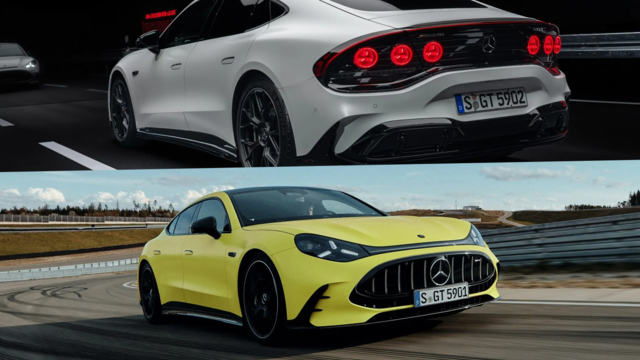
New Electric Mercedes-AMG GT 4-Door Coupe Unveiled: 10 Things You Need to Know
Verdad Gallardo
6 Mercedes Models That Did NOT Age Well (But Are Somehow Still Cool)
Verdad Gallardo
Manual Mercedes? 6 Times Sindelfingen Let Drivers Have All The Fun
Verdad Gallardo
Mercedes SLR McLaren 722 S Is Extremely Rare Example Modified by McLaren
Verdad Gallardo
8 Classic Boxy Mercedes Designs That Have Aged Like Fine Wine
Verdad Gallardo
MBWorld Fanatic!
Joined: Oct 2014
Posts: 4,524
Likes: 1,181
From: WI
17 E43; 21 GLS580
Clearly this whole topic of charging is going to want a FAQ here on the forum if and when folks start to take delivery of their EQS.
The batteries in your EQS are charged only by direct current (DC.) DC fast chargers provide high voltage, high power direct current to your EQS. The EQS can accept up to 204KWh of DC power (up to 480 Volts DC, and up to 300 AMPS) The EQS also has an internal AC to DC converter that allows charging at up to 9.6KW - it converts an alternating current power source to direct current that is used to charge your batteries.
There are four main places most people will be charging their EQS. Note that you can utilize any combination of these four, but most people will use #2 most of the time, plus #1 occasionally and #4 rarely.
1) Commercial DC fast chargers - such as Electrify America - but also many others like Tesla Superchargers, local city-operated chargers, etc. The EQS can charge at up to 204KWh (up to 480 Volts DC, and up to 300 AMPS) at a DC fast charger.
2) Permanently installed level 2 AC-based home or commercial chargers - the EQS can charge at up to 9.6KWh (40 AMPS @240 volts) with one of these.
3) Permanently installed home DC fast charger - these are relatively expensive and unlikely to be common - but they act just like #1 on this list. The charging speed is really limited only by your budget, up to the full 204KWh DC charging capacity of the EQS.
4) Portable level 1 or level 2 AC charging cord - this is a cord that you can plug into an available power outlet anywhere - such as the $250 cord you can buy from Mercedes that charges using 120VAC only, or the $400 Ford cord mentioned above that can charge using either 120VAC or 240VAC. 120V AC portable charging is limited to 1.8KWh (15amps * 120 Volts) which is why the Mercedes charging cord is so slow as to effectively be useless, while the Ford charging cord maxes out at 7.6KW (32amps @240 volts) when plugged into a 240-volt outlet.
There is another discussion going on above about the wiring infrastructure you need in your home to enable #2 above - a home-based level-2 AC charger that supports up to 9.6KW continuous charging (40amps @ 240 Volts). For continuous loads like EV charging, you need to install 240V wiring that is at least 125% more capable than the maximum current draw for charging the EQS. Since the max 240VAC capacity of the EQS internal AC/DC converter is 40 AMPS, you need to install wiring capable of 50 AMPS. For MOST homes, this means a 50AMP circuit breaker coupled with 6-gauge copper wire from your breaker box to your charging location. Since you only need 240AC to support level 2 chargers (you don't need 120VAC, therefore you don't need a neutral wire), you or your electrician will be installing 3 conductors - 2 hot legs and a ground. If you have an unusually long run between your circuit breaker box and your charging location, you might need even thicker wire. If you want to future proof, you should run 4-gauge copper wire and install a level II charger that supports up to 50AMP continuous charging - your next EV (and future versions of the EQS) may support home charging at up to 12KW.
Here is a link to the EQS charging specifications on the Mercedes website -https://www.mbusa.com/en/vehicles/model/eqs/sedan/eqs580v4#specifications
The batteries in your EQS are charged only by direct current (DC.) DC fast chargers provide high voltage, high power direct current to your EQS. The EQS can accept up to 204KWh of DC power (up to 480 Volts DC, and up to 300 AMPS) The EQS also has an internal AC to DC converter that allows charging at up to 9.6KW - it converts an alternating current power source to direct current that is used to charge your batteries.
There are four main places most people will be charging their EQS. Note that you can utilize any combination of these four, but most people will use #2 most of the time, plus #1 occasionally and #4 rarely.
1) Commercial DC fast chargers - such as Electrify America - but also many others like Tesla Superchargers, local city-operated chargers, etc. The EQS can charge at up to 204KWh (up to 480 Volts DC, and up to 300 AMPS) at a DC fast charger.
2) Permanently installed level 2 AC-based home or commercial chargers - the EQS can charge at up to 9.6KWh (40 AMPS @240 volts) with one of these.
3) Permanently installed home DC fast charger - these are relatively expensive and unlikely to be common - but they act just like #1 on this list. The charging speed is really limited only by your budget, up to the full 204KWh DC charging capacity of the EQS.
4) Portable level 1 or level 2 AC charging cord - this is a cord that you can plug into an available power outlet anywhere - such as the $250 cord you can buy from Mercedes that charges using 120VAC only, or the $400 Ford cord mentioned above that can charge using either 120VAC or 240VAC. 120V AC portable charging is limited to 1.8KWh (15amps * 120 Volts) which is why the Mercedes charging cord is so slow as to effectively be useless, while the Ford charging cord maxes out at 7.6KW (32amps @240 volts) when plugged into a 240-volt outlet.
There is another discussion going on above about the wiring infrastructure you need in your home to enable #2 above - a home-based level-2 AC charger that supports up to 9.6KW continuous charging (40amps @ 240 Volts). For continuous loads like EV charging, you need to install 240V wiring that is at least 125% more capable than the maximum current draw for charging the EQS. Since the max 240VAC capacity of the EQS internal AC/DC converter is 40 AMPS, you need to install wiring capable of 50 AMPS. For MOST homes, this means a 50AMP circuit breaker coupled with 6-gauge copper wire from your breaker box to your charging location. Since you only need 240AC to support level 2 chargers (you don't need 120VAC, therefore you don't need a neutral wire), you or your electrician will be installing 3 conductors - 2 hot legs and a ground. If you have an unusually long run between your circuit breaker box and your charging location, you might need even thicker wire. If you want to future proof, you should run 4-gauge copper wire and install a level II charger that supports up to 50AMP continuous charging - your next EV (and future versions of the EQS) may support home charging at up to 12KW.
Here is a link to the EQS charging specifications on the Mercedes website -https://www.mbusa.com/en/vehicles/model/eqs/sedan/eqs580v4#specifications
BTW given the EQS long range the overwhelming charging source will be at home, DC fast charging will only be necessary if your trip is longer than 350 miles round trip! personally till the charging infrastructure in my area improves I have to "sacrifice" and use our GLS 580🤣🤣🤣
Last edited by c4004matic; Dec 14, 2021 at 02:43 PM.
MBWorld Fanatic!
Joined: Dec 2006
Posts: 6,501
Likes: 336
From: Europe
223.168 & 213.012 & 906.633 & 214.005
EQS now going to be offered with a 22 kW AC charger, Europe at least:
https://jesmb.de/10618/
https://jesmb.de/10618/
MBWorld Fanatic!
Joined: Oct 2014
Posts: 4,524
Likes: 1,181
From: WI
17 E43; 21 GLS580
EQS now going to be offered with a 22 kW AC charger, Europe at least:https://jesmb.de/10618/

Super Member

Joined: Jan 2022
Posts: 981
Likes: 555
My installation for the NEMA 6-50 plug recommended by MBUSA in the paperwork my dealer showed me was expensive. The electricians had to do a run from the back of my house, where the high voltage box was ( the breaker box in the garage was only for 120 volt stuff), through the attic, and a wall drop beside my car's parking place. It was $1900. The ChargePoint Home Flex was $699 if purchased through the MB part of their website. I installed it myself in about 10 minutes (very simple). It charges (on the 40 amp circuit through the NEMA 6-50 plug) at 7.7kw, and can charge the car from around 50% to 80% in about 4 hours. This is handled through the Mercedes Me app, and the car turns off charging and sends me a charge complete message from the app when it is at 80%. It is a very simple process. I also have a 100% charge program for trips, but have not used it yet. I have been impressed with how simple the process is, after the intial investment to get the garage ready. I used the 115 volt charger until my garage was ready. It charged the car about 12% overnight, so it gave me enough power for limited driving daily until I got the NEMA plug and the ChargePoint charger installed. Level 3 (fast DC) charging is available publicly, but not optimal, because of ultimately reducing battery life. I will use it only when I am traveling, and cannot reach a destination Level 2 charger for an overnight charge. There are lots of chargers out there, But I will use my EQS primarily as a local car (still have the ICE GLE 53 for trips). Hope this helps folks who are contemplating this understand....It is such a great car, and the paradigm shift from gas stations to level 2 charging is not that hard.


Junior Member
Joined: Mar 2022
Posts: 30
Likes: 5
From: Bluffton SC / AC NJ
EQS 450+
Clearly this whole topic of charging is going to want a FAQ here on the forum if and when folks start to take delivery of their EQS.
The batteries in your EQS are charged only by direct current (DC.) DC fast chargers provide high voltage, high power direct current to your EQS. The EQS can accept up to 204KWh of DC power (up to 480 Volts DC, and up to 300 AMPS) The EQS also has an internal AC to DC converter that allows charging at up to 9.6KW - it converts an alternating current power source to direct current that is used to charge your batteries.
There are four main places most people will be charging their EQS. Note that you can utilize any combination of these four, but most people will use #2 most of the time, plus #1 occasionally and #4 rarely.
1) Commercial DC fast chargers - such as Electrify America - but also many others like Tesla Superchargers, local city-operated chargers, etc. The EQS can charge at up to 204KWh (up to 480 Volts DC, and up to 300 AMPS) at a DC fast charger.
2) Permanently installed level 2 AC-based home or commercial chargers - the EQS can charge at up to 9.6KWh (40 AMPS @240 volts) with one of these.
3) Permanently installed home DC fast charger - these are relatively expensive and unlikely to be common - but they act just like #1 on this list. The charging speed is really limited only by your budget, up to the full 204KWh DC charging capacity of the EQS.
4) Portable level 1 or level 2 AC charging cord - this is a cord that you can plug into an available power outlet anywhere - such as the $250 cord you can buy from Mercedes that charges using 120VAC only, or the $400 Ford cord mentioned above that can charge using either 120VAC or 240VAC. 120V AC portable charging is limited to 1.8KWh (15amps * 120 Volts) which is why the Mercedes charging cord is so slow as to effectively be useless, while the Ford charging cord maxes out at 7.6KW (32amps @240 volts) when plugged into a 240-volt outlet.
There is another discussion going on above about the wiring infrastructure you need in your home to enable #2 above - a home-based level-2 AC charger that supports up to 9.6KW continuous charging (40amps @ 240 Volts). For continuous loads like EV charging, you need to install 240V wiring that is at least 125% more capable than the maximum current draw for charging the EQS. Since the max 240VAC capacity of the EQS internal AC/DC converter is 40 AMPS, you need to install wiring capable of 50 AMPS. For MOST homes, this means a 50AMP circuit breaker coupled with 6-gauge copper wire from your breaker box to your charging location. Since you only need 240AC to support level 2 chargers (you don't need 120VAC, therefore you don't need a neutral wire), you or your electrician will be installing 3 conductors - 2 hot legs and a ground. If you have an unusually long run between your circuit breaker box and your charging location, you might need even thicker wire. If you want to future proof, you should run 4-gauge copper wire and install a level II charger that supports up to 50AMP continuous charging - your next EV (and future versions of the EQS) may support home charging at up to 12KW.
Here is a link to the EQS charging specifications on the Mercedes website -https://www.mbusa.com/en/vehicles/model/eqs/sedan/eqs580v4#specifications
The batteries in your EQS are charged only by direct current (DC.) DC fast chargers provide high voltage, high power direct current to your EQS. The EQS can accept up to 204KWh of DC power (up to 480 Volts DC, and up to 300 AMPS) The EQS also has an internal AC to DC converter that allows charging at up to 9.6KW - it converts an alternating current power source to direct current that is used to charge your batteries.
There are four main places most people will be charging their EQS. Note that you can utilize any combination of these four, but most people will use #2 most of the time, plus #1 occasionally and #4 rarely.
1) Commercial DC fast chargers - such as Electrify America - but also many others like Tesla Superchargers, local city-operated chargers, etc. The EQS can charge at up to 204KWh (up to 480 Volts DC, and up to 300 AMPS) at a DC fast charger.
2) Permanently installed level 2 AC-based home or commercial chargers - the EQS can charge at up to 9.6KWh (40 AMPS @240 volts) with one of these.
3) Permanently installed home DC fast charger - these are relatively expensive and unlikely to be common - but they act just like #1 on this list. The charging speed is really limited only by your budget, up to the full 204KWh DC charging capacity of the EQS.
4) Portable level 1 or level 2 AC charging cord - this is a cord that you can plug into an available power outlet anywhere - such as the $250 cord you can buy from Mercedes that charges using 120VAC only, or the $400 Ford cord mentioned above that can charge using either 120VAC or 240VAC. 120V AC portable charging is limited to 1.8KWh (15amps * 120 Volts) which is why the Mercedes charging cord is so slow as to effectively be useless, while the Ford charging cord maxes out at 7.6KW (32amps @240 volts) when plugged into a 240-volt outlet.
There is another discussion going on above about the wiring infrastructure you need in your home to enable #2 above - a home-based level-2 AC charger that supports up to 9.6KW continuous charging (40amps @ 240 Volts). For continuous loads like EV charging, you need to install 240V wiring that is at least 125% more capable than the maximum current draw for charging the EQS. Since the max 240VAC capacity of the EQS internal AC/DC converter is 40 AMPS, you need to install wiring capable of 50 AMPS. For MOST homes, this means a 50AMP circuit breaker coupled with 6-gauge copper wire from your breaker box to your charging location. Since you only need 240AC to support level 2 chargers (you don't need 120VAC, therefore you don't need a neutral wire), you or your electrician will be installing 3 conductors - 2 hot legs and a ground. If you have an unusually long run between your circuit breaker box and your charging location, you might need even thicker wire. If you want to future proof, you should run 4-gauge copper wire and install a level II charger that supports up to 50AMP continuous charging - your next EV (and future versions of the EQS) may support home charging at up to 12KW.
Here is a link to the EQS charging specifications on the Mercedes website -https://www.mbusa.com/en/vehicles/model/eqs/sedan/eqs580v4#specifications
What connector am I supposed to get - J1772 or CCS - to plug into the car? Where is the socket on the 450+? Driver side front or passenger rear?
Last edited by Wolfaltman; Mar 19, 2022 at 11:56 PM.

Member
Joined: Jan 2022
Posts: 115
Likes: 52
2022 EQS 450+
My EQS 450+ is on the way and this post of yours is exactly the type of information I have been looking for. Our dealer had no answers to these questions. THANKS!
What connector am I supposed to get - J1772 or CCS - to plug into the car? Where is the socket on the 450+? Driver side front or passenger rear?
What connector am I supposed to get - J1772 or CCS - to plug into the car? Where is the socket on the 450+? Driver side front or passenger rear?

Junior Member
Joined: Feb 2019
Posts: 21
Likes: 15
2022 EQS 450+
I got a JuceBox from Costco - it has worked great so far.
https://www.costco.com/juicebox-40-a...100574926.html
https://www.costco.com/juicebox-40-a...100574926.html
MBWorld Fanatic!
Joined: Oct 2014
Posts: 4,524
Likes: 1,181
From: WI
17 E43; 21 GLS580
I got a JuceBox from Costco - it has worked great so far.
https://www.costco.com/juicebox-40-a...100574926.html
https://www.costco.com/juicebox-40-a...100574926.html
MBWorld Fanatic!
Joined: Oct 2014
Posts: 4,524
Likes: 1,181
From: WI
17 E43; 21 GLS580
I got a JuceBox from Costco - it has worked great so far.
https://www.costco.com/juicebox-40-a...100574926.html
https://www.costco.com/juicebox-40-a...100574926.html
MBWorld Fanatic!
Joined: Oct 2014
Posts: 4,524
Likes: 1,181
From: WI
17 E43; 21 GLS580
A 14 50 install is more expensive but more heavy duty. Its also more common in camping sites and so on. IMO 1450 is a better one plug solution particularly if you have a mobile charger.
Itll save you carrying another plug adapter
Last edited by c4004matic; Apr 18, 2022 at 09:37 PM.

Newbie
Joined: Apr 2022
Posts: 8
Likes: 1
EQS 580
Super Member
Joined: Jan 2022
Posts: 981
Likes: 555
If you are planning to use a wall mount charger it really doesn't matter. ChargePoint actually recommends the 6-50, because installation is a little less expensive, but the 14-50 is a little heavier-duty with an extra ground wire. I'm using a 6-50, on a 50 amp breaker, and getting the maximum 9.6kW charge available for the EQS. But I totally agree with c4004matic, if you buy a mobile charging unit, the 14-50 is more readily available out in the wild. Congrats, and hope you enjoy your 580!


