





The S-Class Ghost: A Post-Mortem on Mercedes' Most Important Lesson

Thread Starter
Senior Member


Joined: Oct 2023
Posts: 336
Likes: 298
24 EQS 580 4matic sedan Pinnacle trim w/Exec. rear seating pkg.
The S-Class Ghost: A Post-Mortem on Mercedes' Most Important Lesson
The Beautiful, Expensive Lesson of the Mercedes-Benz EQS
How does a vehicle that shattered world records on its debut also become one of the most polarizing cars in a generation? The story of the Mercedes-Benz EQS isn't one of simple failure; it's a fascinating and essential lesson in the conflict between an engineer's blueprint and a buyer's heart.
The ethos of the EQS was born from a single, almost fanatical obsession: aerodynamic efficiency. The mission from the engineers in Stuttgart was singular: cheat the wind. Every decision, from the sloping roofline to the flush door handles, was made in service to this goal. The result was a technical masterpiece with a coefficient of drag (Cd) of just 0.20—a staggering figure that, at its launch, made it the slipperiest production car ever built. This wasn't just for bragging rights; it was a direct and successful path to maximizing range, where the EQS still stands as one of the best performers in the EV space.
But this triumph of engineering came with an unavoidable, aesthetic cost. To achieve that record-breaking aero, the traditional three-box design—a distinct hood, cabin, and trunk that has defined sedans for a century—had to be abandoned for a "one-bow," cab-forward architecture. The car's shape is a pure, logical consequence of its function. And that is where the disconnect began.
The problem wasn't just the shape itself; it was the ghost of the car it was positioned to be: the electric equivalent of the S-Class. The marketing, the pricing, and the technology suite all drew a direct line to the brand's legendary flagship. This created a burden of expectation that the EQS, by its very design and nature, could never meet, leading to three core conflicts for its intended buyer.
First was the Cachet Deficit. For decades, the S-Class has been the undisputed symbol of arrival. Its value is intrinsically tied to its universally recognized status. The EQS, however, doesn't send the same signal. Its unconventional design tells the world "I'm an early adopter," a message of technological pioneering, not a declaration of being at the top of the food chain. For a buyer motivated by traditional expressions of success, this was a critical misstep.
Second was the Value Proposition Mismatch. The traditional S-Class buyer sees value in its heritage, bank-vault solidity, and timeless design. The EQS proposed a new value proposition—aerodynamic efficiency, a futuristic Hyperscreen—at the same price point. The disconnect occurred because Mercedes was selling the world's best hammer to a customer who needed a screwdriver. They offered a brilliant solution to a problem their core S-Class buyer didn't have.
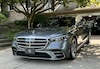
Finally, there was the Experiential Dissonance. This is the day-to-day gap between promise and reality. The expectation, fueled by the marketing, was for a "silent S-Class." I experienced this firsthand with a new S-Class as a loaner. Despite the similar price points, I discovered features—subtle elements of craftsmanship and that certain 'bank vault' feel—in the S-Class that were simply absent from any EQS trim. The character was different. It was an excellent luxury EV, but it was not an electric S-Class, and when you're paying S-Class money, "different" can feel like a compromise.
So where did Mercedes go astray while other EV makers succeeded? The truth is, that's a fallacy. Mercedes' competitors didn't succeed at the same game; they succeeded because they were playing completely different ones.
The market, especially the traditional S-Class buyer, voted with their wallets. It should be no surprise, then, that industry reports and spy shots all point to the same conclusion: the next-generation electric flagship from Mercedes will abandon the one-bow shape and return to a classic three-box design.
Like the Concorde SST, the EQS is a monument to what is technically possible, a showcase of engineering purity that perhaps flew too close to the sun. It is the car Mercedes had to build to learn what their customers truly value in a flagship. They proved they could bend air to their will, but in doing so, they learned a timeless lesson: you can bend metal and you can bend air, but you cannot bend the deep-seated expectations of a customer who knows exactly what a Mercedes-Benz flagship should be.
Now, after all this analysis of market forces and psychology, I have to add a personal, and perhaps paradoxical, confession. You might ask how I can lay out this case of market disconnect while personally experiencing not one, but two of these vehicles—my first being a '23 450 and my current a '24 580.
The simple truth is, I find the EQS to be a phenomenal car. I have been continuously impressed by its serene ride, its class-leading efficiency, and its forward-thinking technology. It is an incredible machine.
Of course, I must be transparent: my perspective is undoubtedly colored by the fact that I secured what can only be described as "unicorn" deals on both. Driving a vehicle with a $140,000 MSRP for less than $200 a month would make anyone fond of it.
But my good fortune in its financing doesn't invalidate the market realities I've discussed. In fact, it highlights the final, crucial point of this entire saga: for the right person at the right price, the EQS is an unbeatable proposition. The disconnect happened because Mercedes struggled to find enough of those right people at the price they were asking.
How does a vehicle that shattered world records on its debut also become one of the most polarizing cars in a generation? The story of the Mercedes-Benz EQS isn't one of simple failure; it's a fascinating and essential lesson in the conflict between an engineer's blueprint and a buyer's heart.
The ethos of the EQS was born from a single, almost fanatical obsession: aerodynamic efficiency. The mission from the engineers in Stuttgart was singular: cheat the wind. Every decision, from the sloping roofline to the flush door handles, was made in service to this goal. The result was a technical masterpiece with a coefficient of drag (Cd) of just 0.20—a staggering figure that, at its launch, made it the slipperiest production car ever built. This wasn't just for bragging rights; it was a direct and successful path to maximizing range, where the EQS still stands as one of the best performers in the EV space.
But this triumph of engineering came with an unavoidable, aesthetic cost. To achieve that record-breaking aero, the traditional three-box design—a distinct hood, cabin, and trunk that has defined sedans for a century—had to be abandoned for a "one-bow," cab-forward architecture. The car's shape is a pure, logical consequence of its function. And that is where the disconnect began.
Anatomy of a Disconnect: The S-Class Ghost
The problem wasn't just the shape itself; it was the ghost of the car it was positioned to be: the electric equivalent of the S-Class. The marketing, the pricing, and the technology suite all drew a direct line to the brand's legendary flagship. This created a burden of expectation that the EQS, by its very design and nature, could never meet, leading to three core conflicts for its intended buyer.
First was the Cachet Deficit. For decades, the S-Class has been the undisputed symbol of arrival. Its value is intrinsically tied to its universally recognized status. The EQS, however, doesn't send the same signal. Its unconventional design tells the world "I'm an early adopter," a message of technological pioneering, not a declaration of being at the top of the food chain. For a buyer motivated by traditional expressions of success, this was a critical misstep.
Second was the Value Proposition Mismatch. The traditional S-Class buyer sees value in its heritage, bank-vault solidity, and timeless design. The EQS proposed a new value proposition—aerodynamic efficiency, a futuristic Hyperscreen—at the same price point. The disconnect occurred because Mercedes was selling the world's best hammer to a customer who needed a screwdriver. They offered a brilliant solution to a problem their core S-Class buyer didn't have.
Finally, there was the Experiential Dissonance. This is the day-to-day gap between promise and reality. The expectation, fueled by the marketing, was for a "silent S-Class." I experienced this firsthand with a new S-Class as a loaner. Despite the similar price points, I discovered features—subtle elements of craftsmanship and that certain 'bank vault' feel—in the S-Class that were simply absent from any EQS trim. The character was different. It was an excellent luxury EV, but it was not an electric S-Class, and when you're paying S-Class money, "different" can feel like a compromise.
A Different Game: The Competitive Context
So where did Mercedes go astray while other EV makers succeeded? The truth is, that's a fallacy. Mercedes' competitors didn't succeed at the same game; they succeeded because they were playing completely different ones.
- Tesla's Model S never tried to be a traditional luxury car. It created a new category entirely, built on the strength of its charging network, its minimalist tech, and the power of being first. It had no legacy to live up to; it was the legacy.
- The Porsche Taycan succeeded by being a Porsche first and an EV second. The focus was relentlessly on performance and brand DNA. Porsche engineers willingly sacrificed some range to ensure it cornered and felt like a true Porsche, which is precisely what their loyal customers demanded.
- The Lucid Air, the most direct competitor in terms of efficiency, was a clean slate. As a new company, they had no "Burden of Expectation." They were free to create their own identity without the ghost of a beloved icon looming over them.
The Business Verdict
The market, especially the traditional S-Class buyer, voted with their wallets. It should be no surprise, then, that industry reports and spy shots all point to the same conclusion: the next-generation electric flagship from Mercedes will abandon the one-bow shape and return to a classic three-box design.
So, was the EQS a failure? I argue no. It was a beautiful, expensive, and absolutely necessary lesson.
Like the Concorde SST, the EQS is a monument to what is technically possible, a showcase of engineering purity that perhaps flew too close to the sun. It is the car Mercedes had to build to learn what their customers truly value in a flagship. They proved they could bend air to their will, but in doing so, they learned a timeless lesson: you can bend metal and you can bend air, but you cannot bend the deep-seated expectations of a customer who knows exactly what a Mercedes-Benz flagship should be.
A Final Confession from the Driver's Seat
Now, after all this analysis of market forces and psychology, I have to add a personal, and perhaps paradoxical, confession. You might ask how I can lay out this case of market disconnect while personally experiencing not one, but two of these vehicles—my first being a '23 450 and my current a '24 580.
The simple truth is, I find the EQS to be a phenomenal car. I have been continuously impressed by its serene ride, its class-leading efficiency, and its forward-thinking technology. It is an incredible machine.
Of course, I must be transparent: my perspective is undoubtedly colored by the fact that I secured what can only be described as "unicorn" deals on both. Driving a vehicle with a $140,000 MSRP for less than $200 a month would make anyone fond of it.
But my good fortune in its financing doesn't invalidate the market realities I've discussed. In fact, it highlights the final, crucial point of this entire saga: for the right person at the right price, the EQS is an unbeatable proposition. The disconnect happened because Mercedes struggled to find enough of those right people at the price they were asking.

Junior Member
Joined: Jul 2024
Posts: 37
Likes: 6
2022 EQS 580
Great analysis. I love my 580 eqs. At the end of the day a Mercedes Benz is still a Mercedes Benz no matter what. I've always have compliments about it and its a head turner and topic of conversation all the time.

MBWorld Fanatic!


Joined: Feb 2014
Posts: 1,938
Likes: 396
From: Iowa
2025 EQS580
The Beautiful, Expensive Lesson of the Mercedes-Benz EQS
How does a vehicle that shattered world records on its debut also become one of the most polarizing cars in a generation? The story of the Mercedes-Benz EQS isn't one of simple failure; it's a fascinating and essential lesson in the conflict between an engineer's blueprint and a buyer's heart.
The ethos of the EQS was born from a single, almost fanatical obsession: aerodynamic efficiency. The mission from the engineers in Stuttgart was singular: cheat the wind. Every decision, from the sloping roofline to the flush door handles, was made in service to this goal. The result was a technical masterpiece with a coefficient of drag (Cd) of just 0.20—a staggering figure that, at its launch, made it the slipperiest production car ever built. This wasn't just for bragging rights; it was a direct and successful path to maximizing range, where the EQS still stands as one of the best performers in the EV space.
But this triumph of engineering came with an unavoidable, aesthetic cost. To achieve that record-breaking aero, the traditional three-box design—a distinct hood, cabin, and trunk that has defined sedans for a century—had to be abandoned for a "one-bow," cab-forward architecture. The car's shape is a pure, logical consequence of its function. And that is where the disconnect began.
The problem wasn't just the shape itself; it was the ghost of the car it was positioned to be: the electric equivalent of the S-Class. The marketing, the pricing, and the technology suite all drew a direct line to the brand's legendary flagship. This created a burden of expectation that the EQS, by its very design and nature, could never meet, leading to three core conflicts for its intended buyer.
First was the Cachet Deficit. For decades, the S-Class has been the undisputed symbol of arrival. Its value is intrinsically tied to its universally recognized status. The EQS, however, doesn't send the same signal. Its unconventional design tells the world "I'm an early adopter," a message of technological pioneering, not a declaration of being at the top of the food chain. For a buyer motivated by traditional expressions of success, this was a critical misstep.
Second was the Value Proposition Mismatch. The traditional S-Class buyer sees value in its heritage, bank-vault solidity, and timeless design. The EQS proposed a new value proposition—aerodynamic efficiency, a futuristic Hyperscreen—at the same price point. The disconnect occurred because Mercedes was selling the world's best hammer to a customer who needed a screwdriver. They offered a brilliant solution to a problem their core S-Class buyer didn't have.
Finally, there was the Experiential Dissonance. This is the day-to-day gap between promise and reality. The expectation, fueled by the marketing, was for a "silent S-Class." I experienced this firsthand with a new S-Class as a loaner. Despite the similar price points, I discovered features—subtle elements of craftsmanship and that certain 'bank vault' feel—in the S-Class that were simply absent from any EQS trim. The character was different. It was an excellent luxury EV, but it was not an electric S-Class, and when you're paying S-Class money, "different" can feel like a compromise.
So where did Mercedes go astray while other EV makers succeeded? The truth is, that's a fallacy. Mercedes' competitors didn't succeed at the same game; they succeeded because they were playing completely different ones.
The market, especially the traditional S-Class buyer, voted with their wallets. It should be no surprise, then, that industry reports and spy shots all point to the same conclusion: the next-generation electric flagship from Mercedes will abandon the one-bow shape and return to a classic three-box design.
Like the Concorde SST, the EQS is a monument to what is technically possible, a showcase of engineering purity that perhaps flew too close to the sun. It is the car Mercedes had to build to learn what their customers truly value in a flagship. They proved they could bend air to their will, but in doing so, they learned a timeless lesson: you can bend metal and you can bend air, but you cannot bend the deep-seated expectations of a customer who knows exactly what a Mercedes-Benz flagship should be.
Now, after all this analysis of market forces and psychology, I have to add a personal, and perhaps paradoxical, confession. You might ask how I can lay out this case of market disconnect while personally experiencing not one, but two of these vehicles—my first being a '23 450 and my current a '24 580.
The simple truth is, I find the EQS to be a phenomenal car. I have been continuously impressed by its serene ride, its class-leading efficiency, and its forward-thinking technology. It is an incredible machine.
Of course, I must be transparent: my perspective is undoubtedly colored by the fact that I secured what can only be described as "unicorn" deals on both. Driving a vehicle with a $140,000 MSRP for less than $200 a month would make anyone fond of it.
But my good fortune in its financing doesn't invalidate the market realities I've discussed. In fact, it highlights the final, crucial point of this entire saga: for the right person at the right price, the EQS is an unbeatable proposition. The disconnect happened because Mercedes struggled to find enough of those right people at the price they were asking.
How does a vehicle that shattered world records on its debut also become one of the most polarizing cars in a generation? The story of the Mercedes-Benz EQS isn't one of simple failure; it's a fascinating and essential lesson in the conflict between an engineer's blueprint and a buyer's heart.
The ethos of the EQS was born from a single, almost fanatical obsession: aerodynamic efficiency. The mission from the engineers in Stuttgart was singular: cheat the wind. Every decision, from the sloping roofline to the flush door handles, was made in service to this goal. The result was a technical masterpiece with a coefficient of drag (Cd) of just 0.20—a staggering figure that, at its launch, made it the slipperiest production car ever built. This wasn't just for bragging rights; it was a direct and successful path to maximizing range, where the EQS still stands as one of the best performers in the EV space.
But this triumph of engineering came with an unavoidable, aesthetic cost. To achieve that record-breaking aero, the traditional three-box design—a distinct hood, cabin, and trunk that has defined sedans for a century—had to be abandoned for a "one-bow," cab-forward architecture. The car's shape is a pure, logical consequence of its function. And that is where the disconnect began.
Anatomy of a Disconnect: The S-Class Ghost
The problem wasn't just the shape itself; it was the ghost of the car it was positioned to be: the electric equivalent of the S-Class. The marketing, the pricing, and the technology suite all drew a direct line to the brand's legendary flagship. This created a burden of expectation that the EQS, by its very design and nature, could never meet, leading to three core conflicts for its intended buyer.
First was the Cachet Deficit. For decades, the S-Class has been the undisputed symbol of arrival. Its value is intrinsically tied to its universally recognized status. The EQS, however, doesn't send the same signal. Its unconventional design tells the world "I'm an early adopter," a message of technological pioneering, not a declaration of being at the top of the food chain. For a buyer motivated by traditional expressions of success, this was a critical misstep.
Second was the Value Proposition Mismatch. The traditional S-Class buyer sees value in its heritage, bank-vault solidity, and timeless design. The EQS proposed a new value proposition—aerodynamic efficiency, a futuristic Hyperscreen—at the same price point. The disconnect occurred because Mercedes was selling the world's best hammer to a customer who needed a screwdriver. They offered a brilliant solution to a problem their core S-Class buyer didn't have.
Finally, there was the Experiential Dissonance. This is the day-to-day gap between promise and reality. The expectation, fueled by the marketing, was for a "silent S-Class." I experienced this firsthand with a new S-Class as a loaner. Despite the similar price points, I discovered features—subtle elements of craftsmanship and that certain 'bank vault' feel—in the S-Class that were simply absent from any EQS trim. The character was different. It was an excellent luxury EV, but it was not an electric S-Class, and when you're paying S-Class money, "different" can feel like a compromise.
A Different Game: The Competitive Context
So where did Mercedes go astray while other EV makers succeeded? The truth is, that's a fallacy. Mercedes' competitors didn't succeed at the same game; they succeeded because they were playing completely different ones.
- Tesla's Model S never tried to be a traditional luxury car. It created a new category entirely, built on the strength of its charging network, its minimalist tech, and the power of being first. It had no legacy to live up to; it was the legacy.
- The Porsche Taycan succeeded by being a Porsche first and an EV second. The focus was relentlessly on performance and brand DNA. Porsche engineers willingly sacrificed some range to ensure it cornered and felt like a true Porsche, which is precisely what their loyal customers demanded.
- The Lucid Air, the most direct competitor in terms of efficiency, was a clean slate. As a new company, they had no "Burden of Expectation." They were free to create their own identity without the ghost of a beloved icon looming over them.
The Business Verdict
The market, especially the traditional S-Class buyer, voted with their wallets. It should be no surprise, then, that industry reports and spy shots all point to the same conclusion: the next-generation electric flagship from Mercedes will abandon the one-bow shape and return to a classic three-box design.
So, was the EQS a failure? I argue no. It was a beautiful, expensive, and absolutely necessary lesson.
Like the Concorde SST, the EQS is a monument to what is technically possible, a showcase of engineering purity that perhaps flew too close to the sun. It is the car Mercedes had to build to learn what their customers truly value in a flagship. They proved they could bend air to their will, but in doing so, they learned a timeless lesson: you can bend metal and you can bend air, but you cannot bend the deep-seated expectations of a customer who knows exactly what a Mercedes-Benz flagship should be.
A Final Confession from the Driver's Seat
Now, after all this analysis of market forces and psychology, I have to add a personal, and perhaps paradoxical, confession. You might ask how I can lay out this case of market disconnect while personally experiencing not one, but two of these vehicles—my first being a '23 450 and my current a '24 580.
The simple truth is, I find the EQS to be a phenomenal car. I have been continuously impressed by its serene ride, its class-leading efficiency, and its forward-thinking technology. It is an incredible machine.
Of course, I must be transparent: my perspective is undoubtedly colored by the fact that I secured what can only be described as "unicorn" deals on both. Driving a vehicle with a $140,000 MSRP for less than $200 a month would make anyone fond of it.
But my good fortune in its financing doesn't invalidate the market realities I've discussed. In fact, it highlights the final, crucial point of this entire saga: for the right person at the right price, the EQS is an unbeatable proposition. The disconnect happened because Mercedes struggled to find enough of those right people at the price they were asking.
I also LOVE my 2025 EQS 580. It’s the best car I’ve ever owned. In second place was my 2022 EQS 580. I continue to receive lots of compliments on this amazing machine.

Super Member


Joined: Apr 2011
Posts: 678
Likes: 258
23' EQS AMG
Great write-up. MB should read it. I was never fond of the MB design language until the EQS came out. MB was the "dark side" for me. I was ready to get an i7 but wanted a different flavor. The 7er started focusing more on the rear passenger amenities more than the driver. The EQS was focused on the driver more than the rear. And the AMG had the power I wanted. The price was right, and I joined the dark side. 
I'm not really brand loyal. I buy what I like at the time, and when I want sometime else of value, I get it when the criteria is met. For now, the EQS is a great luxury car . . . regardless of what names people call it or compare it to. Thank you MB engineers. . . . now quite dicking around with a tri motor axial flux and put 4 of them on upcoming AMG EV. If BMW new klasse beats MB to market on the 4 motors, good bye MB.
I'm not really brand loyal. I buy what I like at the time, and when I want sometime else of value, I get it when the criteria is met. For now, the EQS is a great luxury car . . . regardless of what names people call it or compare it to. Thank you MB engineers. . . . now quite dicking around with a tri motor axial flux and put 4 of them on upcoming AMG EV. If BMW new klasse beats MB to market on the 4 motors, good bye MB.
Thread Starter
Senior Member
Joined: Oct 2023
Posts: 336
Likes: 298
24 EQS 580 4matic sedan Pinnacle trim w/Exec. rear seating pkg.
Great write-up. MB should read it. I was never fond of the MB design language until the EQS came out. MB was the "dark side" for me. I was ready to get an i7 but wanted a different flavor. The 7er started focusing more on the rear passenger amenities more than the driver. The EQS was focused on the driver more than the rear. And the AMG had the power I wanted. The price was right, and I joined the dark side.
I'm not really brand loyal. I buy what I like at the time, and when I want sometime else of value, I get it when the criteria is met. For now, the EQS is a great luxury car . . . regardless of what names people call it or compare it to. Thank you MB engineers. . . . now quite dicking around with a tri motor axial flux and put 4 of them on upcoming AMG EV. If BMW new klasse beats MB to market on the 4 motors, good bye MB.
I'm not really brand loyal. I buy what I like at the time, and when I want sometime else of value, I get it when the criteria is met. For now, the EQS is a great luxury car . . . regardless of what names people call it or compare it to. Thank you MB engineers. . . . now quite dicking around with a tri motor axial flux and put 4 of them on upcoming AMG EV. If BMW new klasse beats MB to market on the 4 motors, good bye MB.
That very mindset is the key to unpacking the whole tri-motor vs. quad-motor debate you brought up, and you are right to focus on a Quad-Motor setup as a benchmark. From a pure software and control perspective, it is the undisputed pinnacle of what is possible with torque vectoring. At its heart, that’s just the ability to precisely control power to each wheel to make a car turn with unnatural agility. A quad-motor setup, one motor at each wheel, is how a vehicle like the Rivian R1T can perform its famous "tank turn" party trick.
However, the engineering battle gets far more interesting when you factor in the type of motor being used, because not all motors are created equal. This is where the simple counting of motors becomes misleading.
Most EVs today, including those from competitors, use standard radial-flux motors. In a radial motor, the electromagnetic forces act on the radius of a cylindrical rotor—picture a hamster running inside a wheel. It's a proven and robust design.
AMG, however, is betting the house on next-generation axial-flux motors, a technology they secured by acquiring the UK-based specialist company YASA. Here, the forces act along the motor's axis—the most effective visualization is to picture a pancake instead of a soup can. The "pancake" design has a fundamental advantage: a massive leap in power density. To put it simply, it's like getting the power of a traditional V8 engine from a package the size of a large pizza and only a few inches thick.
So, that brings us to the strategic bet the engineers at AMG are making. They aren't trying to beat the brute-force quad-motor setup at its own game. They believe that a Tri-Motor system, built with three of their exceptional, power-dense axial-flux motors (like those used in the Tesla Model S Plaid), can deliver a more dynamic, more refined, and ultimately higher-performance result than a system using four heavier, bulkier radial-flux motors.
It’s a fascinating engineering trade-off that pits raw numbers against superior technology; brute force versus advanced finesse.
It’ll be interesting to see which philosophy proves correct in the real world.

MBWorld God!
Joined: Dec 2019
Posts: 32,390
Likes: 6,330
The Beautiful, Expensive Lesson of the Mercedes-Benz EQS
How does a vehicle that shattered world records on its debut also become one of the most polarizing cars in a generation? The story of the Mercedes-Benz EQS isn't one of simple failure; it's a fascinating and essential lesson in the conflict between an engineer's blueprint and a buyer's heart.
The ethos of the EQS was born from a single, almost fanatical obsession: aerodynamic efficiency. The mission from the engineers in Stuttgart was singular: cheat the wind. Every decision, from the sloping roofline to the flush door handles, was made in service to this goal. The result was a technical masterpiece with a coefficient of drag (Cd) of just 0.20—a staggering figure that, at its launch, made it the slipperiest production car ever built. This wasn't just for bragging rights; it was a direct and successful path to maximizing range, where the EQS still stands as one of the best performers in the EV space.
But this triumph of engineering came with an unavoidable, aesthetic cost. To achieve that record-breaking aero, the traditional three-box design—a distinct hood, cabin, and trunk that has defined sedans for a century—had to be abandoned for a "one-bow," cab-forward architecture. The car's shape is a pure, logical consequence of its function. And that is where the disconnect began.
The problem wasn't just the shape itself; it was the ghost of the car it was positioned to be: the electric equivalent of the S-Class. The marketing, the pricing, and the technology suite all drew a direct line to the brand's legendary flagship. This created a burden of expectation that the EQS, by its very design and nature, could never meet, leading to three core conflicts for its intended buyer.
First was the Cachet Deficit. For decades, the S-Class has been the undisputed symbol of arrival. Its value is intrinsically tied to its universally recognized status. The EQS, however, doesn't send the same signal. Its unconventional design tells the world "I'm an early adopter," a message of technological pioneering, not a declaration of being at the top of the food chain. For a buyer motivated by traditional expressions of success, this was a critical misstep.
Second was the Value Proposition Mismatch. The traditional S-Class buyer sees value in its heritage, bank-vault solidity, and timeless design. The EQS proposed a new value proposition—aerodynamic efficiency, a futuristic Hyperscreen—at the same price point. The disconnect occurred because Mercedes was selling the world's best hammer to a customer who needed a screwdriver. They offered a brilliant solution to a problem their core S-Class buyer didn't have.
Finally, there was the Experiential Dissonance. This is the day-to-day gap between promise and reality. The expectation, fueled by the marketing, was for a "silent S-Class." I experienced this firsthand with a new S-Class as a loaner. Despite the similar price points, I discovered features—subtle elements of craftsmanship and that certain 'bank vault' feel—in the S-Class that were simply absent from any EQS trim. The character was different. It was an excellent luxury EV, but it was not an electric S-Class, and when you're paying S-Class money, "different" can feel like a compromise.
So where did Mercedes go astray while other EV makers succeeded? The truth is, that's a fallacy. Mercedes' competitors didn't succeed at the same game; they succeeded because they were playing completely different ones.
The market, especially the traditional S-Class buyer, voted with their wallets. It should be no surprise, then, that industry reports and spy shots all point to the same conclusion: the next-generation electric flagship from Mercedes will abandon the one-bow shape and return to a classic three-box design.
Like the Concorde SST, the EQS is a monument to what is technically possible, a showcase of engineering purity that perhaps flew too close to the sun. It is the car Mercedes had to build to learn what their customers truly value in a flagship. They proved they could bend air to their will, but in doing so, they learned a timeless lesson: you can bend metal and you can bend air, but you cannot bend the deep-seated expectations of a customer who knows exactly what a Mercedes-Benz flagship should be.
Now, after all this analysis of market forces and psychology, I have to add a personal, and perhaps paradoxical, confession. You might ask how I can lay out this case of market disconnect while personally experiencing not one, but two of these vehicles—my first being a '23 450 and my current a '24 580.
The simple truth is, I find the EQS to be a phenomenal car. I have been continuously impressed by its serene ride, its class-leading efficiency, and its forward-thinking technology. It is an incredible machine.
Of course, I must be transparent: my perspective is undoubtedly colored by the fact that I secured what can only be described as "unicorn" deals on both. Driving a vehicle with a $140,000 MSRP for less than $200 a month would make anyone fond of it.
But my good fortune in its financing doesn't invalidate the market realities I've discussed. In fact, it highlights the final, crucial point of this entire saga: for the right person at the right price, the EQS is an unbeatable proposition. The disconnect happened because Mercedes struggled to find enough of those right people at the price they were asking.
How does a vehicle that shattered world records on its debut also become one of the most polarizing cars in a generation? The story of the Mercedes-Benz EQS isn't one of simple failure; it's a fascinating and essential lesson in the conflict between an engineer's blueprint and a buyer's heart.
The ethos of the EQS was born from a single, almost fanatical obsession: aerodynamic efficiency. The mission from the engineers in Stuttgart was singular: cheat the wind. Every decision, from the sloping roofline to the flush door handles, was made in service to this goal. The result was a technical masterpiece with a coefficient of drag (Cd) of just 0.20—a staggering figure that, at its launch, made it the slipperiest production car ever built. This wasn't just for bragging rights; it was a direct and successful path to maximizing range, where the EQS still stands as one of the best performers in the EV space.
But this triumph of engineering came with an unavoidable, aesthetic cost. To achieve that record-breaking aero, the traditional three-box design—a distinct hood, cabin, and trunk that has defined sedans for a century—had to be abandoned for a "one-bow," cab-forward architecture. The car's shape is a pure, logical consequence of its function. And that is where the disconnect began.
Anatomy of a Disconnect: The S-Class Ghost
The problem wasn't just the shape itself; it was the ghost of the car it was positioned to be: the electric equivalent of the S-Class. The marketing, the pricing, and the technology suite all drew a direct line to the brand's legendary flagship. This created a burden of expectation that the EQS, by its very design and nature, could never meet, leading to three core conflicts for its intended buyer.
First was the Cachet Deficit. For decades, the S-Class has been the undisputed symbol of arrival. Its value is intrinsically tied to its universally recognized status. The EQS, however, doesn't send the same signal. Its unconventional design tells the world "I'm an early adopter," a message of technological pioneering, not a declaration of being at the top of the food chain. For a buyer motivated by traditional expressions of success, this was a critical misstep.
Second was the Value Proposition Mismatch. The traditional S-Class buyer sees value in its heritage, bank-vault solidity, and timeless design. The EQS proposed a new value proposition—aerodynamic efficiency, a futuristic Hyperscreen—at the same price point. The disconnect occurred because Mercedes was selling the world's best hammer to a customer who needed a screwdriver. They offered a brilliant solution to a problem their core S-Class buyer didn't have.
Finally, there was the Experiential Dissonance. This is the day-to-day gap between promise and reality. The expectation, fueled by the marketing, was for a "silent S-Class." I experienced this firsthand with a new S-Class as a loaner. Despite the similar price points, I discovered features—subtle elements of craftsmanship and that certain 'bank vault' feel—in the S-Class that were simply absent from any EQS trim. The character was different. It was an excellent luxury EV, but it was not an electric S-Class, and when you're paying S-Class money, "different" can feel like a compromise.
A Different Game: The Competitive Context
So where did Mercedes go astray while other EV makers succeeded? The truth is, that's a fallacy. Mercedes' competitors didn't succeed at the same game; they succeeded because they were playing completely different ones.
- Tesla's Model S never tried to be a traditional luxury car. It created a new category entirely, built on the strength of its charging network, its minimalist tech, and the power of being first. It had no legacy to live up to; it was the legacy.
- The Porsche Taycan succeeded by being a Porsche first and an EV second. The focus was relentlessly on performance and brand DNA. Porsche engineers willingly sacrificed some range to ensure it cornered and felt like a true Porsche, which is precisely what their loyal customers demanded.
- The Lucid Air, the most direct competitor in terms of efficiency, was a clean slate. As a new company, they had no "Burden of Expectation." They were free to create their own identity without the ghost of a beloved icon looming over them.
The Business Verdict
The market, especially the traditional S-Class buyer, voted with their wallets. It should be no surprise, then, that industry reports and spy shots all point to the same conclusion: the next-generation electric flagship from Mercedes will abandon the one-bow shape and return to a classic three-box design.
So, was the EQS a failure? I argue no. It was a beautiful, expensive, and absolutely necessary lesson.
Like the Concorde SST, the EQS is a monument to what is technically possible, a showcase of engineering purity that perhaps flew too close to the sun. It is the car Mercedes had to build to learn what their customers truly value in a flagship. They proved they could bend air to their will, but in doing so, they learned a timeless lesson: you can bend metal and you can bend air, but you cannot bend the deep-seated expectations of a customer who knows exactly what a Mercedes-Benz flagship should be.
A Final Confession from the Driver's Seat
Now, after all this analysis of market forces and psychology, I have to add a personal, and perhaps paradoxical, confession. You might ask how I can lay out this case of market disconnect while personally experiencing not one, but two of these vehicles—my first being a '23 450 and my current a '24 580.
The simple truth is, I find the EQS to be a phenomenal car. I have been continuously impressed by its serene ride, its class-leading efficiency, and its forward-thinking technology. It is an incredible machine.
Of course, I must be transparent: my perspective is undoubtedly colored by the fact that I secured what can only be described as "unicorn" deals on both. Driving a vehicle with a $140,000 MSRP for less than $200 a month would make anyone fond of it.
But my good fortune in its financing doesn't invalidate the market realities I've discussed. In fact, it highlights the final, crucial point of this entire saga: for the right person at the right price, the EQS is an unbeatable proposition. The disconnect happened because Mercedes struggled to find enough of those right people at the price they were asking.
Trending Topics
Super Member
Joined: Apr 2011
Posts: 678
Likes: 258
23' EQS AMG
Radial or Axial flux is a motor design/configuration. There are various types of motors that can either be manufactured a radial flux or axial flux. Both configurations have been around for some time; however radial has had more practical use due to simpler manufacturing while still attaining the efficient operations needed Axial flux has recent come to light due to the need for lighter weight and higher outputs (among other things) from EV (performance) applications. There are many links to various type so AC EV motors types and designs.
BMW is not shy to say that they will put up to 4 motors (combination of EESM and Induction motors) to develop top performance. Keep in mind that EESM can either be radial or axial flux. MB, on the other hand, is marketing 3 axial flux motors in their up coming AMG EV . . . as if axial flux motor configuration was a brand new design. However, I do give them credit for marketing the use of these motors in their upcoming AMG EV (these expensive to manufacturer motors are in cars like the SF90 and Revuelto - both currently hybrids). Perhaps that is one reason MB AMG is contemplating to become a separate unit from MB in the EV race so that they can move quicker with new technologies.
My question is why not cut to the chase and put a motor in each wheel, break some records, and be king of the hill for awhile. It might be north of $250K, but you'll put Lambos and Ferraris to shame, not to mention Xiomi and BYD with their SU7 Ultra and U9 Track EV. Otherwise, J_Boxer may well have a thread 3-4 years from now titles, "AMG EV Axial Flux Ghost: How AMG lost the EV Performance race."
BMW is not shy to say that they will put up to 4 motors (combination of EESM and Induction motors) to develop top performance. Keep in mind that EESM can either be radial or axial flux. MB, on the other hand, is marketing 3 axial flux motors in their up coming AMG EV . . . as if axial flux motor configuration was a brand new design. However, I do give them credit for marketing the use of these motors in their upcoming AMG EV (these expensive to manufacturer motors are in cars like the SF90 and Revuelto - both currently hybrids). Perhaps that is one reason MB AMG is contemplating to become a separate unit from MB in the EV race so that they can move quicker with new technologies.
My question is why not cut to the chase and put a motor in each wheel, break some records, and be king of the hill for awhile. It might be north of $250K, but you'll put Lambos and Ferraris to shame, not to mention Xiomi and BYD with their SU7 Ultra and U9 Track EV. Otherwise, J_Boxer may well have a thread 3-4 years from now titles, "AMG EV Axial Flux Ghost: How AMG lost the EV Performance race."
MB World Stories
The Best of Mercedes & AMG

Manual Mercedes? 6 Times Sindelfingen Let Drivers Have All The Fun
Verdad Gallardo
Mercedes SLR McLaren 722 S Is Extremely Rare Example Modified by McLaren
Verdad Gallardo
8 Classic Boxy Mercedes Designs That Have Aged Like Fine Wine
Verdad Gallardo
Flawlessly Restored Mercedes 190E Evo II Heads to Auction
Verdad Gallardo
Electric Mercedes C-Class Unveiled: 11 Things You Need to Know
Verdad Gallardo
Mercedes EQS Gets A Major Update: Everything You Need to Know
Verdad Gallardo
5 Underrated Mercedes-Benz Models That Don't Get the Love They Deserve
Verdad Gallardo
Mercedes 300D Has Pushed Well Past 1 Million Miles and It Ain't Stopping
Verdad Gallardo
10 Most Reliable Mercedes-Benz Models You Can Buy Used
Verdad Gallardo
Thread Starter
Senior Member
Joined: Oct 2023
Posts: 336
Likes: 298
24 EQS 580 4matic sedan Pinnacle trim w/Exec. rear seating pkg.
Radial or Axial flux is a motor design/configuration. There are various types of motors that can either be manufactured a radial flux or axial flux. Both configurations have been around for some time; however radial has had more practical use due to simpler manufacturing while still attaining the efficient operations needed Axial flux has recent come to light due to the need for lighter weight and higher outputs (among other things) from EV (performance) applications. There are many links to various type so AC EV motors types and designs.
BMW is not shy to say that they will put up to 4 motors (combination of EESM and Induction motors) to develop top performance. Keep in mind that EESM can either be radial or axial flux. MB, on the other hand, is marketing 3 axial flux motors in their up coming AMG EV . . . as if axial flux motor configuration was a brand new design. However, I do give them credit for marketing the use of these motors in their upcoming AMG EV (these expensive to manufacturer motors are in cars like the SF90 and Revuelto - both currently hybrids). Perhaps that is one reason MB AMG is contemplating to become a separate unit from MB in the EV race so that they can move quicker with new technologies.
My question is why not cut to the chase and put a motor in each wheel, break some records, and be king of the hill for awhile. It might be north of $250K, but you'll put Lambos and Ferraris to shame, not to mention Xiomi and BYD with their SU7 Ultra and U9 Track EV. Otherwise, J_Boxer may well have a thread 3-4 years from now titles, "AMG EV Axial Flux Ghost: How AMG lost the EV Performance race."
BMW is not shy to say that they will put up to 4 motors (combination of EESM and Induction motors) to develop top performance. Keep in mind that EESM can either be radial or axial flux. MB, on the other hand, is marketing 3 axial flux motors in their up coming AMG EV . . . as if axial flux motor configuration was a brand new design. However, I do give them credit for marketing the use of these motors in their upcoming AMG EV (these expensive to manufacturer motors are in cars like the SF90 and Revuelto - both currently hybrids). Perhaps that is one reason MB AMG is contemplating to become a separate unit from MB in the EV race so that they can move quicker with new technologies.
My question is why not cut to the chase and put a motor in each wheel, break some records, and be king of the hill for awhile. It might be north of $250K, but you'll put Lambos and Ferraris to shame, not to mention Xiomi and BYD with their SU7 Ultra and U9 Track EV. Otherwise, J_Boxer may well have a thread 3-4 years from now titles, "AMG EV Axial Flux Ghost: How AMG lost the EV Performance race."
Bringing the SF90/Revuelto into the conversation is a brilliant point—it perfectly validates the top-tier performance of axial-flux motors. And your point about the very real threat from competitors like BMW and the aggressive new players like Xiaomi and BYD is the critical context for this entire discussion.
You've perfectly articulated the fundamental strategic dilemma that I believe AMG is wrestling with right now: Do you build a cost-is-no-object "halo car" to win headlines and the perception war, or do you perfect a more scalable, profitable, and perhaps more refined technology that can be deployed across a wider range of "real world" AMG models?
The "King of the Hill" approach you're advocating for has immense marketing value. Being the undisputed Nürburgring king, even with a limited-run hyper-EV, casts a halo over the entire brand that is hard to quantify but incredibly powerful.
The other side of the argument—and likely where AMG's current focus lies—is that perfecting a lighter, more efficient, and scalable tri-motor axial-flux system allows them to infuse all their upcoming models (the future AMG GT, C-Class, E-Class EVs) with a version of this superior technology. It's a bet on elevating the entire portfolio rather than creating one headline-grabber at the peak.
Of course, the real enthusiast's question is, why not both? Perhaps this tri-motor architecture is the "sweet spot" for their series production models, while a true quad-motor axial-flux "Black Series" is waiting in the wings for that record-breaking run. One can hope.
And you're right to challenge me with that future thread title. For AMG's sake, I hope they prove you wrong. But if they don't... well, as others here have noted, I'm rarely accused of being too brief.


Thread Starter
Senior Member
Joined: Oct 2023
Posts: 336
Likes: 298
24 EQS 580 4matic sedan Pinnacle trim w/Exec. rear seating pkg.
To answer your question, my writing style is the unfortunate byproduct of a background in business psychology mixed with a meticulous nature and, frankly, far too much time on my hands to analyze these things. I've been crafting these long-form posts on various forums for years—it’s just how my brain is wired.
As for which AI... I find the one between my ears is still the most interesting, if occasionally buggy. 😉


Super Member
Joined: Apr 2011
Posts: 678
Likes: 258
23' EQS AMG
That's probably the most 2025 compliment a writer can receive! Thank you, I'll take it.
To answer your question, my writing style is the unfortunate byproduct of a background in business psychology mixed with a meticulous nature and, frankly, far too much time on my hands to analyze these things. I've been crafting these long-form posts on various forums for years—it’s just how my brain is wired.
As for which AI... I find the one between my ears is still the most interesting, if occasionally buggy. 😉
To answer your question, my writing style is the unfortunate byproduct of a background in business psychology mixed with a meticulous nature and, frankly, far too much time on my hands to analyze these things. I've been crafting these long-form posts on various forums for years—it’s just how my brain is wired.
As for which AI... I find the one between my ears is still the most interesting, if occasionally buggy. 😉


