When you click on links to various merchants on this site and make a purchase, this can result in this site earning a commission. Affiliate programs and affiliations include, but are not limited to, the eBay Partner Network.
My engine is soft limited at Park/Neutral to do no higher than 4,200RPM. It is how new engines are, soft limiter thingy.
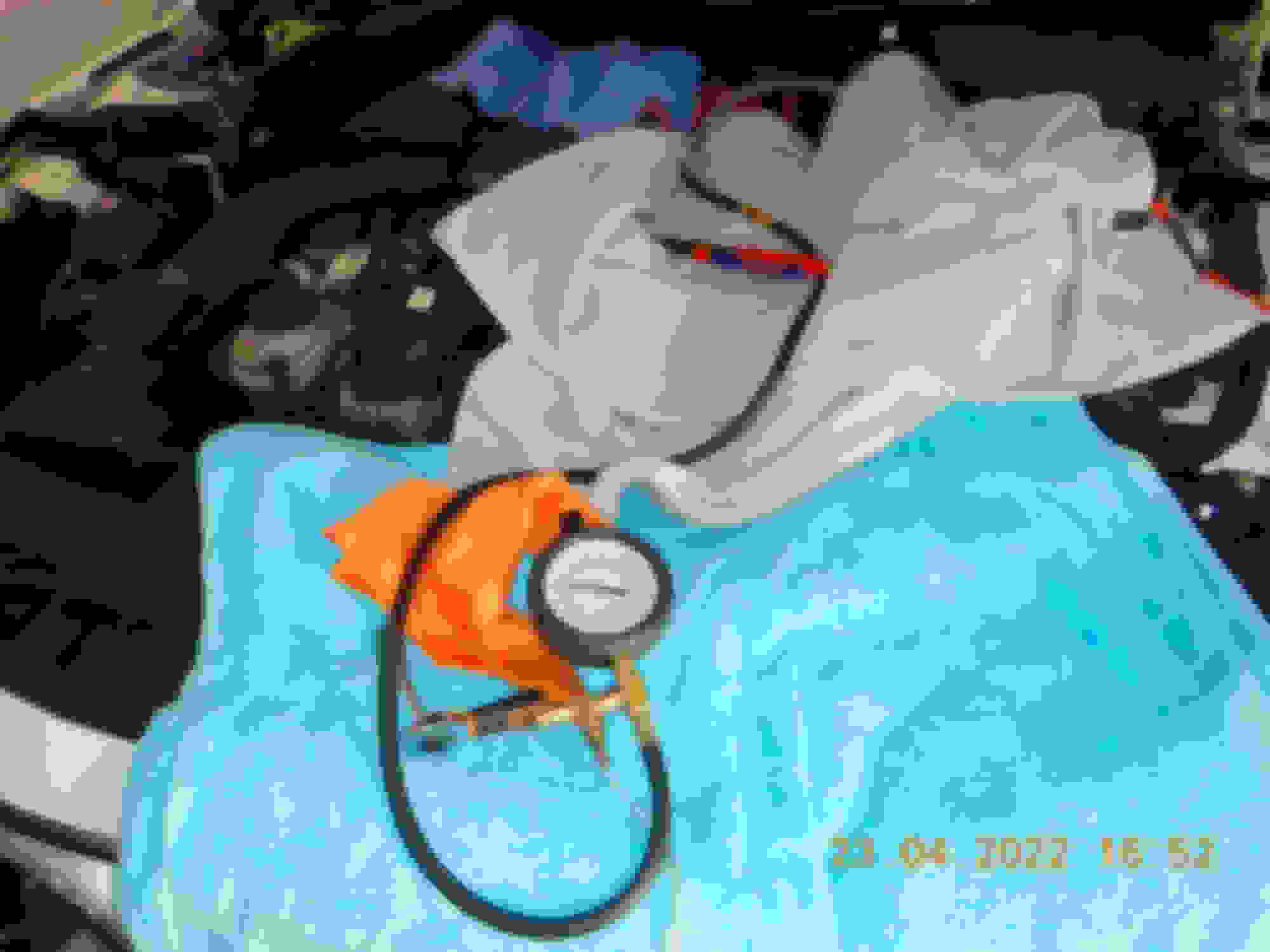
Your oil pressure gauge hose is probably long enough to cause pressure drop read by the gauge, aside from air bubbles not bled out.
So no worry not being able to see 55-60PSI.
Even my analog fuel pressure gauge tester with a mere 1 foot hose and dump valve, it cause head/pressure loss like 5 PSI or so.
Your hose to be able to reach windshield would be 2 feet a bit longer....yes ?
Also to note, when using capillary/boudon tube pressure gauge, its best accuracy is at 50% movement of the dial.
So best to use 100-120 PSI pressure gauge instead of a 140psi one.
The capillary/boudon tube pressure gauge is also expensive if we want the under 2% accuracy, so most likely we get the common 5% accuracy at best. https://www.instrumart.com/pages/539...ccuracy-grades
Also that oil pressure test port has a unique rubber gasket with somekind of "flappy" restriction. If the male thread we use is not long enough,
the rubber gasket opening stay small.
Here is what I mean by the restriction by the rubber gasket: Item 40 is the gasket of the oil filter housing front part and the round part is the oil pressure test port.
Yep, stupid EPC place this item on the RIGHT side of engine, where it is actually supposed to be on the LEFT side of the engine where the oil filter housing is: https://nemigaparts.com/cat_spares/e...asis=212065D04
My engine is soft limited at Park/Neutral to do no higher than 4,200RPM. It is how new engines are, soft limiter thingy.
Your oil pressure gauge hose is probably long enough to cause pressure drop read by the gauge, aside from air bubbles not bled out.
So no worry not being able to see 55-60PSI.
Even my analog fuel pressure gauge tester with a mere 1 foot hose and dump valve, it cause head/pressure loss like 5 PSI or so.
Your hose to be able to reach windshield would be 2 feet a bit longer....yes ?
Also to note, when using capillary/boudon tube pressure gauge, its best accuracy is at 50% movement of the dial.
So best to use 100-120 PSI pressure gauge instead of a 140psi one.
The capillary/boudon tube pressure gauge is also expensive if we want the under 2% accuracy, so most likely we get the common 5% accuracy at best. https://www.instrumart.com/pages/539...ccuracy-grades
Also that oil pressure test port has a unique rubber gasket with somekind of "flappy" restriction. If the male thread we use is not long enough,
the rubber gasket opening stay small.
Here is what I mean by the restriction by the rubber gasket: Item 40 is the gasket of the oil filter housing front part and the round part is the oil pressure test port.
Yep, stupid EPC place this item on the RIGHT side of engine, where it is actually supposed to be on the LEFT side of the engine where the oil filter housing is: https://nemigaparts.com/cat_spares/e...asis=212065D04
I don't know why they make the opening like that...mini cut.
Perhaps simple "check-valve" to trap oil at oil pressure sensor ?...upon engine kill.
so should we understand the true pressure available at engine rear HPFP is less than what's measured at the test port near the pump.
Like 10psi less, right?
2015 SL400 (M276 Turbo), 2014 C350 Sport (M276 NA), 2004 SL500 (M113), 2004 Audi TT225 (BEA)
@S-Prihadi , thanks for that explanation. I was using an inexpensive $30 kit from Amazon. The hose is 4 ft long. So, my readings are consistent with what we expect with the solenoid disconnected and has a top-end max pressure limit. Kinda disappointing to know that I can't trust the absolute readings. However, the next time I get a chance (too fricken cold to be outside right now), I will bleed the air out of the hose first and take a short drive in 2nd or 3rd to see if anything changes.
Put on your mechanical engineering hats. A longer hose does not cause a pressure drop. Well, let me clarify. If there is no flow in the gauge hose (i.e. static situation), there is no pressure drop. Air in the line also doesn't cause a pressure drop. It DOES cause a delay in the response, so you won't see quick changes in oil pressure. But at a consistent RPM, the oil pressure will also pressurize the air in the line, everything at equilibrium. Once the air is pressurized, oil will stop flowing up the line and the gauge will read actual pressure, same as if the hose was 1" long. The only time static pressure changes with length is if you are working a column of fluid against gravity.
2015 SL400 (M276 Turbo), 2014 C350 Sport (M276 NA), 2004 SL500 (M113), 2004 Audi TT225 (BEA)
Originally Posted by kevm14
Put on your mechanical engineering hats. A longer hose does not cause a pressure drop. Well, let me clarify. If there is no flow in the gauge hose (i.e. static situation), there is no pressure drop. Air in the line also doesn't cause a pressure drop. It DOES cause a delay in the response, so you won't see quick changes in oil pressure. But at a consistent RPM, the oil pressure will also pressurize the air in the line, everything at equilibrium. Once the air is pressurized, oil will stop flowing up the line and the gauge will read actual pressure, same as if the hose was 1" long. The only time static pressure changes with length is if you are working a column of fluid against gravity.
Hey! I didn't have my coffee yet!
Now that you articulated that, I remember thinking the same thing. Equilibrium is equilibrium. However, S-Prihadi may be right about the accuracy of the pressure gauge. And the RPM limiting feature when in P or N was something I didn't know about, but suspected. Probably why some "high performance" cars have a launch mode.
Yeah gauge accuracy can absolutely vary but let's not conflate that with hose length. It's physics but if someone wants to do an experiment with hose length I'm game.
Put on your mechanical engineering hats. A longer hose does not cause a pressure drop. Well, let me clarify. If there is no flow in the gauge hose (i.e. static situation), there is no pressure drop. Air in the line also doesn't cause a pressure drop. It DOES cause a delay in the response, so you won't see quick changes in oil pressure. But at a consistent RPM, the oil pressure will also pressurize the air in the line, everything at equilibrium. Once the air is pressurized, oil will stop flowing up the line and the gauge will read actual pressure, same as if the hose was 1" long. The only time static pressure changes with length is if you are working a column of fluid against gravity.
There is no flow per se in the gauge, but there is flow at the overall system and oil lubrication is open ended system. So when we read pressure further from oil pump, pressure drop will show.
If you have a swimming pool with gauges and few types of filters installed, you can see pressure drops at various system/location.
Example I have a pool with sand filter and then cartridge filter, so 2 filters.
I have 4 gauges, at the pump I have pressure gauge to read impeller/pump output pressure and also suction pressure at intake.
At the sand filter there is a pressure gauge as a way to monitor dirt build up, at the cartridge filter there is another pressure gauge .
Highest pressure reading will be the pump impeller housing, as it is reading the entire pressure drop till the open ends...the water nozzles into the pool.
The sand filter is 2nd highest pressure, as it is reading its own sand resistance + filter cartridge + plumbing all the way to water nozzles into the pool.
The filter cartridge has the lowest pressure reading as it in itself is not as restrictive as sand bed and is now closer to to water nozzles into the pool.
If system is fully blocked, and pressurized, yes... we can get equal pressure for entire system.
Anytime there is a diameter reduction or a bend/elbow or a filter media the oil has to fight thru, these are parasitic loss to the flow/pressure.
Here is a nice data of oil pressure differences at various component of the engine.
This is the engine used for the test is based on Isuzu design, for Chinese engine maker.
I think you best install this stand alone oil pressure gauge + sensor from AEM https://www.aemelectronics.com/produ.../parts/30-0307
It has auxillary output which will work with their logger, if you decided to log it.
Long time ago they have OBD2 Logger module also able to take in few analog channels.
Called AQ-1 OBD2 Data Logging System , but now discontinued.
I would think the Banks oil pressure sensor is at the minimum 2% accuracy if not 1% or better.
If engine still cold and oil temperature is only 30-32C or 90F maximum, at 1,300 RPM initial fast idle of engine cold start, 61 PSI I can get.
At this temperature the Mobil 1 0W-40 vicosity is still "thick", I think higher than 71 cSt (at 40C)
Even at mere idling at 663 RPM when the oil is still at 36C / 97F , oil pressure is 36.7PSI
.
Hot engine oil at 89C / 192F, idling at 703 RPM , pressure is much lower of course, 16.3PSI.
.
At 4,000 or anything above 1,700 RPM , hot engine oil at 86C / 187F , oil pressure at best 56 PSI.
So when you are idling at say 600RPM, oil temperature make nite and day difference on the oil pressure at this low RPM. Keep this in mind if you want to take base line data for preventive maintenance work.
I have seen as low as 12PSI at 550RPM with 90C+ (194F+) hot engine oil and coolant temperature nearing 100C / 212F, this is with gear engaged but brake ON....in my city typical traffic jam and
Air Intake Temperature at aftercooler can be as high as 60C/140F. Ambient temp at 32C/90F. Engine bay ambient temperature easy 90C/194F at the side of the aftercooler.
There is no flow per se in the gauge, but there is flow at the overall system and oil lubrication is open ended system. So when we read pressure further from oil pump, pressure drop will show.
It is open ended, so the parts of the oil system where oil is flowing, pressure will be different, agreed. But when you are using a closed ended oil pressure sensor in a fixed location, pressure will not be different due to hose length. Physics dictates that if one end of the system (at the oil test port) is, say, 40 psi, and the other end at the gauge is 0 psi (relative to atmospheric), then oil will be pushed toward the gauge at 40 psi until the pressure at the gauge reaches the same 40 psi (with or without compressible air in the line). Again, it's physics. Pressure will be different at different parts of the oil system because it is a dynamic system. The hose length for the gauge doesn't matter, unless you have a very TALL hose and the oil pressure is working against gravity.
Originally Posted by S-Prihadi
If you have a swimming pool with gauges and few types of filters installed, you can see pressure drops at various system/location.
Example I have a pool with sand filter and then cartridge filter, so 2 filters.
I have 4 gauges, at the pump I have pressure gauge to read impeller/pump output pressure and also suction pressure at intake.
At the sand filter there is a pressure gauge as a way to monitor dirt build up, at the cartridge filter there is another pressure gauge .
Highest pressure reading will be the pump impeller housing, as it is reading the entire pressure drop till the open ends...the water nozzles into the pool.
The sand filter is 2nd highest pressure, as it is reading its own sand resistance + filter cartridge + plumbing all the way to water nozzles into the pool.
The filter cartridge has the lowest pressure reading as it in itself is not as restrictive as sand bed and is now closer to to water nozzles into the pool.
If system is fully blocked, and pressurized, yes... we can get equal pressure for entire system.
Anytime there is a diameter reduction or a bend/elbow or a filter media the oil has to fight thru, these are parasitic loss to the flow/pressure.
In the pool examples you are just citing that different parts of the system show different pressures. That is a dynamic system, and everything is moving (suction, discharge, velocities, cross-sectional area, etc.), and is expected. But the length of the hose of the gauge doesn't matter, once the gauge reaches equilibrium and the air is compressed (or bleed the air out for a quicker response).
If oil is not flowing in the tube, there is no pressure differential. And if there is no pressure differential then there is no pressure reduction from a longer hose. It's physics.
2015 SL400 (M276 Turbo), 2014 C350 Sport (M276 NA), 2004 SL500 (M113), 2004 Audi TT225 (BEA)
Thanks, S-Prihadi. My biggest challenge is finding a location in the SL to mount a gauge without it looking like crap. I thought of replacing the analog clock, but then, how would I know what time it is? (By the way, I'm retired and seldom know what time it is. I don't wear a watch.)
This topic is really getting my juices flowing. I made an electrical analogy to demonstrate my point.
How to read and translate:
40V power source = 40 psi of oil pump (pressure = voltage)
133.3 mA = nominal oil flow in the system (current = flow rate)
Resistors are various points of pressure drop within the system (various galleries, let's say)
Meters read different voltages (pressures) at different places in the system, because there is current flow.
Now if I modify my meter on the left to simulate very LONG wires to the meter, let's see what happens to the measured voltage, and show resulting current flow.
So even with REALLY long wires to measure the voltage of my circuit (50k feed and 50k back to ground), the voltage is the same. The negligible current draw is due to simulation of meter resistance. It's effectively zero. System current draw is 3333x greater than the flow in the left hand side meter circuit. In the oil analogy, there is NO oil flow, because the equivalent resistance of the pressure gauge is infinity.
Thanks Kev for the explanation.
Next time you test similar scenario in real time you share with us the findings.
Here is a similar scenario, but for fuel pump pressure.
There is a schrader valve at the fuel test port, which means a bit extra resistance.
The gauge in use is a Wika of 2% -1%-2% accuracy, this one : https://www.wika.com/media/Data-shee...0212_en_co.pdf
The hose is about 3-4 ish feet.
This is a test against a blocked system, engine is OFF. I use Xentry to trigger the fuel pump till the N118 fuel computer stop itself after reaching its set pressure.
Fuel pressure sensor at the in tank fuel filter under the seat, approx 4 meters away by small fuel pipe. Elevation approx 2 feet at best, between fuel pressure sensor and the pressure gauge placement.
While MB own fuel pipe + fittings produced 1.1 BAR or 15.95PSI pressure drop which I calculated is way too much and simply have to swallow the fact,
the 0.98 BAR or 14.2PSI lost at the fuel tester kit baffled me, afterall this is a closed system at time of test.
That was the original gauge which came with the tester kit and I replaced it with the Wika thereafter.
The 1.1 BAR head loss at MB own fuel plumbing is easy to test. Assuming there is no significant drift at sensor at this low pressure.
I simply bleed out the fuel at the test port schrader valve till it stop and test port being 2 feet higher than fuel filter/sensor , the remaining fuel still stay at the fuel plumbing.
If this is pure weight by gravity, 1.1 BAR surely does not make sense for elevation/head of only 2 feet.
This value was based on old fuel filter sensor, since 2014 , as old as the car. So there is probably a drift already at low pressure reading....which I confirmed some months later.
I took the above measurement before replacing a new fuel filter set, complete with new fuel pressure sensor. Sold that way by MB full set.
The 0.98 BAR lost to tester kit is what puzzled me.
====================
New fuel filter set including fuel pressure sensor installed by now.
Some months later I replaced my High Pressure Fuel Sensor + Temperature , the one at the fuel rail. This is the 200+ BAR fuel pressure+temp sensor.
I discovered it has drifted its value when at very low pressure, it was accidental discovery because I was playing around with HP Fuel Pump and had to bleed all pressure out of the HP fuel system.
I also discovered the ECM will apply subtituted value of 6 BAR ( limp mode for sure ) when and if the connection is lost to the HP fuel press+temp sensor. https://mbworld.org/forums/e-class-w...re-sensor.html
Now I have the chance to test fuel pressure difference between in-tank fuel filter fuel pressure sensor and the HP fuel pressure sensor at the fuel rail, without needing mechanical gauge and pressure loss to hoses and
extra fittings and schrader valve.
Pressure test, new HP Fuel Pressure & Temp sensor. Priming the LP pump and let it stabilized. This is a closed system test. Engine OFF and is at ambient temperature.
HP fuel pump quantity valve is a normally open type, so fuel will flow from fuel filter via HP fuel pump to fuel rail to HP fuel press+temp sensor.
0.4 BAR / 5.8 psi head loss is reasonable value , I recalled calculated if at high fuel flow the loss would be like 0.55 BAR based on pipe ID of 6mm at the estimated length.
You can make your own conclusion based on the real test I done.
Myself I like to learn too, what physics book write and what I am seeing because there are more variables involved from the tester tool of choice.
If you go to ATS youtube channel, you will find Bernie Thompson who is a very good and experienced engineer and designer of ATS scanner scope.
Find his video on cylinder pressure test, this is air pressure not fluid. There he will tell you the effect of hoses length , material, type of fittings, hose swelling and so on.
Cylinder pressure is a VERY dynamic scenario with very high pressures. I am sure hose length, hose diameter and hose stiffness all matters. It does not matter at 40 psi with steady state oil pressure. Or fuel pressure.
I tried to follow your post but you change so many variables each test, and seem to be comparing across test gauges and the fuel pressure sensor of the vehicle that I can't see how you are making the case that hose length is responsible for ANY of the variation you've seen. I'm not saying you aren't capable of doing an experiment, but this is not an A/B test in any way.
The goal of this test was to determine if hose length and air in the hose makes a difference when measuring *pressure spikes* which I have already said it would. However, his results are interesting because even at 2.5m of hose length, he found reasonable accuracy. At 1m hose length, it didn't even matter whether the hose had air in it (again, when measuring spikes!). When hose lengths went to 5m, things fell apart with regard to measuring pressure spikes accurately. He is working with spikes up to 155 bar (2248 psi). Relevant to this thread, we are basically working with no spikes, or what I call static pressure situations.
Take a look at this sentence from his test:
I'm sure that for static pressure measurement the length of the hose is not important, but what about dynamic pressure readings and especially fast pressure spikes?
Length of hose isn't important for static pressure measurement. That's all I've been saying. All the other variables are responsible for the differences, because you aren't trying to measure spikes.
2015 SL400 (M276 Turbo), 2014 C350 Sport (M276 NA), 2004 SL500 (M113), 2004 Audi TT225 (BEA)
@S-Prihadi I didn't read your entire post, but what comes to mind immediately is that the pressure at the fuel pump in the gas tank may be great than that measured at the fuel rail because you have the HPFP in between, which must offer some resistance. Or did you address that in today's lesson?
@S-Prihadi I didn't read your entire post, but what comes to mind immediately is that the pressure at the fuel pump in the gas tank may be great than that measured at the fuel rail because you have the HPFP in between, which must offer some resistance. Or did you address that in today's lesson?
There is a bit of elevation difference between the 2 sensors, max 2 feet or 60cm .....but if Specific Gravity of petrol being 0.7 - 0.8 , its supposed to be about 0.05 BAR difference.
1 BAR is a simplified 10 meters / 33 feet worth of fresh water 1.0 SG elevation difference.
Since the test is a closed ended system and allowed to be stabilized, the reading in theory should be under 0.1 BAR difference or only elevation difference between the 2 sensors.
Add certain processing resolution limitation of the signal to be digitized as single decimal ( 1/10th resolution ) or 0.1 BAR, perhaps 0.2 BAR is as far as it should be different and not 0.4 BAR.
I am trying to follow along here but it is very difficult.
Location A is what, a pressure test at the fuel pump outlet line?
Location B is what, at the fuel rail?
And conditions for A and B are what? Engine off, low pressure pump running?
Ok, what is the line flow? Is it a return system or returnless?
If returnless, I presume you are saying the pump is running and reaches some pressure (either by target or simple pump run timer). And you are then claiming that you are seeing different pressure, with no fuel flow in the system, at different points along the fuel delivery path?
Of course, this seems way out in left field compared to the thread topic at hand.
I see folks are discussing the pressure monitoring
A quick update from my end: just ordered a new oem solenoid, should arrive at some point next week.
Will see how it works
2015 SL400 (M276 Turbo), 2014 C350 Sport (M276 NA), 2004 SL500 (M113), 2004 Audi TT225 (BEA)
Originally Posted by zk2004mb
I see folks are discussing the pressure monitoring
A quick update from my end: just ordered a new oem solenoid, should arrive at some point next week.
Will see how it works
So, are you going to strap it to part of the engine, connect it, and see what happens? Wonder if you can wrap it in something to keep it clean, etc.
Finally got some time to continue this project.
The oem solenoid successfully fooled ECU.
No more CEL. And the car behavior matches my expectation. More responsive gas paddle before 2k rpm.
Will scan codes tomorrow to see if there's any
Finally got some time to continue this project.
The oem solenoid successfully fooled ECU.
No more CEL. And the car behavior matches my expectation. More responsive gas paddle before 2k rpm.
Will scan codes tomorrow to see if there's any
Good job
For all your efforts, besides more responsive accelerator pedal you will also get a better brake pedal.... once things normalize:
2015 SL400 (M276 Turbo), 2014 C350 Sport (M276 NA), 2004 SL500 (M113), 2004 Audi TT225 (BEA)
I finally got my cheap sacrificial solenoid from eBay (China). I decided to use ½" heat-shrink tubing to seal off the open chambers from the elements. I haven't installed it yet, but will try to do so today.
@zk2004mb you may want to consider the same. I don't know what is more harsh than being submerged in the oil pan, but I'm think road grit and the like may cause it to jam and cause another DTC or something.
I finally got my cheap sacrificial solenoid from eBay (China). I decided to use ½" heat-shrink tubing to seal off the open chambers from the elements. I haven't installed it yet, but will try to do so today.
@zk2004mb you may want to consider the same. I don't know what is more harsh than being submerged in the oil pan, but I'm think road grit and the like may cause it to jam and cause another DTC or something.
Looks neat! I didn't take any protection, it's behind the shield so I don't worry much
Mercedes SLR McLaren 722 S Is Extremely Rare Example Modified by McLaren
Slideshow: A one-of-one U.S.-spec Mercedes-Benz SLR McLaren Roadster became even rarer after a factory-backed transformation at McLaren's headquarters.