


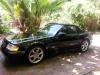

Just converted my ABC Suspension to Strutmasters Coil Overs

MBWorld Fanatic!


Joined: Nov 2010
Posts: 2,605
Likes: 343
From: Welwyn, Herts, UK
2006 S600
ABC should be good for tyre wear. By controlling the height and inclination of the body, it keeps the camber angle of the wheels right all the time.
Of course, if the toe-in is wrong, tires will wear fast, but the wrong ride height will also increase tire wear because the camber will be wrong.
Nick
Of course, if the toe-in is wrong, tires will wear fast, but the wrong ride height will also increase tire wear because the camber will be wrong.
Nick

Super Member
Joined: Jun 2016
Posts: 589
Likes: 60
From: Snowville, ID
W212 E350; W166 GLC300; W164 ML550; W164 ML63; W221 S65; W220 S430; Escalade ESV
In this pictured stretch, I'm comfortable doing 75mph with the S430 airmatic but not with the S600 Strutmasters. Luckily, I don't go through that stretch daily. The speed limit is 65mph and the yellow warning limit is 50mph.
MBWorld Fanatic!
Joined: Nov 2010
Posts: 2,605
Likes: 343
From: Welwyn, Herts, UK
2006 S600
Passive suspension usually has sway bars - certainly cars with a long wheelbase do.
ABC does not use sway bars at all.
MB World Stories
The Best of Mercedes & AMG

Manual Mercedes? 6 Times Sindelfingen Let Drivers Have All The Fun
Verdad Gallardo
Mercedes SLR McLaren 722 S Is Extremely Rare Example Modified by McLaren
Verdad Gallardo
8 Classic Boxy Mercedes Designs That Have Aged Like Fine Wine
Verdad Gallardo
Flawlessly Restored Mercedes 190E Evo II Heads to Auction
Verdad Gallardo
Electric Mercedes C-Class Unveiled: 11 Things You Need to Know
Verdad Gallardo
Mercedes EQS Gets A Major Update: Everything You Need to Know
Verdad Gallardo
5 Underrated Mercedes-Benz Models That Don't Get the Love They Deserve
Verdad Gallardo
Mercedes 300D Has Pushed Well Past 1 Million Miles and It Ain't Stopping
Verdad Gallardo
10 Most Reliable Mercedes-Benz Models You Can Buy Used
Verdad Gallardo
MBWorld Fanatic!
Joined: Nov 2010
Posts: 2,605
Likes: 343
From: Welwyn, Herts, UK
2006 S600
They do !? I never heard that before, but I suppose it stands to reason.
Maybe it's partly because staggered wheels are used by cars and drivers that are more likely to drive fast. Just a thought.
Staggered wheels are ALMOST always wider rear, so if the rears are gripping harder, that suggests drivers lean on the fronts harder than they would otherwise.
I'm a HUGE fan of non-staggered wheels, and both my Mercs are now non-staggered, but I don't have much experience with wear yet. I always found ABC to be kind to tires.
With this experience, I wouldn't have anything except ABC and "square" wheels on a Merc.
I use 275-30-20 all round on my cars, and I bang on about it forever in this thread:
https://mbworld.org/forums/s-class-w...els-tyres.html
Nick
Maybe it's partly because staggered wheels are used by cars and drivers that are more likely to drive fast. Just a thought.
Staggered wheels are ALMOST always wider rear, so if the rears are gripping harder, that suggests drivers lean on the fronts harder than they would otherwise.
I'm a HUGE fan of non-staggered wheels, and both my Mercs are now non-staggered, but I don't have much experience with wear yet. I always found ABC to be kind to tires.
With this experience, I wouldn't have anything except ABC and "square" wheels on a Merc.
I use 275-30-20 all round on my cars, and I bang on about it forever in this thread:
https://mbworld.org/forums/s-class-w...els-tyres.html
Nick
Last edited by Welwynnick; Sep 2, 2016 at 01:45 PM.
Super Member
Joined: Jun 2016
Posts: 589
Likes: 60
From: Snowville, ID
W212 E350; W166 GLC300; W164 ML550; W164 ML63; W221 S65; W220 S430; Escalade ESV
My S600 Michelin PSS tires: 245/45/18 front 265/40/18 rear. Can I do something to the tires/wheels to improve handling? Or ABC my only option?
MBWorld Fanatic!
Joined: Nov 2010
Posts: 2,605
Likes: 343
From: Welwyn, Herts, UK
2006 S600
And keep ABC working by doing the following:
- Change the ABC oil and filter every three years
- Inspect all the ABC flexible hoses every year, and replace any that are seeping.
- Wrap all the ABC flexible hoses within the engine compartment with aluminium foil.

Super Member
Joined: Jun 2016
Posts: 589
Likes: 60
From: Snowville, ID
W212 E350; W166 GLC300; W164 ML550; W164 ML63; W221 S65; W220 S430; Escalade ESV
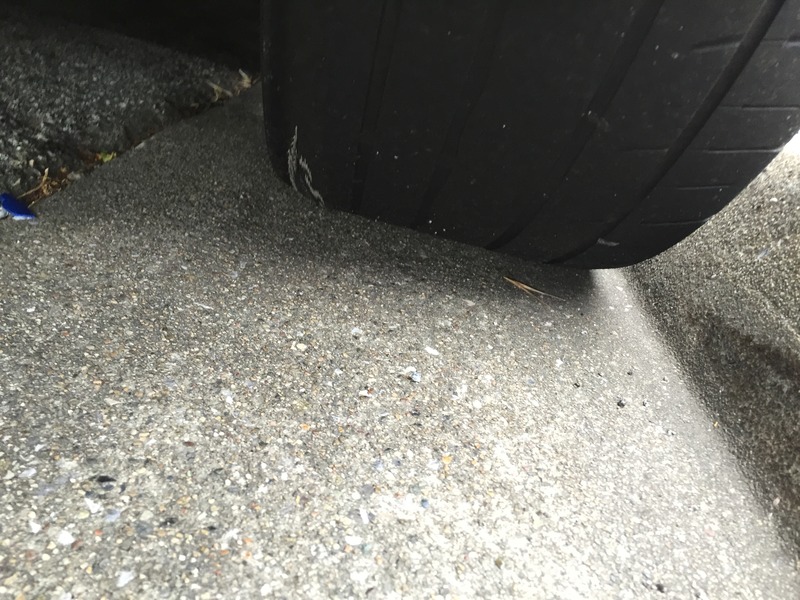
I wanted do do the oil change after 3000miles and that was a good thing. Lifted up the car this afternoon and found the driver front tire in this condition. What caused it? Would 265/40/18 be worst than 245/45/18? What's OEM size for 05 S600 AMG?

MBWorld Fanatic!


Joined: Jan 2008
Posts: 6,151
Likes: 533
Mercedes
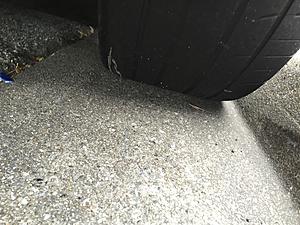
Very common to get inside tire wear like that
Here was mine
Cars with the amg option had 245 45 18 front and 275 40 rear
You can also run 245 45 18 front and 265 40 18 rear (this was the non amg 18 inch size )
As was noted above tread wear mileage warranties are cut in half if you run staggered sizes front and rear, so running 265 40 18 in all four corners will preserve the full tread wear warranty
Here was mine
Cars with the amg option had 245 45 18 front and 275 40 rear
You can also run 245 45 18 front and 265 40 18 rear (this was the non amg 18 inch size )
As was noted above tread wear mileage warranties are cut in half if you run staggered sizes front and rear, so running 265 40 18 in all four corners will preserve the full tread wear warranty
MBWorld Fanatic!
Joined: Nov 2010
Posts: 2,605
Likes: 343
From: Welwyn, Herts, UK
2006 S600
You can adjust the tracks quickly and easily to put that right.
Nick

MBWorld Fanatic!
Joined: Dec 2012
Posts: 2,474
Likes: 439
From: Ball Ground, GA (N of Atlanta)
2003 S500 2007 GL450
You can check/set the toe pretty easily at home.
- Drive the car forward onto a flat area with some clearance around the car.
- Get four "things" to hold string at wheel-center level. Jackstands, concrete blocks, kitchen chairs, whatever. Put two in front and two behind the car.
- Get some strong, thin cord. Run a piece down each side of the car, a few inches from touching the car, from behind the rear bumper to forward of the front bumper.
- Use a tape measure to make the strings equidistant forward and aft of the car, and equidistant from the car.
- Use the tape measure to measure from the front of the tread to the string on each side. Write down the measurement, identifying forward, L and R.
- Repeat at the rear of the tread.
- Look at the measurements, and fine-tune the steering wheel adjustment to make the measurements as close to the same on each side.
- Adjust the outer ends of the tie rods. Lifting the car will change the measurements. You can:Try to measure before lifting and record, then measure after lifting and record, and figure out how to change the lifted measurements so that you get the unlifted measurements that you want; Try to adjust the rods without lifting; Start by driving the car up onto some boards to get it high enough to adjust the rods without lifting; Or something else that you can devise to solve the problem.
What you are trying to do is to have all of these simultaneously:
- Equal front measurements that are about 1/16" smaller than equal rear measurements.
- Equal amount of threads on each tie rod.
- Straight steering wheel.
Make CERTAIN that you tighten everything when you are finished!
This will not be as good as a proper computerized alignment by an expert, but your tires won't wear like that on the inside!
- Drive the car forward onto a flat area with some clearance around the car.
- Get four "things" to hold string at wheel-center level. Jackstands, concrete blocks, kitchen chairs, whatever. Put two in front and two behind the car.
- Get some strong, thin cord. Run a piece down each side of the car, a few inches from touching the car, from behind the rear bumper to forward of the front bumper.
- Use a tape measure to make the strings equidistant forward and aft of the car, and equidistant from the car.
- Use the tape measure to measure from the front of the tread to the string on each side. Write down the measurement, identifying forward, L and R.
- Repeat at the rear of the tread.
- Look at the measurements, and fine-tune the steering wheel adjustment to make the measurements as close to the same on each side.
- Adjust the outer ends of the tie rods. Lifting the car will change the measurements. You can:Try to measure before lifting and record, then measure after lifting and record, and figure out how to change the lifted measurements so that you get the unlifted measurements that you want; Try to adjust the rods without lifting; Start by driving the car up onto some boards to get it high enough to adjust the rods without lifting; Or something else that you can devise to solve the problem.
What you are trying to do is to have all of these simultaneously:
- Equal front measurements that are about 1/16" smaller than equal rear measurements.
- Equal amount of threads on each tie rod.
- Straight steering wheel.
Make CERTAIN that you tighten everything when you are finished!
This will not be as good as a proper computerized alignment by an expert, but your tires won't wear like that on the inside!
Last edited by wallyp; Sep 3, 2016 at 10:22 AM.
Super Member
Joined: Jun 2016
Posts: 589
Likes: 60
From: Snowville, ID
W212 E350; W166 GLC300; W164 ML550; W164 ML63; W221 S65; W220 S430; Escalade ESV
Originally Posted by wallyp
You can check/set the toe pretty easily at home.
- Drive the car forward onto a flat area with some clearance around the car.
- Get four "things" to hold string at wheel-center level. Jackstands, concrete blocks, kitchen chairs, whatever. Put two in front and two behind the car.
- Get some strong, thin cord. Run a piece down each side of the car, a few inches from touching the car, from behind the rear bumper to forward of the front bumper.
- Use a tape measure to make the strings equidistant forward and aft of the car, and equidistant from the car.
- Use the tape measure to measure from the front of the tread to the string on each side. Write down the measurement, identifying forward, L and R.
- Repeat at the rear of the tread.
- Look at the measurements, and fine-tune the steering wheel adjustment to make the measurements as close to the same on each side.
- Adjust the outer ends of the tie rods.
What you are trying to do is to have all of these simultaneously:
- Equal front measurements that are about 1/16" smaller than equal rear measurements.
- Equal amount of threads on each tie rod.
- Straight steering wheel.
Make CERTAIN that you tighten everything when you are finished!
This will not be as good as a proper computerized alignment by an expert, but your tires won't wear like that on the inside!
- Drive the car forward onto a flat area with some clearance around the car.
- Get four "things" to hold string at wheel-center level. Jackstands, concrete blocks, kitchen chairs, whatever. Put two in front and two behind the car.
- Get some strong, thin cord. Run a piece down each side of the car, a few inches from touching the car, from behind the rear bumper to forward of the front bumper.
- Use a tape measure to make the strings equidistant forward and aft of the car, and equidistant from the car.
- Use the tape measure to measure from the front of the tread to the string on each side. Write down the measurement, identifying forward, L and R.
- Repeat at the rear of the tread.
- Look at the measurements, and fine-tune the steering wheel adjustment to make the measurements as close to the same on each side.
- Adjust the outer ends of the tie rods.
What you are trying to do is to have all of these simultaneously:
- Equal front measurements that are about 1/16" smaller than equal rear measurements.
- Equal amount of threads on each tie rod.
- Straight steering wheel.
Make CERTAIN that you tighten everything when you are finished!
This will not be as good as a proper computerized alignment by an expert, but your tires won't wear like that on the inside!
The strange thing is that I don't feel any alignment problem at high speed. I do feel bad handling with cornering. That uneven wear is a complete surprising to me.
I will go with a new set of straight 265/40/18 as suggested.

Super Member
Joined: Jun 2016
Posts: 589
Likes: 60
From: Snowville, ID
W212 E350; W166 GLC300; W164 ML550; W164 ML63; W221 S65; W220 S430; Escalade ESV
My dealer told me about the ball joints 2500 miles ago. I bought the parts and the tools but didn't feel the urgency until my tires went bad.
The lower ball joint job looks easy after I disconnected the upper control arm. Currently I can't figure out how to remove the ball joint from the upper wishbone. Any ideas?
The lower ball joint job looks easy after I disconnected the upper control arm. Currently I can't figure out how to remove the ball joint from the upper wishbone. Any ideas?
MBWorld Fanatic!
Joined: Nov 2010
Posts: 2,605
Likes: 343
From: Welwyn, Herts, UK
2006 S600
Yes - put a jack under the outer end of the lower control arm and lift it up slightly.
Then use a lever to pull the upper arm down. You may need a cranked lever.
That pushes the ball joint together hard enough so that it stays put when you undo the nut.
Nick
Then use a lever to pull the upper arm down. You may need a cranked lever.
That pushes the ball joint together hard enough so that it stays put when you undo the nut.
Nick
Super Member
Joined: Jun 2016
Posts: 589
Likes: 60
From: Snowville, ID
W212 E350; W166 GLC300; W164 ML550; W164 ML63; W221 S65; W220 S430; Escalade ESV
Well, I abandoned the press out job on the wishbone arms bushing as the lower ball joint job is quite a challenge.
I ended up disconnected the wheel from all ball joints in order to press out the lower ball joint from the steering knuckle.
Dealer wants $2300 for the job and now I understand why. Will update Strutmasters performance after the suspension works
I ended up disconnected the wheel from all ball joints in order to press out the lower ball joint from the steering knuckle.
Dealer wants $2300 for the job and now I understand why. Will update Strutmasters performance after the suspension works


