

Hello all! Last September I purchased a 2014 S-550 with some miles on it. I've been a technician for a number of years, specializing mainly in BMW. Since day one of purchasing it, I've noticed that the ride quality is nowhere near what it should be like - I work at one of the largest used car dealerships in America, and I've driven very low mileage W222s - they ride like a dream! However, mine varies from riding fairly well to literally feeling like a F-350 pickup truck, where every single little bump in the road is transmitted to the chassis of the car. When the car is in this 'failure condition', it genuinely feels like the suspension has little to no travel whatsoever. Going over speed bumps, the suspension does not absorb almost any of the bump, the impact almost entirely gets transmitted to the chassis. It feels like the car is riding on hockey pucks!
I have, since purchasing it, spent a handful of hours doing investigatory work on the suspension. The front air struts and air compressor were replaced immediately prior to my purchase of the vehicle, and I have visually confirmed they are Genuine Mercedes-Benz parts. There are zero faults stored in the ADS module, with the only fault stored being in the ECM for the oil pump solenoid being unplugged. I have performed active tests with my Autel on all of the strut valves/solenoids, and they all ride/lower as expected, when requested. I've performed multiple level calibrations with no significant improvement. I have also loosened and re-torqued all of the suspension bushing bolts to ensure they were torqued with the vehicle on level ground. I have scoured all of the live data available from the ADS module and, while the majority of it seems normal, there are a couple outliers that I am not sure what to make of. When looking at the suspension level sensor data, I have the following values: LF 5.29, RF -2.48, LR 3.58, RR 3.8. The right front level sensor value always reports a value that significantly differs from the others. I visually inspected it and it is installed correctly, appearing installed identically to the left front side. Could be normal, just not sure. Secondly, I noticed that any time I check the airmatic system pressure PID, it is constantly spiked at 505.601psi, with the sensor constantly sitting at 5 volts. That seems odd to me - potentially a bad airmatic pressure sensor? However, if that were the case, I would expect it to throw a code of some sort. Additionally, when I check the live data of the AIRMATIC central reservoir filling valve, its status says defective, but again, no codes or anything. Lastly, and I just noticed this today - when performing a level calibration, if I attempt to raise or lower a specific corner, I noticed the opposite corner seems to move as well. I did not observe that when I was doing the individual component tests on the strut relief valves/fill solenoids. I do not have access to STAR or XENTRY, unfortunately. Please help me figure this out <3
I have, since purchasing it, spent a handful of hours doing investigatory work on the suspension. The front air struts and air compressor were replaced immediately prior to my purchase of the vehicle, and I have visually confirmed they are Genuine Mercedes-Benz parts. There are zero faults stored in the ADS module, with the only fault stored being in the ECM for the oil pump solenoid being unplugged. I have performed active tests with my Autel on all of the strut valves/solenoids, and they all ride/lower as expected, when requested. I've performed multiple level calibrations with no significant improvement. I have also loosened and re-torqued all of the suspension bushing bolts to ensure they were torqued with the vehicle on level ground. I have scoured all of the live data available from the ADS module and, while the majority of it seems normal, there are a couple outliers that I am not sure what to make of. When looking at the suspension level sensor data, I have the following values: LF 5.29, RF -2.48, LR 3.58, RR 3.8. The right front level sensor value always reports a value that significantly differs from the others. I visually inspected it and it is installed correctly, appearing installed identically to the left front side. Could be normal, just not sure. Secondly, I noticed that any time I check the airmatic system pressure PID, it is constantly spiked at 505.601psi, with the sensor constantly sitting at 5 volts. That seems odd to me - potentially a bad airmatic pressure sensor? However, if that were the case, I would expect it to throw a code of some sort. Additionally, when I check the live data of the AIRMATIC central reservoir filling valve, its status says defective, but again, no codes or anything. Lastly, and I just noticed this today - when performing a level calibration, if I attempt to raise or lower a specific corner, I noticed the opposite corner seems to move as well. I did not observe that when I was doing the individual component tests on the strut relief valves/fill solenoids. I do not have access to STAR or XENTRY, unfortunately. Please help me figure this out <3
VII
Super Member
close


Yesterday
Unfortunately for somethingike this Xentry would be a lot better some of the inconsistencies might be driven by the 3rd party diagnostics.
Questions:
Are all 4 wheels affected in the same manner?
The suspension does appear to operate correctly from time to time?
Any change going from comfort to sport?
Notes:
Airmatic is airsprings which mostly control level, and electric valve shocks which mostly control the dynamics (The springs are multi chamber but the shocks drive the firmness).
505 psi is way above operational pressure of airmatic this is either a bad translation or a problem.
The level sensor also either a bad translation or a problem.
Questions:
Are all 4 wheels affected in the same manner?
The suspension does appear to operate correctly from time to time?
Any change going from comfort to sport?
Notes:
Airmatic is airsprings which mostly control level, and electric valve shocks which mostly control the dynamics (The springs are multi chamber but the shocks drive the firmness).
505 psi is way above operational pressure of airmatic this is either a bad translation or a problem.
The level sensor also either a bad translation or a problem.
VII
Super Member
close
Yesterday
Also you didn't go and put 21 inch wheels on it right?

maw1124
MBWorld Fanatic!
close


Mar 30, 2026
- Join DateApr 2009
- Posts:1,236
-
iTrader Positive Feedback0
-
iTrader Feedback Score(0)
- Vehicle(s) I drive'06 MB S55 AMG; '04 Audi Allroad 4.2; '05 BMW M3 Conv.; '92 MB 500E
-
Likes:1,036
-
Liked:350 Times in 287 Posts
Do the Airmatic cars have reservoirs? If so, I would check there first. Those are there to smooth pressure spikes.
maw
maw
VII
Super Member
close
Yesterday
Quote:
maw
No, that is for ABC (Hydraulic). Originally Posted by maw1124
Do the Airmatic cars have reservoirs? If so, I would check there first. Those are there to smooth pressure spikes.maw
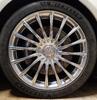
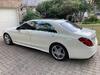
Yes, every once in a while I notice that it seems to be riding nicely - when I notice this, it's always a matter of minutes before it goes back to riding the way it typically does. All 4 wheels are affected in the same way, if I go over a small (half inch) crack in the pavement at ~35mph, it's felt similarly in all four wheels (i.e. harsh). I can feel a difference when I switch it from comfort to sport, it just gets even stiffer, though it honestly feels like it rides a little better in sport mode. Level control works fine, and the car raises when the raised ride height button on the center console is pressed. I just spent the last two hours trying to track down the location of the "airmatic pressure sensor" to no avail - tried disconnecting all electrical connectors from both the compressor and valve block, and live data still reported 5V/505PSI at that sensor. I only have access to AllData for service information, and it isn't exactly exhaustive when it comes to Mercedes (great for BMW, though). There must be a sensor as I have a voltage PID, I'm just having a heck of a time finding it! Some internet research suggested it was attached to one end of the valve block, but I did not see any such thing when I was looking at it a few minutes ago. Lastly, the car has factory 20 inch chrome/black spoke forged AMG wheels, with brand new Continental DWS06+ tires (non-runflat) at 32psi all around. The biggest suspect to me is that pressure sensor value being pegged at 5V - maybe the system thinks there is too much pressure in the struts, so it's putting the dampers into failsafe mode. It 100% feels like all the dampers are stuck on level 4 damping. I can hardly bounce the car whatsoever with it on the ground, there is virtually no suspension travel.
VII
Super Member
close
Yesterday
The pressure sensor would indeed be in the valve block but it is noted as not present for USA vehicles. So it is likely this is not your issue.
I do agree you have an instrumentation problem with either a defective module/sensor or wiring issue with a CAN bus.
I do agree you have an instrumentation problem with either a defective module/sensor or wiring issue with a CAN bus.

TripleDown
Senior Member
close

Mar 30, 2026
- Join DateApr 2023
- Posts:451
-
iTrader Positive Feedback0
-
iTrader Feedback Score(0)
- Vehicle(s) I drive2014 S63 2010 ML350 Bluetec 2009 SL550
-
Likes:170
-
Liked:291 Times in 205 Posts
Hoping you get to the bottom of this. My S63 has always ridden harder than I thought it should and I have always blamed the 20" wheels. But maybe there is someone else at play...
Quote:
Agreed, it's been driving me crazy since the day I bought it. I've driven quite a few other W222s at my dealership and they all rode miles better than mine does, MBC or not. I figured the issue would be fairly easy to diagnose/repair when I initially purchased it - turns out it seems to be one of the hardest diagnostics I've ever had! I can count on one hand the amount of times I've had this much difficulty with a diag, granted it's mainly due to lack of service information imo. I had a co-worker record the car going over a speed bump in the parking lot - while there is some suspension travel, you can clearly see that an excessive amount of energy is still transmitted to the body of the car. That being said, the main complaint is all the small bumps in road surfaces - I can feel every little imperfection, which, to me, suggests a damping issue. If the air struts were truly over-pressurized so much, the ride height of the vehicle would be super high, and it is not. Not to mention that the struts would probably all explode at 500psi, lol. I feel like I'll have to gain XENTRY access in order to diagnose it further. Originally Posted by TripleDown
Hoping you get to the bottom of this. My S63 has always ridden harder than I thought it should and I have always blamed the 20" wheels. But maybe there is someone else at play...
TripleDown
Senior Member
close
Mar 30, 2026
- Join DateApr 2023
- Posts:451
-
iTrader Positive Feedback0
-
iTrader Feedback Score(0)
- Vehicle(s) I drive2014 S63 2010 ML350 Bluetec 2009 SL550
-
Likes:170
-
Liked:291 Times in 205 Posts
The rough ride over the small stuff is definitely more wheels and tires. Big wheels are heavy and that mass cannot respond quickly to changes in position. Plus the lack of sidewall only makes it worse. I learned this myself putting 18s on my old LS430. When winter rolled around each year and the 16 inch wheels and snow tires were put on, the difference in ride was dramatic. Like huge.
Getting some 19s and a softer riding tire is still on my to do list...
Getting some 19s and a softer riding tire is still on my to do list...
Quote:
Getting some 19s and a softer riding tire is still on my to do list...
I have 20s with the same DWS06+ tires on my F30 335i BMW, and that car rides considerably better than my W222, with 6lb heavier cast wheels. I'm sure it would ride a bit better with 18s and more sidewall, but I don't think the root cause has to do with the wheel/tire combo.Originally Posted by TripleDown
The rough ride over the small stuff is definitely more wheels and tires. Big wheels are heavy and that mass cannot respond quickly to changes in position. Plus the lack of sidewall only makes it worse. I learned this myself putting 18s on my old LS430. When winter rolled around each year and the 16 inch wheels and snow tires were put on, the difference in ride was dramatic. Like huge.Getting some 19s and a softer riding tire is still on my to do list...

Junior Member
Quote:
My S65 also rides “rough” over small bumps and I think it’s the weight of factory 20” AMG rims with lower profile tire as the culprit. Over the large stuff it soaks it up really well.Originally Posted by TripleDown
Hoping you get to the bottom of this. My S63 has always ridden harder than I thought it should and I have always blamed the 20" wheels. But maybe there is someone else at play...

Baltistyle
MBWorld Fanatic!
close


Yesterday
- Join DateFeb 2017
- LocationBaltimore County, MD
- Posts:2,271
-
iTrader Positive Feedback0
-
iTrader Feedback Score(0)
- Vehicle(s) I drive'13 s212 63 p30. '06 LX470
-
Likes:756
-
Liked:1,184 Times in 838 Posts
Quote:
maw
yes, they have an air reservoir, for quick recovery. They do not have accumulators/“globes”.Originally Posted by maw1124
Do the Airmatic cars have reservoirs? If so, I would check there first. Those are there to smooth pressure spikes.maw
This is a job for xentry. Though we do have potentially a failed sensor. This sensor can be tested for voltage manually by following xentry diag…
Suspension arms (ball joints & bushings) ?
Quote:
The car does need the front tension and lateral/strut arms replaced, but in my experiences, worn bushings will cause a softer ride as they wear, not a firmer one. It's within the realm of possibilities, though, I agree. Short of XENTRY, I think the next step for diagnostics is to scope the damper solenoids while I drive the car to verify they are both receiving the full 12v (indicating max soft mode) and not a reduced voltage from a bad ADS module and/or bad connections/wiring. I suppose I could also feed them 12v directly and see if I notice a difference. Originally Posted by Tom in Austin
Suspension arms (ball joints & bushings) ?
Quote:
This is a job for xentry. Though we do have potentially a failed sensor. This sensor can be tested for voltage manually by following xentry diag…
I could not find reliable information as to that sensors whereabouts - it does not appear to be on the valve block or air compressor housing, and my car does not have the reservoir in the fender (checked yesterday). If I knew where it was, I have means of testing it outside of XENTRY. Originally Posted by Baltistyle
yes, they have an air reservoir, for quick recovery. They do not have accumulators/“globes”.This is a job for xentry. Though we do have potentially a failed sensor. This sensor can be tested for voltage manually by following xentry diag…
So, since I posted this and fiddled with a variety of connectors on the car, it has been driving nicely significantly more often. I drove it home the day I made this post and noted it rode nicely on the drive home. It also drive nicely nearly all weekend, with only a few short instances of the rough ride being noticed. This morning on the drive in to work, it also rode very nicely, I couldn't feel any of the separations in the road concrete whatsoever. I am not entirely sure what, exactly, I did that caused the improvement, but it does appear to be riding well at least half of the time now, and I am nearly positive the issues I am experiencing are related to some sort of logic/control failure in the ADS system/wiring/connectors/valve block.
Tags
harsh, ride, stiff, suspension
Currently Active Users (1)


