When you click on links to various merchants on this site and make a purchase, this can result in this site earning a commission. Affiliate programs and affiliations include, but are not limited to, the eBay Partner Network.
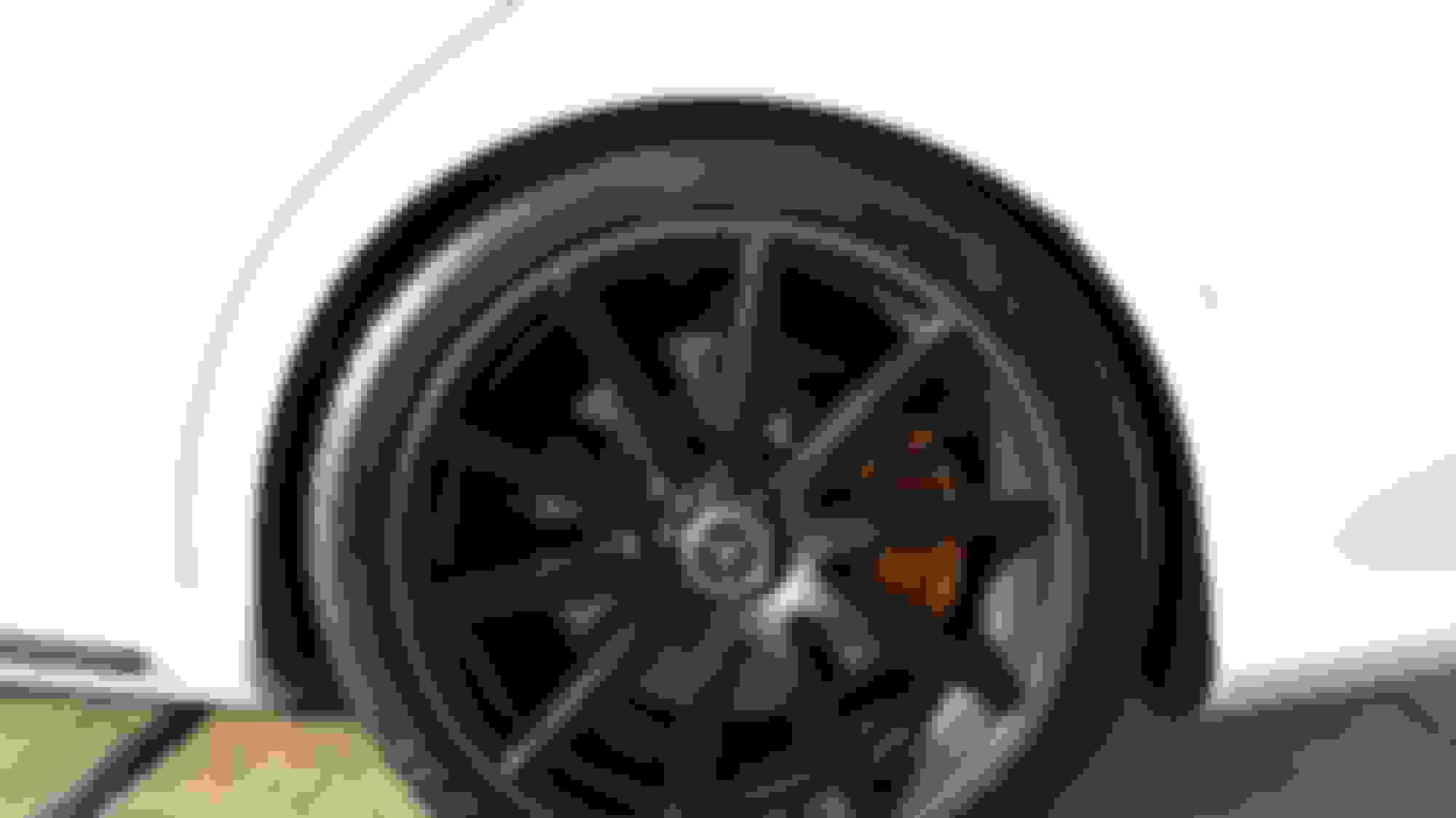
Hey fellas - For those of you with the Ceramic brake set up, my rear left brake squeaks very loudly and it started doing it as a temperature started dropping into the 30s.
The odd thing is that it’s only come out it out of one break in the left ear and not the others. Wondering if you’ve experienced the same or is it abnormal and needs to be looked at?
I have a 2016 S63 4Matic with the CCB's. I live in the Midwest so we see the best of all weather conditions. During the summer for the most part, the brakes make no noise. When winter starts arriving, yes the brakes can make noise. My noise seems to be more the front. Also when I wash the car, they seem to make no noise for a while. I hope this helps.
Last edited by barryrobinson19; Dec 9, 2018 at 08:56 PM.
Reason: My message never appeared.
DB - This seems to be very weather dependent so far. It is now in the 40s and 50s in Seattle and no sign of the squeak but as soon as it is in the 20s and 30s the squeak comes back.
To your original question, the squeak does not go away after the car has been driven for a while when it is cold outside. It would seem to me that if indeed there were something wrong with the pads, it would be a constant noise but I think getting them checked out as always decision
I’ve had CCB in my E63 ( 2017 ) and it did not squeak at any condition, but more to your question. If the squeak is isolated to only 1 wheel/brake and it does not go away even with a warmed brake/pads, there is definitely something wrong. Did you recently replaced the pads and it needed to be bleed out? Take it to your dealer just because it’s isolated to 1 wheel. Good luck.
GT63S ePerformance 4dr, '25 Bentayga Black Ed.(wife), Wrangler and 250 MLB(kids)
Originally Posted by Jan AMG
You need to do a proper bedding.
Absolutely, I'm religious about it but it has to be done on a new car, not going to help on a car with miles.
You can still fix the problem by a little bit of hard braking from as high speed as possible, preferably from 120-100 to a full stop, repeated a few times to remove the accumulated glaze from discs and pads.
I made a write-up based on the McLaren manual because mine were squeaking so loud it was impossible to drive in urban areas and of course I wanted to figure it out. When I tried the procedure based on McLaren manual I lit my CCBs on fire so I made some adjustments for our cars.
Carbon-Ceramic Brakes Bedding-in
Suitable for: New brakes, New pads and When noise appears during street use
The brakes should be cold (Less than 40'C) before carrying out this procedure therefore only use light brake applications or engine braking, whilst driving to the location.
The cool-down periods are the minimum needed and can be longer, tested at 20’C ambient air temperature and highways speeds (130Km/h or 80mph).
Use only use light brake applications or engine braking during each cool down phase.
1] Slow the car 12 times from 80Km/h (50mph) to 30Km/h (19mph) at 0.3G.
Max starting disc temperature should be 40'C, whilst the Max disc temperature reached should be 300'C at the end of the last stop. The cycle time is 8-10 seconds (between brake applications).
Drive at least 10Km (6 miles) to allow the brakes to cool.
2] Slow the car 12 times from 100Km/h (60mph) to 30Km/h (19mph) at 0.45G.
Max starting disc temperature should be 40'C, whilst the Max disc temperature reached should be 400'C at the end of the last stop. The cycle time is 8-10 seconds (between brake applications).
Drive at least 16Km (10 miles) to allow the brakes to cool.
3] Slow the car 10 times from 130Km/h (81mph) to 30Km/h (19mph) at 0.7G.
Max starting disc temperature should be 40'C, whilst the Max disc temperature reached should be 700'C at the end of the last stop. The cycle time is 10-15 seconds (between brake applications).
Drive at least 40Km (25 miles) to allow the brakes to cool.
4] Full ABS (max pedal effort) and slow down 3 times from 100Km/h (60mph) to zero.
Max starting disc temperature should be 40'C.
Drive at least 40Km (25 miles) to allow the brakes to cool.
5] The bedding is finished.
Visually inspect discs to ensure there is a good/consistent coating of pad material on the disc surface (transfer surface) and no surface defects.
Disclaimer:
Tested on AMG CLS 63S 4Matic SB
For suggestions and questions, contact “istar” on AMG Lounge or "Jan AMG" on MBWorld.org.
Inspired by McLaren
Carbon-Ceramic Brakes Bedding-in
Is brake-bedding important and what does it mean?
In order for a brake system to work optimally, the brake disc and pads must be properly bedded-in. Bedding-in, also called breaking-in or conditioning, is the process of depositing an even layer of brake pad material, also called the transfer layer, on the friction face of the brake disc (the surface between the pad and disc).
Bedding-in consists of heating a brake system to its operating temperature to allow the formation of the transfer layer and needs to be done in a controlled way to avoid uneven deposition, which is the number one cause of NVH (Noise, Vibration and Harshness). This procedure is repeated in order to ensure that the entire friction face is evenly covered with brake pad material with cooling periods in between each heating cycle.
"...... brakes convert kinetic energy of a moving vehicle into heat. The simplest way for a brake system to absorb kinetic energy is to break chemical bonds in the rubbing surfaces of the brake pads and rotor. This is called "abrasive friction", because the pads and rotor act as an abrasive, pulling each other apart, wearing, and turning the pad into dust.
A more sophisticated way to absorb kinetic energy is "cohesive friction" (or adhesive friction). ...
...In order to use cohesive friction, pads deposit a film of friction material on the surface of the rotor. As the rotor passes between the pads, the film and the pad surface heat up and become sticky. The pads and friction film bond to each other then break apart, absorbing energy. They bond and break apart continuously as the rotor passes between the pads.
Cohesive friction relies on the surface properties of the friction material and transfer film, which change with temperature. ...
...Used under its design conditions, a cohesive friction material does not wear the rotor at all, as the rotor is protected by the friction film. The pads wear slowly, just enough to keep a supply of adhesive materials at the surface. ..."
Ordered a set of current pads for the CCB's. Went to Mercedes to have them check the part number that is currently on the car and see if the part number has changed. It has. My old part number was 000-420-56-00, current part number that is available is 000-420-69-00. I ordered a set to see what the difference is. Apparently they changed something. I picked up the pads and new sensors for around $300.00 shipped. Awaiting for them to arrive. Also for anyone wanting to know how you find out when a carbon rotor is done. It is indeed by weight (8254G=18.197lbs). Then it is time for new rotors. I never looked up to see if they changed the rotor part number. Hope this helps out.
Mercedes SLR McLaren 722 S Is Extremely Rare Example Modified by McLaren
Slideshow: A one-of-one U.S.-spec Mercedes-Benz SLR McLaren Roadster became even rarer after a factory-backed transformation at McLaren's headquarters.





















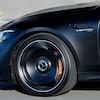
 and of course I wanted to figure it out. When I tried the procedure based on McLaren manual I lit my CCBs on fire so I made some adjustments for our cars.


