When you click on links to various merchants on this site and make a purchase, this can result in this site earning a commission. Affiliate programs and affiliations include, but are not limited to, the eBay Partner Network.
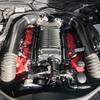
Off hand, does anyone have MB part numbers for the two... EGR valve gaskets next to the supercharger? They're the "brass" topped valves that sit right next to the supercharger. They have small vacuum lines that go into them up top, and then two larger (5/8") black short hoses that feed into the front of the supercharger on either side of the pulley.
Anyone know the part numbers?
thanks,
Pete.
I can find the part numbers later but if you are searching for them they are not EGR valves. They are secondary air injection diverter valves.
2003 E55, 2003 SL55, 2014 CLS63, 2018 q50 Redsport, 1968 Camaro SS, 1999 Trans am Firehawk
Originally Posted by pmgiarrizzo
Supercharger no more! Shes a tad dusty, little bit of wet spots that I didn't have a chance to clean up when I did the Valve Cover Gaskets. The "V" of the engine will be getting a very thorough cleaning, I wouldn't let it stay like this, my OCD will get the better of me.
Inlet bolted on temporarily to check fit. And she just clears the surge tanks and the fuel pressure dampener.
Very, very close fit to the surge tanks, and its clear of the fuel pressure dampener as well.
all of the various bits and pieces laid out for organization and future cleaning.
Close up of the gaskets, hoses and parts.
I have put together a list of parts/gaskets and "while you're in there parts:
-Upper Plenum Gaskets (Left and Right are different)
-Lower Intake Gaskets (Pair)
-Supercharger Inlet Gasket
-Bypass Valve Gasket
-Bypass Valve Ring Seal
-EGR valve gaskets? (not sure if these are EGR related, but they look like it. The two front "zinc" coated round pods next to the supercharger gearbox)
-IAT sensor
-MAP sensor
I don't believe anything else needs to be changed. Fuel Injector O-Rings were brand new with the injectors about 4 or 5 months ago. Valve Cover Gaskets were done at the beginning of the year when I powder coated them.
Fuel Pressure Dampener O-ring was changed last year, might do it for piece of mind. I bought a bag of 10 Viton O-rings, made for fuels and harsh chemicals.
Cheers,
Pete
also do the intercooler to supercharger gasket 113-141-08-80 (earlier production cars used RTV here, but there is a gasket for it now) & crank position sensor (just buy the bosch one on amazon as that is who makes the mb one). The fuel dampener 1120780092 can over time get plugged up with crap so I just replaced the entire thing rather than just the oring. 1120310033 is a vac plug in back of TB snout that was pretty worn on mine. The two hoses 1132381082 & 1132380982 that go to the two injectors on the front were pretty brittle on mine and had hairline cracks. I did NOT replace the gaskets for them though as they are pretty resilient and reusable.
also do the intercooler to supercharger gasket 113-141-08-80 (earlier production cars used RTV here, but there is a gasket for it now) & crank position sensor (just buy the bosch one on amazon as that is who makes the mb one). The fuel dampener 1120780092 can over time get plugged up with crap so I just replaced the entire thing rather than just the oring. 1120310033 is a vac plug in back of TB snout that was pretty worn on mine. The two hoses 1132381082 & 1132380982 that go to the two injectors on the front were pretty brittle on mine and had hairline cracks. I did NOT replace the gaskets for them though as they are pretty resilient and reusable.
cheapest place for parts is mbdirectparts.com
Awesome bit of info here for all of those part numbers, thanks man, that's going to make it very easy for me to visit the boys at the dealership with a list of part numbers and quantities.
For the Supercharger to Intercooler, a few sources are saying the opposite, most of the ones I see say Up to XXXX model year but not past it.. Can anyone confirm this? I may just stick with the Loctite stuff. It holds extremely well and its supposed to be the equivalent to the OEM MB stuff, but considerably less money due to the lack of the 3 pointed star logo
Last edited by pmgiarrizzo; Jan 31, 2017 at 07:28 AM.
Well, I suppose those are theoretical values based on engine displacement rpm limit and air volume that can pass through that size of orifice... my car is making 500whp.. so, add 18% for losses, that's 590hp at the crank.. not sure how that affects your calculations but I'd be curious as to how you came up with the numbers. Not in an insulting way, I'm curious by nature, so please do tell
Pete.
Formula for flow (cfm) through a pipe more or less = .14 x d^2
Awesome bit of info here for all of those part numbers, thanks man, that's going to make it very easy for me to visit the boys at the dealership with a list of part numbers and quantities.
For the Supercharger to Intercooler, a few sources are saying the opposite, most of the ones I see say Up to XXXX model year but not past it.. Can anyone confirm this? I may just stick with the Loctite stuff. It holds extremely well and its supposed to be the equivalent to the OEM MB stuff, but considerably less money due to the lack of the 3 pointed star logo
You have it correct. Early models used a gasket and later ones use the sealant.
Formula for flow (cfm) through a pipe more or less = .14 x d^2
hp = ~ cfm / 1.5
Fair enough, but how do you determine the flow through a pipe based on diameter, velocity and density and many other factors are involved as well. Not to mention, our cars are supercharged, so the dynamics completely change. Typically a pipe flow rate is simply determined by the maximum of volume that can be pushed through a diameter with zero pressure. Anything beyond "zero" pressure ends up changing the dynamics completely.
Our engines, based on the fact that the supercharger screws generate vacuum right behind the throttle body, will ultimately create a "suction" force that "pulls" the air through the throttle body as the engine RPM increases. This is effectively the same as having a force pushing the air through the intake pipes. So the velocity changes and thus, the flow rate changes. Not to mention the temperature of the air on the intake side, is much much cooler than that of the exhaust side, so the two temperatures alone will change the velocity based on air density; Cold air being more dense (slower moving) than Hot air.
The very first calculation is a bore/stroke/# of cylinders and at what RPM you're trying to make max power at to determine the correct size throttle body:
Bore: 3.82in
Stroke: 3.62in
# of Cylinders: 8
HP RPM = 6500 I put down 6500 since we're all looking to make more peak horsepower, these cars tend to taper off after 5500rpm with the OEM throttle body.
The results are for a naturally aspirated motor (no SC or Turbo) so take it with a grain of salt. The suggested TB size it comes out with is about 79mm, our cars have a 74mm, but again, remember the supercharger is sucking in air more than its relying on it being pushed in.
BUT lower in the results, for RACING applications (HIGH RPM) its suggesting a 91mm throttle body. In my opinion, that represents a spot on value for our cars for enormous potential to make power.
Running similar Volumes for intake & exhaust is very important for engines to optimize efficiency. What goes in must come out, right? The volume of air coming in, will definitely be the same volume of air going out. Its basic phyisics and laws of thermodynamics, and conservation of energy/mass properties.
90mm throttle body works out to approximately 9.86square inches of area.
I'm running dual 2.5inch exhausts, and when both of the 2.5 inch areas are added together, my result is 9.817square inches, nearly identical in surface area.
makes sence since im pretty sure my 4.8 gmc sierra has like around a 85mm tb.
The north american manufacturers don't seem to short change on the intake side of things, I believe the OEM Hellcat Throttle body is an 85mm (I could be wrong, I heard through the grape vines).
All your doing i setting your self up for check engine lights and issues.Nice project still i must say ..All i know is that the tb on these cars are over rated unless you got ported heads and cams.The stock t.b is good.
Fair enough, but how do you determine the flow through a pipe based on diameter, velocity and density and many other factors are involved as well. Not to mention, our cars are supercharged, so the dynamics completely change. Typically a pipe flow rate is simply determined by the maximum of volume that can be pushed through a diameter with zero pressure. Anything beyond "zero" pressure ends up changing the dynamics completely.
Our engines, based on the fact that the supercharger screws generate vacuum right behind the throttle body, will ultimately create a "suction" force that "pulls" the air through the throttle body as the engine RPM increases. This is effectively the same as having a force pushing the air through the intake pipes. So the velocity changes and thus, the flow rate changes. Not to mention the temperature of the air on the intake side, is much much cooler than that of the exhaust side, so the two temperatures alone will change the velocity based on air density; Cold air being more dense (slower moving) than Hot air.
The very first calculation is a bore/stroke/# of cylinders and at what RPM you're trying to make max power at to determine the correct size throttle body:
Bore: 3.82in
Stroke: 3.62in
# of Cylinders: 8
HP RPM = 6500 I put down 6500 since we're all looking to make more peak horsepower, these cars tend to taper off after 5500rpm with the OEM throttle body.
The results are for a naturally aspirated motor (no SC or Turbo) so take it with a grain of salt. The suggested TB size it comes out with is about 79mm, our cars have a 74mm, but again, remember the supercharger is sucking in air more than its relying on it being pushed in.
BUT lower in the results, for RACING applications (HIGH RPM) its suggesting a 91mm throttle body. In my opinion, that represents a spot on value for our cars for enormous potential to make power.
Running similar Volumes for intake & exhaust is very important for engines to optimize efficiency. What goes in must come out, right? The volume of air coming in, will definitely be the same volume of air going out. Its basic phyisics and laws of thermodynamics, and conservation of energy/mass properties.
90mm throttle body works out to approximately 9.86square inches of area.
I'm running dual 2.5inch exhausts, and when both of the 2.5 inch areas are added together, my result is 9.817square inches, nearly identical in surface area.
Cheers,
Pete.
Pete - The formula of flow through a circular opening (TB) is what I posted...
Per my earlier post - a 74mm should be good for ~511 hp, 82mm be good for ~630 hp, and 90mm be good for ~750hp (crank)...
The numbers I posted were approximations and triangulate to your estimates as well (I was supporting the benefit of 90mm TB for high horsepower cars). For a stock car or close to stock car, the stock TB is fine, for slightly modified cars the 82mm is likely more than enough, and for heavily modified cars a 90mm is the optimal choice.
All new sensors gaskets and seals are in. Hopefully by this weekend I'll have it all back together and started up... Let's hope for a no-snow kind of day this weekend. We just got about 2-3 inches yesterday... I'm keeping this car as far away from snow as possible.
This will be one of the last updates I make. I may return with a final update in the spring after the car gets her full custom dyno tune, but for now, here are the installation pictures...
The View from front to back of it installed. Very very minimal clearance between the throttle body and Intake plenum, but she fit!
A view of that beautiful gaping hole.
In place for the final time. Need my new Y-Pipe to install the rest of the intake.
The car has no more or less of a "hiccup" than before, my hiccup being a random surge that happens in the span of a split second. Feels like the car lunges forward and then continues like nothing happened. The surge doesn't happen again until the car comes to a complete stop, it lunges when going from light to moderate throttle, and then after it happens, she drives like nothing happened. The car feels like an animal though. Took my brother out for a rip last night, left it in 2nd gear, dropped the hammer around 3000rpm and she lit up the wheels all the way until she shifted into 3rd... spinning wheels from about 80km/h to 130km/h (50mph-80mph)... never had that happen so brutally before. She has spun from 2nd at 80km/h (50mph) up to about 100-110km/h (60-65mph) or so, but 130-140 at redline... never before. The whole time I was just trying to keep the car in a straight line haha.
Here is the youtube video I just uploaded for you guys:
Welcome back everyone to another spring season! (for those of us in the northern side of things). The car is back on the road, and tomorrow she goes in for a custom dyno tune at Eurocharged Canada.
Intake system fully installed and ready
Summer wheels back on (stored on OEM wheels) and back down to an appropriate height
The car dynoed at 500whp and 617wtq last year at the end of the season. Not the highest numbers, but I did drive through 35 degree Celsius temperatures, humidity up the A$$ and it was 45min of bumper to bumper traffic, so the whole engine was roasting hot with already hot ambient temperatures. Tomorrow should be a lot more reasonable, supposed to be 19 or 20 degrees tomorrow, possible thunderstorms, but lets hope that happens today/tonight for clean & dry roads tomorrow.
This will be the best test as to what a 90mm throttle body installation will do for our cars. I have a baseline from last year (sort of) and there has been no other work done to the car aside from the throttle body installation.
Cheers,
Pete.
Also, for above post, tires are 305 and ambient temps were around 20 celcius. This weekend we saw temps around the same and she lights up pretty much anywhere in 2nd gear.. I lit up the tires at 100kmh until she shifted into 3rd at 135-140ish.
I love your summer wheels. They complement your car very very well and the drop is mint!
How did it go with the 90mm dyno
Originally Posted by BoostedAero
^+1
Drum roll please for results...
Results are in, with no tune modification whatsoever, the baseline will give everyone accurate ideas as to what a stock to 90mm throttle body modification will give you if done properly:
Last years numbers before 90mm: 500rwhp and 617rwtq
This years numbers after 90mm: 528rwhp and 615rwtq
After a slight modification to the tune, slightly leaning out the mixture and after a lot of hard and hot runs:
542rwhp and 620rwtq
Very happy with the results! The car easily has 550rwhp in her, but not after that many back to back runs. Everything was too hot to make any more power.
Mercedes SLR McLaren 722 S Is Extremely Rare Example Modified by McLaren
Slideshow: A one-of-one U.S.-spec Mercedes-Benz SLR McLaren Roadster became even rarer after a factory-backed transformation at McLaren's headquarters.