



SL55/63/65/R230 AMG: OK let's have the truth

Thread Starter
MBWorld Fanatic!
Joined: Apr 2008
Posts: 2,838
Likes: 19
From: U.K.
SL 63 W/B AMG , S600,C220
OK let's have the truth
OK my car is lowered with links,
The wheels have just been refurbed, all bent due to 20" rims, 25 profile
tyres, and being lowered.
If I fit a Rentech module instead of links, will it give my wheels some extra
protection, I can't see it will, both make the car lower, so they both have less
suspension travel so I can't see the module being better.
The wheels have just been refurbed, all bent due to 20" rims, 25 profile
tyres, and being lowered.
If I fit a Rentech module instead of links, will it give my wheels some extra
protection, I can't see it will, both make the car lower, so they both have less
suspension travel so I can't see the module being better.

MBWorld Fanatic!
Joined: Apr 2006
Posts: 8,137
Likes: 26
From: Maryland
Eurocharged 2004 E500, Eurocharged ECU/TCU 2005 SL600, 2010 Caddy SwaggerWagon
While both the links and the module accomplish the same thing, they go about it differently. Links, as you know, are a physical adjustable arm that "tricks" the car into thinking it's riding higher than it should be, so it calculates what it needs to do to lower the car down to what it perceives as stock ride height. The module, integrates into the suspension control modules, if you will. It's regulates voltage to each corner and requests that the car go lower, and can adjust on the fly. Since the car is aware of it's true height, it adjusts damping accordingly as well. Another benefit is 100% equal ride height at each corner. With links, this is tricky to do, because each mm in length difference, raises or lowers the car exponentially. Takes a little work to get them all equal, and to adjust height based on preference, is a chore.
I've had the renntech module on my airmatic equipped E-Class, and the car did feel different than when I had it lowered with links. It just felt better, like it dealt with road imperfections better. My SL has always had links, so I can't really speak specifically about the module's comfort benefits over links on an ABC equipped car. I'd assume it's a similar gain.
I went with links when modules were still $1500 and links were maybe $175 or so. If I had to do it again, with the lower prices the modules can be had for, I'd go module all the way.
Nothing is going to give you your OEM ride comfort back. It's the price we pay for aesthetics, and since my car isn't a daily driver, it's easy for me to live with.
I've had the renntech module on my airmatic equipped E-Class, and the car did feel different than when I had it lowered with links. It just felt better, like it dealt with road imperfections better. My SL has always had links, so I can't really speak specifically about the module's comfort benefits over links on an ABC equipped car. I'd assume it's a similar gain.
I went with links when modules were still $1500 and links were maybe $175 or so. If I had to do it again, with the lower prices the modules can be had for, I'd go module all the way.
Nothing is going to give you your OEM ride comfort back. It's the price we pay for aesthetics, and since my car isn't a daily driver, it's easy for me to live with.

MBWorld Fanatic!


Joined: Jun 2009
Posts: 3,040
Likes: 125
From: Atlanta Metro
Current: C217 V12TT AMG Previously: C55 AMG, SL65 AMG
This is why in a few weeks I'm going to pick up one of these: http://programainc.com/mercedes-benz...22210099r.html . When parked I'll lower it, once I start moving I'll program it to go back to stock ride height.

MBWorld Fanatic!


Joined: Aug 2008
Posts: 2,498
Likes: 222
Porsche guy who drives SL63 w/ perf pkg AND perf suspension
lowering doesnt have anything to do with it , its the 1 1/2" rubber that doesnt protect the tire from the road. If you want to protect the wheel you have to get higher profile tire.

Super Member
Joined: Jul 2013
Posts: 930
Likes: 24
06 SL65AMG, 13 Tesla Model S 60kwh, 02 Jaguar S-Type 3.0, 12 S550 4 Matic, 07 E320 Bluetec, 06 LX470
Yep skinnier the tires the more prone they are to bends, if your worried about bends get a set of 19 inch rims for the winter with much bigger sidewalls, or just leave it parked.

Super Moderator


Joined: May 2002
Posts: 10,544
Likes: 3,675
From: Land of 10,000 lakes
AMG GTC Roadster, E63s Ed.1, M8 Comp. Coupe
Had many alignments and toe adjustments done with using lowering links but always had more wear on the inner edge of the tires, especially the rear tires.
I think this is pretty common for anyone lowering their cars
The inner edge of the wheel/tire is experiencing more pressure and weight of the car as the weight is not evenly distributed across the whole contact surface of the tire.
More pressure on the inside of the rim = easier bends
When using a module, the car typically raises the car back to stock height at around 30mph, this reducing the risk on bends over links.
Super Member
Joined: Jun 2014
Posts: 884
Likes: 23
From: U.K.
sl600
I have lowering links however whenever I am in an area with lumps and bumps i will raise it to one light. On highways and smooth fast roads I will keep it lowered or on the track for that matter. I don't think with the ABC a module will make any difference compared to the links. Sounds like you might need some better quality wheels as cheaper wheels do tend to bend. I also have 20" with 305/25r20 tires with no problems.
Trending Topics
Super Moderator
Joined: May 2002
Posts: 10,544
Likes: 3,675
From: Land of 10,000 lakes
AMG GTC Roadster, E63s Ed.1, M8 Comp. Coupe
I have lowering links however whenever I am in an area with lumps and bumps i will raise it to one light. On highways and smooth fast roads I will keep it lowered or on the track for that matter. I don't think with the ABC a module will make any difference compared to the links. Sounds like you might need some better quality wheels as cheaper wheels do tend to bend. I also have 20" with 305/25r20 tires with no problems.
Also, raising the car manually only works at lower speeds. Wether the light is on or not, the car lowers itself at speeds, so your raise is irrelevant. At level 1, it lowers itself over 38mph.
Links require alignment and based on how low you have it, chances are your tires will wear on the inside. I had that on our SL600 even with the MB camber kit (never realized I had that but saw it on an invoice from MB)
I used to like links because they were really cheap but once your add alignment, sets of tires you are chewing through and possibly bend rims (which of course can happen with any ride height), the price quickly adds up.
Plus ride comfort does suffer...
MB World Stories
The Best of Mercedes & AMG

Manual Mercedes? 6 Times Sindelfingen Let Drivers Have All The Fun
Verdad Gallardo
Mercedes SLR McLaren 722 S Is Extremely Rare Example Modified by McLaren
Verdad Gallardo
8 Classic Boxy Mercedes Designs That Have Aged Like Fine Wine
Verdad Gallardo
Flawlessly Restored Mercedes 190E Evo II Heads to Auction
Verdad Gallardo
Electric Mercedes C-Class Unveiled: 11 Things You Need to Know
Verdad Gallardo
Mercedes EQS Gets A Major Update: Everything You Need to Know
Verdad Gallardo
5 Underrated Mercedes-Benz Models That Don't Get the Love They Deserve
Verdad Gallardo
Mercedes 300D Has Pushed Well Past 1 Million Miles and It Ain't Stopping
Verdad Gallardo
10 Most Reliable Mercedes-Benz Models You Can Buy Used
Verdad Gallardo
Thread Starter
MBWorld Fanatic!
Joined: Apr 2008
Posts: 2,838
Likes: 19
From: U.K.
SL 63 W/B AMG , S600,C220
While both the links and the module accomplish the same thing, they go about it differently. Links, as you know, are a physical adjustable arm that "tricks" the car into thinking it's riding higher than it should be, so it calculates what it needs to do to lower the car down to what it perceives as stock ride height. The module, integrates into the suspension control modules, if you will. It's regulates voltage to each corner and requests that the car go lower, and can adjust on the fly. Since the car is aware of it's true height, it adjusts damping accordingly as well. Another benefit is 100% equal ride height at each corner. With links, this is tricky to do, because each mm in length difference, raises or lowers the car exponentially. Takes a little work to get them all equal, and to adjust height based on preference, is a chore.
I've had the renntech module on my airmatic equipped E-Class, and the car did feel different than when I had it lowered with links. It just felt better, like it dealt with road imperfections better. My SL has always had links, so I can't really speak specifically about the module's comfort benefits over links on an ABC equipped car. I'd assume it's a similar gain.
I went with links when modules were still $1500 and links were maybe $175 or so. If I had to do it again, with the lower prices the modules can be had for, I'd go module all the way.
Nothing is going to give you your OEM ride comfort back. It's the price we pay for aesthetics, and since my car isn't a daily driver, it's easy for me to live with.
I've had the renntech module on my airmatic equipped E-Class, and the car did feel different than when I had it lowered with links. It just felt better, like it dealt with road imperfections better. My SL has always had links, so I can't really speak specifically about the module's comfort benefits over links on an ABC equipped car. I'd assume it's a similar gain.
I went with links when modules were still $1500 and links were maybe $175 or so. If I had to do it again, with the lower prices the modules can be had for, I'd go module all the way.
Nothing is going to give you your OEM ride comfort back. It's the price we pay for aesthetics, and since my car isn't a daily driver, it's easy for me to live with.
Other members say just put bigger profile tyres on, I have already bent a
stock 65 wheel, without being lowered, so this may help, but when you put
20" rims on, it transforms the look.
So I will go for the module, just got to pay for all the stuff I have had lately
 There is a guy in the UK who fits the Rentech.

SPONSOR

Joined: Apr 2013
Posts: 1,702
Likes: 178
Mercedes-Benz CLK 550
That's not quite the case. Lowering will have an impact since most likely your camber is not properly adjusted (ABC also lowers the car at speed).
Had many alignments and toe adjustments done with using lowering links but always had more wear on the inner edge of the tires, especially the rear tires.
I think this is pretty common for anyone lowering their cars
The inner edge of the wheel/tire is experiencing more pressure and weight of the car as the weight is not evenly distributed across the whole contact surface of the tire.
Had many alignments and toe adjustments done with using lowering links but always had more wear on the inner edge of the tires, especially the rear tires.
I think this is pretty common for anyone lowering their cars
The inner edge of the wheel/tire is experiencing more pressure and weight of the car as the weight is not evenly distributed across the whole contact surface of the tire.
Fact is “Full front and rear wheel alignment” is no more!
Since the mid ‘90 model’s, with the ever increasing speed of vehicle assembly lines there has been no front or rear Camber (or front Caster) adjustment facility fitted OEM
Only current adjustment is front and rear Toe!
To attempt to return vehicle to factory specs to resolve costly premature inner edge tire wear, improve traction, and fix steering pull the only current alternative for Camber and Caster is to fit offset, slotted bolts (for the front only). But these are inaccurate - one only position bolts - offering a minimal .3 of one degree adjustment (3mm / 1/8”).
It’s no wonder many owners continually change tire brands or go from one MB Dealer or alignment shop to another trying to get it right/fix the problem!
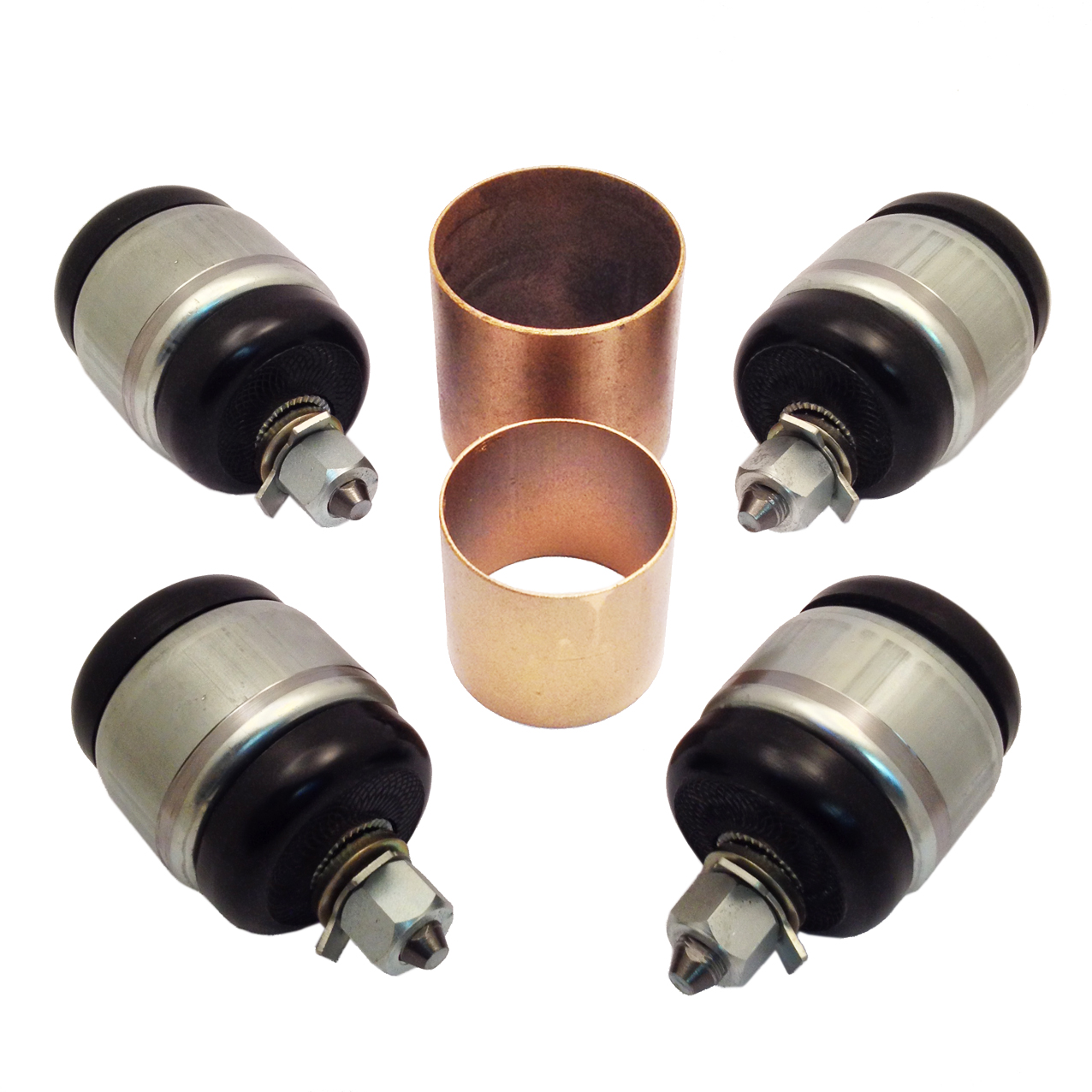
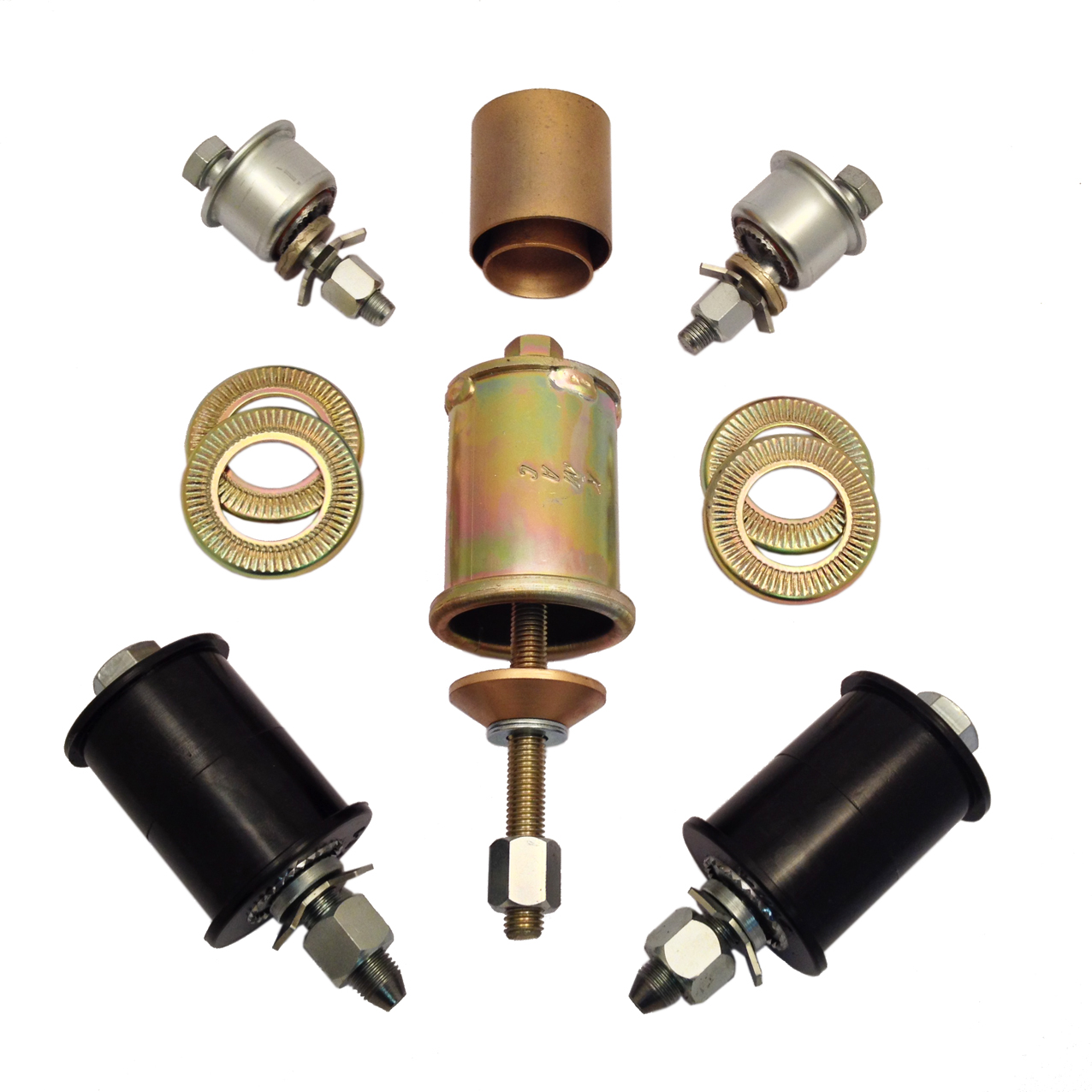
We saw the need therefore "to fix it right the first time" by designing, developing, patenting (and re-instating from the 1990's) fully adjustable front (and rear) suspension for virtually all models.
The current K-MAC kits have up to 4 times the adjustment of these one only position offset bolts (both Positive or Negative). And unlike these one position bolts they can be accurately adjusted on car(under load) direct on alignment turntable (no need for labor intensive removal/replacement each time).
Ongoing, precise adjustment of both Camber and Caster settings if altering suspension height, fitting wide profile tires/wheels, curb knock damage or being able to quickly fine tune/change specs on race days (extra Negative/plus track width to go deeper into the corners/lower lap times). With the unique K-MAC patented design only requiring use of a single wrench/no disassembly.
For the rear, similar kits for precise Camber adjustment (with additional Toe to compensate for the new Camber facility). Importantly unlike the alternative rear adjustable Camber control arms available K-MAC kits do not move top of tire outwards - this reducing essential clearance top of tire to outer fender when adjusting to fix premature inner edge tire wear/improve rear traction.
Also instead of spherical bearings as used on control arms which prematurely pound out allowing metal to metal contact. At K-MAC we have developed long life elastomer bushings.
Bonus with the four front and four rear bushes is that they are also designed with twice the load bearing area and replace the highest wearing suspension bushings. And with K-MAC no special tools are required to fit.
Note (Product background re bushings): Majority OEM bushes have air voids to allow 2 axis movement. So control arms can travel through their required arcs without binding, locking up.
Essential with today’s modern designs of “multi-link” arms with different angle mount points!
Yet most “aftermarket” replacement bushes the industry standard is to eliminate these air voids in an attempt to improve both steering response and reduce wheel hop, loss of traction under brake and acceleration.
The opposite is often the case – the elimination of the air voids causes even more severe wheel hop, loss of traction through binding, locking up of arms.
K-MAC bushes – with 50 years now of bush technology are designed without the air voids but where needed with “full 2 axis movement”. Result is power to the ground – maximum traction/acceleration/braking - along with noticeably improved directional control and steering response for highway driving, lane changing.

Super Member
Joined: Jun 2014
Posts: 884
Likes: 23
From: U.K.
sl600
I had mine at Silverstone GP and SPA GP twice it was good fun. I am trying to drop a little more weight from the car and dial in a little less understeer by adjusting the camber and caster as well as moving some weight to the rear by relocating the starter battery. Also going with a wider track and 12" rear wheels with 315mm cup2 tyres and 10.5" front wheels with 295mm tires. Also cooling mods and more power. YOU CAN NEVER HAVE ENOUGH POWER!


