






Ron Davis Heat Exchanger

Thread Starter
Senior Member
Joined: Apr 2007
Posts: 256
Likes: 9
From: Maryland
2004 E55 AMG
Ron Davis Heat Exchanger
My new HE just arrived today and I plan to install it this weekend. From my other post, https://mbworld.org/forums/w211-amg/213966-diy-heat-exchanger-prep.html , I prepared the coolant circuit so that part of the install is done.
It looks like there's a few options out there now for anyone wanting to replace the stock HE with a larger one or add a secondary HE like I'm doing. Glad to see the market bringing down the cost of these things.
Here are some pics. I'll do another DIY when I do the final install, as well as, IAT temp logging before and after.


It looks like there's a few options out there now for anyone wanting to replace the stock HE with a larger one or add a secondary HE like I'm doing. Glad to see the market bringing down the cost of these things.
Here are some pics. I'll do another DIY when I do the final install, as well as, IAT temp logging before and after.
Trending Topics
MB World Stories
The Best of Mercedes & AMG

Manual Mercedes? 6 Times Sindelfingen Let Drivers Have All The Fun
Verdad Gallardo
Mercedes SLR McLaren 722 S Is Extremely Rare Example Modified by McLaren
Verdad Gallardo
8 Classic Boxy Mercedes Designs That Have Aged Like Fine Wine
Verdad Gallardo
Flawlessly Restored Mercedes 190E Evo II Heads to Auction
Verdad Gallardo
Electric Mercedes C-Class Unveiled: 11 Things You Need to Know
Verdad Gallardo
Mercedes EQS Gets A Major Update: Everything You Need to Know
Verdad Gallardo
5 Underrated Mercedes-Benz Models That Don't Get the Love They Deserve
Verdad Gallardo
Mercedes 300D Has Pushed Well Past 1 Million Miles and It Ain't Stopping
Verdad Gallardo
10 Most Reliable Mercedes-Benz Models You Can Buy Used
Verdad Gallardo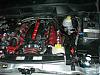
Member
Joined: Aug 2007
Posts: 126
Likes: 0
From: philadelphia
2005 E55 drowned/ 2011 CTS-v coupe gone/ 2012 E63 PP,LSD finally here
very nice Brian, are you gonna run stainlees steel lines, that looks like a 12AN male on the HE, are you gonna use blue & red or black fittings, a 180 degree fitting might work on the return line, could look pretty cool, just a sugesstion, keep up the good work


MBWorld Fanatic!
Joined: Jun 2005
Posts: 1,406
Likes: 1
From: Mia
2005 E 55
Thread Starter
Senior Member
Joined: Apr 2007
Posts: 256
Likes: 9
From: Maryland
2004 E55 AMG
Yes, I've got my stock pump still installed and running full time. I replaced it several months ago with the newest version, but will install my CM30 when I do the HE. I didn't want to drain the system twice.
Thread Starter
Senior Member
Joined: Apr 2007
Posts: 256
Likes: 9
From: Maryland
2004 E55 AMG
No real specific reason but after talking with the guys at Ron Davis they seemed to think with my particular setup that the extra cost to make it double-pass wouldn't be worth it as far as any perceivable gains. Also, the height is only 4.5" because I wanted to leave a little room for air flow to the second oil cooler under the stock HE. I figured a single-pass would give the coolant access to more surface area to make the heat transfer, but who knows...
Thread Starter
Senior Member
Joined: Apr 2007
Posts: 256
Likes: 9
From: Maryland
2004 E55 AMG
Yes, those are -12, and I'll be using black and brushed aluminum fittings with black hose.

Banned
Joined: Sep 2006
Posts: 973
Likes: 1
From: Santa Barbara & Los Angeles, CA
C32, Cobra, 700hp Vespa
In my experience, I would greatly disagree with the above statement. The unit pictured is nice looking for sure, but I actually don't think its much better than the stock unit, if at all. Will it work? Yes, but only because it is being added as a secondary. Is it more efficient than the stock unit? Somewhat. Sure you are adding more cooling capacity, albeit a small amount, but at the expense of adding another unit to block airflow. This is on top of the fact that the design of the unit is not great to begin with.
We are looking at a single pass, tube and fun unit, that has square end tanks. If anything, this unit should have had angled end tanks, being that its a single pass design. Fluid will not flow evenly to all the fins. In fact, you will have pooling of fluid in the corners of the end tanks because of this.
The tube and fin core itself is cheap, but it is light. This is why it is used in many OEM applications. It is not as efficient as bar and plate, especially in a heat exchanger type of application. Tube and fin passages are 1/16" thick, and they are open passages. Bar and plate passages are 1/4" thick, and are internally finned, which helps distribute the fluid evenly in the passage, as well as maintain a good flow rate through the larger passage. Bar and plate cores act more as a heatsink, which is what we want in this type of application. Bar and plate cores also tend to see less damage in a front mount application.
The unit pictured will work for BrianS, mostly because it is part of a custom separation setup. I just don't see this as being an ideal until for the E55 in general. If used by itself, absolutely not. Used as a secondary, helpful. But why put two adequate units together to make a decent setup? Get rid of the mildly efficient stock unit all together, and go with a unit that makes sense. There is a reason most aftermarket ICs and HEs use bar and plate cores. This is across all markets, not just automotive.
Edited: I just wanted to add that Ron Davis makes some beautiful pieces. I am in no way bashing their work as a whole. I just don't think this specific application was thought out very well.
Last edited by Code3 Performance; Oct 26, 2007 at 11:52 AM.
MBWorld Fanatic!
Joined: Jun 2005
Posts: 1,406
Likes: 1
From: Mia
2005 E 55
I was trying to not jump into this conversation for obvious reasons. But after this statement, I feel I need to.
In my experience, I would greatly disagree with the above statement. The unit pictured is nice looking for sure, but I actually don't think its much better than the stock unit, if at all. Will it work? Yes, but only because it is being added as a secondary. Is it more efficient than the stock unit? Somewhat. Sure you are adding more cooling capacity, albeit a small amount, but at the expense of adding another unit to block airflow. This is on top of the fact that the design of the unit is not great to begin with.
We are looking at a single pass, tube and fun unit, that has square end tanks. If anything, this unit should have had angled end tanks, being that its a single pass design. Fluid will not flow evenly to all the fins. In fact, you will have pooling of fluid in the corners of the end tanks because of this.
The tube and fin core itself is cheap, but it is light. This is why it is used in many OEM applications. It is not as efficient as bar and plate, especially in a heat exchanger type of application. Tube and fin passages are 1/16" thick, and they are open passages. Bar and plate passages are 1/4" thick, and are internally finned, which helps distribute the fluid evenly in the passage, as well as maintain a good flow rate through the larger passage. Bar and plate cores act more as a heatsink, which is what we want in this type of application. Bar and plate cores also tend to see less damage in a front mount application.
The unit pictured will work for BrianS, mostly because it is part of a custom separation setup. I just don't see this as being an ideal until for the E55 in general. If used by itself, absolutely not. Used as a secondary, helpful. But why put two adequate units together to make a decent setup? Get rid of the mildly efficient stock unit all together, and go with a unit that makes sense. There is a reason most aftermarket ICs and HEs use bar and plate cores. This is across all markets, not just automotive.
Edited: I just wanted to add that Ron Davis makes some beautiful pieces. I am in no way bashing their work as a whole. I just don't think this specific application was thought out very well.
In my experience, I would greatly disagree with the above statement. The unit pictured is nice looking for sure, but I actually don't think its much better than the stock unit, if at all. Will it work? Yes, but only because it is being added as a secondary. Is it more efficient than the stock unit? Somewhat. Sure you are adding more cooling capacity, albeit a small amount, but at the expense of adding another unit to block airflow. This is on top of the fact that the design of the unit is not great to begin with.
We are looking at a single pass, tube and fun unit, that has square end tanks. If anything, this unit should have had angled end tanks, being that its a single pass design. Fluid will not flow evenly to all the fins. In fact, you will have pooling of fluid in the corners of the end tanks because of this.
The tube and fin core itself is cheap, but it is light. This is why it is used in many OEM applications. It is not as efficient as bar and plate, especially in a heat exchanger type of application. Tube and fin passages are 1/16" thick, and they are open passages. Bar and plate passages are 1/4" thick, and are internally finned, which helps distribute the fluid evenly in the passage, as well as maintain a good flow rate through the larger passage. Bar and plate cores act more as a heatsink, which is what we want in this type of application. Bar and plate cores also tend to see less damage in a front mount application.
The unit pictured will work for BrianS, mostly because it is part of a custom separation setup. I just don't see this as being an ideal until for the E55 in general. If used by itself, absolutely not. Used as a secondary, helpful. But why put two adequate units together to make a decent setup? Get rid of the mildly efficient stock unit all together, and go with a unit that makes sense. There is a reason most aftermarket ICs and HEs use bar and plate cores. This is across all markets, not just automotive.
Edited: I just wanted to add that Ron Davis makes some beautiful pieces. I am in no way bashing their work as a whole. I just don't think this specific application was thought out very well.
FYI: I have a large dual pass bar and plate on my car in front of the stock he, but we have tried different style he's and like I mentioned before quickly realized that overall water volume had more of an impact on iats than the he type. This has been my experience with the 55.

MBWorld Fanatic!
Joined: Jul 2006
Posts: 1,414
Likes: 0
From: Los Angeles, CA
2005 E55
A double pass design incorporates a 360 degree welded baffle to prevent any internal coolant bypass. The baffle forces coolant through the top half of the heat exchanger and then the bottom half, giving the heat exchanger the opportunity to dissipate heat twice...more cooling.
Size does matter, but if the coolant is just flowing right thru the HE, it won't be as effective.
Size does matter, but if the coolant is just flowing right thru the HE, it won't be as effective.
MBWorld Fanatic!
Joined: Jun 2006
Posts: 6,649
Likes: 207
'03 E55, Range Rover Sport Supercharged, Ducati 748R
I guess we agree to disagree, using Brians set-up along with the stock heat exchanger will yield the same results-ie average iats across the board as a large bar and plate he. Just separating the coolant lines and increasing the total water volume does wonders even with the stock he. Once you start getting some iat readings under boost and compare them to different set-ups , you will see similar results as far as Iat's are concerned and come to the conclusion that the ic core is the weak link in the chain.
FYI: I have a large dual pass bar and plate on my car in front of the stock he, but we have tried different style he's and like I mentioned before quickly realized that overall water volume had more of an impact on iats than the he type. This has been my experience with the 55.
FYI: I have a large dual pass bar and plate on my car in front of the stock he, but we have tried different style he's and like I mentioned before quickly realized that overall water volume had more of an impact on iats than the he type. This has been my experience with the 55.
Last edited by chiromikey; Oct 26, 2007 at 12:53 PM.
Banned
Joined: Sep 2006
Posts: 973
Likes: 1
From: Santa Barbara & Los Angeles, CA
C32, Cobra, 700hp Vespa
The weak link is the stock HE, and fluid capacity. The stock IC is perfectly capable of cooling the SC, if the other parts of the system are up to the task. One bar and plate unit yields more fluid capacity that two tube and fin units, and has much greater cooling efficiency. I just don't see the point in leaving the stock unit in its place. Of course total fluid volume makes a huge difference. But if you just added a larger coolant reservoir, without upgrading the HE, you would see minimal gains. I would love to see any data you have on the various setups you tested, and under what kind of conditions tests were run at. Being a former QA Engineer, I just don't see the point in having two units do the work that can be handled more efficiently by one. You are simply adding more points of failure, something I try and avoid. Its just weird to see this mentality, as you rarely see this type of thinking in any other car. Its like a patch versus a fix. Sure it may yield close to the same results, but at what cost? You may send a customer a temporary solution, but you ultimately fix the problem, you don't just work around it.
Last edited by Code3 Performance; Oct 26, 2007 at 01:07 PM.
Banned
Joined: Sep 2006
Posts: 973
Likes: 1
From: Santa Barbara & Los Angeles, CA
C32, Cobra, 700hp Vespa
Moderate results? Just curious to see the kind of testing you guys have done. Could someone point me in the right direction? I am seeing great results with the C32 setup that I have. I have also seen great results with my Cobra. In both applications, neither IC core was touched. I have a hard time believing that by increasing fluid capacity, and using a more efficient HE, that you guys are only seeing moderate results.
MBWorld Fanatic!
Joined: Jun 2006
Posts: 6,649
Likes: 207
'03 E55, Range Rover Sport Supercharged, Ducati 748R
please no offense intended but obvously you haven't spent much time around the e55 if you think the REAL weak link is the h/e and the i/c core isn't the true limiting factor.
if your bar and plate h/e can consistently keep iat's even remotely close to ambient during summer months i'll scrap my extensive custom i/c system and buy your whole package.
if your bar and plate h/e can consistently keep iat's even remotely close to ambient during summer months i'll scrap my extensive custom i/c system and buy your whole package.
Thread Starter
Senior Member
Joined: Apr 2007
Posts: 256
Likes: 9
From: Maryland
2004 E55 AMG
All I know is that my options were very limited when I decided to do this and I wasn't sold enough on the value of the offerings at the time to pay the going rate. After looking around I kept coming back to AFCO, http://www.afabcorp.com/ , heat exchangers as a viable option but the dimensions weren't available so I figured tube-fine was OK for me and called Ron Davis to verify.
code3, if your unit was available at the time then I definitely would have considered it since it looks great and plug-n-play is a bonus.
code3, if your unit was available at the time then I definitely would have considered it since it looks great and plug-n-play is a bonus.
Banned
Joined: Sep 2006
Posts: 973
Likes: 1
From: Santa Barbara & Los Angeles, CA
C32, Cobra, 700hp Vespa
please no offense intended but obvously you haven't spent much time around the e55 if you think the REAL weak link is the h/e and the i/c core isn't the true limiting factor.
if your bar and plate h/e can consistently keep iat's even remotely close to ambient during summer months i'll scrap my extensive custom i/c system and buy your whole package.
if your bar and plate h/e can consistently keep iat's even remotely close to ambient during summer months i'll scrap my extensive custom i/c system and buy your whole package.
So what is the problem with the IC core you keep referring to? I know the C32 unit certainly isn't that bad. Sure it could use some smoothing out, but overall the unit is perfectly fine. Has the core been isolated by itself and tested to show that there is a problem that exists? Or is it an assumption based on exhaustive testing of every other component int he system?
I have spent an extensive amount of time around my Cobra and C32. They use near identical setups as the E55. I can say without a doubt that the weak link is the stock HE, and total system fluid capacity. I was making over 500rwhp in the Cobra. Never had an issue with high IATs at the track or otherwise.
No offense, but have you spent any time around air to water based systems other then the E55? I'm not saying the IC cant be improved, but it certainly isn't holding anyone back from achieving great results.
Maybe your expectations are too high? Ambient IATs during summer months? How about 20°-30° over ambient over 100°? There is hardly a difference in what we are trying to achieve in the bigger picture. Thats what I consistently see during aggressive driving. The SC doesn't shut off, the car is always making power and never feels sluggish. Under 100°, the gap closes, and gets closer to ambient very quickly.
I converted my C32 to a gravity based system. Fluid comes out of the IC hot, down into the HE to cool twice, through the pump, back up into my larger aluminum reservoir, that is baffled to cool more, then into the IC again. If I dump ice in to my reservoir, that ice cold water goes directly into the IC. Obviously the ice is only real beneficial for drag racing.
We are all on the same page as far as what we all want. Consistent power. I truly am interested in getting the problem solved. After spending time with the E55, I don't see what is so different about it. Separate the fluid, increase capacity, upgrade the pump, and upgrade the HE. I am interested in seeing what testing has been done to prove that the stock IC is the problem.
Edited: I just wanted to say sorry BrianS, I didn't mean to muck up your thread. Just trying to promote some good discussion

Yes plug and play is a very nice option
Thread Starter
Senior Member
Joined: Apr 2007
Posts: 256
Likes: 9
From: Maryland
2004 E55 AMG
Absolutely none taken. I'm glad it's generating more discussion on this and find it helpful. My last car was turbo and had a large bar-plate stye IC and the IAT's never went higher than 35degF above ambient which included 95-100 degree days. That was an air-air IC though so different dynamics in play.


