



Question about the supercharger

Thread Starter
Member
Joined: Feb 2008
Posts: 80
Likes: 0
E55 AMG, C32 AMG
Question about the supercharger
So, I have a question regarding our supercharger. I have noticed that if you only mildy throttle and not beyond a certain threshold, the chirp never comes; hence denoting the supercharger has not been engaged on the belt yet.
However, once you load the supercharger on the belt, and hit the freeway (rpm always greater than 1800). Now if you throttle up again, that chirp is not there indicating that the supercharger is already spinning.
I read from other posts regarding positive displacement supercharger and the bypass valves. It turns out our superchargers use a clutch on the snout of ther charger which is activated only at higher load conditions.
So, once the supercharger is engaged, the bearing is always rotating, and the supercharger screw is also rotating at a lower rpm, even though no boost is generated. Do our cars de-clutch the supercharger completely once it has been engaged (except in city traffic), because I never hear the chirp again once it is engaged, and I am on the freeway (no matter how long I just cruise control; however there is a minor perceptible boost lag, which indicates the twin screws very not rotating very fast)? Or once clutched on the freeway, the bearing always rotates at engine speed, and the screws at a much lower rpm (but they still rotate)? Or is there an electronically actuated clutch between the bearing and the twin screw itself, which only leaves the bearing rotate, and the entire supercharger's life itself is preserved?
Sorry for so many questions, but the mechanics for throttle response on our car is very intriguing. Thanks in advance.
However, once you load the supercharger on the belt, and hit the freeway (rpm always greater than 1800). Now if you throttle up again, that chirp is not there indicating that the supercharger is already spinning.
I read from other posts regarding positive displacement supercharger and the bypass valves. It turns out our superchargers use a clutch on the snout of ther charger which is activated only at higher load conditions.
So, once the supercharger is engaged, the bearing is always rotating, and the supercharger screw is also rotating at a lower rpm, even though no boost is generated. Do our cars de-clutch the supercharger completely once it has been engaged (except in city traffic), because I never hear the chirp again once it is engaged, and I am on the freeway (no matter how long I just cruise control; however there is a minor perceptible boost lag, which indicates the twin screws very not rotating very fast)? Or once clutched on the freeway, the bearing always rotates at engine speed, and the screws at a much lower rpm (but they still rotate)? Or is there an electronically actuated clutch between the bearing and the twin screw itself, which only leaves the bearing rotate, and the entire supercharger's life itself is preserved?
Sorry for so many questions, but the mechanics for throttle response on our car is very intriguing. Thanks in advance.
Last edited by archangel100; Oct 1, 2010 at 03:32 PM.

MBWorld Fanatic!
Joined: Jan 2004
Posts: 7,092
Likes: 13
From: Salt Lake City (but not Morm)
2003 E55 & 2014 GL550
Can't answer a lot but can give you my take on it. I heard that the supercharger will disengage under certain conditions on the highway to save MPG. With a higher HP E55, my engagement is pretty violent at times. (just mean it sends quite a shudder through the car) and I have felt it when leaving a straight away gentle cruise (55mpg) to begin to get on the car.
On the other hand, perhaps the supercharger is staying engaged but the ECU is playing with the bypass valve and snapping it shut upon hitting the throttle. Maybe a combo of both.
Wish Benz would give us more info sometimes on their design of the ECU and programming. Guess you can't give away trade secrets but sure is frustrating sometimes.
On the other hand, perhaps the supercharger is staying engaged but the ECU is playing with the bypass valve and snapping it shut upon hitting the throttle. Maybe a combo of both.
Wish Benz would give us more info sometimes on their design of the ECU and programming. Guess you can't give away trade secrets but sure is frustrating sometimes.

MBWorld Fanatic!
Joined: May 2009
Posts: 1,484
Likes: 13
From: Abu Dhabi
C218 CLS63TT PP Edition1, W213 E63S
drive it without the supercharger belt. and you will get some answers of your questions.
when u dont notice there is a change in car habit and power, that is when the S/C is not engaged. ^_^ the best way to get your answers.
believe me, even without S/C you can drive very fast but you will reach it slower and please dont try full throttle or even half the peddle so u dont harm your car. normal driving u will never notice the S/C is out unless u hit it hard.
when u dont notice there is a change in car habit and power, that is when the S/C is not engaged. ^_^ the best way to get your answers.
believe me, even without S/C you can drive very fast but you will reach it slower and please dont try full throttle or even half the peddle so u dont harm your car. normal driving u will never notice the S/C is out unless u hit it hard.
Last edited by Ali_E55; Oct 2, 2010 at 01:29 AM.

Super Member
Joined: Aug 2003
Posts: 626
Likes: 3
From: Los Angeles, CA
'03 E55 (My Daily), '01 ML 320 (Wifey), Twin Turbo '69 Camaro (In Progess)
I do believe that the screws are always windmilling in our superchargers, but under a heavy foot the clutch engages moreso to turn the screws under load. I have a boost gauge in my car and even under light part throttle applications from a stop, it is very easy to generate 7-8 psi of boost which was surprising given how light I was on the go pedal. If I jump on the throttle, I instantly see 10-11 psi with no lag whatsoever as my car is bone stock.
The audible chirp in your clutch assembly may be attributed to the older style clutch. Mercedes now puts in a newer unit that makes much less noise upon engagement/disengagement.
The audible chirp in your clutch assembly may be attributed to the older style clutch. Mercedes now puts in a newer unit that makes much less noise upon engagement/disengagement.
Thread Starter
Member
Joined: Feb 2008
Posts: 80
Likes: 0
E55 AMG, C32 AMG
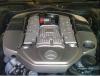
Yes. You seem to be right on the point. I discovered the attached document on the web, and it throws more light on how Mercedes performs boost control. I just wish they had given a soft switch to disengage the supercharger, so that I could disconnect it on the freeway if it had been engaged before the previous stop (for a pass or hard merge), just to increase the life of the charger. However, they choose to run the charger free spinning until the next stop.
I do believe that the screws are always windmilling in our superchargers, but under a heavy foot the clutch engages moreso to turn the screws under load. I have a boost gauge in my car and even under light part throttle applications from a stop, it is very easy to generate 7-8 psi of boost which was surprising given how light I was on the go pedal. If I jump on the throttle, I instantly see 10-11 psi with no lag whatsoever as my car is bone stock.
The audible chirp in your clutch assembly may be attributed to the older style clutch. Mercedes now puts in a newer unit that makes much less noise upon engagement/disengagement.
The audible chirp in your clutch assembly may be attributed to the older style clutch. Mercedes now puts in a newer unit that makes much less noise upon engagement/disengagement.
MBWorld Fanatic!


Joined: Jul 2005
Posts: 3,174
Likes: 19
From: London, UK
No longer stock '06 E55, A3 3.2 Quattro, GLE 400d, R107 280SL, Golf Polo
Nice article...
It would be handy to know if the bypass valve actuates (opens a bit) when MAP /IAT's are too high at WOT?
It would be handy to know if the bypass valve actuates (opens a bit) when MAP /IAT's are too high at WOT?
Thread Starter
Member
Joined: Feb 2008
Posts: 80
Likes: 0
E55 AMG, C32 AMG
Yes it does to release the excess boost that may be generated.
Also, I figured a soft switch way to completely disconnect the supercharger on demand from the pulley. You can use it to save life of the supercharger by not constanly churning it at low load.
So suppose you merge on to the highway with force, and your supercharger is on the belt. Now Mercedes will keep doing boost control in order to save MPG but not the supercharger itself. The supercharger keeps running on the belt, but since the air is taken redirected directly from the intake, no boost is generated. This however increases the wear and tear in the supercharger's mechanically lubricated bearings.
I think in order to decrease the variance of the chirps, Mercedes chose to just engage it once under load and keep it engaged till you get down below 9 mph and very little throttle.
So back to the point, to disconnect it manually after a hard pass or merge; leave the throttle, quickly neutral the tranny. Wait for the rpm to drop under 1K. Now without any throttle, put it back in Drive. The supercharger is disengaged and not running on the belt now . Now, you have to keep the throttle under 20% acceleration gradient, otherwise it will trigger the ECU to engage the charger on the belt again. However, when you accelerate again, and your clutch is the 03-05 design, it will chirp again .
Mercedes used this clutch in old kompressors, then they discontinued it and made the charger fulltime. But they bought it back in the 55k engines. The clutch only disengages when you come back to 0-9 mph speed, and in C32s it is pretty much fulltime.
Anyways, since I have been empirically trying to figure this out for a little while now, I thought I'd share this connundrum with everybody.
Also, I figured a soft switch way to completely disconnect the supercharger on demand from the pulley. You can use it to save life of the supercharger by not constanly churning it at low load.
So suppose you merge on to the highway with force, and your supercharger is on the belt. Now Mercedes will keep doing boost control in order to save MPG but not the supercharger itself. The supercharger keeps running on the belt, but since the air is taken redirected directly from the intake, no boost is generated. This however increases the wear and tear in the supercharger's mechanically lubricated bearings.
I think in order to decrease the variance of the chirps, Mercedes chose to just engage it once under load and keep it engaged till you get down below 9 mph and very little throttle.
So back to the point, to disconnect it manually after a hard pass or merge; leave the throttle, quickly neutral the tranny. Wait for the rpm to drop under 1K. Now without any throttle, put it back in Drive. The supercharger is disengaged and not running on the belt now
. Now, you have to keep the throttle under 20% acceleration gradient, otherwise it will trigger the ECU to engage the charger on the belt again. However, when you accelerate again, and your clutch is the 03-05 design, it will chirp again .Mercedes used this clutch in old kompressors, then they discontinued it and made the charger fulltime. But they bought it back in the 55k engines. The clutch only disengages when you come back to 0-9 mph speed, and in C32s it is pretty much fulltime.
Anyways, since I have been empirically trying to figure this out for a little while now, I thought I'd share this connundrum with everybody.
Last edited by archangel100; Oct 14, 2010 at 07:30 PM.
Trending Topics
Super Member
Joined: Aug 2003
Posts: 626
Likes: 3
From: Los Angeles, CA
'03 E55 (My Daily), '01 ML 320 (Wifey), Twin Turbo '69 Camaro (In Progess)
I haven't heard of many instances in which the bearings in the blower failed. There is piece of mind in knowing that there seems to be an abundance of used Lysholms in the market for reasonable prices in the unlikely event that yours throws in the towel. Even though the rotors are always turning, the loading on the bearings supporting the screws is proportionate to the amount of throttle you're giving it (which isn't a great deal of consolation if you drive like me!)
MB World Stories
The Best of Mercedes & AMG

Manual Mercedes? 6 Times Sindelfingen Let Drivers Have All The Fun
Verdad Gallardo
Mercedes SLR McLaren 722 S Is Extremely Rare Example Modified by McLaren
Verdad Gallardo
8 Classic Boxy Mercedes Designs That Have Aged Like Fine Wine
Verdad Gallardo
Flawlessly Restored Mercedes 190E Evo II Heads to Auction
Verdad Gallardo
Electric Mercedes C-Class Unveiled: 11 Things You Need to Know
Verdad Gallardo
Mercedes EQS Gets A Major Update: Everything You Need to Know
Verdad Gallardo
5 Underrated Mercedes-Benz Models That Don't Get the Love They Deserve
Verdad Gallardo
Mercedes 300D Has Pushed Well Past 1 Million Miles and It Ain't Stopping
Verdad Gallardo
10 Most Reliable Mercedes-Benz Models You Can Buy Used
Verdad Gallardo
MBWorld Fanatic!
Joined: Jan 2011
Posts: 2,127
Likes: 4
From: Chicagoland
AMG
to disconnect it manually after a hard pass or merge; leave the throttle, quickly neutral the tranny. Wait for the rpm to drop under 1K. Now without any throttle, put it back in Drive. The supercharger is disengaged and not running on the belt now . Now, you have to keep the throttle under 20% acceleration gradient, otherwise it will trigger the ECU to engage the charger on the belt again.
. Now, you have to keep the throttle under 20% acceleration gradient, otherwise it will trigger the ECU to engage the charger on the belt again.
MBWorld Fanatic!

Joined: Nov 2004
Posts: 6,697
Likes: 381
2005 E55
I can get my sc to shut off by letting off the gas for about 10 seconds and it engages hard everytime I go past 20% throttle.
The blower is def not turning because with my setup its like 5x louder than stock and you can hear it spinning and it sounds sick.
Iv also logged it and temps start to rise fast once its on.if the blower was on all the time our intake temps would be impossible to controll
The blower is def not turning because with my setup its like 5x louder than stock and you can hear it spinning and it sounds sick.
Iv also logged it and temps start to rise fast once its on.if the blower was on all the time our intake temps would be impossible to controll
MBWorld Fanatic!
Joined: Nov 2004
Posts: 6,697
Likes: 381
2005 E55
with the added boost and carbon intake the car sounds amazing on boost,its a metalic noise that I cant descibe.
when I take her out of storage Ill try ro get a video.I remember when I put the intake on and picked up my friend,the first thing he said was damn your super charger sounds awesome
If you want to hear yours just take the whole intake off and drive it for a second up the street with no intake or filters on it at all
when I take her out of storage Ill try ro get a video.I remember when I put the intake on and picked up my friend,the first thing he said was damn your super charger sounds awesome
If you want to hear yours just take the whole intake off and drive it for a second up the street with no intake or filters on it at all
Thread Starter
Member
Joined: Feb 2008
Posts: 80
Likes: 0
E55 AMG, C32 AMG
Putting the car in neutral and engaging it back in drive should not harm any component any more than a gear change, unless you throttle when putting it back into Drive, which I would imagine should not be a problem too since the throttle is computer actuated. When you put it in neutral the engine and impeller rpm drop to idling range. The turbine is at no load since the tranny is in neutral. When you engage Drive back, it measures vehicle speed, finds the top most gear (lowest torque unless overridden), actuates the tranny's clutches and bands to transmit power. Since our 722.6 has lock up in all forward gears, the stator is also engaged.
In the newer 7 speed transmissions with the double-declutch option, the transmission goes into neutral with with every downshift. When engaging back the torque converter is closely synced with the engine and the vehicle speed when the gear is engaged. Since this is all sensor and computer actuated there is little room for wear and tear in a modern automatic transmission.
In the newer 7 speed transmissions with the double-declutch option, the transmission goes into neutral with with every downshift. When engaging back the torque converter is closely synced with the engine and the vehicle speed when the gear is engaged. Since this is all sensor and computer actuated there is little room for wear and tear in a modern automatic transmission.
Thread Starter
Member
Joined: Feb 2008
Posts: 80
Likes: 0
E55 AMG, C32 AMG
I can get my sc to shut off by letting off the gas for about 10 seconds and it engages hard everytime I go past 20% throttle.
The blower is def not turning because with my setup its like 5x louder than stock and you can hear it spinning and it sounds sick.
Iv also logged it and temps start to rise fast once its on.if the blower was on all the time our intake temps would be impossible to controll
The blower is def not turning because with my setup its like 5x louder than stock and you can hear it spinning and it sounds sick.
Iv also logged it and temps start to rise fast once its on.if the blower was on all the time our intake temps would be impossible to controll
However, I would imagine even if the blower is on all the time, it would not create any high intake temperature issues because it will not be operating under load (rather free wheeling) since the throttle body's air flow clutch for intake into the charger would be shut and no boost would be generated. For instance, in the 4 and 6 cylinder (C32) kompressor cars, the supercharger runs eternally on the belt. Once the ECU determines load conditions, the air flow clutch opens and the feeds it through the supercharger; hence generating boost. This is what is mentioned in the document that I attached some quotes back on this thread under Boost Control.pdf.

MBWorld Fanatic!
Joined: Sep 2008
Posts: 3,575
Likes: 8
From: BC
Haters crazy
Heres my car whining... all stock, just some drop in filters...
http://www.youtube.com/watch?v=u5RrTM6ZlUE
http://www.youtube.com/watch?v=u5RrTM6ZlUE
MBWorld Fanatic!
Joined: Nov 2004
Posts: 6,697
Likes: 381
2005 E55
Does the c32 have a clutch system on the blower?The whole reason for the clutch is to not spin the sc while off boost driving/0-20% throttle to save gas and keep the temps down.
There is a huge drag on the car while trying to spin the blower and everytime I let off the throttle and the back on I get the huge shock/serge/belt chirp of the blower engaging,its def not spinning while light driving
There is a huge drag on the car while trying to spin the blower and everytime I let off the throttle and the back on I get the huge shock/serge/belt chirp of the blower engaging,its def not spinning while light driving
MBWorld Fanatic!
Joined: Nov 2004
Posts: 6,697
Likes: 381
2005 E55
this is from that c32 pdf
Early supercharged 111
engines used an ECM-controlled
clutch to engage the supercharger.
The clutch is activated
for secondary air injection,
and above 2,200 rpm for
boost generation.
Later 111 engines
dispensed with the
clutch, so are
always engaged.
On our cars on a cold start it will spin the blower and in that pdf it says the 111 did too for secondary air injection
It would be crazzy to spin our blades off boost.you would still be spinning the to 20-30,000 rpm and causing drag on the engine that would be over 100 hp(iv read that the tv puts that much drag)on my stock car the clutch was working so smooth that on most times I couldn't tell the sc was on.now with the bigger pulley the drive train shock is there every time I go past 15-20% throttle
Early supercharged 111
engines used an ECM-controlled
clutch to engage the supercharger.
The clutch is activated
for secondary air injection,
and above 2,200 rpm for
boost generation.
Later 111 engines
dispensed with the
clutch, so are
always engaged.
On our cars on a cold start it will spin the blower and in that pdf it says the 111 did too for secondary air injection
It would be crazzy to spin our blades off boost.you would still be spinning the to 20-30,000 rpm and causing drag on the engine that would be over 100 hp(iv read that the tv puts that much drag)on my stock car the clutch was working so smooth that on most times I couldn't tell the sc was on.now with the bigger pulley the drive train shock is there every time I go past 15-20% throttle
Last edited by skratch77; Jan 18, 2011 at 06:12 AM.
MBWorld Fanatic!
Joined: Jan 2011
Posts: 2,127
Likes: 4
From: Chicagoland
AMG
Heres my car whining... all stock, just some drop in filters...
http://www.youtube.com/watch?v=u5RrTM6ZlUE
http://www.youtube.com/watch?v=u5RrTM6ZlUE


