



Throttle Lag Complaints and Performance Improvements Over Stock

Thread Starter
Senior Member
Joined: Jan 2014
Posts: 251
Likes: 48
From: Kalispell, MT
2016 E63 S AMG
As I stated earlier, the only way to assess the performance gain of the turbo back pipe vs downpipe alone is to install the downpipe, dyno, then install the turbo back portion and dyno again on the exact same dyno with atmospherics standardized for both runs. Unless someone is willing to go to this much trouble, the benefit of the turbo back pipe cannot be objectively evaluated.
Last edited by BerndV; Jul 28, 2016 at 11:28 AM.
MBWorld Fanatic!
Joined: Jan 2007
Posts: 2,597
Likes: 19
From: Kuwait
CLS55 2006, CLS 63S 2015
As I stated earlier, the only way to assess the performance gain of the turbo back pipe vs downpipe alone is to install the downpipe, dyno, then install the turbo back portion and dyno again on the exact same dyno with atmospherics standardized for both runs. Unless someone is willing to go to this much trouble, the benefit of the turbo back pipe cannot be objectively evaluated.
''5) Catless down pipes that retain the factory crossmember. Contrary to what most aftermarket exhaust sales pitches would have you believe, the factory exhaust breathes extremely well. With factory turbos, most of the improvement with aftermarket down pipes comes from weight reduction. Don't even think about a turbo back pipe if you are retaining the factory turbos unless you enjoy throwing your money away. ''
You make it sound as you either have tested, or have proof

Thread Starter
Senior Member
Joined: Jan 2014
Posts: 251
Likes: 48
From: Kalispell, MT
2016 E63 S AMG
But you clearly state other wise here
''5) Catless down pipes that retain the factory crossmember. Contrary to what most aftermarket exhaust sales pitches would have you believe, the factory exhaust breathes extremely well. With factory turbos, most of the improvement with aftermarket down pipes comes from weight reduction. Don't even think about a turbo back pipe if you are retaining the factory turbos unless you enjoy throwing your money away. ''
You make it sound as you either have tested, or have proof
''5) Catless down pipes that retain the factory crossmember. Contrary to what most aftermarket exhaust sales pitches would have you believe, the factory exhaust breathes extremely well. With factory turbos, most of the improvement with aftermarket down pipes comes from weight reduction. Don't even think about a turbo back pipe if you are retaining the factory turbos unless you enjoy throwing your money away. ''
You make it sound as you either have tested, or have proof

MBWorld Fanatic!
Joined: Feb 2011
Posts: 2,841
Likes: 202
From: miami / delray beach
2014 E63s amg 4matic, 2009 C63, 2006 E55 AMG , 2001.5 AUDI S4 stg 3+ w/meth
As I stated earlier, the only way to assess the performance gain of the turbo back pipe vs downpipe alone is to install the downpipe, dyno, then install the turbo back portion and dyno again on the exact same dyno with atmospherics standardized for both runs. Unless someone is willing to go to this much trouble, the benefit of the turbo back pipe cannot be objectively evaluated.
http://forums.mercedesclub.org.uk/sh...d.php?t=140875
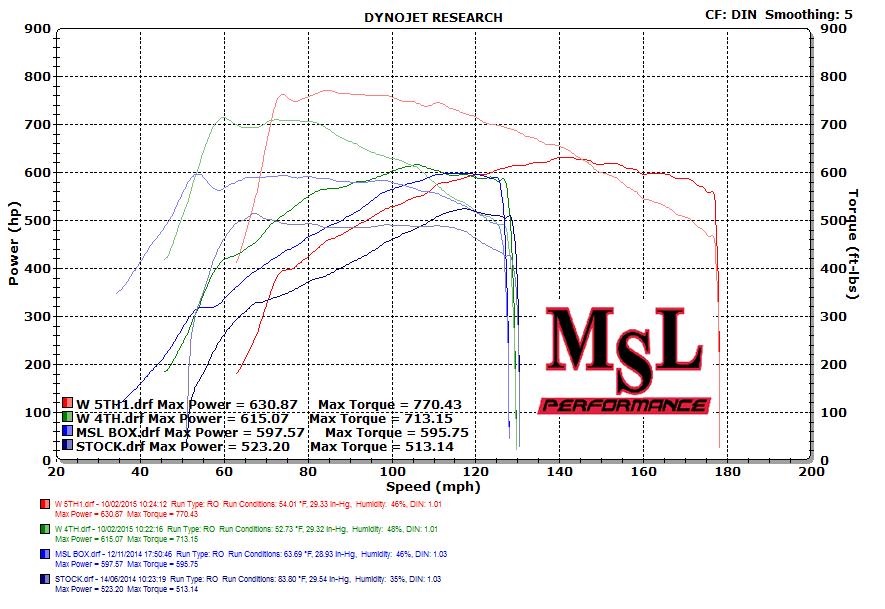
^here's e63s corrected run on same dyno before and after (stock vs weistec tune/turbo back dps) .... looks to me like it putting out about ~30whp/ 70ft-lbs trq more than typical tune only results which are usually around 600whp/700wtrq
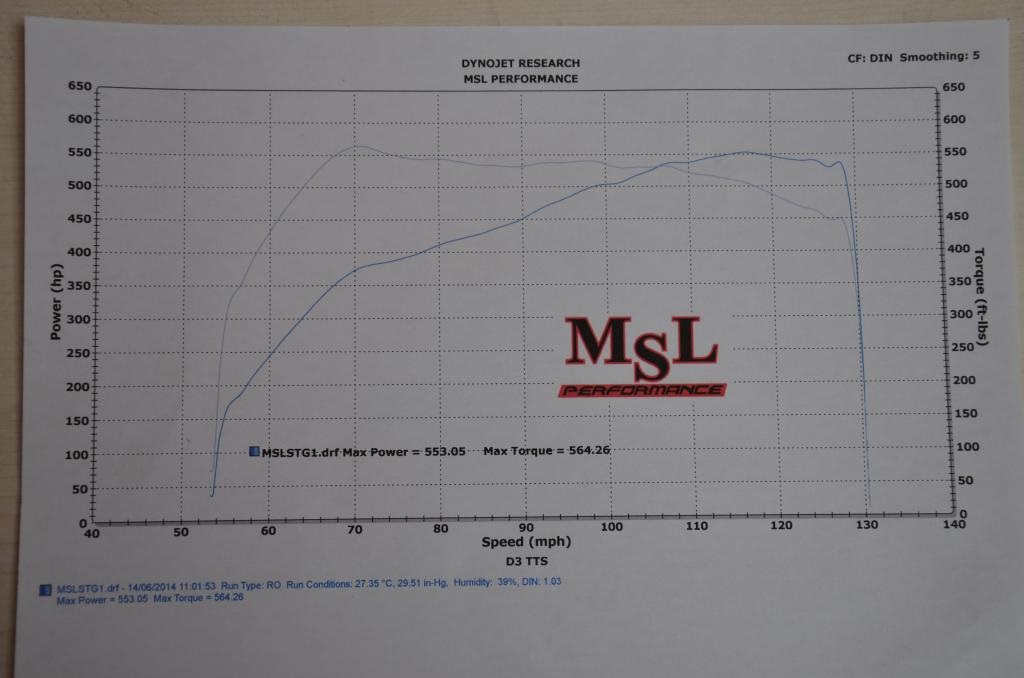
now if that doesnt work for you then here is the owner's car with just the original MSL box tune box where you can see in graph below it made corrected 553 whp/ 564 wtrq w/o the turbo back pipes... in the graph above you can see with the addition or the turbo back pipes to just the MSL tune box it made corrected 597whp / 595 wtrq... a gain of 44 whp / 31 wtrq just by adding turbo back downpipes and not retuning for it
http://forums.mercedesclub.org.uk/sh...d.php?t=133726
Last edited by gaspam; Jul 28, 2016 at 03:11 PM.

MBWorld Fanatic!
Joined: Feb 2010
Posts: 1,380
Likes: 64
From: Toronto
CLS63 PP
So I agree about the cost v. Value issues for AWD vehicles, but I would definitely recommend turbo back style DPs, over mid pipe style on the RWD cars. They make a huge difference on my car.
Thread Starter
Senior Member
Joined: Jan 2014
Posts: 251
Likes: 48
From: Kalispell, MT
2016 E63 S AMG

http://forums.mercedesclub.org.uk/sh...d.php?t=140875
^here's e63s corrected run on same dyno before and after (stock vs weistec tune/turbo back dps) .... looks to me like it putting out about ~30whp/ 70ft-lbs trq more than typical tune only results which are usually around 600whp/700wtrq
now if that doesnt work for you then here is the owner's car with just the original MSL box tune box where you can see in graph below it made corrected 553 whp/ 564 wtrq w/o the turbo back pipes... in the graph above you can see with the addition or the turbo back pipes to just the MSL tune box it made corrected 597whp / 595 wtrq... a gain of 44 whp / 31 wtrq just by adding turbo back downpipes and not retuning for it

http://forums.mercedesclub.org.uk/sh...d.php?t=133726
Thus we are back to one of the original points I made at the beginning of this thread; the TCU is the primary limiting factor when we discuss maximum performance in the lower gears i.e. 0-60 and quarter mile. Half mile and one mile roll ons are another matter entirely because they occur in the top half of the gearing where torque multiplication and TCU intrusion is minimized.
MBWorld Fanatic!
Joined: Feb 2011
Posts: 2,841
Likes: 202
From: miami / delray beach
2014 E63s amg 4matic, 2009 C63, 2006 E55 AMG , 2001.5 AUDI S4 stg 3+ w/meth
One can infer from the speed portion of the graph that the stock, MSL box, and green Weistech runs were all made in 4th gear. Therefore, the comparisons of stock and MSL box vs Weistech tune and exhaust are only valid for the 4th gear portion of the graph. Thus, the addition of the Weistech tune and full turbo back exhaust over just the MSL box yields roughly 17.5 HP and 117 ft lbs of torque. The Weistech tune with turbo back exhaust over stock yields 92 HP and 200 ft lbs of torque. This is pretty much exactly where all the tuners claim to be with a tune and catless downpipes, again depending on how hard they are pushing on the ECU tune and the fuel quality to which the tune is matched.

fact of the matter remains, in this case , the original MSL box tune box w/o the turbo back pipes made 553 whp/ 564 wtrq and with the addition or the turbo back pipes to just the MSL tune box it made 597whp / 595 wtrq... a gain of 44 whp / 31 wtrq
oh wait, doesnt a tune/dp car trap about 6-10 mph than a stock car? weird, i guess that those performance modifications actually did do something
you keep wanting to argue that turbo back dp's dont do much of anything but every member that has them says that it does.... but what do they know, they only have them on their cars and you dont, so you know more than they do about it... sounds logical

Last edited by gaspam; Jul 28, 2016 at 07:01 PM.
Thread Starter
Senior Member
Joined: Jan 2014
Posts: 251
Likes: 48
From: Kalispell, MT
2016 E63 S AMG
nope, there is a reason people dyno in the gear that is closest to 1:1 ratio (5th on our gearbox), because its a straight passthru while 4th is underdriven gear on our cars..Under driven gear will lose more torque to inertial loss (as you are accelerating the mass of the engine/driveline quicker) ..
lol so your point is that we shouldnt get a tune or downpipes because our 1/4 mile times will be same as a stock car since TCU will interfere... ok oh wait, doesnt a tune/dp car trap about 6-10 mph than a stock car? weird, i guess that those performance modifications actually did do something
oh wait, doesnt a tune/dp car trap about 6-10 mph than a stock car? weird, i guess that those performance modifications actually did do somethingI hate having to be repetitive with posters that either have poor reading comprehension or simply have not read the entire thread. The difference between turbo back downpipes and downpipes alone can only be objectively evaluated by dyno testing with the downpipe alone, and then adding the turbo back portion and dyno testing again with no other changes. This must all be done on the same properly calibrated dyno with atmospherics standardized. IMO, the turbo back pipe with stock turbos is worth about 10 WHP and I have stated so in another thread. However, as I have also stated, this gain is going to be at the very top of the RPM range and may introduce some minor deficits at lower RPM's vs downpipes alone. Furthermore, again being repetitive for your sake, the placebo effect is not confined to pharmaceuticals and nutrient supplements. In the world of aftermarket parts and tunes, the combination of emotional investment, financial investment, marketing hype, and expectations can often lead to "feel" and "butt dyno" results that exceed reality. An improvement of 15 WHP (Weistech claims 10-20 so let's split the difference) on a 4200 lb car results in a power to weight ratio improvement of approximately 2.5% and will theoretically improve your performance in the quarter mile by 0.1 seconds. Is that worth $8000 parts and installation on an AWD E63 or CLS 63? My guess is that for most owners, the answer is no.
Last edited by BerndV; Jul 29, 2016 at 12:53 PM.
MB World Stories
The Best of Mercedes & AMG

Manual Mercedes? 6 Times Sindelfingen Let Drivers Have All The Fun
Verdad Gallardo
Mercedes SLR McLaren 722 S Is Extremely Rare Example Modified by McLaren
Verdad Gallardo
8 Classic Boxy Mercedes Designs That Have Aged Like Fine Wine
Verdad Gallardo
Flawlessly Restored Mercedes 190E Evo II Heads to Auction
Verdad Gallardo
Electric Mercedes C-Class Unveiled: 11 Things You Need to Know
Verdad Gallardo
Mercedes EQS Gets A Major Update: Everything You Need to Know
Verdad Gallardo
5 Underrated Mercedes-Benz Models That Don't Get the Love They Deserve
Verdad Gallardo
Mercedes 300D Has Pushed Well Past 1 Million Miles and It Ain't Stopping
Verdad Gallardo
10 Most Reliable Mercedes-Benz Models You Can Buy Used
Verdad Gallardo
MBWorld Fanatic!
Joined: Feb 2011
Posts: 2,841
Likes: 202
From: miami / delray beach
2014 E63s amg 4matic, 2009 C63, 2006 E55 AMG , 2001.5 AUDI S4 stg 3+ w/meth
 regardless of the 2 different dyno runs in different gears, the fact remains that the dyno for the MSL tune box only vs the MSL tune box + wesitec DP's was done in the same gear, so the other gear run is a moot point
oh BerndV is an elitist?? you should feel proud you went to university and try to rub it in people's faces as much as possible
and actually I did take physics... my degree is in financial engineering with econometrics minor so i know how to do that adding and subtracting stuff.... its pretty neatIt has ZERO to do with "inertial loss" as you put it. The guy laughed when I read your quote. As an aside, do you have any clue as to the relatively massive difference in inertial force of the combination of rotating dyno drums and rotating drive wheels relative to the rotating inertia of the engine internals and the gearset in the lower gears? Have you ever taken a university level physics course? The reason cars are dyno tested in the gear closest to 1:1 is because this is the gear least likely to be intruded upon by EMS protection systems and/or torque converter lockup effects
"Higher ratio gears will give you lower chassis dyno numbers for a strange, but logical reason. In essence, the DynoJet calculates hp based on the time it takes to spin up the 2800lb roller assembly. It's basically work divided by time and rpm. Think about this: If you car is at idle in neutral and you stab the throttle, it will take time to accelerate to...let's say 1.1 seconds. Now let's say it takes 8.2 seconds for your car to accelerate the DynoJet from low speed to top speed with 3.23 gears and 7.3 seconds with 3.73 gears. Dyno printout says 355 rwhp with 3.23 gears and 346 rwhp with 3.73 gears...why?
Think aabout this: In the 8.2 seconds it takes to spin the rollers with 3.23 gears, it would still take the motor about 1.1 seconds to overcome its own inertia (idle to redline). There's about 13.4% of the work used just to accelerate the motor itself. With 3.73 gears, the time to reach redline decreases to 7.3 seconds. Divide the 1.1 seconds into the 7.3 seconds and you will see that overcoming the inertia costs 15.1% of the work with 3.73 gears. There is less hp available during this time period to spin the rollers so the DynoJet will read a slightly lower hp figure. Make sense, or did I lose you?"
there are literally hundreds of threads on many different forums that say the same thing... lower gear dynos lower... and they even have dyno results from same day to prove it
http://www.lxforums.com/board/showth...-gear-question
www.bimmerforums.com/forum/showthread.php?160311-dyno-difference-between-3rd-vs-4th-gear-pull
http://www.corvetteforum.com/forums/...numbers-2.html
http://www.stangnet.com/mustang-foru...h-gear.589468/
I hate having to be repetitive with posters that either have poor reading comprehension or simply have not read the entire thread. The difference between turbo back downpipes and downpipes alone can only be objectively evaluated by dyno testing with the downpipe alone, and then adding the turbo back portion and dyno testing again with no other changes. This must all be done on the same properly calibrated dyno with atmospherics standardized. IMO, the turbo back pipe with stock turbos is worth about 10 WHP
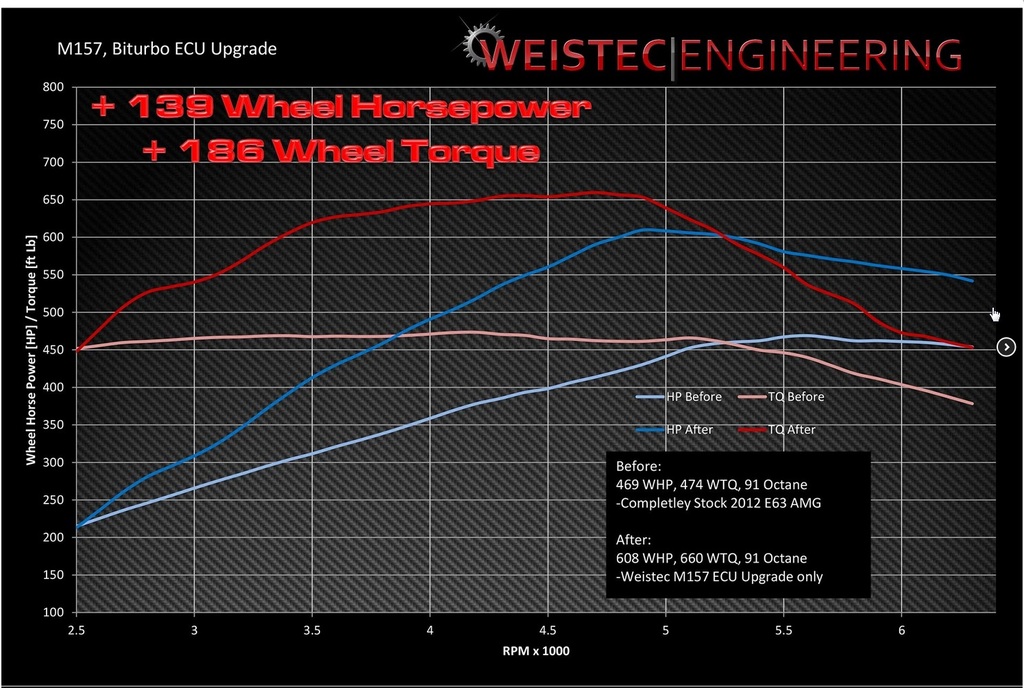
And actually if you go to wesitec's site you will see they post claimed dyno numbers of 608 whp/660wtrq for ecu only and 645/724 for ecu/ dps... do the math, no wait, i dont trust you since you are a proven liar... so difference is +37 whp/ +64 wtrq... here are graphs for your viewing pleasure.... and you can see under the curve the gains are even bigger... look at 4K rpm and you will see about a 60-70whp diff and about 75 wtrq difference... but to you thats probably not that much
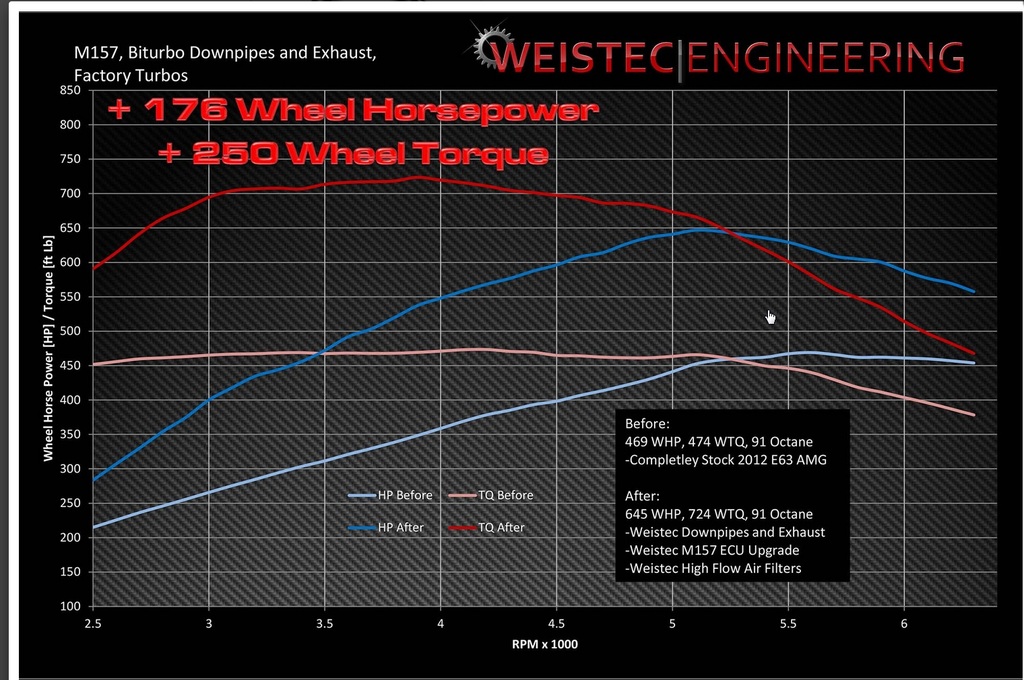
Last edited by gaspam; Jul 29, 2016 at 02:13 PM.
Thread Starter
Senior Member
Joined: Jan 2014
Posts: 251
Likes: 48
From: Kalispell, MT
2016 E63 S AMG
that's weird because my old 1980 jeep CJ7 put down different whp/ trq in different gears and it doesnt even have a TCU to intrude! wonder what caused that
you do realize cars have been dyno'ing well before EMS?ECU systems existed on cars right? lol... here;s a good explanation from LS1tech, since you dont get what i am saying, of why different gear ratios affect dyno numbers:
"Higher ratio gears will give you lower chassis dyno numbers for a strange, but logical reason. In essence, the DynoJet calculates hp based on the time it takes to spin up the 2800lb roller assembly. It's basically work divided by time and rpm. Think about this: If you car is at idle in neutral and you stab the throttle, it will take time to accelerate to...let's say 1.1 seconds. Now let's say it takes 8.2 seconds for your car to accelerate the DynoJet from low speed to top speed with 3.23 gears and 7.3 seconds with 3.73 gears. Dyno printout says 355 rwhp with 3.23 gears and 346 rwhp with 3.73 gears...why?
Think aabout this: In the 8.2 seconds it takes to spin the rollers with 3.23 gears, it would still take the motor about 1.1 seconds to overcome its own inertia (idle to redline). There's about 13.4% of the work used just to accelerate the motor itself. With 3.73 gears, the time to reach redline decreases to 7.3 seconds. Divide the 1.1 seconds into the 7.3 seconds and you will see that overcoming the inertia costs 15.1% of the work with 3.73 gears. There is less hp available during this time period to spin the rollers so the DynoJet will read a slightly lower hp figure. Make sense, or did I lose you?"
you do realize cars have been dyno'ing well before EMS?ECU systems existed on cars right? lol... here;s a good explanation from LS1tech, since you dont get what i am saying, of why different gear ratios affect dyno numbers:
"Higher ratio gears will give you lower chassis dyno numbers for a strange, but logical reason. In essence, the DynoJet calculates hp based on the time it takes to spin up the 2800lb roller assembly. It's basically work divided by time and rpm. Think about this: If you car is at idle in neutral and you stab the throttle, it will take time to accelerate to...let's say 1.1 seconds. Now let's say it takes 8.2 seconds for your car to accelerate the DynoJet from low speed to top speed with 3.23 gears and 7.3 seconds with 3.73 gears. Dyno printout says 355 rwhp with 3.23 gears and 346 rwhp with 3.73 gears...why?
Think aabout this: In the 8.2 seconds it takes to spin the rollers with 3.23 gears, it would still take the motor about 1.1 seconds to overcome its own inertia (idle to redline). There's about 13.4% of the work used just to accelerate the motor itself. With 3.73 gears, the time to reach redline decreases to 7.3 seconds. Divide the 1.1 seconds into the 7.3 seconds and you will see that overcoming the inertia costs 15.1% of the work with 3.73 gears. There is less hp available during this time period to spin the rollers so the DynoJet will read a slightly lower hp figure. Make sense, or did I lose you?"
Of course your old Jeep put down different numbers in different gears. Nobody has claimed that dyno numbers in different gears will not generate different numbers.
now there you go again straight up LYING... where does wesitec claim 10-20 hp for their dp's? actually if you go to their site you will see they post claimed dyno numbers of 608 whp/660wtrq for ecu only and 645/724 for ecu/ dps... do the math, no wait, i dont trust you since you are a proven liar... so difference is +37 whp/ +64 wtrq... here are graphs for your viewing pleasure.... and you can see under the curve the gains are even bigger... look at 4K rpm and you will see about a 60-70whp diff and about 75 wtrq difference... but to you thats probably not that much
I was using your numbers from your post for midpipe vs non midpipe.
BTW, calling me a "proven liar" without evidence is known as an ad hominem. I have not knowingly posted one false statement anywhere on this site since the day I joined. Frankly, you are rather emotional and boring, not to mention that your grammar and spelling leaves much to be desired for someone with your ostensible educational background.
MBWorld Fanatic!
Joined: Feb 2011
Posts: 2,841
Likes: 202
From: miami / delray beach
2014 E63s amg 4matic, 2009 C63, 2006 E55 AMG , 2001.5 AUDI S4 stg 3+ w/meth
According to the quote above, the dyno will report "355 rwhp with 3.23 gears" and "346 rwhp with 3.73 gears". Therefore, the lower the gearing (higher gear ratio number), the more HP the dyno indicates. This is making the exact opposite argument that you are claiming! According to this logic, the HP and torque numbers from the Dynojet graph in question should be lower in 5th gear than in 4th. However, the opposite is the case. If it has nothing to do with the ECU/TCU intrusion, then I await your explanation for these results since you claim such impressive mathematical literacy.
try reading through the other 4 links i provided and see the real word results for yourself where the higher transmission gear results in higher number.... but looks like it doesnt matter now as you are now admitting that dynoing in different gears will give different numbers
and alas, i repeat myself , the fact remains that the dyno for the MSL tune box only vs the MSL tune box + wesitec DP's was done in the same gear, so the other gear run is a moot point.... that the owner gained of 44 whp / 31 wtrq with just the addition of turbo-back downpipes.... I say again, what part of that dont you get ???
 So back to the original point that brought all of this up, turbo-back DP's do provide good gains and have been objectively evaluated
Last edited by gaspam; Jul 29, 2016 at 02:49 PM.
Thread Starter
Senior Member
Joined: Jan 2014
Posts: 251
Likes: 48
From: Kalispell, MT
2016 E63 S AMG
I am simply bored and out of patience with our exchanges, so feel free to post away on this thread. My responses at this point will only be to other members who have something logical, well reasoned, well informed, and relevant to contribute.
Last edited by BerndV; Jul 29, 2016 at 03:14 PM.
MBWorld Fanatic!
Joined: Feb 2011
Posts: 2,841
Likes: 202
From: miami / delray beach
2014 E63s amg 4matic, 2009 C63, 2006 E55 AMG , 2001.5 AUDI S4 stg 3+ w/meth
and alas, i repeat myself , the fact remains that the dyno for the MSL tune box only vs the MSL tune box + wesitec DP's was done in the same gear, so the other gear run is a moot point.... that the owner gained of 44 whp / 31 wtrq with just the addition of turbo-back downpipes.... I say again, what part of that dont you get ??? So back to the original point that brought all of this up, turbo-back DP's do provide good gains and have been objectively evaluated
So back to the original point that brought all of this up, turbo-back DP's do provide good gains and have been objectively evaluatedLast edited by gaspam; Jul 29, 2016 at 03:49 PM.
Thread Starter
Senior Member
Joined: Jan 2014
Posts: 251
Likes: 48
From: Kalispell, MT
2016 E63 S AMG
One final time; in the example you gave me, part of the quote was the following:
"Higher ratio gears will give you lower chassis dyno numbers for a strange, but logical reason"
In fact, according to the quotes we have exchanged above, higher gear ratios give higher numbers. The quote you gave mis-applied the term "higher ratio gears". What the quote should have said was the following:
"Higher ratio gears will give you higher chassis dyno numbers."
We are clearly mis-communicating.
Regarding the much higher 5th gear numbers, vs 4th gear numbers, particularly the torque figure, please give Marcin from Speedriven or Hartmut Feyhl from Renntech a call and inquire about whether the significant numerical difference would likely have anything to do with the TCU. These guys know MUCH more about this than either of us. Marcin is likely to be much more accessible by phone and will provide you, as he has me, a real education regarding the entire ECU/TCU technical details on AMG's.
Another quote:
"lol actually you said only reason different gears put down different numbers is due to TCU/ECU intrusion, not the gear itself, so in a roundabout way, you did say gears wont affect the numbers, just the TCU/ECU intrusion"
What I actually stated was the following:
"The above data is also very interesting because we can see that even in 4th gear, the TCU is being more intrusive than in 5th gear."
This thread pertains primarily to the car I own and in which I am thus most interested, the AWD E63S. Differences in WHP and WTQ are greatly impacted by which gear you select in ways that had no bearing on your old Jeep. Therefore, my commentary is directed at this vehicle only. Gear vs dyno results for other cars are irrelevant because the ECU/TCU in the E63/CLS63 is completely different and represents a significant bottle-neck in getting HP and torque to the ground. That was my entire point in starting this thread.
"Higher ratio gears will give you lower chassis dyno numbers for a strange, but logical reason"
In fact, according to the quotes we have exchanged above, higher gear ratios give higher numbers. The quote you gave mis-applied the term "higher ratio gears". What the quote should have said was the following:
"Higher ratio gears will give you higher chassis dyno numbers."
We are clearly mis-communicating.
Regarding the much higher 5th gear numbers, vs 4th gear numbers, particularly the torque figure, please give Marcin from Speedriven or Hartmut Feyhl from Renntech a call and inquire about whether the significant numerical difference would likely have anything to do with the TCU. These guys know MUCH more about this than either of us. Marcin is likely to be much more accessible by phone and will provide you, as he has me, a real education regarding the entire ECU/TCU technical details on AMG's.
Another quote:
"lol actually you said only reason different gears put down different numbers is due to TCU/ECU intrusion, not the gear itself, so in a roundabout way, you did say gears wont affect the numbers, just the TCU/ECU intrusion"
What I actually stated was the following:
"The above data is also very interesting because we can see that even in 4th gear, the TCU is being more intrusive than in 5th gear."
This thread pertains primarily to the car I own and in which I am thus most interested, the AWD E63S. Differences in WHP and WTQ are greatly impacted by which gear you select in ways that had no bearing on your old Jeep. Therefore, my commentary is directed at this vehicle only. Gear vs dyno results for other cars are irrelevant because the ECU/TCU in the E63/CLS63 is completely different and represents a significant bottle-neck in getting HP and torque to the ground. That was my entire point in starting this thread.
Last edited by BerndV; Jul 29, 2016 at 04:02 PM.
MBWorld Fanatic!
Joined: Feb 2011
Posts: 2,841
Likes: 202
From: miami / delray beach
2014 E63s amg 4matic, 2009 C63, 2006 E55 AMG , 2001.5 AUDI S4 stg 3+ w/meth
This thread pertains primarily to the car I own and in which I am thus most interested, the AWD E63S. Differences in WHP and WTQ are greatly impacted by which gear you select in ways that had no bearing on your old Jeep. Therefore, my commentary is directed at this vehicle only. Gear vs dyno results for other cars are irrelevant
that was my point, that the gains are real and not insignificant and the benefits can be evaluated , contrary to what you may say
Last edited by gaspam; Jul 29, 2016 at 04:47 PM.
Thread Starter
Senior Member
Joined: Jan 2014
Posts: 251
Likes: 48
From: Kalispell, MT
2016 E63 S AMG
Okay, so let the two of us keep this impersonal, unemotional, informative, and objective. I would like to say that when someone chimes in on a thread with selective quotes, statements that indicate that the entire thread has not been read, ad hominen attacks, and a general attempt to make "gotcha" points along with an excessive use of emoticons and "lol's", not to mention accusing Speedriven and myself of being the same person (again with zero evidence), the perception from the other party is automatically personal and negative. I began posting several comments in response to some of your posts that I edited to one word because I would like all of my discourse with other members on this site to be courteous, friendly, and informative. I am here to exchange information and enjoy myself, not argue, bicker, and engage in discourse at a teenage level. I have absolutely nothing to prove. I am 53 and am fortunate to have had enough success in my career to retire two years ago. Life is far too short to focus on anything that generates negative emotions.
With that said, I am asking you politely how we can accurately parse the difference in HP and torque gains between a well designed catless downpipe alone vs Weistech's full turbo back exhaust system. I have made the assertion that the only way to do so would be to install the well designed catless downpipe, dyno, add a turbo back pipe, then dyno again.
If you think my assertion is somehow faulty, then please explain why.
Personally, I am a big fan of the classical definition of "the scientific method" as it was drilled into my head as a college freshman. One goes from an observation to a hypothesis to a theory and then, rarely, to a law. First and third party attempts to disprove the hypothesis are made over and over. If the hypothesis cannot be falsified, then we have a theory. It may or may not ever become a law. Therefore, I am always sceptical of all claims in every intellectual and cognitive realm. Add in the potential for profit or monetary gain, and my scepticism is piqued. One of the many quotes I like:
"What can be asserted without evidence can also be dismissed without evidence."
With that said, I am asking you politely how we can accurately parse the difference in HP and torque gains between a well designed catless downpipe alone vs Weistech's full turbo back exhaust system. I have made the assertion that the only way to do so would be to install the well designed catless downpipe, dyno, add a turbo back pipe, then dyno again.
If you think my assertion is somehow faulty, then please explain why.
Personally, I am a big fan of the classical definition of "the scientific method" as it was drilled into my head as a college freshman. One goes from an observation to a hypothesis to a theory and then, rarely, to a law. First and third party attempts to disprove the hypothesis are made over and over. If the hypothesis cannot be falsified, then we have a theory. It may or may not ever become a law. Therefore, I am always sceptical of all claims in every intellectual and cognitive realm. Add in the potential for profit or monetary gain, and my scepticism is piqued. One of the many quotes I like:
"What can be asserted without evidence can also be dismissed without evidence."
Last edited by BerndV; Jul 29, 2016 at 08:39 PM.
MBWorld Fanatic!
Joined: Feb 2011
Posts: 2,841
Likes: 202
From: miami / delray beach
2014 E63s amg 4matic, 2009 C63, 2006 E55 AMG , 2001.5 AUDI S4 stg 3+ w/meth
With that said, I am asking you politely how we can accurately parse the difference in HP and torque gains between a well designed catless downpipe alone vs Weistech's full turbo back exhaust system. I have made the assertion that the only way to do so would be to install the well designed catless downpipe, dyno, add a turbo back pipe, then dyno again.
If you think my assertion is somehow faulty, then please explain why.
Personally, I am a big fan of the classical definition of "the scientific method" as it was drilled into my head as a college freshman. One goes from an observation to a hypothesis to a theory and then, rarely, to a law. First and third party attempts to disprove the hypothesis are made over and over. If the hypothesis cannot be falsified, then we have a theory. It may or may not ever become a law. Therefore, I am always sceptical of all claims in every intellectual and cognitive realm. Add in the potential for profit or monetary gain, and my scepticism is piqued.
If you think my assertion is somehow faulty, then please explain why.
Personally, I am a big fan of the classical definition of "the scientific method" as it was drilled into my head as a college freshman. One goes from an observation to a hypothesis to a theory and then, rarely, to a law. First and third party attempts to disprove the hypothesis are made over and over. If the hypothesis cannot be falsified, then we have a theory. It may or may not ever become a law. Therefore, I am always sceptical of all claims in every intellectual and cognitive realm. Add in the potential for profit or monetary gain, and my scepticism is piqued.
so instead of doing all that, due to constraints , we can take what info we know about cars that have gone from stock dp's to catless non-turboback dps vs what we know bout cars that have gone from stock dp's to catless turboback dps and compare and get a rough idea of gains from turbo-back vs non-trubo-back dps
we know non-turbo back dps are gaining about ~10hp and turbo-back dps gain about ~30hp.... under the curve probably a bit more for the turbobacks given quicker spool up
Thread Starter
Senior Member
Joined: Jan 2014
Posts: 251
Likes: 48
From: Kalispell, MT
2016 E63 S AMG
If I grant you a full 20 WHP gain for the best designed turbo back exhaust (Weistech) vs catless DP, the question then becomes subjective; is it worth the extra parts and labor expense? Even on a RWD E63, installing that midpipe without lowering the engine would be a frustrating cuss fest. I don't know what the cost is for installing a midpipe on a RWD E63, but as someone who does most of the wrenching on all my vehicles, I would not even contemplate doing it. Perhaps Kponti can chime in here. On an AWD, we are looking at $8000 installed. A salesman at Weistec named Zack told me flat out that it would be a waste of money to add their turbo back system without installing better turbos in the AWD models. A full 20 WHP improvement on this car equates to a theoretical 0.12 second improvement in quarter mile elapsed time (http://www.nitrousexpress.com/oldweb...alculators.htm) That assumes all of the additional power is put to the ground without any type of TCU interference in the lower gears. So my original point at the beginning of this thread was that the price/performance ratio of a midpipe on this car with stock turbos seems unjustified unless you have the ability to get around the TCU. BTW, the same improvement in theoretical quarter mile time can be had by dropping just over 100 lbs from the car. Swap the two batteries for lithium ions (super easy DIY) and you are more than half way there. The added benefit to weight reduction is better handling and fuel economy (not that I personally care about fuel economy).
Last edited by BerndV; Jul 29, 2016 at 07:54 PM.
MBWorld Fanatic!
Joined: Feb 2011
Posts: 2,841
Likes: 202
From: miami / delray beach
2014 E63s amg 4matic, 2009 C63, 2006 E55 AMG , 2001.5 AUDI S4 stg 3+ w/meth
If I grant you a full 20 WHP gain for the best designed turbo back exhaust (Weistech) vs catless DP, the question then becomes subjective; is it worth the extra parts and labor expense? Even on a RWD E63, installing that midpipe without lowering the engine would be a frustrating cuss fest. I don't know what the cost is for installing a midpipe on a RWD E63, but as someone who does most of the wrenching on all my vehicles, I would not even contemplate doing it. Perhaps Kponti can chime in here. On an AWD, we are looking at $8000 installed. A salesman at Weistec named Zack told me flat out that it would be a waste of money to add their turbo back system without installing better turbos in the AWD models. A full 20 WHP improvement on this car equates to a theoretical 0.12 second improvement in quarter mile elapsed time (http://www.nitrousexpress.com/oldweb...alculators.htm) That assumes all of the additional power is put to the ground without any type of TCU interference in the lower gears. So my original point at the beginning of this thread was that the price/performance ratio of a midpipe on this car with stock turbos seems unjustified unless you have the ability to get around the TCU. BTW, the same improvement in theoretical quarter mile time can be had by dropping just over 100 lbs from the car. Swap the two batteries for lithium ions (super easy DIY) and you are more than half way there. The added benefit to weight reduction is better handling and fuel economy (not that I personally care about fuel economy).
weight loss, i agree with that totally especially when its easy free weight loss like spare tire and tool kit from trunk and such... battery, totally on some cars... on ours or similar cars with tons of electronics i am still on the fence as i have read some people having no problems and some people have problems on AGM type... lithium less problems but all the lithiums i am seeing are over $1k and dont last forever like dp's... but again subjective as i have definitely been researching it (hell back on the audi forums we used to remove front and rear bumpers under the plastics for weight reduction)
for me, TCU interruption is annoying from a stop for sure... but my main goal is not 1/4 mile times, though i certainly will go to the track, for me 60-130 is where i really want to shine as that is where i am most likely to have someone wanting to play/mess with me on the highway.... for me the TCU is less of a concern as it for people trying to cut 1.3-1.4x 0-60ft times.... now if there was a tcu tune out there, like there was for E55 when i had it, would i get it? yeah definitely.... will i go stand alone ecu just to eliminate the annoying lag the first 10 mph? probably not.... if it stopped being my daily driver and became my full-blown race car (i wouldnt make a mercedes my ***** to the wall race car though, well maybe a m156 c63 stripped down) sure i would do stand alone ecu, but until then i will do as many bolt-ons as possible to make it as fast as possible 60-130, as for me that is the best metric for street daily drivers that see a lot of highway miles like me.... Im looking to get under 5.6 sec
Last edited by gaspam; Jul 30, 2016 at 03:36 PM.

MBWorld Fanatic!


Joined: Dec 2013
Posts: 2,394
Likes: 239
E63
Cost of install for a turbo back DP on rwd is about $1000 give or take a few extra bucks for shop stuff. The engine does not need to raised or dropped and with the right extentions, its isn't too difficult of a job for a proficient diyer. I think install of the AMS full cooling was much more tedious.

Thread Starter
Senior Member
Joined: Jan 2014
Posts: 251
Likes: 48
From: Kalispell, MT
2016 E63 S AMG
I happen to have purchased both the AMS intake and full intercooler upgrade. I am somewhat dreading the installation which is why I will be doing it over the winter in my hangar. The midpipe on the RWD looks like a real knuckle buster; I would definitely pay someone else for that installation.
MBWorld Fanatic!
Joined: Dec 2013
Posts: 2,394
Likes: 239
E63
Being that you have a 2016, the AMS intercooler is not nearly as hard to install. One place the awd wins in labor. The rwd setup is a lot more tedious with more parts in the fender, second pump etc etc. Long install lol

MBWorld Fanatic!

Joined: Mar 2004
Posts: 2,073
Likes: 27
From: North NJ
2002 C32 AMG, 2013 GLK 350/4, 2015 E63S AMG Wagon
A TCU tune doesn't exist that will fix this problem. Nobody, and I mean nobody, has been able to crack the Bosch encryption for the TCU. These intermittent "lag" problems all originate from the TCU limiting the fun in the first three gears. These turbo engines produce so much torque relative to any NA cars from the past that something had to be done to protect the drive train from endless warranty claims and the resulting customer dissatisfaction. The faster that wet clutch locks up relative to mashing the pedal in lower gears, the greater the shock that is transmitted to the drive train. The torque multiplication in gears 1-3 is therefore limited by the algorithm in the TCU that monitors dozens of variables.
The car I owned previous to my current 2016 E63 was a 2014 E550 4MATIC. The E550 produces less HP and torque and has a torque converter. The combination of less torque and a torque converter (which delivers torque with greater smoothness and less shock) means that the TCU in the E550 can come equipped from the factory with a much less aggressive algorithm for drive train protection. Therefore, as I experienced when transitioning from the E550 to the E63, certain driving conditions resulted in more pronounced lag or delay when flooring the throttle pedal.
The solution for this problem with the turbo AMG cars is a standalone ECU. Speedriven has been developing this very product in conjunction with an ECU manufacturer in Europe for close to two years now. It is now available for M279 powered AMG's and will be alpha-tested this coming winter in the M157. However, you will lose your cruise control, so there is a compromise that comes with the standalone ECU. Also, be prepared to spend $$$ to strengthen the transmission at a minimum, and you will need strengthening of everything else between the transmission and the wheels if you start adding bigger turbos.
This TCU "problem" is the reason the AMS Alpha 9 is only 0.1 seconds quicker in the quarter than the Alpha 7. It is also the reason the Alpha 9 is also slower than the Alpha 7 from 0-60. Without a standalone ECU or a complete bypass of the factory EMS, you can install bigger turbos, stronger rods and pistons, and all the ancillary performance modifications you care to throw at this car and will only gain an edge in roll-on half mile or one mile passes, which is a pretty useless improvement outside of the realm of YouTube video hits and ego inflation.
If you choose not to go the standalone ECU route when it becomes available, the best mods for this car in descending order of importance are:
1) ECU Tune; pick your poison, Renntech, Alpha, and Speedriven are probably the top choices. Tunes are not rocket science, HP and torque improvements are contingent on how much the tuner wants to push the numbers. The "lesser" tunes will often result in more daily driver satisfaction because they don't push the TCU as much.
2) Improved intake volumetric efficiency i.e. AMS carbon intake system, Renntech carbon intake system (IMO the AMS is a better design).
3) Improved intercooler performance i.e. full AMS turbo cooler system. This is especially important if you track the car, make repeated 1/4 mile passes, or operate daily in a hot climate. The resultant heat soak kills performance in turbo cars.
5) Replacement transmission pan that improves fluid capacity and cooling. High transmission fluid temps are one of the variables that the TCU algorithm monitors. My preference is the Speedriven billet pan because the Weistech is cast aluminum. One crack from a rock and your MCT is toast.
5) Catless down pipes that retain the factory crossmember. Contrary to what most aftermarket exhaust sales pitches would have you believe, the factory exhaust breathes extremely well. With factory turbos, most of the improvement with aftermarket down pipes comes from weight reduction. Don't even think about a turbo back pipe if you are retaining the factory turbos unless you enjoy throwing your money away.
6) Replacing the exhaust resonator with an H pipe configuration along with lighter and better breathing mufflers. Almost zero HP difference here with factory turbos but you get more weight reduction and a properly designed H pipe will prevent drone. Again, the AMS exhaust with either their mufflers or the Renntech's would be good depending on your aural preferences.
After that, it is all about weight reduction. Lithium Ion batteries are an easy weight reducer i.e. Braille lithium Ions. This and exhaust are the first mods amateur motorcycle road racers like myself make for relatively dramatic weight reduction on liter bikes that start at over five hundred pounds dry. After replacing the two batteries with lithium ions, be prepared to start dropping big money for bespoke carbon, magnesium, aluminum, and titanium parts.
The car I owned previous to my current 2016 E63 was a 2014 E550 4MATIC. The E550 produces less HP and torque and has a torque converter. The combination of less torque and a torque converter (which delivers torque with greater smoothness and less shock) means that the TCU in the E550 can come equipped from the factory with a much less aggressive algorithm for drive train protection. Therefore, as I experienced when transitioning from the E550 to the E63, certain driving conditions resulted in more pronounced lag or delay when flooring the throttle pedal.
The solution for this problem with the turbo AMG cars is a standalone ECU. Speedriven has been developing this very product in conjunction with an ECU manufacturer in Europe for close to two years now. It is now available for M279 powered AMG's and will be alpha-tested this coming winter in the M157. However, you will lose your cruise control, so there is a compromise that comes with the standalone ECU. Also, be prepared to spend $$$ to strengthen the transmission at a minimum, and you will need strengthening of everything else between the transmission and the wheels if you start adding bigger turbos.
This TCU "problem" is the reason the AMS Alpha 9 is only 0.1 seconds quicker in the quarter than the Alpha 7. It is also the reason the Alpha 9 is also slower than the Alpha 7 from 0-60. Without a standalone ECU or a complete bypass of the factory EMS, you can install bigger turbos, stronger rods and pistons, and all the ancillary performance modifications you care to throw at this car and will only gain an edge in roll-on half mile or one mile passes, which is a pretty useless improvement outside of the realm of YouTube video hits and ego inflation.
If you choose not to go the standalone ECU route when it becomes available, the best mods for this car in descending order of importance are:
1) ECU Tune; pick your poison, Renntech, Alpha, and Speedriven are probably the top choices. Tunes are not rocket science, HP and torque improvements are contingent on how much the tuner wants to push the numbers. The "lesser" tunes will often result in more daily driver satisfaction because they don't push the TCU as much.
2) Improved intake volumetric efficiency i.e. AMS carbon intake system, Renntech carbon intake system (IMO the AMS is a better design).
3) Improved intercooler performance i.e. full AMS turbo cooler system. This is especially important if you track the car, make repeated 1/4 mile passes, or operate daily in a hot climate. The resultant heat soak kills performance in turbo cars.
5) Replacement transmission pan that improves fluid capacity and cooling. High transmission fluid temps are one of the variables that the TCU algorithm monitors. My preference is the Speedriven billet pan because the Weistech is cast aluminum. One crack from a rock and your MCT is toast.
5) Catless down pipes that retain the factory crossmember. Contrary to what most aftermarket exhaust sales pitches would have you believe, the factory exhaust breathes extremely well. With factory turbos, most of the improvement with aftermarket down pipes comes from weight reduction. Don't even think about a turbo back pipe if you are retaining the factory turbos unless you enjoy throwing your money away.
6) Replacing the exhaust resonator with an H pipe configuration along with lighter and better breathing mufflers. Almost zero HP difference here with factory turbos but you get more weight reduction and a properly designed H pipe will prevent drone. Again, the AMS exhaust with either their mufflers or the Renntech's would be good depending on your aural preferences.
After that, it is all about weight reduction. Lithium Ion batteries are an easy weight reducer i.e. Braille lithium Ions. This and exhaust are the first mods amateur motorcycle road racers like myself make for relatively dramatic weight reduction on liter bikes that start at over five hundred pounds dry. After replacing the two batteries with lithium ions, be prepared to start dropping big money for bespoke carbon, magnesium, aluminum, and titanium parts.
1) ECU Tune; pick your poison, Renntech, Alpha, and Speedriven are probably the top choices. Tunes are not rocket science, HP and torque improvements are contingent on how much the tuner wants to push the numbers. The "lesser" tunes will often result in more daily driver satisfaction because they don't push the TCU as much.
2) Improved intake volumetric efficiency i.e. AMS carbon intake system, Renntech carbon intake system (IMO the AMS is a better design).
3) Improved intercooler performance i.e. full AMS turbo cooler system. This is especially important if you track the car, make repeated 1/4 mile passes, or operate daily in a hot climate. The resultant heat soak kills performance in turbo cars.
4) Replacement transmission pan that improves fluid capacity and cooling. High transmission fluid temps are one of the variables that the TCU algorithm monitors. My preference is the Speedriven billet pan because the Weistech is cast aluminum. One crack from a rock and your MCT is toast.


