



Front wheel camber when turning

Thread Starter
MBWorld Fanatic!
Joined: Dec 2006
Posts: 1,105
Likes: 11
From: Toronto, Canada
2019 C300 Wagon; '75 Triumph TR6; previous: 2004 C230 6spd sold after 17 years of driving
Front wheel camber when turning
I tried a search but could not find what I am looking for.
The other day when I parked my car my wheels were hard over left (all the way) and when approaching the car the front wheels are severely tipped over, so much so that the inside edge of my 225/45 17 did not even contact the ground.
I know that this is part of the design or engineering but what is the reason for this. I can't see any advantage except for tire manufacturers as you are going to wear out the outside edges. There is definately less contact area so I would think that this would comprimise handling unless you have severe body roll. It also seems that when you turn hard over at a standstill the height of the front of the car gets higher.
I've seen this tipping effect on other cars (BMW) and other Benz's but not to the degree as on our C class. It does look extreme in that several times people have commented wondering if I have something wrong with the car ie the front strut broke. (the car is fine and nothing is broke)
Does anyone have a theory on this or the purpose?
The other day when I parked my car my wheels were hard over left (all the way) and when approaching the car the front wheels are severely tipped over, so much so that the inside edge of my 225/45 17 did not even contact the ground.
I know that this is part of the design or engineering but what is the reason for this. I can't see any advantage except for tire manufacturers as you are going to wear out the outside edges. There is definately less contact area so I would think that this would comprimise handling unless you have severe body roll. It also seems that when you turn hard over at a standstill the height of the front of the car gets higher.
I've seen this tipping effect on other cars (BMW) and other Benz's but not to the degree as on our C class. It does look extreme in that several times people have commented wondering if I have something wrong with the car ie the front strut broke. (the car is fine and nothing is broke)
Does anyone have a theory on this or the purpose?

Out Of Control!!
Joined: Nov 2005
Posts: 18,677
Likes: 9
From: OC
a quarter mile at a time
Last edited by e1000; May 21, 2007 at 11:11 AM.

Member
Joined: May 2007
Posts: 99
Likes: 0
From: Scottsdale, AZ
2002 C230K Coupe
I was about to start a thread on this topic and found this. I noticed the camber only yesterday and was wondering if it is by design or something broke on my car.
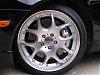
The wheels look like this when parked and wheels turned all the way to the left:
\ |
\|
The wheels look like this when parked and wheels turned all the way to the left:
\ |
\|
Member
Joined: Apr 2007
Posts: 156
Likes: 0
From: Suburbia, CA
mine: '01 C240 w/heavy modifications dad's: '05 997 Carrera S
yeah, ive noticed this, even with my HR cup kit, and ive come to the conclusion that when cornering at speed, the centrifugal (ok...technically centrepital, for all you physics buffs out there...but w/e) force pushes the car toward the outside of the corner, making the tilt you are seeing a good thing because it cancels the tire roll effect of cornering.
Just think of the force you feel in the car when cornering, well the entire car is being acted upon by that force, so I can only assume that the tilt is designed to make it so that force only plants the tires firmer and flatter on the ground. Its a way to use what is normally a negative cornering force to reinforce the traction of the car.
Thats the best I can surmise after thinking about it seriously when i saw that more than just my car did it.
Just think of the force you feel in the car when cornering, well the entire car is being acted upon by that force, so I can only assume that the tilt is designed to make it so that force only plants the tires firmer and flatter on the ground. Its a way to use what is normally a negative cornering force to reinforce the traction of the car.
Thats the best I can surmise after thinking about it seriously when i saw that more than just my car did it.
Member
Joined: Oct 2006
Posts: 209
Likes: 0
From: FW, WA
'06 SS
And you'd be right.
Under lateral loading, the centripetal force will cause more of the tires surface to be in contact with the ground.
I commented on the design before I even left the dealers lot with my first 203 in 2005.
Under lateral loading, the centripetal force will cause more of the tires surface to be in contact with the ground.
I commented on the design before I even left the dealers lot with my first 203 in 2005.
Member
Joined: Sep 2002
Posts: 153
Likes: 0
From: Colorado Springs, CO.
2003 C230K SS (6 spd)
Correct me if I'm wrong but I believe the design is for a tighter turning radius. In 2001, my friend came back from Germany w/ an 01 BMW 325i which did the same thing; he related that to such a tight turning radius which is what the dealership told him. Next time you're parked along a curb, turn you're wheel to the max and proceed to bang a u-ey. You will then appreciate the turning radius your vehicle has.
Trending Topics
Out Of Control!!
Joined: Nov 2005
Posts: 18,677
Likes: 9
From: OC
a quarter mile at a time
it's the caster that's built into the front suspension. caster helps stability at high speeds. the byproduct of high levels of caster is the "tilting" of the front wheels when turned.
the tight turning radius of our cars is simply because since it's a front engine, rear wheel drive layout, there is more room to allow the front wheels to turn further than typical front wheel drive cars.
the tight turning radius of our cars is simply because since it's a front engine, rear wheel drive layout, there is more room to allow the front wheels to turn further than typical front wheel drive cars.
MB World Stories
The Best of Mercedes & AMG

Manual Mercedes? 6 Times Sindelfingen Let Drivers Have All The Fun
Verdad Gallardo
Mercedes SLR McLaren 722 S Is Extremely Rare Example Modified by McLaren
Verdad Gallardo
8 Classic Boxy Mercedes Designs That Have Aged Like Fine Wine
Verdad Gallardo
Flawlessly Restored Mercedes 190E Evo II Heads to Auction
Verdad Gallardo
Electric Mercedes C-Class Unveiled: 11 Things You Need to Know
Verdad Gallardo
Mercedes EQS Gets A Major Update: Everything You Need to Know
Verdad Gallardo
5 Underrated Mercedes-Benz Models That Don't Get the Love They Deserve
Verdad Gallardo
Mercedes 300D Has Pushed Well Past 1 Million Miles and It Ain't Stopping
Verdad Gallardo
10 Most Reliable Mercedes-Benz Models You Can Buy Used
Verdad Gallardo
Member
Joined: Sep 2002
Posts: 153
Likes: 0
From: Colorado Springs, CO.
2003 C230K SS (6 spd)
it's the caster that's built into the front suspension. caster helps stability at high speeds. the byproduct of high levels of caster is the "tilting" of the front wheels when turned.
the tight turning radius of our cars is simply because since it's a front engine, rear wheel drive layout, there is more room to allow the front wheels to turn further than typical front wheel drive cars.
the tight turning radius of our cars is simply because since it's a front engine, rear wheel drive layout, there is more room to allow the front wheels to turn further than typical front wheel drive cars.


Junior Member
Joined: Aug 2006
Posts: 62
Likes: 0
From: Bay Area, CA
06 C230 Black/Ash

So does this "caster" make the tire wear on the outside???
I have only 16,xxx miles on my 2006 c230 and my tires are completely worn on the outside area of the tires...... (both front tires)
I have only 16,xxx miles on my 2006 c230 and my tires are completely worn on the outside area of the tires...... (both front tires)

Super Moderator
Joined: Dec 2006
Posts: 2,403
Likes: 64
From: Camas, WA
2007 C230SS; 2014 ML350 BT
No, if you are wearing the outside edge (very outer tread block) of your tires you probably have too much positive toe (Toe-in). If you are wearing the outside half of your tires you have too much positive camber. Either way, you need an alignment.
Last edited by johnand; May 22, 2007 at 05:26 PM.

Registered User
Joined: Mar 2005
Posts: 62
Likes: 0
From: New York
2005 C230SS 6spd Blk/Blk, 2006 C350 SS 6spd Blk/Blk
I don't think the wear on both inside and outside of both front tires is because of low inflation. More like a design flaw.
Member
Joined: Apr 2007
Posts: 156
Likes: 0
From: Suburbia, CA
mine: '01 C240 w/heavy modifications dad's: '05 997 Carrera S
unless you have completely stock everything, then you should recnsider youre pressures, i think. I run 36 in front and 38 in back, and I get pretty even tire wear...
(assumes no responsibility if you kill yourself because your tires are overinflated)
(assumes no responsibility if you kill yourself because your tires are overinflated)
Thread Starter
MBWorld Fanatic!
Joined: Dec 2006
Posts: 1,105
Likes: 11
From: Toronto, Canada
2019 C300 Wagon; '75 Triumph TR6; previous: 2004 C230 6spd sold after 17 years of driving
You must have a very harsh ride with pressures like that.
Member
Joined: Apr 2007
Posts: 156
Likes: 0
From: Suburbia, CA
mine: '01 C240 w/heavy modifications dad's: '05 997 Carrera S
actually i quite like it, granted im not driving on clouds, but I like a bit of road feel, and im not running 19s so its not bad harshness wise

Super Moderator Alumni
Joined: Mar 2004
Posts: 7,684
Likes: 12
From: West Los Angeles
Midnight Blue 2004.5 C230 Kompressor Sport Sedan. 2002 w210 E320, 2009 w211 E350 Sport
That's why Benz has the best turning radius out of any car I've ever driven. I've seen this with all the Benz's owned in my family from a 450 SLC, to a 300 SEL to a E320 (w210) to my C230KSS (w203) to a CLK320 (w209).
When you turn the wheel to full lock one way or the other, the wheels angle to allow for the great turning radius, but I can't think of any situation a person will be in where they will be travling at a high speed and then torque the wheel to lock (left or right). That would make the car roll for sure (not sure if that's even possible).
As for negative effects, I can't think of any, just because the fastest anyone would be traveling at full lock would be 10-15 mph, making a u-turn.
When you turn the wheel to full lock one way or the other, the wheels angle to allow for the great turning radius, but I can't think of any situation a person will be in where they will be travling at a high speed and then torque the wheel to lock (left or right). That would make the car roll for sure (not sure if that's even possible).
As for negative effects, I can't think of any, just because the fastest anyone would be traveling at full lock would be 10-15 mph, making a u-turn.

Super Member
Joined: May 2006
Posts: 546
Likes: 10
From: Cumberland, RI U.S.A.
2005 C230WZ SS Capri Blue/Ash
That's why Benz has the best turning radius out of any car I've ever driven. I've seen this with all the Benz's owned in my family from a 450 SLC, to a 300 SEL to a E320 (w210) to my C230KSS (w203) to a CLK320 (w209).
When you turn the wheel to full lock one way or the other, the wheels angle to allow for the great turning radius, but I can't think of any situation a person will be in where they will be travling at a high speed and then torque the wheel to lock (left or right). That would make the car roll for sure (not sure if that's even possible).
When you turn the wheel to full lock one way or the other, the wheels angle to allow for the great turning radius, but I can't think of any situation a person will be in where they will be travling at a high speed and then torque the wheel to lock (left or right). That would make the car roll for sure (not sure if that's even possible).
It's funny the comments you get from people when they see your car parked with the wheels turned completely. They think something's wrong, but when I tell them about the turning radius, they are rather amazed.
Super Moderator Alumni
Joined: Mar 2004
Posts: 7,684
Likes: 12
From: West Los Angeles
Midnight Blue 2004.5 C230 Kompressor Sport Sedan. 2002 w210 E320, 2009 w211 E350 Sport
Member
Joined: May 2007
Posts: 99
Likes: 0
From: Scottsdale, AZ
2002 C230K Coupe
Look at the 'camber' in my wheel... this is perfectly normal even at standstill? The outer edge of the front right wheel has excess wear compared to the left wheel. I swapped the wheels so you can see the excess wear on the left wheel now. I am thinking something is wrong...


Super Moderator Alumni
Joined: Mar 2004
Posts: 7,684
Likes: 12
From: West Los Angeles
Midnight Blue 2004.5 C230 Kompressor Sport Sedan. 2002 w210 E320, 2009 w211 E350 Sport
Look at the 'camber' in my wheel... this is perfectly normal even at standstill? The outer edge of the front right wheel has excess wear compared to the left wheel. I swapped the wheels so you can see the excess wear on the left wheel now. I am thinking something is wrong...
Member
Joined: May 2007
Posts: 99
Likes: 0
From: Scottsdale, AZ
2002 C230K Coupe
I know it is difficult to tell from these angles but from other angles you cannot even see that. The tilt or camber is there only when the wheels are turned not when it is straight. But as you can see from the pic, the outer tread is worn out. This was originally the right side wheel which I swapped with the left. The left side wheel did not have any tread wear. I am thinking this is the reason for vibrations at high speeds and excessive road noise at low speeds. 
Super Moderator Alumni
Joined: Mar 2004
Posts: 7,684
Likes: 12
From: West Los Angeles
Midnight Blue 2004.5 C230 Kompressor Sport Sedan. 2002 w210 E320, 2009 w211 E350 Sport
I know it is difficult to tell from these angles but from other angles you cannot even see that. The tilt or camber is there only when the wheels are turned not when it is straight. But as you can see from the pic, the outer tread is worn out. This was originally the right side wheel which I swapped with the left. The left side wheel did not have any tread wear. I am thinking this is the reason for vibrations at high speeds and excessive road noise at low speeds.
Now as for the tires being on the edge at full or almost full lock, that shouldn't cause uneven tirewear. I would check the max tire pressure and increase accordingly. Lower tire pressure does cause for uneven tire wear. OR alignment/mis-alignment.
Member
Joined: May 2007
Posts: 99
Likes: 0
From: Scottsdale, AZ
2002 C230K Coupe
I know I know, it is not camber... the only time I saw camber on a street car was on the rear wheels of a Z4. I was just using the word to describe tilt. Anyway, I checked the tire pressure and it was 29 on both front tires but only the right tire is wearing faster than the left. The alignment is fine, had a mechanic check it before I purchased the car. Oh well, I will probably have a MB mech take a look at it when I get the other issues fixed.


