



New cars and Overtechnology

Thread Starter
Member
Joined: Nov 2003
Posts: 211
Likes: 0
From: Atlanta
2002 E55, Black on Black
New cars and Overtechnology
Just my opinion here, but I think the high-end automotive industry has gone too far in this area. I love ABS. I love xenon headlights. I have no problems with electronic engine management in general.
However, for me, as a driving enthusiast, it stops there. I don't want "drive by wire" throttle and it's problems. I don't need a computer trying to figure out my driving style when it comes to downshifting -- I'd much rather have a mechanical format so I know if I push the pedal down so far, I get the downshift. Now I have no idea with my C-class what I'm going to get. Also, what was wrong with regular mechanical brakes? Why does MB have go with this electronic braking system on the E-class that nobody can modulate?
BMW is far worse -- I-drive is a nightmare.
I'd so much rather have a higher quality interior than a computer that tells me my MPG since my last reset. This just creates more things to go wrong. Perhaps I'm just getting older, but I want my car to do things a car is supposed to do -- just do them better. I don't need them to do more things I don't really need anyway.
Technology that improves the driving experience is good. Technology for the sake of technology seems to be where the industry is headed, and the "driving experience" is suffering.
Just my 2 cents.
However, for me, as a driving enthusiast, it stops there. I don't want "drive by wire" throttle and it's problems. I don't need a computer trying to figure out my driving style when it comes to downshifting -- I'd much rather have a mechanical format so I know if I push the pedal down so far, I get the downshift. Now I have no idea with my C-class what I'm going to get. Also, what was wrong with regular mechanical brakes? Why does MB have go with this electronic braking system on the E-class that nobody can modulate?
BMW is far worse -- I-drive is a nightmare.
I'd so much rather have a higher quality interior than a computer that tells me my MPG since my last reset. This just creates more things to go wrong. Perhaps I'm just getting older, but I want my car to do things a car is supposed to do -- just do them better. I don't need them to do more things I don't really need anyway.
Technology that improves the driving experience is good. Technology for the sake of technology seems to be where the industry is headed, and the "driving experience" is suffering.
Just my 2 cents.

Out Of Control!!
Joined: Jul 2003
Posts: 13,969
Likes: 0
From: Florida
In the market
I agree. The world of technology is turning into a "how much stuff can I fit into this box" competition. It is like that with everything now. Cars and cell phones are the two most perfect examples of this.

MBWorld Fanatic!
Joined: Jul 2002
Posts: 1,750
Likes: 0
From: Peoria IL
2003 MB C230 coupe
i actually sort of disagree with you guys here. i'm a huge fan of technology and technological change and "pushing the envelope". it's the engineer in me. i can see why new electronic devices like the ones you mentioned would be annoying or unwanted to the common driver (those that are afraid to program their VCR  ), but someone has to bring their line of cars into the future and MB and BMW are the ones that can do it. 10 years from now "X-by-wire" will be second nature to alot of car drivers out there and i'll bet it'll work wonderfully when they make it a standard and work out all the kinks as you have to do with all technology. to a hardcore enthusiast, these things may never be popular, but you're already driving a Mercedes, if you don't want "fancy" stuff, go buy a Viper or an old Dodge Charger.
i'm one to not be afraid of change when it comes to technology. i bought Windows XP the day it came out. i have friends that still refuse to upgrade from 2000. someone's gotta push the envelope, sometimes it works out wonderfully, sometimes it sucks for the first couple years. but eventually "new" technologies become second nature to society after the kinks are worked out.
), but someone has to bring their line of cars into the future and MB and BMW are the ones that can do it. 10 years from now "X-by-wire" will be second nature to alot of car drivers out there and i'll bet it'll work wonderfully when they make it a standard and work out all the kinks as you have to do with all technology. to a hardcore enthusiast, these things may never be popular, but you're already driving a Mercedes, if you don't want "fancy" stuff, go buy a Viper or an old Dodge Charger.i'm one to not be afraid of change when it comes to technology. i bought Windows XP the day it came out. i have friends that still refuse to upgrade from 2000. someone's gotta push the envelope, sometimes it works out wonderfully, sometimes it sucks for the first couple years. but eventually "new" technologies become second nature to society after the kinks are worked out.
Out Of Control!!
Joined: Jul 2003
Posts: 13,969
Likes: 0
From: Florida
In the market
i am a fan of the technology as well, but in my designs I always include the option to override the technology (the engineer in me)
Actually, that is tyically a requirment in my designs (battleshort)
Actually, that is tyically a requirment in my designs (battleshort)
MBWorld Fanatic!
Joined: Jul 2002
Posts: 1,750
Likes: 0
From: Peoria IL
2003 MB C230 coupe
Originally posted by Brunelleschi
i am a fan of the technology as well, but in my designs I always include the option to override the technology (the engineer in me)
Actually, that is tyically a requirment in my designs (battleshort)
i am a fan of the technology as well, but in my designs I always include the option to override the technology (the engineer in me)
Actually, that is tyically a requirment in my designs (battleshort)
MBWorld Fanatic!
Joined: Jul 2002
Posts: 1,750
Likes: 0
From: Peoria IL
2003 MB C230 coupe
Originally posted by Brunelleschi
This is true...I wonder how much a car would cost if that option was built into everything......
This is true...I wonder how much a car would cost if that option was built into everything......
Trending Topics

MBWorld Fanatic!
Joined: Jan 2002
Posts: 1,265
Likes: 1
From: Nashua, NH
2008 VW GTI
I agree with truelove. Technology allows these cars to be feature packed at a relatively low cost.
For example, the electronic throttle allows designers the freedom to put the throttle body in places that would impossible if it had to attach to a mechanical cable. It eliminates the bulky cruise control actuators under the hood. It's required to let things like SMT trannys to blip the thottle on downshifts. It allows the cruise control to stay active even when shifting a manny.
As far as "driving experience" suffering; I never notice the e-throttle while driving my car.
For example, the electronic throttle allows designers the freedom to put the throttle body in places that would impossible if it had to attach to a mechanical cable. It eliminates the bulky cruise control actuators under the hood. It's required to let things like SMT trannys to blip the thottle on downshifts. It allows the cruise control to stay active even when shifting a manny.
As far as "driving experience" suffering; I never notice the e-throttle while driving my car.
MB World Stories
The Best of Mercedes & AMG

Manual Mercedes? 6 Times Sindelfingen Let Drivers Have All The Fun
Verdad Gallardo
Mercedes SLR McLaren 722 S Is Extremely Rare Example Modified by McLaren
Verdad Gallardo
8 Classic Boxy Mercedes Designs That Have Aged Like Fine Wine
Verdad Gallardo
Flawlessly Restored Mercedes 190E Evo II Heads to Auction
Verdad Gallardo
Electric Mercedes C-Class Unveiled: 11 Things You Need to Know
Verdad Gallardo
Mercedes EQS Gets A Major Update: Everything You Need to Know
Verdad Gallardo
5 Underrated Mercedes-Benz Models That Don't Get the Love They Deserve
Verdad Gallardo
Mercedes 300D Has Pushed Well Past 1 Million Miles and It Ain't Stopping
Verdad Gallardo
10 Most Reliable Mercedes-Benz Models You Can Buy Used
Verdad Gallardo
Thread Starter
Member
Joined: Nov 2003
Posts: 211
Likes: 0
From: Atlanta
2002 E55, Black on Black
Originally posted by truelove
i actually sort of disagree with you guys here. i'm a huge fan of technology and technological change and "pushing the envelope". it's the engineer in me. i can see why new electronic devices like the ones you mentioned would be annoying or unwanted to the common driver (those that are afraid to program their VCR ), but someone has to bring their line of cars into the future and MB and BMW are the ones that can do it. 10 years from now "X-by-wire" will be second nature to alot of car drivers out there and i'll bet it'll work wonderfully when they make it a standard and work out all the kinks as you have to do with all technology. to a hardcore enthusiast, these things may never be popular, but you're already driving a Mercedes, if you don't want "fancy" stuff, go buy a Viper or an old Dodge Charger.
i'm one to not be afraid of change when it comes to technology. i bought Windows XP the day it came out. i have friends that still refuse to upgrade from 2000. someone's gotta push the envelope, sometimes it works out wonderfully, sometimes it sucks for the first couple years. but eventually "new" technologies become second nature to society after the kinks are worked out.
i actually sort of disagree with you guys here. i'm a huge fan of technology and technological change and "pushing the envelope". it's the engineer in me. i can see why new electronic devices like the ones you mentioned would be annoying or unwanted to the common driver (those that are afraid to program their VCR
), but someone has to bring their line of cars into the future and MB and BMW are the ones that can do it. 10 years from now "X-by-wire" will be second nature to alot of car drivers out there and i'll bet it'll work wonderfully when they make it a standard and work out all the kinks as you have to do with all technology. to a hardcore enthusiast, these things may never be popular, but you're already driving a Mercedes, if you don't want "fancy" stuff, go buy a Viper or an old Dodge Charger.i'm one to not be afraid of change when it comes to technology. i bought Windows XP the day it came out. i have friends that still refuse to upgrade from 2000. someone's gotta push the envelope, sometimes it works out wonderfully, sometimes it sucks for the first couple years. but eventually "new" technologies become second nature to society after the kinks are worked out.
I think MB and BMW are too far toward the latter today. MB has always been about technological advances -- airbags, ABS, etc. These advances typically had no negative impact on the driving experience though.
Perhaps once the "bugs" are worked out today's advances will be worthwhile, but not until then.
Is I-Drive great technology- yes. Does it improve the car? Most say no. Same with MB E-brake technology in the E -Class. Nobody likes the way it works, no matter how advanced it is technologically speaking.
It isn't about being a hardcore enthusiast -- it's about building a better automobile. After all, if you wanted cutting edge technology, I could just as easily suggest you go buy a new Acura TL and all it's technological wonders.
MBWorld Fanatic!
Joined: Jul 2002
Posts: 1,750
Likes: 0
From: Peoria IL
2003 MB C230 coupe
Originally posted by r_liebo
There is a difference between "fancy" stuff that works to improve the car w/o hurting the driving experience and "fancy" stuff just b/c you can do it.
I think MB and BMW are too far toward the latter today. MB has always been about technological advances -- airbags, ABS, etc. These advances typically had no negative impact on the driving experience though.
Perhaps once the "bugs" are worked out today's advances will be worthwhile, but not until then.
Is I-Drive great technology- yes. Does it improve the car? Most say no. Same with MB E-brake technology in the E -Class. Nobody likes the way it works, no matter how advanced it is technologically speaking.
It isn't about being a hardcore enthusiast -- it's about building a better automobile. After all, if you wanted cutting edge technology, I could just as easily suggest you go buy a new Acura TL and all it's technological wonders.
There is a difference between "fancy" stuff that works to improve the car w/o hurting the driving experience and "fancy" stuff just b/c you can do it.
I think MB and BMW are too far toward the latter today. MB has always been about technological advances -- airbags, ABS, etc. These advances typically had no negative impact on the driving experience though.
Perhaps once the "bugs" are worked out today's advances will be worthwhile, but not until then.
Is I-Drive great technology- yes. Does it improve the car? Most say no. Same with MB E-brake technology in the E -Class. Nobody likes the way it works, no matter how advanced it is technologically speaking.
It isn't about being a hardcore enthusiast -- it's about building a better automobile. After all, if you wanted cutting edge technology, I could just as easily suggest you go buy a new Acura TL and all it's technological wonders.
you said "Is I-Drive great technology- yes. Does it improve the car? Most say no." the key word there is "Most". some would say yes and that's the way it usually goes for all new technology. 10 years from now we won't be able to live without it or something similar. 15 years from now it'll be standard on the cheapest of cars. i just installed a wireless network in my house mainly just as an expensive toy, but it brings me joy and it's my hobby to do stuff like that. but i get made fun of about the network by friends who would rather drive a grand am than a mercedes because it's "practical".
technology can be quickly developed and implemented these days, perhaps too quickly. maybe car companies should slow down and really perfect these technologies and make sure they're user friendly and very useful before implementing them which is probably your point and i agree with you there. but years from now drivers won't think twice about verbally commanding their cars to start the engine.

MBWorld Fanatic!
Joined: Nov 2001
Posts: 3,600
Likes: 1
From: Earth
GLB 250 4matic
i also disagree.
in most cases, the technology is there to help and not for it's own sake. as long as the tool is effective and useful, i have no problem w/ it.
checkout the nano paint thread. that is an example that i find quite beneficial.
in most cases, the technology is there to help and not for it's own sake. as long as the tool is effective and useful, i have no problem w/ it.
checkout the nano paint thread. that is an example that i find quite beneficial.
Last edited by young; Mar 4, 2004 at 11:29 AM.

MBWorld Fanatic!
Joined: Aug 2002
Posts: 2,753
Likes: 0
From: York, PA
2003 C230K Sport Coupe, 1986 190E 2.3
I think the biggest problem is people not wanting or being able to deal with change. I see it all the time just here at work. Drive by wire is great and I have yet to see a problem with it on my car at least. As for the E-Brake on the E-Class and above, that also is a great idea, technology helping the driver by determining what he wants to do. Lets face it, as we get older our reactions are slower. Who buys E class and above, most of the people are older folks, not all but Most. The people who do not like it are just not used to it, once people are used to it and accept it and learn how to use it, everything will most likely be fine. Although advances will be made to tweak what is used already. But I would assume that eventually most technology used today in the MB and BMW lineup will grace other vehicle lines as well.
Thread Starter
Member
Joined: Nov 2003
Posts: 211
Likes: 0
From: Atlanta
2002 E55, Black on Black
Originally posted by truelove
i agree with you on some points. but it's all a major matter of opinion. and i think it also has alot, if not all, to do with someone's technological literacy. i for one am not afraid of fancy, frilly, technologies on cars and actually want them because i actually use them and work them into my daily drive as much as i can because they bring me joy and it's easy for me to learn how to use them. however, my mother or grandmother wouldn't ever even touch an automatic sunroof for fear of breaking it. i can see your point about just striving to improve the automobile first and foremost but i think we can all agree that german car companies have no problem in that area.
you said "Is I-Drive great technology- yes. Does it improve the car? Most say no." the key word there is "Most". some would say yes and that's the way it usually goes for all new technology. 10 years from now we won't be able to live without it or something similar. 15 years from now it'll be standard on the cheapest of cars. i just installed a wireless network in my house mainly just as an expensive toy, but it brings me joy and it's my hobby to do stuff like that. but i get made fun of about the network by friends who would rather drive a grand am than a mercedes because it's "practical".
technology can be quickly developed and implemented these days, perhaps too quickly. maybe car companies should slow down and really perfect these technologies and make sure they're user friendly and very useful before implementing them which is probably your point and i agree with you there. but years from now drivers won't think twice about verbally commanding their cars to start the engine.
i agree with you on some points. but it's all a major matter of opinion. and i think it also has alot, if not all, to do with someone's technological literacy. i for one am not afraid of fancy, frilly, technologies on cars and actually want them because i actually use them and work them into my daily drive as much as i can because they bring me joy and it's easy for me to learn how to use them. however, my mother or grandmother wouldn't ever even touch an automatic sunroof for fear of breaking it. i can see your point about just striving to improve the automobile first and foremost but i think we can all agree that german car companies have no problem in that area.
you said "Is I-Drive great technology- yes. Does it improve the car? Most say no." the key word there is "Most". some would say yes and that's the way it usually goes for all new technology. 10 years from now we won't be able to live without it or something similar. 15 years from now it'll be standard on the cheapest of cars. i just installed a wireless network in my house mainly just as an expensive toy, but it brings me joy and it's my hobby to do stuff like that. but i get made fun of about the network by friends who would rather drive a grand am than a mercedes because it's "practical".
technology can be quickly developed and implemented these days, perhaps too quickly. maybe car companies should slow down and really perfect these technologies and make sure they're user friendly and very useful before implementing them which is probably your point and i agree with you there. but years from now drivers won't think twice about verbally commanding their cars to start the engine.
This doesn't even address the host of reliability problems with rushing new technology to market as well, as many E-Class and C-class owners will attest to.
Technology today can be great (nanotech paint, Bluetooth, ever increasing HP without sacrificing fuel economy), but technology not ready for market isn't a good idea.

MBWorld Fanatic!


Joined: Feb 2003
Posts: 1,414
Likes: 339
From: Charlotte, NC
Had: 1987 300TD, Had: 2004 C230 Sport Sedan, Have: 2014 E350 Sport, Have: 2019 S450
Originally posted by mctwin2kman
As for the E-Brake on the E-Class and above, that also is a great idea, technology helping the driver by determining what he wants to do.
As for the E-Brake on the E-Class and above, that also is a great idea, technology helping the driver by determining what he wants to do.
The first fly-by-wire airliner in the world was made by Airbus. During it's introduction at the Paris air show many years ago, it crashed. The cause: The pilot made a low-speed pass of the airport with the landing gear down. When he attempted to throttle up to fly off, the computer wouldn't let him, as it was configuring the plane for landing. The plane slowly lost altitude, and crashed into a stand of trees at the end of the airfield.
Of course, the problem has since been fixed, but try telling the pilot who died in that one that fly-by-wire was a great idea.
If I'm gonna die in a crash, I would rather it be my fault, than some damn computer that 'thought' it knew what I was trying to do.
Last edited by dmatre; Mar 4, 2004 at 04:33 PM.
MBWorld Fanatic!
Joined: Aug 2002
Posts: 2,753
Likes: 0
From: York, PA
2003 C230K Sport Coupe, 1986 190E 2.3
Hey I agree that it may not be needed or good in some cases. But with the majority of the idiot drivers out there on the road and older drivers this kind of babysitting is needed. At least the E has half and half braking, electro-hydrolic, I think the new SL is all Electric. The only thing I worry about is off course the failure of electronic components due to heat and other factors. You need to have some sort of safety backup device or you end up like that AirBus Pilot. But look at planes now, almost all are fly-by wire.......
MBWorld Fanatic!
Joined: Nov 2001
Posts: 1,377
Likes: 1
From: Vancouver Island, B.C. Canada
2005 smart cabrio; 2008 Mercedes-Benz B 200
thoughts
Couple of points:
(1) I think that electronic throttles are becoming a necessity with the ever tightening emission control standards. I'd bet that they will become universal in 5 years' time, like it or not.
(2) The principal problem as I see it with systems such as ESP is that there will be a temptation to use these technologies to dumb down fundamental suspension design (i.e. cheapest cost solutions) and other basics like weight distribution, and use the ESP to bring what would otherwise be a dangerous-handling car up to a standard of benign safety.
In the old days of ESP, the cars that it equipped had very good basic suspension designs, and the ESP was a supplemental safety feature.
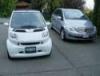
Today, there are several examples of cars which actually REQUIRE ESP to hold the road safely: smart, Mercedes-Benz A-Class, Peugeot 607, and undoubtedly more. So if the electronics fail or otherwise malfunction, you are left with a patently unsafe-to-drive motor car, and that is anathema to the reason ESP was introduced in the first place.
I also can't help but think that there is a safety paradox that could come to pass here - all the nanny-driving aids on new cars will make the unwashed masses think that now they can tailgate at 130 km/h, do 90 degree corners flat out in the snow and so on, because all of the driver aids.
This is one reason that I have a 1966 car (the other reason is she is so pretty ) - it's from a simpler era and offers a real driving experience. Sometimes that's a real antidote to the semi-involving driving experiences that most cars of today offer. Frankly, my 404 is more fun to drive than the C 230 K.
(1) I think that electronic throttles are becoming a necessity with the ever tightening emission control standards. I'd bet that they will become universal in 5 years' time, like it or not.
(2) The principal problem as I see it with systems such as ESP is that there will be a temptation to use these technologies to dumb down fundamental suspension design (i.e. cheapest cost solutions) and other basics like weight distribution, and use the ESP to bring what would otherwise be a dangerous-handling car up to a standard of benign safety.
In the old days of ESP, the cars that it equipped had very good basic suspension designs, and the ESP was a supplemental safety feature.
Today, there are several examples of cars which actually REQUIRE ESP to hold the road safely: smart, Mercedes-Benz A-Class, Peugeot 607, and undoubtedly more. So if the electronics fail or otherwise malfunction, you are left with a patently unsafe-to-drive motor car, and that is anathema to the reason ESP was introduced in the first place.
I also can't help but think that there is a safety paradox that could come to pass here - all the nanny-driving aids on new cars will make the unwashed masses think that now they can tailgate at 130 km/h, do 90 degree corners flat out in the snow and so on, because all of the driver aids.
This is one reason that I have a 1966 car (the other reason is she is so pretty
) - it's from a simpler era and offers a real driving experience. Sometimes that's a real antidote to the semi-involving driving experiences that most cars of today offer. Frankly, my 404 is more fun to drive than the C 230 K.

MBWorld Fanatic!
Joined: Jun 2003
Posts: 1,095
Likes: 0
From: Southern California, USA
03 White on Stone E320
I don't have a problem with technology, but I do think the Germans are rushing the products out too early. Plus, they load it up so much, the car stops being instictive and user friendly. I see so many problems complained about that are related to these cool new features yet I don't see complained about as much when on the Japanese cars.
The brakes on our E class suck. Whenever I do anything beyond a super light press on the brakes, the stupid system thinks I'm doing a panic stop and slams on the brakes. Very annoying in a parking lot or mild stop and go traffic.
The onboard computer can show lots of info, but it shows so much, it takes too many presses and requires too much looking (and not paying attention to the road) that I just don't bother.
The brakes on our E class suck. Whenever I do anything beyond a super light press on the brakes, the stupid system thinks I'm doing a panic stop and slams on the brakes. Very annoying in a parking lot or mild stop and go traffic.
The onboard computer can show lots of info, but it shows so much, it takes too many presses and requires too much looking (and not paying attention to the road) that I just don't bother.
Guest
Posts: n/a
Re: New cars and Overtechnology
Originally posted by r_liebo
Just my opinion here, but I think the high-end automotive industry has gone too far in this area. I love ABS. I love xenon headlights. I have no problems with electronic engine management in general.
However, for me, as a driving enthusiast, it stops there. I don't want "drive by wire" throttle and it's problems. I don't need a computer trying to figure out my driving style when it comes to downshifting -- I'd much rather have a mechanical format so I know if I push the pedal down so far, I get the downshift. Now I have no idea with my C-class what I'm going to get. Also, what was wrong with regular mechanical brakes? Why does MB have go with this electronic braking system on the E-class that nobody can modulate?
BMW is far worse -- I-drive is a nightmare.
I'd so much rather have a higher quality interior than a computer that tells me my MPG since my last reset. This just creates more things to go wrong. Perhaps I'm just getting older, but I want my car to do things a car is supposed to do -- just do them better. I don't need them to do more things I don't really need anyway.
Technology that improves the driving experience is good. Technology for the sake of technology seems to be where the industry is headed, and the "driving experience" is suffering.
Just my 2 cents.
Just my opinion here, but I think the high-end automotive industry has gone too far in this area. I love ABS. I love xenon headlights. I have no problems with electronic engine management in general.
However, for me, as a driving enthusiast, it stops there. I don't want "drive by wire" throttle and it's problems. I don't need a computer trying to figure out my driving style when it comes to downshifting -- I'd much rather have a mechanical format so I know if I push the pedal down so far, I get the downshift. Now I have no idea with my C-class what I'm going to get. Also, what was wrong with regular mechanical brakes? Why does MB have go with this electronic braking system on the E-class that nobody can modulate?
BMW is far worse -- I-drive is a nightmare.
I'd so much rather have a higher quality interior than a computer that tells me my MPG since my last reset. This just creates more things to go wrong. Perhaps I'm just getting older, but I want my car to do things a car is supposed to do -- just do them better. I don't need them to do more things I don't really need anyway.
Technology that improves the driving experience is good. Technology for the sake of technology seems to be where the industry is headed, and the "driving experience" is suffering.
Just my 2 cents.
Get a manual if you want 'controlled downshifts', despite your logic, no matter how hard you mash the gas in an auto, you're never garranteed a downshift.
Drive by wire is going to be great, you're seeing it in its infantcy. Mechanical drive didn't always used to be what it is today.
MBWorld Fanatic!
Joined: Aug 2002
Posts: 2,753
Likes: 0
From: York, PA
2003 C230K Sport Coupe, 1986 190E 2.3
Personally when driving around town and what not without my wife in the car the ESP is turned off. I hate the systems intrusiveness sometimes. It should allow a little tire spin before activating and I hate that it cuts fuel flow so quickly. Like a shift from second to third while getting on the highway and then the tire chirps and all hell breaks loose. The fule gets cut and the brakes activate and Jamie gets tossed forward due to the rapid slowing down while trying to enter traffic. This occurs of course when really slamming it into gear and dropping the clutch. If the 6 speed did not have such a short 1st gear this shift would not have been required at 2nd would most likely get me to 60. The coupe does not have that much power so I can't imagine how annoying this would be on an AMG version, because I am sure they can do more than chirp the tires on a shift. Maybe this is why the Auto trannies shift so slow and smooth, to eliminate the harder shift and spinning of the tires. But these car companies are giving the driver to many aids and this causes worse driving and more lazy driving. I still love to drive and sometimes the intrusivness gets to me. I have yet to have ESP activate to actually help me out. I know how to drive and I know the limits of the car and do not need an Electronic Nanny to do anything for me. If I push the car too far I don't think the ESP could save it anyhow, as the laws of physics will take over and counter anything that system does and the car will be wrecked.
Guest
Posts: n/a
BTW, My "driving experience" is comuting to/from work, not canyon racing. Thus all the 'little touches' of technology are more than welcomed, like:
auto dimming mirrors
1-touch turn signals
auto stopping of wipers when drivers door opened
rain-sensing wipers
speed sensing wipers
tunnel-mode
integrated steering wheel buttons and dash display for most functions (I wish climate control was there too!)
Then there's the safety advancements:
BAS (it has saved me more than once already)
ESP (although when driving hard it kicks in inapproipriately on quick hgh-rev shifts)
automatic use of nearby bulb to replace burnout bulb function
auto dimming mirrors
1-touch turn signals
auto stopping of wipers when drivers door opened
rain-sensing wipers
speed sensing wipers
tunnel-mode
integrated steering wheel buttons and dash display for most functions (I wish climate control was there too!)
Then there's the safety advancements:
BAS (it has saved me more than once already)
ESP (although when driving hard it kicks in inapproipriately on quick hgh-rev shifts)
automatic use of nearby bulb to replace burnout bulb function
Guest
Posts: n/a
Originally posted by mctwin2kman
If I push the car too far I don't think the ESP could save it anyhow, as the laws of physics will take over and counter anything that system does and the car will be wrecked.
If I push the car too far I don't think the ESP could save it anyhow, as the laws of physics will take over and counter anything that system does and the car will be wrecked.
I'm sure at 100 mph+ there'd be issues, yet at normal driving speeds ESP should beable to deal with most situations.
MBWorld Fanatic!
Joined: Jul 2002
Posts: 1,750
Likes: 0
From: Peoria IL
2003 MB C230 coupe
Re: thoughts
Originally posted by Mike T.
...(2) The principal problem as I see it with systems such as ESP is that there will be a temptation to use these technologies to dumb down fundamental suspension design (i.e. cheapest cost solutions) and other basics like weight distribution, and use the ESP to bring what would otherwise be a dangerous-handling car up to a standard of benign safety.
In the old days of ESP, the cars that it equipped had very good basic suspension designs, and the ESP was a supplemental safety feature.
Today, there are several examples of cars which actually REQUIRE ESP to hold the road safely: smart, Mercedes-Benz A-Class, Peugeot 607, and undoubtedly more. So if the electronics fail or otherwise malfunction, you are left with a patently unsafe-to-drive motor car, and that is anathema to the reason ESP was introduced in the first place....
...(2) The principal problem as I see it with systems such as ESP is that there will be a temptation to use these technologies to dumb down fundamental suspension design (i.e. cheapest cost solutions) and other basics like weight distribution, and use the ESP to bring what would otherwise be a dangerous-handling car up to a standard of benign safety.
In the old days of ESP, the cars that it equipped had very good basic suspension designs, and the ESP was a supplemental safety feature.
Today, there are several examples of cars which actually REQUIRE ESP to hold the road safely: smart, Mercedes-Benz A-Class, Peugeot 607, and undoubtedly more. So if the electronics fail or otherwise malfunction, you are left with a patently unsafe-to-drive motor car, and that is anathema to the reason ESP was introduced in the first place....
another example is the F117 stealth jet. it was basically completely desinged by electronic controls experts. it's entire operation and ability to stay in flight depends completely on the onboard electronic control system. if the pilot wants to do a maneuver and the control system thinks it's too dangerous, it simply won't allow it. now for those of you wondering why this is the case on this particular jet, take a look at the picture below. completely flatpanel non-aerodynamic design (a design feature solely to avoid radar). in theory, the thing should never be able to leave the ground, let alone be built in the first place. but thanks to electronic control, it kicks *** on the battle field and fills a particular need very well.
some products (or product features) would never see the light of day if hardcore technology wasn't involved, and i believe that may have something to do with the A-class and smart cars. and these cars do fill a particular nitch that was unable to be filled before we had the technology of today.

Last edited by truelove; Mar 5, 2004 at 10:42 AM.
MBWorld Fanatic!
Joined: Aug 2002
Posts: 2,753
Likes: 0
From: York, PA
2003 C230K Sport Coupe, 1986 190E 2.3
Originally posted by taylor192
You'd be surprised. On a snowy day I tried to make this car spin out by going 80 kmph down a road and truning all the way to steering-wheel-lock (no comments on how smart this was, it was late at night and an open area with flat ditches) and ESP kicked in quickly before the backend could even swing around.
I'm sure at 100 mph+ there'd be issues, yet at normal driving speeds ESP should beable to deal with most situations.
You'd be surprised. On a snowy day I tried to make this car spin out by going 80 kmph down a road and truning all the way to steering-wheel-lock (no comments on how smart this was, it was late at night and an open area with flat ditches) and ESP kicked in quickly before the backend could even swing around.
I'm sure at 100 mph+ there'd be issues, yet at normal driving speeds ESP should beable to deal with most situations.

MBWorld Fanatic!
Joined: Oct 2002
Posts: 7,587
Likes: 0
From: Louisiana
E320
In the good old days of non-ESP, you had to be really careful accelerating out of a corner with fast cars. I remember almost losing control on my Z a few times accelerating out of corners too fast. With these new breed of cars, you can floor it and not even break a sweat.
MBWorld Fanatic!
Joined: Nov 2001
Posts: 1,377
Likes: 1
From: Vancouver Island, B.C. Canada
2005 smart cabrio; 2008 Mercedes-Benz B 200
Re: thoughts
Originally posted by truelove
i'm not sure i totally agree with you here. sometimes a vehicle would be completely impossible to even conceive without technological assistance. the A-class and smart cars are inherently small cars with unstable weight distribution compared to large sedans (they're just asking to be tipped over on a turn).
i'm not sure i totally agree with you here. sometimes a vehicle would be completely impossible to even conceive without technological assistance. the A-class and smart cars are inherently small cars with unstable weight distribution compared to large sedans (they're just asking to be tipped over on a turn).
But more to the point, the Peugeot 607 is a large FWD sedan the size of an E-Class, and when its nominally sophisticated suspension proved to allow the car to go up on two wheels in the Elk test, Peugeot had two choices: re-engineer the suspesion, or slap ESP on all the cars to avoid dangerous behaviour. They chose the latter. This is a trend, just watch for it.


