When you click on links to various merchants on this site and make a purchase, this can result in this site earning a commission. Affiliate programs and affiliations include, but are not limited to, the eBay Partner Network.
Huzzah! I am nowhere near brave enough to try and drain the TC, full marks lad!
Priceless information there sir, we should certainly make a large note on the main page here that anyone doing this service for themselves should hook up a trickle charger while working on it;
Thanks! The thing is there was no warning the the battery was dead and after it died it wasent completely dead, all the doors, electronics and lights seemed ok (other than all the errors on the screen)! so you would put the key to on position and everything looked ok, turn the key to start and a very loud click (sounded like a short to be honest) and the lights and everything would just shut down. I tested the voltage on the battery and got 11V (no load), plugged in an OBD and with the ignition on was showing 8V which is way too low. So my guess is the car knows the voltage is too low and doesent even crank the starter. And all the errors were from the different electronics components not receiving enough power to run properly.
You should do the TC, my opinion much easier than the pan (just drain!), and there a huge amount of fluid in there. To fill the TC just turn car on and put it in D and R a few times. My car took about 9L Total and about a quarter L came out via spill method.
Oh yes sir! I am for certain aware it is of absolute importance, I meant doing the entire job seems daunting, but the MOST strikingly difficult part seems to be the TC drain. I will likely not attempt this simply due to that portion.
However, this thread has enlightened me to this issue, and i will make certain my mechanic/dealer does drain it upon any flush/change.
Is there a reason not to flush or change based on age or amt of miles?
My service was done at 53,000mi. $450 at all 3 Dallas dealers. German Motor works did it for $375. No one is draining the TC in Dallas. I was declined by everyone for a TC drain. 83,000mi now im getting the 3rd gear downshift "CLANK".
This morning before getting to work, I decided to stop by a reputable independent Merc tech shop to get a quote for the transmission service.
I told the business owner that my C250 was nearing 40k miles, and that I was there to get a quote for the transmission service. He told me that he didn't recommend it. His reasoning was that the transmission has already broken in to the fluid already in the transmission. To drain it, and fill it anew, the transmission would be operating in fluid of two viscosities. He finished by saying that if everything was working well, to not worry about it until I near 80k miles.
On a 2011 C300 4 Matic, is there a drain plug on the torque converter to drain out the fluid of the converter during a transmission service?
Yes there is a drain plug for the torque converter. When I had my done I asked to have it drained and paid extra for the fluid. But at first the service writer was not sure then he checked and said it would be done.
Is there a way to tell whether you have red or blue transmission fluid on a 2011 C300 4 matic?
The 722.9 "plus" transmission was introduced in mid-2010, and one of the changes for the "plus" was the fluid change to blue. The only way to be 100% sure is to check your VIN and see if you have the "plus" transmission. I have a 2011 C300 4matic just like you (May 2011 build/South Africa) and it came up as plus, hence blue fluid.
Doesn't the transmission fluid in TC circulate with the transmission?
If it does and you change your transmission fluid ever 40K miles,(in my case, 40K, 80K and now about 120K) aren't you about as well off?
My reason for asking is that I've battled with my dealership over this in the past and lost. There isn't any other MB dealership within a 100 miles. Is this battle over draining the TC worth waging given 40K miles transmission servicing and you've got to be exchanging some of the new transmission fluid with whats in the TC by virtue of it all circulating together?
Can anyone advise what actually goes on at 10:45 in this video? He manages to drain out a lot of excess oil and I want to be as thorough when doing mine.
Can I turn on the engine and switch between gears with the plate off, maybe this will shoot out some excess oil too?
when a transmission does not have a TC drain do you have to drain it is there a way i just did my B service and they only put in 6L which means no tc drain doesn't this contaminate the new fluid with the old how can I go about finding out what to do.
This morning before getting to work, I decided to stop by a reputable independent Merc tech shop to get a quote for the transmission service.
I told the business owner that my C250 was nearing 40k miles, and that I was there to get a quote for the transmission service. He told me that he didn't recommend it. His reasoning was that the transmission has already broken in to the fluid already in the transmission. To drain it, and fill it anew, the transmission would be operating in fluid of two viscosities. He finished by saying that if everything was working well, to not worry about it until I near 80k miles.
Opinions/comments?
.......the 2012 C250 Maintenance Booklet Part no. 204 584 27 95 Edition D 2012 indicates transmission service under the 70,000 mile section.
My opinion? Beautiful car. Some whining (either the turbocharger - or MAYBE - the 722.9) upon low speed forward movement once out of the garage and moving toward the mouth of the court where I reside.
2004 C240 4Matic: 462,859 Miles 2013 C300 4Matic: 156,715 Miles
722.6 Life Experiences & More
This topic I have read with interest and found a few items that may be of help and possible interest to the readers herein.
As for the Mercedes Benz transmissions being used only in Mercedes that seems to be somewhat inaccurate....based off the work and life experiences I have had here on this planet.
The 722.6, as it is referred to MB owners, has another name here in the US and I suppose in other countries where you find the transmissions commonly called NAG1s.
These are found to be in 1996 and up 722.6 equipped Chrysler, Dodge, Jeep and Mercedes vehicles. "Chrysler calls this unit a NAG1".
Remember when Chrysler and Daimler were working together at one time......
This 722.6 transmission has the following issues that can be easily corrected if the owner is willing to do a little homework versus an Remove & Replace after being advised by service writers of following the books in regard to servicing transmissions. The fluids vary in quality and performance on the approved list is the short of it all. But here is the summary of issues MB forum owners probably have and are experiencing at some time or another.
The 722.6 units suffer from Pressure Regulator valve and Lube Regulator valve issues in their inherent initial design, from the factory, that shows the following symptons:
1. Insufficient Pressure Rise
2. 2nd-3rd Gear Flare
3. Torque converter Slip or shudder
4. Soft Shifts
5. Shudder on Hard Throttle Acceleration from a stop.
If the owner of said transmission is driving what is termed highway miles (trips more than 50 miles one way typically) these issues will tend to creep up on you around the 8 year mark of your vehicle's service life.
As for using only approved fluids I have studied this and found typically the MB Labeled fluids are consistently packaged properly with the correct viscometric properties (depending on the ATF Spec and Vehicle Application: for example 236.10 etc.).
The products you buy should have a batch number to refer to when purchasing that shows some type of quality control factor during manufacture. This is your only hope of you decide to take the dealer to court, the judge will deem most of your statements as hearsay evidence as opposed to calibrated instrumentation producing documentation (oil samples and evidentiary evidence from your vehicle) as to what problems were imposed upon you by possibly the OEM. In the USA, for example, up to 27% of bulk fluids are not correctly filled with the label's viscometric properties. (So think for a - moment..... How does your MB dealer receive their fluids?). If its bulk you might want to think twice....
Why? Bulk tanks I would suspect are not being cleaned..... clean oil in a dirty container put in a $50,000 + vehicle = an uh-oh down the road.
This topic also seems to imply that only OEM approved fluids are your road to happiness and contentment. If that was actually true, then the warranty imposed on owners by the dealer (yes they are on the middle between you and the LLC in the country you live in, in the US, MBUSA LLC for example) should have these approved fluids given to the customer free of charge.
After all, the logic seems to be those not on the approved list are grade school level chemistry idiots making fluids for the some of the worlds best engineered cars in their bathtubs perhaps. You might be off going and playing blackjack at your favorite casino......this is what I seem to be reading.
The main point here is that after you have followed all the recommendations and your 722.6 stuff is in the shop and the service writer doesn't want to seek good will funds for the rare failures you have encountered what good is your warranty? Exactly.
Your warranty doesn't cover wear items such as engine oils, brake pads/rotors, brake fluids, engine coolants, gear lubricants, and yes transmission fluids. All these are only recommendations. What you are hearing from the dealer is that IF you don't use these fluids you risk us not being able to help you because the LLC (in your country) is telling us to go pound sand if the dealer sends in a claim and you don't have our fluid or our approved fluids in the vehicle, regardless if it is engine, transmission, brake fluids etc.
So stay with our initial minimum quality standard and live with our craftsmanship...good or bad. This is our deal for you. Minimum, minimum, minimum.
The factory doesn't make the best fluids for your transmission, they develop / manufacture the transmission, then they receive bids after settling on the best chemistry data from the testing from oil companies, and then receive these fluids from vendors like Shell, FUCHS, Mobil etc.
The same is true for other fluids. These are the result of the reality of a compromise between engineering and the group of folks at MB known as the marketing department. Quality is 2nd here to...well read the next paragraph.
The reader herein is merely the recipient of the fluids that come from the lowest bidder....... wow. Money first.....Yes this is true.
It is noteworthy to add that while the testing at the factory and the approval process is rigorous and stringent, it doesn't mean that you are actually getting that fluid in the packaging you purchase.
If you believe it does, I merely state a saying from Henry Ford, that he used in the beginning of the 20th century. Whether you believe me or not, you are right.
One major key to a long transmission life is the fluid's ability to retain high levels of anti-oxidants in suspension to stop the Total Acid Number (known to the engineers and chemistry readers as TAN) from rising prematurely.
A second key to a long transmission life is the fluid's ability to handle the drivers pushing on the pedal and the resisting of scuffing of the transmission's planetary, sun and ring gears by the fluid.
For the geeks this is known as the FZG Gear Wear Test. 12 is the number for passes and some fluid manufacturers can show data of 13 passes.
I have been told that going from 12 to 13 passes (ASTM D 5182) is like climbing Mount Everest without an oxygen mask....twice in 1 day. I am not a chemist but found this interesting nonetheless.
When I bought my Mercedes with the 722.6 I have had the life experience of being told to run the fluid in the 722.6 as a lifetime fluid.
Looked everywhere for Mercedes spec defining lifetime.... still looking.
Hmmmm.
A couple years later MB in their infinite wisdom stated that well now you need to change your thinking about our words in the owners manual we sold you and change the fluid at 39,000 miles. Then never again.
Really............. When contacting vendors on the approved list they stated that I should change my fluid every 36,000 miles maximum......
Shell and Fuchs engineering here readers.
So here is what I did to solve this dilemma as the dealership only knows the part numbers and what the owners and service directors learn during their seminars, schools, training and other functions.
They are doing all they can do, don't misread this please. My dealership is full of folks that care. Yes they really do. All of then are doing their best and trying to make a living to boot.
I started measuring. I analyzed the OEM packaged fluid that was labeled synthetic and found that didn't mean it was chemically manufactured in a laboratory. I got a baseline. Then every B service I analyzed again.
I found these fluids degrade rather quickly especially in their shear resistance and the additive fall out (in particular the anti-oxidants -> AOs) was rapid. Especially if you operated in severe conditions and high ambient temperatures. Again, the approved 722.6 transmission lubricants are a compromise between marketing and engineering and I found that the anti oxidants used by most vendors to keep the price down and be able to compete in bidding were high volatility AOs.
This means these AOs boil off quickly..... leaving you to deal with the service writer when your 722.6 fails a few months after the warranty.
How can this be? It isn't in the OEM spec, boil off rates not there folks.
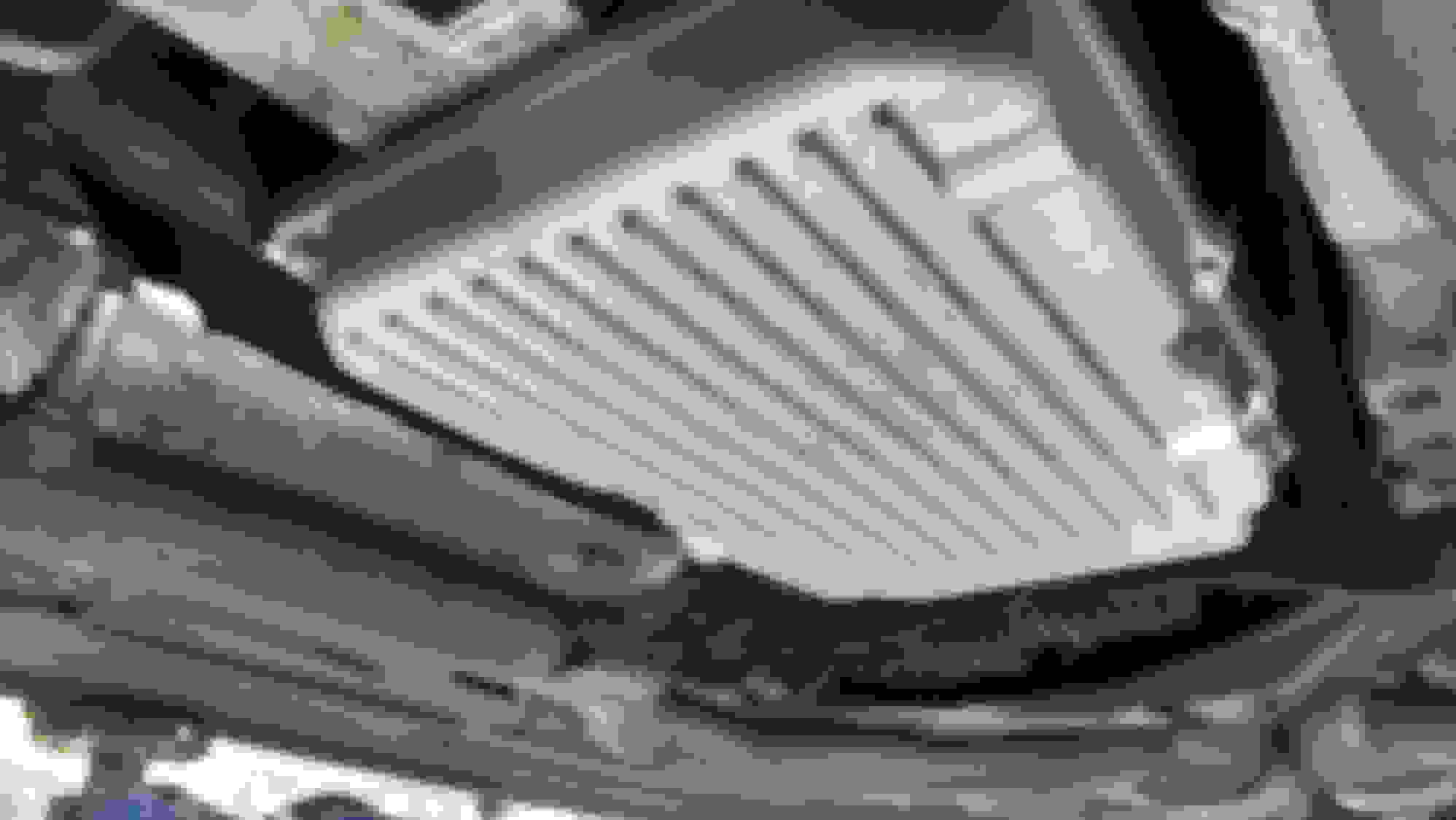
Then I realized that the fluid was a mess to get out and that the pans were known for rusting badly.
So I had a pan developed to facilitate quick and easy drain and fills. Seeabove. The vehicle and transmission are at the 425,000 kilometer mark (263,500 miles) and the fluid roughly 4 quarts, is drained easily every 40,000 miles and measured for TAN creep and FZG shear stability.
The torque converter doesn't have a plug but the pan design allows quick drain and refills without much of a mess. And after a days usage and shifts the fluid can be changed out completely without utilizing flushing machine service fees by virtually anyone. Just drain and refill again to get a 90% + new fluid mix. At my dealership they have flushing machines.....yes plural, they don't utilize.
Summary: OEM branded fluids are consistently packaged, the specs are merely the minimum, the product recommendations are just that just recommendations, Mercedes knows it fluids need improving (the war between engineering and marketing) and the innate desire to improve greenhouse gas emission reductions and improve the fluid quality over time. Your warranty is for the hardware, not the fluids and you can change the fluids out yourself with a better pan design that doesn't rust.
And 722.6s almost = Chrysler NAG1s.
Oh and install the 722.6 shift kit from the late Gil Younger, the master of fixing the design obsolesence we all are asked to live with.
It was developed after Transgo ran 722.6s in MBs through Death Valley until they found issues..........then the technology was the ethic resulted in the kit you can examine for yourself.
One could expect nearly double the 722.6 life and durability after installing this part....al things being equal.
Costs about a $140 to install at a reputable ATRA repair facility; plus the kit from Transgo. It might cost $410 at the MB dealer if you get them to agree to install.
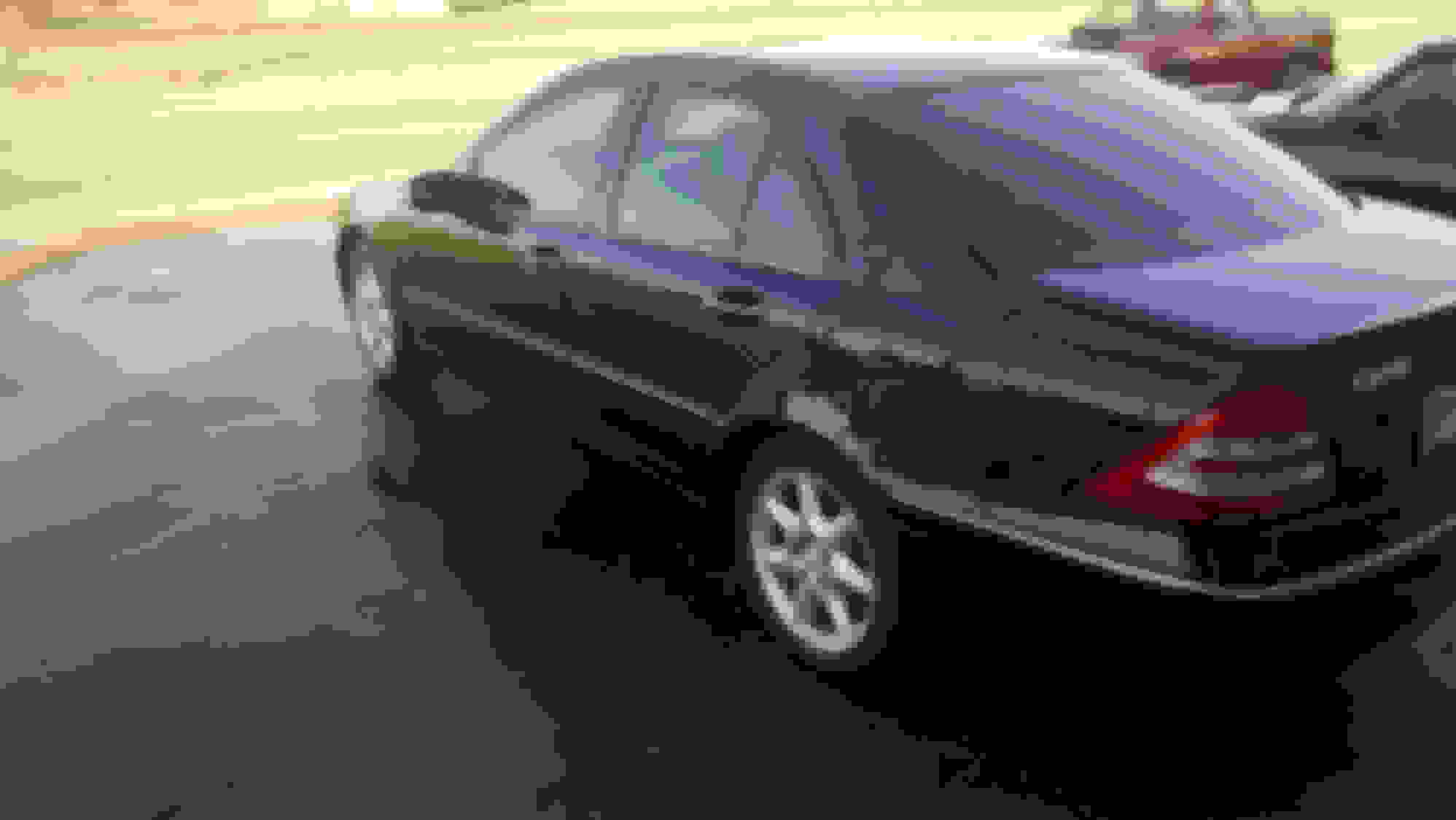
Heading towards 500,000 kilometers in the C240 722.6 equipped unit you see below that is cared for and kept clean.
Then I will get another badge to put on the front. This unit delivers 33.8 MPGs on the interstates at 73 MPH.
Last edited by theoilzone; Jul 28, 2015 at 12:44 AM.
Hey guys, very helpfull thread. IVe been reading and finally pulled the trigger on doing my own change. So my concern is that when i installed the new filter, it really slumps down on the back side where its not connected to the transmission so its kind of sitting slanted. The filter did have an o-ring on it and i snapped it into place it just doesnt seem too snug which make the other side hang down. Is this normal? i just left it like that and put on the clean pan. But i havent filled it up .. going to wait for your responses if anybody had come up on this issue
thanks in advance...
Last edited by Koolkozak; Aug 2, 2015 at 11:42 PM.
Yesterday I purchased a '09 C350 from the local MB dealer. Car has 51K on it and was "B" serviced there at 38K with transmission service included. I asked the service manager if they drain the TC. He said that they stopped draining the TC back around 2000 when MB stopped adding the drain plug. He defended this by stating that even now some cars just don't have the drain plug and when they do have a plug it is difficult to access. Also he said that the filter does a great job in capturing particulates. So, bottom line I'm looking to do a complete transmission drain sometime soon for my peace of mind.
My service was done at 53,000mi. $450 at all 3 Dallas dealers. German Motor works did it for $375. No one is draining the TC in Dallas. I was declined by everyone for a TC drain. 83,000mi now im getting the 3rd gear downshift "CLANK".
AutoHans in Addison confirmed to me they drain the TC, and quoted $450 for the service.
I just purchased w212 with 7g tronic. What is the interval you have been changing the transmission oil & filter ? MB interval is 120 000 (75 000 miles), but should it be done more often ?
The 722.9 "plus" transmission was introduced in mid-2010, and one of the changes for the "plus" was the fluid change to blue. The only way to be 100% sure is to check your VIN and see if you have the "plus" transmission. I have a 2011 C300 4matic just like you (May 2011 build/South Africa) and it came up as plus, hence blue fluid.
Hello, I've been looking around and not sure exactly what you mean by "check your VIN".
If you mean go to one of the free VIN checker sites, I did do that, but It doesn't say if I have a PLUS transmission. My transmission according to the VIN checker is: 722964 03 901043 [transmissionType = GA]
But my understanding was that there are 722.9 7G Tronic and 722.9 7G Tronic PLUS transmissions, so I'm not sure how to further determine my type.
I've seen people talk about push button start, and 3.5L vs 3.0L for the C300, but nothing concrete. By the way mine is non-push button start and the 3.0L.
I'm with you on this jmac. I have done much research as well and since my trans service is due, I'm trying to zero in on the proper fluid also. My # is 722999 03 161122. 2011 C300 no start/stop. So the question remains for us, G Tronic or G Tronic Plus??
Mercedes SLR McLaren 722 S Is Extremely Rare Example Modified by McLaren
Slideshow: A one-of-one U.S.-spec Mercedes-Benz SLR McLaren Roadster became even rarer after a factory-backed transformation at McLaren's headquarters.



























 Just drain and refill again to get a 90% + new fluid mix. At my dealership they have flushing machines.....yes plural, they don't utilize.