When you click on links to various merchants on this site and make a purchase, this can result in this site earning a commission. Affiliate programs and affiliations include, but are not limited to, the eBay Partner Network.
I've had several cars with turbo's over the years, some heavily modified cars. At one point, I had about 4-5 turbochargers on my workbench.
While at the dealer, I took a good look at the C250 engine. I first noticed that the 1.8L engine had a well fitted, front mounted Intercooler (IC), that would efficiently cool the very hot boosted air (~270F) from the turbo. Usually the IC is smaller and stuffed in the engine bay, where cooling air must be ducted to it. A common mod for these lesser cars is to upgrade to a FMIC, like the C250 has, as built.
But the "magic" shared by most turbocharged cars shows up on the highway. At 60mph a small push on the gas pedal and the car shoots forward like it's got a V8 ... no downshift needed.
This is because while cruising, the exhaust flow is high enough for the turbo to create boost, from the compressor wheel to the Throttle Body (TB). That boost level is controlled to only 5-7 psi, but that is enough to keep the turbo spinning smartly, like at ~50,000 rpms.
For testing purposes, assume you had a pressure gauge reading the intake pipe before the TB, and another gauge reading the intake manifold (that has passage ways down to the back of the intake valves). In reality, the C250 does not have a boost gauge.
So while crusing, you see you have about 5 psi between the turbo and the TB, and 18" of vacuum in the intake manifold (just like in a non-tubo car), but unlike a non-turbo, you have the gas pedal pushed just slightly. Technically, with 5 psi on the back of the TB, to get the same air (and gas) flow needed for cruising on the highway, you need less opening of the TB with the turbo, vs a non-turbo'd car.
Then you want to pass someone, also cruising on the highway. Push the pedal down a bit and you have an instant 5 psi in the manifold for much more engine torque/hp, and the pre-spooled turbo makes even more power/boost almost instantly. It pulls hard because of the very high torque rating at the lower "cruising" rpms.
Simply put, on the highway it acts like you have a V8 under the hood. Now getting rolling from a stop is whole other game ...
Coming from the Audi world I totally agree that MB made a great decision in the FMIC instead of SMIC. Definitely huge in reducing heat soak. I wondering when someone will take the plunge and install a disco potato or 30R on one of these c250's and actually make some real power with it?
I just drove around the new c250 for a week and half as my loaner. I'm coming from a 08 C350 and on the highway this car was a beast. BUT, that lag, I have no idea if it's from the turbo lag or if it's just a transmission issue, or even the electronic drive by wire accel pedal, I can't live with. I thought my car when I first got it had horrible lag when I stepped on the gas (my previous car was a 05 Civic Si which I have boosted, took turbo out went with stage 3 NA cams, was working on a crv block and rex type s head with forged internals with Jackson racing supercharger mounted) But I think the C250's initial lag is dangerous as well as annoying, I think I've had couple times where I'm trying to make a left turn and I think I have enough time to avoid the car coming towards me, and when I try to go I'm sitting there for extra seconds and realize that I can't make it anymore. But you are right, on highway it's a beast and a fun car to drive.
... I think I've had couple times where I'm trying to make a left turn and I think I have enough time to avoid the car coming towards me, and when I try to go I'm sitting there for extra seconds and realize that I can't make it anymore ...
For that situation, learn to "prepare for launch" by giving some throttle while keeping the car stopped via brake pedal. I'm sure there is a limit where the ecu lets you know it. But don't make a habit of it.
E definitely exacerbates the lag over S, but for just puttering around I don't mind. I've actually found that it makes me a more relaxed driver. On my average commute, my tach rarely goes over 2,500 RPM so I'm not really hitting much boost though. The main place where I look for power is from about 30-70 MPH for merging, which it has no problem laying down.
I came from a smart - it's got some similar characteristics off of the line due to the speed it engages the clutch, so it wasn't a huge adjustment for me. It definitely teaches you a different driving style - that's for sure.
E definitely exacerbates the lag over S, but for just puttering around I don't mind. I've actually found that it makes me a more relaxed driver. On my average commute, my tach rarely goes over 2,500 RPM so I'm not really hitting much boost though. The main place where I look for power is from about 30-70 MPH for merging, which it has no problem laying down.
I came from a smart - it's got some similar characteristics off of the line due to the speed it engages the clutch, so it wasn't a huge adjustment for me. It definitely teaches you a different driving style - that's for sure.
It's probably just a muscle memory issue for me honestly, and if I ended up buying a c250, couple weeks and I'll adjust to it accordingly since my reaction coming from drive by cable to drive by wire was the same reaction. C250 is a blast to drive no doubt, and I love the mod potential of factory turbo cars. And yes I did drive on E. What do you get MPG on your 250? Seemed like it gets amazing MPG!
'08 C300 Lux Barolo Red Beige Leather P2 MM 18" wheels '84 944
Originally Posted by jaeguyoon
I just drove around the new c250 for a week and half as my loaner. I'm coming from a 08 C350 and on the highway this car was a beast. BUT, that lag, I have no idea if it's from the turbo lag or if it's just a transmission issue, or even the electronic drive by wire accel pedal, I can't live with. I thought my car when I first got it had horrible lag when I stepped on the gas (my previous car was a 05 Civic Si which I have boosted, took turbo out went with stage 3 NA cams, was working on a crv block and rex type s head with forged internals with Jackson racing supercharger mounted) But I think the C250's initial lag is dangerous as well as annoying, I think I've had couple times where I'm trying to make a left turn and I think I have enough time to avoid the car coming towards me, and when I try to go I'm sitting there for extra seconds and realize that I can't make it anymore. But you are right, on highway it's a beast and a fun car to drive.
Trans in E or S? First gear start gets the revs and thus the boost up sooner.
Trans in E or S? First gear start gets the revs and thus the boost up sooner.
That's my initial though too. But it would be interesting to do some testing of starts in E vs S, + power braking. The turbo needs load to rev up. And with a 7 spd, 2nd gear may not be too tall. I would not bet on E being fastest, but it would be an interesting test.
It's probably just a muscle memory issue for me honestly, and if I ended up buying a c250, couple weeks and I'll adjust to it accordingly since my reaction coming from drive by cable to drive by wire was the same reaction. C250 is a blast to drive no doubt, and I love the mod potential of factory turbo cars. And yes I did drive on E. What do you get MPG on your 250? Seemed like it gets amazing MPG!
Mine is sitting at 21.8 over the past 3,500 miles according to the dash, with a mix of highway and city. Having he A/C blasting and a lot of city has not been terribly good to it the past couple of weeks.
... On my average commute, my tach rarely goes over 2,500 RPM so I'm not really hitting much boost though...
The engine produces max torque of 229 ft-lbs from 2200 - 4300 rpms, so shifting at 2500 rpm could still be in a high torque zone for the engine. How hard you push boost, w/o gauge, depends on whether you feel like you are pushing a 3400 lb car with a 1.8L na engine, or something more like a 3L na engine.
You could be lugging the engine, shifting that low. Lugging includes high crank bearing loads at low speed where the oil film thickness gets little hydrodynamic contribution.
Mine is sitting at 21.8 over the past 3,500 miles according to the dash, with a mix of highway and city. Having he A/C blasting and a lot of city has not been terribly good to it the past couple of weeks.
MPG'S
One factor that influences the mpg's is the BSFC (Brake Specific Fuel Consumption) for the engine.
BSFC = (lb/hr)/hp
If you compare the C300 and the C250, with both pushed hard, the C250 would likely burn more fuel, as turbos are set extra rich at high output. A high BSFC of ~.62 for a turbo means more fuel burned per hp, vs a value of ~.47 for a NA engine. Copied info:
So the problem becomes the use of BSFC if we can’t calculate an exact number for an engine. Well, we can get a range of BSFCs for engines. For example, in our last post I used 0.65 as a safe number for a turbocharged engine. Most turbo’d engines run between 0.6 and 0.65 BSFC while supercharged cars have a BSFC between 0.55 and 0.6, and naturally aspirated engines use only 0.45 to 0.5 Lbs/Hp*Hr. These are only approximations, but you can clearly see the difference between naturally aspirated engines and turbocharged engines. Turbocharged engines usually require more fuel to keep detonation at bay due to the increased temperature and pressure of the intake air. This is why a turbocharged engine uses more fuel per horsepower per hour.
You could be lugging the engine, shifting that low. Lugging includes high crank bearing loads at low speed where the oil film thickness gets little hydrodynamic contribution.
If they set up an automatic transmission to shift the engine to the point where it is lugging, they are going to have a lot of explaining to do down the road to a lot of owners.
I tend to accelerate very gently if I am just puttering around, so the engine is almost inaudible, but it does not feel/sound like it is shuddering when you do hear it though.
I drive my car like an animal. Have my Stage 1 tune installed up to 100% from JB+ and the intake installed. As well as a free flowing (post-cat) quad exhaust setup. I love it. The car definitely does move great. Although, I think I'm creating too much boost (as there can be too much). I get a sort of "pulsing" of PSI through the engine. And if I don't pull back, will hit overboost.
What is weird is that this doesn't occur on WOT applications, but rather "heavy foot" applications; where the throttle is maybe 60% down. Do you have any idea what could be causing this. You can actually hear and feel a lurching of power where there is more power, less power, more power, etc.
Also, after these mods, there is essential ZERO lag in "S" mode. However, "E" mode is pretty bad lag. Especially when stock. I have also found that E mode gives MUCH greater fuel economy on the highway and around town on the C250, where my previous C300 did not.
...I tend to accelerate very gently if I am just puttering around, so the engine is almost inaudible, but it does not feel/sound like it is shuddering when you do hear it though.
"You could be lugging ... " You are definately not lugging it.
I drive my car like an animal. Have my Stage 1 tune installed up to 100% from JB+ and the intake installed. As well as a free flowing (post-cat) quad exhaust setup. ....I get a sort of "pulsing" of PSI through the engine. And if I don't pull back, will hit overboost.
What is weird is that this doesn't occur on WOT applications, but rather "heavy foot" applications; where the throttle is maybe 60% down. Do you have any idea what could be causing this..
Contact JB or seller. They definitely mess with the boost control to get all that torque. You may be in closed loop mode @60% and having detonation issues, vs open loop heavy rich mode at wot.
Also looks like they tinker with the gas pedal response, aka sprint booster.
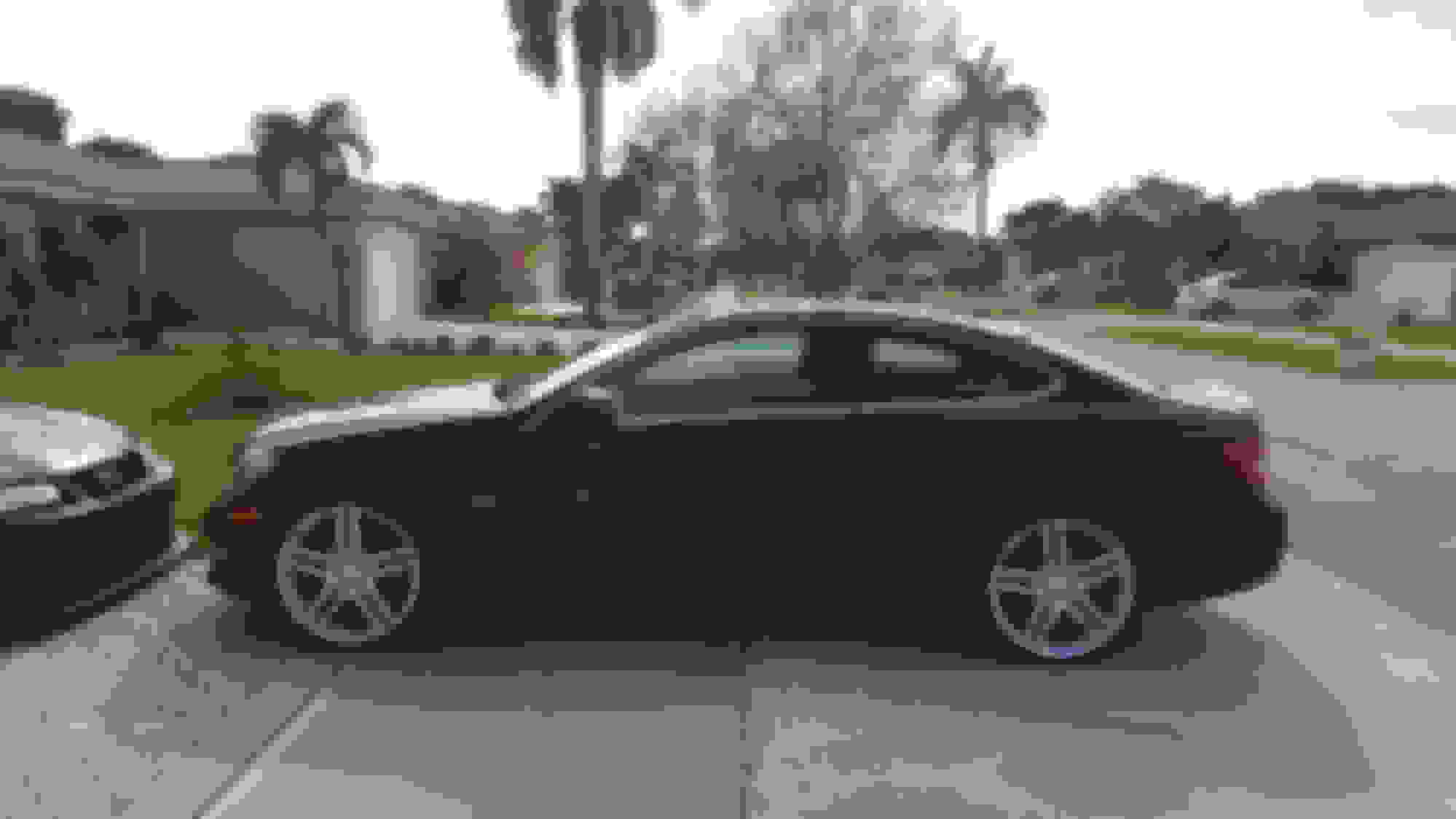
Any rims u put is gonna degrade the ride quality ur putting more rim less rubber in my opinion my 12' c250 coupe had the sport package and it was firm to begin with so for me it was a no brainer why sacrafice the potential of the look of the car that it gets with 20's which looks absolutely stunning might i add for one inch less leaving it look like its lacking or cheap to me... when with 19's ur still gonna get the ruff ride? Smh if u want the look u sacrafice the ride quality a little bit ..stop crying ohh it rubbs its ruff its to much of a hassle ive had 20's with 35+ offset tires (poking past fenders a little) everyone said 50 48 positive offset was the way to go anything else ull rubb like as if it wouldent work at all or it wasent worth the hassle ..i wouldent give a millimeter of offset back ..it makes the car it creates the look.. ive been driving hard on it on messed up miami streets for almost a year now yea they rub on hard bumps yea i feel every little nook and cranny on the road ...but all i get are compliments and when i got people in my car they never ever complain only grin cause their happy to ride in such a pimped out whip...
Make ur choice
Dont fall for the hype
Im grateful for this site as a resource but i wouldent recommend following anything blindly...
Any rims u put is gonna degrade the ride quality ur putting more rim less rubber in my opinion my 12' c250 coupe had the sport package and it was firm to begin with so for me it was a no brainer why sacrafice the potential of the look of the car that it gets with 20's which looks absolutely stunning might i add for one inch less leaving it look like its lacking or cheap to me... when with 19's ur still gonna get the ruff ride? Smh if u want the look u sacrafice the ride quality a little bit ..stop crying ohh it rubbs its ruff its to much of a hassle ive had 20's with 35+ offset tires (poking past fenders a little) everyone said 50 48 positive offset was the way to go anything else ull rubb like as if it wouldent work at all or it wasent worth the hassle ..i wouldent give a millimeter of offset back ..it makes the car it creates the look.. ive been driving hard on it on messed up miami streets for almost a year now yea they rub on hard bumps yea i feel every little nook and cranny on the road ...but all i get are compliments and when i got people in my car they never ever complain only grin cause their happy to ride in such a pimped out whip...
Make ur choice
Dont fall for the hype
Im grateful for this site as a resource but i wouldent recommend following anything blindly...
Yea i cant believe 4 years later still no concrete set up to do no diy write ups nothing that anyone has really done to make the car faster relatively safely... thats why i build the mustang... the aftermarket the knowledge the resources are overwhelmingly abundant... when i decided to go turbo i read up on diys one after the other all day for weeks (crane operator lots of down time and phone usage lol) to the point that i just had to find a reason to stop because the information just never ends...
Hey thank you thats the nicest thing anyone has said to me all day..
Lol, hope it gets better.
Originally Posted by Budgetstunts
Yea i cant believe 4 years later still no concrete set up to do no diy write ups nothing that anyone has really done to make the car faster relatively safely... thats why i build the mustang... the aftermarket the knowledge the resources are overwhelmingly abundant... when i decided to go turbo i read up on diys one after the other all day for weeks (crane operator lots of down time and phone usage lol) to the point that i just had to find a reason to stop because the information just never ends...
I miss being in the VAG community but I did know there was less options when I got my car. Still, I wish there was a simple Stage 1 flash. With the ECU being locked there are not going to be any real bolt on upgrades of benefit either.
I miss being in the VAG community but I did know there was less options when I got my car. Still, I wish there was a simple Stage 1 flash. With the ECU being locked there are not going to be any real bolt on upgrades of benefit either.
Wat is this vag community i do not speak this languages
Mercedes SLR McLaren 722 S Is Extremely Rare Example Modified by McLaren
Slideshow: A one-of-one U.S.-spec Mercedes-Benz SLR McLaren Roadster became even rarer after a factory-backed transformation at McLaren's headquarters.