



HELP code intake installed...Y-Pipe clip snapped

Thread Starter
Member
Joined: Jul 2006
Posts: 154
Likes: 0
From: Melbourne
C32 AMG
 HELP code intake installed...Y-Pipe clip snapped
hey fellas,
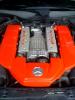
i just installed the code 3 intake by D I Y, there are 2 clips (upper and lower) and when i tried to push the y pipe into place the lower clip snapped!!
I was just wondering if it is necessary to replace the y pipe if only the lower clip snapped? it is still firmly held in place though
thanks for the input
i just installed the code 3 intake by D I Y, there are 2 clips (upper and lower) and when i tried to push the y pipe into place the lower clip snapped!!
I was just wondering if it is necessary to replace the y pipe if only the lower clip snapped?
it is still firmly held in place thoughthanks for the input
MBWorld Fanatic!


Joined: Feb 2006
Posts: 6,213
Likes: 8
LET C32 2002
Personally I doubt it will bother you...the splitter is basically forced down by being attached by the hoses to air boxes but hey the clips are there for a reason right? Do as others suggested and just keep an eye on it to make sure its not letting air get sucked in...or just place a large enough clamp and secure it down thou not alot of room to play with. GL


MBWorld Fanatic!
Joined: Oct 2006
Posts: 4,856
Likes: 4
02 C32 AMG
both of mine are broken off, which kind of sucks so it is a little loose. it is held in there decently well because of the little room between it and the firewall. also, the intake plenums seem to keep it place pretty well. i put on one of those metal clasps (the name of it escapes me) and screwed it to as tight as it would go. unfortunately, the rubber (or is it plastic?) piece that goes on to the throttle body is too thick for that to do anything. and i torqued the clasp too much and may have cracked that rubber/plastic part that goes over the throttle body. i think i need to replace that now as my car makes whistling noises under different levels of throttle.
Last edited by jturkel; Aug 28, 2008 at 01:09 PM.
Trending Topics

Super Member
Joined: Mar 2007
Posts: 946
Likes: 1
From: Bay Area
03 C32 gone, 06 CLS55, 16 Tesla X
Sorry for off the topic 
Since ever I installed it, I have been wondering isn't it true that the intake will suck all the hot air from the engine component? So how come the graph shows a good power/torque gain for it? Well I am thinking it is gaining power only when the engine is cold, but we will lose power when it's hot?
Can someone or maybe Aaron or Brandon chime in for an answer?
Thanks,
Since ever I installed it, I have been wondering
isn't it true that the intake will suck all the hot air from the engine component? So how come the graph shows a good power/torque gain for it? Well I am thinking it is gaining power only when the engine is cold, but we will lose power when it's hot?Can someone or maybe Aaron or Brandon chime in for an answer?
Thanks,
MB World Stories
The Best of Mercedes & AMG

Manual Mercedes? 6 Times Sindelfingen Let Drivers Have All The Fun
Verdad Gallardo
Mercedes SLR McLaren 722 S Is Extremely Rare Example Modified by McLaren
Verdad Gallardo
8 Classic Boxy Mercedes Designs That Have Aged Like Fine Wine
Verdad Gallardo
Flawlessly Restored Mercedes 190E Evo II Heads to Auction
Verdad Gallardo
Electric Mercedes C-Class Unveiled: 11 Things You Need to Know
Verdad Gallardo
Mercedes EQS Gets A Major Update: Everything You Need to Know
Verdad Gallardo
5 Underrated Mercedes-Benz Models That Don't Get the Love They Deserve
Verdad Gallardo
Mercedes 300D Has Pushed Well Past 1 Million Miles and It Ain't Stopping
Verdad Gallardo
10 Most Reliable Mercedes-Benz Models You Can Buy Used
Verdad Gallardo
MBWorld Fanatic!
Joined: Dec 2007
Posts: 5,034
Likes: 6
From: Corona, CA
03 g35 coupe...........02 c32 Sold
Sorry for off the topic
Since ever I installed it, I have been wondering isn't it true that the intake will suck all the hot air from the engine component? So how come the graph shows a good power/torque gain for it? Well I am thinking it is gaining power only when the engine is cold, but we will lose power when it's hot?
Can someone or maybe Aaron or Brandon chime in for an answer?
Thanks,
Since ever I installed it, I have been wondering
isn't it true that the intake will suck all the hot air from the engine component? So how come the graph shows a good power/torque gain for it? Well I am thinking it is gaining power only when the engine is cold, but we will lose power when it's hot?Can someone or maybe Aaron or Brandon chime in for an answer?
Thanks,
When air is hot, air molecules expand therefore reducing the amount of air molecules that can fit in the same amount of volume.
When you get into the upper rpm, you need as much air and fuel as possible to create more power. Cold air is preferred given the speed is equal to the hot air because there's more air mass with cold air.
The reason the code3 intake creates more power even though its sucking up hot air is because at the upper rpm's the engine is choking for air so its needs more air whether hot or cold. The additional air would allow the combustion taking place to create more power. This is only to a certain degree because the ecu still determines the over all amount of air and fuel going into the car.
This is a horribly simplified answer, it has more to do with the relationship between air density, pressure, and volume flow going through a constant volume.
This is when your chem classes come in. Just google air temp and volume to learn more.
Last edited by TemjinX2; Aug 29, 2008 at 05:08 AM.
Thread Starter
Member
Joined: Jul 2006
Posts: 154
Likes: 0
From: Melbourne
C32 AMG
remove this rubber bit
i removed this weather stripping circled in red, it unseals the engine bay and expose the filter to the outside, letting it suck melbourne's 45F winter air
can i say L.O.U.D
my butt dyno also feels a bit faster, but maybe it's the noise making it feel fast
but it's raining tonite, so i put the weather stripping back on
can i say L.O.U.D
my butt dyno also feels a bit faster, but maybe it's the noise making it feel fast
but it's raining tonite, so i put the weather stripping back on
Last edited by AMGV6K; Aug 29, 2008 at 06:06 AM.
Super Member
Joined: Mar 2007
Posts: 946
Likes: 1
From: Bay Area
03 C32 gone, 06 CLS55, 16 Tesla X
Thanks,
I understand what you are talking about. I am very much sure that the engine will suck more hot air from this intake and very small amount of cold air that is coming front through the air box (the cold air will dramatically be reduced compare to the original amount of cold air)
So the question now is: a lot more hot air, and normal col air, which will be better?. Well the dyno favors the intake, but I am just curios when it get really hot will it still cover for the loss?
I understand what you are talking about
. I am very much sure that the engine will suck more hot air from this intake and very small amount of cold air that is coming front through the air box (the cold air will dramatically be reduced compare to the original amount of cold air)So the question now is: a lot more hot air, and normal col air, which will be better?
. Well the dyno favors the intake, but I am just curios when it get really hot will it still cover for the loss?i'll try to take a stab at this. Basically in combustion, air is air whether cold or hot. Cold is usually better because when the air is cold, the air molecules condense so you can fit more air molecules with the same given amount of volume.
When air is hot, air molecules expand therefore reducing the amount of air molecules that can fit in the same amount of volume.
When you get into the upper rpm, you need as much air and fuel as possible to create more power. Cold air is preferred given the speed is equal to the hot air because there's more air mass with cold air.
The reason the code3 intake creates more power even though its sucking up hot air is because at the upper rpm's the engine is choking for air so its needs more air whether hot or cold. The additional air would allow the combustion taking place to create more power. This is only to a certain degree because the ecu still determines the over all amount of air and fuel going into the car.
This is a horribly simplified answer, it has more to do with the relationship between air density, pressure, and volume flow going through a constant volume.
This is when your chem classes come in. Just google air temp and volume to learn more.
When air is hot, air molecules expand therefore reducing the amount of air molecules that can fit in the same amount of volume.
When you get into the upper rpm, you need as much air and fuel as possible to create more power. Cold air is preferred given the speed is equal to the hot air because there's more air mass with cold air.
The reason the code3 intake creates more power even though its sucking up hot air is because at the upper rpm's the engine is choking for air so its needs more air whether hot or cold. The additional air would allow the combustion taking place to create more power. This is only to a certain degree because the ecu still determines the over all amount of air and fuel going into the car.
This is a horribly simplified answer, it has more to do with the relationship between air density, pressure, and volume flow going through a constant volume.
This is when your chem classes come in. Just google air temp and volume to learn more.
Last edited by CLKCLK; Aug 29, 2008 at 12:51 PM.
MBWorld Fanatic!
Joined: Dec 2007
Posts: 5,034
Likes: 6
From: Corona, CA
03 g35 coupe...........02 c32 Sold
Thanks,
I understand what you are talking about. I am very much sure that the engine will suck more hot air from this intake and very small amount of cold air that is coming front through the air box (the cold air will dramatically be reduced compare to the original amount of cold air)
So the question now is: a lot more hot air, and normal col air, which will be better?. Well the dyno favors the intake, but I am just curios when it get really hot will it still cover for the loss?
I understand what you are talking about
. I am very much sure that the engine will suck more hot air from this intake and very small amount of cold air that is coming front through the air box (the cold air will dramatically be reduced compare to the original amount of cold air)So the question now is: a lot more hot air, and normal col air, which will be better?
. Well the dyno favors the intake, but I am just curios when it get really hot will it still cover for the loss?This is the assumption, until you know to actual cold air temp and hot air temp and flow rates of both to try to measure the air mass. But this is makes it hard to compare because both the hot air and cold are coming through different fans, so its not a apples to apples comparison.
Without doing all those calculations, the dyno shows, increasing the general volume of air through the third intake opening is more benficial then not having it regardless whether the air is cold or hot.
If you want all cold air, then just go with the LET intake. I think the difference between the code3 and LET intakes is around 10hp but the cost is $150 compared to $550.
I think bang for your buck the code3 intake is better and more stocking looking to pass smog if your in a strict smog state.
At the end of the day air is air, whether hot or cold doesn't change the combustion properties.
Last edited by TemjinX2; Aug 29, 2008 at 05:28 PM.
MBWorld Fanatic!
Joined: Feb 2006
Posts: 6,213
Likes: 8
LET C32 2002
$150 buys a square piece of plastic with screws and a square really thin foam filter...$550 gets a SL55 "Y" splitter all rubber and metal hardware also 3" tubes and round filters so for $150 you get like 8-10 small pieces $550 gets you 13-15 small to big pieces and keeps the colder air coming from the grill mixing in more then the hot air from the front of the engine bay. I imo think there is no comparison.
MBWorld Fanatic!
Joined: Dec 2007
Posts: 5,034
Likes: 6
From: Corona, CA
03 g35 coupe...........02 c32 Sold
$150 buys a square piece of plastic with screws and a square really thin foam filter...$550 gets a SL55 "Y" splitter all rubber and metal hardware also 3" tubes and round filters so for $150 you get like 8-10 small pieces $550 gets you 13-15 small to big pieces and keeps the colder air coming from the grill mixing in more then the hot air from the front of the engine bay. I imo think there is no comparison.
You also have to keep in mind that the LET intake will probably fail the visual inspection part of smog for california and other states that follow california smog standards.

Super Moderator
Joined: Jul 2006
Posts: 3,365
Likes: 12
From: Orange County, CA
GMC - Miata - Trek - P-Car
…At the end of the day air is air, whether hot or cold doesn't change the combustion properties...
Any aftermarket intake can only ultimately endeavor to provide two potential advantages over our original equipment configuration. Those would be reducing restriction to available atmospheric pressure and supplying an intake charge at ambient temperature to the throttle body. Trust you’ll set aside filtering efficiency and its affect on silicate contamination for the sake of this discussion.
Although I’m obviously not a highly educated man such as yourself, I’ve a pretty fair grasp on the rudimentary atmospheric and thermodynamic principles. Higher density inlet air improves any engine’s volumetric efficiency, regardless of how it’s obtained. Improving density with the use of cool inlet air gets the best possible horsepower from any engine. An oft-proven rule of thumb is an approximately 1% horsepower increase for every eleven degree Fahrenheit reduction in air temperature. You’re welcome to verify that well-documented fact via myriad readily available SAE publications or, if you would prefer, from my personal reference library. An engine ingesting warm air will be down on power more than you might imagine: Assume that the outside (ambient) air temperature is 70* F and the underhood temperature is 150* F. If the engine produces 300 HP with 150* F air inlet temperature, it can then rightly be expected to produce 322 HP with 70* F air-inlet temperature. Therefore, the increase afforded by utilizing outside temperature air is considerable. Density altitude is also of paramount importance. It’s often accounted for in various correction factors. Fortunately, it is invariably the same for the bloke you’re running against.
…This is when your chem classes come in…
There are several scheduled dyno and track events that have been shared around here.
Perhaps we’ll catch up then.
MBWorld Fanatic!
Joined: Dec 2007
Posts: 5,034
Likes: 6
From: Corona, CA
03 g35 coupe...........02 c32 Sold
With all due respect, that is simply not the case.
Any aftermarket intake can only ultimately endeavor to provide two potential advantages over our original equipment configuration. Those would be reducing restriction to available atmospheric pressure and supplying an intake charge at ambient temperature to the throttle body. Trust you’ll set aside filtering efficiency and its affect on silicate contamination for the sake of this discussion.
Although I’m obviously not a highly educated man such as yourself, I’ve a pretty fair grasp on the rudimentary atmospheric and thermodynamic principles. Higher density inlet air improves any engine’s volumetric efficiency, regardless of how it’s obtained. Improving density with the use of cool inlet air gets the best possible horsepower from any engine. An oft-proven rule of thumb is an approximately 1% horsepower increase for every eleven degree Fahrenheit reduction in air temperature. You’re welcome to verify that well-documented fact via myriad readily available SAE publications or, if you would prefer, from my personal reference library. An engine ingesting warm air will be down on power more than you might imagine: Assume that the outside (ambient) air temperature is 70* F and the underhood temperature is 150* F. If the engine produces 300 HP with 150* F air inlet temperature, it can then rightly be expected to produce 322 HP with 70* F air-inlet temperature. Therefore, the increase afforded by utilizing outside temperature air is considerable. Density altitude is also of paramount importance. It’s often accounted for in various correction factors. Fortunately, it is invariably the same for the bloke you’re running against.
Have you not noticed how your car performs significantly stronger on a cool and crisp evening than during the debilitating heat of a hot summer day? There’s frequently a mundane lecture followed by a perfunctory lab in most physical science dissertations to validate the professor’s diatribe. No disrespect intended toward any of the fine contributing scientists on our forum. There are, in fact, several from whom I’ve learned much; boohooramblers’ contributions, as merely one example of an excellent resource. When one validates pertinent real-world data and their results, they’re a darn sight more rewarding than those bestowed from men involved in solely esoteric or academic pursuits, IMHO.
There are several scheduled dyno and track events that have been shared around here.
Perhaps we’ll catch up then.
Any aftermarket intake can only ultimately endeavor to provide two potential advantages over our original equipment configuration. Those would be reducing restriction to available atmospheric pressure and supplying an intake charge at ambient temperature to the throttle body. Trust you’ll set aside filtering efficiency and its affect on silicate contamination for the sake of this discussion.
Although I’m obviously not a highly educated man such as yourself, I’ve a pretty fair grasp on the rudimentary atmospheric and thermodynamic principles. Higher density inlet air improves any engine’s volumetric efficiency, regardless of how it’s obtained. Improving density with the use of cool inlet air gets the best possible horsepower from any engine. An oft-proven rule of thumb is an approximately 1% horsepower increase for every eleven degree Fahrenheit reduction in air temperature. You’re welcome to verify that well-documented fact via myriad readily available SAE publications or, if you would prefer, from my personal reference library. An engine ingesting warm air will be down on power more than you might imagine: Assume that the outside (ambient) air temperature is 70* F and the underhood temperature is 150* F. If the engine produces 300 HP with 150* F air inlet temperature, it can then rightly be expected to produce 322 HP with 70* F air-inlet temperature. Therefore, the increase afforded by utilizing outside temperature air is considerable. Density altitude is also of paramount importance. It’s often accounted for in various correction factors. Fortunately, it is invariably the same for the bloke you’re running against.
Have you not noticed how your car performs significantly stronger on a cool and crisp evening than during the debilitating heat of a hot summer day? There’s frequently a mundane lecture followed by a perfunctory lab in most physical science dissertations to validate the professor’s diatribe. No disrespect intended toward any of the fine contributing scientists on our forum. There are, in fact, several from whom I’ve learned much; boohooramblers’ contributions, as merely one example of an excellent resource. When one validates pertinent real-world data and their results, they’re a darn sight more rewarding than those bestowed from men involved in solely esoteric or academic pursuits, IMHO.
There are several scheduled dyno and track events that have been shared around here.
Perhaps we’ll catch up then.
C32used said the code3 intake is not comparble to the LET intake. I disagreed and stated my reasons above.
Comparing stock intake with the code3 mode changes the variables, so its not a apples to apples comparison.
Your assuming the cold air is better the hot when the flow rate and fan constant are the same, which i have already stimpulated to that. But the code3 intake mod changes the constant fan because it opens a third intake port therefore changing the flow rates as well. Air flow rates also have a influence on the amount of air density not just tempertures.
You get more power for cold air because of the increase amount of air molecules with added fuel equals more combustion but the chemical formula for combustion is still the same. The property of 02 doesn't change whether hot or cold. If you take the same amount of cold molecules and used the same amount of hot molecules you will get the same amount of combustion.
Hence my comment of air being air whether hot or cold.
You saw my one comment on air being air and assumed my comment was cold and hot being the same given the same variables,which is not the case.
This is why there is a degree of engineering involved because you have to strike the right balance to get the most power. Just because your sucking in cold air doesn't automatically mean your going to get the most power.
Thats why short ram intakes can yield more hp then cold air intakes depending on the setup, even though the short ram is sucking in hot air versus the cold air of the cold air intake.
Last edited by TemjinX2; Aug 30, 2008 at 03:41 AM.
MBWorld Fanatic!
Joined: Oct 2006
Posts: 4,856
Likes: 4
02 C32 AMG
i removed this weather stripping circled in red, it unseals the engine bay and expose the filter to the outside, letting it suck melbourne's 45F winter air
can i say L.O.U.D
my butt dyno also feels a bit faster, but maybe it's the noise making it feel fast
but it's raining tonite, so i put the weather stripping back on
can i say L.O.U.D
my butt dyno also feels a bit faster, but maybe it's the noise making it feel fast
but it's raining tonite, so i put the weather stripping back on
Thread Starter
Member
Joined: Jul 2006
Posts: 154
Likes: 0
From: Melbourne
C32 AMG
, and drove in the rain twice 
then i thought "man IT IS meant to make the s/c more audible. but not this LOUD"
i realized only when i popped up the hood, so i put it back where it belongs, and the noise is just right

MBWorld Fanatic!
Joined: Mar 2008
Posts: 4,165
Likes: 4
PLAID
$150 buys a square piece of plastic with screws and a square really thin foam filter...$550 gets a SL55 "Y" splitter all rubber and metal hardware also 3" tubes and round filters so for $150 you get like 8-10 small pieces $550 gets you 13-15 small to big pieces and keeps the colder air coming from the grill mixing in more then the hot air from the front of the engine bay. I imo think there is no comparison.
MBWorld Fanatic!
Joined: Feb 2006
Posts: 6,213
Likes: 8
LET C32 2002

I have BOTh the LET and the Code III intake, Was wondering if I can run BOTh of them and get the advantages of BOTH using the std splitter and then running the Code III and the pipes from the LET?? I believe the std splitter with the Code III on back will fit to the boots of the LET one?? Just a thought since I have both???
MBWorld Fanatic!
Joined: Oct 2006
Posts: 4,856
Likes: 4
02 C32 AMG
MBWorld Fanatic!
Joined: Mar 2008
Posts: 4,165
Likes: 4
PLAID
Intakes
The rubber boots from the SL Splitter should fit the stock Y pipe. Not vice versa?? They have a larger diameter I believe?? I want to do BOTh to get the advantages of the Code III (it felt very torquey) and the higher speed of the LET unit. Yes, Lots of air being taken in and will need a Jerry Tune, BUT thought I'd give it a try.
I thought that LET unit was as nice or nicer than the Needswings unit I saw on the SRT-6s at the drags sat??? Theirs is a single pipe unit. I am going to try and do BOTh.
Victor asked about MPG, I've seen no noticeable improvement from the Code III. Still averaging about 23-25 on highway and about 19-21 in city.
I thought that LET unit was as nice or nicer than the Needswings unit I saw on the SRT-6s at the drags sat??? Theirs is a single pipe unit. I am going to try and do BOTh.
Victor asked about MPG, I've seen no noticeable improvement from the Code III. Still averaging about 23-25 on highway and about 19-21 in city.


