





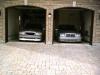


C43 Recovery from Storage

Thread Starter
Junior Member
Joined: Aug 2006
Posts: 39
Likes: 0
From: Cambs, UK
2000 C43 Wagon
C43 Recovery from Storage
After nearly 2 years in storage (covered/dehumidified with monthly run-up) it's getting close to time to get the DogWagon back on the road My thoughts are a Service B plus all fluids (brakes, coolant, ATF). Grateful for any other suggestions you might have plus things to look out for based on your collective experience.
Thanks in advance,
Mike
My thoughts are a Service B plus all fluids (brakes, coolant, ATF). Grateful for any other suggestions you might have plus things to look out for based on your collective experience. Thanks in advance,
Mike
Thread Starter
Junior Member
Joined: Aug 2006
Posts: 39
Likes: 0
From: Cambs, UK
2000 C43 Wagon

MBWorld Fanatic!


Joined: Apr 2005
Posts: 3,784
Likes: 84
From: SCV SoCal
2002 CLK430
Yes, it degrades. [caution, more than you wanted to know alert]
Good gasoline is volatile, meaning it vaporizes quickly (one reason for the charcoal canister). This allows it to mix well with the intake air. Unfortunately, it’s volatility means it evaporates quickly too, but not all at once. It separates then evaporates. What’s left doesn’t burn very well in a high compression engine. I’d drain it and use it in a lawnmower.
Good gasoline is volatile, meaning it vaporizes quickly (one reason for the charcoal canister). This allows it to mix well with the intake air. Unfortunately, it’s volatility means it evaporates quickly too, but not all at once. It separates then evaporates. What’s left doesn’t burn very well in a high compression engine. I’d drain it and use it in a lawnmower.
Trending Topics

MBWorld Fanatic!
Joined: Feb 2004
Posts: 1,559
Likes: 0
From: Portsmouth, NH
none
Yes, it degrades. [caution, more than you wanted to know alert]
Good gasoline is volatile, meaning it vaporizes quickly (one reason for the charcoal canister). This allows it to mix well with the intake air. Unfortunately, it’s volatility means it evaporates quickly too, but not all at once. It separates then evaporates. What’s left doesn’t burn very well in a high compression engine. I’d drain it and use it in a lawnmower.
Good gasoline is volatile, meaning it vaporizes quickly (one reason for the charcoal canister). This allows it to mix well with the intake air. Unfortunately, it’s volatility means it evaporates quickly too, but not all at once. It separates then evaporates. What’s left doesn’t burn very well in a high compression engine. I’d drain it and use it in a lawnmower.
Hey Marcus, how do fuel stabilizers stack up? and how long is "too long" for a tank of gas to sit?
MB World Stories
The Best of Mercedes & AMG

Manual Mercedes? 6 Times Sindelfingen Let Drivers Have All The Fun
Verdad Gallardo
Mercedes SLR McLaren 722 S Is Extremely Rare Example Modified by McLaren
Verdad Gallardo
8 Classic Boxy Mercedes Designs That Have Aged Like Fine Wine
Verdad Gallardo
Flawlessly Restored Mercedes 190E Evo II Heads to Auction
Verdad Gallardo
Electric Mercedes C-Class Unveiled: 11 Things You Need to Know
Verdad Gallardo
Mercedes EQS Gets A Major Update: Everything You Need to Know
Verdad Gallardo
5 Underrated Mercedes-Benz Models That Don't Get the Love They Deserve
Verdad Gallardo
Mercedes 300D Has Pushed Well Past 1 Million Miles and It Ain't Stopping
Verdad Gallardo
10 Most Reliable Mercedes-Benz Models You Can Buy Used
Verdad Gallardo
MBWorld Fanatic!
Joined: Apr 2005
Posts: 3,784
Likes: 84
From: SCV SoCal
2002 CLK430

MBWorld Fanatic!
Joined: Dec 2007
Posts: 1,100
Likes: 0
From: Rochester, MN
sounds like airplane
I've done some research into this with storing my car as well-
I store with a full tank and additive each winter and burn that tank before I do anything spirited.
I agree you need to drain that gas
I store with a full tank and additive each winter and burn that tank before I do anything spirited.
I agree you need to drain that gas

MBWorld Fanatic!
Joined: Jul 2005
Posts: 1,224
Likes: 6
From: S.E. FLA.
05 ML-500 , 03 CLK5.5 AMG has left the Garage
Post storage things to Check
Funny you should bring this up. My 2003 CLK 5.5 AMG Has been laided up for 2 years & 8 months. I just started to get energize again, over the last 2 weeks and I'm going to finish up the project.the Motor was pulled & the heads were ported reassembled & a Kleemann Blower kit installed ,all but the fuel system update to run this blower. So at that time I just parked the car, it had about 5 gallons of Hi test (93oct) No Fuel stablizer. I didn't expect the project to take over 2 years. What I did know was that there is a switch up by the motor , which came off the vaccum side the the intake manifold.I think it is controled by the ECU ( I may need help here Marcus ) which helps control the gas tank vapor system . So no vapors are release into the atmosphere and captured by the carbon canister with at rest. So I as I see it the fuel system is Sealed , so to speak when the engine is not running.
I found the gas tank access pie caps (2) under the rear seat , got the special Spanner wrench & opened up the tank fuel and removed the passenger side fuel pump & canister. What a Pain. . Ther was only 2 gallons left on the passenger side & the Drivers side had a pint. . So for grins I stuck a hose down the filler ? gas cap neck.only to see if I could siphon out the remaining 2 gallons. The hose didn';t come close to the bottom of the tank. BTW the gas was pretty bad. UCK! and the pumps were lock up with varnish. Thats another story for another Thread.
Ok , whats this really about. From My experience from winter storage of marine engines. Fuel stabilizers are good for about 6 months on an open vent system & 8 months on a closed system. Starting the car once a month & bringing it up to operating temp Is a very good thing. But after 2 years of storage, siphon as much old gas out as you can . Add fresh gas , Change the gas filter ( THATS A MUST), Change the engine oil & Filter, get the brake system flushed , The brake fluid is HYDROscopic . , Just absorbes moisture . This is not good for the ABS. Your tires are probably flat spoted from sitting in one spot on Cement., Add some more air ,5lbs more that spec.. Also look at your engine belt. It may be weather checked. Hope this helps _PTEngineering
I found the gas tank access pie caps (2) under the rear seat , got the special Spanner wrench & opened up the tank fuel and removed the passenger side fuel pump & canister. What a Pain. . Ther was only 2 gallons left on the passenger side & the Drivers side had a pint. . So for grins I stuck a hose down the filler ? gas cap neck.only to see if I could siphon out the remaining 2 gallons. The hose didn';t come close to the bottom of the tank. BTW the gas was pretty bad. UCK! and the pumps were lock up with varnish. Thats another story for another Thread.
Ok , whats this really about. From My experience from winter storage of marine engines. Fuel stabilizers are good for about 6 months on an open vent system & 8 months on a closed system. Starting the car once a month & bringing it up to operating temp Is a very good thing. But after 2 years of storage, siphon as much old gas out as you can . Add fresh gas , Change the gas filter ( THATS A MUST), Change the engine oil & Filter, get the brake system flushed , The brake fluid is HYDROscopic . , Just absorbes moisture . This is not good for the ABS. Your tires are probably flat spoted from sitting in one spot on Cement., Add some more air ,5lbs more that spec.. Also look at your engine belt. It may be weather checked. Hope this helps _PTEngineering
MBWorld Fanatic!
Joined: Apr 2005
Posts: 3,784
Likes: 84
From: SCV SoCal
2002 CLK430
Funny you should bring this up. My 2003 CLK 5.5 AMG Has been laided up for 2 years & 8 months. I just started to get energize again, over the last 2 weeks and I'm going to finish up the project.the Motor was pulled & the heads were ported reassembled & a Kleemann Blower kit installed ,all but the fuel system update to run this blower. So at that time I just parked the car, it had about 5 gallons of Hi test (93oct) No Fuel stablizer. I didn't expect the project to take over 2 years. What I did know was that there is a switch up by the motor , which came off the vaccum side the the intake manifold.I think it is controled by the ECU ( I may need help here Marcus ) which helps control the gas tank vapor system . So no vapors are release into the atmosphere and captured by the carbon canister with at rest. So I as I see it the fuel system is Sealed , so to speak when the engine is not running.
I found the gas tank access pie caps (2) under the rear seat , got the special Spanner wrench & opened up the tank fuel and removed the passenger side fuel pump & canister. What a Pain. . Ther was only 2 gallons left on the passenger side & the Drivers side had a pint. . So for grins I stuck a hose down the filler ? gas cap neck.only to see if I could siphon out the remaining 2 gallons. The hose didn';t come close to the bottom of the tank. BTW the gas was pretty bad. UCK! and the pumps were lock up with varnish. Thats another story for another Thread.
Ok , whats this really about. From My experience from winter storage of marine engines. Fuel stabilizers are good for about 6 months on an open vent system & 8 months on a closed system. Starting the car once a month & bringing it up to operating temp Is a very good thing. But after 2 years of storage, siphon as much old gas out as you can . Add fresh gas , Change the gas filter ( THATS A MUST), Change the engine oil & Filter, get the brake system flushed , The brake fluid is HYDROscopic . , Just absorbes moisture . This is not good for the ABS. Your tires are probably flat spoted from sitting in one spot on Cement., Add some more air ,5lbs more that spec.. Also look at your engine belt. It may be weather checked. Hope this helps _PTEngineering
I found the gas tank access pie caps (2) under the rear seat , got the special Spanner wrench & opened up the tank fuel and removed the passenger side fuel pump & canister. What a Pain. . Ther was only 2 gallons left on the passenger side & the Drivers side had a pint. . So for grins I stuck a hose down the filler ? gas cap neck.only to see if I could siphon out the remaining 2 gallons. The hose didn';t come close to the bottom of the tank. BTW the gas was pretty bad. UCK! and the pumps were lock up with varnish. Thats another story for another Thread.
Ok , whats this really about. From My experience from winter storage of marine engines. Fuel stabilizers are good for about 6 months on an open vent system & 8 months on a closed system. Starting the car once a month & bringing it up to operating temp Is a very good thing. But after 2 years of storage, siphon as much old gas out as you can . Add fresh gas , Change the gas filter ( THATS A MUST), Change the engine oil & Filter, get the brake system flushed , The brake fluid is HYDROscopic . , Just absorbes moisture . This is not good for the ABS. Your tires are probably flat spoted from sitting in one spot on Cement., Add some more air ,5lbs more that spec.. Also look at your engine belt. It may be weather checked. Hope this helps _PTEngineering
You've got it right. That’s part of the vapor recovery system and a basic part of OBDII. The gas vapors are routed to the storage canister. Occasionally while running in closed loop mode, the engine consumes the canister's contents (gas vapors) in a purge cycle. It does this with intake vacuum. Every now and then, the purge cycle is suspended while the vapor recovery system is under vacuum. The ECU then waits to see if the vacuum holds. If that leakdown test fails, the check engine light comes on. That’s why the gas cap has to be on and tight – it’ll cause te vacuum test to fail
Thread Starter
Junior Member
Joined: Aug 2006
Posts: 39
Likes: 0
From: Cambs, UK
2000 C43 Wagon
Starting the car once a month & bringing it up to operating temp Is a very good thing. But after 2 years of storage, siphon as much old gas out as you can . Add fresh gas , Change the gas filter ( THATS A MUST), Change the engine oil & Filter, get the brake system flushed , The brake fluid is HYDROscopic . , Just absorbes moisture . This is not good for the ABS. Your tires are probably flat spoted from sitting in one spot on Cement., Add some more air ,5lbs more that spec.. Also look at your engine belt. It may be weather checked. Hope this helps _PTEngineering
 . The car comes out of store next month for it's MOT (UK annual safety inspection) and I've asked a Benz specialist who I trust to go through pretty much all that you and Marcus have suggested in slow time. Will let you know how it all goes in Nov when I get back to the UK.
Mike


Thread Starter
Junior Member
Joined: Aug 2006
Posts: 39
Likes: 0
From: Cambs, UK
2000 C43 Wagon
Dead easy when your employer directs you overseas and the cost to register the vehicle in the new country is circa £3000 (say $6500 US)  which is non-refundable. Anything over 2 litres is asking for a big bill in this part of the world
which is non-refundable. Anything over 2 litres is asking for a big bill in this part of the world
MBWorld Fanatic!
Joined: Dec 2007
Posts: 1,100
Likes: 0
From: Rochester, MN
sounds like airplane
Thread Starter
Junior Member
Joined: Aug 2006
Posts: 39
Likes: 0
From: Cambs, UK
2000 C43 Wagon
Well, surprise! The car sailed through its MOT this week with no issues identified. The battery is a bit weak so it had ABS and ESP captions on initially - the guy who runs the storage company tells me it's undriveable without ESP - sounds like he's got a heavy right foot! Next stop the service and a new battery


