When you click on links to various merchants on this site and make a purchase, this can result in this site earning a commission. Affiliate programs and affiliations include, but are not limited to, the eBay Partner Network.
Hi All, I'm looking to consult the forum for its wisdom on an issue I am facing with my brakes. It came to my attention when I drove the C43 today that I had a metal-on-metal rubbing sound coming from my front wheel area while turning.
Immediately it sounded to me like worn down brake pads or like when a clutch is completely worn on a manual car. But the strange thing was the fact that I only heard the sound when turning left and only left at low speed, occuring roughly at full lock or within 1/4 - 1/2 turn of full lock. I knew the car should have fresh pads, and could see as much at from the outside so I tried checking to see if the rims were somehow scraping against something (which I think would be pretty ludicrous unless the suspension was completely busted). No marks on wheels, fender liner, or anything within wheel well. Occured to me that stability control would brake inner wheel on high speed turns and that maybe for some reason it would do at low speed for tighter turning, so turned it off completely and still same sound. All this to say that I went through the possibilities one by one and was completely stumped.
As I had re-examined the brakes more closely though, I had noticed a strangely rough texture on the outer circumference of the brake disc. I am almost certain this is the issue, but I am still stumped as to why. I've never owned a car with a fixed design brake caliper so I am not the most familiar with them. Based on what I can tell part of the brake caliper is rubbing against the right side brake disc, and the same to a lesser extent on the left side. Not sure about what the clearance between the caliper and disc is when new on fixed caliper brakes like these, but I can only see ~2mm on the outer facing side. There are two implications I see based on the information I have gathered:
1. For whatever reason, the brake caliper or brake disc is flexing and their relative positions are not staying consistent? Because... If it was simply the disc being warped, would it not also rub while driving straight too? Also, the rubbing is very consistent so it would be like your discs were completely warped all the way around (again, sounding a lot like a worn clutch where it's just metal on metal all the way around and too consistent to be warping in certain parts of the disc to my knowledge).
2. Assuming the disc is warped, it is likely warped only slightly because I cannot feel any steering wheel judder when descelerating from high speed that you would expect from a decently warped disc. Implication being that even slight warp in your disc on these brakes will cause your caliper and disc to chew at each other long before they even warp to the point that your steering wheel vibrates while braking (the usual sign that your discs are warped to me).
Maybe these things are completely normal and I haven't got a bloody clue haha
Sorry for the super long write up about just the caliper rubbing against the disc. I'm not an experienced mechanic, nor have I ever driven cars with fixed caliper brakes. I attempted to break down the process of me diagnosing the issue, and I apologise if it was a very roundabout way of doing things. I plan on taking it to a mechanic to have a look at it within the next few days.
Its not the brakes. Anything wrong would be independent of steering angle. Brakes pads stay very close to the rotors when not engaged. Normal. Furthermore, braking sounds fine, no vibrations.
Perform bed-in procedure of the pads and see if that helps. If all your components are OEM then it shouldn't be a fitment issue obviously but can still be a case of bad assembly.
While moving, the frequency caused by the rubbing may not cause any sounds which explains why it only happens at low speeds. Also, the weight of the driver + the difference in CG of the curb weight might explain why it only affects left turns.
Now that I think about it, I'm pretty sure I've experienced this on cold days as well. May be a combination of the above as well as a slightly warped disc...
If you are talking about the jagged surface with ridges on the brake disc itself, that is completely normal on our cars. 4000lb car with aggressive semi-metallic pads and relatively soft rotors will do that. Assuming you got the car new in 2019, it should be about time to replace all discs.
Its not the brakes. Anything wrong would be independent of steering angle. Brakes pads stay very close to the rotors when not engaged. Normal. Furthermore, braking sounds fine, no vibrations.
Normally I'd totally agree with you on this but the visible abrasion on my brake disc suggests otherwise. Also if you're suggesting it's not worn brakes, not sure where else you would hear the consistent sound of rubbing which sounds like worn pads on brake disc or like a worn clutch as it slips.
Perform bed-in procedure of the pads and see if that helps. If all your components are OEM then it shouldn't be a fitment issue obviously but can still be a case of bad assembly.
While moving, the frequency caused by the rubbing may not cause any sounds which explains why it only happens at low speeds. Also, the weight of the driver + the difference in CG of the curb weight might explain why it only affects left turns.
Now that I think about it, I'm pretty sure I've experienced this on cold days as well. May be a combination of the above as well as a slightly warped disc...
If you are talking about the jagged surface with ridges on the brake disc itself, that is completely normal on our cars. 4000lb car with aggressive semi-metallic pads and relatively soft rotors will do that. Assuming you got the car new in 2019, it should be about time to replace all discs.
I would assume the brakes are bedded in properly since I have done some decent braking on it - nothing too over the top but I've shed from like 100km/h to 60km/h.
I first noticed when I was driving alone, then I had someone sitting in passenger to listen for it too and it still occured - so likely not that affected by the weight shift.
Nah not the usual ridges from braking, it looks like a line around the outer circumference ~2-4mm tall all the way around. Unforunately I recently acquired the car so I'm not certain of exactly what has been changed. It's likely only the pads have been changed.
All in all, I am thinking a combination of poor assembly and flex maybe. Not sure if you've noticed but when you turn full lock stationary, you can see the car sort of shift in an unnatural feeling way. Obviously it's down to the suspension geometry, but I'd imagine that probably puts a decent amount of stress and could cause maybe the disc to deflect a tiny amount.
I would assume the brakes are bedded in properly since I have done some decent braking on it - nothing too over the top but I've shed from like 100km/h to 60km/h.
I first noticed when I was driving alone, then I had someone sitting in passenger to listen for it too and it still occured - so likely not that affected by the weight shift.
Nah not the usual ridges from braking, it looks like a line around the outer circumference ~2-4mm tall all the way around. Unforunately I recently acquired the car so I'm not certain of exactly what has been changed. It's likely only the pads have been changed.
All in all, I am thinking a combination of poor assembly and flex maybe. Not sure if you've noticed but when you turn full lock stationary, you can see the car sort of shift in an unnatural feeling way. Obviously it's down to the suspension geometry, but I'd imagine that probably puts a decent amount of stress and could cause maybe the disc to deflect a tiny amount.
The "ridge" as you describe along the outer rim of the rotor means you need to change out the discs. All discs have a minimum thickness in which if you are seeing a lip as large as 2-4mm on each side means they are done. This happens to all cars as the brake pads don't reach to the very end of the circumference of the discs.
The full-lock scenario you described is called wheel skip or tire skip and happens when the sidewalls roll over on itself. This is due to steering/suspension geometry involving Ackermann angle. And your right, this force is very large, so much so it can lift the car just by turning your steering wheel completely.
Nah not a ridge, abrasion. Sorry if I confused you. Basically it still looks flush with the surface, but like a strip with a constant width/height ~2-4mm all around that's been really roughed up. I'll try to get a pic.
Also I'm aware of wheel skip, and it's not that. The wheel skip is more like thunking.
I called a dealer to get an appointment to probably get it done under warranty since the car really should not be making those sounds. They told me they'd call me back real quick and it's been nearly an hour since I called them. This is why I don't like dealing with dealers.
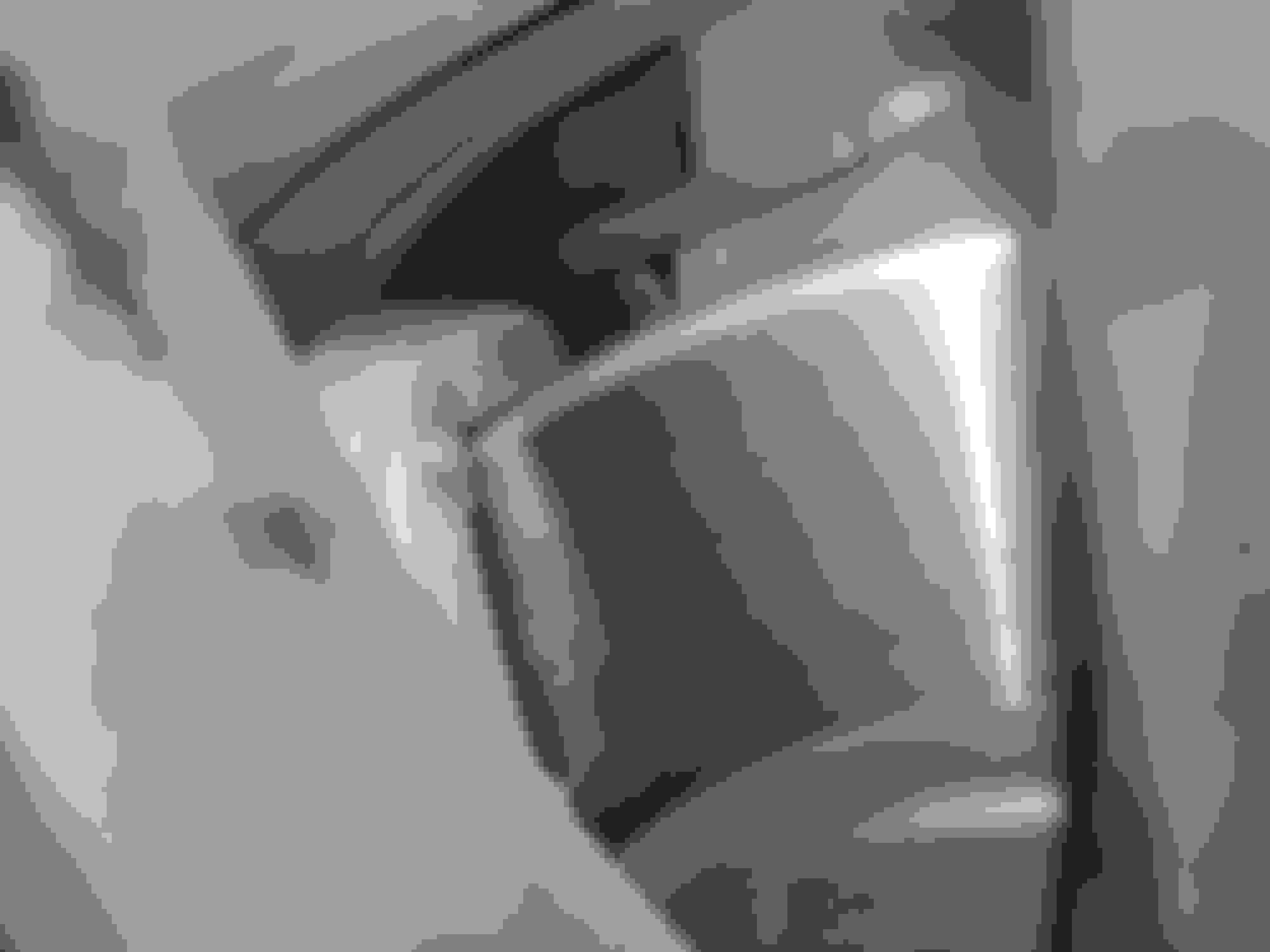
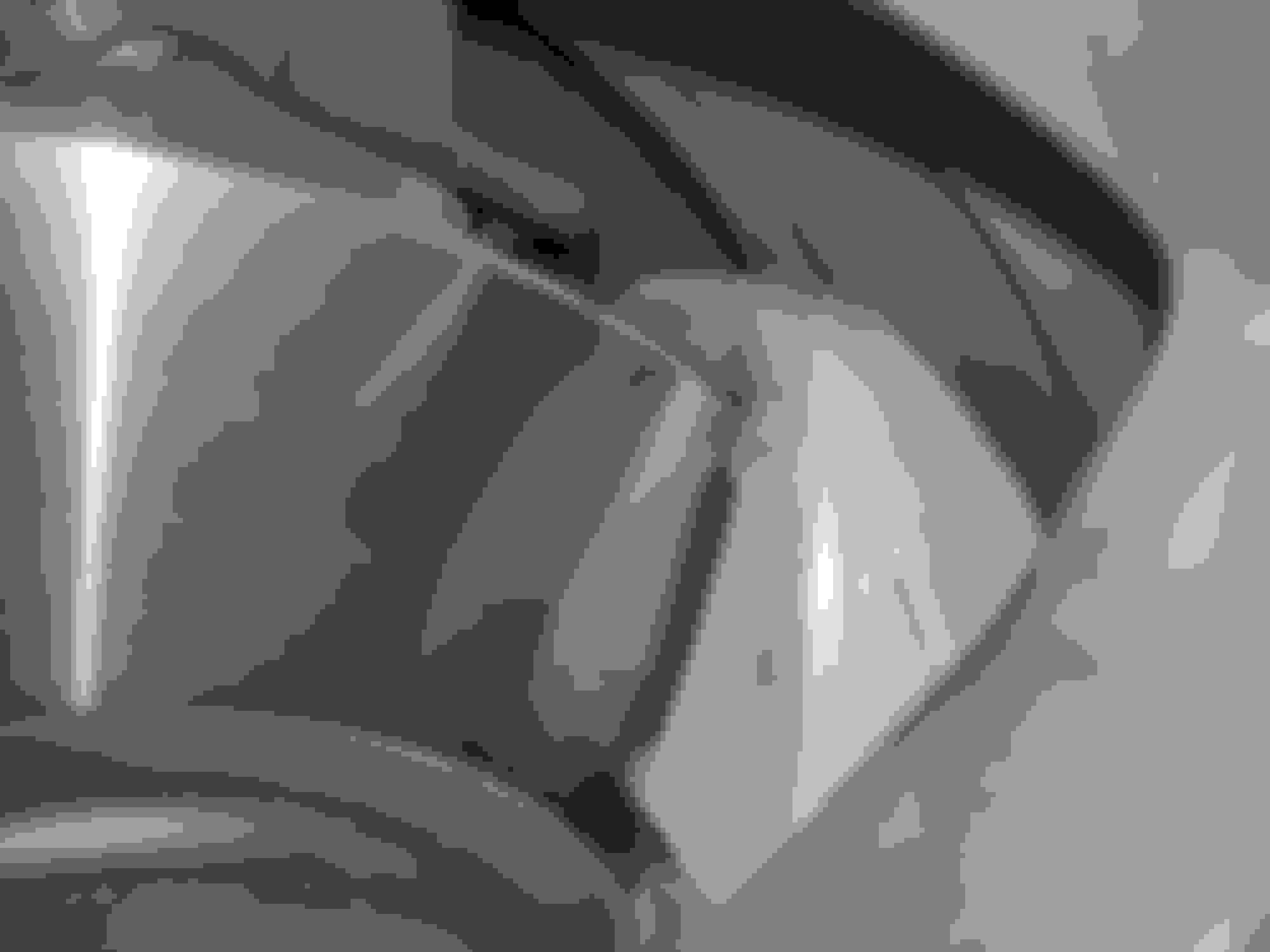
@jonathan358 It'll probably make more sense once you see these images. One is the right hand disc very visibly roughened up. Other is left side which after checking, is in line with rear so should be how it is supposed to be.
That rough crap on the right disk is not normal. Have you removed the caliper yet? You might have a small rock stuck in the pad area. That would constantly rub and do that damage.
Either way, remove the caliper and see what's going on. The rotor shouldn't look like that.
Ideally I'd like to remove the caliper and disc, clean the surfaces and reseat. But I don't have a torque wrench and am not sure exactly how important correctly torqued bolts are. I've worked on some japanese cars before and just went by feel, but whenever I hear about the euro cars everyone almost always mentions how important torquing accurately is.
I guess you don't need to remove the caliper really. The fronts are pretty cool on these cars. You can pull the pads out without even removing the caliper/bracket. They pull out of the back of the caliper. Take the wheel off, take the wire clip off the back of the caliper without bending it too much, pull out the two pins towards you, then you can just pull the pads out of the back of the caliper and check everything out.
... I don't have a torque wrench and am not sure exactly how important correctly torqued bolts are. ...
Proper torque _is_ important ... and the caliper-mounting bolts are 1-time use (i.e., they are spec'd to be replaced each time as they're designed to be torqued only once).
However, as pointed out, you can easily pull the pads without removing the calipers. It'll be interesting to hear the results (pics of the pad would be interesting, also). My best guess would be with DirtyDD's, a rock ... though rocks usually create an apocalyptic squeal. It could also be some foreign matter that got into the pad when it was manufactured.
So I took off my wheels and also disassembled the pads... kinda. Took off wheels, then took off outer pad but couldn't get the inner pad because the sensor connector that's attached with an E-Torx bolt. Never the less, I spread both pads away from disc.
Inspected the pad I could pull out and only noticed some weird coloring near the bottom of the pad but other than that pretty normal. Could also see how the damage on the disc has chewed up the pad a tiny bit. Inspected the disc - only damaged on the side facing outward. 2 things stood out to me about the disc:
1. Disc was the floating/free mounted (or whatever it's called) type. They're not fixed in place with a screw.
2. Despite being mounted as such, there were holes in the disc and the hub for that screw which affixes the brake disc to the hub. Like, what???
Anyways decided to reassemble properly and see how it goes. Torqued up the wheels properly to 130Nm (seems to be what the manual says so... I think people have debated it as 150Nm at some point). Tightened in opposites hand tight, then slight pressure with ratchet, then 90Nm, and finally 130Nm.
Surprising, it's gone now. My guess is probably someone ****ed up assembly and didn't properly torque, or didn't torque in a manner which distributes the force. Not sure how you could mess that up
Also, could someone please let me know if their disc are also not the type affixed? I get the feeling that these discs are not the proper ones or something, given that the disc and hub both have the holes where a screw should go but don't line up.
The discs have a single hole for a small low torque screw that holds them to the hub. This is to hold them in place during install, its not a load bearing bolt. The force that holds the disc in place is from the wheels bolts. It being missing is wrong, but wont affect anything, maybe a tiny misbalance by the weight being missing.
Glad its fixed!! If the wheel bolts are improperly installed (not torqued in the right order) you can warp the rotor. I guess that's possible, but I dont think thats it. Clearly whoever did the last brake job was a hack since they skipped the mounting screw. I'd still bet my beer there was a small rock in there though that fell out when you took it all apart.
Xmas list: External torx bit set, torque wrench (or did you already get one?)
I posted detailed brake change instructions on the facebook group. Maybe I'll share them here at some point. Its an easy job.
The discs have a single hole for a small low torque screw that holds them to the hub. This is to hold them in place during install, its not a load bearing bolt. The force that holds the disc in place is from the wheels bolts. It being missing is wrong, but wont affect anything, maybe a tiny misbalance by the weight being missing.
Glad its fixed!! If the wheel bolts are improperly installed (not torqued in the right order) you can warp the rotor. I guess that's possible, but I dont think thats it. Clearly whoever did the last brake job was a hack since they skipped the mounting screw. I'd still bet my beer there was a small rock in there though that fell out when you took it all apart.
Xmas list: External torx bit set, torque wrench (or did you already get one?)
I posted detailed brake change instructions on the facebook group. Maybe I'll share them here at some point. Its an easy job.
Hmm interesting, I've done discs on a honda and they had a screw which mounted the disc to the hub. But, I'm also aware that it's not necessary.
The hole on the disc looked like it was positioned right at a raised section on the hub underneath, in the way that if a screw was in it it would probably push against hub and it would no longer be straight. So I still think it's mounting given that the disc is almost entirely reliant on the wheel bolts to hold it in place.
It's possible if they began torquing one bolt all the way to spec before others, that it could mount the disc in a way which is not flush. When I applied pressure on opposite sides of the disc with my palm, I could see that pressure on either side would have it basically rubbing against the caliper.
Yeah, I never encountered e-torx. Got a 1/2" torque wrench that's more suitable for the high torque stuff like wheel bolts. I don't think I'll be needing anything lower torque as of now.
Brakes and Oil are all pretty easy. I'm not entirely decided if I'll DIY the oil change and brakes, because warranty and there are things with euros that mechanics tend to know about like common issues. It's going out of warranty next February anyways, so I'll be thinking about it.
E torx bit set. Wrench bits, not a diff wrench. Its what you need for various bolts like that brake wear sensor. Worth getting a set from amazon.
D
Oh yeah, I'm aware of the E-Torx set. It's just the way I am answering in blocks. Brake sensor seems to just be pull from pads, and lift on the metal clip for the actual connector.
Would get one but, trying to avoid tools unless I absolutely need it. So once I need it, I'll get one
I've already got impact hex sockets, impact bits (allen, torx, etc), ratchet, and now torque wrench.
Anyway, I'm relieved I don't have to waste a day taking it to a dealer now. Then probably get charged a sizable amount with the end result being "no issue". For something which took me an hour or less including fiddling around with the pads. Additionally, I'm like pretty certain the previous owner got the car serviced at an MB dealer, even getting a new set of the original conti run flats.
And... it's started rubbing again. Not even sure what to do with it at this point. Seeing that I had only taken out the brake pads, and remounted the wheel last time means it probably comes down to these two. I can ease the pressure and retorque easily, so I guess I could try isolating that.
One thought I currently have is the wheel mounting torque, some people have debated whether it's 130Nm or 150Nm. I went with 130Nm, but maybe I should be doing 150Nm? The idea being that since the disc essentially relies on the wheel mounting pressure to keep it in place, it may not be sufficiently torqued with 130Nm. I've done a pulls with some decent braking in the past few days.
Mercedes SLR McLaren 722 S Is Extremely Rare Example Modified by McLaren
Slideshow: A one-of-one U.S.-spec Mercedes-Benz SLR McLaren Roadster became even rarer after a factory-backed transformation at McLaren's headquarters.






 Brake disc rubbing















 Fixed
Fixed


