







Fluid MotorUnion C63 AMG Oil Cooler:

Thread Starter
Former Vendor of MBWorld
Joined: Nov 2008
Posts: 304
Likes: 0
From: Plainfield/ Naperville, IL
A few
Fluid MotorUnion C63 AMG Oil Cooler:
So over the last month or so we have been testing some oil cooling alternatives for the C63 Oil Temperature issues that some of you may or may not have experienced so far.
Here is a little taste of what we have been working on, OEM fitment, stock location, stock mounts:
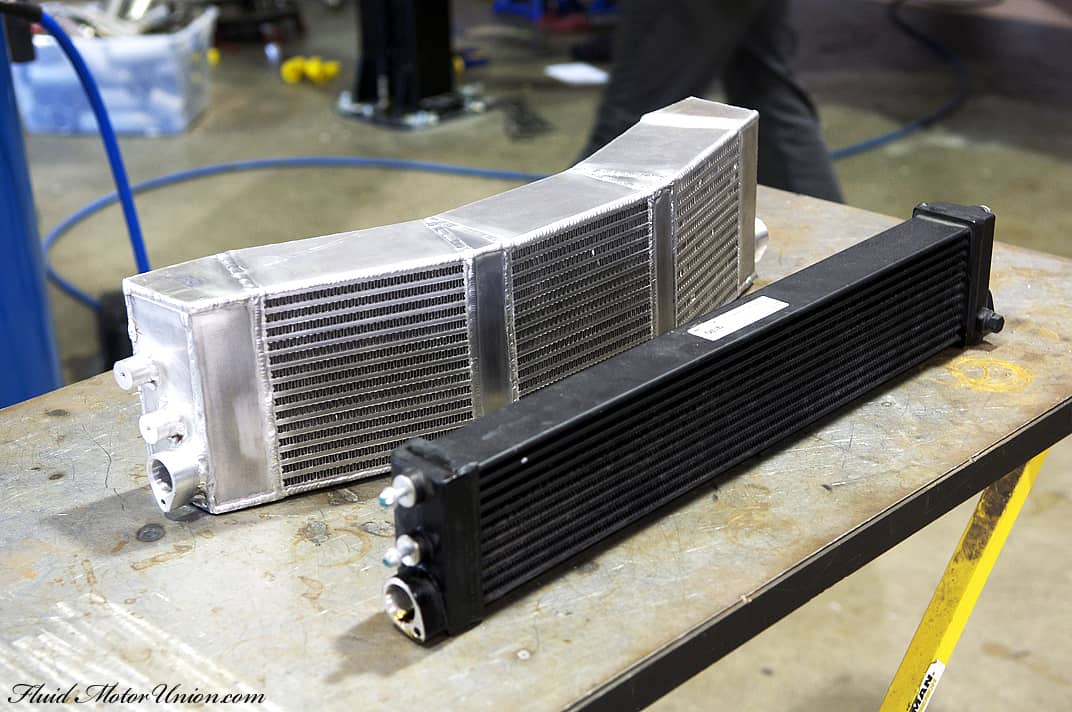
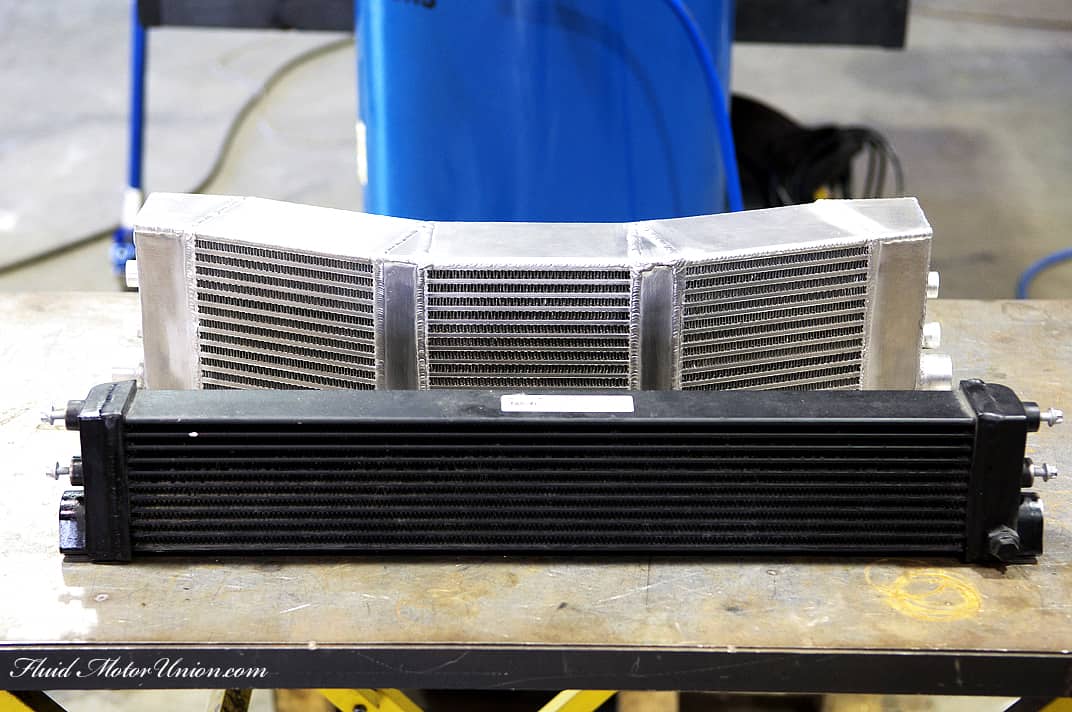
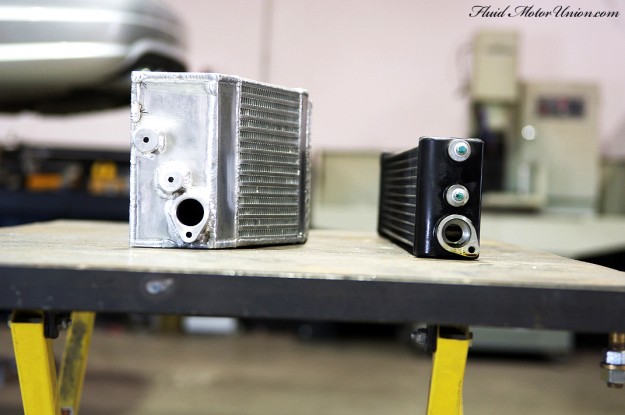
Test fit on a CLK63:
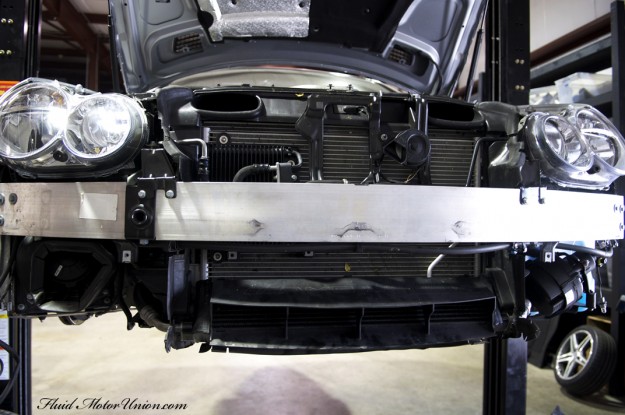
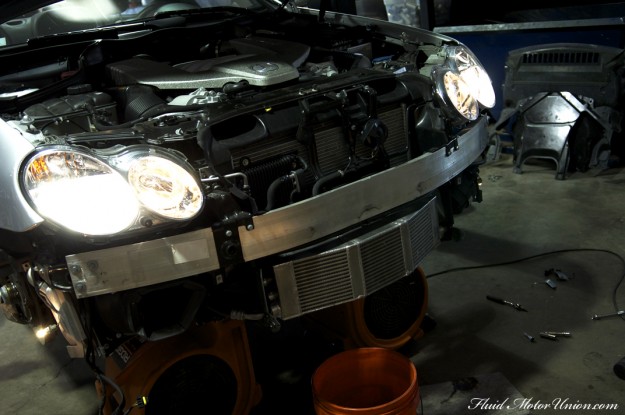
Now this is that exact same car with our Fluid MotorUnion oil cooler attached. We’re still testing on available cars to see if this application could apply to a broad spectrum of Mercedes vehicles. We’ve now confirmed that there at least two different Mercs on which the oil cooler will fit. Either way, here are some specs about our fabricated aluminum monster, compiled by Mike Eastway:
The FMU oil cooler has a 580% capacity increase over stock (~3 quarts)
The FMU oil cooler’s surface area is increased by 205% over stock.
Eastway ran a total of five test cycles. These cycles consisted of:
Idling until oil temperature stabilized.
Running the engine at 3000 rpm until the oil reached a temperature of 105 degrees Celsius.
Idling until the temperatures returned to initial start point, with 5 minutes of stabilization between test cycles.
These tests were performed inside with the hood open and a fan approximately one foot in front of the oil cooler.
Here are the graphs:
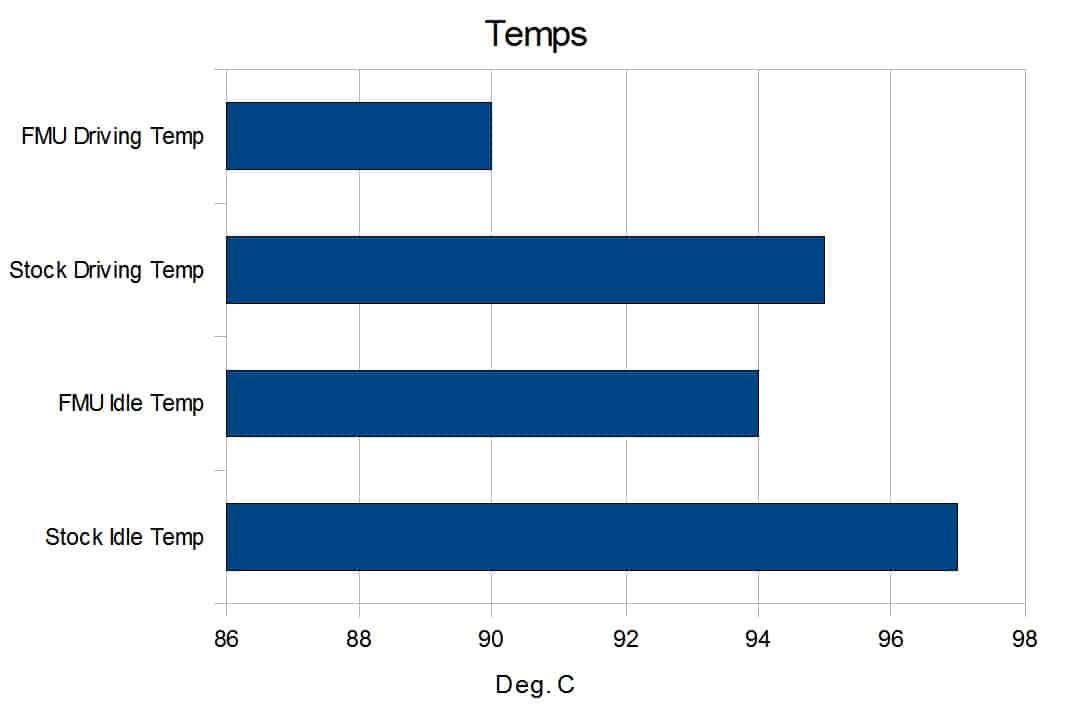
Here, the driving temperature was tested by driving normally (non-spirited) for 30 minutes, followed by 30 minutes of idling. You can see a marked decrease in oil temperature both while driving and idling afterwards when compared to the stock oil cooler.
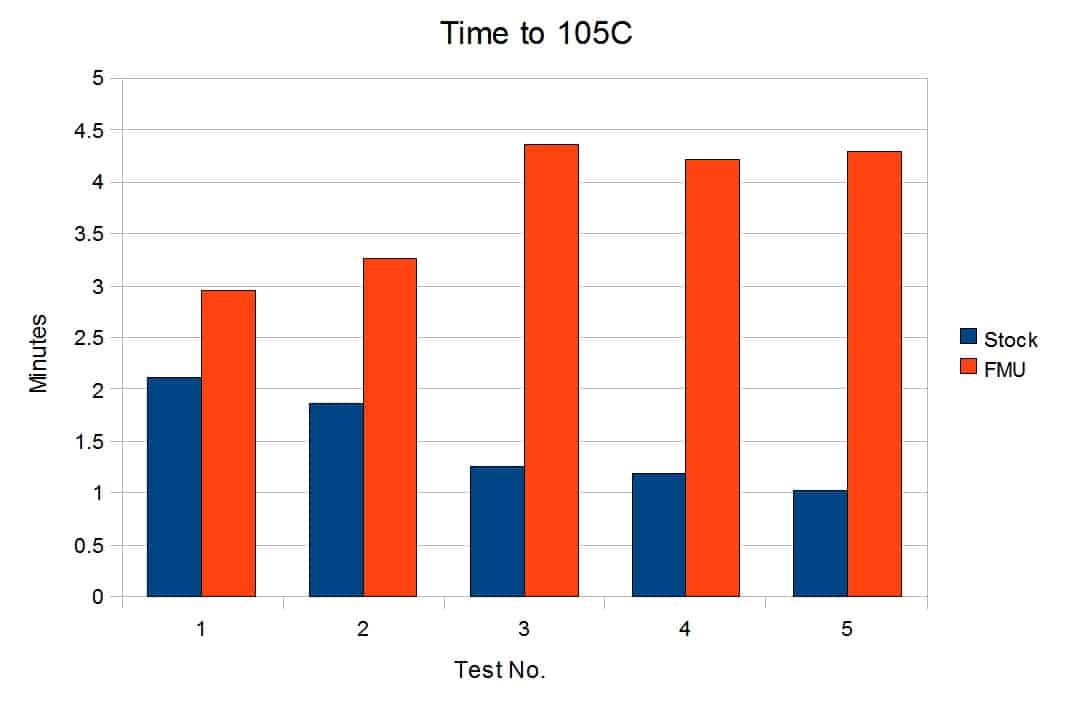
Here, you can see that as the test cycles continued, the time it took to reach 105 degrees shortened with the stock oil cooler. With our aluminum oil cooler attached, each cycle actually increased the time it took to reach 105 degrees, thanks to the thermodynamic properties and specific heat of aluminum. The properties of aluminum are paramount in keeping temperatures down over longer periods of time, which won’t happen with the setup of the stock cooler.
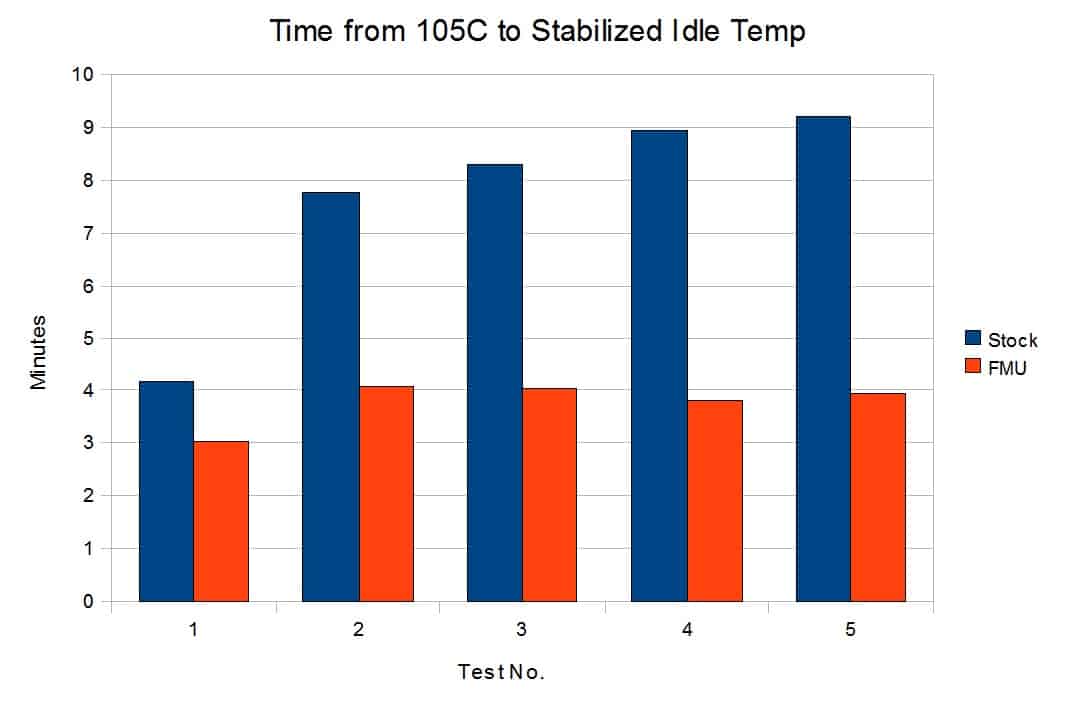
Once again, the results are pretty predictable. The larger surface area and overall capacity of our oil cooler allowed the oil to reach a stable operating temperature in an almost perfectly consistent amount of time each cycle. As expected, the stock oil cooler continued to slow down its feeble attempt at cooling the oil after repeated cycles, eventually taking almost nine minutes (twice the time of the FMU cooler) to bring the oil down to a stable temperature.
Once again these are not the final images of the product, this is more or less a feeler to gauge interest by C63 Owners.
Keep your eyes peeled for more information as we continue to do more track and dyno testing of this setup and please feel free to e-mail mmarzano@fluidmotorunion.com for more details.
Here is a little taste of what we have been working on, OEM fitment, stock location, stock mounts:
Test fit on a CLK63:
Now this is that exact same car with our Fluid MotorUnion oil cooler attached. We’re still testing on available cars to see if this application could apply to a broad spectrum of Mercedes vehicles. We’ve now confirmed that there at least two different Mercs on which the oil cooler will fit. Either way, here are some specs about our fabricated aluminum monster, compiled by Mike Eastway:
The FMU oil cooler has a 580% capacity increase over stock (~3 quarts)
The FMU oil cooler’s surface area is increased by 205% over stock.
Eastway ran a total of five test cycles. These cycles consisted of:
Idling until oil temperature stabilized.
Running the engine at 3000 rpm until the oil reached a temperature of 105 degrees Celsius.
Idling until the temperatures returned to initial start point, with 5 minutes of stabilization between test cycles.
These tests were performed inside with the hood open and a fan approximately one foot in front of the oil cooler.
Here are the graphs:
Here, the driving temperature was tested by driving normally (non-spirited) for 30 minutes, followed by 30 minutes of idling. You can see a marked decrease in oil temperature both while driving and idling afterwards when compared to the stock oil cooler.
Here, you can see that as the test cycles continued, the time it took to reach 105 degrees shortened with the stock oil cooler. With our aluminum oil cooler attached, each cycle actually increased the time it took to reach 105 degrees, thanks to the thermodynamic properties and specific heat of aluminum. The properties of aluminum are paramount in keeping temperatures down over longer periods of time, which won’t happen with the setup of the stock cooler.
Once again, the results are pretty predictable. The larger surface area and overall capacity of our oil cooler allowed the oil to reach a stable operating temperature in an almost perfectly consistent amount of time each cycle. As expected, the stock oil cooler continued to slow down its feeble attempt at cooling the oil after repeated cycles, eventually taking almost nine minutes (twice the time of the FMU cooler) to bring the oil down to a stable temperature.
Once again these are not the final images of the product, this is more or less a feeler to gauge interest by C63 Owners.
Keep your eyes peeled for more information as we continue to do more track and dyno testing of this setup and please feel free to e-mail mmarzano@fluidmotorunion.com for more details.

MBWorld Fanatic!


Joined: Mar 2008
Posts: 1,068
Likes: 21
CLK63 Black Series
Looks like a quality oil cooler! With an increased surface area in addition to the increased oil capacity, I'm sure it will perform better than the stock unit while driving. What I don't understand is why you show oil temperatures at idle? It will not change temperatures at idle for a simple fact: There is an oil temperature regulator located in the crank housing, which is operated by oil pressure. It remains closed at idle, and oil will only circulate within the block, not the cooler. Once rpm's go up, so does oil pressure and the regulator will open to allow oil going through the cooler.
However, your graph shows lower idle temperatures than stock. My only explanation for this is that you had the fan still blowing cool air onto the cooler and engine. In real world driving, if the car sits at idle, there is no airflow other than the thermostat activated radiator fan and the hood is closed. While I believe all your other statistics on the graph, the lower idle temperatures don't make sense to me.
However, your graph shows lower idle temperatures than stock. My only explanation for this is that you had the fan still blowing cool air onto the cooler and engine. In real world driving, if the car sits at idle, there is no airflow other than the thermostat activated radiator fan and the hood is closed. While I believe all your other statistics on the graph, the lower idle temperatures don't make sense to me.
Thread Starter
Former Vendor of MBWorld
Joined: Nov 2008
Posts: 304
Likes: 0
From: Plainfield/ Naperville, IL
A few
Looks like a quality oil cooler! With an increased surface area in addition to the increased oil capacity, I'm sure it will perform better than the stock unit while driving. What I don't understand is why you show oil temperatures at idle? It will not change temperatures at idle for a simple fact: There is an oil temperature regulator located in the crank housing, which is operated by oil pressure. It remains closed at idle, and oil will only circulate within the block, not the cooler. Once rpm's go up, so does oil pressure and the regulator will open to allow oil going through the cooler.
However, your graph shows lower idle temperatures than stock. My only explanation for this is that you had the fan still blowing cool air onto the cooler and engine. In real world driving, if the car sits at idle, there is no airflow other than the thermostat activated radiator fan and the hood is closed. While I believe all your other statistics on the graph, the lower idle temperatures don't make sense to me.
However, your graph shows lower idle temperatures than stock. My only explanation for this is that you had the fan still blowing cool air onto the cooler and engine. In real world driving, if the car sits at idle, there is no airflow other than the thermostat activated radiator fan and the hood is closed. While I believe all your other statistics on the graph, the lower idle temperatures don't make sense to me.
Trending Topics
MB World Stories
The Best of Mercedes & AMG

Manual Mercedes? 6 Times Sindelfingen Let Drivers Have All The Fun
Verdad Gallardo
Mercedes SLR McLaren 722 S Is Extremely Rare Example Modified by McLaren
Verdad Gallardo
8 Classic Boxy Mercedes Designs That Have Aged Like Fine Wine
Verdad Gallardo
Flawlessly Restored Mercedes 190E Evo II Heads to Auction
Verdad Gallardo
Electric Mercedes C-Class Unveiled: 11 Things You Need to Know
Verdad Gallardo
Mercedes EQS Gets A Major Update: Everything You Need to Know
Verdad Gallardo
5 Underrated Mercedes-Benz Models That Don't Get the Love They Deserve
Verdad Gallardo
Mercedes 300D Has Pushed Well Past 1 Million Miles and It Ain't Stopping
Verdad Gallardo
10 Most Reliable Mercedes-Benz Models You Can Buy Used
Verdad Gallardo

Senior Member
Joined: May 2007
Posts: 355
Likes: 0
From: Hong Kong/Charlotte
2010 C63
Looks like these tests were done on a W211 E63 - is that correct? Do they have an second oil cooler like the C63? What is the increase in surface area and oil storage when the C63's second oil cooler (with dedicated fan) is included?
And do you have upgraded power steering or transmission coolers?
And do you have upgraded power steering or transmission coolers?


Thread Starter
Former Vendor of MBWorld
Joined: Nov 2008
Posts: 304
Likes: 0
From: Plainfield/ Naperville, IL
A few
Looks like these tests were done on a W211 E63 - is that correct? Do they have an second oil cooler like the C63? What is the increase in surface area and oil storage when the C63's second oil cooler (with dedicated fan) is included?
And do you have upgraded power steering or transmission coolers?
And do you have upgraded power steering or transmission coolers?
They do have a second oil cooler, like the C63. The increased surface area and oil storage, in terms of numbers, remains the same, since the incorporation of surface area+storage of the second cooler doesn't change.
In terms of percentages, obviously the number will drop a bit when you include the second oil cooler, but needless to say there is still a large increase in both overall surface area and overall capacity.
We do not have upgraded power steering or transmission coolers. We are always open to new ideas, though

We don't have specific numbers for that at this moment, as we were focused solely on the oil temperatures when testing. We'll return here with any rough numbers if they happen to be in the project notes.
Yes it does. We only fabbed up a replacement for the primary oil cooler in front of the radiator, however. Perhaps that's another project to undertake!
Last edited by FluidMotorUnion; Sep 24, 2010 at 03:02 PM.



Super Member
Joined: Nov 2008
Posts: 684
Likes: 2
From: Dallas TX area
M5, C63, 335Ci



Thread Starter
Former Vendor of MBWorld
Joined: Nov 2008
Posts: 304
Likes: 0
From: Plainfield/ Naperville, IL
A few
Thanks again guys, we'll have more details posted shortly!

MBWorld Fanatic!
Joined: Apr 2010
Posts: 1,955
Likes: 7
2017 Mini Cooper S Clubman ALL4 - British Racing Green
$0,000.99
... Sorry.. could not resist
 Thats what my current budget would be...
  stupid mold/rotten insulation/drywall problem eating up my budget..

MBWorld Fanatic!
Joined: Oct 2008
Posts: 1,521
Likes: 3
From: Central Florida
2013 Chevy 427 Torch Red
I would strongly suggest that you consider pricing based upon similar products that have been developed for other cars. Bear in mind your R&D investment and resist the urge to impose the MB tariff that so many vendors require. I read about the project BMW that you guys have been working on and it is very impressive. This may not be as large of an ownership group but many are willing to do meaningful upgrades if reasonably priced.
Super Moderator Alumni
Joined: Dec 2009
Posts: 2,189
Likes: 6
From: USA
2011 GLK 350, 2013 GT-R, & 2013 RAM 1500
I would strongly suggest that you consider pricing based upon similar products that have been developed for other cars. Bear in mind your R&D investment and resist the urge to impose the MB tariff that so many vendors require. I read about the project BMW that you guys have been working on and it is very impressive. This may not be as large of an ownership group but many are willing to do meaningful upgrades if reasonably priced.
Super Member
Joined: Nov 2008
Posts: 684
Likes: 2
From: Dallas TX area
M5, C63, 335Ci
100% agree...Price it fairly and you will sell far more that some of the people that try to recoup their entire R&D investment on the first few sales.
Overall I think the product looks great and offers meaninful real world benefits to those of us that drive our cars the way the engineers designed them to be used.
Overall I think the product looks great and offers meaninful real world benefits to those of us that drive our cars the way the engineers designed them to be used.