When you click on links to various merchants on this site and make a purchase, this can result in this site earning a commission. Affiliate programs and affiliations include, but are not limited to, the eBay Partner Network.
11’ C63 AMG; D2 Audi A8; 15’ Golf TDi; 97’ F350PSD; B6 Audi S4; D1 Audi V8; A2 VW GTi
Camshaft Adjuster Lock Plate Drawings are Coming Soon
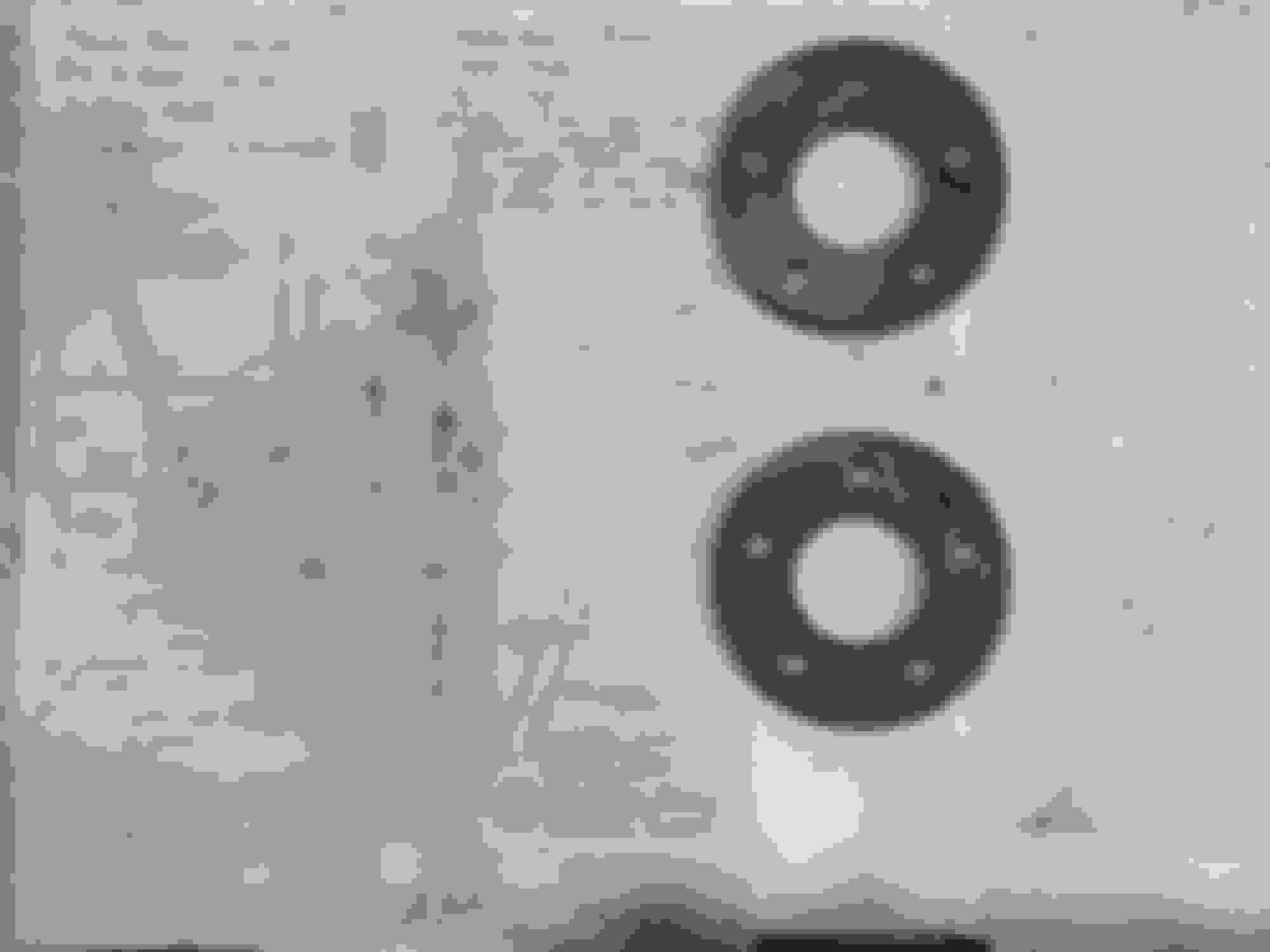
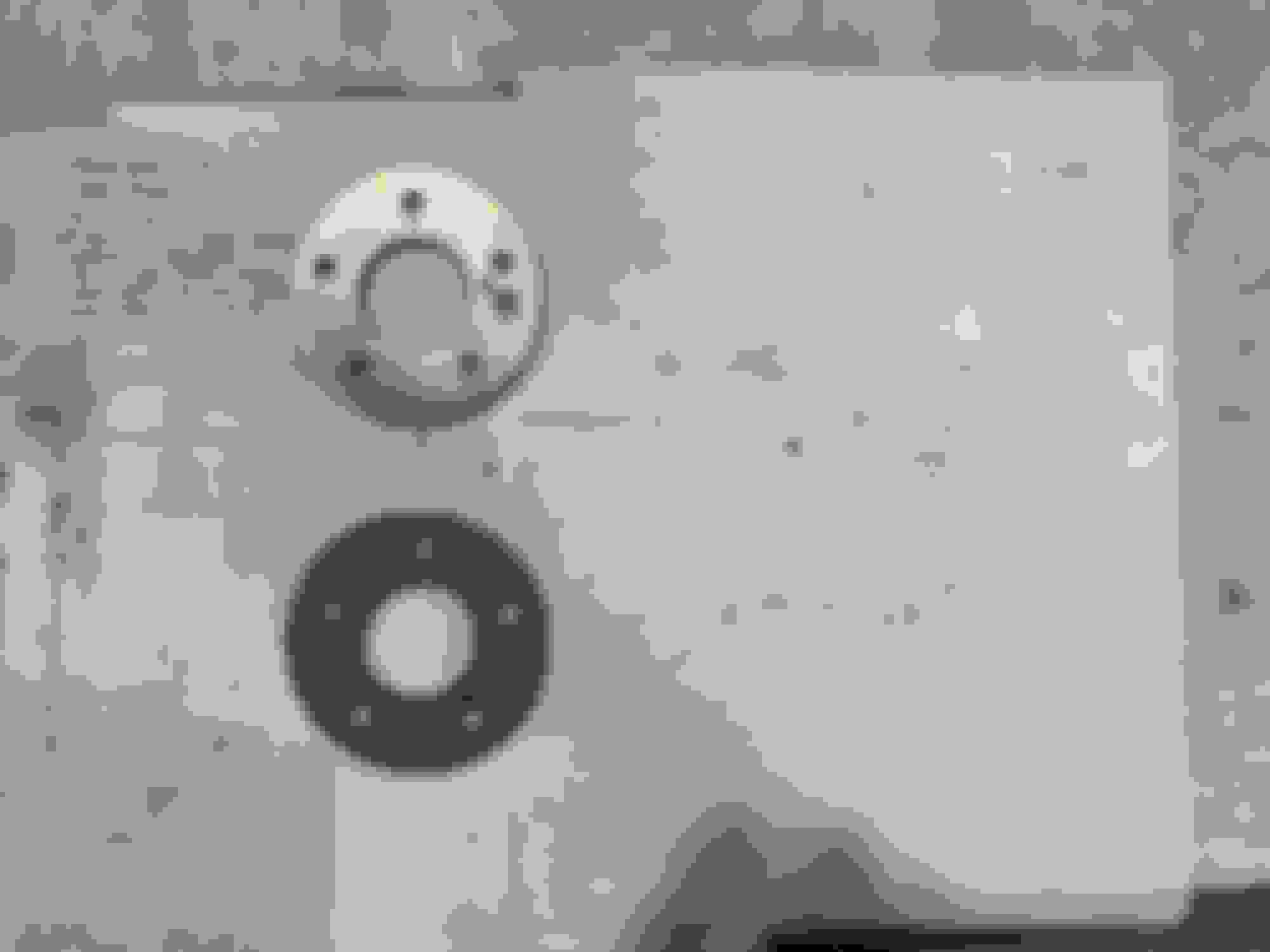
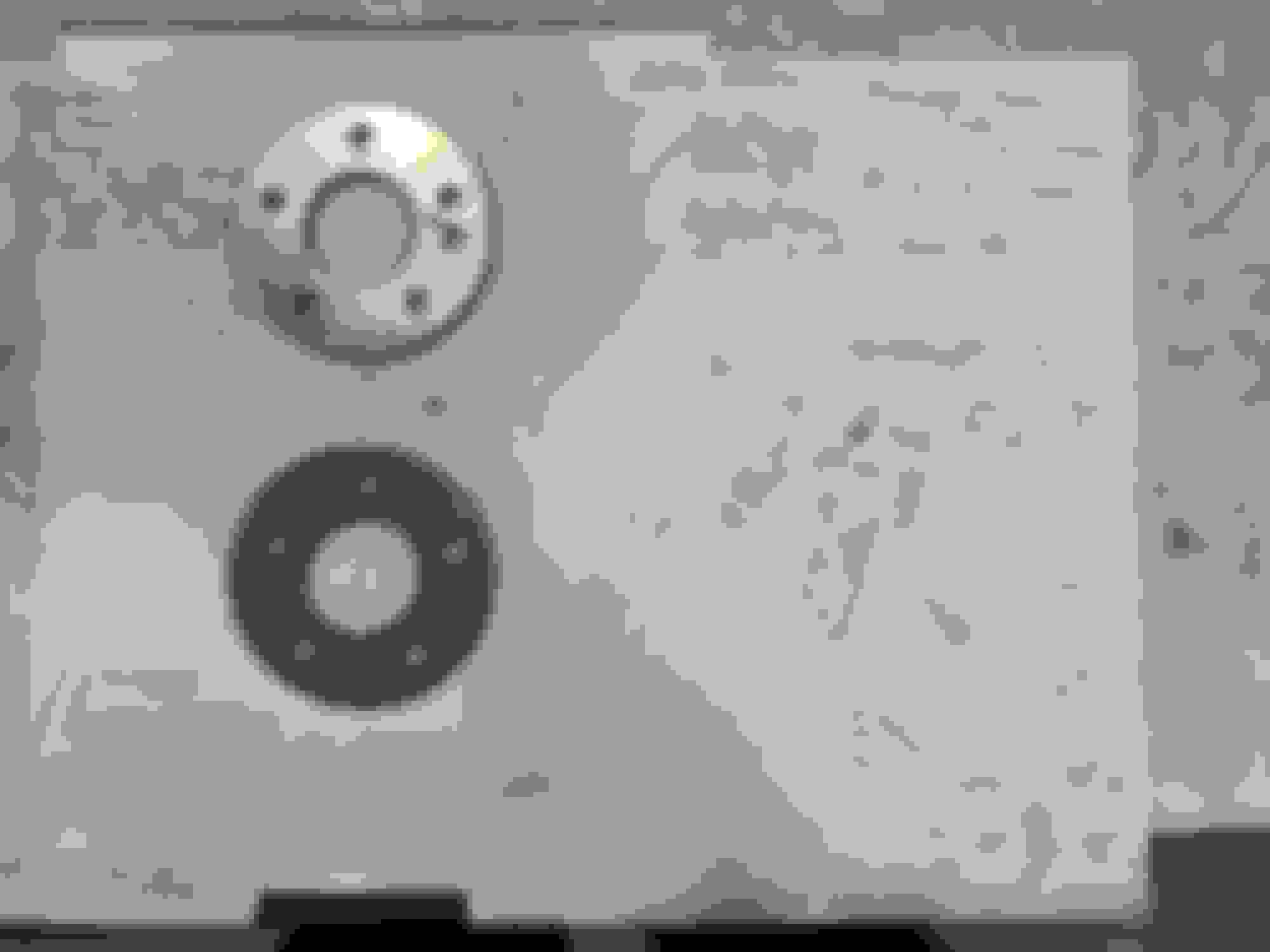
I have been working with another member who was kind enough to send me a pair of worn lock plates to attempt to repair.
I have begun dimensioning them before I start modifying them for repair. I am going to post a PRELIMINARY working drawing. This is not the final print by any means. Essentially I use these sketches to help me program the CMM to generate an actual drawing based on a real part.
I have at least 1 or 2 more pages to detail other features on these parts, so it’s a work in progress.
Furthermore, do not contact me complaining that you used these drawings (incorrectly) to make a part that messed your car up. I will have no part of it.
These are definitely not to any sort of scale. Apparently, graph paper is something engineering stopped using in the 90’s? Where have I been the last 25 years...
Ok, I give up trying to make these stand up straight. Ignore the angle measurements on this sketch, I ****ed my trig up. Dimensions are accurate though. Angles on this sketch are accurate. You’ll notice two lock pin bores on one part. That is because the parts are identical with the exception of the location of this lock pin bore. One sketch, two parts.
11’ C63 AMG; D2 Audi A8; 15’ Golf TDi; 97’ F350PSD; B6 Audi S4; D1 Audi V8; A2 VW GTi
Originally Posted by swedepat
Give us detailed measurements in metric and i´ll cad em up for us all.
Sounds good. I’ve been working on it a little bit at night while the machines run.
Luckily almost everything on these parts is a rattle fit, with the exception of the flatness, surface finish, and the parallelism. The flatness is so good that if you take two of these plates and wring them together, they will stick to each other.
The pins are a rattle fit in the lock bore even when new, the locations of all the other features seem to be in the neighborhood of +/- .0015” or so.
But like I say, flatness and high surface finish is an absolute must for the oil to seal against the surface of the plate with no gasket. But by far the most important part is the parallelism. On the two examples I have here, they both measured less than .0001” out of parallel. The way the gear lines up and meshes to the chain idler/pinion is determined by the parallelism. If it is out of whack the gear will eat itself alive.
11’ C63 AMG; D2 Audi A8; 15’ Golf TDi; 97’ F350PSD; B6 Audi S4; D1 Audi V8; A2 VW GTi
I will re-do the drawing on paper that isn’t yellow in two versions.
one with polar coordinates and the other with Cartesian.
Most machinists program at the control in Cartesian, and if you’re making one of these without a rotary table on say, a Bridgeport with a DRO, you’ll want Cartesian.
I have this new idea around this.
At work i have a spark erosion machine.
And if making a 'male' in copper i can just make a new hole in existing plates, this will not make them better than new ones, but it is a fresh start on the same ones you already have.
So my question, if turning the plate 72 degrees does the old holes interference with something?
11’ C63 AMG; D2 Audi A8; 15’ Golf TDi; 97’ F350PSD; B6 Audi S4; D1 Audi V8; A2 VW GTi
Originally Posted by swedepat
It might be easier if you got the right connections.
induction harden the new hole to greater hardness then surrounding metal.
The diagonal slot, this must be a channel for oilsupply?
Yes. Meet me in my other thread about these things. Something about worn adjusters laying around. That thread focuses on the repair. This one is for the prints.
Yes. Meet me in my other thread about these things. Something about worn adjusters laying around. That thread focuses on the repair. This one is for the prints.
The machinist and I have been back and forth at this. I’ve been experimenting on stronger material/treatments that actually work. Right now I’ve got an oem improvement but could be better. Its no easy task to map and blueprint these up for the community. This is a big step into open sourcing this info. I’m sure we’ll end up with something, likely a huge improvement, in the near future.
If anyone wants a laser scan, we use Exact Metrology for scanning some high precision OEM parts. Can convert to solid model(s), and at high res it will be +/- a couple tenths or better. It's a process I lean on more and more as that technology has evolved quite nicely.
11’ C63 AMG; D2 Audi A8; 15’ Golf TDi; 97’ F350PSD; B6 Audi S4; D1 Audi V8; A2 VW GTi
Originally Posted by VektorPerforman
If anyone wants a laser scan, we use Exact Metrology for scanning some high precision OEM parts. Can convert to solid model(s), and at high res it will be +/- a couple tenths or better. It's a process I lean on more and more as that technology has evolved quite nicely.
Im planning on verifying everything with the CMM in a few days. (Hopefully).
Nothing on these parts is remotely that tight of a tolerance. The major OD really doesn’t matter, the location of the lock bore could be +/- .025” and it wouldn’t matter. The lock bore measures .305 or something. The lock pin measures .275 and some change. The center ID is .004ish clear of the part that fits through it. The rest is just clearance for bolts and such.
The only thing that REALLY matters with these is the surface finish, flatness, and parallelism.
Surface finish and flatness because it’s what keeps the oil pressure in. Parallelism because that locates the Spur gear in relation to the chain driven pinion.
Thickness could be +/-.005 probably because that would only affect the fore/aft location of the gear itself, not the camshaft. That’s probably all a rattle fit anyway, because the only thing that holds it together is a snap ring.
The most expensive parts on these adjusters is the 5sided vane Inside and the cylinder that it lives in. That geometry is probably done on a wire EDM machine.
That 3D scan could be quite handy for dimensioning the entire part, all of its pieces.
Like machinist said. The inner gear needs to do its job for the VVT part. The oil bore for the pin also needs to be at the correct degree but also note that even the stock parts aren’t exact with how the provisions line up inside. See photo here. Just a reminder that timing is a slave to the cam position sensor so the adjuster gear dictates VVT not the other way around. To a degree the solenoids play a role in ensuring consistency with oil pressure on both banks.
11’ C63 AMG; D2 Audi A8; 15’ Golf TDi; 97’ F350PSD; B6 Audi S4; D1 Audi V8; A2 VW GTi
I measured the parts with a CMM.
I was half a degree off on the location of the lock bores, but I really don’t think these parts are that precise. You’ll notice that the location of the bolt holes is slightly off from where they are supposed to be, based on the locations for a 5x60.something mm bolt circle.
Half a degree on the camshaft is equivalent to 1 degree on the crankshaft.
I didn’t draw the slot in. You’ll have to use your imagination. Each size has two numbers. That is the max and min measurement for each feature. It means the round parts aren’t actually round.
Mercedes SLR McLaren 722 S Is Extremely Rare Example Modified by McLaren
Slideshow: A one-of-one U.S.-spec Mercedes-Benz SLR McLaren Roadster became even rarer after a factory-backed transformation at McLaren's headquarters.