Hi everyone
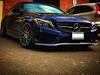
I own a 2017 C63S Coupe, with 19" wheels all around. Stock tires are 255/35 in the front and 285/30 in the rear. We can discuss the best tires for track days, but that's a whole other discussion, what I want to know, is the best size set-up. I have a few questions:
- On the stock wheels (I believe 9" and 10.5" width, correct?), what's the widest tire I can fit without any rubbing? From what I have researched, I have been led to believe I could fit 265/35 in the front and 295/30 in the back.
- If I buy a new set of wheels, then there's a lot more options! 305s in the back? Is that the best set-up? If so, what ratio fits? And what diameter? 305/25R20? or 305/30R19 (not sure this is a size that would be easy to find). With this set-up in the back, what's the best set-up in the front? 265 or 275? Of course we also have to talk about wheel off-sets, so that the tires don't rub against anything. And what ratio? So many combinations I'm getting overwhelmed!
Search the forum, this has been discussed a million times..
I did, but I'm sorry I don't have hours to search every page of every single thread that comes up on the search. I'm coming here because, as already stated, I have done research and I still need advice. If you can give me some guidance, thanks, if not, then that's okay.
I have a 2017 Coupe with the 19" forged cross spoke wheels as well and can tell you that the PS4S tires in 275/35/19 fit fine in the front and 305/30/19 fit fine in the rear. I have no rubbing at all.
I have a 2017 Coupe with the 19" forged cross spoke wheels as well and can tell you that the PS4S tires in 275/35/19 fit fine in the front and 305/30/19 fit fine in the rear. I have no rubbing at all.
I have not taken it to a track on these tires or the stock Continental tires. However, on the street the grip has been an improvement. As for acceleration, the rear will still break loose if you aren't progressive with the throttle, but it is improved.
I have not taken it to a track on these tires or the stock Continental tires. However, on the street the grip has been an improvement. As for acceleration, the rear will still break loose if you aren't progressive with the throttle, but it is improved.
I can imagine!
What about comfort?
Since the tire is closer to the fender well, when you fall on a pothole or go over a speed bump, does it ever touch it?
I like how there's less of a gap between the tire and the fenders, without having to lower it (it already is a stiff suspension).
I can imagine!
What about comfort?
Since the tire is closer to the fender well, when you fall on a pothole or go over a speed bump, does it ever touch it?
I like how there's less of a gap between the tire and the fenders, without having to lower it (it already is a stiff suspension).
The ride is good, but I feel that is more of a function of tire pressure. I keep it around 37/38 to try to minimize the chance of bending a wheel if I hit a pot hole or uneven pavement. I am at stock height on the stock suspension. The tires never touch the inner fender lining.
Quote:
Originally Posted by munis
Wait is the 19" in the rear? The rears are 20" no? Will the tire size be then 305-30-20 then?
I have a non-S C63, so the wheels are 19" diameter all around.
The ride is good, but I feel that is more of a function of tire pressure. I keep it around 37/38 to try to minimize the chance of bending a wheel if I hit a pot hole or uneven pavement. I am at stock height on the stock suspension. The tires never touch the inner fender lining.
I have a non-S C63, so the wheels are 19" diameter all around.
Going by your topic title, if you are looking for a track day setup, you need to focus on tire sizes that properly fit your wheel size and not try to cram the largest tire possible onto the wheel. Track performance is so much more about weight transfer, contact patch uniformity and stability, sidewall stiffness, how the tire behaves transitioning laterally and longitudinally, and everything else your tire is subjected to. That miniscule amount of increased "grip" you'd get from a wider tire would be completely overshadowed by all the other negative issues it'd compound if it is ill-fit to your wheel size.
Not only that, unless you're a pro (and 99.9% of people on here are not), you'll never begin to exploit the grip difference created by 10mm wider tires on the same wheel width. You're much better off trying to search for something that gives you a predictable/balanced setup instead of focusing on increased grip.
If you are wanting to increase overall grip though, you'd be much better off looking for a grippier tire compound than for a wider size. Especially if it's for a track-only set of wheels. But you need to be careful that switching to a significantly grippier tire can alter the overall behavior of a car's handling. A setup that gives you neutral/slight understeer on stock tires could turn into snap oversteer with semi-slicks. And vice versa.
Going by your topic title, if you are looking for a track day setup, you need to focus on tire sizes that properly fit your wheel size and not try to cram the largest tire possible onto the wheel. Track performance is so much more about weight transfer, contact patch uniformity and stability, sidewall stiffness, how the tire behaves transitioning laterally and longitudinally, and everything else your tire is subjected to. That miniscule amount of increased "grip" you'd get from a wider tire would be completely overshadowed by all the other negative issues it'd compound if it is ill-fit to your wheel size.
Not only that, unless you're a pro (and 99.9% of people on here are not), you'll never begin to exploit the grip difference created by 10mm wider tires on the same wheel width. You're much better off trying to search for something that gives you a predictable/balanced setup instead of focusing on increased grip.
If you are wanting to increase overall grip though, you'd be much better off looking for a grippier tire compound than for a wider size. Especially if it's for a track-only set of wheels. But you need to be careful that switching to a significantly grippier tire can alter the overall behavior of a car's handling. A setup that gives you neutral/slight understeer on stock tires could turn into snap oversteer with semi-slicks. And vice versa.
Agreed.
I am looking for wider wheels, that was my second question on the original post, and I just posted another thread, because I am looking for a grippier compound. I am considering Trofeo R or the R888R. Here in Mexico I cannot find the Trofeo R in 275-305 set-up, only 265-295 (19" all around), but the R888R is available on 275-305. Which is better? Same price.
Not only that, I am considering EBC OrangeStuff breaks (not R90 approved, but that is fine in Mexico). Only after new grippier wheels, and better brakes, I will go for a chip tune, and then other stuff.
Thanks
Really? The EBC website makes you input the weight and horsepower of your car, and then gives you choices. it even says that the OrangeStuff works best on heavy cars, up to 750 Celsius, developed for track use. I see you are using RP-X, why not RP-1? I guess I was considering pads that were still acceptable for road use, as I don't plan on making my car a track only car (or change everything after a track day).
Our local track is a short track that's noted as being one of the worst for brake/tire wear (assuming you're being aggressive). I chose RP-X because it's the most aggressive compound that's able to withstand the most heat. Bluestuff pads on the fronts would only survive about 1 hour of aggressive track time ... they got burned off, due to the heat.
Interesting note -- we're mostly COVID isolating so I didn't swap out either the track tires or pads after the final track day last fall. I've probably done about 10 short trips around the area and, AFAIK, haven't noticed anything to be worried about WRT the braking with the RP-X pads on the street. In temps down to about 40 deg F, they still have good initial/cold bite (maybe just due to the fact that the fronts are large-area rotors). Won't speculate about their performance in freezing temps, however.
FYI, the EBC web page https://ebcbrakes.com/products/brake-pads/ states "Orangestuff full race brake pads
Track and race pads for cars below 250bhp in shorter races." I wish EBC would quote the same/complete data for each of their pads so clear comparisons could be made.
Going by your topic title, if you are looking for a track day setup, you need to focus on tire sizes that properly fit your wheel size and not try to cram the largest tire possible onto the wheel. Track performance is so much more about weight transfer, contact patch uniformity and stability, sidewall stiffness, how the tire behaves transitioning laterally and longitudinally, and everything else your tire is subjected to. That miniscule amount of increased "grip" you'd get from a wider tire would be completely overshadowed by all the other negative issues it'd compound if it is ill-fit to your wheel size.
Not only that, unless you're a pro (and 99.9% of people on here are not), you'll never begin to exploit the grip difference created by 10mm wider tires on the same wheel width. You're much better off trying to search for something that gives you a predictable/balanced setup instead of focusing on increased grip.
If you are wanting to increase overall grip though, you'd be much better off looking for a grippier tire compound than for a wider size. Especially if it's for a track-only set of wheels. But you need to be careful that switching to a significantly grippier tire can alter the overall behavior of a car's handling. A setup that gives you neutral/slight understeer on stock tires could turn into snap oversteer with semi-slicks. And vice versa.
Slideshow: A one-of-one U.S.-spec Mercedes-Benz SLR McLaren Roadster became even rarer after a factory-backed transformation at McLaren's headquarters.