


Hersh's Turbo CLK430 Build Thread

Super Member
Joined: Aug 2005
Posts: 514
Likes: 0
From: Normal, IL
02 E55; 99 CLK430 (Sold)

Senior Member
Joined: Jul 2007
Posts: 327
Likes: 2
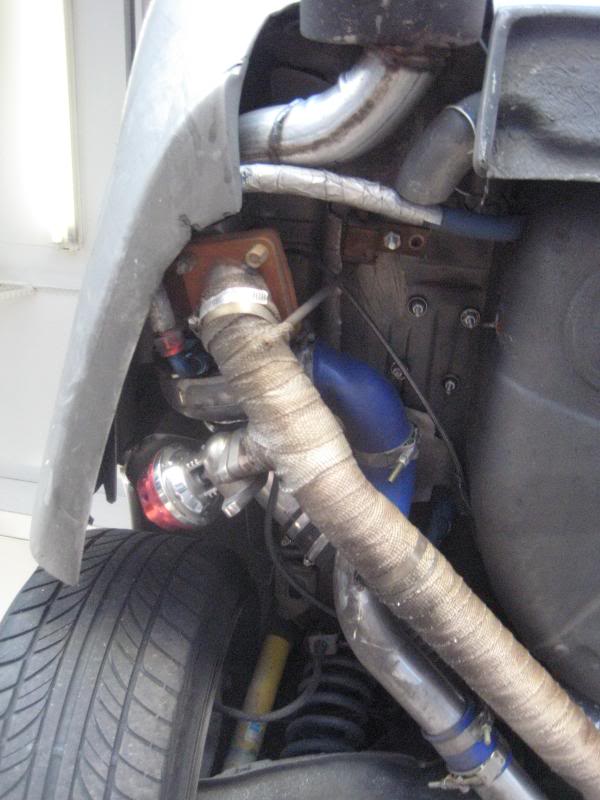
Got a few requests to see how it's setup in the rear. Here's the best pic I got:
It's got a flexible, steel supported, silicon intake made for Turbo P-cars. It's heat wrapped at the point it crosses over the also-wrapped exhaust just to be safe. The MAF is back there too. His painted tip didn't fair too well with the heat from my MIG welder lol.

You can see the filter in this pic:

It's got a flexible, steel supported, silicon intake made for Turbo P-cars. It's heat wrapped at the point it crosses over the also-wrapped exhaust just to be safe. The MAF is back there too. His painted tip didn't fair too well with the heat from my MIG welder lol.
You can see the filter in this pic:
Last edited by Max Hughes; Oct 9, 2009 at 01:35 AM.

Out Of Control!!


Joined: Feb 2003
Posts: 13,489
Likes: 96
haters crazy
Thread Starter
MBWorld Fanatic!
Joined: Oct 2006
Posts: 1,745
Likes: 2
From: NJ
w208
cats are off....we ran outa welding wire so we couldnt finish putting on the straight pipes...so we're takin it down for the nite and then hopefully its all set tomorrow so we can tune it and dyno

Banned
Joined: Sep 2009
Posts: 515
Likes: 0
From: Heart of America
CLK430
MB World Stories
The Best of Mercedes & AMG

New Electric Mercedes-AMG GT 4-Door Coupe Unveiled: 10 Things You Need to Know
Verdad Gallardo
6 Mercedes Models That Did NOT Age Well (But Are Somehow Still Cool)
Verdad Gallardo
Manual Mercedes? 6 Times Sindelfingen Let Drivers Have All The Fun
Verdad Gallardo
Mercedes SLR McLaren 722 S Is Extremely Rare Example Modified by McLaren
Verdad Gallardo
8 Classic Boxy Mercedes Designs That Have Aged Like Fine Wine
Verdad Gallardo
Flawlessly Restored Mercedes 190E Evo II Heads to Auction
Verdad Gallardo
Electric Mercedes C-Class Unveiled: 11 Things You Need to Know
Verdad Gallardo
Mercedes EQS Gets A Major Update: Everything You Need to Know
Verdad Gallardo
5 Underrated Mercedes-Benz Models That Don't Get the Love They Deserve
Verdad Gallardo
Thread Starter
MBWorld Fanatic!
Joined: Oct 2006
Posts: 1,745
Likes: 2
From: NJ
w208
replaced the cats with straight pipes but still an exhaust restriction somewhere according to max...and still getting a rotten egg smell when pushin the car.....gunna try removing replacing the precats with straight pipes tomorrow.........would anyone be able to tell me which set of cats are more restrictive?

Banned
Joined: Sep 2009
Posts: 515
Likes: 0
From: Heart of America
CLK430
replaced the cats with straight pipes but still an exhaust restriction somewhere according to max...and still getting a rotten egg smell when pushin the car.....gunna try removing replacing the precats with straight pipes tomorrow.........would anyone be able to tell me which set of cats are more restrictive?

MBWorld Fanatic!
Joined: May 2006
Posts: 1,486
Likes: 4
From: San Antonio, Tx
2000 CLK430
Greg
Thread Starter
MBWorld Fanatic!
Joined: Oct 2006
Posts: 1,745
Likes: 2
From: NJ
w208
If you get rid of the primary cats (or hollow it out) then you might end up getting some CEL lights, at least thats what I was told when I brought the issue up a while back. You should check into that before you run into some headaches when trying to pass the SMOG test, just trying to look out for you.
Greg
Greg

Newbie
Joined: Oct 2009
Posts: 1
Likes: 0
clk
can anybody sugest to solve clk mechanickal problem
Hello i have got 1998 clk 2300 kompresor . And the thing is that i have car acselarating wery bad . and i was diagnosite by mechanics that have to change supercarge bypass valve(throtle or part which goes to kompresor)nothing changed. still cilinders not burning the petrol, because not enouth air comong to engine. or mechanics say that kompresor koming to an and.
coud you help me with this.
you would give a wery big help. thanks
coud you help me with this.
you would give a wery big help. thanks
Thread Starter
MBWorld Fanatic!
Joined: Oct 2006
Posts: 1,745
Likes: 2
From: NJ
w208
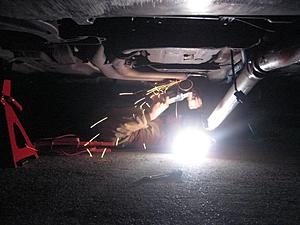
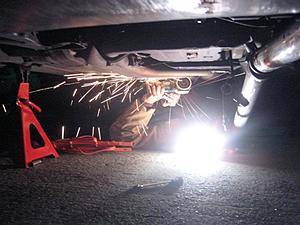
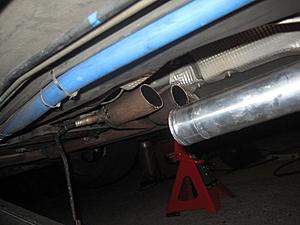
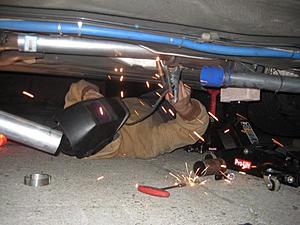
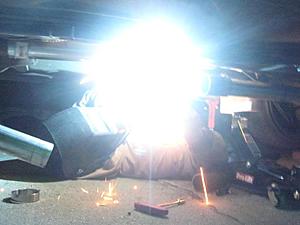
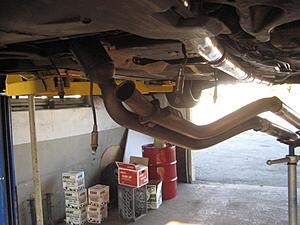
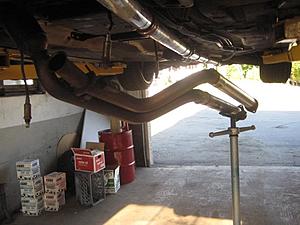
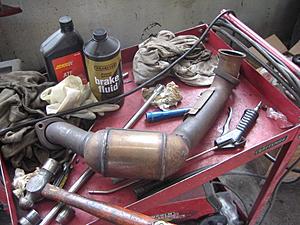
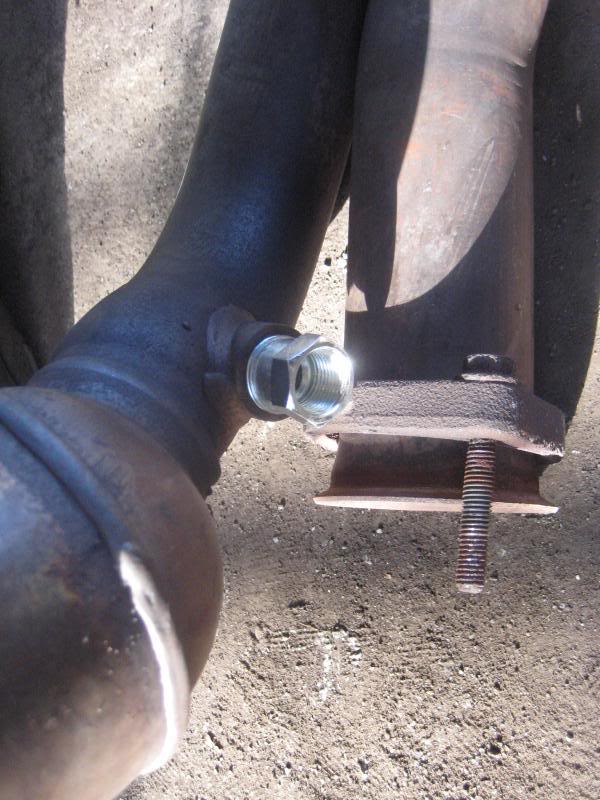
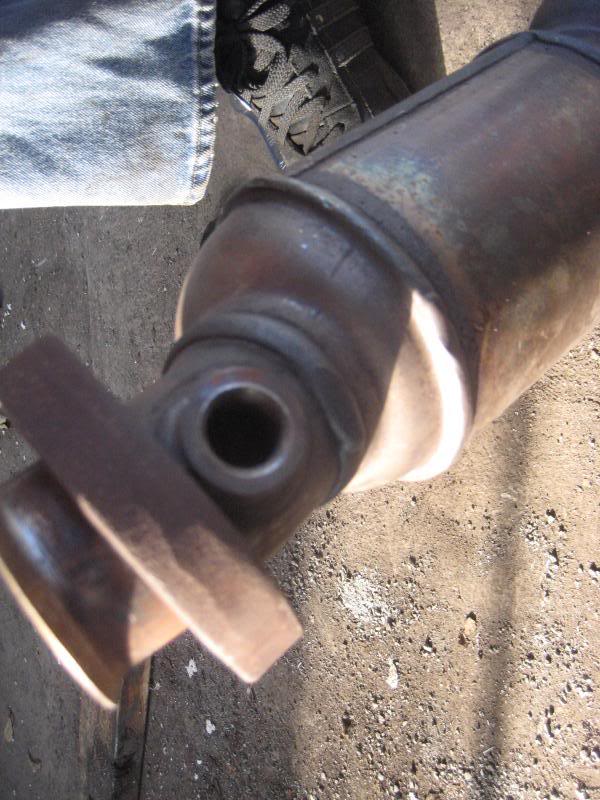
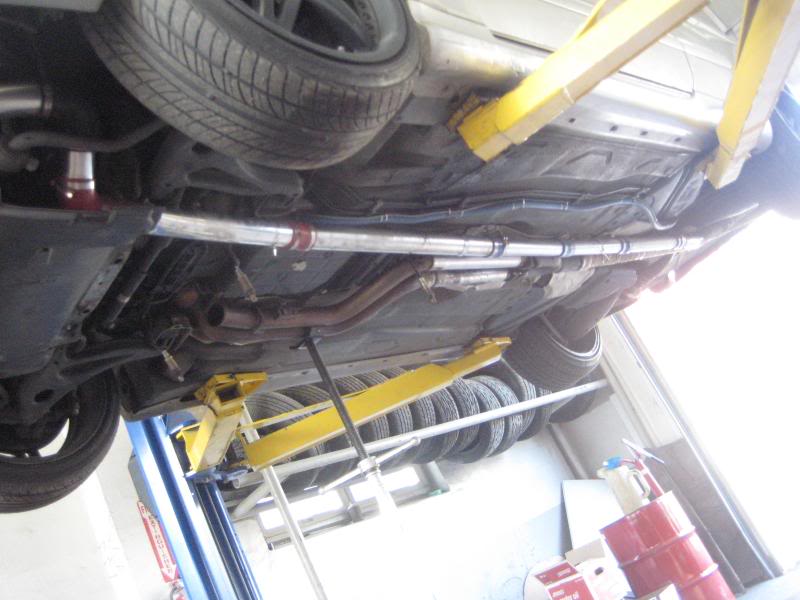
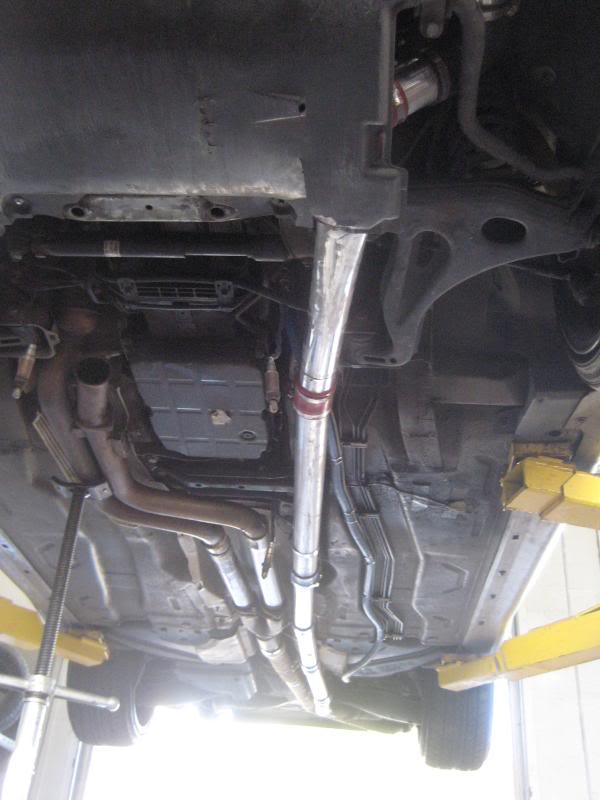
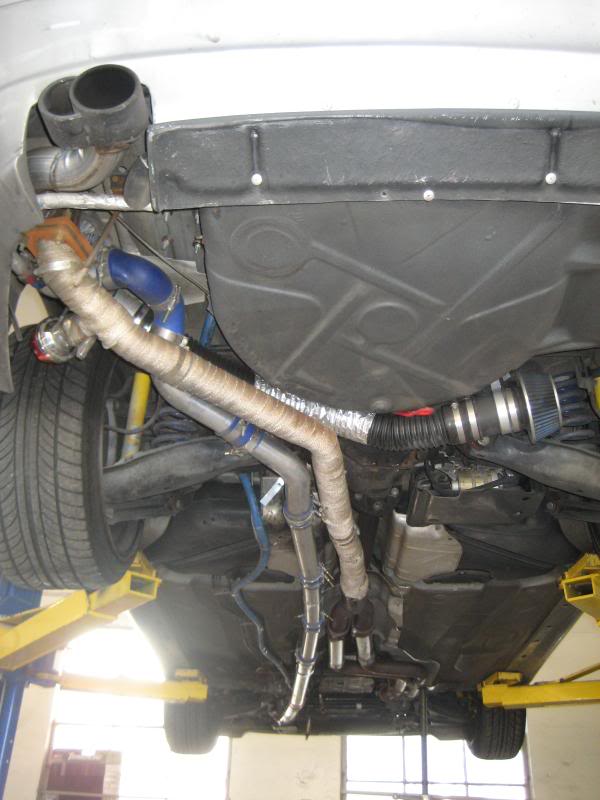
left u guys outa the loop with sum pictures....sum pics of choppin off the main cats and replacing them with straight pipes and then a week or so later gutting out the pre cats.....i have no check engine lights by just using these things called sparkplug nonfoulers that u can pick up at most auto chain stores....just gota drill a hole in em and then screw em into the O2 sensor hole and then screw the O2 sensor into them (gotta drill the hole so the O2 sensor can fit through the end of it)......it sounds mean as hell without any cats and pretty much full straight pipe.....no cats, no resonator, no muffler...just the turbo at the end.......as some may or may not know...the bad news is it still hasnt solved the problem and max said the only thing it can be then is a bad turbo ...so when i get some time... we're gunna swap turbos and go from there...hopefully thatll get me boostin where im supposed to be....
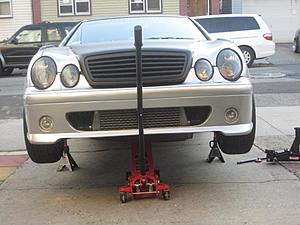
heres some pics of the cat removal, cat guttin and some random pics of the full setup once i got to finally see it actually up on a lift...
The silver thing is the sparkplug nonfouler:
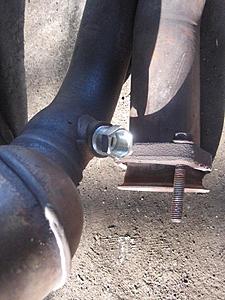
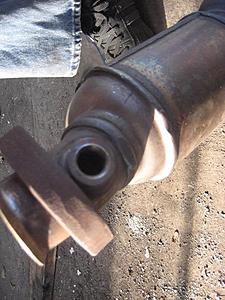
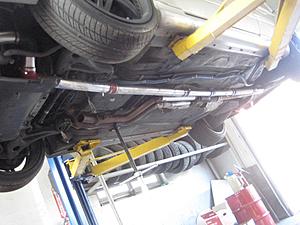
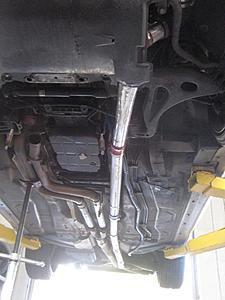
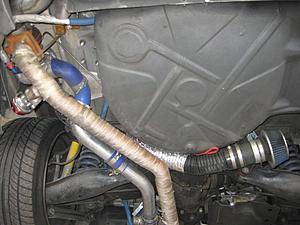
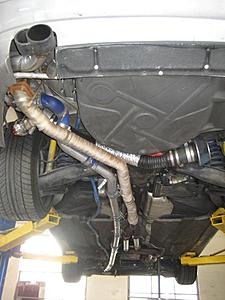
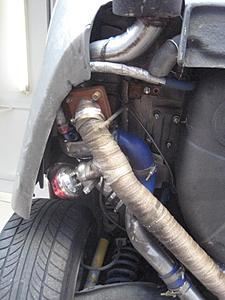
heres some pics of the cat removal, cat guttin and some random pics of the full setup once i got to finally see it actually up on a lift...


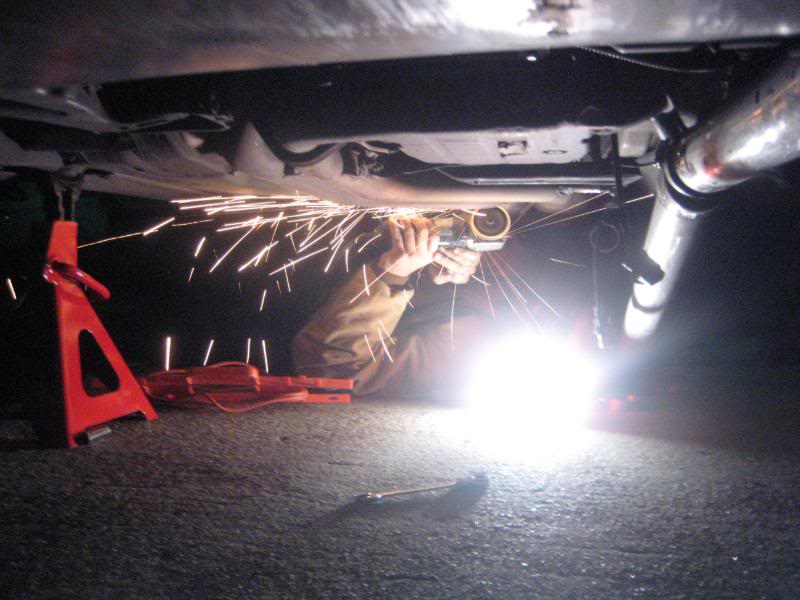
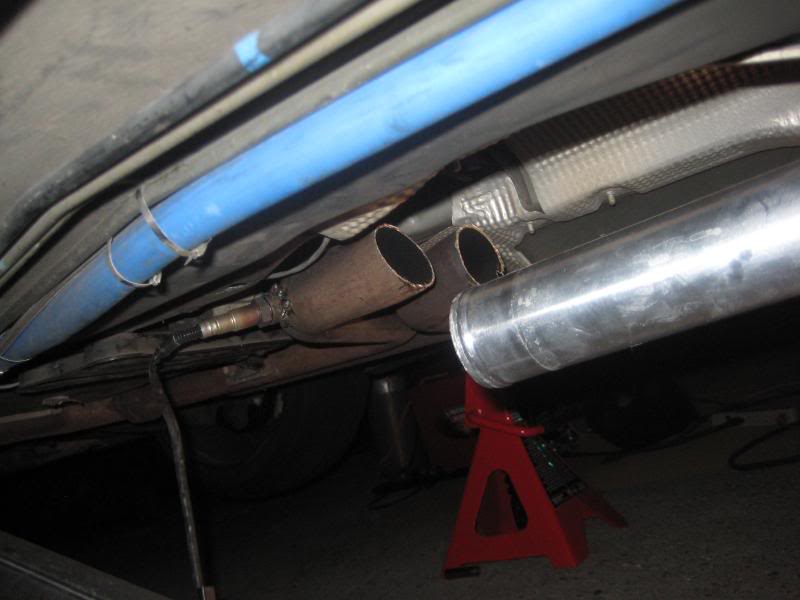

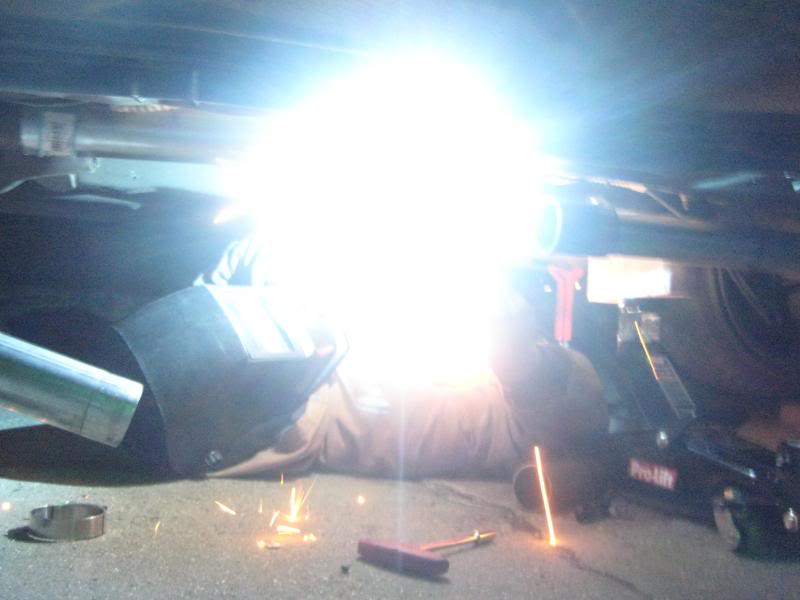
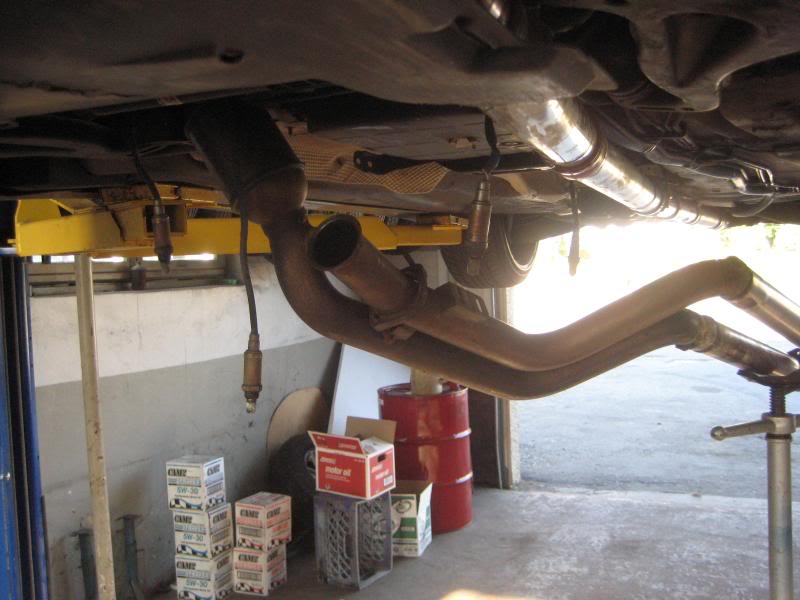

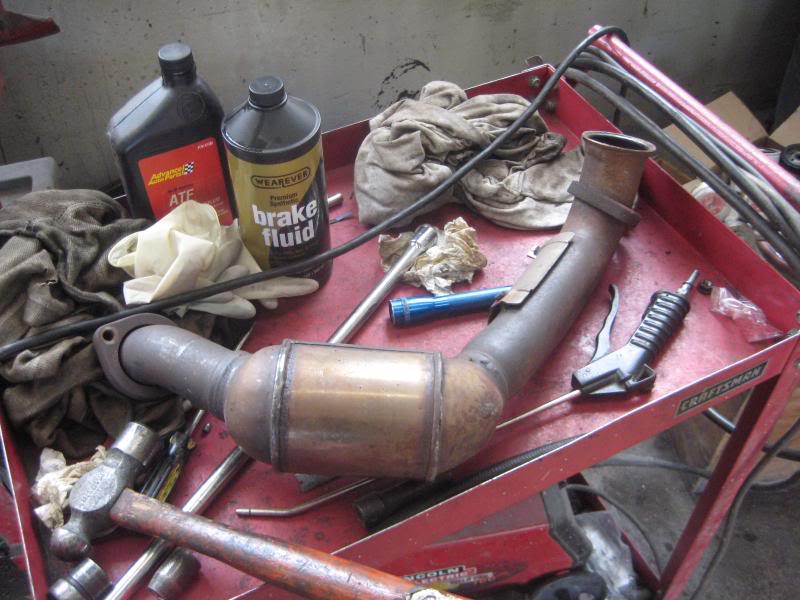
The silver thing is the sparkplug nonfouler:


MBWorld Fanatic!


Joined: Apr 2005
Posts: 3,784
Likes: 84
From: SCV SoCal
2002 CLK430
A guy by the name of Corky Bell wrote a book entitled Max Boost. These are a couple of quotes
Clearly, performance of the turbine is in part determined by the temperature of the exhaust gasses. It is reasonable, then, to expend some effort toward getting the exhaust gas from the combustion chamber to the turbine with the least possible temperature loss.
And
Exhaust manifold design is one of the keys to high power output, and the two-turbo layout inherently offers superior manifold design. The heat loss of the cross tube in V-style engines can be considerable. Remember, it is in part this heat that powers the turbine.
By the time it reaches that rear mounted turbo, the exhaust loses a lot of heat. The rear half of your exhaust is wrapped. You might want to look into using header wrap in the front half of the exhaust as well.
The only company I know of that successfully ran a pipe a long way to their turbo was Porsche with the 951. The engine was a cross flow inline four with the turbo mounted on the intake side.
Clearly, performance of the turbine is in part determined by the temperature of the exhaust gasses. It is reasonable, then, to expend some effort toward getting the exhaust gas from the combustion chamber to the turbine with the least possible temperature loss.
And
Exhaust manifold design is one of the keys to high power output, and the two-turbo layout inherently offers superior manifold design. The heat loss of the cross tube in V-style engines can be considerable. Remember, it is in part this heat that powers the turbine.
By the time it reaches that rear mounted turbo, the exhaust loses a lot of heat. The rear half of your exhaust is wrapped. You might want to look into using header wrap in the front half of the exhaust as well.
The only company I know of that successfully ran a pipe a long way to their turbo was Porsche with the 951. The engine was a cross flow inline four with the turbo mounted on the intake side.


Member
Joined: Jul 2009
Posts: 223
Likes: 0
From: California
03 CLK 500
Hello guys,
since there has been few w208 owner that have went the turbo route on the clk, maybe you guys can direct me on my thought of getting a single turbo installed.
I have w209 03 CLK500 and highly considering going the turbo route (t3 and only running no more the 6-8 psi). My question is what would I need to upgrade on my CLK500 for my 500 to handle the turbo? And what would I actually need?
Thank you guys
since there has been few w208 owner that have went the turbo route on the clk, maybe you guys can direct me on my thought of getting a single turbo installed.
I have w209 03 CLK500 and highly considering going the turbo route (t3 and only running no more the 6-8 psi). My question is what would I need to upgrade on my CLK500 for my 500 to handle the turbo? And what would I actually need?
Thank you guys
Last edited by riarm; Oct 27, 2009 at 04:53 PM.
MBWorld Fanatic!
Joined: Feb 2007
Posts: 1,398
Likes: 1
From: Los Angeles
2000 CLK 3.2
A guy by the name of Corky Bell wrote a book entitled Max Boost. These are a couple of quotes
Clearly, performance of the turbine is in part determined by the temperature of the exhaust gasses. It is reasonable, then, to expend some effort toward getting the exhaust gas from the combustion chamber to the turbine with the least possible temperature loss.
And
Exhaust manifold design is one of the keys to high power output, and the two-turbo layout inherently offers superior manifold design. The heat loss of the cross tube in V-style engines can be considerable. Remember, it is in part this heat that powers the turbine.
By the time it reaches that rear mounted turbo, the exhaust loses a lot of heat. The rear half of your exhaust is wrapped. You might want to look into using header wrap in the front half of the exhaust as well.
The only company I know of that successfully ran a pipe a long way to their turbo was Porsche with the 951. The engine was a cross flow inline four with the turbo mounted on the intake side.
Clearly, performance of the turbine is in part determined by the temperature of the exhaust gasses. It is reasonable, then, to expend some effort toward getting the exhaust gas from the combustion chamber to the turbine with the least possible temperature loss.
And
Exhaust manifold design is one of the keys to high power output, and the two-turbo layout inherently offers superior manifold design. The heat loss of the cross tube in V-style engines can be considerable. Remember, it is in part this heat that powers the turbine.
By the time it reaches that rear mounted turbo, the exhaust loses a lot of heat. The rear half of your exhaust is wrapped. You might want to look into using header wrap in the front half of the exhaust as well.
The only company I know of that successfully ran a pipe a long way to their turbo was Porsche with the 951. The engine was a cross flow inline four with the turbo mounted on the intake side.
The rear mounted turbo set up is not a new thing that Max has made up and Porsche is not the only company that has had success with this type of set up.
Here is one video example of an install with success with dyno numbers as well. There are many examples of this type of set up by STS if you check out the videos that come up with this one after viewing it.
2 Guys Garage single rear mount turbo install ( good one to watch in it's entirety )
http://www.youtube.com/watch?v=xnFA9...rom=PL&index=6
STS Rear Mount Turbo Corvette with narration
http://www.youtube.com/watch?v=rtkpL...72F8AB&index=0
Last edited by CLK FAN; Oct 28, 2009 at 01:59 AM.


