



Under Hood Temps

Thread Starter
Banned
Joined: Aug 2007
Posts: 2,735
Likes: 1
CLK 63 Black Series, 2009 S550, 2011 Range Rover Supercharged, BMW F800 GS Anniv Edition
Under Hood Temps
After reading about "Dads" C63 vented hood...it got me wondering if we could do something similar to allow for better heat dissipation with the Black Series. Take a look at the following photo. You can clearly see that the inside of my hood right under the vent is becoming discolored from excessive heat. Now, going back to Dad's hood...where he installed vents...we already have a vent, but the vent only opens into the engine bay on the sides...you can see from the picture that the underside of the hood is a solid piece that allows no heat from the motor to escape.
I'm wondering if there is a way to remove the hood, cut the underside to expose the vents and then reroute the windshield washer tubes that go to the jets ?? Seems like an easy to way to use the existing hood vent to allow for heat to escape - cause clearly (from the discoloration of my hood) there is a LOT of heat in that area of the motor that has nowhere to go but back and down through the transmission tunnel.
I've also been toying with the idea of adding some ducts a la the SL65 Black Series hood but I'm not sure I want to do that to my car and make it look like something it's not...even though it would be a very functional mod. I'm all about modding, but it has to be functional yet retain the OEM look. So, I'm leaning towards modifying the underside of the hood to open up the existing hood vent. What do you guys think ? And yes, I've been a bit bored lately
Edit - I forgot to mention...When I used to have a 993; all the guys I spoke to who knew the 993 inside and out....said it was best to remove the large plastic tray under the engine because it trapped heat inside the engine bay. We also have a similar black plastic tray under out motors...I wonder if removing it would help out with temps....but there's also the possibility of something hitting the oil pan and that would be no bueno....
I'm wondering if there is a way to remove the hood, cut the underside to expose the vents and then reroute the windshield washer tubes that go to the jets ?? Seems like an easy to way to use the existing hood vent to allow for heat to escape - cause clearly (from the discoloration of my hood) there is a LOT of heat in that area of the motor that has nowhere to go but back and down through the transmission tunnel.
I've also been toying with the idea of adding some ducts a la the SL65 Black Series hood but I'm not sure I want to do that to my car and make it look like something it's not...even though it would be a very functional mod. I'm all about modding, but it has to be functional yet retain the OEM look. So, I'm leaning towards modifying the underside of the hood to open up the existing hood vent. What do you guys think ? And yes, I've been a bit bored lately
Edit - I forgot to mention...When I used to have a 993; all the guys I spoke to who knew the 993 inside and out....said it was best to remove the large plastic tray under the engine because it trapped heat inside the engine bay. We also have a similar black plastic tray under out motors...I wonder if removing it would help out with temps....but there's also the possibility of something hitting the oil pan and that would be no bueno....
Last edited by LZH; Dec 9, 2010 at 06:23 PM.

MBWorld Fanatic!
Joined: Feb 2004
Posts: 2,566
Likes: 7
'14 ML BT
The bigger worry is the effect on aerodynamics, aren't there a couple of vents that direct ground level air up into the engine bay?
While it may be minor, you'd hate to lose some down force on a high speed track turn and from what I read, you guys in Cali have a few of those type turns. Not that many here in TX, especially since TMS is closed to guys like us after the death earlier this year.

MBWorld Fanatic!
Joined: Jan 2008
Posts: 6,621
Likes: 55
From: Naperville, IL/Chicago
2008 CLK63 Black Series 2012 C63 Black Series 2014 SLS Black Series
Luke, I pondered this same thought a while back, although I had a slightly different approach and idea to address the heat issus. I found out that I could lower the under hood temps by about 25 degrees by removing the black fiber insulation mat affixed to the inside of the hood. A few strategically placed adhesive backed cheap thermometers from cooking store and you can condut your own experiment. Obviously that fiber mat is there to protect your hoods paint from those blistering temps. There is a paint avaiable that will do the same thing as the mat but not insulate inward, in theory it should reflect the heat away from the hood surface protecting the automotive finishon the outside but will not insulate the engine bay and hold heat in like that mat is doing. The paint is a flourine-carbon paint, esentially the same stuff they paint the inside of self cleaning ovens with. Maybe I will finally test it out to see how it works. Here's a link to the paint I found and have been wondering about trying.
http://www.alibaba.com/product-gs/27...eflection.html
http://www.alibaba.com/product-gs/27...eflection.html

Senior Member

Joined: Nov 2002
Posts: 381
Likes: 0
CLK63 Black Series
Hi Jim,
Just a thought about that paint. If it reflects the heat away from the underside of the hood and the exterior factory paint on the outside of the hood, doesn't it seem that the only place that the reflected heat can go is to be reflected back toward the engine compartment? If that is true, it seems as though the result would be even higher engine compartment temperatures. That can't be a good thing.
JDB
Just a thought about that paint. If it reflects the heat away from the underside of the hood and the exterior factory paint on the outside of the hood, doesn't it seem that the only place that the reflected heat can go is to be reflected back toward the engine compartment? If that is true, it seems as though the result would be even higher engine compartment temperatures. That can't be a good thing.
JDB
MBWorld Fanatic!
Joined: Jan 2008
Posts: 6,621
Likes: 55
From: Naperville, IL/Chicago
2008 CLK63 Black Series 2012 C63 Black Series 2014 SLS Black Series
Hi Jim,
Just a thought about that paint. If it reflects the heat away from the underside of the hood and the exterior factory paint on the outside of the hood, doesn't it seem that the only place that the reflected heat can go is to be reflected back toward the engine compartment? If that is true, it seems as though the result would be even higher engine compartment temperatures. That can't be a good thing.
JDB
Just a thought about that paint. If it reflects the heat away from the underside of the hood and the exterior factory paint on the outside of the hood, doesn't it seem that the only place that the reflected heat can go is to be reflected back toward the engine compartment? If that is true, it seems as though the result would be even higher engine compartment temperatures. That can't be a good thing.
JDB
Maybe I will give this a shot and then do some tests, howver I suspect the ideal way to conduct this kind of experiment would be with a complex temperature monitoring system which could be monitored via laptop while the car is being driven in various conditions. I'm pretty sure our computers pull timing when intake temps get too high, so this may be a fix or the few degrees (20 to 30) we are talking about may not be enough to make a difference. It would be nice to know bt could be a lot of work for minimal gains.
Thread Starter
Banned
Joined: Aug 2007
Posts: 2,735
Likes: 1
CLK 63 Black Series, 2009 S550, 2011 Range Rover Supercharged, BMW F800 GS Anniv Edition
that's a good idea as well, Jim. I'll look into that paint...I too thought about removing the black heat insulating material, but then I know the underside of my hood would get toasted brown like the pic I posted above. I really think opening up that underside of the hood below the vent would allow for a TON of heat to escape as it's at the back of the hood and airflow would naturally push it out when the car is rolling. Water ingress is an issue to consider, but I think the negative effects would be minimal and I also live in a somewhat dry climate.
I think I'm gonna take my car this week over to Beverly Coachcraft and have Peter take a look at modifying the underside of the vent. I'll post his thoughts and let you guys know what progress (if any) I make.
I think I'm gonna take my car this week over to Beverly Coachcraft and have Peter take a look at modifying the underside of the vent. I'll post his thoughts and let you guys know what progress (if any) I make.
Senior Member
Joined: Nov 2002
Posts: 381
Likes: 0
CLK63 Black Series
Jim,
For checking underhood temperatures, do they still sell those temperature sensitive stickers? I know they were available about 40 years ago to the racing community to allow checking of temperature conditions. They would change colors if specific temperature ranges were reached.
Might be just the ticket for your research.
JDB
For checking underhood temperatures, do they still sell those temperature sensitive stickers? I know they were available about 40 years ago to the racing community to allow checking of temperature conditions. They would change colors if specific temperature ranges were reached.
Might be just the ticket for your research.
JDB
Trending Topics
MBWorld Fanatic!
Joined: Jan 2008
Posts: 6,621
Likes: 55
From: Naperville, IL/Chicago
2008 CLK63 Black Series 2012 C63 Black Series 2014 SLS Black Series
Jim,
For checking underhood temperatures, do they still sell those temperature sensitive stickers? I know they were available about 40 years ago to the racing community to allow checking of temperature conditions. They would change colors if specific temperature ranges were reached.
Might be just the ticket for your research.
JDB
For checking underhood temperatures, do they still sell those temperature sensitive stickers? I know they were available about 40 years ago to the racing community to allow checking of temperature conditions. They would change colors if specific temperature ranges were reached.
Might be just the ticket for your research.
JDB
MB World Stories
The Best of Mercedes & AMG

Manual Mercedes? 6 Times Sindelfingen Let Drivers Have All The Fun
Verdad Gallardo
Mercedes SLR McLaren 722 S Is Extremely Rare Example Modified by McLaren
Verdad Gallardo
8 Classic Boxy Mercedes Designs That Have Aged Like Fine Wine
Verdad Gallardo
Flawlessly Restored Mercedes 190E Evo II Heads to Auction
Verdad Gallardo
Electric Mercedes C-Class Unveiled: 11 Things You Need to Know
Verdad Gallardo
Mercedes EQS Gets A Major Update: Everything You Need to Know
Verdad Gallardo
5 Underrated Mercedes-Benz Models That Don't Get the Love They Deserve
Verdad Gallardo
Mercedes 300D Has Pushed Well Past 1 Million Miles and It Ain't Stopping
Verdad Gallardo
10 Most Reliable Mercedes-Benz Models You Can Buy Used
Verdad Gallardo
Senior Member
Joined: Nov 2002
Posts: 381
Likes: 0
CLK63 Black Series
Jim,
Here's a link for some that will record up to 500 F.
http://www.palmerwahl.com/pdfs/TempP...TempPlates.pdf
Would that get the job done for you?
I just Google'd temperature indicating stickers.
JDB
Here's a link for some that will record up to 500 F.
http://www.palmerwahl.com/pdfs/TempP...TempPlates.pdf
Would that get the job done for you?
I just Google'd temperature indicating stickers.
JDB

Junior Member
Joined: Jun 2008
Posts: 50
Likes: 0
From: santa barbara
clk 63 black series
I've been concerned about our high engine temps also & have considered the 180 degree thermostat that MHP's been selling. Anyone tried one of these? He claims 15 - 25 degree F drops in engine temps.

Thread Starter
Banned
Joined: Aug 2007
Posts: 2,735
Likes: 1
CLK 63 Black Series, 2009 S550, 2011 Range Rover Supercharged, BMW F800 GS Anniv Edition
I've also thought about running those thermenolator (or whatever they're called) gaskets and the 180 Tstat...Anyone have any experience with these...are the gaskets the same thing as a phenolic gaskets ?

MBWorld Fanatic!


Joined: Mar 2008
Posts: 1,068
Likes: 21
CLK63 Black Series
Luke, I took my BMC filters out today for cleaning, and while they were drying in the sun, I looked under the hood for some better airflow solutions. If the car is stationary, unless you go with a louvered hood, their is really nothing you can do for better airflow. However, I found one thing that will help to extract some hot air out of the engine compartment quicker.
Between the condenser for air condition/radiator, and the cross member where the hood locks into, there is a gasket. As far as I can tell, it is fastened to the cross member by 3 screws. Taking it out shouldn't be too difficult and is worth a try. By removing this piece, air will now flow over the heads and intake and out the hood vent towards the windshield. I can think of only one draw back, that it might create some wind sound at higher speed. Anyway, I think it's worth a try.
Between the condenser for air condition/radiator, and the cross member where the hood locks into, there is a gasket. As far as I can tell, it is fastened to the cross member by 3 screws. Taking it out shouldn't be too difficult and is worth a try. By removing this piece, air will now flow over the heads and intake and out the hood vent towards the windshield. I can think of only one draw back, that it might create some wind sound at higher speed. Anyway, I think it's worth a try.
Thread Starter
Banned
Joined: Aug 2007
Posts: 2,735
Likes: 1
CLK 63 Black Series, 2009 S550, 2011 Range Rover Supercharged, BMW F800 GS Anniv Edition
Nice find Sascha, I'll take a look at it. It sounds like that would create some nice cross flow/ventilation, but the underside of the louvers in the hood still needs to be modified/opened up for heat to escape. As it is in stock form, those louvers in the hood only open up outside the engine bay on the far left and right sides.
Thread Starter
Banned
Joined: Aug 2007
Posts: 2,735
Likes: 1
CLK 63 Black Series, 2009 S550, 2011 Range Rover Supercharged, BMW F800 GS Anniv Edition
No, but it does develop some very high underhood temps that most likely cause the motor to pull timing in hot climates, thus reducing power.
I'm simply looking into ways of mitigating this and increasing airflow as well as helping the motor dissipate heat better.
I'm simply looking into ways of mitigating this and increasing airflow as well as helping the motor dissipate heat better.

Member
Joined: Dec 2010
Posts: 149
Likes: 0
From: W Coast & E Europe
08 E63, 07 RS4, 04 GT3, 10 LR4, 02 Pajero
Thanks for the clarification. Trying to learn as much as I can about this model.
Thread Starter
Banned
Joined: Aug 2007
Posts: 2,735
Likes: 1
CLK 63 Black Series, 2009 S550, 2011 Range Rover Supercharged, BMW F800 GS Anniv Edition
Luke, I took my BMC filters out today for cleaning, and while they were drying in the sun, I looked under the hood for some better airflow solutions. If the car is stationary, unless you go with a louvered hood, their is really nothing you can do for better airflow. However, I found one thing that will help to extract some hot air out of the engine compartment quicker.
Between the condenser for air condition/radiator, and the cross member where the hood locks into, there is a gasket. As far as I can tell, it is fastened to the cross member by 3 screws. Taking it out shouldn't be too difficult and is worth a try. By removing this piece, air will now flow over the heads and intake and out the hood vent towards the windshield. I can think of only one draw back, that it might create some wind sound at higher speed. Anyway, I think it's worth a try.
Between the condenser for air condition/radiator, and the cross member where the hood locks into, there is a gasket. As far as I can tell, it is fastened to the cross member by 3 screws. Taking it out shouldn't be too difficult and is worth a try. By removing this piece, air will now flow over the heads and intake and out the hood vent towards the windshield. I can think of only one draw back, that it might create some wind sound at higher speed. Anyway, I think it's worth a try.

MBWorld Fanatic!
Joined: Jan 2008
Posts: 6,621
Likes: 55
From: Naperville, IL/Chicago
2008 CLK63 Black Series 2012 C63 Black Series 2014 SLS Black Series
Luke, to answer your question regarding if phenolics and Thermalnators are the same? They both should acheive the same goal but they are both made out of different materials. Phenolic is a complex high pressure sandwhich of paper type fibers and a fabrics as where the thermalnators are made out of some type of plastic resin, looked like a nylon or delryn but looks like it could also be a urythane based material. Urythane is an olyfin and olyfins are poor at disapating heat so I doubt it is urythane.
This is not an Andy or MHP bashing post, like I said he stood behind the Tstat, I just wanted to let you guys know about my experiences with these two products.
Last edited by jrcart; Dec 15, 2010 at 01:47 PM.

MBWorld Fanatic!
Joined: Feb 2003
Posts: 5,983
Likes: 21
From: Vegas and Vancouver, BC
.
Are both of the bumper louvers venting something on the BS? On our C63, the passenger side bumper vent is for the oil cooler, while the driver side one is fake (blocked off). I was thinking of removing the plastic block to allow additional airflow into the engine compartment.
Junior Member
Joined: Jun 2008
Posts: 50
Likes: 0
From: santa barbara
clk 63 black series
I had the the MHP thermalnators installed for about 18 months, they seemd to deteriorate rather quickly, I had my intake removed for some additional mods last winter and they(thermalnators) were not able to be salvaged or re-used/re-installed, they became very brittle and almost dry rotted looking, I guess that is the best way to describe what happened. Now I am trying out the evosport phenolic spacers. As for MHP Tstat, I had issues with that as well, This past spring it stuck and failed caused me to over heat and became non-functional. I spoke with Andy and he did stand behind his TStat, he offered me a new one at no charge but I passed on the offer, I did not notice any difference in temps between the stock Tstat and the MHP unit, I ran the stock unit all summer and will continue to run the stock unit. I'm not saying that the Tstat did not work as described, just saying there were no noticible gains/advantages in performance or with under hood temps or water/coolant temps.
Luke, to answer your question regarding if phenolics and Thermalnators are the same? They both should acheive the same goal but they are both made out of different materials. Phenolic is a complex high pressure sandwhich of paper type fibers and a fabrics as where the thermalnators are made out of some type of plastic resin, looked like a nylon or delryn but looks like it could also be a urythane based material. Urythane is an olyfin and olyfins are poor at disapating heat so I doubt it is urythane.
This is not an Andy or MHP bashing post, like I said he stood behind the Tstat, I just wanted to let you guys know about my experiences with these two products.
Luke, to answer your question regarding if phenolics and Thermalnators are the same? They both should acheive the same goal but they are both made out of different materials. Phenolic is a complex high pressure sandwhich of paper type fibers and a fabrics as where the thermalnators are made out of some type of plastic resin, looked like a nylon or delryn but looks like it could also be a urythane based material. Urythane is an olyfin and olyfins are poor at disapating heat so I doubt it is urythane.
This is not an Andy or MHP bashing post, like I said he stood behind the Tstat, I just wanted to let you guys know about my experiences with these two products.

Senior Member
Joined: Sep 2007
Posts: 348
Likes: 0
From: Houston, TX
2012 ML350 Bluetec
I have this under development and the preliminary mold for a carbon vented hood has been approved. I will still need to test fit the hood. It is based on the sl65 bs hood, but our cars are black series cars, so I have no qualms about mimicking the design. I'm actually quite excited to see the end result painted.
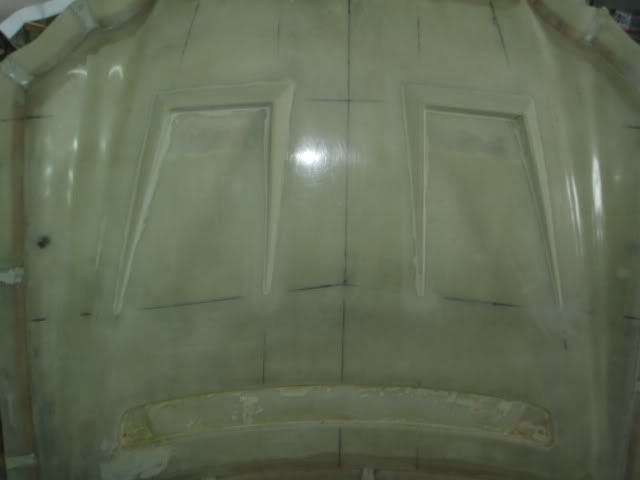
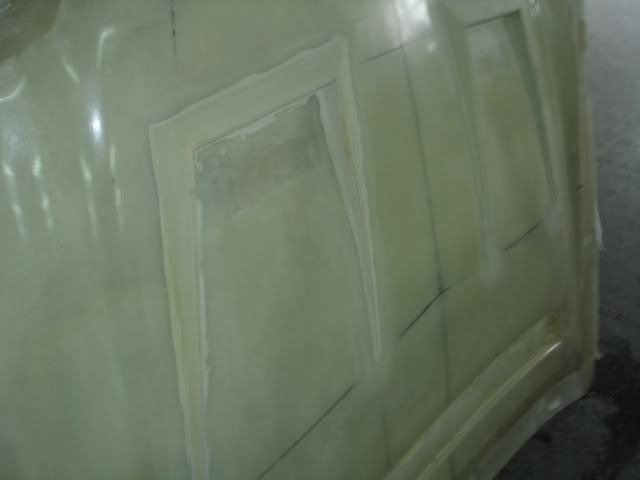
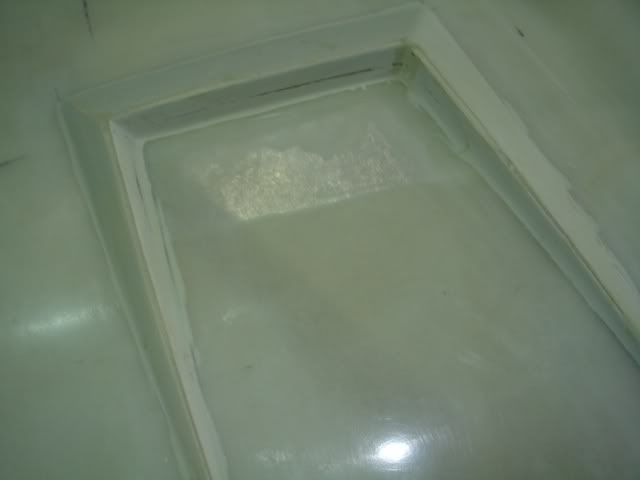
After reading about "Dads" C63 vented hood...it got me wondering if we could do something similar to allow for better heat dissipation with the Black Series. Take a look at the following photo. You can clearly see that the inside of my hood right under the vent is becoming discolored from excessive heat. Now, going back to Dad's hood...where he installed vents...we already have a vent, but the vent only opens into the engine bay on the sides...you can see from the picture that the underside of the hood is a solid piece that allows no heat from the motor to escape.
I'm wondering if there is a way to remove the hood, cut the underside to expose the vents and then reroute the windshield washer tubes that go to the jets ?? Seems like an easy to way to use the existing hood vent to allow for heat to escape - cause clearly (from the discoloration of my hood) there is a LOT of heat in that area of the motor that has nowhere to go but back and down through the transmission tunnel.
I've also been toying with the idea of adding some ducts a la the SL65 Black Series hood but I'm not sure I want to do that to my car and make it look like something it's not...even though it would be a very functional mod. I'm all about modding, but it has to be functional yet retain the OEM look. So, I'm leaning towards modifying the underside of the hood to open up the existing hood vent. What do you guys think ? And yes, I've been a bit bored lately
Edit - I forgot to mention...When I used to have a 993; all the guys I spoke to who knew the 993 inside and out....said it was best to remove the large plastic tray under the engine because it trapped heat inside the engine bay. We also have a similar black plastic tray under out motors...I wonder if removing it would help out with temps....but there's also the possibility of something hitting the oil pan and that would be no bueno....
I'm wondering if there is a way to remove the hood, cut the underside to expose the vents and then reroute the windshield washer tubes that go to the jets ?? Seems like an easy to way to use the existing hood vent to allow for heat to escape - cause clearly (from the discoloration of my hood) there is a LOT of heat in that area of the motor that has nowhere to go but back and down through the transmission tunnel.
I've also been toying with the idea of adding some ducts a la the SL65 Black Series hood but I'm not sure I want to do that to my car and make it look like something it's not...even though it would be a very functional mod. I'm all about modding, but it has to be functional yet retain the OEM look. So, I'm leaning towards modifying the underside of the hood to open up the existing hood vent. What do you guys think ? And yes, I've been a bit bored lately
Edit - I forgot to mention...When I used to have a 993; all the guys I spoke to who knew the 993 inside and out....said it was best to remove the large plastic tray under the engine because it trapped heat inside the engine bay. We also have a similar black plastic tray under out motors...I wonder if removing it would help out with temps....but there's also the possibility of something hitting the oil pan and that would be no bueno....
MBWorld Fanatic!
Joined: Jan 2008
Posts: 6,621
Likes: 55
From: Naperville, IL/Chicago
2008 CLK63 Black Series 2012 C63 Black Series 2014 SLS Black Series
Very nice, lines look clean. I assume it will be functional venting? Is that going to be a one off custom our are you going to be selling them? I might be interested once I can see how one looks painted and installed.
Senior Member
Joined: Sep 2007
Posts: 348
Likes: 0
From: Houston, TX
2012 ML350 Bluetec
I sent the fabricator a hood around christmas time, and was doing the hood as a custom project. In terms of function, I am assuming that the underhood temps will be lowered. I spent quite a bit of time calculating the vent sizes and positions comparing them to the sl65 black series hood, but I have in no way done scientific tests on the hood to measure aerodynamics. The temperature change will have to be tested once the hood is installed. I'm hoping that it does have a functional benefit in addition to looking good. If you want more details about the hood just shoot me a pm.
Last edited by wonsuk_utmb; Feb 17, 2011 at 03:25 PM.
MBWorld Fanatic!
Joined: Jan 2008
Posts: 6,621
Likes: 55
From: Naperville, IL/Chicago
2008 CLK63 Black Series 2012 C63 Black Series 2014 SLS Black Series
I sent the fabricator a hood around christmas time, and was doing the hood as a custom project. In terms of function, I am assuming that the underhood temps will be lowered. I spent quite a bit of time calculating the vent sizes and positions comparing them to the sl65 black series hood, but I have in no way done scientific tests on the hood to measure aerodynamics. The temperature change will have to be tested once the hood is installed. I'm hoping that it does have a functional benefit in addition to looking good. If you want more details about the hood just shoot me a pm.


