


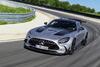

Tracking a '19 AMG GT-C

Thread Starter
Junior Member

Joined: Apr 2021
Posts: 55
Likes: 9
2019 AMG GT-C
Tracking a '19 AMG GT-C
hey guys, i recently purchased a 2019 AMG GT-C and I'm using it as a dual purpose GT/track car. I wanted to see what it would take to track the car maybe 6 times a year. Feel like it isn't that much of a step down from the GT-R and that it'd be able to handle the circuit.
Any advice is appreciated
Any advice is appreciated
hey guys, i recently purchased a 2019 AMG GT-C and I'm using it as a dual purpose GT/track car. I wanted to see what it would take to track the car maybe 6 times a year. Feel like it isn't that much of a step down from the GT-R and that it'd be able to handle the circuit.
Any advice is appreciated
Any advice is appreciated

The AMG GTC is somewhat more rewarding for road use, offering a more compliant ride and everyday usability, while the GTR provides a measurable advantage on the circuit due to its more focused chassis setup, aerodynamics, and calibration.
It is possible to enhance the GTC’s track performance through targeted modifications; however, doing so will inevitably come at the expense of comfort and will require significant financial investment—typically exceeding twice the original MSRP difference between the GTC and the GTR.
To offer you effective recommendations, can you please share the following?
1. Which circuits or track types do you plan to drive?
2. What is your current level of track experience, and with which cars?
3. Does your GTC have any existing modifications?
4. Is it equipped with a retractable or fixed rear wing?
5. What tires are you currently running, and what is their condition?
Sharing couple of pictures will be nice too.
Last edited by G. P; Nov 4, 2025 at 07:19 AM.
Thread Starter
Junior Member
Joined: Apr 2021
Posts: 55
Likes: 9
2019 AMG GT-C
hey G.
I planned for a dual purpose vehicle, the GT-R would've been great, but it was out of my budget to be frank - I'm not sure a 30-40% premium wouldve been worth it if the GT-C is about 85-90% of the car (correct me if im wrong).
I wanted to just be sure the car has proper cooling (should be similar to the GTR) as I already expect the brakes and tires to be upgraded. Suspension wise, the GTR is far superior, but that can be fixed with aftermarket coilovers.
1. I plan to run tracks like sebring, watkins glen, buttonwillow, big willow, etc.
2. I did time attack before with my C5 Z06 - had AP racing brakes, squared setup, reliability mods (cooling, pulleys, etc) - ran that car for 3 years - I currently also have an '06 S2000 - N/A, AP racing BBKs (had girodisc for a little but moved into AP because I love AP lol), Ohlins DFV long stroke coilovers, chassis tuned) - This is my all out car if I ever have the itch.
3. The GTC is bone stock - I don't plan to add mods just yet, maybe a better set of brake pads after i find the stock limit and tires ( not sure what size) also need to understand oiling here as I want to go slightly thicker (5w-40) for increased heat considerations.
4. The car has the stock retractable wing
5. The tires are stock OEM supplied
I'll share some pictures when I get it, it's currently being transported to me. I can't wait. It's in Solar Beam Yellow too!
I planned for a dual purpose vehicle, the GT-R would've been great, but it was out of my budget to be frank - I'm not sure a 30-40% premium wouldve been worth it if the GT-C is about 85-90% of the car (correct me if im wrong).
I wanted to just be sure the car has proper cooling (should be similar to the GTR) as I already expect the brakes and tires to be upgraded. Suspension wise, the GTR is far superior, but that can be fixed with aftermarket coilovers.
1. I plan to run tracks like sebring, watkins glen, buttonwillow, big willow, etc.
2. I did time attack before with my C5 Z06 - had AP racing brakes, squared setup, reliability mods (cooling, pulleys, etc) - ran that car for 3 years - I currently also have an '06 S2000 - N/A, AP racing BBKs (had girodisc for a little but moved into AP because I love AP lol), Ohlins DFV long stroke coilovers, chassis tuned) - This is my all out car if I ever have the itch.
3. The GTC is bone stock - I don't plan to add mods just yet, maybe a better set of brake pads after i find the stock limit and tires ( not sure what size) also need to understand oiling here as I want to go slightly thicker (5w-40) for increased heat considerations.
4. The car has the stock retractable wing
5. The tires are stock OEM supplied
I'll share some pictures when I get it, it's currently being transported to me. I can't wait. It's in Solar Beam Yellow too!
Last edited by 2gosu; Nov 4, 2025 at 11:41 AM.
hey G.
I planned for a dual purpose vehicle, the GT-R would've been great, but it was out of my budget to be frank - I'm not sure a 30-40% premium wouldve been worth it if the GT-C is about 85-90% of the car (correct me if im wrong).
I wanted to just be sure the car has proper cooling (should be similar to the GTR) as I already expect the brakes and tires to be upgraded. Suspension wise, the GTR is far superior, but that can be fixed with aftermarket coilovers.
1. I plan to run tracks like sebring, watkins glen, buttonwillow, big willow, etc.
2. I did time attack before with my C5 Z06 - had AP racing brakes, squared setup, reliability mods (cooling, pulleys, etc) - ran that car for 3 years - I currently also have an '06 S2000 - N/A, AP racing BBKs (had girodisc for a little but moved into AP because I love AP lol), Ohlins DFV long stroke coilovers, chassis tuned) - This is my all out car if I ever have the itch.
3. The GTC is bone stock - I don't plan to add mods just yet, maybe a better set of brake pads after i find the stock limit and tires ( not sure what size) also need to understand oiling here as I want to go slightly thicker (5w-40) for increased heat considerations.
4. The car has the stock retractable wing
5. The tires are stock OEM supplied
I'll share some pictures when I get it, it's currently being transported to me. I can't wait. It's in Solar Beam Yellow too!
I planned for a dual purpose vehicle, the GT-R would've been great, but it was out of my budget to be frank - I'm not sure a 30-40% premium wouldve been worth it if the GT-C is about 85-90% of the car (correct me if im wrong).
I wanted to just be sure the car has proper cooling (should be similar to the GTR) as I already expect the brakes and tires to be upgraded. Suspension wise, the GTR is far superior, but that can be fixed with aftermarket coilovers.
1. I plan to run tracks like sebring, watkins glen, buttonwillow, big willow, etc.
2. I did time attack before with my C5 Z06 - had AP racing brakes, squared setup, reliability mods (cooling, pulleys, etc) - ran that car for 3 years - I currently also have an '06 S2000 - N/A, AP racing BBKs (had girodisc for a little but moved into AP because I love AP lol), Ohlins DFV long stroke coilovers, chassis tuned) - This is my all out car if I ever have the itch.
3. The GTC is bone stock - I don't plan to add mods just yet, maybe a better set of brake pads after i find the stock limit and tires ( not sure what size) also need to understand oiling here as I want to go slightly thicker (5w-40) for increased heat considerations.
4. The car has the stock retractable wing
5. The tires are stock OEM supplied
I'll share some pictures when I get it, it's currently being transported to me. I can't wait. It's in Solar Beam Yellow too!
Having transitioned from a 2019 GTR to a 2020 GTC myself—a decision that, in hindsight, proved very sound—I previously prepared a detailed write-up outlining recommended GTC upgrades for dual street and track use. The document covers wheels, tires, rotors, pads, brake fluids, cooling ducts, aerodynamic enhancements, and tuning considerations
I’ll find it and make sure the content is still relevant, and post it a bit later.
Thread Starter
Junior Member
Joined: Apr 2021
Posts: 55
Likes: 9
2019 AMG GT-C
Nice! What was the reason behind the move? I was a little hesitant because of the infotainment on the '19 but I'm sure there's a way to get carplay and the like running; the car's character overrode that lol. How's tracking the GT-C any noticeable differences/similarities with the GT-R? Any insight is appreciated - I'd love to read the write up so please link it when you review it.
I'm also considering getting an extended warranty that's honored by Mercedes Benz - heard the '19s arent too finnicky, but the example I purchased is low mileage, so I don't think it'd hurt to have that piece of mind
I'm also considering getting an extended warranty that's honored by Mercedes Benz - heard the '19s arent too finnicky, but the example I purchased is low mileage, so I don't think it'd hurt to have that piece of mind
Last edited by 2gosu; Nov 4, 2025 at 01:24 PM.

SPONSOR


Joined: Apr 2021
Posts: 1,567
Likes: 475
From: Scottsdale, Arizona
2001 E55AMG
Trenton O. Gibson
tgibson@highline-autos.com
Highline Autos
Direct: 602.909.9216
Office: 480.348.0777
Trending Topics
Nice! What was the reason behind the move? I was a little hesitant because of the infotainment on the '19 but I'm sure there's a way to get carplay and the like running; the car's character overrode that lol. How's tracking the GT-C any noticeable differences/similarities with the GT-R? Any insight is appreciated - I'd love to read the write up so please link it when you review it.
I'm also considering getting an extended warranty that's honored by Mercedes Benz - heard the '19s arent too finnicky, but the example I purchased is low mileage, so I don't think it'd hurt to have that piece of mind
I'm also considering getting an extended warranty that's honored by Mercedes Benz - heard the '19s arent too finnicky, but the example I purchased is low mileage, so I don't think it'd hurt to have that piece of mind
MB World Stories
The Best of Mercedes & AMG

Manual Mercedes? 6 Times Sindelfingen Let Drivers Have All The Fun
Verdad Gallardo
Mercedes SLR McLaren 722 S Is Extremely Rare Example Modified by McLaren
Verdad Gallardo
8 Classic Boxy Mercedes Designs That Have Aged Like Fine Wine
Verdad Gallardo
Flawlessly Restored Mercedes 190E Evo II Heads to Auction
Verdad Gallardo
Electric Mercedes C-Class Unveiled: 11 Things You Need to Know
Verdad Gallardo
Mercedes EQS Gets A Major Update: Everything You Need to Know
Verdad Gallardo
5 Underrated Mercedes-Benz Models That Don't Get the Love They Deserve
Verdad Gallardo
Mercedes 300D Has Pushed Well Past 1 Million Miles and It Ain't Stopping
Verdad Gallardo
10 Most Reliable Mercedes-Benz Models You Can Buy Used
Verdad Gallardo
Junior Member
Joined: Feb 2025
Posts: 65
Likes: 15
I dont think theres anything out of ordinary for track prep, brakes pads/ fluids tires and you're pretty much all good to go. No real overheating or any starvation concerns. I just ran my GT R at buttonwillow (one of the tracks you mentioned) and honestly GT C might've felt better there as the GT R was way too stiff for that track and didn't handle the bumps well at all.
Here are the primary track-focused features that distinguish the AMG GTR from the GTC.
The GTR benefits from a significantly stiffer suspension setup and reinforced chassis, enabling sharper cornering response and improved agility in low- and mid-speed turns.
Its enhanced aerodynamic package—including a larger fixed rear wing, extended front splitter, and active underbody aero elements—allows for higher cornering speeds and improved stability at elevated velocities.
Additionally, the GTR’s wider front rims and tires, paired with track-oriented compound rubber, deliver superior mechanical grip and steering precision.
The adjustable rear wing can be configured for reduced drag on slower, grip-dependent circuits or increased downforce for high-speed stability on faster tracks.
Finally, the higher engine output provides an additional performance margin, particularly noticeable on longer straights and during acceleration out of corners.
While suspension modifications can narrow the gap between the two models, they come with substantial trade-offs in ride comfort and handling balance. Executing these changes correctly is technically demanding and often disrupts the car’s carefully tuned dynamics.
For that reason, enthusiasts seeking a truly track-optimized platform are better served starting with the GTR as a base.
Most other enhancements—such as aero or wheel and tire upgrades—are easier to apply to the GTC and have a relatively minor impact on street drivability.
My recommendations below are based on my experience with spirited driving a 2019 GTR and longer term 2020 GTC, daily on public roads, with 4-5 track days and additional 1-2 HPDE days a year, and includes information gathered from members of this forum on GTCs over the years. It’s just my opinion so don’t follow it 😊
Tires and Brakes
Tires and brakes are the two most critical components for both performance and safety in a high-output vehicle such as the AMG GT. Every aspect of grip, stability, and stopping power ultimately depends on them.
For optimal safety and performance, a two sets of wheels configuration is highly recommended: one set for public road use and another for track applications.
If maintaining two sets is not feasible, a compromise must be made. You will either use a road-biased setup that underperforms on track or a track setup that sacrifices daily drivability, comfort, and all-weather safety, where Track-oriented tires typically: a) perform poorly in wet conditions, b) generate more cabin noise and transmit greater vibration, c) have a shorter lifespan, and d) are unsafe below approximately 40°F (4°C) due to compound hardening.
For your public-road driving in warm climates, mild winters, or occasional rain, using the OEM rims, the most balanced options are:
Track Setup
When transitioning to the racetrack, tire choice becomes critical for both performance consistency and driver safety. While many brands claim superior grip or heat cycles, Michelin remains the benchmark for AMG GT models, with most variants developed specifically for Mercedes-AMG applications (MO and MO1 codes).
These tires offer predictable behavior at the limit—vital for confidence during high-load maneuvers.
For drivers still developing track proficiency, starting with summer street tires is acceptable. Once ready to push harder, upgrade to Michelin Pilot Sport Cup 2 (240) or the older Cup 2 (180) which is the OEM tire that comes with the GTR.
If using only one-wheel set (GTC OEM):
These are lighter, stronger, and specifically engineered for track duty.
OEM AMG GTR Forged Wheel Specifications:
Recommended Track Tires for GTR Forged Wheels:
Brakes
The OEM braking system on the AMG GTC is exceptional for both spirited street driving and occasional performance use.
However, several key upgrades can enhance braking consistency, reduce stopping distances, and improve driver confidence under track conditions.
Brake Cooling:
Proper brake cooling is absolutely critical for track use. The factory setup is marginal and often insufficient during extended high-temperature operation. As brake fluid temperatures rise, pedal travel increases and can lead to noticeable fade—a well-documented limitation in the GT series (with the possible exception of the GTR Pro).
The TIKT TGT-B-001 front cooling ducts are highly recommended. They channel a substantial volume of air into the center of the front rotors, dramatically improving heat evacuation.
When paired with Girodisc rotors, this system efficiently vents hot air from the rotor periphery, significantly reducing operating temperatures and thermal stress.
Rotors:
The Girodisc A1-123 front and A2-148 rear rotors are direct-fit replacements for the OEM discs. These rotors are slotted rather than drilled, providing superior structural integrity and thermal management. Their internal vane design features curved, directional channels that pull air through the center of the rotor more efficiently than the OEM’s honeycomb-style pin layout. When combined with proper cooling ducts, they maintain consistent performance throughout repeated heavy braking cycles.
Brake Pads:
Pairing the Girodisc rotors with PAGID RSL29 pads provides an ideal balance of street and track performance. The correct fitment for the GTC is shape #8238 for the front calipers and shape #8246 for the rears. These pads deliver excellent modulation, linear friction response, and fade resistance, with a consistent coefficient of friction between 0.41 and 0.45 from 100°C to 700°C.
They are street-drivable, durable, and compatible with the factory wear sensors.
For dedicated track applications, Girodisc GP20 or GP40 pads offer higher bite and heat tolerance, though they are considerably more aggressive and unsuitable for casual road use.
Brake Fluid:
To prevent pedal fade under extreme thermal load, high-quality brake fluid is essential. Two top-performing options are:
Overall, this combination—optimized cooling, Girodisc rotors, PAGID pads, and high-temperature fluid—transforms the GTC braking system into a setup that performs consistently and safely under demanding track conditions while remaining manageable for street use.
(I will follow shortly with Aerodynamics and Tuning info)
The GTR benefits from a significantly stiffer suspension setup and reinforced chassis, enabling sharper cornering response and improved agility in low- and mid-speed turns.
Its enhanced aerodynamic package—including a larger fixed rear wing, extended front splitter, and active underbody aero elements—allows for higher cornering speeds and improved stability at elevated velocities.
Additionally, the GTR’s wider front rims and tires, paired with track-oriented compound rubber, deliver superior mechanical grip and steering precision.
The adjustable rear wing can be configured for reduced drag on slower, grip-dependent circuits or increased downforce for high-speed stability on faster tracks.
Finally, the higher engine output provides an additional performance margin, particularly noticeable on longer straights and during acceleration out of corners.
While suspension modifications can narrow the gap between the two models, they come with substantial trade-offs in ride comfort and handling balance. Executing these changes correctly is technically demanding and often disrupts the car’s carefully tuned dynamics.
For that reason, enthusiasts seeking a truly track-optimized platform are better served starting with the GTR as a base.
Most other enhancements—such as aero or wheel and tire upgrades—are easier to apply to the GTC and have a relatively minor impact on street drivability.
My recommendations below are based on my experience with spirited driving a 2019 GTR and longer term 2020 GTC, daily on public roads, with 4-5 track days and additional 1-2 HPDE days a year, and includes information gathered from members of this forum on GTCs over the years. It’s just my opinion so don’t follow it 😊
Tires and Brakes
Tires and brakes are the two most critical components for both performance and safety in a high-output vehicle such as the AMG GT. Every aspect of grip, stability, and stopping power ultimately depends on them.
For optimal safety and performance, a two sets of wheels configuration is highly recommended: one set for public road use and another for track applications.
If maintaining two sets is not feasible, a compromise must be made. You will either use a road-biased setup that underperforms on track or a track setup that sacrifices daily drivability, comfort, and all-weather safety, where Track-oriented tires typically: a) perform poorly in wet conditions, b) generate more cabin noise and transmit greater vibration, c) have a shorter lifespan, and d) are unsafe below approximately 40°F (4°C) due to compound hardening.
For your public-road driving in warm climates, mild winters, or occasional rain, using the OEM rims, the most balanced options are:
- Michelin Pilot Super Sport (is the OEM came with your GTC)
- Front: 265/35ZR19 (98Y) MO
- Rear: 305/30ZR20 (103Y) MO
- Optional rear upgrade: 335/30ZR20 (108Y) NO, for enhanced stance and grip.
- Michelin Pilot Sport 4S, an excellent alternative,
- Front: 265/35ZR19 (98Y) MO1
- Rear: 305/30ZR20 (103Y).
Track Setup
When transitioning to the racetrack, tire choice becomes critical for both performance consistency and driver safety. While many brands claim superior grip or heat cycles, Michelin remains the benchmark for AMG GT models, with most variants developed specifically for Mercedes-AMG applications (MO and MO1 codes).
These tires offer predictable behavior at the limit—vital for confidence during high-load maneuvers.
For drivers still developing track proficiency, starting with summer street tires is acceptable. Once ready to push harder, upgrade to Michelin Pilot Sport Cup 2 (240) or the older Cup 2 (180) which is the OEM tire that comes with the GTR.
If using only one-wheel set (GTC OEM):
- Front: 265/35ZR19 (98Y) MO1 Cup 2 (180), or 275/35ZR19 (100Y) MO CUP 2(180)
- Rear: 325/30ZR20 (106Y) MO (Cup 2 (180)),
; narrower tires than 325 will not seat properly on the 12” rear rims.
These are lighter, stronger, and specifically engineered for track duty.
OEM AMG GTR Forged Wheel Specifications:
- Front: A190 401 13 00 — 10Jx19 ET56
- Rear: A190 401 14 00 — 12Jx20 ET52
Recommended Track Tires for GTR Forged Wheels:
- Front: Michelin Pilot Sport Cup 2 (240) 275/35ZR19 (100Y)
- Rear: Michelin Pilot Sport Cup 2 (240) 345/30ZR20 (106Y)
Brakes
The OEM braking system on the AMG GTC is exceptional for both spirited street driving and occasional performance use.
However, several key upgrades can enhance braking consistency, reduce stopping distances, and improve driver confidence under track conditions.
Brake Cooling:
Proper brake cooling is absolutely critical for track use. The factory setup is marginal and often insufficient during extended high-temperature operation. As brake fluid temperatures rise, pedal travel increases and can lead to noticeable fade—a well-documented limitation in the GT series (with the possible exception of the GTR Pro).
The TIKT TGT-B-001 front cooling ducts are highly recommended. They channel a substantial volume of air into the center of the front rotors, dramatically improving heat evacuation.
When paired with Girodisc rotors, this system efficiently vents hot air from the rotor periphery, significantly reducing operating temperatures and thermal stress.
Rotors:
The Girodisc A1-123 front and A2-148 rear rotors are direct-fit replacements for the OEM discs. These rotors are slotted rather than drilled, providing superior structural integrity and thermal management. Their internal vane design features curved, directional channels that pull air through the center of the rotor more efficiently than the OEM’s honeycomb-style pin layout. When combined with proper cooling ducts, they maintain consistent performance throughout repeated heavy braking cycles.
Brake Pads:
Pairing the Girodisc rotors with PAGID RSL29 pads provides an ideal balance of street and track performance. The correct fitment for the GTC is shape #8238 for the front calipers and shape #8246 for the rears. These pads deliver excellent modulation, linear friction response, and fade resistance, with a consistent coefficient of friction between 0.41 and 0.45 from 100°C to 700°C.
They are street-drivable, durable, and compatible with the factory wear sensors.
For dedicated track applications, Girodisc GP20 or GP40 pads offer higher bite and heat tolerance, though they are considerably more aggressive and unsuitable for casual road use.
Brake Fluid:
To prevent pedal fade under extreme thermal load, high-quality brake fluid is essential. Two top-performing options are:
- Castrol React SRF: Wet boiling point 518°F / Dry 608°F — ideal for drivers alternating between track and street use due to its stability and longevity.
- Torque RT700: Wet 439°F / Dry 683°F — slightly better dry temp for the first track sessions, though it requires more frequent changes due to the average wet temp .
Overall, this combination—optimized cooling, Girodisc rotors, PAGID pads, and high-temperature fluid—transforms the GTC braking system into a setup that performs consistently and safely under demanding track conditions while remaining manageable for street use.
(I will follow shortly with Aerodynamics and Tuning info)
Thread Starter
Junior Member
Joined: Apr 2021
Posts: 55
Likes: 9
2019 AMG GT-C
Interesting, did you set up the GTR for buttonwillow? I know the GTC has more compliant suspension; wonder if you could adjust the GTR to mimic it. do you think they'd both be similar speed wise or times? What kind of lap times were you putting down?
Thread Starter
Junior Member
Joined: Apr 2021
Posts: 55
Likes: 9
2019 AMG GT-C
Here are the primary track-focused features that distinguish the AMG GTR from the GTC.
The GTR benefits from a significantly stiffer suspension setup and reinforced chassis, enabling sharper cornering response and improved agility in low- and mid-speed turns.
Its enhanced aerodynamic package—including a larger fixed rear wing, extended front splitter, and active underbody aero elements—allows for higher cornering speeds and improved stability at elevated velocities.
Additionally, the GTR’s wider front rims and tires, paired with track-oriented compound rubber, deliver superior mechanical grip and steering precision.
The adjustable rear wing can be configured for reduced drag on slower, grip-dependent circuits or increased downforce for high-speed stability on faster tracks.
Finally, the higher engine output provides an additional performance margin, particularly noticeable on longer straights and during acceleration out of corners.
While suspension modifications can narrow the gap between the two models, they come with substantial trade-offs in ride comfort and handling balance. Executing these changes correctly is technically demanding and often disrupts the car’s carefully tuned dynamics.
For that reason, enthusiasts seeking a truly track-optimized platform are better served starting with the GTR as a base.
Most other enhancements—such as aero or wheel and tire upgrades—are easier to apply to the GTC and have a relatively minor impact on street drivability.
My recommendations below are based on my experience with spirited driving a 2019 GTR and longer term 2020 GTC, daily on public roads, with 4-5 track days and additional 1-2 HPDE days a year, and includes information gathered from members of this forum on GTCs over the years. It’s just my opinion so don’t follow it 😊
Tires and Brakes
Tires and brakes are the two most critical components for both performance and safety in a high-output vehicle such as the AMG GT. Every aspect of grip, stability, and stopping power ultimately depends on them.
For optimal safety and performance, a two sets of wheels configuration is highly recommended: one set for public road use and another for track applications.
If maintaining two sets is not feasible, a compromise must be made. You will either use a road-biased setup that underperforms on track or a track setup that sacrifices daily drivability, comfort, and all-weather safety, where Track-oriented tires typically: a) perform poorly in wet conditions, b) generate more cabin noise and transmit greater vibration, c) have a shorter lifespan, and d) are unsafe below approximately 40°F (4°C) due to compound hardening.
For your public-road driving in warm climates, mild winters, or occasional rain, using the OEM rims, the most balanced options are:
Track Setup
When transitioning to the racetrack, tire choice becomes critical for both performance consistency and driver safety. While many brands claim superior grip or heat cycles, Michelin remains the benchmark for AMG GT models, with most variants developed specifically for Mercedes-AMG applications (MO and MO1 codes).
These tires offer predictable behavior at the limit—vital for confidence during high-load maneuvers.
For drivers still developing track proficiency, starting with summer street tires is acceptable. Once ready to push harder, upgrade to Michelin Pilot Sport Cup 2 (240) or the older Cup 2 (180) which is the OEM tire that comes with the GTR.
If using only one-wheel set (GTC OEM):
These are lighter, stronger, and specifically engineered for track duty.
OEM AMG GTR Forged Wheel Specifications:
Recommended Track Tires for GTR Forged Wheels:
Brakes
The OEM braking system on the AMG GTC is exceptional for both spirited street driving and occasional performance use.
However, several key upgrades can enhance braking consistency, reduce stopping distances, and improve driver confidence under track conditions.
Brake Cooling:
Proper brake cooling is absolutely critical for track use. The factory setup is marginal and often insufficient during extended high-temperature operation. As brake fluid temperatures rise, pedal travel increases and can lead to noticeable fade—a well-documented limitation in the GT series (with the possible exception of the GTR Pro).
The TIKT TGT-B-001 front cooling ducts are highly recommended. They channel a substantial volume of air into the center of the front rotors, dramatically improving heat evacuation.
When paired with Girodisc rotors, this system efficiently vents hot air from the rotor periphery, significantly reducing operating temperatures and thermal stress.
Rotors:
The Girodisc A1-123 front and A2-148 rear rotors are direct-fit replacements for the OEM discs. These rotors are slotted rather than drilled, providing superior structural integrity and thermal management. Their internal vane design features curved, directional channels that pull air through the center of the rotor more efficiently than the OEM’s honeycomb-style pin layout. When combined with proper cooling ducts, they maintain consistent performance throughout repeated heavy braking cycles.
Brake Pads:
Pairing the Girodisc rotors with PAGID RSL29 pads provides an ideal balance of street and track performance. The correct fitment for the GTC is shape #8238 for the front calipers and shape #8246 for the rears. These pads deliver excellent modulation, linear friction response, and fade resistance, with a consistent coefficient of friction between 0.41 and 0.45 from 100°C to 700°C.
They are street-drivable, durable, and compatible with the factory wear sensors.
For dedicated track applications, Girodisc GP20 or GP40 pads offer higher bite and heat tolerance, though they are considerably more aggressive and unsuitable for casual road use.
Brake Fluid:
To prevent pedal fade under extreme thermal load, high-quality brake fluid is essential. Two top-performing options are:
Overall, this combination—optimized cooling, Girodisc rotors, PAGID pads, and high-temperature fluid—transforms the GTC braking system into a setup that performs consistently and safely under demanding track conditions while remaining manageable for street use.
(I will follow shortly with Aerodynamics and Tuning info)
The GTR benefits from a significantly stiffer suspension setup and reinforced chassis, enabling sharper cornering response and improved agility in low- and mid-speed turns.
Its enhanced aerodynamic package—including a larger fixed rear wing, extended front splitter, and active underbody aero elements—allows for higher cornering speeds and improved stability at elevated velocities.
Additionally, the GTR’s wider front rims and tires, paired with track-oriented compound rubber, deliver superior mechanical grip and steering precision.
The adjustable rear wing can be configured for reduced drag on slower, grip-dependent circuits or increased downforce for high-speed stability on faster tracks.
Finally, the higher engine output provides an additional performance margin, particularly noticeable on longer straights and during acceleration out of corners.
While suspension modifications can narrow the gap between the two models, they come with substantial trade-offs in ride comfort and handling balance. Executing these changes correctly is technically demanding and often disrupts the car’s carefully tuned dynamics.
For that reason, enthusiasts seeking a truly track-optimized platform are better served starting with the GTR as a base.
Most other enhancements—such as aero or wheel and tire upgrades—are easier to apply to the GTC and have a relatively minor impact on street drivability.
My recommendations below are based on my experience with spirited driving a 2019 GTR and longer term 2020 GTC, daily on public roads, with 4-5 track days and additional 1-2 HPDE days a year, and includes information gathered from members of this forum on GTCs over the years. It’s just my opinion so don’t follow it 😊
Tires and Brakes
Tires and brakes are the two most critical components for both performance and safety in a high-output vehicle such as the AMG GT. Every aspect of grip, stability, and stopping power ultimately depends on them.
For optimal safety and performance, a two sets of wheels configuration is highly recommended: one set for public road use and another for track applications.
If maintaining two sets is not feasible, a compromise must be made. You will either use a road-biased setup that underperforms on track or a track setup that sacrifices daily drivability, comfort, and all-weather safety, where Track-oriented tires typically: a) perform poorly in wet conditions, b) generate more cabin noise and transmit greater vibration, c) have a shorter lifespan, and d) are unsafe below approximately 40°F (4°C) due to compound hardening.
For your public-road driving in warm climates, mild winters, or occasional rain, using the OEM rims, the most balanced options are:
- Michelin Pilot Super Sport (is the OEM came with your GTC)
- Front: 265/35ZR19 (98Y) MO
- Rear: 305/30ZR20 (103Y) MO
- Optional rear upgrade: 335/30ZR20 (108Y) NO, for enhanced stance and grip.
- Michelin Pilot Sport 4S, an excellent alternative,
- Front: 265/35ZR19 (98Y) MO1
- Rear: 305/30ZR20 (103Y).
Track Setup
When transitioning to the racetrack, tire choice becomes critical for both performance consistency and driver safety. While many brands claim superior grip or heat cycles, Michelin remains the benchmark for AMG GT models, with most variants developed specifically for Mercedes-AMG applications (MO and MO1 codes).
These tires offer predictable behavior at the limit—vital for confidence during high-load maneuvers.
For drivers still developing track proficiency, starting with summer street tires is acceptable. Once ready to push harder, upgrade to Michelin Pilot Sport Cup 2 (240) or the older Cup 2 (180) which is the OEM tire that comes with the GTR.
If using only one-wheel set (GTC OEM):
- Front: 265/35ZR19 (98Y) MO1 Cup 2 (180), or 275/35ZR19 (100Y) MO CUP 2(180)
- Rear: 325/30ZR20 (106Y) MO (Cup 2 (180)),
; narrower tires than 325 will not seat properly on the 12” rear rims.
These are lighter, stronger, and specifically engineered for track duty.
OEM AMG GTR Forged Wheel Specifications:
- Front: A190 401 13 00 — 10Jx19 ET56
- Rear: A190 401 14 00 — 12Jx20 ET52
Recommended Track Tires for GTR Forged Wheels:
- Front: Michelin Pilot Sport Cup 2 (240) 275/35ZR19 (100Y)
- Rear: Michelin Pilot Sport Cup 2 (240) 345/30ZR20 (106Y)
Brakes
The OEM braking system on the AMG GTC is exceptional for both spirited street driving and occasional performance use.
However, several key upgrades can enhance braking consistency, reduce stopping distances, and improve driver confidence under track conditions.
Brake Cooling:
Proper brake cooling is absolutely critical for track use. The factory setup is marginal and often insufficient during extended high-temperature operation. As brake fluid temperatures rise, pedal travel increases and can lead to noticeable fade—a well-documented limitation in the GT series (with the possible exception of the GTR Pro).
The TIKT TGT-B-001 front cooling ducts are highly recommended. They channel a substantial volume of air into the center of the front rotors, dramatically improving heat evacuation.
When paired with Girodisc rotors, this system efficiently vents hot air from the rotor periphery, significantly reducing operating temperatures and thermal stress.
Rotors:
The Girodisc A1-123 front and A2-148 rear rotors are direct-fit replacements for the OEM discs. These rotors are slotted rather than drilled, providing superior structural integrity and thermal management. Their internal vane design features curved, directional channels that pull air through the center of the rotor more efficiently than the OEM’s honeycomb-style pin layout. When combined with proper cooling ducts, they maintain consistent performance throughout repeated heavy braking cycles.
Brake Pads:
Pairing the Girodisc rotors with PAGID RSL29 pads provides an ideal balance of street and track performance. The correct fitment for the GTC is shape #8238 for the front calipers and shape #8246 for the rears. These pads deliver excellent modulation, linear friction response, and fade resistance, with a consistent coefficient of friction between 0.41 and 0.45 from 100°C to 700°C.
They are street-drivable, durable, and compatible with the factory wear sensors.
For dedicated track applications, Girodisc GP20 or GP40 pads offer higher bite and heat tolerance, though they are considerably more aggressive and unsuitable for casual road use.
Brake Fluid:
To prevent pedal fade under extreme thermal load, high-quality brake fluid is essential. Two top-performing options are:
- Castrol React SRF: Wet boiling point 518°F / Dry 608°F — ideal for drivers alternating between track and street use due to its stability and longevity.
- Torque RT700: Wet 439°F / Dry 683°F — slightly better dry temp for the first track sessions, though it requires more frequent changes due to the average wet temp .
Overall, this combination—optimized cooling, Girodisc rotors, PAGID pads, and high-temperature fluid—transforms the GTC braking system into a setup that performs consistently and safely under demanding track conditions while remaining manageable for street use.
(I will follow shortly with Aerodynamics and Tuning info)
Junior Member
Joined: Feb 2025
Posts: 65
Likes: 15
I put down a 1:54:04 (CRS V2) but I know the car can do way better, it was just my first time with the car there.
Last edited by leafyamg; Nov 5, 2025 at 10:42 AM.
Thread Starter
Junior Member
Joined: Apr 2021
Posts: 55
Likes: 9
2019 AMG GT-C
I did not, my car is pretty stock so not much to setup other than alignment, perhaps I could've tried to put the suspension in the softer mode to counter all the bumps but didn't try. I think laptimes will be close enough on similar tires.
I put down a 1:54:04 (CRS V2) but I know the car can do way better, it was just my first time with the car there.
I put down a 1:54:04 (CRS V2) but I know the car can do way better, it was just my first time with the car there.
Junior Member
Joined: Feb 2025
Posts: 65
Likes: 15
Yeah I've ran in a couple times in my Gen 5 viper before. No heatsoak issues, I just checked my front straight speeds and they were at most a couple mph off in the afternoon (but that could also be me being more timid). oil/gearbox temp were all good through out. I'm on RF650 fluid (and ceramics) and no issues there either. I do have the ansix brake ducts all around.
It's a good car IMO to just show up and drive, I have done most of the norcal tracks with this (just got the car this year), and haven't ran into any issues other than a coilpack failure which all of us have very long factory extended warranty on
It's a good car IMO to just show up and drive, I have done most of the norcal tracks with this (just got the car this year), and haven't ran into any issues other than a coilpack failure which all of us have very long factory extended warranty on
Thread Starter
Junior Member
Joined: Apr 2021
Posts: 55
Likes: 9
2019 AMG GT-C
Yeah I've ran in a couple times in my Gen 5 viper before. No heatsoak issues, I just checked my front straight speeds and they were at most a couple mph off in the afternoon (but that could also be me being more timid). oil/gearbox temp were all good through out. I'm on RF650 fluid (and ceramics) and no issues there either. I do have the ansix brake ducts all around.
It's a good car IMO to just show up and drive, I have done most of the norcal tracks with this (just got the car this year), and haven't ran into any issues other than a coilpack failure which all of us have very long factory extended warranty on
It's a good car IMO to just show up and drive, I have done most of the norcal tracks with this (just got the car this year), and haven't ran into any issues other than a coilpack failure which all of us have very long factory extended warranty on
Junior Member
Joined: Feb 2025
Posts: 65
Likes: 15
just whatever OEM uses, pretty sure its mobil1. I wouldnt get CCB kit unless your car already came with it, girodiscs are easy and reputable.
With these pads, I can confidently slow the car from 170 mph down to around 80 mph when braking late into a corner, with no fade at all. What’s even better is that they’re completely livable on the street — great cold bite, very progressive, and no annoying squeal (if ambient temp are over 60F
)For engine oil, any synthetic 5W-40 that meets MB 229.5 spec will do. The OEM part number is 000-989-79-02-19-BIFU. If you track the car occasionally, even with a tune at a moderate Stage 1 level (like a Renntech tune), I’d recommend changing the oil every 5,000 miles.
The GTC uses a transaxle setup, which combines the transmission and differential into one unit. It has two separate fluid compartments:
- The differential side uses MB 236.26 spec GL-5 gear oil.
- The dual-clutch transmission side uses MB 236.25 DCT-F3 fluid, which is specifically formulated for the wet clutches.
Both of these fluids are made by Shell and are the only ones Mercedes-Benz officially approves for the 7DCL750 transaxle.
You can use off-brand alternatives, but make sure they explicitly state compliance with MB 236.26 and MB 236.25. Personally,
I prefer sticking with OEM-approved fluids — it’s not worth taking chances with this particular system.
Even with some track use, the transaxle fluid only needs to be changed about every 30,000 miles.
Below are two links I found very helpful when servicing mine, covering both the fluid specs and the procedure in detail.
https://mbworld.org/forums/coupe-roa...e-caution.html
https://mbworld.org/forums/coupe-roa...ml#post9219224
I particularly like the stage matrix developed by GAD Motors in Germany. It serves as an excellent reference for understanding what supporting upgrades are recommended at each horsepower level, helping you plan modifications in a structured and reliable way.
At this point, though, the best advice is simple — take the car out and enjoy it.
https://www.gad-motors.de/50aqawgh9a...gtc%2Fgtr-m178
MBWorld Fanatic!

Joined: Dec 2013
Posts: 1,083
Likes: 508
*

Member
Joined: Feb 2025
Posts: 154
Likes: 27
From: Rome, Italy
AMG GTR 2021 (Euro version)
I completely agree with your assessment of the GTR’s price premium over the GTC, particularly when the primary use is public-road driving. It is clear that you have considerable racetrack experience, which is excellent—you will quickly discover just how capable the GTC is once you take it on track. Expect to return from each session with a smile.
Having transitioned from a 2019 GTR to a 2020 GTC myself—a decision that, in hindsight, proved very sound—I previously prepared a detailed write-up outlining recommended GTC upgrades for dual street and track use. The document covers wheels, tires, rotors, pads, brake fluids, cooling ducts, aerodynamic enhancements, and tuning considerations
I’ll find it and make sure the content is still relevant, and post it a bit later.
Having transitioned from a 2019 GTR to a 2020 GTC myself—a decision that, in hindsight, proved very sound—I previously prepared a detailed write-up outlining recommended GTC upgrades for dual street and track use. The document covers wheels, tires, rotors, pads, brake fluids, cooling ducts, aerodynamic enhancements, and tuning considerations
I’ll find it and make sure the content is still relevant, and post it a bit later.
For the same model year and simlar mileage, the price difference here in Europe is around 20-25k $, but from an aesthetic point of view, the GTR is much more appealing (fixed wing, front bumper, rear bumebr&diffuser with mufller triple exit etc..), not to mention the differences in terms of technical specifications and performance... Would it really be a bad choice to buy a GTR if driven 95% of time on road?

MBWorld Fanatic!

Joined: May 2008
Posts: 2,524
Likes: 1,007
From: Overland Park, KS
‘24 BMW iX M60
forgive me for shorty hijacking the discussion, but is a GTR really that inadvisable for road use (albeit driven very sporty, mainly on mountain roads and highways, no city), compared to a GTC?
For the same model year and simlar mileage, the price difference here in Europe is around 20-25k $, but from an aesthetic point of view, the GTR is much more appealing (fixed wing, front bumper, rear bumebr&diffuser with mufller triple exit etc..), not to mention the differences in terms of technical specifications and performance... Would it really be a bad choice to buy a GTR if driven 95% of time on road?
For the same model year and simlar mileage, the price difference here in Europe is around 20-25k $, but from an aesthetic point of view, the GTR is much more appealing (fixed wing, front bumper, rear bumebr&diffuser with mufller triple exit etc..), not to mention the differences in terms of technical specifications and performance... Would it really be a bad choice to buy a GTR if driven 95% of time on road?
MBWorld Fanatic!
Joined: May 2008
Posts: 2,524
Likes: 1,007
From: Overland Park, KS
‘24 BMW iX M60
AP Racing offers several components that fit the AMG GTC, and while I haven’t personally installed them on mine, I can confirm that switching to Pagid RSL29 pads made a huge difference compared to the OEM setup.
With these pads, I can confidently slow the car from 170 mph down to around 80 mph when braking late into a corner, with no fade at all. What’s even better is that they’re completely livable on the street — great cold bite, very progressive, and no annoying squeal (if ambient temp are over 60F)
For engine oil, any synthetic 5W-40 that meets MB 229.5 spec will do. The OEM part number is 000-989-79-02-19-BIFU. If you track the car occasionally, even with a tune at a moderate Stage 1 level (like a Renntech tune), I’d recommend changing the oil every 5,000 miles.
The GTC uses a transaxle setup, which combines the transmission and differential into one unit. It has two separate fluid compartments:
- The differential side uses MB 236.26 spec GL-5 gear oil.
- The dual-clutch transmission side uses MB 236.25 DCT-F3 fluid, which is specifically formulated for the wet clutches.
Both of these fluids are made by Shell and are the only ones Mercedes-Benz officially approves for the 7DCL750 transaxle.
You can use off-brand alternatives, but make sure they explicitly state compliance with MB 236.26 and MB 236.25. Personally,
I prefer sticking with OEM-approved fluids — it’s not worth taking chances with this particular system.
Even with some track use, the transaxle fluid only needs to be changed about every 30,000 miles.
Below are two links I found very helpful when servicing mine, covering both the fluid specs and the procedure in detail.
https://mbworld.org/forums/coupe-roa...e-caution.html
https://mbworld.org/forums/coupe-roa...ml#post9219224
With these pads, I can confidently slow the car from 170 mph down to around 80 mph when braking late into a corner, with no fade at all. What’s even better is that they’re completely livable on the street — great cold bite, very progressive, and no annoying squeal (if ambient temp are over 60F
)For engine oil, any synthetic 5W-40 that meets MB 229.5 spec will do. The OEM part number is 000-989-79-02-19-BIFU. If you track the car occasionally, even with a tune at a moderate Stage 1 level (like a Renntech tune), I’d recommend changing the oil every 5,000 miles.
The GTC uses a transaxle setup, which combines the transmission and differential into one unit. It has two separate fluid compartments:
- The differential side uses MB 236.26 spec GL-5 gear oil.
- The dual-clutch transmission side uses MB 236.25 DCT-F3 fluid, which is specifically formulated for the wet clutches.
Both of these fluids are made by Shell and are the only ones Mercedes-Benz officially approves for the 7DCL750 transaxle.
You can use off-brand alternatives, but make sure they explicitly state compliance with MB 236.26 and MB 236.25. Personally,
I prefer sticking with OEM-approved fluids — it’s not worth taking chances with this particular system.
Even with some track use, the transaxle fluid only needs to be changed about every 30,000 miles.
Below are two links I found very helpful when servicing mine, covering both the fluid specs and the procedure in detail.
https://mbworld.org/forums/coupe-roa...e-caution.html
https://mbworld.org/forums/coupe-roa...ml#post9219224
There are companies that make adapters so that you can make an AP Racing BBK fit the car, but iirc this is not recommended by AP Racing, and hence I would not chance it.
I just checked the AP Racing website and couldn’t find any BBKs designed for Mercedes.
Last edited by thebishman; Nov 5, 2025 at 05:45 PM.
With respect, that statement may not be true:
https://mbworld.org/forums/coupe-roa...wear-data.html
https://mbworld.org/forums/coupe-roa...wear-data.html
My point (as well as @leafyamg post) was specifically about how it fits with the OP’s current objectives and vehicle setup.
Please take a moment to read the entire thread to understand the OP’s context, what he is trying to achieve, and then substantiate—preferably with numerical justification or ROI analysis—how a CCB conversion would make sense in his case.
You may well be correct, but it needs to be demonstrated within that framework.
I'm here to learn too.
Last edited by G. P; Nov 5, 2025 at 09:35 PM.


