When you click on links to various merchants on this site and make a purchase, this can result in this site earning a commission. Affiliate programs and affiliations include, but are not limited to, the eBay Partner Network.
My Radar Detector gives me a voltage readout by default, which is a pretty good feature since it lets me know how my charging system is doing.
So, on my W211 I always had a reading of about 14.2 volts while in normal operation. I have a loaner car right now that is giving me 14.4 volts. My "new" 2010 W212 is only giving me a reading of about 12.4 volts in normal operation.
So, should I be concerned that I have a bad battery or a bad charging system? I just got my car last week CPO and want to make sure all is okay. Should a CPO vehicle not have a new battery?
It's part of the "blue efficiency" changes. The alternator doesnt charge at full voltage all the time. On cold start or if there is a very high electrical load (full fan, heated seats and rear demister) then it will charge at 14-14.6v. Once the battery has had it's initial charge and the electrical load is low it drops to 12.6v under idle and cruise. When you're coasting off throttle it goes back to 14-14.6v as it's "free energy". It saves a bit of fuel but all these small changes add up.
My Radar Detector gives me a voltage readout by default, which is a pretty good feature since it lets me know how my charging system is doing.
So, on my W211 I always had a reading of about 14.2 volts while in normal operation. I have a loaner car right now that is giving me 14.4 volts. My "new" 2010 W212 is only giving me a reading of about 12.4 volts in normal operation.
So, should I be concerned that I have a bad battery or a bad charging system? I just got my car last week CPO and want to make sure all is okay. Should a CPO vehicle not have a new battery?
Thanks!
Originally Posted by Ausmbtech
It's part of the "blue efficiency" changes. The alternator doesnt charge at full voltage all the time. On cold start or if there is a very high electrical load (full fan, heated seats and rear demister) then it will charge at 14-14.6v. Once the battery has had it's initial charge and the electrical load is low it drops to 12.6v under idle and cruise. When you're coasting off throttle it goes back to 14-14.6v as it's "free energy". It saves a bit of fuel but all these small changes add up.
I don't understand this answer. Maybe because I don't understand the "blue efficiency" jargon? If a battery is at 12.4V it is not fully charged so it should never read that with the motor on. It should be reading 14-14.6V because it should be in "charge" status. 12.4V is about 60% charged. I understand no charge when the battery is at 12.6V....or about 100% charged. I'm not arguing, please educate me.
They aren't conventional batteries on these newer vehicles. They are a "AGM" battery which can be charged in a very different way to a conventional battery. Basically the alternator is electronically controlled to charge the battery only as required or when it will use the least fuel possible (during overrun). All this adds up for about a 2-3% fuel saving which when combined with other fuel saving measures adds up to enough you'll notice it over the life of the car.
Actually, the batteries are fairly common. It is the alternator that is special. To save fuel the alternators, via and electronically controlled clutch, only cycle on when voltage dips below a certain preset level. I think MB was calling it "on-demand" charging or something catchy like that. I believe it is controlled by one of the rear control modules.
Thanks for the good feedback. My concern is that the battery was replaced in November of 2012, which is actually good since it means I shouldn't have to replace it for some time, except that I think it should have lasted much longer - right? I thought the main battery would last at least 4 to 5 years - no?
Thanks for the good feedback. My concern is that the battery was replaced in November of 2012, which is actually good since it means I shouldn't have to replace it for some time, except that I think it should have lasted much longer - right? I thought the main battery would last at least 4 to 5 years - no?
When I used to live in TX (College Station, not far from Houston), my batteries would last 2 to 3 years max. Most of my friends also had to replace their car's batteries every 2 to 3 years.
Batteries hate extreme hot and extreme cold weather. It greatly reduces their life.
Here in the cooler part of CA, most people see around 7 years out of their batteries if not more. My wife's current car is 7 years old and still on original battery.
Actually, the batteries are fairly common. It is the alternator that is special. To save fuel the alternators, via and electronically controlled clutch, only cycle on when voltage dips below a certain preset level. I think MB was calling it "on-demand" charging or something catchy like that. I believe it is controlled by one of the rear control modules.
Yes, and AGM battery is common and it's a lead/acid battery but with different internals (saturated glass mat instead of fluid for one thing). I don't think there's any "clutch" involved. The alternator is regulated by electronics to either be in charge mode...causing a draw on motor power...or not charge....causing no draw on power hence better mpg. I've been closely measuring my battery since I bought the car (used) to determine the battery health. I don't drive much and my initial measurement showed the battery at about 25% charge. So I charged it to 100%. After about 3 weeks of usage it dropped down to 25% again. The alternator was putting out about 14.5 volts so I'm wondering what's going on. Yesterday I took a road trip for 230 miles and started with 12.5 volts and expected the battery to be at 12.6 volts after the trip. Instead it dropped to 12.4 volts after the trip. ?? I've installed an easy hook up for a battery tender but now I'm wondering what good it is? Does anyone know what the charge parameters of the "smart" system are? I don't want to keep hooking up the trickle charge if I don't need to.
When I used to live in TX (College Station, not far from Houston), my batteries would last 2 to 3 years max. Most of my friends also had to replace their car's batteries every 2 to 3 years.
Batteries hate extreme hot and extreme cold weather. It greatly reduces their life.
Here in the cooler part of CA, most people see around 7 years out of their batteries if not more. My wife's current car is 7 years old and still on original battery.
That's it!!! I'm moving to California so I can get a few more years out of my battery.
It's part of the "blue efficiency" changes. The alternator doesnt charge at full voltage all the time. On cold start or if there is a very high electrical load (full fan, heated seats and rear demister) then it will charge at 14-14.6v. Once the battery has had it's initial charge and the electrical load is low it drops to 12.6v under idle and cruise. When you're coasting off throttle it goes back to 14-14.6v as it's "free energy". It saves a bit of fuel but all these small changes add up.
dear Sir, i know this post is old i do hope if you answered me, because I'm having a hard time diagnosing an issue with my car, i drive a 2010 E200 blue efficiency, when the car is idling with only headlights on the voltage is 13.5v, and idling without load its 12.6v but when i place full load max AC headlights fog lights etc.. the voltage starts to drop up to 12.8 volts and all the vehicle electronics are affected by this surge, my question is would the alternator or VR be suspected?
dear Sir, i know this post is old i do hope if you answered me, because I'm having a hard time diagnosing an issue with my car, i drive a 2010 E200 blue efficiency, when the car is idling with only headlights on the voltage is 13.5v, and idling without load its 12.6v but when i place full load max AC headlights fog lights etc.. the voltage starts to drop up to 12.8 volts and all the vehicle electronics are affected by this surge, my question is would the alternator or VR be suspected?
What do you mean " voltage drops up"?
Does it go up or down??? I am guessing down because AC uses a lot of Amps to run compressor clutch coil and fan, blower etc.
12.6V...12.8V is about a maintenance voltage, meaning at that voltage the battery is not gaining or loosing charge until it swings below 12.5V
As long as your battery voltage is between 12.6V and 14.9V while driving, the ECU is managing well the smart alternator output to meet demands.
Problem zone is below 12.4V while driving without any extra consumer load.
ECU has a way to get confused about battery condition when the (LIN-Bus) battery sensor output can not be captured. Then crazy ECU/Alternator drains the battery below 12V under 80Amps, then switches back to 14.9V 50Amp as soon as you coast down... battery abuse non-stop.
BTW: Idling rpm output regulation is always somewhat limited to prevent affecting engine load too much for traffic jam polution concerns.
What do you mean " voltage drops up"?
Does it go up or down??? I am guessing down because AC uses a lot of Amps to run compressor clutch coil and fan, blower etc.
12.6V...12.8V is about a maintenance voltage, meaning at that voltage the battery is not gaining or loosing charge until it swings below 12.5V
As long as your battery voltage is between 12.6V and 14.9V while driving, the ECU is managing well the smart alternator output to meet demands.
Problem zone is below 12.4V while driving without any extra consumer load.
ECU has a way to get confused about battery condition when the (LIN-Bus) battery sensor output can not be captured. Then crazy ECU/Alternator drains the battery below 12V under 80Amps, then switches back to 14.9V 50Amp as soon as you coast down... battery abuse non-stop.
BTW: Idling rpm output regulation is always somewhat limited to prevent affecting engine load too much for traffic jam polution concerns.
actually i found a document on the WIS about the charging mechanism, when i have the headlights turned on and AC blower set to maximum the battery voltage is supposed to be 14.3 v and mine is giving 12.8.
at idle 12.8V under heavy load is not bad at all. Understand the max alternator output power at idle is really limited by the low rpm, not the regulator.
Remove all the loads, drive around and see what you get at idle without load on a cold engine/battery (not super hot to reach thermal limitations measured by battery sensor on Neg. Term.)
at idle 12.8V under heavy load is not bad at all. Understand the max alternator output power at idle is really limited by the low rpm, not the regulator.
Remove all the loads, drive around and see what you get at idle without load on a cold engine/battery (not super hot to reach thermal limitations measured by battery sensor on Neg. Term.)
Do you use the IC Worskshop BATT display??
🤘
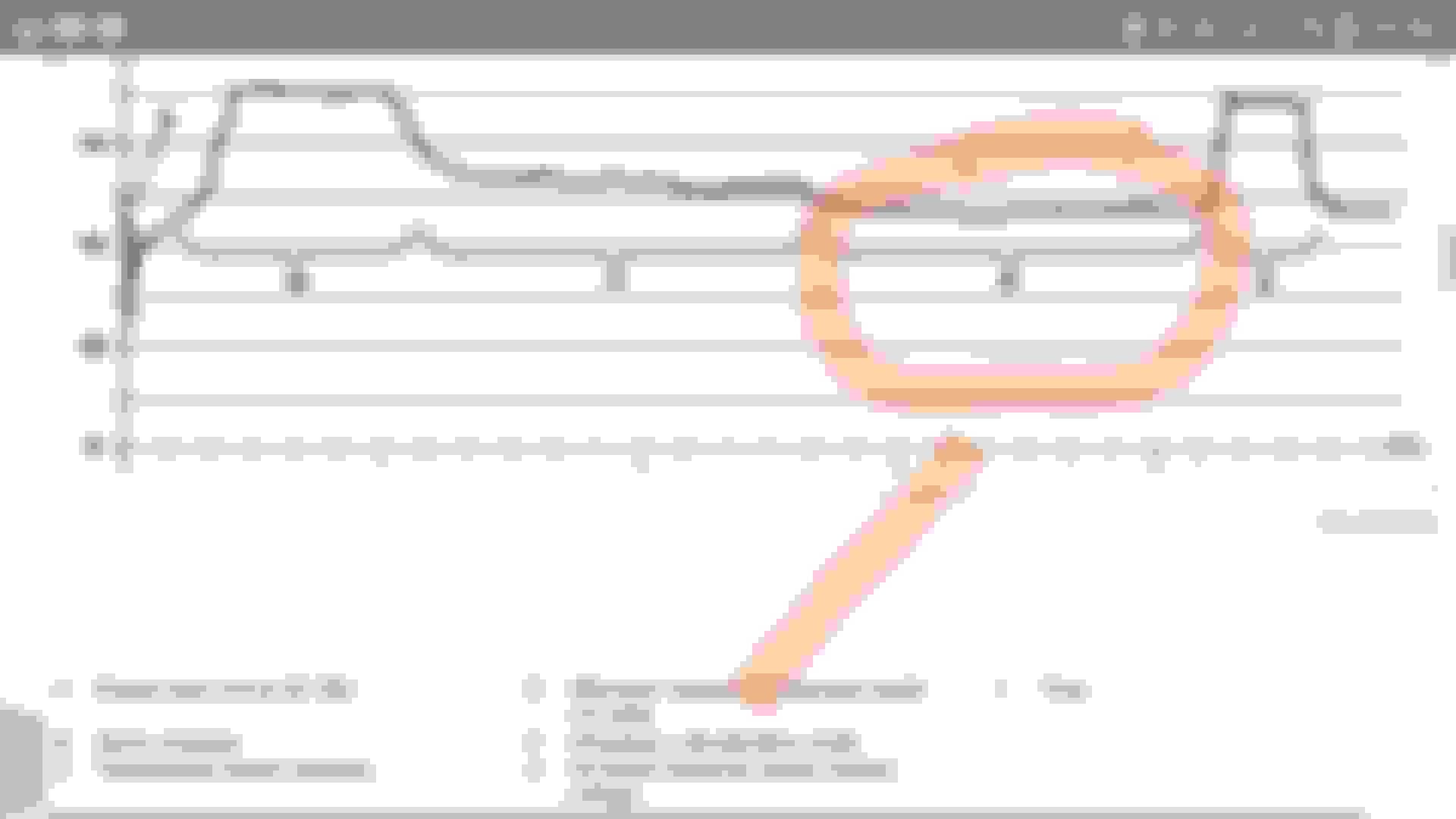
Dear sir if you check above these are the different battery voltage phases of the w212 except for model 212.095, with high blower setting the battery should be outputting 14.3v as stated by WIS but mine is outputting a range between 12.4 - 12.8 with high blower motor, and i am getting a low battery level fault in the rear SAM, i even turned off the battery management using the star C5 but still I'm getting these low voltages accompanied by flickering in vehicle electrics, i have checked all wiring and also checked the Engine all is Good, that leaves either the voltage regulator or the alternator. P.S : This voltage drop only appears after the engine has warmed up (30 mins of driving or so) which also indicate a charging system failure.
Based on the system doc you posted, after battery warm up charge the load detection is no longer taken into consideration to raise the alternator voltage to 14.3V as intended. Voltage control goes in uncontrolled loop.
Everything else seems fine as far ECU controlling the alternator to smart-charge the main AGM.
Scan your car to see how many faulted CAN modules are reported ? What DTC?
PS: have you tested the same heavy load condition *BEFORE* car is at operating temperature? There is a small chance the ECU is throttling OVERCHARGE of already HOT AGM !!
NOTE: in you document HEADLIGHTS:ON clearly pegs minimum voltage output at 13.5V regardless of other fancy smart calculations. I turn on my headlights as a FAILSAFE when my ECU control swings below 12.3v after 1 hour of driving.
Schematic:
The ECU reads status messages of LIN-Sensor of the main front AGM through the REAR-SAM on CAN-E2.
In order to read E2, ECU needs to go through a busy CAN Gateway (Chassis or Central). Unrelated modules gone crazy flood the networks with messages (RFK! W212-'14MY) disrupt signaling with high latencies queues. Thus the battery loop regulation goes off the rail after initial charge.
Based on the system doc you posted, after battery warm up charge the load detection is no longer taken into consideration to raise the alternator voltage to 14.3V as intended. Voltage control goes in uncontrolled loop.
Everything else seems fine as far ECU controlling the alternator to smart-charge the main AGM.
Scan your car to see how many faulted CAN modules are reported ? What DTC?
PS: have you tested the same heavy load condition *BEFORE* car is at operating temperature? There is a small chance the ECU is throttling OVERCHARGE of already HOT AGM !!
NOTE: in you document HEADLIGHTS:ON clearly pegs minimum voltage output at 13.5V regardless of other fancy smart calculations. I turn on my headlights as a FAILSAFE when my ECU control swings below 12.3v after 1 hour of driving.
Schematic:
The ECU reads status messages of LIN-Sensor of the main front AGM through the REAR-SAM on CAN-E2.
In order to read E2, ECU needs to go through a busy CAN Gateway (Chassis or Central). Unrelated modules gone crazy flood the networks with messages (RFK! W212-'14MY) disrupt signaling with high latencies queues. Thus the battery loop regulation goes off the rail after initial charge.
But put into consideration that a test has been conducted as follows.
Battery Management was switched off using C5 star, that should give a constant 14.3v reading.
I've conducted this via two ways ( first method was by disabling battery management through the c5 and the second method was by unplugging the battery sensor located on the negative terminal)
result of both tests it gave 12.2v under load and 12.9 without load which are both considered out of range. I've also checked my battery level at rest it was 11.9 volts knowing that i do drive far distances. Since the battery management system was disabled this excludes a control issue, the ME-SFI was scanned for fault codes but there was no fault codes, all of this concludes to either a faulty alternator or a voltage regulator, which i will be replacing next week just waiting for the parts and I'll let you know.
This is definitely very interesting!
I think we do have the SAME PROBLEM of the ECU not controlling the alternator once car is driven for a while, regardless of high load or no high load... crazy low volts !!
Keep us posted with outcome of new regulator swap.
I hold my thought it is a buggy software, not broken hardware.
Att. Wild drifting voltage 😆
---------
Edit based on Design Doc P54.10-3013-08
This detailed document shows de different smart stages used to charge the big/small AGM batteries on W212.
Scope involves: ECU, Alternator, Front+Rear-SAMS, Front Main AGM, LIN-C2 Batt-Sensor (Volt, Amp, Temp!)
on-board voltage management stages
As I understand...the Main battery charge progresses from 14.9v to 13.5v to 12.6V when control is handed over to the Rear-SAM that's in charge of "power management" (ie. power savings). When Rear-SAM gets in charge of Mgt...
Essentialy after the ECU is satisfied with main-battery charge, the R-Sam is tasked with calculating an alternator target output that satifies the load of on-board comsumers. This target demand is passed back to F-Sam then directly acted upon by ECU driving the alternator LIN-C1 Control. the money is in the details 🙃
FIX:
I believe R-Sam control needs a firmware update or some TLC to reset values, unless another module (crazy RFK?) is raining chaos on R-Sam busy networking.. Anyone else with Xentry hints appreciated ... ?
🤘
Last edited by CaliBenzDriver; Mar 17, 2021 at 09:04 PM.
Reason: found MB Smart Alternator Design doc.
This is definitely very interesting!
I think we do have the SAME PROBLEM of the ECU not controlling the alternator once car is driven for a while, regardless of high load or no high load... crazy low volts !!
Keep us posted with outcome of new regulator swap.
I hold my thought it is a buggy software, not broken hardware.
Att. Wild drifting voltage 😆
---------
Edit based on Design Doc P54.10-3013-08
This detailed document shows de different smart stages used to charge the big/small AGM batteries on W212.
Scope involves: ECU, Alternator, Front+Rear-SAMS, Front Main AGM, LIN-C2 Batt-Sensor (Volt, Amp, Temp!)
on-board voltage management stages
As I understand...the Main battery charge progresses from 14.9v to 13.5v to 12.6V when control is handed over to the Rear-SAM that's in charge of "power management" (ie. power savings). When Rear-SAM gets in charge of Mgt...
Essentialy after the ECU is satisfied with main-battery charge, the R-Sam is tasked with calculating an alternator target output that satifies the load of on-board comsumers. This target demand is passed back to F-Sam then directly acted upon by ECU driving the alternator LIN-C1 Control. the money is in the details 🙃
FIX:
I believe R-Sam control needs a firmware update or some TLC to reset values, unless another module (crazy RFK?) is raining chaos on R-Sam busy networking.. Anyone else with Xentry hints appreciated ... ?
🤘
i dont think it has anything to do with the rear sam because when battery management is off, and battery sensor b95 (LIN B7) is disconnected, it should output the 14.3v regardless, but fun fact with load on it gives 12.2v but as soon as i release all the load it then shows 14.3v, this is a clear sign of a weakening alternator, i already suspect the alternator because for a matter of 2 years i had steering oil from the reservoir leaking directly into the alternator, and I've been driving it with the leak and just topping it once in a while, i suspect that my carelessness has lead me to this point. But we should clear out that very soon i ordered a new valeo alternator with a new regulator, you'll be the First one to know the outcome as soon as it arrives.
About how many miles is your car now? A new alternator is always a good insurance you won't have to deal with wornout brush set.
These cars don't run so well on unregulated voltage. Low voltage below 12V makes the car feel sluggish and old with CAN faults.
The good alternator output is really going to bring life back into your car.
👍
About how many miles is your car now? A new alternator is always a good insurance you won't have to deal with wornout brush set.
These cars don't run so well on unregulated voltage. Low voltage below 12V makes the car feel sluggish and old with CAN faults.
The good alternator output is really going to bring life back into your car.
👍
it has 43k KM but it's 10 years old, and by the way replacing the alternator solved the issue.
just going to daisy chain on this w218 Xentry voltage shows 11.3 - however, when i put a meter on the front battery I get 12.4 I believe there is another battery in the trunk on the passenger side, although i've never been to it. I'm trouble shooting an issue, and i'm running out of conclusions. low battery voltage allegedly can throw this code, and 11.3 is certainly low - worth noting on a charger it stays at 11.3 as well. Could the combined batteries be averaging down? Paralell to this, anyone that knows how to use a Xentry in combination with WIS for the repair protocols I'm willing to pay to learn. Or even what the training manuals are called an where they exist.
What is your battery voltage shown by a DVM when Xentry shows 11.3?
12.5 on the battery 11.7 on the Xentry
BUT - i'm new to Xentry, i discovered the "test" button - and in doing so it said "right" side - and right = passenger side ( i'm 44 years old, been working on cars since 14 until this year I NEVER heard ANYONE refer to a vehicle's orientation by left and right.)
So, given that all my work was done on the left, which absolutely needed it anyway and it seems that the best practice is if one cam sensor leaks change them all, and make sure the magnets are not leaking either.
Battery voltage was a guess based on internet advice - Xentry test protocol is probably a better process eh? In my quest to figure out how to use Xentry with WIS it seems like Xentry says what to do, and WIS is the reference for what / where that is specifically with any references. The sensor range on the p0431 was right in the middle of the operating range.
I just pray this is as simple as oil through the sensor and a quick swap.
I really would love a "preventative w218" list. I've read some about some sort of oil plug for the top of the engine that gets stuck, which is why the chain tensioner starts wearing, which if not caught will really cause some issues. Easy enough to just take the oil cap off and inspect.
I have another thread on this in the c218 section where it should be. Guess i'm c218 cls550 ? thought i was w218. 218 for sure, via the vin
Last edited by jerellorenzo; Sep 17, 2023 at 10:05 PM.
Reason: typo
Mercedes SLR McLaren 722 S Is Extremely Rare Example Modified by McLaren
Slideshow: A one-of-one U.S.-spec Mercedes-Benz SLR McLaren Roadster became even rarer after a factory-backed transformation at McLaren's headquarters.