









HELL of a Predicament !!

Thread Starter
Senior Member


Joined: Apr 2016
Posts: 460
Likes: 157
From: Phoenix, AZ
2016 E350 Sport 2WD
HELL of a Predicament !!
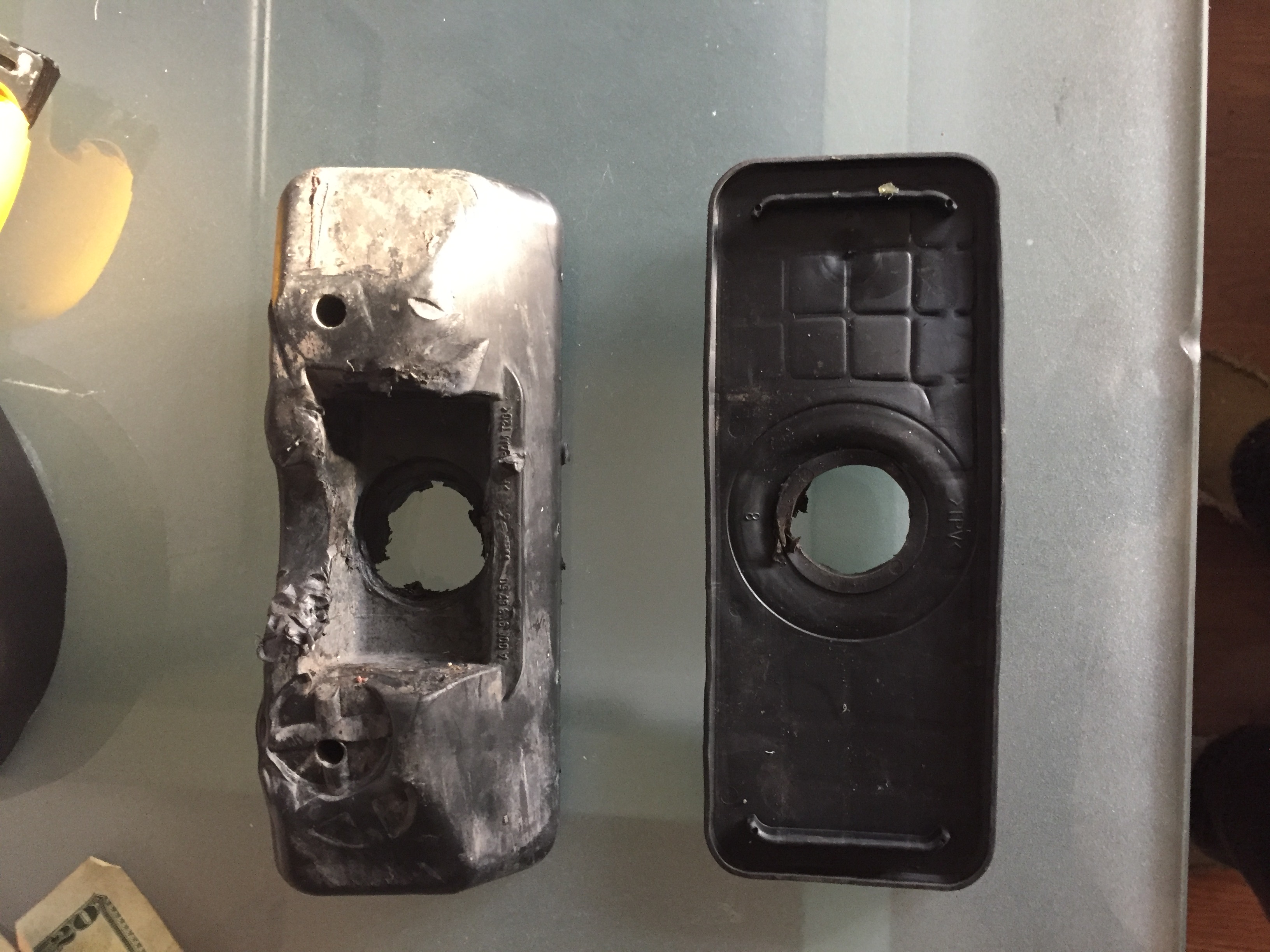
On my first foray under the 2016 to change oil, I used a bottle jack at each jack point on the side of the car. On the drivers side, the head of the jack slipped thru a hole in the plastic jack pad, and then thru a hole in the metal of the chassis AND IT WON'T COME OUT!
Of course, there is limited room to work, maybe 12", and to see what's going on , but I can see past the plastic jack pad to where the threaded part of the jack goes thru the metal. I could cut the threaded part of the jack and push it up but I don't know where it would go. At least I could remove the jack and drive the car. With covers under the car, I can't see if there would be a way to retrieve the sawn-off part and I don't think I really want it in there rattling around forever. There doesn't seem to be anything solid to pry against in the area of the jack pad so no leverage to pry the jack screw out.
Suggestions??
Of course, there is limited room to work, maybe 12", and to see what's going on , but I can see past the plastic jack pad to where the threaded part of the jack goes thru the metal. I could cut the threaded part of the jack and push it up but I don't know where it would go. At least I could remove the jack and drive the car. With covers under the car, I can't see if there would be a way to retrieve the sawn-off part and I don't think I really want it in there rattling around forever. There doesn't seem to be anything solid to pry against in the area of the jack pad so no leverage to pry the jack screw out.
Suggestions??

Member
Joined: Nov 2015
Posts: 206
Likes: 38
From: Southern
2014 E-350
That sucks! I don't go under...either does the dealer. Use this: https://www.amazon.com/gp/product/B0...?ie=UTF8&psc=1
As far as getting your jack out...patience, a sledge, some pry bars, a torch, something to cut it off, not sure without seeing it! Good luck though.
As far as getting your jack out...patience, a sledge, some pry bars, a torch, something to cut it off, not sure without seeing it! Good luck though.

MBWorld Fanatic!


Joined: Mar 2014
Posts: 6,398
Likes: 695
From: Northwest Illinois
2014 E350 also restored: 1969 Camaro convertible SS 1957 Chevy Belair 2dr hardtop
Sorry to hear but if it went in it has to come out. Use a jack to jack car up and patiently work it out. Good luck
Thread Starter
Senior Member
Joined: Apr 2016
Posts: 460
Likes: 157
From: Phoenix, AZ
2016 E350 Sport 2WD
I got it out.
The plastic jack pad fits into the hole in the sheet metal somewhat like a grommet with plastic also on the inside. I used a narrow chisel to cut the plastic away from the metal, and that left room for the jack screw to come out, quite easily at that.
Quite an adventure for the day. And now on to the first oil change.
The plastic jack pad fits into the hole in the sheet metal somewhat like a grommet with plastic also on the inside. I used a narrow chisel to cut the plastic away from the metal, and that left room for the jack screw to come out, quite easily at that.
Quite an adventure for the day. And now on to the first oil change.
Thread Starter
Senior Member
Joined: Apr 2016
Posts: 460
Likes: 157
From: Phoenix, AZ
2016 E350 Sport 2WD
The plastic jack pad is made in 2 pieces: a flat base that goes up against the chassis and then the part with the rectangular cavity with a hole in the middle of the cavity. The outer part snaps to the base and they attach much like a grommet, attaching to the sheet metal. I will have to buy a new one although I could attach the old one with some construction adhesive or body seam sealer. But since it's a new car, might as well fix it correctly.
I did get the oil and filter changed. Also found that jack point in the center front of the car and made a wood insert for my floor jack head so that I can use the center jack point in the future if needed. Not much room under the car unless you really jack it high.
My plan for future changes is to purchase an oil pump and pump the oil out the dipstick tube. Much easier, not as messy, don't have to crawl under the car and I am confident that as much oil will be removed with the pump method as the drain plug method. I was pleasantly surprised to see almost no oil in the filter housing when I removed that and no spills.
I'll post some pics tomorrow of the jack pad.
I did get the oil and filter changed. Also found that jack point in the center front of the car and made a wood insert for my floor jack head so that I can use the center jack point in the future if needed. Not much room under the car unless you really jack it high.
My plan for future changes is to purchase an oil pump and pump the oil out the dipstick tube. Much easier, not as messy, don't have to crawl under the car and I am confident that as much oil will be removed with the pump method as the drain plug method. I was pleasantly surprised to see almost no oil in the filter housing when I removed that and no spills.
I'll post some pics tomorrow of the jack pad.
Trending Topics
MB World Stories
The Best of Mercedes & AMG

6 Mercedes Models That Did NOT Age Well (But Are Somehow Still Cool)
Verdad Gallardo
Manual Mercedes? 6 Times Sindelfingen Let Drivers Have All The Fun
Verdad Gallardo
Mercedes SLR McLaren 722 S Is Extremely Rare Example Modified by McLaren
Verdad Gallardo
8 Classic Boxy Mercedes Designs That Have Aged Like Fine Wine
Verdad Gallardo
Flawlessly Restored Mercedes 190E Evo II Heads to Auction
Verdad Gallardo
Electric Mercedes C-Class Unveiled: 11 Things You Need to Know
Verdad Gallardo
Mercedes EQS Gets A Major Update: Everything You Need to Know
Verdad Gallardo
5 Underrated Mercedes-Benz Models That Don't Get the Love They Deserve
Verdad Gallardo
Mercedes 300D Has Pushed Well Past 1 Million Miles and It Ain't Stopping
Verdad Gallardo
MBWorld Fanatic!
Joined: Mar 2014
Posts: 6,398
Likes: 695
From: Northwest Illinois
2014 E350 also restored: 1969 Camaro convertible SS 1957 Chevy Belair 2dr hardtop
Thanks for the follow up. I will not due my own oil changes until the extended warranty from MB is up which is another 3 years. Glad you got it out. Surprised it only snaps on instead of screwing on.

MBWorld Fanatic!
Joined: May 2016
Posts: 2,754
Likes: 163
From: CA
2014 E350 W212
Glad you ended up getting the jack removed. I use ramps to do any under car work. Rhino makes ramps low profile enough for the E350 to drive up on. Gives plenty of room and secure as capacity outnumbers weight of car by 6000 pounds or so.
MBWorld Fanatic!
Joined: May 2016
Posts: 2,754
Likes: 163
From: CA
2014 E350 W212
My plan for future changes is to purchase an oil pump and pump the oil out the dipstick tube. Much easier, not as messy, don't have to crawl under the car and I am confident that as much oil will be removed with the pump method as the drain plug method. I was pleasantly surprised to see almost no oil in the filter housing when I removed that and no spills.

MBWorld Fanatic!
Joined: Jun 2013
Posts: 1,900
Likes: 210
From: Sacramento , CA
2010 e550 p2
I'd be interested to hear what you think using this method. I've always been hesitant to use the suction method as I tend to think the draining through the drain plug "flushes" any particulates out that may be in the bottom of the pan, and that suction may not completely empty all the fluid. Probably wishful thinking on the "flushing" action. As for saving the mess, you need to replace the filter so you need to get under anyway, right? That's my reasoning at least, I may have to re-think?

Member
Joined: Nov 2015
Posts: 206
Likes: 38
From: Southern
2014 E-350
I'd be interested to hear what you think using this method. I've always been hesitant to use the suction method as I tend to think the draining through the drain plug "flushes" any particulates out that may be in the bottom of the pan, and that suction may not completely empty all the fluid. Probably wishful thinking on the "flushing" action. As for saving the mess, you need to replace the filter so you need to get under anyway, right? That's my reasoning at least, I may have to re-think?
MBWorld Fanatic!
Joined: May 2016
Posts: 2,754
Likes: 163
From: CA
2014 E350 W212
The dealerships use the topside oil change method, sucking through the dipstick. If there was risk to the engine by doing this, Mercedes would have them doing it from the bottom. Any harmful particulates (not really much on modern engines) get filtered out. Filter is on top.
Member
Joined: Nov 2015
Posts: 206
Likes: 38
From: Southern
2014 E-350
Good to know about the filter being on top, thanks. I haven't done the service myself yet so learned something. The skeptic in my thinks if there might be a risk to the engine using this method, MB knows it most likely won't show up until post warranty. My impression of dealer service is that their goal is to see the car through the warranty period with no regard to post-warranty or long-term health of the car. But that's probably just me being too cynical.
If you have shavings/debris at the bottom of your oil pan (pretty rare these days), they would be stuck there - because if they're suspended in your oil they would be sufficiently filtered during normal circulation.
With CPOs and MB extended warranties, there'd be no way for them to calculate the appropriate time to have damage occur by using the topside method...so I think you're safe! To each their own though...I really like the topside method...I just pump up the system and walk away, come back later and swap the filter & refill. No dirt, no raising the car up, and no oil mess anywhere!
Last edited by fosterelli; Oct 29, 2016 at 10:29 PM.
Thread Starter
Senior Member
Joined: Apr 2016
Posts: 460
Likes: 157
From: Phoenix, AZ
2016 E350 Sport 2WD
I'd be interested to hear what you think using this method. I've always been hesitant to use the suction method as I tend to think the draining through the drain plug "flushes" any particulates out that may be in the bottom of the pan, and that suction may not completely empty all the fluid. Probably wishful thinking on the "flushing" action. As for saving the mess, you need to replace the filter so you need to get under anyway, right? That's my reasoning at least, I may have to re-think?
As for metal particles in the pan, it is, of course, possible that you may be able to detect them in the pan after pulling the plug, but I would think that either particles would flush with the oil rushing out, or would remain in the pan out of sight. If the particles flush with the oil, you can still look in your oil drain pan for their presence.
I'm voting with Fosterelli on that one.

Junior Member
Joined: Jan 2016
Posts: 25
Likes: 2
2002 W210 2WD Wagon, 2011 F150, Mazda 6, Miata 10th AE, 94 MR2 Turbo, Beechcraft A36
I've got some old hardwood flooring that I put some rubber on and use that to protect the bottom of the boxed unibody sections then just jack it up. A little harder but a lot less drama than the ski adventure.
Junior Member
Joined: Jan 2016
Posts: 25
Likes: 2
2002 W210 2WD Wagon, 2011 F150, Mazda 6, Miata 10th AE, 94 MR2 Turbo, Beechcraft A36
The dealerships use the topside oil change method, sucking through the dipstick. If there was risk to the engine by doing this, Mercedes would have them doing it from the bottom. Any harmful particulates (not really much on modern engines) get filtered out. Filter is on top.
even with thick oil, metal is not going to get lifted into the engine. Some of the alloys might, but the idea that you could suck them out with the extremely low viscosity stuff in these engines is just silly.
Fortunately, the design of our oil filters makes it easy to pull the pleats apart and see what the oil pump's been able to pull up to the filter.
Obviously more crap is going to fall out the bottom than get sucked out of the top.
The idea that "the dealer does it, so it must be the best way" is not universally true and often downright false.
MBWorld Fanatic!
Joined: May 2016
Posts: 2,754
Likes: 163
From: CA
2014 E350 W212
Fun, yeah, I experienced this as well as I have the epoxied garage floor and it makes for a slippery base. I bought industrial strength, adhesive-backed velcro that I stuck to the bottom of the ramps and floor, and leave on both. Has done the trick for me, when I need the ramps I simply line up the velcro and stick, the weight of the car seems to squish them together sufficient to stop the ramps from squirting around.
Member
Joined: Nov 2015
Posts: 206
Likes: 38
From: Southern
2014 E-350
IMHO the dealers don't care that much if your car gets damaged or not. If the engine grenades, more revenue. They are after whatever is easy and gives them a chance at beating book labor.
even with thick oil, metal is not going to get lifted into the engine. Some of the alloys might, but the idea that you could suck them out with the extremely low viscosity stuff in these engines is just silly.
Fortunately, the design of our oil filters makes it easy to pull the pleats apart and see what the oil pump's been able to pull up to the filter.
Obviously more crap is going to fall out the bottom than get sucked out of the top.
The idea that "the dealer does it, so it must be the best way" is not universally true and often downright false.
even with thick oil, metal is not going to get lifted into the engine. Some of the alloys might, but the idea that you could suck them out with the extremely low viscosity stuff in these engines is just silly.
Fortunately, the design of our oil filters makes it easy to pull the pleats apart and see what the oil pump's been able to pull up to the filter.
Obviously more crap is going to fall out the bottom than get sucked out of the top.
The idea that "the dealer does it, so it must be the best way" is not universally true and often downright false.
The topside method is not new - just new to some people on here. No one is trying to "suck" crap out of the top. It's an oil change. As long as you're maintaining your oil change intervals properly, the filter does all of the work your car needs as far as particulate removal. If something is stuck in the sump (shavings/particles) you don't have to worry about it anyway. If it does circulate, the filter catches it. Oil goes from the sump to the filter, then to the engine and back down to the sump.
Filters average a nominal 25-30 microns..that catches very small particles. Human hair is about 45-70 microns. The human eye can see about 40 microns. And filter efficiency ratings are pretty high these days.
Your oil change is there to remove the old oil and change the filter. It is not designed for you to remove anything else (like junk in the pan). The lubrication system of your car takes care of that.
You're not pulling any crap from the bottom vs. the top. It's all in your filter, or stuck somewhere not hurting anything. But for those who are concerned about it, feel free to climb under your car and do it the hard way. But I bet your engine won't be more protected than the topside guys.
I'm also willing to bet all manufacturers of topside oil change vehicles (including Mercedes) have conducted used oil and filter analysis of both methods, prior to implementing the topside process. They wouldn't want their warranty claims jumping because the topside provided less protection. MB is making 2 million cars a year - can you guess the costs if they didn't do their homework first? I guarantee they put more thought into this than you can imagine, including engineering studies and engine tear-downs for wear inspections.
The dealer way certainly isn't always the best way, but usually is - because they are factory-trained, have access to information and equipment you don't, and do it all day long on the same types of vehicles. So while they aren't always on point, they are getting it right far greater than most independent shops and backyard mechanics...not to mention DIY'ers. Their exposure to countless MB engine services, repairs, overhauls, troubleshooting, diagnostics, etc. on a daily basis makes them the experts, not us.
Last edited by fosterelli; Nov 1, 2016 at 01:24 PM.


