When you click on links to various merchants on this site and make a purchase, this can result in this site earning a commission. Affiliate programs and affiliations include, but are not limited to, the eBay Partner Network.
not sure i've ever seen the "ECO' flag yellow on my speedometer status display.
This doesn't happen in 2016 models. The 2014s (IDK about 2015s) have the ECO indicator always on. It is yellow when it is not ready and turns green when it is.
Our 2016s have no such indication. We know it's ready when the green ECO appears and the engine shuts off. I keep ECO on at all times and haven't had any issues.
Last edited by LILBENZ230; Apr 29, 2021 at 09:50 AM.
This doesn't happen in 2016 models. The 2014s (IDK about 2015s) have the ECO indicator always on. It is yellow when it is not ready and turns green when it is.
Our 2016s have no such indication. We know it's ready when the green ECO appears and the engine shuts off.
I keep ECO on at all times and haven't had any issues.
ECO is an avantgarde design that allows modern Engines to Cut Off at all stops. There are many pros and cons, people either love it or hate it. For me... ECO is like a ratle snake that gives me warning something's wrong.
ECO is the reason why Bosch developed the external ECU regulation in addition to the ALTernator internal regulation we've enjoyed for the past 40 years. This is what got us here to fix this mess!
The main AGM gets deeply discharged by powering the whole car during 30Amp shut-off and 100Amp restarts. Thus the AGM needs a closely tailored mechanism to quickly recharge it to a safe level around 80%. AGM is used as a sort of giant capacitor with easy charge/discharge abilities. Other than that need for speed, the car has nothing against fully charging our AGM with deceleration burst etc.
The ECU uses a battery sensor to precisely monitor its vitals, including temperature. This prevents out gasing explosive hydrogen from the lead-acid or heat stressing the joint between posts and plastic casing.
During ECO the 2 SAM brothers gang up together to reduce consumer energy in order to optimize shut-off time vs. driver comfort. They also network the battery data back to ECU through the busy gateway.
We have not talked much about AUX batt. It mostly has a good life. It gets charged by the ALT through a relay commanded by R-SAM during the 14.9...13.5V Q-cycle. So not so much rodeo, to force power out of AUX during charge. Its charge current is unmeasured and simply limited by a dumbo 5w resitor that also limits *discharge* during nasty ALT surges.
... more, later.
I mean, I appreciate your post but I was simply stating that in terms of what the car shows in the IC - your 2014 has an ECO indicator that will be yellow like this:
Our 2016s do not show that. Nothing shows up until the engine cuts off, at which point ECO shows up in green.
Last edited by LILBENZ230; Apr 29, 2021 at 03:23 PM.
thank you for helping build this body of knowledge focused on low batteries.
I had no idea the ECO Flag had been revamped at some point - Everything keeps evolving, that is precisely why some Valeo's are not compatible with a range of cars. Darn internal regulator has an untested software bug.
In order to keep on the bleeding edge, German giants keep evolving their design non-stop. This way they can finely tune the built-in failure points, minimize material. At some point complete designs with factory tools are sold to foreign suppliers.
👍
Last edited by CaliBenzDriver; Apr 29, 2021 at 04:21 PM.
I'm with LB... my 2016 looks like his. The only ECO indicator is the button in the center stack, and it burns green all the time, whether conditions are right for ECO S/S or not.
Yep, Benz seems to change something every year. It’s like none are exactly the same.
Here is the display in my 2016. No ECO indicator at all.
these "classic screens" displays look really nice with so much data available. Xentry should comme built-in and preloaded 🤣
Recently I've seen how Toyota cars dish out all their data over 5G to a dedicated OEM-APP ( live tire pressure, oil mileage, TSB by VIN, open Recalls,...)
The Toyota App is an impressive ownership dashboard that helps cut down on round-robin dealer extortion. 🤣
Last edited by CaliBenzDriver; Apr 30, 2021 at 01:07 AM.
Reason: formating
This is something I didn't know existed .
Thanks a lot .
I have also learnt that CCA value should be higher on the batteries . What's CCA ? Cold Cranking Amper .When you use a spectrometer to measure the battery power , the indicator of the tool should match the number on the battery sticker .If not then your battery may needs charging .
I think this reply is relevant to this topic
But batteries are not the subject here, nor is battery drain... UNRELIABLE CHARGE IS a staple with Benz of this generation across models.
THIS! This is why I got rid of my 2015 E350. and yes, it's the charging system that's the problem, not batteries. MB replaced 9(!) batteries total (all 3 batteries, 3x) in 3 years on my car in total, but MBUSA refused to acknowledge that it was a problem.
What I observed was that for the almighty MPG rating, the car wasn't charging the battery like a normal car would. Instead they try to charge the battery when you're slowing down/braking. Perhaps this works fine for some people, but I drive mostly highway miles. I even had the Aux battery fail after an hour of driving, multiple times.
Making matters worse is that the W212's electronics, in particular the ones with the ECO Stop/Start system, are very fussy about voltage. I had all sorts of problems with the car not starting, radio acting up, multiple systems going INOP. Replacing the batteries would make the car run normally for awhile...then after a few months of wear & tear the car would start acting up again. Other than replacing batteries, MBUSA was unhelpful to put it politely.
THIS! This is why I got rid of my 2015 E350. and yes, it's the charging system that's the problem, not batteries. MB replaced 9(!) batteries total (all 3 batteries, 3x) in 3 years on my car in total, but MBUSA refused to acknowledge that it was a problem.
What I observed was that for the almighty MPG rating, the car wasn't charging the battery like a normal car would. Instead they try to charge the battery when you're slowing down/braking. Perhaps this works fine for some people, but I drive mostly highway miles. I even had the Aux battery fail after an hour of driving, multiple times.
Making matters worse is that the W212's electronics, in particular the ones with the ECO Stop/Start system, are very fussy about voltage. I had all sorts of problems with the car not starting, radio acting up, multiple systems going INOP. Replacing the batteries would make the car run normally for awhile...then after a few months of wear & tear the car would start acting up again. Other than replacing batteries, MBUSA was unhelpful to put it politely.
Your ownership experience highlights this subject. There is a disconnect somewhere in the Xentry troubleshooting tree that makes it impossible for Benz techs to remotely consider be able to fix these cars.
It took me 7 years to intimately understand the subtilities of that twin-batteries multi-voltage dual-regulation design. It's a good one!
I believe the Benz engineers who integrated this Bosch design run out of money to design troubleshooting markers and proper DTC's (*) .
Currently these cars have hardly any idea they are runing into trouble. The consumers being switched off is in direct corolation to this voltage yoyo. The SAMS's sense an issue and decide to cut-off part of the loads. The defroster acting up is a classic in the forum.
The fact you are a highway driver makes you a prime candidate for this problem when the car drains the main AGM uncontrollably.
...LATER EDITS...
(*) A smart Bunny 🐇 on post#137 clearly spotted the existing GAPS: 1) How it functions...
2) How it breaks...
3) How to repair it...
For those with a thinking cap, now you know where the limits are.
This new feature is not integrated in the 'idiot light", no warning message, no DTC scan Fault, no troubleshooting steps, no repair - Free battery and car wash only!
YES, NOT ALL CARS affected equally. Some VIN'S are trouble free and I really hope yours is.
👍
Last edited by CaliBenzDriver; Apr 30, 2021 at 10:06 PM.
Reason: 🐰
MB replaced 9(!) batteries total (all 3 batteries, 3x) in 3 years on my car in total, but MBUSA refused to acknowledge that it was a problem..
Wait, 3 batteries. I thought at the most... ECO start-stop version has only 2.
1 main one 80 Ah AGM at engine bay and 1 baby AGM 12 Ah at the boot/trunk . 80 Ah is my Asian spec, USA version maybe bigger ?
Is there any special option of a W212 for cold countries where a 3rd battery is then installed ?
3x battery changes in 3 years is D.C ****
I do agree with Cali on his earlier post on 60 amps into battery as charging value is weird, albeit a short burst.
60 amps is not to be given to a 80Ah AGM I got from MB. 35% of 80 Ah is the max rating Varta allowed as BULK charge, yes bulk charge as in many minutes and not burst style.
Let's do some brainstorming and software experts please chime in.
LIN is a 2 way communication protocol.
If this explanation is correct : https://www.testmyalternator.com/en/...mmies-tma.html
I lean towards the MB algo being either having a bug of some kind or half-baked algo it is
Since Valeo can not directly know what is going on at Hyundai Mobis the data provider for the battery state of charge, only the ECM knows everyhing and ECM is the big boss and hence I believed the algo is held at the ECM.
Valeo LIN charge controller is only ahead compared to single way communication charge controller because it can confirm order commanded by ECM.
So its like ECM saying : Valeo please create 100 amps at 14.2 volts.
Valeo then replied : ECM Sire, I have done the 100amps output..roger and out.
Then ECM then wait for Miss Hyundai Mobis which will report net amperage into the battery.
I doubt the ECM can say this : Valeo, do what you need to do, me lazy to think for now because me busy with C02 reduction , I don't want to be in another DieselGate like our distant cousin .....
I dont think the Valeo has any charging algo built in as each car manufacturer has its own charging style.
Example a BMW ( so I read) need a new batttery to be programmed/informed to ECM, so that the ECM can accomodate new vs aging battery charging profile.
I am not sure the charging system is main issue here.
Both W212 I bought with higher mileage come with flooded batteries as main battery and they still work after 3 and 4 years. Still far away from 13 years we've been getting on older MB models, but much better than W212 average.
So the AGM battery seems to be a weak point.
THIS! This is why I got rid of my 2015 E350. and yes, it's the charging system that's the problem, not batteries. MB replaced 9(!) batteries total (all 3 batteries, 3x) in 3 years on my car in total, but MBUSA refused to acknowledge that it was a problem.
What I observed was that for the almighty MPG rating, the car wasn't charging the battery like a normal car would. Instead they try to charge the battery when you're slowing down/braking. Perhaps this works fine for some people, but I drive mostly highway miles. I even had the Aux battery fail after an hour of driving, multiple times.
Making matters worse is that the W212's electronics, in particular the ones with the ECO Stop/Start system, are very fussy about voltage. I had all sorts of problems with the car not starting, radio acting up, multiple systems going INOP. Replacing the batteries would make the car run normally for awhile...then after a few months of wear & tear the car would start acting up again. Other than replacing batteries, MBUSA was unhelpful to put it politely.
Sounds like you had a lemon that MB would not help with. That is not the same thing as a poorly designed system. I am also primarily a highway driver, and have never had any such issue. Same car, same systems.
Glad you got rid of your problem car, but that does not mean all W212s are the same. As a matter of fact, it almost seems like no W212s are the same.
Wait, 3 batteries. I thought at the most... ECO start-stop version has only 2.
1 main one 80 Ah AGM at engine bay and 1 baby AGM 12 Ah at the boot/trunk . 80 Ah is my Asian spec, USA version maybe bigger ?
Is there any special option of a W212 for cold countries where a 3rd battery is then installed ?
IIRC, the 3 batteries are the main (engine compartment), aux (spare tire well), and the emergency battery (driver's side dashboard). The emergency battery looked like an alarm system/UPS battery.
Sounds like you had a lemon that MB would not help with. That is not the same thing as a poorly designed system. I am also primarily a highway driver, and have never had any such issue. Same car, same systems.
Mine was a '15, fully-loaded if that makes any difference. It spent about 40% of its life at the dealership. At one point the dealership had it for 3 months straight. I racked up 20,000-30,000 miles on loaners over the 3 years I had the car. MBUSA even sent the factory mechanic to work on it. He spent 3 days with the car and declared it "working as designed." This despite videos, graphs, etc.
Even if mine wasn't typical, I'd still say it's a poorly designed system if 3 dealerships AND MBUSA's own staff are unable to properly diagnose, troubleshoot, and repair it. When designing a system you should be focused on 1) How it functions, 2) How it breaks, 3) How to repair it. When I do systems design, I focus heavily on #2 & #3. #1 is easy; any Engineering 101 student can do that. Doing well with #2 & #3 is what makes you look like a rockstar and gives your product a good reputation.
Mine was a '15, fully-loaded if that makes any difference. It spent about 40% of its life at the dealership. At one point the dealership had it for 3 months straight. I racked up 20,000-30,000 miles on loaners over the 3 years I had the car. MBUSA even sent the factory mechanic to work on it. He spent 3 days with the car and declared it "working as designed." This despite videos, graphs, etc.
Even if mine wasn't typical, I'd still say it's a poorly designed system if 3 dealerships AND MBUSA's own staff are unable to properly diagnose, troubleshoot, and repair it. When designing a system you should be focused on 1) How it functions, 2) How it breaks, 3) How to repair it. When I do systems design, I focus heavily on #2 & #3. #1 is easy; any Engineering 101 student can do that. Doing well with #2 & #3 is what makes you look like a rockstar and gives your product a good reputation.
Wow, what a terrible experience you had, with all due respect, you bought an '18 E300 to replace it?
Wow, what a terrible experience you had, with all due respect, you bought an '18 E300 to replace it?
I searched hard before settling on the '18 E300. Distronic was the #1 feature I wanted. The Volvo S90's display froze & went black during a test drive, the Hyundai Genesis didn't do it for me (everything that looked metallic inside was plastic), didn't care for the BMW 5. Lexus GS looks like it got hit with an Ugly Stick™ and didn't have Android Auto and the 2021 Lexus LS still doesn't! What's left? Tesla? Their self-driving system isn't as good as Distronic and the charging situation was a no-go for me.
So... I reluctantly ordered an E300 to my specs. It's had problems and to their credit, MBUSA did offer to buy it back this time...but they've not been able to make a replacement car, so I still have it. I recently bought the extended warranty, so it's their problem now.
Even if mine wasn't typical, I'd still say it's a poorly designed system if 3 dealerships AND MBUSA's own staff are unable to properly diagnose, troubleshoot, and repair it. When designing a system you should be focused on 1) How it functions, 2) How it breaks, 3) How to repair it. When I do systems design, I focus heavily on #2 & #3. #1 is easy; any Engineering 101 student can do that. Doing well with #2 & #3 is what makes you look like a rockstar and gives your product a good reputation.
I still disagree. I think you're conflating "unable" with "unwilling". And dealerships are, on the whole, pretty much terrible. No dealership actually "repairs" a problem per se.. problems get resolved when they swap enough parts to remedy it. It's unfortunate but not at all surprising they couldn't do anything for your W212. Even within this 5 page thread here, most people are just nerding out. Their cars are still functioning fine and not consuming batteries like your car was, even though there are some who are especially paranoid about the way the smart charging system works. My E350's first battery lasted from its production date of 4/2015 until 12/2019. The replacement is still strong - no issues, and it does eco stop/start on every drive. That is a decrease in lifespan over what I got on my older Benz cars which was around 7 years or so, but still very acceptable given the low cost of replacement batteries (assuming you DIY)
Like Pierre said, can't believe you replaced it with a W213. The W213s I've had as loaner cars seem like a step down, especially under the hood.
Last edited by LILBENZ230; Apr 30, 2021 at 04:35 PM.
2016 E350 4Matic wagon, 2019 Ford Expedition, 2019 Chevy Bolt EV
Originally Posted by BeachBunny
Mine was a '15, fully-loaded if that makes any difference. It spent about 40% of its life at the dealership. At one point the dealership had it for 3 months straight. I racked up 20,000-30,000 miles on loaners over the 3 years I had the car. MBUSA even sent the factory mechanic to work on it. He spent 3 days with the car and declared it "working as designed." This despite videos, graphs, etc.
Even if mine wasn't typical, I'd still say it's a poorly designed system if 3 dealerships AND MBUSA's own staff are unable to properly diagnose, troubleshoot, and repair it. When designing a system you should be focused on 1) How it functions, 2) How it breaks, 3) How to repair it. When I do systems design, I focus heavily on #2 & #3. #1 is easy; any Engineering 101 student can do that. Doing well with #2 & #3 is what makes you look like a rockstar and gives your product a good reputation.
... Even if mine wasn't typical, I'd still say it's a poorly designed system if 3 dealerships AND MBUSA's own staff are unable to properly diagnose, troubleshoot, and repair it.
When designing a system you should be focused on
1) How it functions,
2) How it breaks,
3) How to repair it.
When I do systems design, I focus heavily on #2 & #3.
#1 is easy; any Engineering 101 student can do that.
Doing well with #2 & #3 is what makes you look like a rockstar and gives your product a good reputation.
I am with you 100% with your fair minded conclusions. Your reasoning is well beyond what average fan boys tolerate before glossing. I find nuggets of truth very refreshing.
I left my post #132 eluding to missing debugging logic. Here you are hitting on that aspect of design best practice: maintenance support.
I am certain MB directors know what they are doing. Beancounters can easily spot the highest parts volume on their ERP-BI dashboards.
What's cristal clear... there is no warning message about this problem. I you don't have it best of luck.
... I do agree with Cali on his earlier post on 60 amps into battery as charging value is weird, albeit a short burst.
60 amps is not to be given to a 80Ah AGM I got from MB. 35% of 80 Ah is the max rating Varta allowed as BULK charge, yes bulk charge as in many minutes and not burst style.
In post #117 above I showed from your YouTube video... IT IS 80 AMPS THAT ARE PUNCHED INTO THE AGM !!!
You know your stuff and understand what over 1,000.Watts surge does to electric systems...
After its quick "charge cycle" in the middle of a driving session, the battery is guaranteed to be hot.
1Kw punches... yes: abnormal 🤔
Last edited by CaliBenzDriver; Apr 30, 2021 at 07:47 PM.
2016 E350 4Matic wagon, 2019 Ford Expedition, 2019 Chevy Bolt EV
actually, short periods of 80+ amps into a lead acid battery is pretty normal for cars with old style simple alternator+regulators. those are often 100 amp or more alternators, if the battery was run down before you started the car, that alternator will pump everything it can into the battery as fast as it can. and, starter power is on the order of 100-200 amps easily.
I can side with your long battery experience. You think a high charge current is acceptable, it may be...
I think we can agree that an 80Amp charge current is a sign of deeply discharged battery, right ?
With that event taking place AFTER the charge cycle, it may lead you to search for answers. How can the battery be so discharged right after being charged? I'd like to know.
smooth transitions
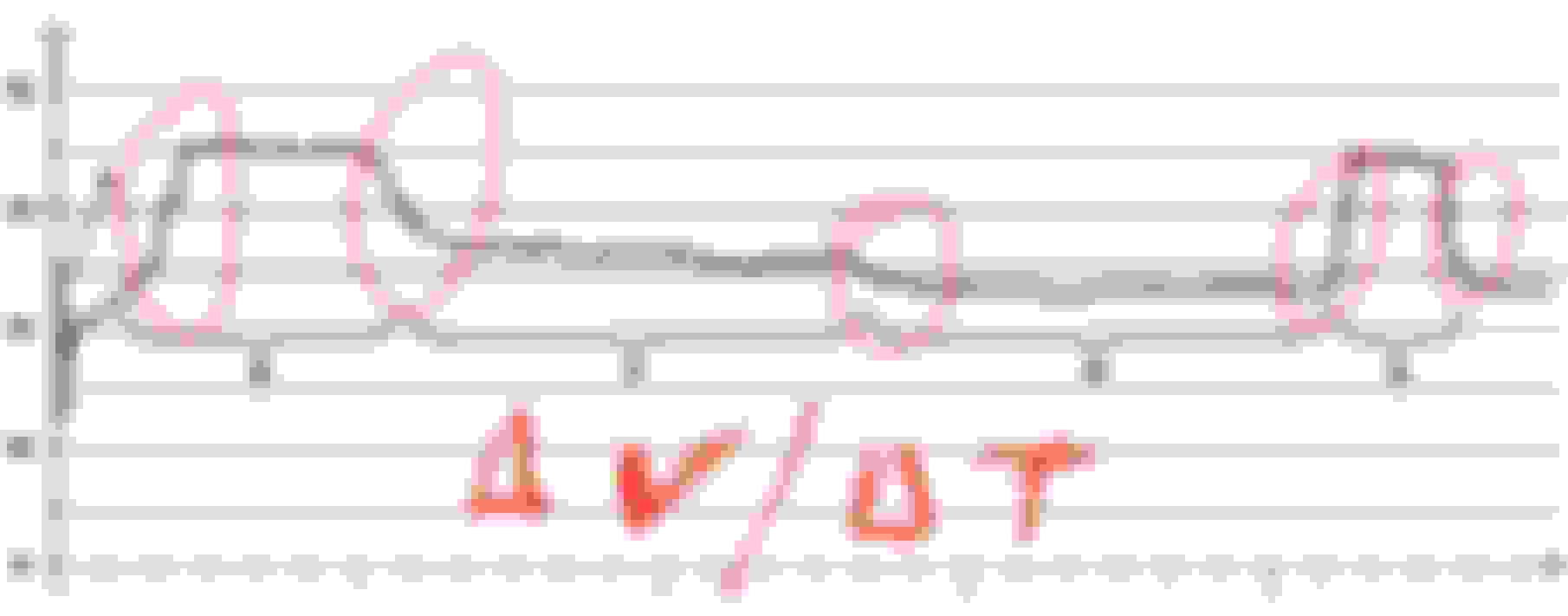
Benz purposely designed smooth VOLTAGE TRANSITIONS RAMPS to prevent battery spikes (See pdf referenced earlier).
Thank you for taking the time to swap notes.
Last edited by CaliBenzDriver; May 1, 2021 at 03:39 AM.
Reason: ✌️
Its interesting the topic of the high current transients... as far I know, there's nothing in place in traditional VRs to limit current. The only limit is the batteries internal resistance, plus the resistance of the circuit (wiring/body). I akin it to flipping a switch or current draw during an electric motor start... Additionally, AGMs typically have lower internal resistance than flooded lead-acid
Is this worse than a few second draw at 150A+ during a start?
Mercedes SLR McLaren 722 S Is Extremely Rare Example Modified by McLaren
Slideshow: A one-of-one U.S.-spec Mercedes-Benz SLR McLaren Roadster became even rarer after a factory-backed transformation at McLaren's headquarters.