When you click on links to various merchants on this site and make a purchase, this can result in this site earning a commission. Affiliate programs and affiliations include, but are not limited to, the eBay Partner Network.
We've had our 350e for 4 weeks and I thought it'd be interesting to have a fuel/energy consumption thread for anyone interested in such things.
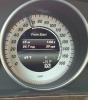
We've been running the car in EL mode a lot but recently I've driven in Sport mode a bit to give the engine some running in time. Here is the result so far:
1.5 L/100 km is 157 US MPG. Obviously the engine's not been on all that much yet, maybe for 375 km. The electric consumption when running purely in Electric mode is a bit under 22 kWh/100 km.
We will be doing a road trip in a week so more fuel will be burnt, so I'll update here afterwards.
Today I did a run in Sport mode which is summarized below:
6.7 L/100 km is a bit over 35 US MPG, so I was quite pleased with that, as the Sport shift program is not at all economical and I even shifted manually to a higher gear a couple of times.
July 11, 2025
First longish drive in the GLC 350e today. Hybrid mode. 396 km in total: brutally heavy traffic for 100 km going east from Vancouver, followed by some good mountain climbs to over 1300 metres. Overall consumption was 5.0 L/100 km (47 US MPG) plus 6.2 kWh/100 km once we arrived at the destination of Penticton in the Okanagan valley. Cost-wise the electricity is about 83 cents per 100 km so call it 5.5 L/100 km in cost (premium fuel). Most excellent for such a comfortable and heavy car.
I'm slowly filling the battery for free at the hotel and so the return via the Okanagan Connector and Coquihalla highways (120 km/h speed limit on the latter) will be a tougher test, as there is one 1730 metre climb and another big one out of Merritt towards Hope. I'd be stoked if the car did under 7 L/100 km on that leg. That would be better than the car it replaced. We shall see.
On the 2 km descent near the copper mine near Princeton, the PHEV battery recovered 5%, from zero. The descents are bigger on the run back to Vancouver that we'll be doing on Monday.
July 14, 2025:
Did the run back from Penticton to Vancouver Island via Hwy 97, 97C and 5 (Coquihalla). Put car in Hybrid mode as we left.
The new car had about 90% battery when we left the hotel this AM. Then we got called back to the hotel as we were about to turn onto the highway, because my sister's 2013 Audi Q5 had broken down as they tried to leave the hotel in Penticton and my son and I had to use our two cars (his a Fiesta) to move two more people, one more bike and two large dogs back to Vancouver. The Audi was towed to the dealer in Kelowna. The Audi would not start and the CEL had been on for a day or 2 and then started flashing just before the car refused to restart this morning.
Anyway with three aboard, two bikes and lots of luggage cramming the car, and the car in Hybrid mode rather than electric, in which it would have used all its plug-in energy before the engine started, we averaged about 120 km/h up the two passes and down to Hope; the first (Pennansk) at 1730 m or so in the driving wind and rain. Maximum speed was 155 km/h for a quick burst. Maximum engine speed was 5000 RPM, again for a short time. The temperature up there was 11 degrees, a far cry from the 40+ degrees the day before (average temp) during the Velocifondo bike event at Okanagan Granfondo (the reason we were there).
Maximum energy recovery to PHEV battery was 6 or 7 km worth on the drive downhill into Hope. The plug-in battery was totally depleted near Chilliwack, more than 300 km into the return journey. Then we hit utterly brutal stop and go traffic that saw the car using the hybrid battery to move, with occasional engine fire-ups when brisker acceleration was needed as the accordion expanded.
The maximum fuel consumption peaked at 7.0 L/100 km on the second summit, and when we got home it was 6.5 that it was showing on the OBC right now. So 6.5 L/100 km(36.2 US MPG) and a full battery, again with the equivalent electricity cost being worth about 0.5 L/100 km: so call it 7.0 and that's better than the B-Class it replaced would have done in similar circumstances. It'd have been 7.5.
Amazing results for such a heavy and comfortable car.
I'm coming up on ~6000kms on my GLC 350e. My average electric range on a full charge is ~109km (city driving) and ~80km (highway driving). I've only driven on the highway once while on full electric mode to see what the range would be. It's definitely more cost effective to be on hybrid mode if youre travelling on the highway more than 80kms.
My average fuel economy is 1.6L/100kms with 80% electric usage. Fuel economy for ~300km trip with highway driving was ~3.2L/100km with a full battery charge on hybrid mode. The return ~300km trip with zero battery on hybrid mode was ~8L/100km. The lowest hybrid fuel consumption I've had was 2.2L/100km which was a ~180km roundtrip through county roads and city driving.
Overall super happy with the performance of the vehicle. The 109km of electric range was a nice surprise considering they only advertise the range ti be 87km. Interested to see how this changes during the winter months.
We've managed 115 km of actual "EL" range and the highest predicted range so far has been 127 km. This aligns with the European test estimates. The EPA/Transport Canada estimates for both fuel consumption and electrical consumption are usually pessimistic.
Here's mine. How are you getting 14.6 kWh/100km on electric mode? Are you not using AC or playing any music? That's impressively low. I've been pretty mindful on slowly taking off and I use D- mode to recuperate as much battery as possible but I can never get my average lower than 19 kWh/100km.
How are you getting 14.6 kWh/100km on electric mode? Are you not using AC or playing any music? That's impressively low. I've been pretty mindful on slowly taking off and I use D- mode to recuperate as much battery as possible but I can never get my average lower than 19 kWh/100km.
The thing about the After Reset and After Start data is that it blends the fuel and electrical consumption, so neither figure is representative of consumption if that was the only source of motion.
When driving in EL I find it difficult to get less than 20 kWh/100 km, and in S around 7 L/100 km is normal.
My total km includes a lot of fuel use relative to yours so that explains the difference.
So this MPGe bullcrap has me going nuts. So
what is the estimated combined total range on a full electric tank 😡 and full gasoline tank of course on hybrid mode - highway?
I've seen 700+ km on the gasoline side and 130 km on the electric side. Theoretically 800+ km.
I thought I would ask the followers of this post their opinion. My lease will be up just in time for the 2026 “e” to arrive in the US. I’ve been thinking of replacing my 300 with an “e” since my driving is very short range. I’m retired and as a rule don’t take long drives.
I drive 3 times a week around 20 miles (32k) round trip. In 28 months I driven 13,950 miles (22,450k). I would start with household current (110v) just to see if I needed to upgrade. Our power company offers a level 2 charger installation. See the summary below. This doesn’t make 2 much sense to me. Not sure what my cost would be but even amortizing the charger and adding the electric cost I don’t think I would spend $38. Right now I spend around $45 to fill up the 300 each mt. I think having an electrician install a level 2 would be preferable. My circuit breaker box is 2ft from the nose of my car. So insulation is minimal.
Here is a summary of what power company offers.
• Full Installation ($38/month): FPL installs a Level 2 charger, including a 240-volt circuit, all permitting, and electrical work (circuit must be within 10 feet of the electrical panel). Includes unlimited off-peak charging (nights, weekends, and holidays).
• Equipment-Only Installation ($31/month): For homes with an existing 240-volt circuit, FPL provides and installs the charger, including setup and hardwiring. Customers handle any additional electrical work.
• Maintenance and operation of the charger are covered, with chargers programmed to start during off-peak hours for cost savings.
TERMS:
• 10-year commitment, after which you own the charger.
• Early termination is possible with a fee to cover uninstallation costs. (have no idea what fee cost would be)
• Option to purchase the charger after five years for its remaining net book value.
• Off-Peak Charging:
• Unlimited charging during off-peak hours:
• Summer (April 1–Oct 31): 9:00 PM–12:00 PM, weekends, and holidays (Memorial Day, Independence Day, Labor Day).
• Winter (Nov 1–March 31): 10:00 PM–6:00 AM and 10:00 AM–6:00 PM, weekends, and holidays (New Year’s Day, Thanksgiving, Christmas).
• On-peak charging incurs additional costs, manageable via the FPL Evolution app.
I am a complete novice at all this. All and Any Comments Welcome. Thanks
I had been planning to add a Type 2 charger to our home when we first ordered the car, but since we got the GLC350e over two months ago, I've only been using the Type 1 that comes with the car and it's been just fine. I've found that on the 120V household circuit, the battery will totally fill over about 21 hours if it's empty, and the total range is up to 125 km in EV mode so I've found that electric driving and 120V Type 1 charging is adequate. The cost of installing a Type 2 charger is not justifiable with my use pattern, and I think this will be the case for most PHEVs, as opposed to BEVs.
I’m retired too, usually drive about 45 miles a day, and the 120v charger is sufficient. It’s always charged and ready the next morning. I only charge to 80% unless I know I’m driving an extra long distance (more than the battery).
I agree that for my driving, a Type 2 charger isn’t needed. Even when fully drained it takes less than a day to charge. The 120v charging rate is 1.2kW per hr. The battery is 23.8 kWHr.
If you do choose to go the Type 2 route, all you need is the circuit and outlet installed. You wouldn’t need to buy the full Type 2 charger since what comes with the car works on 120v or 220v. The ‘deal’ the utility is giving - paying for it over ten years - doesn’t make financial sense IMO.
Here's some simple math. 2024 GLC300 delivered July 7, 2024. These are real world figures using odometer readings and gasoline receipts. All top tier gas usually from Costco. Miles from new: 6876.
Total gas cost: $811.59. Average MPG: 26.61 Out the door price $57,000.00. So you professional number crunchers can do some ROI crunching to see if low mileage users like me would see any benefit to an "e" model.
Here's some simple math. 2024 GLC300 delivered July 7, 2024. These are real world figures using odometer readings and gasoline receipts. All top tier gas usually from Costco. Miles from new: 6876.
Total gas cost: $811.59. Average MPG: 26.61 Out the door price $57,000.00. So you professional number crunchers can do some ROI crunching to see if low mileage users like me would see any benefit to an "e" model.
It all depends on how long you plan on keeping the 350e. The PHEV is roughly $10k more than the 300. Based on the numbers you've provided, this $10k would cover about 10 years of gas for you. Based on your personal driving, the 300 is likely a better buy.
I’m retired too, usually drive about 45 miles a day, and the 120v charger is sufficient. It’s always charged and ready the next morning. I only charge to 80% unless I know I’m driving an extra long distance (more than the battery).
I agree that for my driving, a Type 2 charger isn’t needed. Even when fully drained it takes less than a day to charge. The 120v charging rate is 1.2kW per hr. The battery is 23.8 kWHr.
If you do choose to go the Type 2 route, all you need is the circuit and outlet installed. You wouldn’t need to buy the full Type 2 charger since what comes with the car works on 120v or 220v. The ‘deal’ the utility is giving - paying for it over ten years - doesn’t make financial sense IMO.
If you're driving 45 miles daily, how are you able to charge the battery to 80% on just a Level 1 charger? It would take roughly 17 hours to charge from 0 to 80%. For me the Level 2 charger has been a game changer but I'm primarily driving on pure electric mode and I only have about 8 -12 hours of charge time available before I need to leave again for work. The Level 1 charger wasn't fast enough for me to keep up woth my usage.
I had been planning to add a Type 2 charger to our home when we first ordered the car, but since we got the GLC350e over two months ago, I've only been using the Type 1 that comes with the car and it's been just fine. I've found that on the 120V household circuit, the battery will totally fill over about 21 hours if it's empty, and the total range is up to 125 km in EV mode so I've found that electric driving and 120V Type 1 charging is adequate. The cost of installing a Type 2 charger is not justifiable with my use pattern, and I think this will be the case for most PHEVs, as opposed to BEVs.
I purchased a Level 2 charger off Amazon for $250 CAD and the cost to wire a 240V outlet to my garage was $500 CAD. But if you're able to keep up with your demand using a Level 1 charger, than no need for Level 2. I've set my Level 2 charger to 16A so that it charges slowly over night but I have the option to switch to 32A if I need to charge the battery quicker. I still can't seem to figure out why my car doesn't allow me to charge at 40A.
I've found the 125km estimated range is not very accurate. The highest I've had is 118km estimated range on a full charge and I was able to get about 113km. I primarily drive on pure electric mode and my average range on a full charge has been 108-113km. I'm pretty light footed and I'm using the D- driving mode to maximize regen. My average kWh/100 km has been 23-24.
$750 for the Type 2 would cover more than 25,000 km of electric driving for me, so to me it's still not worth the cost, even though it's cheap in absolute terms. Maybe I'll change my mind sometime.
The other thing is that even with the trickle charging (I guess it's more than that, at 1200W) the car's cooling fan turns on so the more rapid charge rate would generate more heat in the battery and make the cooling work harder or possibly slightly affect battery aging. Although I'd expect that the car should easily be able to handle Type 2 by design....still, less heat is better. I do have the DC fast charger port and tried it once at the dealer (scary fast) but that probably does over-tax the battery cooling so I would never do it on a road trip except in an emergency.
For range, the current estimate according to the app is 132 km when full:
And the best I've seen so far on the dashboard following one of those charges is 129 km:
The best we've achieved in EV mode so far is about 120 km with four aboard on a highway drive. I rarely use all of the EV range on a single drive so I'd have to experiment a bit, but I do occasionally get into the 20.x kWh/00 km after an EV mode drive. Considering the "official" range of 87 in North America, this is fabulous.
If you're driving 45 miles daily, how are you able to charge the battery to 80% on just a Level 1 charger? It would take roughly 17 hours to charge from 0 to 80%. For me the Level 2 charger has been a game changer but I'm primarily driving on pure electric mode and I only have about 8 -12 hours of charge time available before I need to leave again for work. The Level 1 charger wasn't fast enough for me to keep up woth my usage.
My driving is mostly in the morning. When I start out it’s at 80% charge, about 60 miles range. I’m home by early afternoon. 45 miles leaves me with about 20% charge left. Plug it in (120v Level 1) and it finishes charging from 20% to 80% in about 12 hours. It’s usually done charging at about 3 am.
If I go with the “e” I defiantly have a few points to think about. I live in very hot sunny Florida which begs the possibility of overheating the battery? Although I haven’t read anyone with issues do to heat from charging. From what everyone says I don’t seem to need a type 2 with my driving habits. The cost difference between gas & e. and how long I own the car. Ownership is easy 3 yr lease, negotiated cost not sure how much I can negotiate a 2026 and then do battle with lease guy. In South Florida quite a few dealers are Autonation so I might just shop the state. Guess my 1st step is a test drive which will seem a little strange in electric mode.
I live in Georgia, found exactly what I was looking for in Rochester NY, negotiated 9.5% off, and had it shipped to my home. Also got the dealer to pay $500 of the $1000 shipping cost. Don’t limit yourself to searching just Florida.
Last edited by CZ.in.GA; Aug 13, 2025 at 02:02 PM.
Mercedes SLR McLaren 722 S Is Extremely Rare Example Modified by McLaren
Slideshow: A one-of-one U.S.-spec Mercedes-Benz SLR McLaren Roadster became even rarer after a factory-backed transformation at McLaren's headquarters.