



Lug Nut Corrosion

Thread Starter
Member
Joined: Apr 2003
Posts: 180
Likes: 2
From: boston
02clk55///2010GLK350
Lug Nut Corrosion
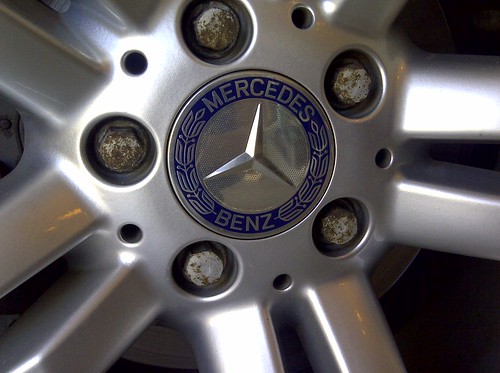
I started to get corrosion on all of my lug nuts. I went to the dealership and they immediately asked what wheel cleaner that I was using. I said the same one that I've used on my AMG for 9 years. Their reply was that MB was using a different (eco friendly) coating on the nuts and that wheel cleaner has been dissolving it...leading to corrosion. They replaced all 20.
Super Member
Joined: Dec 2007
Posts: 898
Likes: 9
From: Woodstock, IL
His 2019 RAM Cummins Turbo Diesel Laramie; Her's 2007 ML320 CDI P3; Mine BMW R1200R
Welcome to the NEW Mercedes Benz.
I started having this issue with my 2007 ML. They replaced them once, and I have had to buy ever since.
All my other previous MB's and other cars never had this issue.
Now I have to suck it up and call it "maintenance"
I started having this issue with my 2007 ML. They replaced them once, and I have had to buy ever since.
All my other previous MB's and other cars never had this issue.
Now I have to suck it up and call it "maintenance"

Super Member
Joined: Sep 2011
Posts: 714
Likes: 38
From: CANADA eh!
Very very slow
I have the same issue.
My co-workers were teasing me about it.
I was thinking buying aftermarket market lug nuts to replaced these.
Maybe the aftermarket ones will be better than these original ones.
My co-workers were teasing me about it.
I was thinking buying aftermarket market lug nuts to replaced these.
Maybe the aftermarket ones will be better than these original ones.
Super Member
Joined: Sep 2011
Posts: 714
Likes: 38
From: CANADA eh!
Very very slow
This is the reason I am considering aftermarket.


MBWorld Fanatic!
Joined: Oct 2009
Posts: 2,071
Likes: 20
Nissan GT-R BE / '12 Ducati-1199 Panigale S / '12 C300-4M Loaded/GLK350-4M Loaded
I use a very small amount of anti-seize compound on the threads ONLY, not on the bold seat or hub-ring. This will prevent these new bolts from rusting on permanently... (for those that no longer rotate their tires). Make sure you properly torque the bolts to 110 ft lbs. By the way, for all the nerds who have doubts, as long are you follow the above instructions.... 1) use sparingly, 2) do not apply any to where the bolts seats in the wheel, 3) do not apply to hub ring or where the wheel and the hub meet and there will be no problems. Doing it for over 40 years with no issues.

Copied from ENGINEERING WEEKLY:
I did a little more research on this and here is what I found...
The general consensus seems to be that the use of anti seize on vehicle lug nuts that are properly torqued, is not going to contribute to the lug nuts loosening. It seems wherever I posted, more people reported using anti seize on lug nuts for years without any problems, than people advised against it.
It also seems to be considered that the application of lubricants in general to properly torqued fasteners will not contribute to their loosening. It is generally considered that traverse movement is what causes fasteners to loosen www.boltscience.com.
However, it probably makes good sense that the anti seize be very sparingly applied to *only* the lug stud thread and *not* the contact or interface point between the end of the lug nut and the rim. The question of whether or not to decrease the manufacturers torque specifications to account for the application of anti seize is debatable, but if you can keep the anti seize off of the contact point between the end of the lug nut where it seats in the rim, you are probably better off staying with the manufacturers specified torque. The following information will explain why.
I found some info regarding wheel stud failure here...
http://www.boltscience.com/pages/failure4.htm
The link directly below goes to a page with some interesting information regarding the difference in axial loads (preload) obtained when coating *only* the threads with anti seize, and when coating both the threads *and* under the bolt head or nut. Apparently, if the information is reliable, there is a huge change in axial load when you coat both the threads and under the bolt head or nut, as compared with hardly any change in axial load when you apply anti seize to *only* the threads and not under the bolt head or nut.
http://www.mechanicsupport.com/articleTorqueWrench.html
If you look at the table / charts provided near the bottom of the page at the link directly above, using anti seize on the *thread only* shows slightly less axial load than using no lubricant at all. This is probably due to the wide variation in friction of identical bolts with dry un-lubricated threads, which can be as much as +/- 25% to +/- 50%.. See the following links for more information.
http://www.surebolt.com/
http://www.rstechltd.com/TITERITE.PDF
http://www.rstechltd.com/Advanced%20...Oct%202001.pdf
http://www.rstechltd.com/Technical_articles.htm (some more articles here)
http://www.hexagon.de/dose/dose-1e.pdf
http://euler9.tripod.com/fasteners/preload.html
They say that about 90% of the input torque of the torque wrench is consumed by friction, with 50% of the friction being between the bolt head and mounting surface, 40% of the friction being in the threads, & only 10% being the stretch of the bolt which produces the axial force or preload.
The article at mechanicsupport.com references another article titled "Failure of bolts in helicopter main rotor drive plate assembly due to improper application of lubricant" by N. Eliaz, G. Gheorghiu, H. Sheinkopf, O. Levi, G. Shemesh, A. Mordecai, H. Artzi, Published in Engineering Failure Analysis #10, pages 443-451
Here is a link to the article published in engineering failure analysis.
http://www.eng.tau.ac.il/~neliaz/Papers_Files/C27.pdf
Regarding the article at the link directly above, it seems it was not the use of anti seize that was causing failure of the helicopter rotor bolts, but rather the improper application of anti seize that was causing failure, namely applying anti seize under the bolt head or nut instead of only applying it to the fastener threads. Applying anti seize under the bolt heads and/or nuts increased axial loads substantially. It also appears Tightening by turning the bolt instead of, as specified, the nut, resulted in more torque going into bolt tension rather than being absorbed by bolt head friction.
Would it be unreasonable to require engineers to design all *critical* threaded joints & related components (wheel lugs, helicopter rotors, etc. anything where a life may be at stake) to be able to withstand the maximum axial loads produced by torquing lubricated threads to specs with a torque wrench ? The lubricants vary, so they should design for the lube that produces the lowest friction.
It seems anti seize and/or lube on threaded joints is a good idea in most cases, plus applying the lube produces more consistent and accurate transmission of torque, so it would appear to make sense to always design for a lubricated joint.
I have also read that research has shown that not lubricating the thread and nut face will result in the friction value increasing on re-tightening which subsequently reduces the preload for a given torque value. This would be especially important regarding lug nuts, which are being removed & re-tightened frequently for tire rotations.
It seems all torque specifications should specify both dry and lubricated threads for reference, & if lubrication or anti seize is required or recommended, it's exact application method should be specified. Although ideally the joint would be designed to withstand a worse case scenario application of lube on both the threads and under the bolt head.
At the http://www.boltscience.com website, they say that it is actually transverse joint movement that causes loosening of threaded fasteners. In the case of a wheel, friction between the wheel and the hub prevent traverse movement. The friction is generated by the axial force generated by the torqued lug nuts.
Because of traverse movement causing joint loosening, it's probably best to not use anti seize or any lube on the back side of the rim where it contacts the rotors, hub, or brake drums.
My feeling is the benefit of using anti seize on lug nut studs outweigh any concerns of problems it may cause. I do think it is a good idea to apply the anti seize very sparingly to the lug studs, and to try to not get any anti seize on the contact point between the end of the lug & where it seats in the rim lug recesses.
The last time I used anti seize on lug nuts, I think the way I did it was to smear a small dab of anti seize on the end of the lug stud, then run a lug nut on the stud by hand back and forth until a thin film of anti seize covers most all the stud (almost up to the rim). I ran the nut back and forth on the stud enough times so that it did not push a glob of anti seize between the end of the lug and where the lug seats in the rim when I was ready to finally tighten the lugs down. I wiped off any anti seize at the lug end as required.
If anti seize is used however, it seems wise to be extra careful to make sure that any shop you take your vehicle too only uses a hand torque wrench to tighten the lugs to the correct torque.
The main question that remains is whether to torque the lugs to manufacturers specs or reduce the torque by a percentage to compensate for any increase in axial loads due to the anti seize. Based on the information given above, & my experience, my guess is to just torque the lugs to manufacturers specs, especially if you use the anti seize very sparingly and can keep it off the end of the lug nuts where they seat with the rims.
This has worked for me and I think the fact that it did not warp my rotors is a clue that the axial loads are not too outrageous. Shops warp rotors all the time with power impact wrenches, and they might turn or replace your rotors, but they don't replace the lug studs as a precaution for the possibility of them being overstressed by the impact which warped the rotors.
This reasoning may not apply to all vehicles, especially larger tucks, but for most pickups and cars, I would think that if you have not warped the rotors and you do not feel any brake pulsations, then you probably have not overstressed the lug nuts & studs to a point of any real concern. Impact wrenches break lug studs off all the time, I doubt anyone has broken a lug stud off with a hand torque wrench, whether coated with anti seize or not. I doubt any rotors have been warped with a hand torque wrench, anti seize on lug studs or not.
John
Copied from ENGINEERING WEEKLY:
I did a little more research on this and here is what I found...
The general consensus seems to be that the use of anti seize on vehicle lug nuts that are properly torqued, is not going to contribute to the lug nuts loosening. It seems wherever I posted, more people reported using anti seize on lug nuts for years without any problems, than people advised against it.
It also seems to be considered that the application of lubricants in general to properly torqued fasteners will not contribute to their loosening. It is generally considered that traverse movement is what causes fasteners to loosen www.boltscience.com.
However, it probably makes good sense that the anti seize be very sparingly applied to *only* the lug stud thread and *not* the contact or interface point between the end of the lug nut and the rim. The question of whether or not to decrease the manufacturers torque specifications to account for the application of anti seize is debatable, but if you can keep the anti seize off of the contact point between the end of the lug nut where it seats in the rim, you are probably better off staying with the manufacturers specified torque. The following information will explain why.
I found some info regarding wheel stud failure here...
http://www.boltscience.com/pages/failure4.htm
The link directly below goes to a page with some interesting information regarding the difference in axial loads (preload) obtained when coating *only* the threads with anti seize, and when coating both the threads *and* under the bolt head or nut. Apparently, if the information is reliable, there is a huge change in axial load when you coat both the threads and under the bolt head or nut, as compared with hardly any change in axial load when you apply anti seize to *only* the threads and not under the bolt head or nut.
http://www.mechanicsupport.com/articleTorqueWrench.html
If you look at the table / charts provided near the bottom of the page at the link directly above, using anti seize on the *thread only* shows slightly less axial load than using no lubricant at all. This is probably due to the wide variation in friction of identical bolts with dry un-lubricated threads, which can be as much as +/- 25% to +/- 50%.. See the following links for more information.
http://www.surebolt.com/
http://www.rstechltd.com/TITERITE.PDF
http://www.rstechltd.com/Advanced%20...Oct%202001.pdf
http://www.rstechltd.com/Technical_articles.htm (some more articles here)
http://www.hexagon.de/dose/dose-1e.pdf
http://euler9.tripod.com/fasteners/preload.html
They say that about 90% of the input torque of the torque wrench is consumed by friction, with 50% of the friction being between the bolt head and mounting surface, 40% of the friction being in the threads, & only 10% being the stretch of the bolt which produces the axial force or preload.
The article at mechanicsupport.com references another article titled "Failure of bolts in helicopter main rotor drive plate assembly due to improper application of lubricant" by N. Eliaz, G. Gheorghiu, H. Sheinkopf, O. Levi, G. Shemesh, A. Mordecai, H. Artzi, Published in Engineering Failure Analysis #10, pages 443-451
Here is a link to the article published in engineering failure analysis.
http://www.eng.tau.ac.il/~neliaz/Papers_Files/C27.pdf
Regarding the article at the link directly above, it seems it was not the use of anti seize that was causing failure of the helicopter rotor bolts, but rather the improper application of anti seize that was causing failure, namely applying anti seize under the bolt head or nut instead of only applying it to the fastener threads. Applying anti seize under the bolt heads and/or nuts increased axial loads substantially. It also appears Tightening by turning the bolt instead of, as specified, the nut, resulted in more torque going into bolt tension rather than being absorbed by bolt head friction.
Would it be unreasonable to require engineers to design all *critical* threaded joints & related components (wheel lugs, helicopter rotors, etc. anything where a life may be at stake) to be able to withstand the maximum axial loads produced by torquing lubricated threads to specs with a torque wrench ? The lubricants vary, so they should design for the lube that produces the lowest friction.
It seems anti seize and/or lube on threaded joints is a good idea in most cases, plus applying the lube produces more consistent and accurate transmission of torque, so it would appear to make sense to always design for a lubricated joint.
I have also read that research has shown that not lubricating the thread and nut face will result in the friction value increasing on re-tightening which subsequently reduces the preload for a given torque value. This would be especially important regarding lug nuts, which are being removed & re-tightened frequently for tire rotations.
It seems all torque specifications should specify both dry and lubricated threads for reference, & if lubrication or anti seize is required or recommended, it's exact application method should be specified. Although ideally the joint would be designed to withstand a worse case scenario application of lube on both the threads and under the bolt head.
At the http://www.boltscience.com website, they say that it is actually transverse joint movement that causes loosening of threaded fasteners. In the case of a wheel, friction between the wheel and the hub prevent traverse movement. The friction is generated by the axial force generated by the torqued lug nuts.
Because of traverse movement causing joint loosening, it's probably best to not use anti seize or any lube on the back side of the rim where it contacts the rotors, hub, or brake drums.
My feeling is the benefit of using anti seize on lug nut studs outweigh any concerns of problems it may cause. I do think it is a good idea to apply the anti seize very sparingly to the lug studs, and to try to not get any anti seize on the contact point between the end of the lug & where it seats in the rim lug recesses.
The last time I used anti seize on lug nuts, I think the way I did it was to smear a small dab of anti seize on the end of the lug stud, then run a lug nut on the stud by hand back and forth until a thin film of anti seize covers most all the stud (almost up to the rim). I ran the nut back and forth on the stud enough times so that it did not push a glob of anti seize between the end of the lug and where the lug seats in the rim when I was ready to finally tighten the lugs down. I wiped off any anti seize at the lug end as required.
If anti seize is used however, it seems wise to be extra careful to make sure that any shop you take your vehicle too only uses a hand torque wrench to tighten the lugs to the correct torque.
The main question that remains is whether to torque the lugs to manufacturers specs or reduce the torque by a percentage to compensate for any increase in axial loads due to the anti seize. Based on the information given above, & my experience, my guess is to just torque the lugs to manufacturers specs, especially if you use the anti seize very sparingly and can keep it off the end of the lug nuts where they seat with the rims.
This has worked for me and I think the fact that it did not warp my rotors is a clue that the axial loads are not too outrageous. Shops warp rotors all the time with power impact wrenches, and they might turn or replace your rotors, but they don't replace the lug studs as a precaution for the possibility of them being overstressed by the impact which warped the rotors.
This reasoning may not apply to all vehicles, especially larger tucks, but for most pickups and cars, I would think that if you have not warped the rotors and you do not feel any brake pulsations, then you probably have not overstressed the lug nuts & studs to a point of any real concern. Impact wrenches break lug studs off all the time, I doubt anyone has broken a lug stud off with a hand torque wrench, whether coated with anti seize or not. I doubt any rotors have been warped with a hand torque wrench, anti seize on lug studs or not.
John
Last edited by MBRedux; May 12, 2012 at 06:02 PM.
Trending Topics
MB World Stories
The Best of Mercedes & AMG

Manual Mercedes? 6 Times Sindelfingen Let Drivers Have All The Fun
Verdad Gallardo
Mercedes SLR McLaren 722 S Is Extremely Rare Example Modified by McLaren
Verdad Gallardo
8 Classic Boxy Mercedes Designs That Have Aged Like Fine Wine
Verdad Gallardo
Flawlessly Restored Mercedes 190E Evo II Heads to Auction
Verdad Gallardo
Electric Mercedes C-Class Unveiled: 11 Things You Need to Know
Verdad Gallardo
Mercedes EQS Gets A Major Update: Everything You Need to Know
Verdad Gallardo
5 Underrated Mercedes-Benz Models That Don't Get the Love They Deserve
Verdad Gallardo
Mercedes 300D Has Pushed Well Past 1 Million Miles and It Ain't Stopping
Verdad Gallardo
10 Most Reliable Mercedes-Benz Models You Can Buy Used
Verdad Gallardo
Thread Starter
Member
Joined: Apr 2003
Posts: 180
Likes: 2
From: boston
02clk55///2010GLK350
It's not the shaft of the bolt. They were fine. The heads were rusting and looked like crap. The wheel cleaner caused the coating to break down leading to the rust. The shafts looked new.
MBWorld Fanatic!
Joined: Oct 2009
Posts: 2,071
Likes: 20
Nissan GT-R BE / '12 Ducati-1199 Panigale S / '12 C300-4M Loaded/GLK350-4M Loaded
 ...... never mind!
Super Member
Joined: Dec 2007
Posts: 898
Likes: 9
From: Woodstock, IL
His 2019 RAM Cummins Turbo Diesel Laramie; Her's 2007 ML320 CDI P3; Mine BMW R1200R
I have always use anti seize on lug nuts since as far as I can remember. I also tighten with a MAC torque wrench to specs. Even in my 'past life' as a mechanic (or "tech" as they are called now). Never had an issue.
And before my 07 ML, I had never noticed the chrome heads of the lug nuts rust on ANY car, let alone a Mercedes. Also never noticed PLASTIC fuel lids on Mercedes till I got my 07. Wife's prior E320 had metal lid.
Now I see pretty much all German cars with this rusty lug issue, usually around 2 years old and so on. Been told it's to protect the environment when the vehicle is recycled so the coating doesn't seep into the ground water or something.
I say give me a good plated lug nut as I drink bottled water anyways.
And as for warranty, they will replace it once (or twice?) if I remember correctly.
And before my 07 ML, I had never noticed the chrome heads of the lug nuts rust on ANY car, let alone a Mercedes. Also never noticed PLASTIC fuel lids on Mercedes till I got my 07. Wife's prior E320 had metal lid.
Now I see pretty much all German cars with this rusty lug issue, usually around 2 years old and so on. Been told it's to protect the environment when the vehicle is recycled so the coating doesn't seep into the ground water or something.
I say give me a good plated lug nut as I drink bottled water anyways.
And as for warranty, they will replace it once (or twice?) if I remember correctly.
Super Member
Joined: Apr 2010
Posts: 520
Likes: 5
From: Tromsø, 69° 41' N
2010 GLK 220CDI 4M BlueEFFICIENCY
"Chrome heads" or just coated? The lug bolts of our GLK have an appearance of being galvanized, however may only be coated by some stuff. They have now been thru their 3rd "season" of 6 months on salted roads and no signs of rust/corrosion. The brake rotors are a different story. 
Anti seize is not used, but a MIL-G spec. grease is sparingly applied on the bolts. The wheels are not washed with any kind of wheel cleaner, but water & soap (of course always Swissvax brand!). Assuming the lug bolts are same P/Ns (I don't believe they are stamped on -), I don't see why the culprit seems to be more frequently observed "over there".
The issue is reported before on this forum.
Anti seize is not used, but a MIL-G spec. grease is sparingly applied on the bolts. The wheels are not washed with any kind of wheel cleaner, but water & soap (of course always Swissvax brand!). Assuming the lug bolts are same P/Ns (I don't believe they are stamped on -), I don't see why the culprit seems to be more frequently observed "over there".
The issue is reported before on this forum.

Member
Joined: Aug 2010
Posts: 184
Likes: 2
none
Embarrassing but there's worse. We have a Toyota Sienna as well. After about 2 years the paint on the aluminum wheels started to bubble. In fact it started to do so at the end of the first summer we had it so it hadn't even been through winter when it started. Only washed by hand with soap and water. Needless to say I took it back to the dealer at the end of year 3 (end of std warranty) and asked them to do something about it. They offered to have them stripped and refinished. Well, that was the best thing since now they look great and don't show any signs of recurrence of the bubbling/peeling paint finish. Took a week though.
So moral of the story, there are worse things. At least the lug nuts are an easy thing to replace quickly even though I agree that it's fairly poor quality that they should even need it.
So moral of the story, there are worse things. At least the lug nuts are an easy thing to replace quickly even though I agree that it's fairly poor quality that they should even need it.
MBWorld Fanatic!
Joined: Oct 2009
Posts: 2,071
Likes: 20
Nissan GT-R BE / '12 Ducati-1199 Panigale S / '12 C300-4M Loaded/GLK350-4M Loaded
 if you were to ask me?
Super Member
Joined: Sep 2011
Posts: 714
Likes: 38
From: CANADA eh!
Very very slow
iewoals:
I have a 2008 Sienna LTD AWD ...and I do not have the problem you mentioned or rust on lug nuts. I just dislike the run flat tires on it and NO Spare tire.
MBRedux:
I will complaint for sure.
I am just wondering if MB will replace these lug nuts AFTER the warranty runs out.
The warranty starts to run out for some of us here.
I have a 2008 Sienna LTD AWD ...and I do not have the problem you mentioned or rust on lug nuts. I just dislike the run flat tires on it and NO Spare tire.
MBRedux:
I will complaint for sure.
I am just wondering if MB will replace these lug nuts AFTER the warranty runs out.
The warranty starts to run out for some of us here.
MBWorld Fanatic!
Joined: Oct 2009
Posts: 2,071
Likes: 20
Nissan GT-R BE / '12 Ducati-1199 Panigale S / '12 C300-4M Loaded/GLK350-4M Loaded
iewoals:
I have a 2008 Sienna LTD AWD ...and I do not have the problem you mentioned or rust on lug nuts. I just dislike the run flat tires on it and NO Spare tire.
MBRedux:
I will complaint for sure.
I am just wondering if MB will replace these lug nuts AFTER the warranty runs out.
The warranty starts to run out for some of us here.
I have a 2008 Sienna LTD AWD ...and I do not have the problem you mentioned or rust on lug nuts. I just dislike the run flat tires on it and NO Spare tire.
MBRedux:
I will complaint for sure.
I am just wondering if MB will replace these lug nuts AFTER the warranty runs out.
The warranty starts to run out for some of us here.
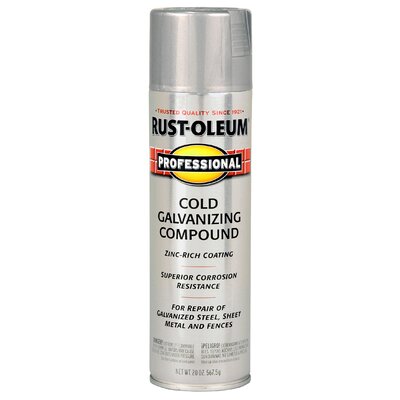
This is not just silver paint... it's Zinc rich ...

Rust-Oleum Professional 20 Oz Gray Cold Galvanizing Compound Spray Paint #7584-838
Member
Joined: Aug 2010
Posts: 184
Likes: 2
none
Here's an example of what the bubbling paint would look like.

Last edited by iewoals; May 15, 2012 at 11:43 AM. Reason: add image of wheel bubbling
Member
Joined: Aug 2010
Posts: 184
Likes: 2
none
Sure... they should! Just don't give in... give them hell until they do... at nearly $12 bucks each, that's $240 for all 4 corners! Have them just give them to you, and do it yourself. This way MB doesn't have to pay the labor cost, and they should comply... However, before replacing your old corroded bolts with the new ones, coat the heads with a shot or two of this to help reduce rust...
This is not just silver paint... it's Zinc rich ...
Rust-Oleum Professional 20 Oz Gray Cold Galvanizing Compound Spray Paint #7584-838
This is not just silver paint... it's Zinc rich ...
Rust-Oleum Professional 20 Oz Gray Cold Galvanizing Compound Spray Paint #7584-838

MBWorld Fanatic!
Joined: Oct 2009
Posts: 2,071
Likes: 20
Nissan GT-R BE / '12 Ducati-1199 Panigale S / '12 C300-4M Loaded/GLK350-4M Loaded


