


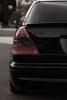


The Ultimate Sleeper- CLK350

Thread Starter
MBWorld Fanatic!
Joined: Feb 2008
Posts: 2,230
Likes: 1
From: Los Angeles, California
2006 E55 BEAST
The Ultimate Sleeper- CLK350
My friend got an Audi S5 a little while ago, it's the first fast car he has and let's just say that he's been kinda cocky since he got it. The other night he was on Sunset with a friend of ours when a CLK350 with a couple of 20 year olds came up next to him.
Other Driver: Hey man, nice car
Friend: Thanks
Other Driver: So those are really fast right?
Friend: Yeah, it's really fast
Other Driver: You want to do a quick run? I know you'll win but I want to see by how much.
So they did a rolling start and the CLK350 put a car length on the S5. They stopped at the next light and the driver of the CLK350 said, "it might be a CLK350, but it's chipped"
Lol. Needless to say, it put my friend in his place. But seriously, a CLK350 can be that quick with just a chip?
Other Driver: Hey man, nice car
Friend: Thanks
Other Driver: So those are really fast right?
Friend: Yeah, it's really fast
Other Driver: You want to do a quick run? I know you'll win but I want to see by how much.
So they did a rolling start and the CLK350 put a car length on the S5. They stopped at the next light and the driver of the CLK350 said, "it might be a CLK350, but it's chipped"
Lol. Needless to say, it put my friend in his place. But seriously, a CLK350 can be that quick with just a chip?
MBWorld Fanatic!
Joined: Dec 2007
Posts: 1,184
Likes: 3
W210 E55 & W204 C63
His shifts sucked, but still.
Trending Topics

MBWorld Fanatic!
Joined: Oct 2006
Posts: 4,856
Likes: 4
02 C32 AMG
the Audi S5 is faster than a stock C32. Even the new mustang GTs arent faster than the C32.......As far as C350s go, i have had a loaner C350 and they arent slow....but they trap around 95 or so in a 1/4 mile on a good day IIRC....and the mustang GTs (if its a new one you are referring to) trap above 100...so i'm guessing someone was granny shifting. idk.....either way......i dont see a CLK350 keeping up with an S5.......a CLK550 isnt as fast as an S5
MB World Stories
The Best of Mercedes & AMG

Dubai Tuner Gives the Mercedes G-Class An Entirely New Look
Verdad Gallardo
Six Gift Ideas Your AMG Loving Dad or Grad Will Cherish

7 Craziest Things AMG Gas Ever Built
Verdad Gallardo
New Electric Mercedes-AMG GT 4-Door Coupe Unveiled: 10 Things You Need to Know
Verdad Gallardo
6 Mercedes Models That Did NOT Age Well (But Are Somehow Still Cool)
Verdad Gallardo
Manual Mercedes? 6 Times Sindelfingen Let Drivers Have All The Fun
Verdad Gallardo
Mercedes SLR McLaren 722 S Is Extremely Rare Example Modified by McLaren
Verdad Gallardo
8 Classic Boxy Mercedes Designs That Have Aged Like Fine Wine
Verdad Gallardo
Flawlessly Restored Mercedes 190E Evo II Heads to Auction
Verdad Gallardo


MBWorld Fanatic!

Joined: Sep 2002
Posts: 3,679
Likes: 0
CLS55 AMG
Twice; the C350s trap more like 99+, 14.1 sec @ 99.1 mph in this test:
http://www.motortrend.com/roadtests/...ecs_price.html


As to the original race, a CLK350 shouldn't beat an S5, chipped or not....chips on n/a motors are worthless for the most part, unless it's a SW detuned motor a'la the C63. The S5 traps at 105-106, you'd need an extra 60-70 hp out of that 3.5L 6 to get there, and that's going to take extensive engine mods or spray.
http://www.motortrend.com/roadtests/...ecs_price.html
As to the original race, a CLK350 shouldn't beat an S5, chipped or not....chips on n/a motors are worthless for the most part, unless it's a SW detuned motor a'la the C63. The S5 traps at 105-106, you'd need an extra 60-70 hp out of that 3.5L 6 to get there, and that's going to take extensive engine mods or spray.
Last edited by Improviz; Dec 13, 2009 at 08:13 PM.
MBWorld Fanatic!
Joined: Sep 2002
Posts: 3,679
Likes: 0
CLS55 AMG
A stock CLK550 would probably pull an S5, or at a minimum run even with it. Again, there've been objective tests run of tests on normally aspirated motors, and no discernable gains were made (see "Chips Ahoy" article in C&D, where they tested seven chips by Dinan, others, and got no gains). But fortunately, a 550 woudn't need any gains to make a good showing here.

Member
Joined: Jan 2008
Posts: 78
Likes: 0
From: San Diego, CA
2009 Z06, 2006 Touareg V8, 1999 A4 1.8t, 1997 M3
As everyone else has said, no way the CLK350 keeps up... CLK550 would run even or pull, depending on mph range of the run. A properly-driven S5 would get the jump on a 550 out of the hole and probably stay there 'til 80-90 mph.
350 though? Not unless your friend in the S5 was shifting well below redline, or started his run too low in the rev range. The 4.2 is useless below 3500, and still pretty anemic until 5k or so.
350 though? Not unless your friend in the S5 was shifting well below redline, or started his run too low in the rev range. The 4.2 is useless below 3500, and still pretty anemic until 5k or so.


MBWorld Fanatic!
Joined: May 2009
Posts: 1,044
Likes: 2
211-55
The average 1/4 mile for an S5 is roughly 1 second better than a CLK350. That's somewhere in the neighborhood of 6-7 car lengths around 100 mph. An S5 is AWD and not very torquey so the only way your buddy could have screwed up from a slow roll is on the shifting. I wouldn't expect the CLK350 to win in a million years with just a tune.

Super Member
Joined: Sep 2006
Posts: 537
Likes: 0
From: San Jose, CA
Charger SRT-8
That's what I'm thinking and then allowing for a few minor factors, very plausible outcome.
That isn't hard to do
An unprepped, bone stock SLK350 with TC on ran consistent 14.1s (2.1/2.2 60fts) @ 98-99mph at Sears Point a few years ago too. Are the CLKs geared any different?
Due to torque management and emission restrictions, that statement is more untrue now than it was before. Btw, what do stock vs. chipped C63s pick up on the dyno?
Twice; the C350s trap more like 99+, 14.1 sec @ 99.1 mph in this test:
http://www.motortrend.com/roadtests/...ecs_price.html
http://www.motortrend.com/roadtests/...ecs_price.html
As to the original race, a CLK350 shouldn't beat an S5, chipped or not....chips on n/a motors are worthless for the most part, unless it's a SW detuned motor a'la the C63. The S5 traps at 105-106, you'd need an extra 60-70 hp out of that 3.5L 6 to get there, and that's going to take extensive engine mods or spray.
MBWorld Fanatic!
Joined: Sep 2002
Posts: 3,679
Likes: 0
CLS55 AMG
But aside from such a case, there simply aren't that many gains to be made by timing tweaks. Here's a good article from Hot Rod that illustrates this.
They took a 360CI V8 with a 10.5:1 compression and tested its horsepower/torque output with several different octane fuels (87 octane, 91 octane, 91 octane plus "octane booster", and 100 octane race fuel. They also varied the timing to try and optimize it to the fuel rating, recording horsepower numbers at several different timing settings for each octane rating.
Guess how much extra horsepower using 100 octane fuel with optimized timing netted them over 91 octane with optimized timing?
[corrected--oops!] 7.5 horsepower.

It is also illustrative to note that their maximum horsepower numbers at *all* octane ratings, from 87 octane all the way up to 100 octane, came with the *same* setting of timing advance: 36 degrees. Deviating from this setting in either direction, regardless of the octane of the fuel being used, resulted in lower measured horsepower and torque. The only octane level that benefited from a different level of timing advance was 114 octane, wherein maximum power was reached by retarding, not advancing timing, to 31 degrees of advance.
Their conclusions:
Originally Posted by Hot Rod magazine
Conclusion
Frankly, the results of our test were a bit confounding. We consulted the chemists at Super 104+ and our pal Tim Wusz at 76 to help figure out what had happened. Here’s what we learned:
First, the octane booster did work. However, we saw that octane alone does not deliver horsepower; it only allows more complete utilization of the hard parts in the engine. Wusz said, “An engine does not know what the octane rating of the fuel is, unless it is too low”; note that we made less power by adding booster to 91-octane fuel. The lower the octane of the base fuel, the more benefit you’ll get from octane booster.
Also, the Edelbrock heads on our test motor have high-efficiency combustion chambers that are very tolerant of low octane levels, and their aluminum construction helps, too. Older chamber designs may not be as efficient and may succumb to abnormal combustion more easily.
But most of all, we discovered that our presumption that higher-octane fuels burn slower than lower-octane fuels (and therefore require more ignition lead) is largely incorrect. There are too many other fuel-formulation issues at work to assign a general rule about octane. Race fuel tends to have a more powerful formulation than pump gas, regardless of octane rating, because it is denser and can release more power and heat. (Note that we made the best power with 114 octane with the least ignition lead, indicating it had the fastest burn time.) California pump gas is blended with methyl tertiary-butyl ether (MTBE), alcohol, and other ingredients damaging to performance. Knowing what we know now, we’ll always experiment with ignition timing—both higher and lower settings—when we change fuels rather than presuming that more power can be made with more octane due to more timing.
Frankly, the results of our test were a bit confounding. We consulted the chemists at Super 104+ and our pal Tim Wusz at 76 to help figure out what had happened. Here’s what we learned:
First, the octane booster did work. However, we saw that octane alone does not deliver horsepower; it only allows more complete utilization of the hard parts in the engine. Wusz said, “An engine does not know what the octane rating of the fuel is, unless it is too low”; note that we made less power by adding booster to 91-octane fuel. The lower the octane of the base fuel, the more benefit you’ll get from octane booster.
Also, the Edelbrock heads on our test motor have high-efficiency combustion chambers that are very tolerant of low octane levels, and their aluminum construction helps, too. Older chamber designs may not be as efficient and may succumb to abnormal combustion more easily.
But most of all, we discovered that our presumption that higher-octane fuels burn slower than lower-octane fuels (and therefore require more ignition lead) is largely incorrect. There are too many other fuel-formulation issues at work to assign a general rule about octane. Race fuel tends to have a more powerful formulation than pump gas, regardless of octane rating, because it is denser and can release more power and heat. (Note that we made the best power with 114 octane with the least ignition lead, indicating it had the fastest burn time.) California pump gas is blended with methyl tertiary-butyl ether (MTBE), alcohol, and other ingredients damaging to performance. Knowing what we know now, we’ll always experiment with ignition timing—both higher and lower settings—when we change fuels rather than presuming that more power can be made with more octane due to more timing.
Last edited by Improviz; Dec 19, 2009 at 12:58 PM.
Super Member
Joined: Sep 2006
Posts: 537
Likes: 0
From: San Jose, CA
Charger SRT-8
Good info, thank you. However the net from 87 to 100 was 7.5hp but that is pretty small.
However, modern fuel injected engines are a little different and the motor in point was an unrestricted 360ci with a carburetor.
Factor in fuel injection, in some cases 2 spark plugs per cylinder and/or 4valves, a similar sized motor making 425 to 500+hp with full emissions, a 6400rpm+ redline, etc., the octane differential can be more significant. Free up the emission controls and now it's different ball game.
For me, I went from 398/422 to 413/432 running 96+ octane vs. 91 octane. My baselines before tuning were 385/382 on another dyno and canned tune 388/402 on tuning dyno.
However, modern fuel injected engines are a little different and the motor in point was an unrestricted 360ci with a carburetor.
Factor in fuel injection, in some cases 2 spark plugs per cylinder and/or 4valves, a similar sized motor making 425 to 500+hp with full emissions, a 6400rpm+ redline, etc., the octane differential can be more significant. Free up the emission controls and now it's different ball game.
For me, I went from 398/422 to 413/432 running 96+ octane vs. 91 octane. My baselines before tuning were 385/382 on another dyno and canned tune 388/402 on tuning dyno.
MBWorld Fanatic!
Joined: Sep 2002
Posts: 3,679
Likes: 0
CLS55 AMG
Good info, thank you. However the net from 87 to 100 was 7.5hp but that is pretty small.
However, modern fuel injected engines are a little different and the motor in point was an unrestricted 360ci with a carburetor.
Factor in fuel injection, in some cases 2 spark plugs per cylinder and/or 4valves, a similar sized motor making 425 to 500+hp with full emissions, a 6400rpm+ redline, etc., the octane differential can be more significant. Free up the emission controls and now it's different ball game.
However, modern fuel injected engines are a little different and the motor in point was an unrestricted 360ci with a carburetor.
Factor in fuel injection, in some cases 2 spark plugs per cylinder and/or 4valves, a similar sized motor making 425 to 500+hp with full emissions, a 6400rpm+ redline, etc., the octane differential can be more significant. Free up the emission controls and now it's different ball game.
MBWorld Fanatic!
Joined: Jul 2006
Posts: 2,146
Likes: 1
From: L.A., CA
'08 M5, '10 Land Cruiser
As everyone else has said, no way the CLK350 keeps up... CLK550 would run even or pull, depending on mph range of the run. A properly-driven S5 would get the jump on a 550 out of the hole and probably stay there 'til 80-90 mph.
350 though? Not unless your friend in the S5 was shifting well below redline, or started his run too low in the rev range. The 4.2 is useless below 3500, and still pretty anemic until 5k or so.
350 though? Not unless your friend in the S5 was shifting well below redline, or started his run too low in the rev range. The 4.2 is useless below 3500, and still pretty anemic until 5k or so.
MBWorld Fanatic!
Joined: Sep 2002
Posts: 3,679
Likes: 0
CLS55 AMG
No no no, I think a CLK350 would give a CLK550 a good race...don't you?
After all, it was you wrote that a CLK550 could give a CLS55 a good race, and a CLK350 is down 100 hp on the 550, just like the 550 is down over 100 hp on the 55....so I'm certain you'd agree, yes?
After all, it was you wrote that a CLK550 could give a CLS55 a good race, and a CLK350 is down 100 hp on the 550, just like the 550 is down over 100 hp on the 55....so I'm certain you'd agree, yes?
Last edited by Improviz; Dec 19, 2009 at 07:42 PM.

Banned
Joined: Apr 2009
Posts: 555
Likes: 0
From: Mexico
09 CLK550
No no no, I think a CLK350 would give a CLK550 a good race...don't you?
After all, it was you wrote that a CLK550 could give a CLS55 a good race, and a CLK350 is down 100 hp on the 550, just like the 550 is down over 100 hp on the 55....so I'm certain you'd agree, yes?
After all, it was you wrote that a CLK550 could give a CLS55 a good race, and a CLK350 is down 100 hp on the 550, just like the 550 is down over 100 hp on the 55....so I'm certain you'd agree, yes?
They are same body and only have 150lbs diff with clk 550 having more Hp and TQ.


