Still interested in turbocharging your E55?

MBWorld Fanatic!


Joined: Aug 2003
Posts: 8,882
Likes: 1,214
From: In my garage
E55, GLS450, GL63, GLE350
Yes, I do understand. The blow off valve will shut when you see a situation where there is no vacuum. When the engine is under vacuum conditions such as driving down the highway, the BOV will vent to the atmosphere. When you open the throttle, it will slam shut and you will have boost to your engine.
The easiest way to demostrate how the BOV works is to ride in a forced induction car with a vacuum/boost gauge and note when it is seeing vacuum and seeing boost. If the system is properly designed, you will only see boost in the intake when you open the throttle to accelerate. Under constant conditions, the engine will operate under vacuum conditions. Most turbocharged/supercharged engines only see boost for a very small percentage of time - unless you are on a race course constantly braking and accelerating or if you are a wreckless driver.
The turbo/supercharger will always be blowing air through the plumbing but the amount of that air that enters your engine will depend on the position of the BOV, wastegate(turbo only) and your supercharger/turbo's ability to provide the volume and pressure. It's not rocket science and is actually easy to design the system but the hard part is the tuning and fueling to compensate for the extra air and heat.

MBWorld Fanatic!
Joined: Feb 2008
Posts: 1,803
Likes: 12
From: Charleston, SC
GL450
I used to work on WRX's a lot, so the FI/turbo system is pretty familiar to me.
A BOV is spring loaded. Meaning it will only open if the turbo is making enough pressure to push it open. Or more specifically, if the difference between the manifold pressure and the turbo outlet pressure is greater than the pressure required to open the BOV spring.
BOV springs I've encountered are in the 7 to 10 PSI range required to open them (somewhat similar to wastegate spring pressures). I've pushed them with my thumb, and they are fairly stiff. This means that during normal driving, the BOV is closed. It only opens if the turbo is making over 7 psi and the throttle is (mostly) closed. Meaning, it's only open during boosted gear shifts or when you suddenly slam the throttle closed after being on decent boost.
When driving gently, the engine simply isn't making much boost because there's not enough exhaust gas flowing through the turbo. Hence, BOV is closed.
A wastegate and BOV both cut effective boost to the throttle body, but for different reasons and in different ways. The wastegate cuts exhaust gas to the turbo, essentially spooling it down, when the boost controller registers overboost. The BOV cuts boost to the engine when the turbo is making a lot of boost but the engine isn't accepting it.
As for how this would affect an aftermarket FI Benz? You can easily use a MBC or EBC to adjust boost levels, including having multiple max boost settings (if your EBC will support it). As for tuning, that's the issue. A boost variable fuel pressure riser may work, as this would skip all of the complicated open loop/closed loop/PTFB issues of electronic tuning. As boost increases, fuel delivery increases.
BlownV8, what type of engine management are you using?
A BOV is spring loaded. Meaning it will only open if the turbo is making enough pressure to push it open. Or more specifically, if the difference between the manifold pressure and the turbo outlet pressure is greater than the pressure required to open the BOV spring.
BOV springs I've encountered are in the 7 to 10 PSI range required to open them (somewhat similar to wastegate spring pressures). I've pushed them with my thumb, and they are fairly stiff. This means that during normal driving, the BOV is closed. It only opens if the turbo is making over 7 psi and the throttle is (mostly) closed. Meaning, it's only open during boosted gear shifts or when you suddenly slam the throttle closed after being on decent boost.
When driving gently, the engine simply isn't making much boost because there's not enough exhaust gas flowing through the turbo. Hence, BOV is closed.
A wastegate and BOV both cut effective boost to the throttle body, but for different reasons and in different ways. The wastegate cuts exhaust gas to the turbo, essentially spooling it down, when the boost controller registers overboost. The BOV cuts boost to the engine when the turbo is making a lot of boost but the engine isn't accepting it.
As for how this would affect an aftermarket FI Benz? You can easily use a MBC or EBC to adjust boost levels, including having multiple max boost settings (if your EBC will support it). As for tuning, that's the issue. A boost variable fuel pressure riser may work, as this would skip all of the complicated open loop/closed loop/PTFB issues of electronic tuning. As boost increases, fuel delivery increases.
BlownV8, what type of engine management are you using?
MBWorld Fanatic!
Joined: Aug 2003
Posts: 8,882
Likes: 1,214
From: In my garage
E55, GLS450, GL63, GLE350
Don't confuse a BOV with a spring actuated pop-off valve(POV). However, there are dual function BOV's that also have an integrated pop-off valve that releases pressure under boost pressures that are too high.
A BOV or diverter valve is a vacuum activated relief valve. It can be diverted to the intake or to the atmosphere. A pop-off valve is activated by excess pressure and is diverted to the atmosphere.
Here is a good picture of a typical turbo system. Not the difference between the POV & BOV.
A BOV or diverter valve is a vacuum activated relief valve. It can be diverted to the intake or to the atmosphere. A pop-off valve is activated by excess pressure and is diverted to the atmosphere.
Here is a good picture of a typical turbo system. Not the difference between the POV & BOV.
MBWorld Fanatic!
Joined: Feb 2008
Posts: 1,803
Likes: 12
From: Charleston, SC
GL450
Here's the wikipedia diagram of inside a BOV.

That spring takes a good bit of pressure to compress. It requires not just negative manifold pressure (vacuum), but also positive intake pressure (from the turbo). If the spring is soft enough to open just from negative manifold pressure, the valve would be open at idle. In a true BOV (not a recirc valve) that would mean you're pulling unfiltered, unmetered (hasn't passed through the MAF) air into the manifold. This will often stall the car. I had this happen before on a friend's car, and we had to tighten the BOV spring so it would stay closed except under boosted lift throttle, or else the car would stall while idling.
This isn't the best source, but it does put it nicely:
One quibble with that site is they oversimplify the situation. The BOV spring does two things. It keeps the valve closed except when it needs to be open (to relieve boost). It also keeps the valve closed when you build boost very rapidly and the boost pressure in the intake is greater than the boost pressure in the manifold, simply because the intake path to the BOV is shorter than the manifold path to the BOV and the manifold hasn't "caught up" yet. A turbo can potentially build boost fast enough that the pressure differential between the two will open the BOV if the spring is too weak. This would mean wasting boost at the very time you're trying to build it (fast turbo spool up).
In theory I guess you could run a recirculating valve with a weak spring so it was open at idle, but generally you want it closed at idle. If it's an atmospheric venting BOV, you definitely want it closed at idle.
That spring takes a good bit of pressure to compress. It requires not just negative manifold pressure (vacuum), but also positive intake pressure (from the turbo). If the spring is soft enough to open just from negative manifold pressure, the valve would be open at idle. In a true BOV (not a recirc valve) that would mean you're pulling unfiltered, unmetered (hasn't passed through the MAF) air into the manifold. This will often stall the car. I had this happen before on a friend's car, and we had to tighten the BOV spring so it would stay closed except under boosted lift throttle, or else the car would stall while idling.
This isn't the best source, but it does put it nicely:
Originally Posted by http://www.frozenboost.com/stpg.php?page_id=bov
the purpose of the spring in a BOV is to hold the BOV closed when your throttle plate is closed, IE during idle and deceleration conditions. Under these conditions, the vacuum in your intake manifold is much higher than the vacuum in your intake piping (therefore under the BOV piston) so the BOV has a natural tendency to spring open. Being open isn't even a problem if you are recirculating your BOV into your intake, however if you are NOT recirculating, it can allow unfiltered air into your intake which IS a problem.
In theory I guess you could run a recirculating valve with a weak spring so it was open at idle, but generally you want it closed at idle. If it's an atmospheric venting BOV, you definitely want it closed at idle.

Junior Member
Joined: Jan 2009
Posts: 72
Likes: 0
300sd 300td e55
I understand the whole turbo blow off valve thing I have a 300sd that runs 20+ PSI and it makes high boost when I'm cruising on the highway not full but high i guess now in hindsight your right because the gas car would require a lot less power than my diesel to keep moving at the same speed lol my bad I understand that when your off the pedal it will make no boost
thanks guys
thanks guys
MBWorld Fanatic!
Joined: Aug 2003
Posts: 8,882
Likes: 1,214
From: In my garage
E55, GLS450, GL63, GLE350
Here's the wikipedia diagram of inside a BOV.
That spring takes a good bit of pressure to compress. It requires not just negative manifold pressure (vacuum), but also positive intake pressure (from the turbo). If the spring is soft enough to open just from negative manifold pressure, the valve would be open at idle. In a true BOV (not a recirc valve) that would mean you're pulling unfiltered, unmetered (hasn't passed through the MAF) air into the manifold. This will often stall the car. I had this happen before on a friend's car, and we had to tighten the BOV spring so it would stay closed except under boosted lift throttle, or else the car would stall while idling.
This isn't the best source, but it does put it nicely:
One quibble with that site is they oversimplify the situation. The BOV spring does two things. It keeps the valve closed except when it needs to be open (to relieve boost). It also keeps the valve closed when you build boost very rapidly and the boost pressure in the intake is greater than the boost pressure in the manifold, simply because the intake path to the BOV is shorter than the manifold path to the BOV and the manifold hasn't "caught up" yet. A turbo can potentially build boost fast enough that the pressure differential between the two will open the BOV if the spring is too weak. This would mean wasting boost at the very time you're trying to build it (fast turbo spool up).
In theory I guess you could run a recirculating valve with a weak spring so it was open at idle, but generally you want it closed at idle. If it's an atmospheric venting BOV, you definitely want it closed at idle.
That spring takes a good bit of pressure to compress. It requires not just negative manifold pressure (vacuum), but also positive intake pressure (from the turbo). If the spring is soft enough to open just from negative manifold pressure, the valve would be open at idle. In a true BOV (not a recirc valve) that would mean you're pulling unfiltered, unmetered (hasn't passed through the MAF) air into the manifold. This will often stall the car. I had this happen before on a friend's car, and we had to tighten the BOV spring so it would stay closed except under boosted lift throttle, or else the car would stall while idling.
This isn't the best source, but it does put it nicely:
One quibble with that site is they oversimplify the situation. The BOV spring does two things. It keeps the valve closed except when it needs to be open (to relieve boost). It also keeps the valve closed when you build boost very rapidly and the boost pressure in the intake is greater than the boost pressure in the manifold, simply because the intake path to the BOV is shorter than the manifold path to the BOV and the manifold hasn't "caught up" yet. A turbo can potentially build boost fast enough that the pressure differential between the two will open the BOV if the spring is too weak. This would mean wasting boost at the very time you're trying to build it (fast turbo spool up).
In theory I guess you could run a recirculating valve with a weak spring so it was open at idle, but generally you want it closed at idle. If it's an atmospheric venting BOV, you definitely want it closed at idle.
The Wikipedia site is correct. Read what it says closely. When the throttle plate is open the spring shuts from the fact that the vacuum is removed. It's got nothing to do with boost pressure. At idle, the throttle plate is in the closed position. When you go WOT or accelerate, the throttle plate opens or is in the open postion. It is vacuum operated and that vacuum determines weither it is open or closed. You are correct that boost can open the valve if the spring is too weak. If you remove the vacuum, it will be in the closed position all the time and will cause the car to get very hot and will also lead to what is caused compressor surge.
In a forced induction application and when the air has no place to go once the throttle closes, it sends a shock wave back through the plumbing and will eventually cause the supercharger or turbocharger vanes to fail. Some say that low boost applications, 5 psi or less, don't need a BOV but that has not been my experience. The BOV was made to reduce damage to compressors by releving that shockwave when the throttle plate closes after letting off the accelerator. It also has a benifit of cooling the intake charge down because it is not under constant pressure. The difference in intake temperature is much higher when you have a BOV that fails. The air just stays hot and the engine runs hotter from that hot air.
The BOV is in the OPEN position when the car is at idle and while you are driving under vacuum. The air is being blown out of the BOV or recirculation valve because it is under vacuum conditions and does not need boost. The engine can't suck air from the outside because the filtered air is being pushed into the engine and the excess air is venting out of the BOV or recirculation valve. When you open the throttle, the valve shuts the vent to the atmosphere, if you are running a MAP based engine management system, or recirculation point, if you are running a MAF based engine management system, so you can get boost.
Some people actually put a small filter on the BOV but it is rarely needed. Here is why: http://www.youtube.com/watch?v=B_RWZASfE3M The only time it can actually suck air from that point is if one of the forced induction hoses from the supercharger or turbo becomes detached and or if you have a really ineffiucient turbo or supercharger. If that happens, the engine will be able to suck air through the BOV. It has happed to me when I was running high boost and blew a hose clamp. After that, I switched to a very high pressure hose clamp so it would not happen again.
Here is some good reading that furtner explains how a turbo system works:
http://www.atlanticz.ca/zclub/techtips/turbo/index.html
Here are a few good you tube clips of a BOV in action. Notice that when the accelerator is depressed the BOV valve closes. When the throttle is closed, the BOV opens.
http://www.youtube.com/watch?v=M2--IIMSa9A
http://www.youtube.com/watch?v=yfodN...eature=channel
http://www.youtube.com/watch?v=GLnWDF5zDc4
Last edited by BlownV8; Aug 28, 2009 at 10:18 PM.

MBWorld Fanatic!
Joined: Nov 2008
Posts: 1,560
Likes: 10
210 55
A turbo has a wastegate, which is spring loaded. Most tubos I've used have an 8 pound spring, meaning no matter what you set the boost controller at, the turbo makes at least 8 pounds. It's only when the turbo is making more boost than the wastegate spring that the boost controller can do anything. So you can't really turn a turbo "off."
This unit only intercept the pressure hose for the wast gate & electronically open or close the wastgate gradually. with this you can set the boost at 8 - 10 - 12 psi (example) but not minor that the calibrated spring in the wast valve. (8psi calibraed spring for example, you can't go under 8psi.. only 8psi + regulable.. 10 12 15..)
Fabio Daniel
Fabio Daniel
MB World Stories
The Best of Mercedes & AMG

New Electric Mercedes-AMG GT 4-Door Coupe Unveiled: 10 Things You Need to Know
Verdad Gallardo
6 Mercedes Models That Did NOT Age Well (But Are Somehow Still Cool)
Verdad Gallardo
Manual Mercedes? 6 Times Sindelfingen Let Drivers Have All The Fun
Verdad Gallardo
Mercedes SLR McLaren 722 S Is Extremely Rare Example Modified by McLaren
Verdad Gallardo
8 Classic Boxy Mercedes Designs That Have Aged Like Fine Wine
Verdad Gallardo
Flawlessly Restored Mercedes 190E Evo II Heads to Auction
Verdad Gallardo
Electric Mercedes C-Class Unveiled: 11 Things You Need to Know
Verdad Gallardo
Mercedes EQS Gets A Major Update: Everything You Need to Know
Verdad Gallardo
5 Underrated Mercedes-Benz Models That Don't Get the Love They Deserve
Verdad Gallardo
Thread Starter
Senior Member
Joined: Jul 2007
Posts: 327
Likes: 2
To expand a little more, there are 3 things that control your boost level: exhaust gas, wastegate, and boost controller.
When the engine isn't producing a lot of exhaust gas (low RPM, low throttle) the turbo isn't spooled up. As you start to add throttle and/or RPM, the turbo starts generating boost. Until you hit the wastegate spring pressure, the turbo's boost level is dependent on exhaust gas. After the wastegate spring pressure, the turbo is making enough boost that the boost controller can open the wastegate and drop boost back down to the wastegate spring pressure. So if you have a 8 pound wastegate spring, and a two stage electronic boost controller (EBC), you could have a street 8 psi and race 12 psi setting, just by hitting a button on the EBC.
One thing to note here is that the engine can make boost even at part throttle, so you can have a situation called PTFB (part throttle, full boost) when using a manual boost controller. This may be very difficult to tune around. Max, do you know?
When the engine isn't producing a lot of exhaust gas (low RPM, low throttle) the turbo isn't spooled up. As you start to add throttle and/or RPM, the turbo starts generating boost. Until you hit the wastegate spring pressure, the turbo's boost level is dependent on exhaust gas. After the wastegate spring pressure, the turbo is making enough boost that the boost controller can open the wastegate and drop boost back down to the wastegate spring pressure. So if you have a 8 pound wastegate spring, and a two stage electronic boost controller (EBC), you could have a street 8 psi and race 12 psi setting, just by hitting a button on the EBC.
One thing to note here is that the engine can make boost even at part throttle, so you can have a situation called PTFB (part throttle, full boost) when using a manual boost controller. This may be very difficult to tune around. Max, do you know?
MBWorld Fanatic!
Joined: Feb 2008
Posts: 1,803
Likes: 12
From: Charleston, SC
GL450
That's good news. This is a big issue within the Subaru community, with regards to the stock ECU.
Thread Starter
Senior Member
Joined: Jul 2007
Posts: 327
Likes: 2
Subaru guys have those 'tip-in' features which adds more fuel in closed loop by tricking the o2 sensor when the boost starts. I can make a 'tip-in' map on the AEM so the car will run richer AFR's will partial throttle boosting if someone really wants to. It's one of the AEM's best features. My E320 has one but I haven't run that map in 10K miles and I've had no problems.

Former Vendor of MBWorld
Joined: Jan 2009
Posts: 600
Likes: 0
From: CA working like a slave
C63 AMG Arctic w/ Stage 1 Tune, DoubleXX pipe, MCD-631X coming soon
What t hell see my eyes!! this is real!!!???
This car are ready??? who are the owner?, damn! this is insane looks an awesome work!
https://mbworld.org/forums/members/s...amg-turbo.html
Fabio Daniel
This car are ready??? who are the owner?, damn! this is insane looks an awesome work!
https://mbworld.org/forums/members/s...amg-turbo.html
Fabio Daniel
MBWorld Fanatic!
Joined: Nov 2008
Posts: 1,560
Likes: 10
210 55


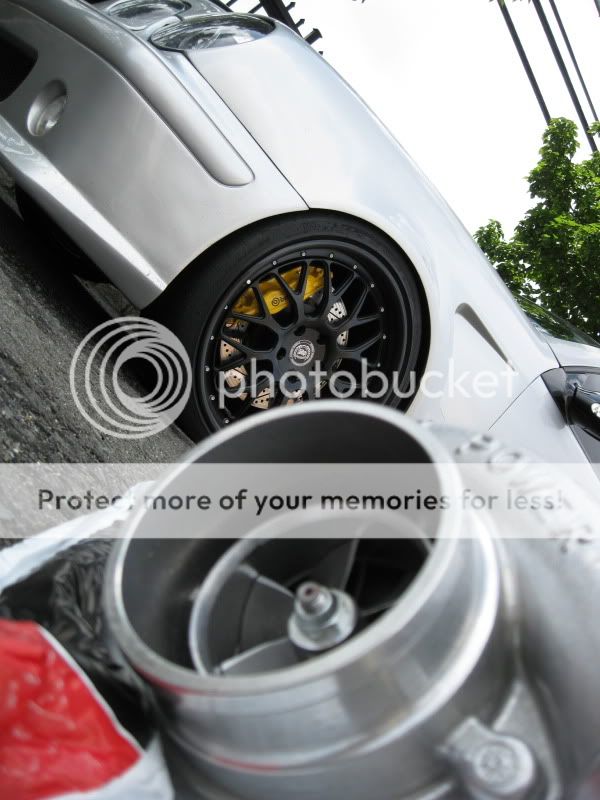
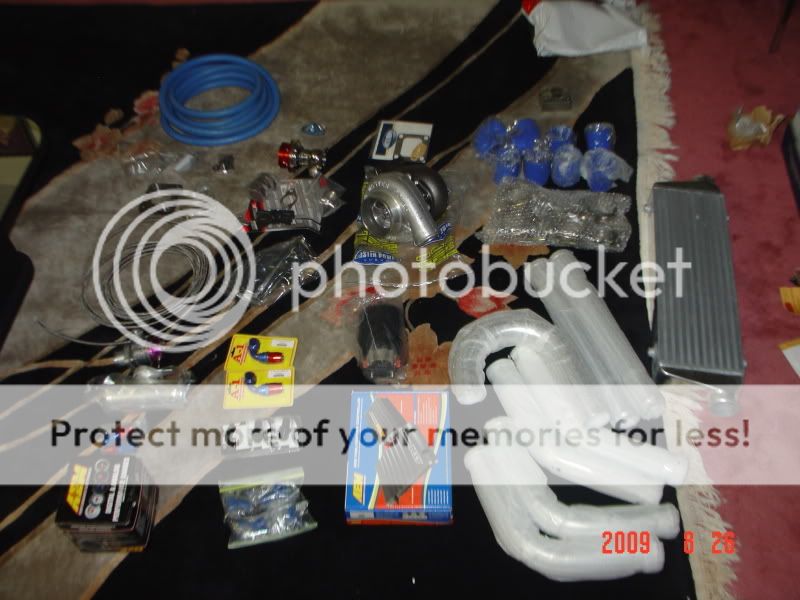

Out Of Control!!
Joined: Feb 2003
Posts: 13,489
Likes: 96
haters crazy

Super Member
Joined: Aug 2005
Posts: 514
Likes: 0
From: Normal, IL
02 E55; 99 CLK430 (Sold)
https://mbworld.org/forums/clk-class...serrrrr-d.html
Last edited by jtbeche; Sep 11, 2009 at 11:01 PM.
MBWorld Fanatic!
Joined: Feb 2008
Posts: 1,803
Likes: 12
From: Charleston, SC
GL450
My impression was that although the rear mount has to move the air a long distance, the limited volume of the piping/system reduces the turbo lag. A separate intercooler seems like it would make you "feel" the remote turbo location more.
Very curious to see how this turns out, though.
Thread Starter
Senior Member
Joined: Jul 2007
Posts: 327
Likes: 2