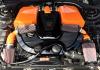



Just spoke w/Speedriven... Latest news is SICK!

MBWorld Fanatic!
Joined: Jul 2012
Posts: 1,556
Likes: 15
From: Canada
07 E63 + 07 CLK63CAB
Sorry guys, misread the chart, I am a fool the air/fuel was richer after 5500.
With all the issues with cooling and you supercharged guys running tanks in the trunk or reservoirs in the engine compartment, what actually cools the tank besides filling with ice, once that melts the temp goes up. The lines running from the engine to the tank provide a method of cooling but most I see are rubber. Would it be an idea to run 1 inch copper tubes with aluminum fins wrap around to provide a method to dissipate the heat to and from the tank in the first place, also have not seen any tank with external cooling. Correct me if I am on the wrong track, just wondering out loud?
Not trying to be smart, just a question!
With all the issues with cooling and you supercharged guys running tanks in the trunk or reservoirs in the engine compartment, what actually cools the tank besides filling with ice, once that melts the temp goes up. The lines running from the engine to the tank provide a method of cooling but most I see are rubber. Would it be an idea to run 1 inch copper tubes with aluminum fins wrap around to provide a method to dissipate the heat to and from the tank in the first place, also have not seen any tank with external cooling. Correct me if I am on the wrong track, just wondering out loud?
Not trying to be smart, just a question!

Banned
Joined: Apr 2012
Posts: 668
Likes: 2
From: Racine, WI
2003 E55 AMG
Sorry guys, misread the chart, I am a fool the air/fuel was richer after 5500.
With all the issues with cooling and you supercharged guys running tanks in the trunk or reservoirs in the engine compartment, what actually cools the tank besides filling with ice, once that melts the temp goes up. The lines running from the engine to the tank provide a method of cooling but most I see are rubber. Would it be an idea to run 1 inch copper tubes with aluminum fins wrap around to provide a method to dissipate the heat to and from the tank in the first place, also have not seen any tank with external cooling. Correct me if I am on the wrong track, just wondering out loud?
Not trying to be smart, just a question!
With all the issues with cooling and you supercharged guys running tanks in the trunk or reservoirs in the engine compartment, what actually cools the tank besides filling with ice, once that melts the temp goes up. The lines running from the engine to the tank provide a method of cooling but most I see are rubber. Would it be an idea to run 1 inch copper tubes with aluminum fins wrap around to provide a method to dissipate the heat to and from the tank in the first place, also have not seen any tank with external cooling. Correct me if I am on the wrong track, just wondering out loud?
Not trying to be smart, just a question!

MBWorld Fanatic!
Joined: Dec 2005
Posts: 2,347
Likes: 1
From: So Cal
2006 Weistec 3.0L SC'd C55, 2006 MaxPsi PT6466 Turbo'd M3, 2019 Maserati GTS , 2020Alfa Quadrifoglio
Check the website. The 63 kit stage stage 1-3 requires removal of secondary air injection but not the 50-state legal stage 0 kit. However, the 55 kit does not mention anything about removing the secondary air injection pump. I imagine that if you wanted to upgrade to a 82TB, bigger injectors and colder plugs with reservoir tank, exhaust heads then removing the pump would be necessary. When my car is completed I doubt it will pass smog here in So. Cal.
MBWorld Fanatic!
Joined: Dec 2005
Posts: 2,347
Likes: 1
From: So Cal
2006 Weistec 3.0L SC'd C55, 2006 MaxPsi PT6466 Turbo'd M3, 2019 Maserati GTS , 2020Alfa Quadrifoglio
Are you talking about the appearance or the performance? There is a good reason why Weistec has the inlet to one side. The throttle body inlet in front of the firewall is extremely restrictive. Even Speedriven is contending with this issue today.
I visited my car at Weistec today and they have some things in the works that will completely eliminate the Hot Air Intake issue, However they will not be altering their intake to a dual inlet design in my opinion.
I visited my car at Weistec today and they have some things in the works that will completely eliminate the Hot Air Intake issue, However they will not be altering their intake to a dual inlet design in my opinion.

MBWorld Fanatic!

Joined: Jan 2009
Posts: 1,175
Likes: 101
From: Australia
09 C63
Check the website. The 63 kit stage stage 1-3 requires removal of secondary air injection but not the 50-state legal stage 0 kit. However, the 55 kit does not mention anything about removing the secondary air injection pump. I imagine that if you wanted to upgrade to a 82TB, bigger injectors and colder plugs with reservoir tank, exhaust heads then removing the pump would be necessary. When my car is completed I doubt it will pass smog here in So. Cal.
MB World Stories
The Best of Mercedes & AMG

Manual Mercedes? 6 Times Sindelfingen Let Drivers Have All The Fun
Verdad Gallardo
Mercedes SLR McLaren 722 S Is Extremely Rare Example Modified by McLaren
Verdad Gallardo
8 Classic Boxy Mercedes Designs That Have Aged Like Fine Wine
Verdad Gallardo
Flawlessly Restored Mercedes 190E Evo II Heads to Auction
Verdad Gallardo
Electric Mercedes C-Class Unveiled: 11 Things You Need to Know
Verdad Gallardo
Mercedes EQS Gets A Major Update: Everything You Need to Know
Verdad Gallardo
5 Underrated Mercedes-Benz Models That Don't Get the Love They Deserve
Verdad Gallardo
Mercedes 300D Has Pushed Well Past 1 Million Miles and It Ain't Stopping
Verdad Gallardo
10 Most Reliable Mercedes-Benz Models You Can Buy Used
Verdad Gallardo
Member
Joined: Feb 2013
Posts: 166
Likes: 1
From: Barrington, IL
06 e55 amg
Are you talking about the appearance or the performance? There is a good reason why Weistec has the inlet to one side. The throttle body inlet in front of the firewall is extremely restrictive. Even Speedriven is contending with this issue today.
I visited my car at Weistec today and they have some things in the works that will completely eliminate the Hot Air Intake issue, However they will not be altering their intake to a dual inlet design in my opinion.
I visited my car at Weistec today and they have some things in the works that will completely eliminate the Hot Air Intake issue, However they will not be altering their intake to a dual inlet design in my opinion.

Banned
Joined: Sep 2010
Posts: 2,542
Likes: 72
From: Palatine, IL
Speedriven
Are you talking about the appearance or the performance? There is a good reason why Weistec has the inlet to one side. The throttle body inlet in front of the firewall is extremely restrictive. Even Speedriven is contending with this issue today.
I visited my car at Weistec today and they have some things in the works that will completely eliminate the Hot Air Intake issue, However they will not be altering their intake to a dual inlet design in my opinion.
I visited my car at Weistec today and they have some things in the works that will completely eliminate the Hot Air Intake issue, However they will not be altering their intake to a dual inlet design in my opinion.

MBWorld Fanatic!


Joined: Aug 2003
Posts: 8,882
Likes: 1,212
From: In my garage
E55, GLS450, GL63, GLE350
Every 10° increase in intake temps cost you around 1% power. Cold air starting and finishing the compression process is the key to making power in forced induction engines.
Last edited by BlownV8; Jul 26, 2013 at 11:19 AM.
MBWorld Fanatic!
Joined: Dec 2005
Posts: 2,347
Likes: 1
From: So Cal
2006 Weistec 3.0L SC'd C55, 2006 MaxPsi PT6466 Turbo'd M3, 2019 Maserati GTS , 2020Alfa Quadrifoglio
Both companies have good designs and I don't know how restrictive the throttle body placement and the angle of the inlet will affect flow but Weistec's argument seems to make some sense however my first look at the placment of the cone filter in the center of the engine over the top of the exhaust manifold immediately screamed of heat soak even before I heard about all the AITs with OEM 55k customers. That is why they are addressing it by experimenting with several new designs to create a "RAM cold air intake effect".
Yes, starting with hot air in a forced induction engine is very bad. The hot air will get even hotter when it is compressed. You overload the intercoolers ability to cool the intake charge.
Every 10° increase in intake temps cost you around 1% power. Cold air starting and finishing the compression process is the key to making power in forced induction engines.
Every 10° increase in intake temps cost you around 1% power. Cold air starting and finishing the compression process is the key to making power in forced induction engines.
MBWorld Fanatic!
Joined: Dec 2005
Posts: 2,347
Likes: 1
From: So Cal
2006 Weistec 3.0L SC'd C55, 2006 MaxPsi PT6466 Turbo'd M3, 2019 Maserati GTS , 2020Alfa Quadrifoglio
Even though I'm now a customer of Weistec, I prefer the symetrical look of the dual intakes. That's what I had before they removed my Kleemann Autorotor for this Whipple.
I've also read that the Autorotor design is actually MORE efficient than the Whipple/Lysholm design but Weistec states the other way around.
Can somebody chime in on which one is more efficient and why?
I've also read that the Autorotor design is actually MORE efficient than the Whipple/Lysholm design but Weistec states the other way around.
Can somebody chime in on which one is more efficient and why?
MBWorld Fanatic!
Joined: Aug 2003
Posts: 8,882
Likes: 1,212
From: In my garage
E55, GLS450, GL63, GLE350
In order of efficiency.
1. Rotrex 80% +
2. a. Autorotor 70% - 80%
2. b. Lysholm 70% - 80%
3. Vortech/Procharger 60% - 80%
4. Eaton 40% - 55%
In comparison to the Autorotor and Lysholm with similar displacement, the same size Autorotor will outperform the Lysholm.
1. Rotrex 80% +
2. a. Autorotor 70% - 80%
2. b. Lysholm 70% - 80%
3. Vortech/Procharger 60% - 80%
4. Eaton 40% - 55%
In comparison to the Autorotor and Lysholm with similar displacement, the same size Autorotor will outperform the Lysholm.

MBWorld Fanatic!
Joined: May 2011
Posts: 1,109
Likes: 20
From: Las Vegas, NV
1000Hp Diesel Trucks, 2019 E63s
Where did you acquire this information?


Banned
Joined: Sep 2010
Posts: 2,542
Likes: 72
From: Palatine, IL
Speedriven
The customer chewed thru his tranny. We will be rebuilding it soon
The car has been running for months customer put around 5k miles on it until his trans went
After the dyno customer took the car, enjoyed the whole summer and dropped it off a month ago to rebuild the trans.
The car has been running for months customer put around 5k miles on it until his trans went
After the dyno customer took the car, enjoyed the whole summer and dropped it off a month ago to rebuild the trans.