


 what power train has been swapped in? I vote for air ride and stock steelies.




My 'new' W108

Thread Starter
Super Member
Joined: Feb 2013
Posts: 659
Likes: 25
From: SE MI
2005 Mercedes E55 AMG
My 'new' W108
Picked up a W108 last week, a 1969 280s to be exact. It was relatively nearby, the body is great (original paint), and it has a powertrain swap done so I don't feel too bad about hacking into it as opposed to an all-original car. Interior is pretty trashed, looking to source a full interior or possibly an entire parts car to get this thing up to snuff. I'll get it cleaned up, 'reliable', and lower it a bit for now. Long term plans include a modern MB powertrain, rack and pinion steering, and a larger wheel setup that still retains the classic style
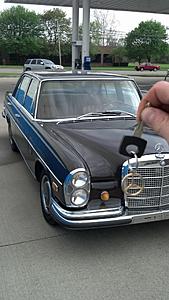
I'll update this as I dig into it, but I've got bigger projects now so she'll only get attention when I'm frustrated with another

I'll update this as I dig into it, but I've got bigger projects now so she'll only get attention when I'm frustrated with another
Trending Topics
MBWorld Fanatic!


Joined: Oct 2002
Posts: 3,083
Likes: 88
LOVE the 108 - i had dreams of dropping in a 55K powertrain (before 2nd kid came)- can be done for about $10K + air rdie - search out lewdahotdog on instagram - he was featured in stanceworks and has turned his 108 into a beauty -
also - i think weistec is doing a 108 too -
also - i think weistec is doing a 108 too -
MB World Stories
The Best of Mercedes & AMG

Manual Mercedes? 6 Times Sindelfingen Let Drivers Have All The Fun
Verdad Gallardo
Mercedes SLR McLaren 722 S Is Extremely Rare Example Modified by McLaren
Verdad Gallardo
8 Classic Boxy Mercedes Designs That Have Aged Like Fine Wine
Verdad Gallardo
Flawlessly Restored Mercedes 190E Evo II Heads to Auction
Verdad Gallardo
Electric Mercedes C-Class Unveiled: 11 Things You Need to Know
Verdad Gallardo
Mercedes EQS Gets A Major Update: Everything You Need to Know
Verdad Gallardo
5 Underrated Mercedes-Benz Models That Don't Get the Love They Deserve
Verdad Gallardo
Mercedes 300D Has Pushed Well Past 1 Million Miles and It Ain't Stopping
Verdad Gallardo
10 Most Reliable Mercedes-Benz Models You Can Buy Used
Verdad Gallardo
Thread Starter
Super Member
Joined: Feb 2013
Posts: 659
Likes: 25
From: SE MI
2005 Mercedes E55 AMG
For now, I'm looking into running a stock reproduction 6.3L exhaust for this thing from the big, mid muffler section rearward...
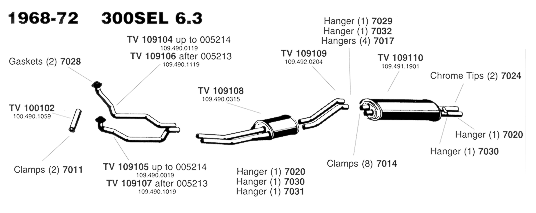
Won't sound stock with the 302 but I think it'll offer an interesting presence.
It'll be static low with the stock steelies/hubs for now. Any money to this old girl will be spent on the swap before suspension.
LOVE the 108 - i had dreams of dropping in a 55K powertrain (before 2nd kid came)- can be done for about $10K + air rdie - search out lewdahotdog on instagram - he was featured in stanceworks and has turned his 108 into a beauty -
also - i think weistec is doing a 108 too -
also - i think weistec is doing a 108 too -
Been out of town since right after I picked this up, I'm actually anxious to get back there and at least start cleaning
And thanks everyone else! It'll be slow for awhile, but I'll post progress when I have it
Last edited by rockthemullet; May 19, 2014 at 12:44 PM.
Super Member
Joined: Jan 2007
Posts: 852
Likes: 3
From: Sleepy Hollow, IL
65 Chevelle Wagon w/ C5 frame, 08 ML63, 04 S600, 04 E55,(sold) 00 ML55,(sold) 98 C43-55K Swap
Thread Starter
Super Member
Joined: Feb 2013
Posts: 659
Likes: 25
From: SE MI
2005 Mercedes E55 AMG

PLATINUM SPONSOR

Joined: Jun 2008
Posts: 3,834
Likes: 65
From: Texas
2003 CL55
Looks clean on the outside and those MB`s seem to be near bullet proof!
__________________

E63 Biturbo, UPD Cold Air induction kit, UPD performance crank pulley and UPD adjustable rear suspension with ride height adjustment.
CL55 UPD Cold Air Boost kit, UPD 3000 stall converter, UPD 77mm SC clutched pulley and beltwrap kit, Custom long tubes, UPD crank pulley , UPD suspension kit, UPD SC pulley, Aux. HE, Trunk tank w/rule 2000 pump, Mezeire pump, UPD 5pc idler set, Aluminum rotor hats.
www.ultimatepd.com
instagram @ultimate_pd
facebook.com/ultimatepd
E63 Biturbo, UPD Cold Air induction kit, UPD performance crank pulley and UPD adjustable rear suspension with ride height adjustment.
CL55 UPD Cold Air Boost kit, UPD 3000 stall converter, UPD 77mm SC clutched pulley and beltwrap kit, Custom long tubes, UPD crank pulley , UPD suspension kit, UPD SC pulley, Aux. HE, Trunk tank w/rule 2000 pump, Mezeire pump, UPD 5pc idler set, Aluminum rotor hats.
www.ultimatepd.com
instagram @ultimate_pd
facebook.com/ultimatepd

MBWorld Fanatic!
Joined: Dec 2006
Posts: 1,124
Likes: 32
From: Florida-Germany-New York
2004 E55,1969 300SEL6.3,2011 ML350 BlueTec Diesel,2005 ML400 CDI
And one step beyond is the W109 6.3. About 10cm longer. The 1968-69 versions remained the fastest 4 door sedans ever built until the introduction of the E55.
The W109 300SEL 6.3 marked Mercedes-Benz "unofficial" return to racing after the 1955 Le Mans tragedy with a brief, but successful racing history winning at Macao and finishing 2nd overall at the 1971 24 hours of Spa only because car required extra refueling stops. The W109, fondly referred to as the "Rote Sau" (Red Pig) heralded the beginning of AMG.
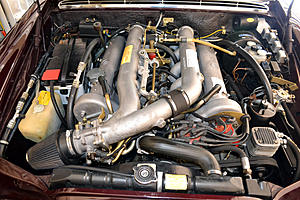
The story behind the 300 SEL 6.3 should seem pretty familiar to most American muscle car fans. A maverick engineer with racing ties secretly takes a great big engine from another application (in this case, a 6.3-liter V-8 from a limousine), and stuffs it into some poor, innocent midsize sedan (a 300 SEL that started out with a 3.0-liter inline-six). The engine is re-engineered with high-performance parts, and the suspension and chassis are modified to handle the weight and power. A limited number of theses absurdly complicated, powerful and expensive vehicles are then unleashed on an unsuspecting public. That engineer was Erich "Hot Wax" Waxenberger at the Daimler-Benz experimental department. Developed in 1960, the engine is designated 100.981, and is commonly referred to as the M-100. This was Mercedes' first production V-8. The engine technology came directly from Mercedes' 1950’s Grand Prix 300SLR "Silver Arrows". It is highly sophisticated and durable with single-overhead cams, a nitrided crankshaft, seven main bearings, sodium-filled valves, hardened valve seats and molybdenum-coated piston rings. Normally aspirated with direct, timed mechanical fuel injection and dual plenums with tuned ram air induction and massive oil cooler. A very similar system can be seen on all of the 300SLR race cars of the mid 1950’s.
Another of the more advanced aspects of the car is its self leveling air suspension. The forerunner of the Airmatic system. Four air chambers with bellows replace steel springs, pressurized at up to 228 p.s.i with a recirculated alcohol/air mixture fed from an engine-driven compressor.
A ZF limited slip differential incorporates it’s own oil cooler. Full independent suspension with anti-dive technology and the first production car ever with 4 wheel ventilated disc brakes and fitted with rare 15" wheels.
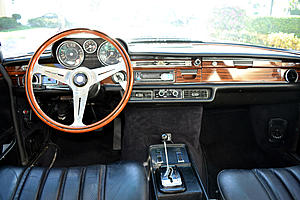
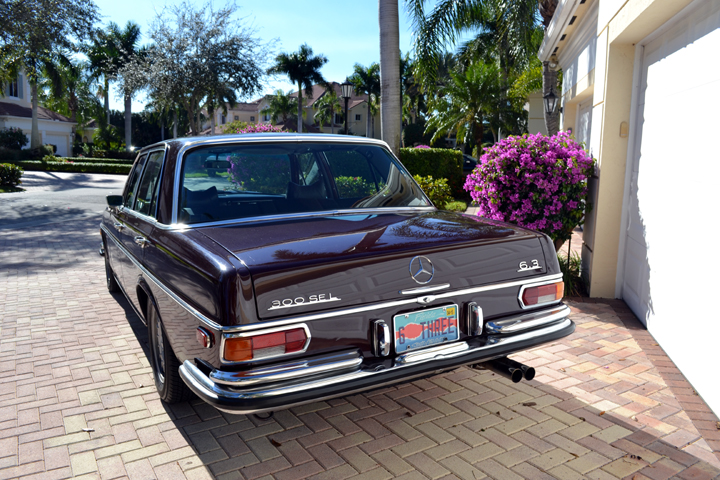
The ground-up restoration of my W109 took more than 20 years to complete requiring 2 donor cars. The rust free roller was a rare non-sunroof unit. The engine has been increased to 6.5 liters with re-profiled camshafts and minor modifications to the injection system. 0-60 times run about 5 seconds.
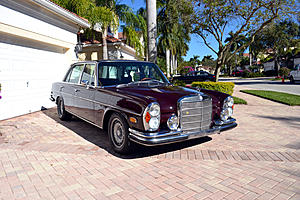
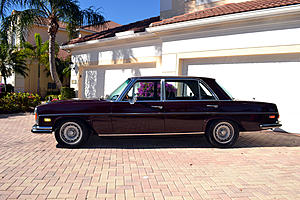
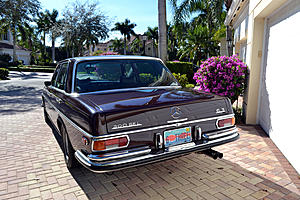
The W109 300SEL 6.3 marked Mercedes-Benz "unofficial" return to racing after the 1955 Le Mans tragedy with a brief, but successful racing history winning at Macao and finishing 2nd overall at the 1971 24 hours of Spa only because car required extra refueling stops. The W109, fondly referred to as the "Rote Sau" (Red Pig) heralded the beginning of AMG.
The story behind the 300 SEL 6.3 should seem pretty familiar to most American muscle car fans. A maverick engineer with racing ties secretly takes a great big engine from another application (in this case, a 6.3-liter V-8 from a limousine), and stuffs it into some poor, innocent midsize sedan (a 300 SEL that started out with a 3.0-liter inline-six). The engine is re-engineered with high-performance parts, and the suspension and chassis are modified to handle the weight and power. A limited number of theses absurdly complicated, powerful and expensive vehicles are then unleashed on an unsuspecting public. That engineer was Erich "Hot Wax" Waxenberger at the Daimler-Benz experimental department. Developed in 1960, the engine is designated 100.981, and is commonly referred to as the M-100. This was Mercedes' first production V-8. The engine technology came directly from Mercedes' 1950’s Grand Prix 300SLR "Silver Arrows". It is highly sophisticated and durable with single-overhead cams, a nitrided crankshaft, seven main bearings, sodium-filled valves, hardened valve seats and molybdenum-coated piston rings. Normally aspirated with direct, timed mechanical fuel injection and dual plenums with tuned ram air induction and massive oil cooler. A very similar system can be seen on all of the 300SLR race cars of the mid 1950’s.
Another of the more advanced aspects of the car is its self leveling air suspension. The forerunner of the Airmatic system. Four air chambers with bellows replace steel springs, pressurized at up to 228 p.s.i with a recirculated alcohol/air mixture fed from an engine-driven compressor.
A ZF limited slip differential incorporates it’s own oil cooler. Full independent suspension with anti-dive technology and the first production car ever with 4 wheel ventilated disc brakes and fitted with rare 15" wheels.
The ground-up restoration of my W109 took more than 20 years to complete requiring 2 donor cars. The rust free roller was a rare non-sunroof unit. The engine has been increased to 6.5 liters with re-profiled camshafts and minor modifications to the injection system. 0-60 times run about 5 seconds.




Last edited by AgSilver; Aug 27, 2016 at 12:33 PM.


MBWorld Fanatic!
Joined: Dec 2006
Posts: 1,124
Likes: 32
From: Florida-Germany-New York
2004 E55,1969 300SEL6.3,2011 ML350 BlueTec Diesel,2005 ML400 CDI
The Euro 6.9's were on a par with the '70-'71 W109 6.3.'s, but not the US versions (emission controls). The '68-'69 W109 6.3's smoked all of them. The W116 did away with the low pivot swing axle and incorporated hydropneumatic suspension.
The W109 6.3 K4-50 transmission was designed to be suitable for road racing and completed the 1971 24 hour race at Spa where the W109 finished 2nd only because of the number of fuel stops required. The shift times are about the same as the current DB 7 speed. It is connected to the engine with a lock-up fluid coupler which disengages with a slight jerk when coming to a full stop. The '68-'69 6.3's are not particularly quiet as there was little sound deadening. On the inside is sounds like a machine shop on wheels.
Here it is on a demo run:
The W109 6.3 K4-50 transmission was designed to be suitable for road racing and completed the 1971 24 hour race at Spa where the W109 finished 2nd only because of the number of fuel stops required. The shift times are about the same as the current DB 7 speed. It is connected to the engine with a lock-up fluid coupler which disengages with a slight jerk when coming to a full stop. The '68-'69 6.3's are not particularly quiet as there was little sound deadening. On the inside is sounds like a machine shop on wheels.
Here it is on a demo run:
Last edited by AgSilver; Aug 29, 2016 at 04:31 PM.

SPONSOR

Joined: Sep 2014
Posts: 3,647
Likes: 818
From: Worldwide
2007 Mercedes E63 AMG
love that generation body style. timeless classic!


