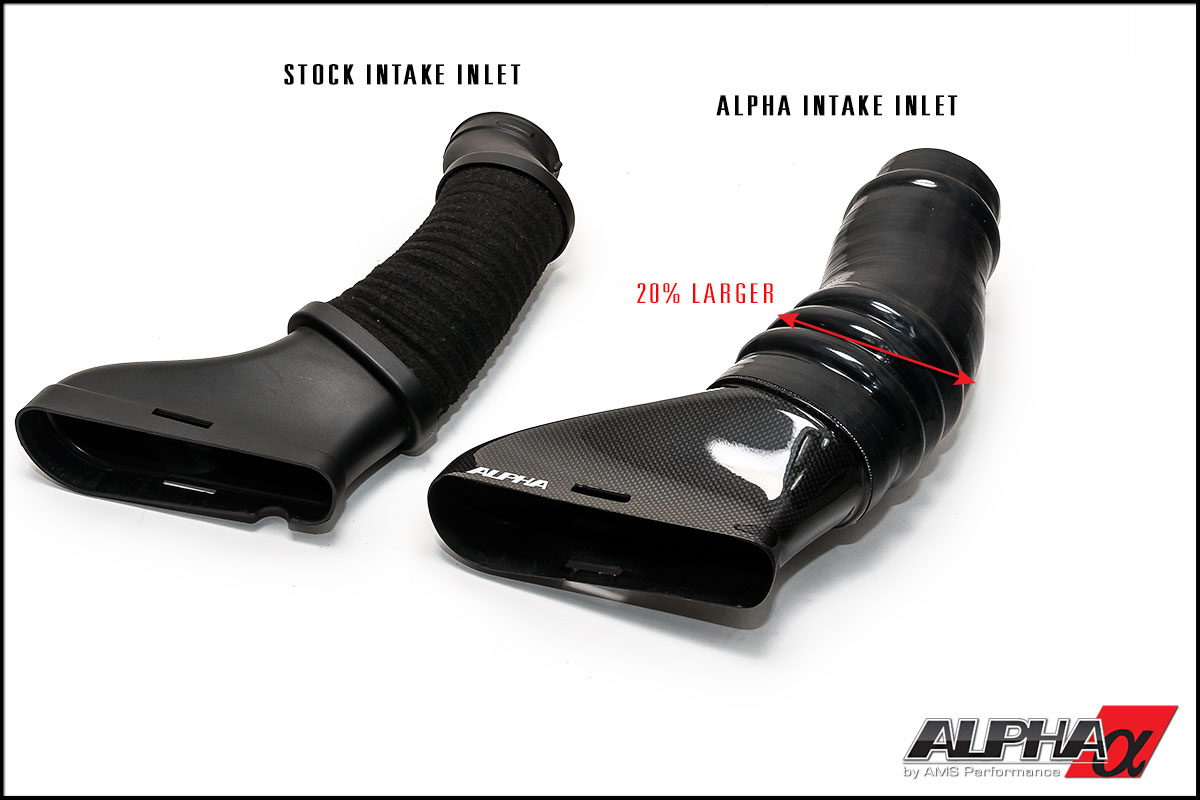
As many of you on here are aware the poorly constructed Tesa Tape tubes that lead into the airbox are a constant issue of unraveling or getting dislodge creating a great deal of heat soaked air to get into the motor which may reduce power and or effect overall performance.
In an effort to upgrade and mitigate future issues I purchased two sets of the Spectre #8741 tubing and created a solution that looks OEM and functions much better. I left more than enough tubing inside to make it a tight pressured fit this way it may deter the silicone coupler from falling off or getting lose.
While I am far from a professional at any of this I feel it looks better than the OEM installation and should last a much longer than those felt Tesa Tape wrapped wires and the solution cost less than one OEM tube let alone multiple sets over the course of ownership.
I hope this helps others in the future. Please post your results if you wind up installing as well.
Before I go on let me disclose that I am a pretty seasoned Mechanical Engineer. With that said, I believe there was a reason for these cloth tubes. I believe they performed the best from a heat transfer standpoint. The real proof, and it would be interesting to get the instruments setup to measure, would be air temperature as it enters the boxes. I suspect when the engine is at full steady state soaked temp with the hood closed, the inner surfaces of that plastic tube are hotter than the cloth tubes. Additionally, there is the surface differences to consider. The cloth tubes are much less able to allow for a laminar convection flow than the plastic tubes. This in simple terms means that the plastic tubes are likely hotter than the cloth tubes to begin with and also allows that hotter surface to transfer heat to the flowing air better. This is all a theory from my experience of course,but I would bet it has merit. I seriously doubt the Stuttgart engineers said "Hey let's use these difficult to make more costly and uglier cloth tubes than using a simple 15 cent molded piece of plastic".
So, to be clear, I am not here to rain your parade at all so please do not take it that way. What you have does indeed look better. No question. I would just like to see box inlet air temp for both cloth and plastic at full hot while both sitting idling and at say 40 mph ish also.
I forgot to mention that although I believe the Stuttgart boys did their diligence in choosing this airflow component, they certainly could have done a better job in it's construction. Ideally some type of integrated wire mesh to hold things together so that they can't become unraveled.
if the tesa tape / felt inlet were designed in a lab and worked well in testing it certainly failed in real world. my reason being is that even when new they had a poor fitment and after a few removals they never aligned perfectly. they always pulled in air from the engine bay even when moving since they were never sealed properly. i cannot imagine the silicone tubing any worse especially when under load since it would be pulling external air which is piped in through the front and the ram and not having the gaps like the oem which in theory would not pull air in from the engine bay. as far as heat soak of the parts themselves... no idea but i imagine negligible at best but if someone has the equipment to test iat and other temps i'll gladly offer mine as the guinea pig. also while looking at the other AMG motors and their duct work... it appears the engineers felt the same:
also the good folks over at AMS appeared to have found a flaw or achillese heel in the engineering as well and this is their solution part of a larger kit:
Ive had this on mine for a while and although it works great the rubber pieces get really hot and turn kinda white and is peeling a bit. still think its better than the constantly tearing oem ones I just wish we could fabricate something even better
you can...install silicone tubes. they will conduct less heat since they are thicker and absorb a bulk of the heat before reaching the air inside the tube or go carbon fiber.
As many of you on here are aware the poorly constructed Tesa Tape tubes that lead into the airbox are a constant issue of unraveling or getting dislodge creating a great deal of heat soaked air to get into the motor which may reduce power and or effect overall performance.
In an effort to upgrade and mitigate future issues I purchased two sets of the Spectre #8741 tubing and created a solution that looks OEM and functions much better. I left more than enough tubing inside to make it a tight pressured fit this way it may deter the silicone coupler from falling off or getting lose.
While I am far from a professional at any of this I feel it looks better than the OEM installation and should last a much longer than those felt Tesa Tape wrapped wires and the solution cost less than one OEM tube let alone multiple sets over the course of ownership.
I hope this helps others in the future. Please post your results if you wind up installing as well.
couple of things about the heat soaked air...1) any air coming through those intakes isn’t going to be hotter than the same air that is being compressed by the 1000 degree turbos. And 2)....intercoolers. Maybe someone can explain it to me but...I’ve always considered ‘cold air intakes’ to be superfluous, at best, on turbocharged cars with intercoolers. And vaporware, at worst.
Iconoclast do you have the list of parts you purchased at all?
I did this mod using silicone pipes on a GL63 a couple of years ago due to the tape items falling apart and just picked a GLS63 so want to repeat and that install looks really neat and tidy so Im keen to explore them.
couple of things about the heat soaked air...1) any air coming through those intakes isn’t going to be hotter than the same air that is being compressed by the 1000 degree turbos. And 2)....intercoolers. Maybe someone can explain it to me but...I’ve always considered ‘cold air intakes’ to be superfluous, at best, on turbocharged cars with intercoolers. And vaporware, at worst.
Colder air entering the turbo is more efficient for the compressor wheel.
you mean the compressor wheel that’s attached to the rest of a 1000° turbo? You really think a few degrees is gonna make an appreciable difference?
I read your other post earlier but didn't want to bump it because it was an old comment. But since we're here...
Literally yes, a few degrees can be of consequence. I'll give you a few examples. Ever not that your car runs better in late autumn, early winter? That's because it is due to a given volume of air being more oxygen dense, allowing you to burn more fuel. Or that it can seem a bit slower in the summer? That's because it is. High IATs make the engine more detonation prone so the ECU is more liable to pull timing on hotter days. Have you ever been to a drag strip and watched people put bags of ice on their intercoolers while in the staging lanes? That only produces a few degrees of difference in the charge air but it's enough that you can run more aggressive timing with less risk.
With regard to your earlier comment about CAIs being superfluous due to intercoolers, the part of the equation that you're overlooking is that the cooler the air pre-turbo, the cooler the air will be post-turbo and post-intercooler.
you mean the compressor wheel that’s attached to the rest of a 1000° turbo? You really think a few degrees is gonna make an appreciable difference?
Yes.
You have multiple issues with hotter air entering the compressor.
One is the temperature of the air entering the compressor does relate to the temperature exiting it.
The other issue is the compressor wheel will have a harder time compressing hotter inlet air temps (less density) resulting in the waste gate needing to close more causing higher shaft speed which equals even more heat. This compounds the issue.
Slideshow: A one-of-one U.S.-spec Mercedes-Benz SLR McLaren Roadster became even rarer after a factory-backed transformation at McLaren's headquarters.