When you click on links to various merchants on this site and make a purchase, this can result in this site earning a commission. Affiliate programs and affiliations include, but are not limited to, the eBay Partner Network.
AMG GT black series rear wing on a 2016 GTS Edition 1?
I have been contemplating replacing my 2016 GTS Edition 1 fixed rear wing with a black series rear wing and have some q's. Would this be a swap and bolt on job or ? Would there be any downforce advantages on / off track? I plan on keeping this car, I'm not sure this car will ever appreciate in value as is? It has low miles, ppf all around and looks great, also renntech adjustable springs, renntech tune, etc but no real external mods other than stance. Thoughts on any of this?
FWIW: I have owned both cars and I can tell you first hand that you would spend a lot of money trying to install and get the Black Series wing to work on any other model. Besides the physical bolt on expense there would be ECU mods that may not be available to you to have the wing operate properly. Also several wiring harnesses would need to be purchased if available to you. Both of the latter items would require a Black Series serial/vin number for purchase. NET/NET Not a good idea.
Agree 100% with Jerry’s assessment. It would take a lot of time; money and knowledge to get this to work properly, and then you’d have a huge mismatch in front to rear downforce; enough that if you’re a quick driver on a road course it might very well unsettle the car or even induce instability.
If you must change the rear wing think about the OEM GTR wing along with the canards from the Pro on the front would be my recommendation.
Thanks guys, appreciate the insight and experience! I have no problem with the ED 1 wing, just curious about increased functionality and a more aggressive look I might be willing to invest in. Welcome to other ideas / discussion about improved aero opportunities.
I think a few members have opted for the GT4 wing, theyre quite hard to source, but there are reps on ebay if you want to risk it. Otherwise, I've also seen black series wing reps, e.g. just the foil without the active aero element
Thanks guys, appreciate the insight and experience! I have no problem with the ED 1 wing, just curious about increased functionality and a more aggressive look I might be willing to invest in. Welcome to other ideas / discussion about improved aero opportunities.
AA
Upgrading to a more aggressive rear wing requires careful consideration of how you plan to drive and use the car.
To maintain proper aerodynamic balance, any increase in rear downforce should be matched with an increase in front downforce—typically by adding a larger front splitter. Without this upgrade, you risk losing front-end grip during cornering, which can lead to understeer.
The severity of that understeer depends on corner speed, angle, and overall driving conditions. In short: it’s not ideal.
Additionally, increasing your car's aero footprint has trade-offs. More downforce means more rolling resistance and aerodynamic drag, which can reduce both acceleration and top speed. This has grater effect on GT and GTS, unlike the more powerful GTC, GTR and GTR Pro.
When designed correctly, though, with balanced front and rear aero, it improves high-speed stability and cornering grip—essential for performance driving.
That said, if you're upgrading the wing primarily for the aesthetics, that’s absolutely valid and can be a lot of fun. Just be mindful not to push the car too hard through fast corners or at high speeds on straightaways if the rear wing is aggressive and there's no corresponding front aero to match.
You don’t want to end up like Mark Webber —
(Of course you will not, but just trying to show the extreme case)
One more thing to consider: the AMG GTS has a narrower rear track compared to the GTC, GTR, GTR Pro, and Black Series, so fitting a GT4 or Black Series wing might look a bit disproportionate on the GTS.
Upgrading to a more aggressive rear wing requires careful consideration of how you plan to drive and use the car.
To maintain proper aerodynamic balance, any increase in rear downforce should be matched with an increase in front downforce—typically by adding a larger front splitter. Without this upgrade, you risk losing front-end grip during cornering, which can lead to understeer.
The severity of that understeer depends on corner speed, angle, and overall driving conditions. In short: it’s not ideal.
Additionally, increasing your car's aero footprint has trade-offs. More downforce means more rolling resistance and aerodynamic drag, which can reduce both acceleration and top speed. This has grater effect on GT and GTS, unlike the more powerful GTC, GTR and GTR Pro.
When designed correctly, though, with balanced front and rear aero, it improves high-speed stability and cornering grip—essential for performance driving.
That said, if you're upgrading the wing primarily for the aesthetics, that’s absolutely valid and can be a lot of fun. Just be mindful not to push the car too hard through fast corners or at high speeds on straightaways if the rear wing is aggressive and there's no corresponding front aero to match.
You don’t want to end up like Mark Webber —https://www.youtube.com/watch?v=ZXZaAuyuYmQ
(Of course you will not, but just trying to show the extreme case)
One more thing to consider: the AMG GTS has a narrower rear track compared to the GTC, GTR, GTR Pro, and Black Series, so fitting a GT4 or Black Series wing might look a bit disproportionate on the GTS.
Thanks GP! I don't want a "Mark W" result for sure! I really do want a balance of downforce functionality, and looks. The GTS is tuned (Rtech) with a set of (Rtech) adjustable springs recently added, with a slight drop and four wheel alignment (reputable shop). With the extra torque / power it can feel a little light, mostly up front, under heavy acceleration. So, like most folks I guess, I want the best functionality, to be safe, use good sense, and look good while doing it if y'all think the best solution for functional downforce for a 10 yr old GTS ED1 that may see some limited track days is what the AMG engineers have delivered with this car, I will leave well enough alone...
Thanks GP! I don't want a "Mark W" result for sure! I really do want a balance of downforce functionality, and looks. The GTS is tuned (Rtech) with a set of (Rtech) adjustable springs recently added, with a slight drop and four wheel alignment (reputable shop). With the extra torque / power it can feel a little light, mostly up front, under heavy acceleration. So, like most folks I guess, I want the best functionality, to be safe, use good sense, and look good while doing it if y'all think the best solution for functional downforce for a 10 yr old GTS ED1 that may see some limited track days is what the AMG engineers have delivered with this car, I will leave well enough alone...
Thank you all for great info / discussion.
This is great—looks like you’ve already made some smart modifications to boost power and stiffen the suspension, clearly aimed at improving track performance. And since aesthetics aren’t your main focus, let’s talk about the next step in enhancing the car’s dynamics.
There are two key areas to consider:
- The sensation of the front end feeling light under heavy acceleration
-Optimizing the car for track use
1. Addressing the “Front Feels Light” Issue
First, it's important to identify when this feeling occurs, because that determines the root cause and the solution.
There are generally two phases in the vehicle’s performance spectrum:
The mechanical grip phase, where power delivery and suspension geometry dominate behavior (typically up to 80–100 mph)
The aerodynamic phase, where aero begins to significantly influence vehicle dynamics (usually from 80 mph upward, depending on the car’s weight, shape, and setup)
If the front-end lift or "light feeling" happens below 80 mph, it's likely due to suspension tuning—specifically spring rates, damping, front-to-rear rake, or weight distribution. In that case, adjustments to the mechanical setup are key.
If the issue appears above 80–100 mph, especially under wide-open throttle, then you’re likely entering the aero phase, and a lack of frontal downforce is the culprit. In that case, improving aerodynamic balance—such as by adding or modifying a front splitter or underbody elements—would be the next step.
2. Optimizing for Track Use
Track type and cornering speeds dictate how important mechanical vs. aero grip will be.
If most of your cornering speeds are below 80 mph, mechanical grip is still king. That means optimizing suspension geometry, tires, camber, spring rates, and sway bars.
If you're driving on high-speed tracks where corner entry speeds are above 80 mph (like road courses with sweepers or banked sections), then aerodynamic balance becomes a major factor. In these scenarios, dialing in both front and rear aero to maintain stability at high speeds will significantly improve performance.
IMHO, a GTR wing with a proper front splitter upgrade will be an amazing upgrade without effecting the car's HP too much, "paying" a bit in acceleration targets over 100 mph.
Thanks for the breakdown GP! Initial acceleration is fine even with the increased hp/torque, I have 305's in the back and 265's with stagger wheel setup from factory (mich p4 tread). Where it does feel a bit "light" up front during hard acceration is right around that 70/80 mph mark. It can pull very hard, as expected, in that 3-6k rpm range from those speeds through when I back off; this where it feels like I could sharpen things up. I have looked at the gtr rear wing, assuming there would be more functionality than the gts ed1 fixed wing? Curious on how to adjust the gtr wing for max functionality other than road test/adjust until it "feels" right? I have not explored, what appers to be, a sort of face lift front diffuser change out, and honestly that sounds $$$$ and a full face lift project, unless you have seen good non extreme options? The ed1 has some additional aero already attached, but may be better options?
If I'm being honest, unless you are much more serious into tracking, the choice of rear wing will not matter (other than maybe to your mpg), so imo you can pick purely from aesthetics.
If you are driving on public roads and driving at speeds where you are running out of pure mechanical grip, that's too fast for public roads.
The GT R's rear wing provides some more downforce yes but it is not substantial compared to a higher bigger GT wing like APR. To your question on adjusting wing for functionality, that IS how you're supposed to do it, make changes, drive at the limit and then adjust based on the car's feedback at the limit and your driving style, there's no magical preset setting.
I've driven cars with massive imbalance of aero (APR GTC300 wing at the back and no front aero), and on the street and canyons could hardly tell the difference, and only on track with high speed corners could I tell that the car was pushing
Thanks for the breakdown GP! Initial acceleration is fine even with the increased hp/torque, I have 305's in the back and 265's with stagger wheel setup from factory (mich p4 tread). Where it does feel a bit "light" up front during hard acceration is right around that 70/80 mph mark. It can pull very hard, as expected, in that 3-6k rpm range from those speeds through when I back off; this where it feels like I could sharpen things up. I have looked at the gtr rear wing, assuming there would be more functionality than the gts ed1 fixed wing? Curious on how to adjust the gtr wing for max functionality other than road test/adjust until it "feels" right? I have not explored, what appers to be, a sort of face lift front diffuser change out, and honestly that sounds $$$$ and a full face lift project, unless you have seen good non extreme options? The ed1 has some additional aero already attached, but may be better options?
Love to hear the feedback!
AA
@leafyamg’s answer above is spot on and provides solid insight. He correctly noted that fitting a larger rear wing increases fuel consumption (MPG), but to clarify, the underlying cause is the additional aerodynamic drag.
The drag forces you to apply more throttle to achieve the same speed and acceleration you’d see without the wing, which in turn raises fuel usage.
Whether you’re driving in a straight line, sweeping through a fast corner, or just cruising on public roads, the reality is the larger the wing and the steeper the angle of attack, the sooner drag will start to build—often at surprisingly low speeds.
For example, when I set the GTR wing on my car to 10 degrees, I could feel the drag coming on as early as 50 mph.
I also spent time running the DC3/U94 wing (the one you have on your GTS Edition 1). Because it has a fixed angle—a one-size-fits-all configuration—it generated noticeable drag even at moderate speeds.
In contrast, the GTR wing offers adjustability between 0–10 degrees, and when set to 0 degrees, it produced less drag than the fixed U94 wing.
This is why choosing an adjustable wing is critical if your driving goals vary between road use, track days, and high-speed events.
Regarding front aero, you mentioned the diffuser, but I’d consider a larger splitter, or as @thebishman pointed out in post #3 above, adding side canards may be all you need to balance rear downforce.
Ultimately, you’ll have to experiment: test a setup, take notes, make adjustments, and repeat until you dial in a configuration that suits both your driving style and the specific track.
Personally, since I prefer the car to rotate and lean toward oversteer in performance driving, I installed larger fixed front splitter extensions. Even with the GTR wing set to a full 10 degrees, the car still exhibits a bias toward oversteer in high-speed corners.
And yes—just because of the larger non-removable front splitter, I absolutely pay the price at the fuel pump.
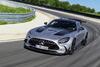
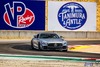
Add-on front splitter extension. Must be attached to the chassis (not front bumper) to remain on car @ 150MPH and above.
Mercedes SLR McLaren 722 S Is Extremely Rare Example Modified by McLaren
Slideshow: A one-of-one U.S.-spec Mercedes-Benz SLR McLaren Roadster became even rarer after a factory-backed transformation at McLaren's headquarters.











 —
—
 if y'all think the best solution for functional downforce for a 10 yr old GTS ED1 that may see some limited track days is what the AMG engineers have delivered with this car, I will leave well enough alone...










