When you click on links to various merchants on this site and make a purchase, this can result in this site earning a commission. Affiliate programs and affiliations include, but are not limited to, the eBay Partner Network.
December is rainy season in my city/country with Feb being its peak, and this misery will be till March.
Been flooding everywhere too some days in Jan and this Feb.
My car been left untouched since I replaced its engine oil on 11th Dec 2024.
I had its engine started after oil change only yesterday 10th Feb 2025, because I was doing heat soak alternator load test.
HVAC running in a tropical country car is the same as "drying" the car interior, thus HVAC is life and death not only to achieve nice 22C in the car, but its drying function is important too.
I can get up to 30% humidity or lower inside the car with HVAC running in recycle mode.
The Banks Air-Mouse is the humidity and temperature sensor which I tested before I installed it at its final location the front grille.
.
=================
So its been closed car door while in the garage and under fabric cover for dust control ...........nearly 60 days. Poor thing my car.
I been in-out of country/city the past 60 days.
While my interior does not feel wet or has any "wet" smell, this rainy season with 90% humidity all day long is bad for my car interior.
Those whitish micro dots are sign of humid air, see below at the fake chrome spoke of the steering.
No whitish micro dots on leather, only on the fake chrome of steering spoke and the fake chrome 4 doors pull handle interior side.
I never had this kind humidity for so long in my car closed door.
==================
The humidity today, 89%. The 25C is from my room temperature, its like 27C out of my room at night.
So I use my working room dehumidifier and place it in the car....LOL
Shut air passage at window for power cable using towel
Probably I will run it for 4 hours or more.
Dang, tropical country and its "gift" .
.
Last edited by S-Prihadi; Feb 11, 2025 at 09:25 AM.
I managed to collect close to 340cc of water.
My car is surely not airtight like a scuba tank, but it was good tight enough for drying rigged as-is.
.
Open front door to close the window of rear door. Remove cable and collect water drain tray. That alone raised 3% humidity inside the car within 7 minutes.
.
36 minutes later after unit shut down and a bit of air exchange from door opening, I get 52% RH , 9% RH rise.
Total water vapor collected in 4 hours = 340cc
Assuming interior is 100% air tight, at 100% humidity when at 30C the water vapor per 1,000 liter of air is only 30.4cc
My car interior at best ... I think only 3,000 liters. The boot is supposedly 540 liters.
100cc of water vapor in theory is the maximum I can "drain" out of the interior air when the saturation occurred up to 30C.
Even if say the temperature is 40C , thus 51cc of water vapor per 1,000 liter of air, it would be 150cc at best.
Say 50cc is still at the dehumidifier fins as it was always running in my working room for like 24 hours a day, max 200cc only.
There must be some very mild air exchange from the towel I used as seal, 2 vent rubber flaps at rear bumper sides and HVAC *flap ( I program to close if car engine is OFF and ignition key out ).
Will do drying again tomorrow.
I dare not leave the dehumidifier running in my car while I go to bed, too risky due to the heat it generated.
This is a compressor based unit.
.
Last edited by S-Prihadi; Feb 11, 2025 at 12:10 PM.
I saw where they have these relatively affordable mini garages made of plastic. They are for long term storage of cars. They have them in some car museums. They are airtight, and control the climate very well once sealed. Maybe something like that could counter your tropical humidity challenges?
MS! could this interior humidity have anything to do with not having a heater core to help dry the HVAC cavity ??
Its not supposed to store gallons of condensate, perhaps half a cup ?
No Cali, it is just the ambient humidity in Jakarta is now extra high above 90% RH.
This is the curse of being in the tropics.
HVAC condensate drain water output in my climate is crazy high and that makes interior very nice and dry, if HVAC is running.
Not using the car at least once per week is the problem.
Not bad the air for 15 hours, gone up only to 68% RH closed door, dehumidifier unit off.
Because the air inside the car is still decently dry, within 44 minutes of unit running its now back to 49% RH
I will run it another 4 hours today , hoping the fabrics inside the car to be under 45% RH.
I think next time when I am away, the usual drill of charging the car battery every Sunday by my servant need to also include dehumidifier running every day for 2 hours at least.
Must buy a new dehumidifier unit because the one in use is for my working room to protect my baby grand Yamaha Disklavier piano and it runs nearly 24 hours a day, with short break only when
water is full.
I also got my servant to run HVAC from 11AM to 4PM daily when I am away, keep all rooms in the house drier.
Its a messy affair when humidity is always high day and night.
----------
The same thing I do for my clients yachts, we need to run the HVAC everyday for at least 8 daylight hours.
Many of the yachts roof or headliner are made of leather and them leather droop when humidity is high and be tight again if HVAC running making the air drier.
I get away on yachts using portable stand alone 1.5HP HVAC like below if yacht under 60 feet:
Using above is cheaper mechanically, albeit temperature reduction is only 2-3 Celsius at best, but water vapor get removed good enough and better than dehumidifier.
Yachts HVAC is sea water cooled, so its more risk running it when yacht stationary due to plastic/garbage clogging the cooling water suction valve under the hull.
Last edited by S-Prihadi; Feb 12, 2025 at 04:59 AM.
I saw where they have these relatively affordable mini garages made of plastic. They are for long term storage of cars. They have them in some car museums. They are airtight, and control the climate very well once sealed. Maybe something like that could counter your tropical humidity challenges?
Yes I seen that too, its like US$3,000 each.
If I have more and "nicer" cars and bigger garage, I don't mind spending on one of those and I can inject my scuba air which is super crazy dry. 3 scuba tanks of 80 Cubic Feet size is about 8,500 liters of free air space.
It seems 43% RH is as low as my unit can do for the car interior.
Almost 200cc of water for the 2.5 hour of drying and the RH increased to 50% when I removed the water tray bout 30 minutes after unit shut down.
It is a dilemma, dehumidifier unit produce heat from cooling down the compressor. This my interior car temperature would be 38.5C by average with unit running, and that is no good too....if long term.
---------------------
A small unit for a car, if not compressor based, but a Peltier based is a 2nd option and its usually a poor performer per watt consumed.
I don't mind the electric bill, I hope Peltier based unit can do also as low as 43% RH, but I do worry the Peltier which is a semiconductor can overheat and burn.. if ambient temperature inside the car goes up to 39C.
I hope the designer incorporate thermal safety strategy for the Peltier. The hot reject air being pumped back to the car interior is the BAD part of this whole "drying" a car interior scenario.
Must buy the Peltier unit first to try....
=============
Other option is, I prepare dry air injection system for my interior. Which I will need to jerry-rig a try it first, see how effective it will work.
I can send my super dry below 0.1% RH scuba air with regulator at say 20 liters per minute into the car interior for total of 3,000 liters of air free space...every week I am away.
It will be 150 minutes of continuous slow air injection.
They are fairly bulletproof if considering a used one. I owned about 50 to 60 of them over 13 years and rarely had repairs or replaced them as i purchased them.
Dri-Eaz has excellent products and is an industry leader in product innovation and drying techniques.
A LGR or Low Grain Refrigerant would be a more effective model for a modest increase in cost.
The benefit of this style are:
1. it exhausts the dry air out the back through an exhaust port which you could vent into your auto.
2. it has a water tray and a pump that pumps the water out when it fills out. so you could lay a small vinyl hose to a drain or outside to pump out the water.
3. if you read about them, which i am sure you will and will probably end up teaching me something, LOL. A LGR unit precools the air to maximize removing the water.
4. Since it is outside your car you don't have to worry about the unit getting to hot inside your car and leaving it running 24x7.
There are other considerations i could give you towards the setup if you are interested in this approach. Just PM me, if so.
One such would be to drape your car with poly and tape to floor and vent into that sealed area, or even put the DeHu inside the sealed area for increased efficiency.
Good luck , let me know if you would like more info.
Wow...that is one King Kong unit... thank you so much Vich3 for the information.
------------
I tested my dry air injection proof of concept. It works, even though it is now more of an air mix instead of more of air exchange,
where air-exchange would be more efficient per liter of dry air injected into car interior.
I do not have a proper 10 BAR low flow regulator for my scuba air yet, the one I have is a nitrogen one.
So the air gun I limit its opening using a marker pen on the trigger. By ear and air flow feel, it is maximum 15 liters per-minute I think.
In 35 minutes I managed to remove 4% RH, from 62 to 58 % RH.
This has benefit where the air injected is super clean breathing air grade and is cool at ambient temperature, say 27C today.
Thus this method will not expose my interior to old/stale dried air and hot circulated ambient air from the dehumidifier unit condenser exhaust.
=============
The Front SAM is a good injection point for dry air via small tube into interior, as it has a big opening into car interior for the wires.
Dry air will also dry the Front SAM *electronic motherboard ( mine already conformal coated ) and connectors...in theory.
The green arrow below will be the small plastic tube I can push into the interior.
I can modify the Front SAM cover with bulkhead type injection port like how I injected dry nitrogen to my sealed LED ILS Code 641 headlight to prevent it from fogging.
.
.
The mushroom looking plastic is a plug. This bulkhead fitting is for use in Reverse Osmosis low pressure system, it is 10 BAR rated and is a quick
coupler by way of metal clip and an o-ring "hugging/sealing" tube outer diameter.
.
-------------
If I can pressurized enough the interior air space , which I think is : less than 0.1 PSI should be sufficient to make the rubber exhaust flap at rear bumper open up,
thus I possibly may get a good air-exchange.
This is the rubber exhaust flaps I speak of, 1 of the two units L and R.
When we close our door, we do not get the "choked-ear" problem from increased air pressure....which is an issue found on some very cheap cars in my market,
because the car does not have this vent flap.
I have such air cleaner from Sharp with HEPA and carbon filter and PlasmaCluster in my room running 24/7....not bad this unit.
02. The last 2 days and I have opened up my car door like 5 times already, the humidity in my car is max at 66% today ( was 62% 2 days ago ) when outside ambient is at 74%.
So the natural air "leak" of car interior is not too bad. The fabrics inside the car seems to be decently dried from the total 6 hours of drying I done.
03. I think if I can set up twice a week at @3 hours drying/dehumid regime for car interior when car is not in use, it could do good for my car interior long term.
After all I plan to at least keep the car to 2034. I do keep my car interior very clean, but keeping it to be within 50% RH or lower was never possible with engine OFF, HVAC OFF.
Now I want to focus on this.
The process of fabrics's moisture to be released into the air can only happen if I get the car air to be dry enough and slow 3 hours dehumid process I hope will do that.
As to how much condensate water trapped at HVAC evaporator fins unit after HVAC use, if seeing home HVAC evap, it is crazy wet for us in the tropics.
I would also need to add preventive maintenance regime of killing AC compressor and set blower max full 2 minutes before engine shut down, hoping to drive condensate
out of the evap fins on to the garage floor.... as best I could.
That's all for now.
The Sharp's Hepa & carbon filter + PlasmaCluster. At the least the main features information is in English
I got the new Sharp dehumid unit, but it has no HEPA and Activated carbon filter, as indicated by the asterik
But it has the ion injection.
I then look at specification from the unit Vich3 suggested.
So maximum ambient temperature of the room is to be no more than 38C / 100F for the unit to work properly.
This 38C is very important information, as my home dehumi unit does not have such information.
The 60 days of no using the car, albeit closed door, still made my car kinda "wet, as it is not a true sealed interior like a "submarine".
I tested last nite the new Sharp unit for like 3 hours. Laundry mode is the most powerful setting I can choose.
I also bought extra humidty and temp sensor, same Xiaomi brand but bigger unit with time and date, its reading is by average lower by 7 to 10% RH than my old sensor.
The temperature is basically identical, with up to 0.3C difference only.
.
1st time use.
3 hours of work, 140CC of water approx Yesterday nite test session.
2nd time use.
Today late afternoon test session, I forgot how many hours, surely no more than 3 hours I think. Lowest I got was 43% RH actually and no more than 36C / 97F interior temperature.
.
Running in day time with higher ambient humidity, gets me more water, even in a closed door of the car.
BTW : I still need to open the door to place the water container, set the window and etc etc, so I had to introduce outside wet ambient air too.
Today whole day humiidty is 74% to 90% forecasted/logged. Temperature 25-29C.
.
The good thing about the new Sharp unit its that its overall exhaust air is not as hot as my old dehumi unit.
Older unit is supposedly 355 watt 20 liters per day and new Sharp unit is 160 to 240 watt 12 liters per day, thus newer unit less powerful but is good for car interior use.
Old unit in 2.5 hours heated up the interior to 38.6C, from 30.4C start.
New Sharp unit heated up the interior to 35.1C , from 31C start.
I can't comment on total water collected per test session as a comparison, as each session I do , the car interior already getting drier and drier.
Mechanical wise for the dehumi unit, I will limit it to run at 36C. I do not want it to die of early overheating death and running useless not effective pass 38C
And I can get up to 43% RH using the Sharp , with 36C ambient temperature inside the car, granted it started at typical 61% RH due to previous session 16 hours ago or so.
=============
Side benefit :
I was thinking, now I can make my car interior like a mini drying room at 43% RH and 36C / 97F.
I think it can help me if one day when and if I want to dry my sealed LED ILS code 641 internally to some degree, before I add dry nitrogen to it.
All I need to do is open up the 2 electronic modules for better air flow, get a laptop mini cooling fan , dry the headlight in my car cabin .
If I can start to have my headlight internals at 43% RH, it would be an awesome help.
In my house I do not have a room so small which is as "sealed" as my car interior.
I also can not get a container big enough to house a dehumi unit and my headlights.
I can't even vacuum dry my headlight like how foodie can use vacuum drying for their food or fruits.
I worry that electrolytic type capacitor can implode under vacuum, as it will be equal to 14.7 PSI of pressure stress going outwards out of the capacitor.
Just a thought
But its is a fluctuating pressure and not constant vacuum, no mention of electrolytic capacitors though.
.
The new drying procedure in a vacuum drying oven:
Drying the electronics assembly in a Memmert vacuum oven VO at approx. 60 °C and 14 to 16 vacuum drying cycles (always alternating between 50 and 900 mbar)
Drying time approx. 2 to 2.5 hours
They are refering to absolute pressure in millibar and not gauge pressure
50 millibar absolute at sea level is about 28 inchHg of vacuum or -14 PSI vacuum.
----
The capacitors. I do not know how my Code 641 LED module electronics looks like inside, but any LED driver module must have capacitors guaranteed.
Its been 5 days I let my car interior as closed door after a dehumi session.
I had one day, opened up the door and made some testing of electrical load. So 2 door openings only within those 5 days.
From 15th to 20th Feb its been climbing up to 60% RH ( based on small RH sensor ), while outside ambient been 75 - 80ish % RH everyday.
Big unit is minus 7% to 10% less humidity reading compared to small one. Thus I add 10%. This is inside the car after 5 days from last dehumi session.
The outside air humidity at 80%, so interior is 80-61 = 19% drier still. Not bad.
----------------
I think the fabrics/components inside the car been very humid, accumulated the past 60 days before 1st time dehumi unit used in interior.
After a few drying session, albeit not totally sealed my car interior is, its overall humidity is based on more towards saturation from the fabics/components instead of the
free air only .... in the interior. Thus interior humidity after few dehumi session been always up to 20% drier than ambient outside air, because the fabrics/component is rather "dry" now.
I think my next try will be the boot/luggage. With my car cover, I think I can create a least free air entry when drying the boot/luggage.
---------------------
I am doing a dehumi session again now.............
The new Sharp dehumi unit RH reading is after its blower, thus it is reading very dry air output, not a true car interior overall RH
3% extra RH is from door opening, placing the dehumi unit inside the car. Was 51% RH and then 54% RH.
At stand by before powering its compressor, the Sharp RH sensor is the same as the Big RH sensor, meaning it is 10% drier too compared to my Small RH sensor.
-------------
With this information in mind, I think once per week doing dehumi session where car not being used at all.....could possibly be sufficient, no need twice a week
I know its lame for you guys to see a 60% RH stable overall in a car or outdoor RH, to me to see 60% RH will need HVAC and/or dehumi unit to run
===========
The two sensors difference in RH reading
.
How sensitive is this RH sensor reading water vapor release from my hand ?
We human sweat ( water vapor ) by nature and more so for my climate.
Taken out of car interior and its adjusting itself to ambient RH
Place it on my hand to read my very own moisture release
From hand to table
Its very fast responding, not bad.
---------------------
Blow super dry scuba tank air for a few seconds, I can read 16% RH
The trunk space. Dehumi unit too tall hahahah, so must open trunk door .
I added fan few minutes after dehumi unit running, to better spread the heat load
.
.
Trying to seal extrenal air the best I could.
.
Too hot too fast, airspace too small, supposedly only 540 liters. 95 minutes run and air temp already at 37.6C / 99.7F , starting was typical 29-30C if at this early evening hours.
.
.
Approx 135 ML / CC water. Not bad.
The trunk space after a long drive like 6-9 hours or more, gets this hot too +7C or 12.6F rise above ambient easy.
Probably much heat transfer from exhaust system is when the car is creeping super slow in traffic jam. This heat rise is for night time as end of journey, not day time.
I actually have two layers of extra sound insulating material ( reduce heat too ) already in place between trunk metal to trunk airspace above spare wheel floorboard.
Even the cabin interior, when I touch the tranny tunnel carpet area where the center console is, after 6-9 hours drive I could feel it is hotter than interior ambient temperature.
I do not know its model number , I only remembered it is a Nikon brand.
Its for seeing far, 2 meters or more.
I can't wear progressive glass, I get headache.
So I got 3, reading book , 30cm distance sharp
PC use, 80CM distance sharp
Driving use the 2 meters or more....sharp. But looking at Instrument Cluster kinda mild blur
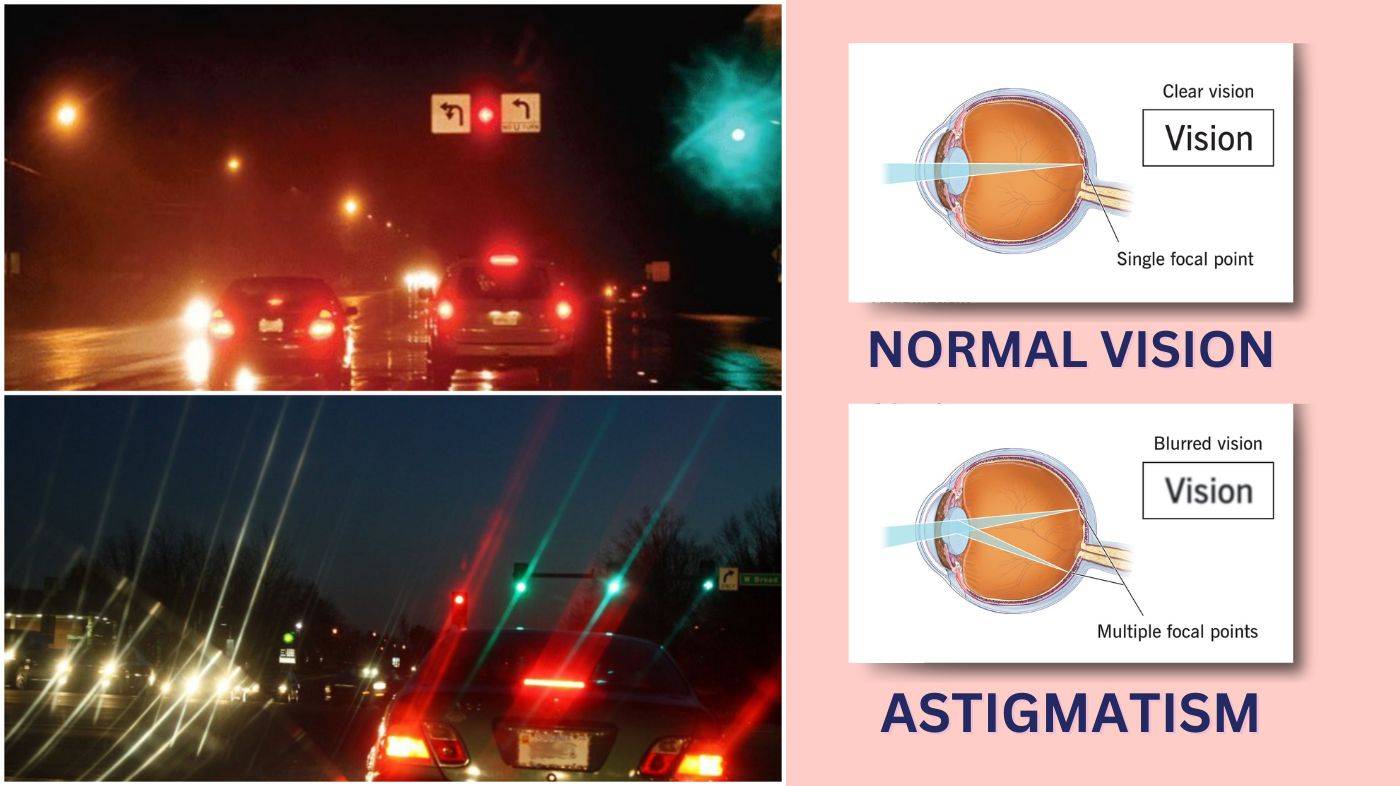
My right eye is worst one, far or near = blur and I have cylinder too, I think that is what people call it, you know where lights can have minor "tail"
Left eye no "cylinder" but far or near = blur too
Cylinder = The official name is astigmatism so I checked
Yeah, Near-Astigmatism.. Then, those d i c k s did not WARN me when they said "Bi-Focal" a year or so ago...they need some training on how to prevent emotional trauma of getting old.
Yeah, Near-Astigmatism.. Then, those d i c k s did not WARN me when they said "Bi-Focal" a year or so ago...they need some training on how to prevent emotional trauma of getting old.
I agree, eyesight worn-out is so much a pain emotionally, more so when I was a 20/20 eyesight and never worn any glasses in the past.
Mercedes SLR McLaren 722 S Is Extremely Rare Example Modified by McLaren
Slideshow: A one-of-one U.S.-spec Mercedes-Benz SLR McLaren Roadster became even rarer after a factory-backed transformation at McLaren's headquarters.
























 if ambient temperature inside the car goes up to 39C.