


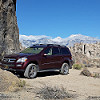



Tips on the x164 OM642 vehicles

Thread Starter
MBWorld Fanatic!


Joined: Dec 2004
Posts: 4,268
Likes: 253
Tips on the x164 OM642 vehicles
Ok, I think I have seen a lot of that platform now equipped with the OM642 motor so I can make a few (long term- based) observations.
Those are first hand observations that I believe hold true as indicated by my experience, history of repairs of said vehicles and problems they come with.
This is a list compiled by me and by no means approved or related in any way to the MB mothership. Following some of my recommendations can create hazards on the road so please use common sense.
Also, some of my dos and donts are not limited to the x164, but apply to all vehicles, so I am sure other folks can benefit from this too...
So... in no particular order:
1. Diesels dont like cold starts. Start your truck and wait at least 30-60 seconds before you take off
2. Cold ABS modules do not like sudden braking - avoid sudden stops the first few miles of your trip. Also, when taking off for the first time each day, do not stomp on the break pedal to shift truck into gear- instead feather the pedal just enough so you can shift the tranny in "D"
3. Diesels do not like to be shut down and turned back on in few minutes- so if you can- let it idle if you know you will need the truck again in few minutes.
4. Do not rev the truck past 2500 rpms when driving regularly. Especially when cold. But better avoid it completely. If you find yourself doing it more than once or twice each day the diesel is not for you. Sorry. Adjust your driving style or seek a gasoline vehicle.
5. When turning the steering, never turn all the way to lock and keep it there - once you hit the lock- back off a bit- your steering rack and pump will thank you.
6. When you see a pothole that you cannot avoid - do not jump in it with the brakes applied- this is the fastest way to destroy front end components- instead brake as hard as you can before the pothole, but let off the pedal when jumping in the pothole- this unloads the suspension and it will live longer.
7. Change your ATF at 37-40k miles and then every 50k miles. Change your center diff fluid at same frequencies. Front and rear diffs are generally trouble free. When cold at low speeds and slowing down your front diff will groan a bit. This is normal
8. Do not run biodiesel. Trust me. Especially if you dont do it regularly. Biodisel is a capable detergent that will scrape your tank, fuel lines and filter clean from gunk... which will end up in your fuel filter and then in your injectors.
9. Remember #4? There is an exception. Once a month or so when on the highway and engine is well warmed up, slow down to 40-50mph and floor the truck. Keep it floored until 70-75 or whatever speed you think is prudent and/or legal. Do not do it when you are too close to your destination- you want some time after that exercise at light throttle to cool things down.
10. Never top off the tank. Once the fuel "pistol" clicks full- do not top off. Ever.
11. If you want to accelerate - instead of flooring the truck to force the kick down, use the paddles to downshift (usually one gear down only) and apply moderate throttle enough to achieve your goal. Once done- upshift manually to get the tranny back into auto mode.
12. Drive smoothly. I cant reinforce this enough. Accelerate smoothly, turn smoothly, brake smoothly. Every component in your truck will live longer and your wallet will be happier.
... and speaking of wallet- a word about your friendly MB dealership- treat them with respect and understanding. They are humans too and often have just as much idea about what is wrong with your vehicle as you do (assuming you know nothing)- thus it may take them some time to figure out the culprit. Establish good relationship with particular service adviser you like and develop it. Most dealers are genuinely interested in you being a happy customer. However, do look for second opinion and if you think the dealer is pulling a quick one on you- politely do draw a line in the sand and tell them what you think they are doing wrong.
I am sure I am missing a thing or two so I will add to the list...
Hope this helps
Those are first hand observations that I believe hold true as indicated by my experience, history of repairs of said vehicles and problems they come with.
This is a list compiled by me and by no means approved or related in any way to the MB mothership. Following some of my recommendations can create hazards on the road so please use common sense.
Also, some of my dos and donts are not limited to the x164, but apply to all vehicles, so I am sure other folks can benefit from this too...
So... in no particular order:
1. Diesels dont like cold starts. Start your truck and wait at least 30-60 seconds before you take off
2. Cold ABS modules do not like sudden braking - avoid sudden stops the first few miles of your trip. Also, when taking off for the first time each day, do not stomp on the break pedal to shift truck into gear- instead feather the pedal just enough so you can shift the tranny in "D"
3. Diesels do not like to be shut down and turned back on in few minutes- so if you can- let it idle if you know you will need the truck again in few minutes.
4. Do not rev the truck past 2500 rpms when driving regularly. Especially when cold. But better avoid it completely. If you find yourself doing it more than once or twice each day the diesel is not for you. Sorry. Adjust your driving style or seek a gasoline vehicle.
5. When turning the steering, never turn all the way to lock and keep it there - once you hit the lock- back off a bit- your steering rack and pump will thank you.
6. When you see a pothole that you cannot avoid - do not jump in it with the brakes applied- this is the fastest way to destroy front end components- instead brake as hard as you can before the pothole, but let off the pedal when jumping in the pothole- this unloads the suspension and it will live longer.
7. Change your ATF at 37-40k miles and then every 50k miles. Change your center diff fluid at same frequencies. Front and rear diffs are generally trouble free. When cold at low speeds and slowing down your front diff will groan a bit. This is normal
8. Do not run biodiesel. Trust me. Especially if you dont do it regularly. Biodisel is a capable detergent that will scrape your tank, fuel lines and filter clean from gunk... which will end up in your fuel filter and then in your injectors.
9. Remember #4? There is an exception. Once a month or so when on the highway and engine is well warmed up, slow down to 40-50mph and floor the truck. Keep it floored until 70-75 or whatever speed you think is prudent and/or legal. Do not do it when you are too close to your destination- you want some time after that exercise at light throttle to cool things down.
10. Never top off the tank. Once the fuel "pistol" clicks full- do not top off. Ever.
11. If you want to accelerate - instead of flooring the truck to force the kick down, use the paddles to downshift (usually one gear down only) and apply moderate throttle enough to achieve your goal. Once done- upshift manually to get the tranny back into auto mode.
12. Drive smoothly. I cant reinforce this enough. Accelerate smoothly, turn smoothly, brake smoothly. Every component in your truck will live longer and your wallet will be happier.
... and speaking of wallet- a word about your friendly MB dealership- treat them with respect and understanding. They are humans too and often have just as much idea about what is wrong with your vehicle as you do (assuming you know nothing)- thus it may take them some time to figure out the culprit. Establish good relationship with particular service adviser you like and develop it. Most dealers are genuinely interested in you being a happy customer. However, do look for second opinion and if you think the dealer is pulling a quick one on you- politely do draw a line in the sand and tell them what you think they are doing wrong.
I am sure I am missing a thing or two so I will add to the list...
Hope this helps
Last edited by alx; Sep 15, 2017 at 02:21 PM.

MBWorld Fanatic!
Joined: Aug 2003
Posts: 8,882
Likes: 1,212
From: In my garage
E55, GLS450, GL63, GLE350
13. If you can't follow that advice, don't buy the 320 or 350.
14. Even if you follow this advice, there is still no guarantee you won't have serious issues.
15. Get a warranty that will cover the engine and associated parts. If you can't find a warranty and can't afford major repairs, the 320/350 is not for you.
14. Even if you follow this advice, there is still no guarantee you won't have serious issues.
15. Get a warranty that will cover the engine and associated parts. If you can't find a warranty and can't afford major repairs, the 320/350 is not for you.

Member
Joined: Jan 2016
Posts: 167
Likes: 29
BMW 335d
11. If you want to accelerate - instead of flooring the truck to force the kick down, use the paddles to downshift (usually one gear down only) and apply moderate throttle enough to achieve your goal. Once done- upshift manually to get the tranny back into auto mode.
12. Drive smoothly. I cant reinforce this enough. Accelerate smoothly, turn smoothly, brake smoothly. Every component in your truck will live longer and your wallet will be happier.
Boooooo, whats the fun in that? :-(

Senior Member

Joined: Jun 2012
Posts: 409
Likes: 22
2008 GL320CDI (310k) & 2017 GLS450 (160k)
Thanks alx.
Most of this applies not just to OM642 and a lot of it is common sense, IMHO.
I drive vehicle with a diesel (no just OM642) way different than a gas powered vehicle. I believe this what makes a difference.
16. Don't take advice from a guy who never owned one and has no clue what is he talking about. I've seen a few of those.
Most of this applies not just to OM642 and a lot of it is common sense, IMHO.
I drive vehicle with a diesel (no just OM642) way different than a gas powered vehicle. I believe this what makes a difference.
16. Don't take advice from a guy who never owned one and has no clue what is he talking about. I've seen a few of those.
MBWorld Fanatic!
Joined: Aug 2003
Posts: 8,882
Likes: 1,212
From: In my garage
E55, GLS450, GL63, GLE350
Did you know I ordered a new 320 in 2007?
Last edited by BlownV8; Sep 18, 2017 at 12:22 PM.

MBWorld Fanatic!

Joined: Apr 2016
Posts: 1,124
Likes: 205
From: NW
2018 GLC 4MATIC
Originally Posted by alx
4. Do not rev the truck past 2500 rpms when driving regularly. Especially when cold. But better avoid it completely. If you find yourself doing it more than once or twice each day the diesel is not for you. Sorry. Adjust your driving style or seek a gasoline vehicle.
Hope this helps
And I found a lot of information on to drive it as you stole it, rev it high to keep turbo and DPF clean. Just saying

To be honest engine sound wrong to me when it revs past 3K RPM, i think 2.5 is the right number.
Trending Topics
Senior Member
Joined: Jun 2012
Posts: 409
Likes: 22
2008 GL320CDI (310k) & 2017 GLS450 (160k)
MB World Stories
The Best of Mercedes & AMG

Manual Mercedes? 6 Times Sindelfingen Let Drivers Have All The Fun
Verdad Gallardo
Mercedes SLR McLaren 722 S Is Extremely Rare Example Modified by McLaren
Verdad Gallardo
8 Classic Boxy Mercedes Designs That Have Aged Like Fine Wine
Verdad Gallardo
Flawlessly Restored Mercedes 190E Evo II Heads to Auction
Verdad Gallardo
Electric Mercedes C-Class Unveiled: 11 Things You Need to Know
Verdad Gallardo
Mercedes EQS Gets A Major Update: Everything You Need to Know
Verdad Gallardo
5 Underrated Mercedes-Benz Models That Don't Get the Love They Deserve
Verdad Gallardo
Mercedes 300D Has Pushed Well Past 1 Million Miles and It Ain't Stopping
Verdad Gallardo
10 Most Reliable Mercedes-Benz Models You Can Buy Used
Verdad Gallardo
Thread Starter
MBWorld Fanatic!
Joined: Dec 2004
Posts: 4,268
Likes: 253
if you are trying to have fun in a 220-240hp 6000 pound truck you are doing it wrong i say... 
the diesel gl is made as a practical and comfy family truck that does not like sudden movements in any axis in any direction
... and i recently had the opportunity to drive the gls63 and i can tell you that one doesnt like it either... sure, you can make good use of the 500+hp it has, but control is simply not there. driven a tuned buick gn(x)/ turbo ta? that is how it feels. power with no control. the x5m and the cayenne turbo are much better in the control department, but still... the heft is there once you start tossing them around... and they are much smaller than the gl
the diesel gl is made as a practical and comfy family truck that does not like sudden movements in any axis in any direction
... and i recently had the opportunity to drive the gls63 and i can tell you that one doesnt like it either... sure, you can make good use of the 500+hp it has, but control is simply not there. driven a tuned buick gn(x)/ turbo ta? that is how it feels. power with no control. the x5m and the cayenne turbo are much better in the control department, but still... the heft is there once you start tossing them around... and they are much smaller than the gl
Senior Member
Joined: Jun 2012
Posts: 409
Likes: 22
2008 GL320CDI (310k) & 2017 GLS450 (160k)
I also test drove a 450 and it is not quicker getting up to the highway speeds than 320. I don't know what people are talking about when they say that 450 is faster than 320. Maybe because they only drove one of those, but not both. GL is not a race car. It is a comfortable highway cruiser. Comfortable ride and easy towing is so much important than taking a corner faster. I have a different car for that 
MBWorld Fanatic!
Joined: Aug 2003
Posts: 8,882
Likes: 1,212
From: In my garage
E55, GLS450, GL63, GLE350
The 450 was rated to 60 mph in 6.6 while the 320 was, in some tests over 10 seconds. I could feel a huge difference between the two from a stop. Once you are rolling, the speed differential is not as noticeable but the 450 is still quicker.
These are probably more accurate.
https://www.0-60specs.com/mercedes-benz-gls-0-60-times/
These are probably more accurate.
https://www.0-60specs.com/mercedes-benz-gls-0-60-times/
Last edited by BlownV8; Sep 19, 2017 at 03:02 PM.
Senior Member
Joined: Jun 2012
Posts: 409
Likes: 22
2008 GL320CDI (310k) & 2017 GLS450 (160k)
How is 0-60 relevant and practical in daily driving? In real life driving, 450 is not quicker, actually slower on the highway ramp, getting up to speed. Or trying to overtake a slow moving vehicle. It is little under powered for its weight. Lack of 60-70 lb of torque is noticeable. Even some 450 owners agree with this.
But GL is not about speed anyway.
But GL is not about speed anyway.
MBWorld Fanatic!
Joined: Aug 2003
Posts: 8,882
Likes: 1,212
From: In my garage
E55, GLS450, GL63, GLE350
GL 320 CDI acceleration times in miles per hour
0 - 30 mph 3.8 s
0 - 40 mph 5.5 s
0 - 50 mph 7.5 s
0 - 60 mph 9.8 s
0 - 70 mph 12.8 s
0 - 80 mph 16.9 s
0 - 90 mph 23.2 s
2007 GL450 acceleration time in miles per hour
0-30 2.2 sec
0-40 3.4
0-50 4.7
0-60 6.5
0-70 8.5
0-80 10.9
0-90 14
Quarter mile 14.9 sec @ 93.0 mph
0 - 30 mph 3.8 s
0 - 40 mph 5.5 s
0 - 50 mph 7.5 s
0 - 60 mph 9.8 s
0 - 70 mph 12.8 s
0 - 80 mph 16.9 s
0 - 90 mph 23.2 s
2007 GL450 acceleration time in miles per hour
0-30 2.2 sec
0-40 3.4
0-50 4.7
0-60 6.5
0-70 8.5
0-80 10.9
0-90 14
Quarter mile 14.9 sec @ 93.0 mph
Last edited by BlownV8; Sep 20, 2017 at 07:35 AM.
Senior Member
Joined: Jun 2012
Posts: 409
Likes: 22
2008 GL320CDI (310k) & 2017 GLS450 (160k)
GL 320 CDI acceleration times in miles per hour
0 - 30 mph 3.8 s
0 - 40 mph 5.5 s
0 - 50 mph 7.5 s
0 - 60 mph 9.8 s
0 - 70 mph 12.8 s
0 - 80 mph 16.9 s
0 - 90 mph 23.2 s
2007 GL450 acceleration time in miles per hour
0-30 2.2 sec
0-40 3.4
0-50 4.7
0-60 6.5
0-70 8.5
0-80 10.9
0-90 14
Quarter mile 14.9 sec @ 93.0 mph
0 - 30 mph 3.8 s
0 - 40 mph 5.5 s
0 - 50 mph 7.5 s
0 - 60 mph 9.8 s
0 - 70 mph 12.8 s
0 - 80 mph 16.9 s
0 - 90 mph 23.2 s
2007 GL450 acceleration time in miles per hour
0-30 2.2 sec
0-40 3.4
0-50 4.7
0-60 6.5
0-70 8.5
0-80 10.9
0-90 14
Quarter mile 14.9 sec @ 93.0 mph
Senior Member
Joined: Jun 2012
Posts: 409
Likes: 22
2008 GL320CDI (310k) & 2017 GLS450 (160k)
Anyway, I would like to join OP and add that OM642 is not "one size fits all" engine. If it is not used as it was designed or intended, you probably going to have issues. If you want to get great fuel economy, but you make a lot of short trips in town, you should be looking at the hybrid instead. Each vehicle has its strengths and weaknesses. You have to know them before you get one. This is the reason why another diesel GL will not work for my family, no matter how much I want one. You have to consider who and under what conditions it will be used. I hope this will help future buyers.
If you need to drive a nail in, don't use a screw driver.
If you need to drive a nail in, don't use a screw driver.

Senior Member
Joined: May 2013
Posts: 437
Likes: 84
From: Espoo, Finland
2012 GL 350
First off, a big part of the reason the diesel is slower to 60 is because it has to shift an additional time due to the low redline vs. a gas engine.
I think the list above basically comes down to 'drive it gently' which will generally always make a car last longer than 'drive it like you stole it.' Then again, I won a 13 hour race in a car with more than 225,000 miles on the odometer, but after all, that was a BMW...
I have always wondered why the advice has been to leave diesels running rather than shutting them off. As a guy with an engineering degree, I can't for the life of me think of a good reason for this to be true, and that this is a hold over from the 'bad old days' of diesel engines when they were only in big rigs. I'd love somebody to explain it to me in mechanical terms. In fact, I think idling is *worse* for a modern diesel due to the DPF, which needs plenty of heat to prevent clogging, which it won't get at idle.
I do get that you want to let the turbo cool down before shutting it off.
I do understand that you may want to let a diesel idle a short period after a cold start because diesels don't combust as well as gasoline engines, and letting it warm up at a slow idle will perhaps buy you greater efficiency in the long run rather than by dumping a lot of fuel in as you rocket away after sitting a while.
I think the list above basically comes down to 'drive it gently' which will generally always make a car last longer than 'drive it like you stole it.' Then again, I won a 13 hour race in a car with more than 225,000 miles on the odometer, but after all, that was a BMW...
I have always wondered why the advice has been to leave diesels running rather than shutting them off. As a guy with an engineering degree, I can't for the life of me think of a good reason for this to be true, and that this is a hold over from the 'bad old days' of diesel engines when they were only in big rigs. I'd love somebody to explain it to me in mechanical terms. In fact, I think idling is *worse* for a modern diesel due to the DPF, which needs plenty of heat to prevent clogging, which it won't get at idle.
I do get that you want to let the turbo cool down before shutting it off.
I do understand that you may want to let a diesel idle a short period after a cold start because diesels don't combust as well as gasoline engines, and letting it warm up at a slow idle will perhaps buy you greater efficiency in the long run rather than by dumping a lot of fuel in as you rocket away after sitting a while.
MBWorld Fanatic!
Joined: Aug 2003
Posts: 8,882
Likes: 1,212
From: In my garage
E55, GLS450, GL63, GLE350
That's nice. But you see, I drove both within an hour period of time to have something to compare to. So numbers are meaningless when you have real life experience. 320 is also rated 24mpg on the highway, but I average that number driving almost half my miles in city. Again, numbers are irrelevant in my case.
 I too drove them back to back too within minutes of each other. All of the empirical evidence shows the 320 is MUCH slower but if you believe otherwise then so be it.
 https://cars.usnews.com/cars-trucks/...08/performance
tests showed the GL450 to be capable of getting from 0-60 in 6.7 seconds, the third-quickest time among the SUVs it tested,
the diesel GL320 CDI isn't going to break any acceleration records,
You do realize the 320 would be 20 car lengths behind the 450 at the end of the 1/4 mile with a 2 second difference?

Senior Member

Joined: Mar 2009
Posts: 401
Likes: 31
From: CT
GL 450, 993TT, Cayenne Diesel, 964C4
Originally Posted by BlownV8
Ah, the "real life" butt dyno testI too drove them back to back too within minutes of each other. All of the empirical evidence shows the 320 is MUCH slower but if you believe otherwise then so be it.
https://cars.usnews.com/cars-trucks/...08/performanceOn the other hand:http://www.autorooster.com/0-60-time...benz/gl-class/
You do realize the 320 would be 20 car lengths behind the 450 at the end of the 1/4 mile with a 2 second difference?
I too drove them back to back too within minutes of each other. All of the empirical evidence shows the 320 is MUCH slower but if you believe otherwise then so be it. https://cars.usnews.com/cars-trucks/...08/performanceOn the other hand:http://www.autorooster.com/0-60-time...benz/gl-class/
You do realize the 320 would be 20 car lengths behind the 450 at the end of the 1/4 mile with a 2 second difference?
Thank you alex for posting this great thread only to be ruined.
Senior Member
Joined: Jun 2012
Posts: 409
Likes: 22
2008 GL320CDI (310k) & 2017 GLS450 (160k)
http://www.autorooster.com/0-60-time...benz/gl-class/
You do realize the 320 would be 20 car lengths behind the 450 at the end of the 1/4 mile with a 2 second difference?
Senior Member
Joined: Jun 2012
Posts: 409
Likes: 22
2008 GL320CDI (310k) & 2017 GLS450 (160k)
I have always wondered why the advice has been to leave diesels running rather than shutting them off. As a guy with an engineering degree, I can't for the life of me think of a good reason for this to be true, and that this is a hold over from the 'bad old days' of diesel engines when they were only in big rigs. I'd love somebody to explain it to me in mechanical terms. In fact, I think idling is *worse* for a modern diesel due to the DPF, which needs plenty of heat to prevent clogging, which it won't get at idle.
But Mercedes does have a E300 hybrid with 2.1L diesel. How does that work?
Thread Starter
MBWorld Fanatic!
Joined: Dec 2004
Posts: 4,268
Likes: 253
On acceleration- you both are correct... sort of. The diesel has more torque at lower rpms so it is more accessible around town without flogging the engine. Thus makes the truck feel more powerful than it actually is. However, the gasser makes slightly less tq, but for a longer time (ie more hp). Thus if you bury the throttle and let it do its thing the gassed is faster by the numbers.
You can think of this differently- stop light to stop light the diesel will feel faster and might actually even hold its own. There is just not enough time for the gasser to capitalize its up advantage. The highway is a different story- floor the diesel and keep it floored and it just falls flat on its face- the gasser is much faster when given enough time to utilize its higher red line and resulting advantageous gearing at higher speeds.
Senior Member
Joined: Jun 2012
Posts: 409
Likes: 22
2008 GL320CDI (310k) & 2017 GLS450 (160k)
That diesel is a different creature as far as oil paths and valleys are concerned. It has multiple anti- drain features that make sure not all oil is drained into the oil pan when engine is stopped.
On acceleration- you both are correct... sort of. The diesel has more torque at lower rpms so it is more accessible around town without flogging the engine. Thus makes the truck feel more powerful than it actually is. However, the gasser makes slightly less tq, but for a longer time (ie more hp). Thus if you bury the throttle and let it do its thing the gassed is faster by the numbers.
You can think of this differently- stop light to stop light the diesel will feel faster and might actually even hold its own. There is just not enough time for the gasser to capitalize its up advantage. The highway is a different story- floor the diesel and keep it floored and it just falls flat on its face- the gasser is much faster when given enough time to utilize its higher red line and resulting advantageous gearing at higher speeds.
On acceleration- you both are correct... sort of. The diesel has more torque at lower rpms so it is more accessible around town without flogging the engine. Thus makes the truck feel more powerful than it actually is. However, the gasser makes slightly less tq, but for a longer time (ie more hp). Thus if you bury the throttle and let it do its thing the gassed is faster by the numbers.
You can think of this differently- stop light to stop light the diesel will feel faster and might actually even hold its own. There is just not enough time for the gasser to capitalize its up advantage. The highway is a different story- floor the diesel and keep it floored and it just falls flat on its face- the gasser is much faster when given enough time to utilize its higher red line and resulting advantageous gearing at higher speeds.
MBWorld Fanatic!
Joined: Aug 2003
Posts: 8,882
Likes: 1,212
From: In my garage
E55, GLS450, GL63, GLE350
You missed what ALX said. The diesel will feel faster due to the engine operating near peak torque but the power band is very narrow. It is in no way faster or quicker than the gas version. Again, butt dyno is not accurate.
The diesel is a wonderful Hwy cruiser that doesn't feel taxed. Believe me, I get it and that is a great attribute. I have car with around 1,000 lb/ft of torque and acceleration feels effortless but I know it's not the fastest thing on the road. It's fast but cars with more HP and less torque can be faster/quicker; however, mine will feel no strain while they have to rev the crud out of their engine.
The diesel is a wonderful Hwy cruiser that doesn't feel taxed. Believe me, I get it and that is a great attribute. I have car with around 1,000 lb/ft of torque and acceleration feels effortless but I know it's not the fastest thing on the road. It's fast but cars with more HP and less torque can be faster/quicker; however, mine will feel no strain while they have to rev the crud out of their engine.
Senior Member
Joined: Jun 2012
Posts: 409
Likes: 22
2008 GL320CDI (310k) & 2017 GLS450 (160k)
I almost believed it when a few people said that 450 is quicker. And I was expecting it to be, when I drove it. But when I did, I know for a fact that it isn't. Again, this is for a daily driving application stand point. Not racing at the drag strip.

Junior Member
Joined: Aug 2008
Posts: 52
Likes: 7
2008 Gl320, 2008 Widebody E92 335I (Race car), E90 335i(Daily Driver), Audi Q5 (Wife's Car)
That diesel is a different creature as far as oil paths and valleys are concerned. It has multiple anti- drain features that make sure not all oil is drained into the oil pan when engine is stopped.
On acceleration- you both are correct... sort of. The diesel has more torque at lower rpms so it is more accessible around town without flogging the engine. Thus makes the truck feel more powerful than it actually is. However, the gasser makes slightly less tq, but for a longer time (ie more hp). Thus if you bury the throttle and let it do its thing the gassed is faster by the numbers.
You can think of this differently- stop light to stop light the diesel will feel faster and might actually even hold its own. There is just not enough time for the gasser to capitalize its up advantage. The highway is a different story- floor the diesel and keep it floored and it just falls flat on its face- the gasser is much faster when given enough time to utilize its higher red line and resulting advantageous gearing at higher speeds.
On acceleration- you both are correct... sort of. The diesel has more torque at lower rpms so it is more accessible around town without flogging the engine. Thus makes the truck feel more powerful than it actually is. However, the gasser makes slightly less tq, but for a longer time (ie more hp). Thus if you bury the throttle and let it do its thing the gassed is faster by the numbers.
You can think of this differently- stop light to stop light the diesel will feel faster and might actually even hold its own. There is just not enough time for the gasser to capitalize its up advantage. The highway is a different story- floor the diesel and keep it floored and it just falls flat on its face- the gasser is much faster when given enough time to utilize its higher red line and resulting advantageous gearing at higher speeds.
It was a stark contrast to my Cadillac Escalade with the Big 6.0 liter engine. The HP and Torque was biased up top on in the RPM range for that vehicle and you really had to get into the throttle to get it to move but when you had the engine screaming away at 6,000 rpms i guess it was 'fast' for a vehicle of that size. Around town that vehicle was slow and felt cumbersome because 90% of the time i was driving around out of the power band. Don't even get me started about how it towed...
The gl320 on the other hand has the majority of its power in the rpm range where you spend most of your time driving. That fat meaty torque curve gives you the feeling of instant power and the initial surge can feel almost a little abrupt and jolty because you get most of the torque immediately at such a low rpm. This makes towing a lot more enjoyable, because instead of having the engine singing away at 4,000 rpm on large grades (like in my previous escalade) the diesel quietly chugs along at 2600-2800 rpm on large grades and just takes it all in its stride.
Is the Gl450 faster than the Gl320? Absolutely there is no question about that. But in a real world setting the 320 might be able to hold its own due to the placement of its power band.


