




BAD IC pump? check my test please

Thread Starter
Member
Joined: Aug 2009
Posts: 195
Likes: 0
From: Houston, TX
2010 E350
BAD IC pump? check my test please
Been having high IAT's at WOT after install of CM30.
My procedure to test was: The car is cold, sat overnight. Put the rear wheels up on ramps. Remove the two Schrader valves and push on 3/8 clear plastic tubing. As soon as I installed the tubing air bubbles did come the IC's and into the clear tubes followed by a little water. " I thought ah now we are seeing something". I cap off the overflow tube on the filler neck and insert a funnel. Fill with some more antifreeze.
Start car, no flow from the clear tubes. Run car until warm with IAT's reading 147, rev'ed it a few times to 3k and still no flow. This should confirm bad pump or no power to pump. So I am going to remove the CM30 and bench test it and then if bad, replace with my stock pump "after testing it also".
Thoughts and advice?
My procedure to test was: The car is cold, sat overnight. Put the rear wheels up on ramps. Remove the two Schrader valves and push on 3/8 clear plastic tubing. As soon as I installed the tubing air bubbles did come the IC's and into the clear tubes followed by a little water. " I thought ah now we are seeing something". I cap off the overflow tube on the filler neck and insert a funnel. Fill with some more antifreeze.
Start car, no flow from the clear tubes. Run car until warm with IAT's reading 147, rev'ed it a few times to 3k and still no flow. This should confirm bad pump or no power to pump. So I am going to remove the CM30 and bench test it and then if bad, replace with my stock pump "after testing it also".
Thoughts and advice?
Thread Starter
Member
Joined: Aug 2009
Posts: 195
Likes: 0
From: Houston, TX
2010 E350
No rear res. I have had it vaccum bled and bled it myself also. Hard to bleed it if the pump isn't pumping any fluid to bleed. I also can't hear the pump run when I shut off the engine, I'm told that I should be able to hear it.

PLATINUM SPONSOR

Joined: Jun 2008
Posts: 3,834
Likes: 65
From: Texas
2003 CL55
It is very hard to hear the pump after the car is shut off. Again, temp and other factors effect pump activation.. I had to get my car hot (when I ran the cm30) and then open the plastic door and put my hand on the pump to feel if it was running.. There is a small door under the car in front of passenger front tire and front valance.. The pump is under this door..
Did you run your car at HRP Friday? Someone saw a silver SL out there..
Did you run your car at HRP Friday? Someone saw a silver SL out there..
__________________

E63 Biturbo, UPD Cold Air induction kit, UPD performance crank pulley and UPD adjustable rear suspension with ride height adjustment.
CL55 UPD Cold Air Boost kit, UPD 3000 stall converter, UPD 77mm SC clutched pulley and beltwrap kit, Custom long tubes, UPD crank pulley , UPD suspension kit, UPD SC pulley, Aux. HE, Trunk tank w/rule 2000 pump, Mezeire pump, UPD 5pc idler set, Aluminum rotor hats.
www.ultimatepd.com
instagram @ultimate_pd
facebook.com/ultimatepd
E63 Biturbo, UPD Cold Air induction kit, UPD performance crank pulley and UPD adjustable rear suspension with ride height adjustment.
CL55 UPD Cold Air Boost kit, UPD 3000 stall converter, UPD 77mm SC clutched pulley and beltwrap kit, Custom long tubes, UPD crank pulley , UPD suspension kit, UPD SC pulley, Aux. HE, Trunk tank w/rule 2000 pump, Mezeire pump, UPD 5pc idler set, Aluminum rotor hats.
www.ultimatepd.com
instagram @ultimate_pd
facebook.com/ultimatepd

MBWorld Fanatic!
Joined: Dec 2001
Posts: 3,704
Likes: 28
From: 20854
new balance
I suggest you get a new CM30 (theyre cheap) then have the system re-bled at the dealership. When using the factory pressurized system its very sensitive to air pockets. This is one of the reasons why I switched to a res because its no longer pressurized, if there are bubbles it vents itself into the res.
Trending Topics
Thread Starter
Member
Joined: Aug 2009
Posts: 195
Likes: 0
From: Houston, TX
2010 E350
It is very hard to hear the pump after the car is shut off. Again, temp and other factors effect pump activation.. I had to get my car hot (when I ran the cm30) and then open the plastic door and put my hand on the pump to feel if it was running.. There is a small door under the car in front of passenger front tire and front valance.. The pump is under this door..
MB World Stories
The Best of Mercedes & AMG

Manual Mercedes? 6 Times Sindelfingen Let Drivers Have All The Fun
Verdad Gallardo
Mercedes SLR McLaren 722 S Is Extremely Rare Example Modified by McLaren
Verdad Gallardo
8 Classic Boxy Mercedes Designs That Have Aged Like Fine Wine
Verdad Gallardo
Flawlessly Restored Mercedes 190E Evo II Heads to Auction
Verdad Gallardo
Electric Mercedes C-Class Unveiled: 11 Things You Need to Know
Verdad Gallardo
Mercedes EQS Gets A Major Update: Everything You Need to Know
Verdad Gallardo
5 Underrated Mercedes-Benz Models That Don't Get the Love They Deserve
Verdad Gallardo
Mercedes 300D Has Pushed Well Past 1 Million Miles and It Ain't Stopping
Verdad Gallardo
10 Most Reliable Mercedes-Benz Models You Can Buy Used
Verdad Gallardo
Thread Starter
Member
Joined: Aug 2009
Posts: 195
Likes: 0
From: Houston, TX
2010 E350
I suggest you get a new CM30 (theyre cheap) then have the system re-bled at the dealership. When using the factory pressurized system its very sensitive to air pockets. This is one of the reasons why I switched to a res because its no longer pressurized, if there are bubbles it vents itself into the res.
I will take your advice and let the dealer fiddle with it. They are very mod friendly and will charge it to warranty.
Last edited by blazeone; Nov 16, 2009 at 12:25 PM.

Super Member
Joined: Nov 2004
Posts: 992
Likes: 11
From: Illinois
GL550, C55, 335i Coupe, vintage Mustang
Nick
PLATINUM SPONSOR
Joined: Jun 2008
Posts: 3,834
Likes: 65
From: Texas
2003 CL55
My system always self bleed but again, not sure on the V12.. I did burn up two CM30`s and never went back to them..
Ambient was 61 deg on my way home and my IAT`s stayed at 69-72 deg with some city and hwy driving.. Make a lot of power with that kind of cold air..
There are a lot of smaller under the hood tanks for the Mustang GT 500 and other S/C mustangs. Canton makes all kind of tanks..
__________________
E63 Biturbo, UPD Cold Air induction kit, UPD performance crank pulley and UPD adjustable rear suspension with ride height adjustment.
CL55 UPD Cold Air Boost kit, UPD 3000 stall converter, UPD 77mm SC clutched pulley and beltwrap kit, Custom long tubes, UPD crank pulley , UPD suspension kit, UPD SC pulley, Aux. HE, Trunk tank w/rule 2000 pump, Mezeire pump, UPD 5pc idler set, Aluminum rotor hats.
www.ultimatepd.com
instagram @ultimate_pd
facebook.com/ultimatepd
E63 Biturbo, UPD Cold Air induction kit, UPD performance crank pulley and UPD adjustable rear suspension with ride height adjustment.
CL55 UPD Cold Air Boost kit, UPD 3000 stall converter, UPD 77mm SC clutched pulley and beltwrap kit, Custom long tubes, UPD crank pulley , UPD suspension kit, UPD SC pulley, Aux. HE, Trunk tank w/rule 2000 pump, Mezeire pump, UPD 5pc idler set, Aluminum rotor hats.
www.ultimatepd.com
instagram @ultimate_pd
facebook.com/ultimatepd

Senior Member
Joined: Apr 2014
Posts: 290
Likes: 3
SL65
No you don't. It isn't much different from the S and CL classes. What many don't say is that bleeding is SUPER critical with a stock system. I would remove the intercooler pump relay and install a jumper to keep the pump on for bleeding the system. On an SL, the relay is under the false floor of the rear interior passenger side storage compartment. I have seen stock systems bleed in 15 minutes cold, and have had them take an hour and a half too with no changes in procedure. Remember, the cooling system needs to be completely cold to properly bleed the system.
Nick
Nick

Super Member
Joined: May 2015
Posts: 554
Likes: 37
2004 S600
I can't answer that directly, but on my car (2004 S600) the relay is ground triggered and ignition powered, so I have the trigger permanently grounded as a hotwire, so the pump runs whenever the ignition is on. I left the car at the shop so I'd have to look and see which pin it is. Hopefully somebody can chime in with a more specific answer.
Senior Member
Joined: Apr 2014
Posts: 290
Likes: 3
SL65
I can't answer that directly, but on my car (2004 S600) the relay is ground triggered and ignition powered, so I have the trigger permanently grounded as a hotwire, so the pump runs whenever the ignition is on. I left the car at the shop so I'd have to look and see which pin it is. Hopefully somebody can chime in with a more specific answer.
if you know would be good
Super Member
Joined: May 2015
Posts: 554
Likes: 37
2004 S600
These are a complete ***** to get bled. They really need to be vacuum filled, or bled with the car off, cold, with a battery charger/power supply to keep the battery from going dead and the relay jumpered. Meaning you need to find the relay on your vehicle that controls the intercooler pump, and run a jumper wire, or a purpose-built always on jumper relay from the power supply terminal to the load terminal. Or manually power up the pump directly with a jumper wire. Or supply power (or ground if that's what it requires) to the relay trigger. The "key" may have to be in the ON position for the pump to come on. That's really all I can tell you off the top of my head, I don't have an SL65, or the diagram for one to be able to answer more specifically.
As far as the bleeding procedure, without vacuum fill equipment or modifying the stock cooling loop, you'll probably need to keep the pump running continuously while filling the system, and periodically depress the bleeder valves on the intercoolers. Or remove the valve core on the bleed valves and run hoses to a header tank/fill rig that feeds back into the filler neck. It may take a long time, or it may go fairly quickly, depending on where the air is in the system and the pump's state of prime.
As far as the bleeding procedure, without vacuum fill equipment or modifying the stock cooling loop, you'll probably need to keep the pump running continuously while filling the system, and periodically depress the bleeder valves on the intercoolers. Or remove the valve core on the bleed valves and run hoses to a header tank/fill rig that feeds back into the filler neck. It may take a long time, or it may go fairly quickly, depending on where the air is in the system and the pump's state of prime.
Senior Member
Joined: Apr 2014
Posts: 290
Likes: 3
SL65
These are a complete ***** to get bled. They really need to be vacuum filled, or bled with the car off, cold, with a battery charger/power supply to keep the battery from going dead and the relay jumpered. Meaning you need to find the relay on your vehicle that controls the intercooler pump, and run a jumper wire, or a purpose-built always on jumper relay from the power supply terminal to the load terminal. Or manually power up the pump directly with a jumper wire. Or supply power (or ground if that's what it requires) to the relay trigger. The "key" may have to be in the ON position for the pump to come on. That's really all I can tell you off the top of my head, I don't have an SL65, or the diagram for one to be able to answer more specifically.
As far as the bleeding procedure, without vacuum fill equipment or modifying the stock cooling loop, you'll probably need to keep the pump running continuously while filling the system, and periodically depress the bleeder valves on the intercoolers. Or remove the valve core on the bleed valves and run hoses to a header tank/fill rig that feeds back into the filler neck. It may take a long time, or it may go fairly quickly, depending on where the air is in the system and the pump's state of prime.
As far as the bleeding procedure, without vacuum fill equipment or modifying the stock cooling loop, you'll probably need to keep the pump running continuously while filling the system, and periodically depress the bleeder valves on the intercoolers. Or remove the valve core on the bleed valves and run hoses to a header tank/fill rig that feeds back into the filler neck. It may take a long time, or it may go fairly quickly, depending on where the air is in the system and the pump's state of prime.
 . I read somewhere it is in the rear compartment under the fake floor on the passenger side of the car, which helps but doesnt specifically say which relay it is, I might just have to strip the bumper and power it up directly to perform this procedure. Ive heard of people adding reservoirs to the IC coolant system that self bleeds it continuously, not sure how good this works or if it actually can bleed it via a reservoir
Super Member
Joined: May 2015
Posts: 554
Likes: 37
2004 S600
I presume it is probably an identical relay that runs the pump on the S65 and S600, just in different locations. I will try and figure out tomorrow which pins you need to jumper at least once you find your relay. Or just run 12V directly to the power wire on the pump. I believe it is accessible just by dropping the splash shield on the 600...not sure on your car.
A continuous bleed setup is probably a good idea, but I defer to more experienced members as to designing one. The cooling thread sticky is a wealth of information if you haven't read it yet.
A continuous bleed setup is probably a good idea, but I defer to more experienced members as to designing one. The cooling thread sticky is a wealth of information if you haven't read it yet.
Senior Member
Joined: Apr 2014
Posts: 290
Likes: 3
SL65
Ive read that post it has so much information kind of more of people experimenting. Seems the best way to cool down these v12 beasts is by adding a thicker cooler and a bigger pump. But this is a mod I might do once I actually get my car back up and running and bleed the system, if the stock pump and bleed doesnt cool down the car , will definitely do the upgraded pump and cooler. Seems not hard to do and well worth doing. Mercedes failed on the v12 in terms of cooling using a pump which is currently being used on 2.0ltr vehicles by VW like the Golf turbo, we are 6.0ltr V12s with a engine that has very bad heating issues, one would of thought AMG would of took this into consideration when designing. They probably troll these forums and make improvements per our discussions hahah
Super Member
Joined: May 2015
Posts: 554
Likes: 37
2004 S600
Sorry, I'm about to ramble on for an hour about somewhat unrelated junk now...but here goes.
The pump is not so much the issue, I think, as the control scheme is. I believe Mercedes designed it to control peak temperatures and make intake temps more consistent and slow to change, not for power production. So the factory control logic for the pump dictates that it not activate until higher IATs, which actually increases the efficiency of both the charge cooler and the heat exchanger (short term) because it increases the instantaneous temperature differential at each. The heat exchanger efficiency overall is another matter...the fact that it's limited by ambient temperatures which are often quite high to begin with is an issue I see as significant. All heat exchanger capacities and efficiencies are based on temperature differential between the two fluids (in this case coolant and air). No matter how big you make that cooler (within actual fittable physical dimensions) you're not any better off from an efficiency standpoint (in fact worse so due to the higher volume of water becoming less warm during a pull resulting in lower temperature differential at the exchanger and worse efficiency that actually REQUIRES the larger heat exchanger), just a capacity one. Don't get me wrong, a bigger heat exchanger is better...but not as much better as it should be. As in twice the size is not twice the cooling capacity (well it IS, at the same temperature, but the whole point of having a larger exchanger is to get to a lower temperature...and the closer you get to ambient the more ridiculously inefficient the process becomes).
That's what interests me so much about leveraging higher temperature differentials to take better advantage of the available cooling space. Air conditioning systems do this. By compressing the refrigerant, it gets superheated to a couple hundred degrees and the BTU exchange at the condenser takes place at that large temperature differential, yielding a much higher capacity for the same sized heat exchanger. It stands to reason (to me at least) that dumping the charge air heat into a water system that is then chilled by an A/C system, and the heat ending up being dissipated through a much higher temperature condenser would result in a significantly higher efficiency and BTU capacity at the heat exchanger, thus maximizing the available space for cooling. The problem with this is the capacity of the A/C system and the power it takes to run it. The power isn't so much an issue since with a large system capacity, the water/coolant itself can store the heat during a short acceleration period and then dissipate it over a much longer time period. But the capacity is. The compressor and condenser just aren't sized to handle that kind of thermal load
With that said, I believe improvements can be made in that area and that an overdriven A/C compressor and dual condensers could potentially be utilized to much greater effect than a direct air/water heat exchanger. Perhaps at a fuel economy cost, but would provide an extremely significant power improvement.
Also, I think latent heat of vaporization is something that should not be ignored. Water or other liquid mist (depending on what temperature range and heat capacity you are seeking to achieve) can be sprayed on the heat exchanger to lower the temperature a significant amount below ambient. This is more economical in air/air direct intercoolers than our air/water setup due precisely to the thing that is an advantage of the air/water setup in normal situations and that is it's heat storage capacity/thermal mass. It takes a lot more energy to heat or cool water than it does air, so the water acts as a buffer, or capacitor if you will, to slow the timeframe during which any temperature change occurs. In other words, you would see slower results temperature-wise from spraying one of our systems than an air/air setup, but they would probably carry more ultimate weight in terms of charge cooling.
The pump is not so much the issue, I think, as the control scheme is. I believe Mercedes designed it to control peak temperatures and make intake temps more consistent and slow to change, not for power production. So the factory control logic for the pump dictates that it not activate until higher IATs, which actually increases the efficiency of both the charge cooler and the heat exchanger (short term) because it increases the instantaneous temperature differential at each. The heat exchanger efficiency overall is another matter...the fact that it's limited by ambient temperatures which are often quite high to begin with is an issue I see as significant. All heat exchanger capacities and efficiencies are based on temperature differential between the two fluids (in this case coolant and air). No matter how big you make that cooler (within actual fittable physical dimensions) you're not any better off from an efficiency standpoint (in fact worse so due to the higher volume of water becoming less warm during a pull resulting in lower temperature differential at the exchanger and worse efficiency that actually REQUIRES the larger heat exchanger), just a capacity one. Don't get me wrong, a bigger heat exchanger is better...but not as much better as it should be. As in twice the size is not twice the cooling capacity (well it IS, at the same temperature, but the whole point of having a larger exchanger is to get to a lower temperature...and the closer you get to ambient the more ridiculously inefficient the process becomes).
That's what interests me so much about leveraging higher temperature differentials to take better advantage of the available cooling space. Air conditioning systems do this. By compressing the refrigerant, it gets superheated to a couple hundred degrees and the BTU exchange at the condenser takes place at that large temperature differential, yielding a much higher capacity for the same sized heat exchanger. It stands to reason (to me at least) that dumping the charge air heat into a water system that is then chilled by an A/C system, and the heat ending up being dissipated through a much higher temperature condenser would result in a significantly higher efficiency and BTU capacity at the heat exchanger, thus maximizing the available space for cooling. The problem with this is the capacity of the A/C system and the power it takes to run it. The power isn't so much an issue since with a large system capacity, the water/coolant itself can store the heat during a short acceleration period and then dissipate it over a much longer time period. But the capacity is. The compressor and condenser just aren't sized to handle that kind of thermal load
With that said, I believe improvements can be made in that area and that an overdriven A/C compressor and dual condensers could potentially be utilized to much greater effect than a direct air/water heat exchanger. Perhaps at a fuel economy cost, but would provide an extremely significant power improvement.
Also, I think latent heat of vaporization is something that should not be ignored. Water or other liquid mist (depending on what temperature range and heat capacity you are seeking to achieve) can be sprayed on the heat exchanger to lower the temperature a significant amount below ambient. This is more economical in air/air direct intercoolers than our air/water setup due precisely to the thing that is an advantage of the air/water setup in normal situations and that is it's heat storage capacity/thermal mass. It takes a lot more energy to heat or cool water than it does air, so the water acts as a buffer, or capacitor if you will, to slow the timeframe during which any temperature change occurs. In other words, you would see slower results temperature-wise from spraying one of our systems than an air/air setup, but they would probably carry more ultimate weight in terms of charge cooling.
Senior Member
Joined: Apr 2014
Posts: 290
Likes: 3
SL65
It actually improves performance as boost is not cut out if the temp is at ambient or below, this is why once the HE heat up the car just doesnt go as good hence everyone trying to improve the water/coolant temp by larger core radiators and better flowing pumps. Renntech would not sell a larger radiator and pump for $3k because its just cool to have. You mention having a "spay water onto the coolers system" hahaha dont you dare suggest this, one drop of water onto those plugs or coil packs, or IGN modules and your gonna be driving home in limp mode my friend. These engines along with most cars are not meant to have water sprayed around engine bays, especially when "running" , if the coolers were down below I would have said it might be an option, but if anything a "risky" one too
Super Member
Joined: May 2015
Posts: 554
Likes: 37
2004 S600
It actually improves performance as boost is not cut out if the temp is at ambient or below, this is why once the HE heat up the car just doesnt go as good hence everyone trying to improve the water/coolant temp by larger core radiators and better flowing pumps. Renntech would not sell a larger radiator and pump for $3k because its just cool to have. You mention having a "spay water onto the coolers system" hahaha dont you dare suggest this, one drop of water onto those plugs or coil packs, or IGN modules and your gonna be driving home in limp mode my friend. These engines along with most cars are not meant to have water sprayed around engine bays, especially when "running" , if the coolers were down below I would have said it might be an option, but if anything a "risky" one too
If you don't want to think outside the box, I don't blame you...I don't really expect the S-class crowd to do so, but I can assure you I'm going to be spraying the crap out of my heat exchangers and won't lose any sleep over it. It's one thing to take a garden hose to the coils (which I have done with no ill effect, by the way) and an entirely different thing to be misting a 1-40 micron droplet sized fog of water onto a series of heat exchangers with an extremely high thermal mass. There won't be a drop of water making it through all the heat exchangers...it will be a lot less likely to damage anything than driving your car in the rain. Despite popular belief there's nothing delicate about the Mercedes coils or electronics either, just expensive and somewhat unfortunate that it must be replaced as an assembly and that the computer throws a fit and shuts down a whole bank to preserve the catalyst if it detects a misfire.
They are quite robust, really...I deal with a variety of makes and models of cars on a day to day basis and it's highly unusual for a car with to go 100k without at least one coil failure. In my opinion these cars don't have an unusually high failure rate on those parts...on my coil assembly that finally failed, I ohmed them out and had 3 bad individual coils out of 12 after 96k miles. I checked the other bank as well and they are all good. so 12.5% total failure rate after 100k and mine had definitely been directly wet numerous times.
Furthermore,I think heat is a MUCH more likely culprit of coil destruction than a wee bit of moisture...they're sealed pretty darn well against that (if you've ever tried to get one of the covers off you know that) and live in a hot enviroment anyway that would tend to keep them dry. Moisture in the plug well might cause the spark to break down/arc to another place as opposed to across the spark plug gap but that's actually easier on the coils because that event is happening due to lower resistance/voltage requirements across the path the spark does take vs the plug gap...it does not stress them, what really stresses them is an open-circuit condition in which the spark has nowhere within the voltage range the coil is producing to jump to and breaks down internally in the coil windings. However, that's very unlikely to happen with these as the entire coil tube is grounded and provides a convenient, nearby place for the spark to arc to in the event of a plug failure/too large of a gap/whatever the cause of the high firing voltage requirement.
Senior Member
Joined: Apr 2014
Posts: 290
Likes: 3
SL65
I wouldn't call that improving performance, I would call it preserving performance...and I think there are a LOT better ways to do that than focusing on the heat exchanger. It's a piece of the puzzle, but it's a big puzzle. I think Renntech would sell anything they could make money on for 3-10x what it's worth, whether or not it delivers that much value. Not knocking their products, it appears to be quality stuff, but $3,500 for a $200 heat exchanger and $300 pump is ridiculous, especially since they aren't products they have developed, they are just throwing parts together into a kit and marking it up. And to some people that may be worth it for the convenience factor but my point is a high price tag does not necessarily automatically indicate a high value. I mean they charge $19,000 for a stage 3 package to add a whopping 96hp to an S65. That's just insane.
If you don't want to think outside the box, I don't blame you...I don't really expect the S-class crowd to do so, but I can assure you I'm going to be spraying the crap out of my heat exchangers and won't lose any sleep over it. It's one thing to take a garden hose to the coils (which I have done with no ill effect, by the way) and an entirely different thing to be misting a 1-40 micron droplet sized fog of water onto a series of heat exchangers with an extremely high thermal mass. There won't be a drop of water making it through all the heat exchangers...it will be a lot less likely to damage anything than driving your car in the rain. Despite popular belief there's nothing delicate about the Mercedes coils or electronics either, just expensive and somewhat unfortunate that it must be replaced as an assembly and that the computer throws a fit and shuts down a whole bank to preserve the catalyst if it detects a misfire.
They are quite robust, really...I deal with a variety of makes and models of cars on a day to day basis and it's highly unusual for a car with to go 100k without at least one coil failure. In my opinion these cars don't have an unusually high failure rate on those parts...on my coil assembly that finally failed, I ohmed them out and had 3 bad individual coils out of 12 after 96k miles. I checked the other bank as well and they are all good. so 12.5% total failure rate after 100k and mine had definitely been directly wet numerous times.
Furthermore,I think heat is a MUCH more likely culprit of coil destruction than a wee bit of moisture...they're sealed pretty darn well against that (if you've ever tried to get one of the covers off you know that) and live in a hot enviroment anyway that would tend to keep them dry. Moisture in the plug well might cause the spark to break down/arc to another place as opposed to across the spark plug gap but that's actually easier on the coils because that event is happening due to lower resistance/voltage requirements across the path the spark does take vs the plug gap...it does not stress them, what really stresses them is an open-circuit condition in which the spark has nowhere within the voltage range the coil is producing to jump to and breaks down internally in the coil windings. However, that's very unlikely to happen with these as the entire coil tube is grounded and provides a convenient, nearby place for the spark to arc to in the event of a plug failure/too large of a gap/whatever the cause of the high firing voltage requirement.
If you don't want to think outside the box, I don't blame you...I don't really expect the S-class crowd to do so, but I can assure you I'm going to be spraying the crap out of my heat exchangers and won't lose any sleep over it. It's one thing to take a garden hose to the coils (which I have done with no ill effect, by the way) and an entirely different thing to be misting a 1-40 micron droplet sized fog of water onto a series of heat exchangers with an extremely high thermal mass. There won't be a drop of water making it through all the heat exchangers...it will be a lot less likely to damage anything than driving your car in the rain. Despite popular belief there's nothing delicate about the Mercedes coils or electronics either, just expensive and somewhat unfortunate that it must be replaced as an assembly and that the computer throws a fit and shuts down a whole bank to preserve the catalyst if it detects a misfire.
They are quite robust, really...I deal with a variety of makes and models of cars on a day to day basis and it's highly unusual for a car with to go 100k without at least one coil failure. In my opinion these cars don't have an unusually high failure rate on those parts...on my coil assembly that finally failed, I ohmed them out and had 3 bad individual coils out of 12 after 96k miles. I checked the other bank as well and they are all good. so 12.5% total failure rate after 100k and mine had definitely been directly wet numerous times.
Furthermore,I think heat is a MUCH more likely culprit of coil destruction than a wee bit of moisture...they're sealed pretty darn well against that (if you've ever tried to get one of the covers off you know that) and live in a hot enviroment anyway that would tend to keep them dry. Moisture in the plug well might cause the spark to break down/arc to another place as opposed to across the spark plug gap but that's actually easier on the coils because that event is happening due to lower resistance/voltage requirements across the path the spark does take vs the plug gap...it does not stress them, what really stresses them is an open-circuit condition in which the spark has nowhere within the voltage range the coil is producing to jump to and breaks down internally in the coil windings. However, that's very unlikely to happen with these as the entire coil tube is grounded and provides a convenient, nearby place for the spark to arc to in the event of a plug failure/too large of a gap/whatever the cause of the high firing voltage requirement.
On another note how did you measure ohms on the coils ? This sounds interesting.
Water sprayers onto inter coolers is a great idea, would you physically jump out and spray them with a water bottle ? I've seen it been done before ! Or would it be a electronic button installed in the car ? Or would it be an automatic feature incorporated when they reach a certain temp? My worry about this is if the water being sprayed does not evaporate it will trickle down, where to ? I'm not sure and probably not willing to take that risk! I know they are connected to the inlets and the turbo inlet manifolds , and also inconveniently located above the coilpacks/spark plugs. Getting water there is a misfire itself and another limp mode. Wouldn't one also think that the water into the coil /plug leads would put confuse if not stress the coilpacks? I think so. This is why I would probably not go with this option, although it does work great if your coolers are like down below away from electrics / engine. Like on the evos where the coolers are down near the road and bumper , extra run off would go to the road if anything

MBWorld Fanatic!


Joined: Nov 2010
Posts: 2,605
Likes: 343
From: Welwyn, Herts, UK
2006 S600
Hi guys,
Yes, bleeding the stock IC system is a nightmare. Yes, the intercoolers perform well, but the rest of the system is terrible. Its full of air-locks, and vacuum refilling is the only real way. To do it properly, I'd recommend using a commercial cooling system vacuum re-filler in conjunction with a proper rotary vane vacuum pump, as use for AC systems.
They're not expensive.
I made some heat shields for my coil packs out of aluminium sheet. They dropped the peak temperatures about 6 deg C.
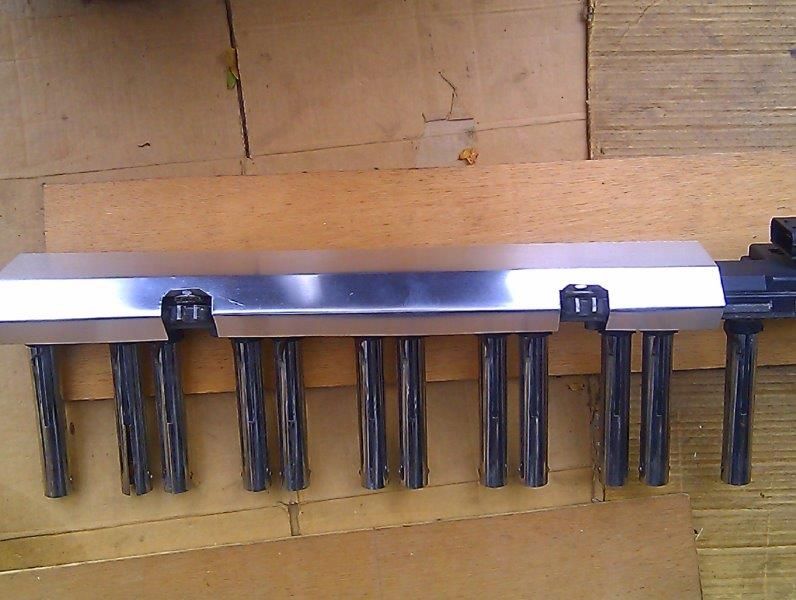
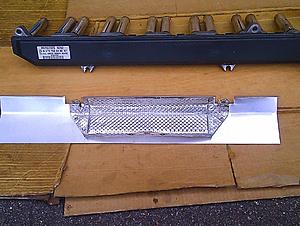
They didn't fix all the problems in the world - it needs a combination of things, but they helped. The real beneficiary of heat shielding are the ABC flexible hoses. There's a really big win there.
Nick
Yes, bleeding the stock IC system is a nightmare. Yes, the intercoolers perform well, but the rest of the system is terrible. Its full of air-locks, and vacuum refilling is the only real way. To do it properly, I'd recommend using a commercial cooling system vacuum re-filler in conjunction with a proper rotary vane vacuum pump, as use for AC systems.
They're not expensive.
I made some heat shields for my coil packs out of aluminium sheet. They dropped the peak temperatures about 6 deg C.

They didn't fix all the problems in the world - it needs a combination of things, but they helped. The real beneficiary of heat shielding are the ABC flexible hoses. There's a really big win there.
Nick
Last edited by Welwynnick; Feb 13, 2016 at 10:12 AM.
Senior Member
Joined: Apr 2014
Posts: 290
Likes: 3
SL65
Hi guys,
Yes, bleeding the stock IC system is a nightmare. Yes, the intercoolers perform well, but the rest of the system is terrible. Its full of air-locks, and vacuum refilling is the only real way. To do it properly, I'd recommend using a commercial cooling system vacuum re-filler in conjunction with a proper rotary vane vacuum pump, as use for AC systems.
They're not expensive.
I made some heat shields for my coil packs out of aluminium sheet. They dropped the peak temperatures about 6 deg C.
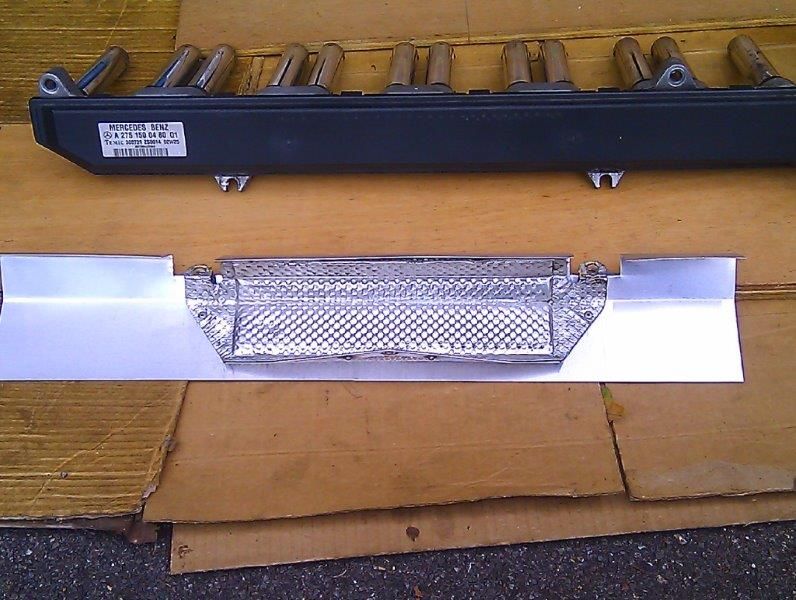
They didn't fix all the problems in the world - it needs a combination of things, but they helped. The real beneficiary of heat shielding are the ABC flexible hoses. There's a really big win there.
Nick
Yes, bleeding the stock IC system is a nightmare. Yes, the intercoolers perform well, but the rest of the system is terrible. Its full of air-locks, and vacuum refilling is the only real way. To do it properly, I'd recommend using a commercial cooling system vacuum re-filler in conjunction with a proper rotary vane vacuum pump, as use for AC systems.
They're not expensive.
I made some heat shields for my coil packs out of aluminium sheet. They dropped the peak temperatures about 6 deg C.
They didn't fix all the problems in the world - it needs a combination of things, but they helped. The real beneficiary of heat shielding are the ABC flexible hoses. There's a really big win there.
Nick
Super Member
Joined: May 2015
Posts: 554
Likes: 37
2004 S600
I agree with you on a few points being "overpriced by renntech" but it still must cost them money to get engineers to make up plug and play pumps , brackets and sitting measuring cars and thinking of how the pump acts if put horizontally or vertically. They are a business after all and some people want it done in a couple of days as to waiting for eBay to send pumps out then rewiring, soldering, making brackets , installing the pump upside down and not knowing why there still running high temps. So you pay for convenience but us mb members are smarter then that and can help each other out figure it out.
On another note how did you measure ohms on the coils ? This sounds interesting.
Water sprayers onto inter coolers is a great idea, would you physically jump out and spray them with a water bottle ? I've seen it been done before ! Or would it be a electronic button installed in the car ? Or would it be an automatic feature incorporated when they reach a certain temp? My worry about this is if the water being sprayed does not evaporate it will trickle down, where to ? I'm not sure and probably not willing to take that risk! I know they are connected to the inlets and the turbo inlet manifolds , and also inconveniently located above the coilpacks/spark plugs. Getting water there is a misfire itself and another limp mode. Wouldn't one also think that the water into the coil /plug leads would put confuse if not stress the coilpacks? I think so. This is why I would probably not go with this option, although it does work great if your coolers are like down below away from electrics / engine. Like on the evos where the coolers are down near the road and bumper , extra run off would go to the road if anything
On another note how did you measure ohms on the coils ? This sounds interesting.
Water sprayers onto inter coolers is a great idea, would you physically jump out and spray them with a water bottle ? I've seen it been done before ! Or would it be a electronic button installed in the car ? Or would it be an automatic feature incorporated when they reach a certain temp? My worry about this is if the water being sprayed does not evaporate it will trickle down, where to ? I'm not sure and probably not willing to take that risk! I know they are connected to the inlets and the turbo inlet manifolds , and also inconveniently located above the coilpacks/spark plugs. Getting water there is a misfire itself and another limp mode. Wouldn't one also think that the water into the coil /plug leads would put confuse if not stress the coilpacks? I think so. This is why I would probably not go with this option, although it does work great if your coolers are like down below away from electrics / engine. Like on the evos where the coolers are down near the road and bumper , extra run off would go to the road if anything
As far as spraying the intercooler, I think you misunderstood what I meant. I mean spraying the front mounted heat exchanger, not the intercooler directly. I can see why you would be concerned about that getting moisture into bad places. In an air/water setup the spray will have a much slower, more cumulative effect than in a direct air/air cooling setup like most turbo cars have. I already have a water/methanol injection system on the car and am in the process of improving it so while I am at it, I will probably be adding a separate loop (either separated via solenoid, or a completely separate pump) for misting the intercoolers. These nozzles will be a LOT smaller than your typical water/alcohol injection nozzles, and produce a much finer low-volume spray. But I'm going to use a ton of them, lol. Essentially it will be these nozzles:
However, mine will be operated at much higher pressures than just hooking up a garden hose, which will make even finer spray. I believe my injection pump is at 250psi right now so it should make an extremely fine fog and prevent any moisture accumulation. When the droplet size is below a certain threshold, the surface tension of the water droplets is so high that they bounce off of things instead of wetting surfaces, in addition to having a much larger surface area for heat transfer with the air making them much more easily vaporized for cooling. It's essentially dry fog. I will also be using nozzles threaded/brazed directly into rigid aluminum or stainless tubing, not plastic tubing with adapters like they are typically used.
As far as how it will be activated, I will most likely have a switch somewhere that I will have activate a number of things together to put the car into "chill" mode. As you may know, I will be playing around with refrigerated intercooling and that's my primary purpose for attempting to increase system efficiency with the misting, so I will need to activate the A/C system control solenoids I will be installing, the misting pump, the cooling fan, and a circulation pump on that intercooler loop. I don't want a ton of switches, so they will probably all be on one switch or controller with diodes to prevent issues when the car triggers those systems itself.


