When you click on links to various merchants on this site and make a purchase, this can result in this site earning a commission. Affiliate programs and affiliations include, but are not limited to, the eBay Partner Network.
ALT-LIN unplugged can only produce maximum 14.1 volts as highest voltage if you seeing on Instrument Cluster.
ECM controlled alternator with LIN connected can go up to 14.8V, which is too high if being used as float charging.
The volt data from IC is smoothen-out data, not fast, so that you guys can read easy.
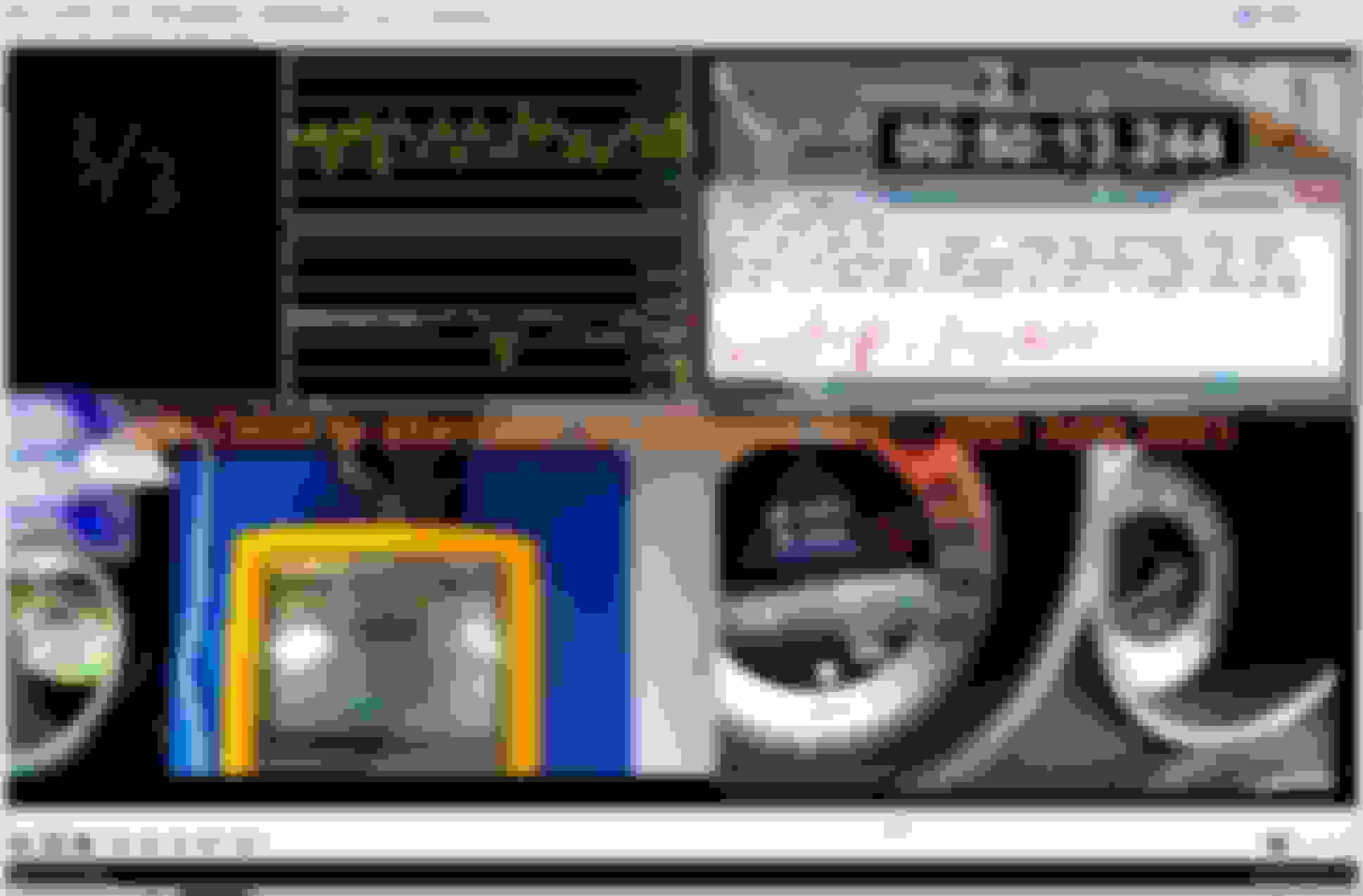
I will give you an example. This is the 1st short test run I did with ALT-LIN disconnected.
The Fluke DMM is reading direct at battery post. The graph logging is only 1hz or 1 data point persecond and not 5hz like I do today.
Above : alternator is charging battery at 3.3 amps, while already fullfilling car own electrical demand of unknown value ( usually 45 amps approx )
Remember, the IC amperage data is for what goes in or taken out of the battery, and not actual alternator gross output.
At this point in time, both Fluke DMM and IC shows 14.1V.
IMAGE BELOW :
I then pressed horn button 3 times, worth about 1 second total ON-OFF-ON-OFF-ON-OFF
IC voltage data is slow, it showed only max voltage dip to 13.8V, while the Fluke DMM can show as low as 13.55V. The 1hz logger showed 13.7 volt dip.
So the horn probably consumed 11Amp ish, 3.3amp ish from alternator and that minus 7.3 amps is battery contribution to provide power for the horn, because alternator by design is not an instant
power provider, it takes 1-2 seconds to ramp out more amperage output.
One will be wondering, how could amperage shows -7.3amps while alternator voltage at battery is still 13.55V ( Fluke DMM ), this shows the IC amperage data is probably
faster reading than volts. Battery itself has surface voltage charge a few seconds after a charger is removed, and this can be 13V+.
Logging at 5hz shows lots of things you usually can not see, has good and bad side, but for me it is good to see what the eyes can't see.
IC voltage with only 1 digit after decimal is also another smoothening method, you can't see 100 millivolts movement at all.
14.100 = 14.1
14.199 = 14.1, unless it uses 14.151 format as next up or 14.2 to be displayed, which seems is not the case.
The IC always shows 14.1V, while OBD2 B-BUS voltage ( local voltage to rear SAM ) is actual at 1 hz and is swinging 100 millivolts.
If you load stress the alternator for 1.5 to 2 seconds, I think it is enough duration to see good voltage dip at IC.
==============
The 248 minutes Log011 I been using on previous 2 posts is a 8-9 hour run non stop Surabaya to Jakarta, the last fuel stop at highway and into Jakarta traffic jam in the evening.
I sent my friend home and then I went home. The heat soak alternator does show for 0.1 to 0.2 seconds voltage dip below 12.7Volts from its 5 hz log when already caught in
jakarta peak evening traffic.
===================
When daytime and no heat soak on alternator at all and 1hz only logging, and not more than 50ish minutes total run, see the data below.
The very data 1st time ALT-LIN disconnected.
1st log, COLD start to running around inner city highway on a nice Sunday June 20th, 2021 and then fuel stop. You can see voltage dip below 12V.
2nd log, buy fuel, stop for 3 minutes, log again but first 15-20 second gone due to auto logging delay.
Above, cold start and then out of the house and into the highway. The 13.5V dip is the electric power steering.
Below : After refueling........... logging started late by 15-20 seconds, thus you cant see under 12V voltage dip.
1hz logging and no heat soak looks better ...right ?
What's the point looking better if I can't see a 5hz voltage dip during a very heat soaked operation ?
==========
I will inspect/clean/tighten my F32 this Feb 2025, I last check and tightened back in 2020 if I recall.
It has since gone thru high heat soak durations and vibrations during 2 of Bali run , 2 of Surabaya run and and that snakey road run.
===========
Nevertheless if you guys would do the eletric power steering load test, it will be good data to share.
Mstr Surya, everything you touch is always really interesting.
It looks like drop voltage issue under load... prepare test-plan and scope probes.
Let me see exactly what you've found...
Last edited by CaliBenzDriver; Jan 30, 2025 at 05:17 PM.
You report your engine response is improving. ECU is responding well to your enhanced setup. Now your engine is reworking stronger fuel map based on better combustion from stable timings during about a ~600Mi range.
You noticed your tranny is still bangy... we can help you cancel that temporarily and definitely.
> Temporarily fix:
You can get a simple "preview of better networking" for about 200Mi after a chassis Reboot.
> Durable fix:
You're well on you way to empower strong "normal" performance from your rig.
The following is what's involved...
> ENGINE:
> Cancelling the stock Shift-Delays can be experienced with a quick step: Chassis Reboot!
This step sanitizes modules transceiver and refreshes overloaded Central Gateway.
> TRANNY:
Transmission gear shifting is a difficult act that relies on ECU-TCU systems coordination. Stock conditions makes this challenge lend OUTSIDE the normal envelope range.
>> Default shifts you are familiar with are sloppy-slippery when clutches eat wide Rpm difference. The tranny decides to shift regardless of engine control.
>> Proper shifts are computed matched Rpm :
ECU-TCU Handshake then execute:
clutches combination open,
throttle dials lower target Rpm,
tranny shuts nearly matched Rpm.
Very little slippage, no heat, very quick, very strong, low clutch pressure required.
This translates into ATF not heating up to drop viscosity so shift computations remain valid.
The result is seemless gear change up/down !!
The gearbox really performs given a good setup. Unfortunately stock forces sloppy shifts.
-1- The first step is ECU needs good throttle control, lag disables that entirely. ALT-LIN + MOD-4 restore "normal" throttle control.
-2- The second step requires "normal" CAN-C bandwidth.
-3- The third step requires patience to let TCU fine tune historical data for clutch pressures vs. ATF Temp. From 500 to 1500Mi range.
> SELF-TUNING DRIVEABILITY:
-- Self-Tuning to hit target bullseye is interactive. ECU and TCU can only handle a fixed data range.
-- When poor setup forces operations out of range, the result is forced out of control !!
-- When setup is favorable ECU perfectly control engine trottle and TCU is helped by the engine to match shafts Rpm.
-- Given proper setup: clutch work is strong and quick with little wear and clutch sludge.
These proper TIMINGS are enabled by:
Solderless networking
MOD-4 pressure
ALT-LIN ignition
Remaining detune you have is from MOD-2: VVT wobling. Provide better viscosity when engine is ready...
ok to be patient and conservative to let engine contributions get well balanced.
Self-tuning setups for ECU/TCU is an interactive journey!
thanks Cali
..well for the reboot procedure idk how i can do it in the w205 because of the small AUX battery and im not tech/electric guy who can find a way to do it
btw.. i went to a local tuner to test the car on dyno to check my tune because the one who did it is based in another Country and i can't travel to him and i told him that the car isn't make full boost on the IC display and after the dyno he said the throttle body is closed (i guess he meant not open as much as it should be for tuned car), so im thinking this might be also another reason the car to make some strange things with the gears and also producing around half to 1/3 of the MAX boost, so i might go and retune it again + the mods from your side the car it should be even better
..well for the reboot procedure idk how i can do it in the w205 because of the small AUX battery and im not tech/electric guy who can find a way to do it
btw.. i went to a local tuner to test the car on dyno to check my tune because the one who did it is based in another Country and i can't travel to him and i told him that the car isn't make full boost on the IC display and after the dyno he said the throttle body is closed (i guess he meant not open as much as it should be for tuned car), so im thinking this might be also another reason the car to make some strange things with the gears and also producing around half to 1/3 of the MAX boost, so i might go and retune it again + the mods from your side the car it should be even better
As far as REBOOT W205 with CAP-AUX... I would deal with MAIN only and leave AUX alone or better locate the WIS Procedure to replace CAP-AUX. We want to know the proper plug-in procedure!!
(we need to avoid extreme surge by Farad Caps)
Poor boost control is a different topic. Mix that with ECU/TCU firmware tunes and you have me out.
Tranny is never going to shift well while engine is unsettled. Its alway the last element.
Tranny can not adapt to poor changing unstable conditions.
> Simple + Ready + Free:
While you know shifts are sloppy, you can refrain from overheating your tranny with high power demands, right?
Rationally speaking... taking it easy on tranny is up to you.
Last edited by CaliBenzDriver; Jan 30, 2025 at 05:37 PM.
As far as REBOOT W205 with CAP-AUX... I would deal with MAIN only and leave AUX alone or better locate the WIS Procedure to replace CAP-AUX. We want to know the proper plug-in procedure!!
(we need to avoid extreme surge by Farad Caps)
Poor boost control is a different topic. Mix that with ECU/TCU firmware tunes and you have me out.
Tranny is never going to shift well while engine is unsettled. Its alway the last element.
Tranny can not adapt to poor changing unstable conditions.
While you know shifts are sloppy don't waste your tranny with high power demands.
by "main" you mean float process only i guess
BUT it would be unbelievable if you was able to join into this topic as well isn't it?
well.. i do have some suspicious is because of the poor timings which the car had before the mods you described well + probably not correct ecu tune after the stealership updates and i think this leads to really confused communication between E/TCU
Last edited by KristiyanPetrov; Jan 30, 2025 at 05:36 PM.
BUT it would be unbelievable if you was able to join into this topic as well isn't it?
well.. i do have some suspicious is because of the poor timings which the car had before the mods you described well + probably not correct ecu tune after the stealership updates and i think this leads to really confused communication between E/TCU
We remove peebles only one at the time, skillfully.
When you had extra variables: it's additional headache to sort through.
Poor boost usually involve waste gates or the tiny vacuum pump outlet check-valve (bank-2 rear).
Firmware tunes are in a different league each managed by their dedicated professionals.
Last edited by CaliBenzDriver; Jan 30, 2025 at 06:09 PM.
We remove many peebles skillfully one at the time.
When you had more variables: it's additional headache to sort through.
Poor boost usually involve waste gates or the vacuum check valve.
Firmware tunes are in a different league each managed by their dedicated professionals.
true true, thank you
well you're right, usually they're the symptoms for the boost issues, but the issue appear right next after the updates, so it should be something related to the updates i do believe but until i pull the trigger for new tuned file or stock one for test i guess i will be only with my suspicious
Last edited by KristiyanPetrov; Jan 30, 2025 at 06:09 PM.
2015 SL400 (M276 Turbo), 2014 C350 Sport (M276 NA), 2004 SL500 (M113), 2004 Audi TT225 (BEA)
I took some measurements to day of voltage and current between the engine and body. I attached my probes to the timing cover and strut tower where I had placed the ground strap. I took measurements with the engine off and with it running. And there were indeed voltage and current measured, albeit small. Still, I would have thought the engine would be grounded to the body and there would be no voltage or current flow.
It appears that the voltage is the same whether the engine is off or on, but current is definitely different. So, now I know if I connect my ground strap at my measuring points, some current is going to go into the body.
[QUOTE=JettaRed;9105467]I took some measurements to day of voltage and current between the engine and body. I attached my probes to the timing cover and strut tower where I had placed the ground strap. I took measurements with the engine off and with it running.
And there were indeed voltage and current measured, albeit small. Still, I would have thought the engine would be grounded to the body and there would be no voltage or current flow.
It appears that the voltage is the same whether the engine is off or on, but current is definitely different. So, now I know if I connect my ground strap at my measuring points, some current is going to go into the body.
....
Current, Engine On
.../QUOTE]
This is interesting: you've measured 128mA in parallel bypass of with W-TF strap with ENG:ON.
We could almost calculate the strap resistance by saying 25Amp in the strap and 128mA in the bypass but then were missing the drop-voltage.
What we can conclude without involving physics is the secondary strap helps primary strap to lower voltage drop by sharing current path.
This reduced voltage drops, noisy riples and help limit starter in-rush current (known as "LRA") before it begins cranking.
+++ mA vs. Amp range:
Notice the difference between the two test settings.
The test leads location best match the dial selection, right?
> Use the "10Amp" lead setting to ensure you don't blow up the mA circuit DVM protection
Last edited by CaliBenzDriver; Jan 30, 2025 at 08:51 PM.
2015 SL400 (M276 Turbo), 2014 C350 Sport (M276 NA), 2004 SL500 (M113), 2004 Audi TT225 (BEA)
That was with the second ground cable disconnected (i.e., stock). I will do it again with the cable connected again. But it's supposed to rain all day tomorrow, so it might be Saturday before I can do that.
That was with the second ground cable disconnected (i.e., stock). I will do it again with the cable connected again. But it's supposed to rain all day tomorrow, so it might be Saturday before I can do that.
It all good better weather included... more road test with full ALT load conditions:
wippers,
HL:ON,
A/C Defrost
Heated seats
Rear window grid
Nimble throttle and good brakes!!
I bed your Hyundai is not going to budge during side to side steering at 14.1Volts... let's see.
Don't overdo steering super load: prefuse is the weak link.
Last edited by CaliBenzDriver; Jan 30, 2025 at 08:59 PM.
@S-Prihadi
MS! I looked at your test drive and comments.
Than you very kindly for your real-life report!
Now how are we going to fix what this shows?
I get the impression you're somewhat satisfied with Mercedes stock setup, even though you're running MOD-1 and ALT-LIN...
Myself on the other end, see room for improving a bad resistive circuit stressing your electronics.
We discovered W212 fancy battery cooking Yo-Yo, I am sure we can retire the factory gremlins at F32.
You need A/C running with your 365 day summer weather... let's make this to work great on your chassis.
1/3: battery ABSORBING +3Amps
2/3: battery SUPPLYING -7Amps
3/3: Battery RECOVERING +10Amps
> Tally Things Up:
-- We have evidence of drop-voltage ripples
-- We have evidence of Battery paying out big amps
> What Does That Tell Us ??
All good sa-sis-fied?
No way : ALT current is not comming through your supply circuit.
Main battery is a taker, not a supplier.
something not working well on the supply side!!
You can start from ALT or from the Prefuse,
We like numbers a lot, lets measure supply side drop voltage from point to point.
> TEST PLAN:
-- use your garage power supply instead of running hot static engine not moving hot fumes
-- load down the R-SAM big cable with your incandescent bulb rig or battery tester carbon-pile
-- Don't disturb ANY of your F32 nuts because they are "#1 suspect".
-- We want to take couple measurements and compare them one to the other.
-- End goal is to pin down what is No1 dropping connection (I guess the most uphill)
-- I would measure voltage rather than amps to qualify the Prefuse circuits.
-- Fuse-links Do Drop Voltage because they must be resistive by nature to be able to overheat.
- The basic suspect are oxidized connections due to heat.
> HOW TO FIX:
I am not exactly sure how to best proceed but I know we don't want to sand anodized precious metals to expose worst cheaper metals.
Silver may be welcomed to help in this party. Forget gold plating, yet best against oxidation!!
Your boating expertise is going to help us a very long way to fix our failing connections.
Thank you.
Last edited by CaliBenzDriver; Jan 31, 2025 at 01:46 AM.
Based on what we know, 90% chance PreFuse damages can be attributed to the stock ECU 90Amp "drained by driving" yo-yo bug.
ALT-LIN is a perfect insurance to prevent any future yoyo damage but not existing damages.
In addition note to NEVER CHARGE A FLAT MAIN by driving. Unlimited battery-roasting current damages prefuse to create... drop-voltage ripples.
Because existing ECU circuitry is proven sensitive to unstable voltage supply, we need to prevent drop ripples by cleaning oxidized Prefuse connections.
meaning prefuse helps tank powertrain performance. Nicely done! **
We know drops are additional by nature: each connection adds extra drop penalty.
The end goal is VIP ECU power supply... let's focus on fixing that path up to ALT input.
Overall theme are gentle failure. Our advanced MB systems are designed to age instead of failing suddenly.
This way every system gets safely derated to require busy service. Nicely done!
> F32 Nuts are IMPORTANT !!
Fixing F32 drops involve dealing with undersized nuts.
I don't know what is the best practice to make these nut connections reliable. We can only deal with existing cables we got (Max load ~125Amps: ok)
I believe a normal stainless steel nut with counternut + washer will be an upgrade. We can't use nylon nuts. It needs to take the heat created by drop voltage.
**: that's an invite to undobypass the harness-spaghetti designed to derate reliable ignition stable power.
- all branches and banks power feed must be equal. - GND is direct by the coil screw.
- simply double up additional while keeping existing harness in place for "backup".
OXIDIZED color SHOWS HEAT/DROP
Less current > less drop > > better powertrain mixture! ++++ SIMPLE SANITY CHECK :
Everyone likes clear and simple... so do I
- Q: How can you tell prefuse is nearly good?
- A: Your IC Display stays put regardless of high chassis load.
> TEST SHOWS:
-- IF the battery sensor volt/current are non-affected by load, it gives a sense that prefuse ALT and BATT Inputs are in good shape.
-- ELSE prefuse is easing its way downhill.
Last edited by CaliBenzDriver; Jan 31, 2025 at 06:09 PM.
2015 SL400 (M276 Turbo), 2014 C350 Sport (M276 NA), 2004 SL500 (M113), 2004 Audi TT225 (BEA)
The above pics are kinda confusing. Basically, the added (red) grounding cable did nothing to affect the amperage or the voltage (or maybe my cheap DMM couldn't detect it). And I couldn't find my amp clamp. I think I hooked up the DMM wrong for the amps.
The above pics are kinda confusing.
Basically, the added (red) grounding cable did nothing to affect the amperage or the voltage (or maybe my cheap DMM couldn't detect it).
And I couldn't find my amp clamp. I think I hooked up the DMM wrong for the amps.
JR! don't kill yourself, it's pretty difficult to collect meaningful trusted measurements for actionable results.
MS! is an expert at test instrumention setup.
(Test conditions, test equipment, user & system errors, DC current glitches,...) makes for high error rate
If the test outcome decides "new secondary strap vs. single strap" ...
Then I can jump on the side of Japanese quality.
3 straps maybe overkilled but 2 is a reliable choice.
Difficult test setup is why instead of grabbing a DVM number, I thought we could try to light up a test bulb... we likely dealing within the range of 250mV drop.
A clean strap high and dry beats salty stock W-TF.
We don't replace it,
we simply double up existing to offer less resistive path.
That's guaranteed result without any measurement.
+++ mA current in parallel with secondary strap...
116mA flowing through a 3rd path
Some current prefers to travel through your DVM leads.
DANKE!
Last edited by CaliBenzDriver; Jan 31, 2025 at 10:05 PM.
I ordered an clamp-type amp meter to see if there actually is any current going through the red cable. It should arrive tomorrow.
You'll enjoy great results using your new AC/DC current clamp. Perfect way not to alter the existing system undergoing test ie. low error!
I have one that can record peak In-rush A/C motors LRA with soft-starters ramps...
I don't know about using it DC In-rush during crank time ?
It will definitely measure well running engine DC current going through your red cable.
Let's guess current should be a near split with primany strap. As measured at ALT cable lending onto Prefuse.
-- battery charging will be near zero/full
-- engine GNDs its current strait from ALT to block
-- Then we need to activate body load that GND to chassis, not to the engine like the EPS.
> Quick Strap Calculations:
we can compare (1-primary + 2-secondary) strap with 3-ALT. ... meaning we provide 2 and 3 to calculate 1 without climber under the rig.
++++ More fun: CPS Rpm + ESP true wheel speed signal
I bet you new shiny clamp will do "FREQUENCY metering" as well so you can measure exact RPM from CPS square wave signal.
Wheel sensor at ESP
Last edited by CaliBenzDriver; Feb 1, 2025 at 05:06 AM.
Interesting part is how they tape over their windshield seals to prevent freezing water from popping glass -- Sounds like smart practice front/back glass
Interesting part is how they tape over their windshield seals to prevent freezing water from popping glass -- Sounds like smart practice front/back glass
I will take her word for everything she said. No need to verify anything myself.
2015 SL400 (M276 Turbo), 2014 C350 Sport (M276 NA), 2004 SL500 (M113), 2004 Audi TT225 (BEA)
Ok, here are pics of my current readings using my newly acquired clamp meter. The Amp scale is 0-40 Amps.
There was no current or voltage with the engine off. The Amperage was a little over 9A DC when I first started the engine. The Amps would slowly drop, much like we observe when viewing the Amperage (IB) through the engineering menu.
I am a little confused. 8+ Amps DC or 1.3 Amps AC can be lethal if there is sufficient voltage. But the negligible voltage I measure is why I don't get a shock when touching the running engine and car body. I feel like I'm doing something wrong.
12 volts isn't enough to give you a buzz no matter the current capability of the source under normal circumstances. You can safely grab a car battery's terminals, or even power tool battery packs. But you can get a tingle from a 9 volt battery on your tongue -- a bit of saliva improves conductivity. You need at least 50 to 60 volts DC to feel it on dry fingers. Curiously, the human body is more susceptible to AC, and there seems to be resonance at power line frequencies 50-60 Hz. Electric shocks when you grab door knobs can be a couple thousand volts, but are very low current -- probably not good for your pacemaker though.
2015 SL400 (M276 Turbo), 2014 C350 Sport (M276 NA), 2004 SL500 (M113), 2004 Audi TT225 (BEA)
As I think about it, the clamp meter was mimicking the tick-down of Amps as displayed through the engineering menu. I should have compared the two while it was happening. Hmmmm, something for me to do tomorrow.
Mercedes SLR McLaren 722 S Is Extremely Rare Example Modified by McLaren
Slideshow: A one-of-one U.S.-spec Mercedes-Benz SLR McLaren Roadster became even rarer after a factory-backed transformation at McLaren's headquarters.