Thank you for this report while ALT-ECU controlled
-- Your ECU really hugs it's 14.7V, thats odd it doesn't move around at all.
-- Battery current is moderatly normal (17A to 5A)
Overall these data show a trouble-free electric system operating well.
Open questions are :
-- Why battery does not go below 1A in 15/20Mn?
-- Why is the ECU stuck on 14.7V ??
There was some fluctuations probaby 14.5-14.9 but I was driving so couldn't keep track all of them. My drive was only about 12-15mins so maybe not enough time for the amperage to drop.
I wasn't happy with the way my car was running. Probably my imagination, but I disconnected this additional grounding cable. For kicks, tomorrow I will measure any voltage or current between the engine and body with the engine off and then with it running. I am curious if there is any measurable potential differences.
Interestingly, the car seemed to run smoother today after I disconnected the red ground cable. I swear that sometimes I feel one with the car and can tell when it feels good or not.
Am I losing my mind?
Yes, I think you're right
Try to bend a S in your strap to dampen any vibrations. This gauge is fairly stiff unless its made with premium tiny-strends.
Testing the main GND strap in millivolts is fun... we know the shape of the current is nothing like DC nor 60Hz Sinusoidal AC... so best way is look for gremlins with a scope or jump GND good and be done already. Jagged riples are gonna look like was MS! gets, I believe from its PreFuse.
bigger current main path bigger voltage drop ripples under higher load meaning it needs seriously good contacts quality. (Do not sand off precious metals oxides like silver used in relays) MB uses a special alloys for contact surfaces. criterias
(Can you clean paint off from the strut landing area)
A bad main strap connection is going to build drop-voltage riples. We dislike riples because lower voltage draws higher current.
+++ this looks like we are aiming towards a DeOx spray maintenance of F32.
There was some fluctuations probaby 14.5-14.9 but I was driving so couldn't keep track all of them. My drive was only about 12-15mins so maybe not enough time for the amperage to drop.
Ok, I see. Everything happears as if you have a well working stock system: 14.4 to 14.9V bulk charge rate.
Once ECU gets satisfied with battery charge level then it will switch to 12.6V float and possibly let you experience the 90Amp "drain by driving" bug only done during float!
Right now no evidence of that because charge current shown to be moderate.
Yes IC Displays the Battery sensor (BATT-LIN) networked to R-SAM > CGW> ECU.
Under stable voltage battery current decreases as its charge level increase. 100% normal.
> Operating current ranges:
-- IB above than 25/30A : charge/drain involved. Use a regulated batt charger!!
-- IB between 20 to 15A : normal stock fare
-- IB between 15A and 1A : getting fully charged.
-- What slows charge absorption are the aged plate internal resistance - Float charging directly help fix unbalanced cells (AGM Setting: OUT OF CIRCUIT!)
> ALT IS A BAD MUSCLE CHARGER:
The voltage is regulated but the current is virtually unlimited - This is how PREFUSE+AGM GETS TOASTED.
Pls charge low batteries with a charger that limits current.
When you force 1350Watt into a hot AGM it GLOWS like a bread toaster. That's 90Amps under 14.9V affectionatly coined "The Yo-Yo" .
Long story short when ECU controls ALT voltage screw up are likely inevitable. IC dIsplay shows what's happening.
> ALT-LIN STABLE 14.15V:
-- Our end goal is a stable voltage to feed ECU IGNITION for smooth reliable timely sparks.
-- We dont exactly care about BATT. itself. It's here to help boost instand load demand (steering, A/C fan,..)
-- Batt does smooth riples in best conditions.
-- A good Batt condition is beneficial but is not our primary goal.
thanks for this long nice explanation
so only with ALT unplugged without float/reboot, do you think those figures are good enough?
Try to bend a S in your strap to dampen any vibrations. This gauge is fairly stiff unless its made with premium tiny-strends.
Testing the main GND strap in millivolts is fun... we know the shape of the current is nothing like DC nor 60Hz Sinusoidal AC... so best way is look for gremlins with a scope or jump GND good and be done already. Jagged riples are gonna look like was MS! gets, I believe from its PreFuse.
bigger current main path bigger voltage drop ripples under higher load meaning it needs seriously good contacts quality. (Do not sand off precious metals oxides like silver used in relays) MB uses a special alloys for contact surfaces. criterias
(Can you clean paint off from the strut landing area)
A bad main strap connection is going to build drop-voltage riples. We dislike riples because lower voltage draws higher current.
+++ this looks like we are aiming towards a DeOx spray maintenance of F32.
That cable is super flexible with super thin strands inside, so I think it'll be ok. I have enough slack in it to absorb any engine vibrations. I will do some paint removal on the strut tower. Again, I first want to make sure there is no current or voltage between the engine and body.
In S/S+ mode IB is sit around 2-3A (usually im in S mode for daily driving)
1. Since ALT unplugged i drive only City but i feel more sharp response on throttle and car seems to be a bit louder on higher rpms : )))
2. Oil solenoid unplugged as well since September last year and engine currently with Motul X Gen II 5/40
Sometimes the car does weird changes, let say im in 2nd gear and i accelerate to 2.4k rpm and i move my leg from the gas then the car as it stays in higher revs the tranny does jump and bang (shifting next up gear) and 2s after that the IC display shows gear was changed and the rpms goes down because of the next up gear is kinda delay not sure if it's something because of my current Stage 2 remap and there's mismatch of something (sometimes is doing this, specifically during cold oil on tranny)
Cold weather and first start of the day will often cause pronounced shifting until things warm up. When did the harsh shifting start? If it doesn't get better, you may need to reset and readapt your transmission. You will need XENTRY or a suitable bi-directional scan tool to do this. I had @BenzNinja help me with my transmission back in the Fall.
yes, please report your experiment. Do keep an eye on chassis voltage.
The first thing BATT-LIN does is disable IC Display.
Then your left measuring voltage differently ie. not exactly matching "battery" value.
Let see what ECU does...
The end goal is a flat stable voltage, low current.
-- At least we hope it disables the "oportunistic charge" [12.6v/14.9v] swing.
-- ECU firmware is challenged to manage ALT without battery feedback....
-- ALT is connected, unable to self-regulate 14.15V independently...
-- What voltage do ECU/ALT bargain over LIN Bus (without BATT_LIN)???
With BATT-LIN disconnected (and ALT-LIN remaining connected)
After another 15 mile trip to the office:
Pros
- ECO started out "off" when I started the car today.
- No CEL or any other indication of trouble
Cons
- I saw voltage steady at 14.1v for most of the trip. However, low speed starts and stops showed frequent dips to mid-13v. This wasn't the case with BATT-LIN connected.
I think I prefer it fluctuating but remaining above 14.1v rather than dipping to <14v when in traffic. That should give voltage regulators throughout the car more headroom to work with. I intend to plug the BATT-LIN back in when I get home and just live with turning off ECO on startup... it's basically muscle memory anyway at this point.
ALT-LIN unplugged can only produce maximum 14.1 volts as highest voltage if you seeing on Instrument Cluster.
ECM controlled alternator with LIN connected can go up to 14.8V, which is too high if being used as float charging.
The volt data from IC is smoothen-out data, not fast, so that you guys can read easy.
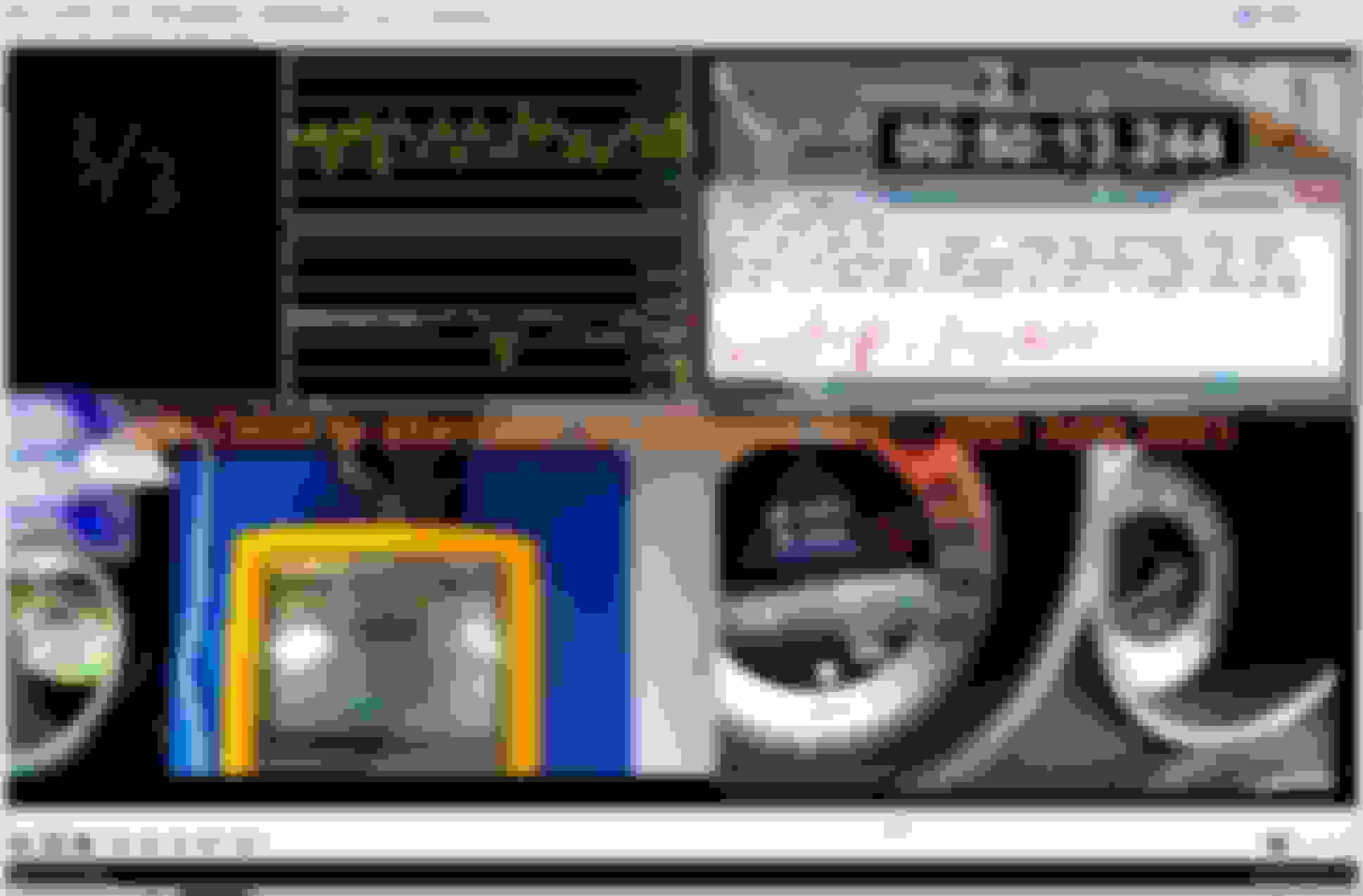
I will give you an example. This is the 1st short test run I did with ALT-LIN disconnected.
The Fluke DMM is reading direct at battery post. The graph logging is only 1hz or 1 data point persecond and not 5hz like I do today.
Above : alternator is charging battery at 3.3 amps, while already fullfilling car own electrical demand of unknown value ( usually 45 amps approx )
Remember, the IC amperage data is for what goes in or taken out of the battery, and not actual alternator gross output.
At this point in time, both Fluke DMM and IC shows 14.1V.
IMAGE BELOW :
I then pressed horn button 3 times, worth about 1 second total ON-OFF-ON-OFF-ON-OFF
IC voltage data is slow, it showed only max voltage dip to 13.8V, while the Fluke DMM can show as low as 13.55V. The 1hz logger showed 13.7 volt dip.
So the horn probably consumed 11Amp ish, 3.3amp ish from alternator and that minus 7.3 amps is battery contribution to provide power for the horn, because alternator by design is not an instant
power provider, it takes 1-2 seconds to ramp out more amperage output.
One will be wondering, how could amperage shows -7.3amps while alternator voltage at battery is still 13.55V ( Fluke DMM ), this shows the IC amperage data is probably
faster reading than volts. Battery itself has surface voltage charge a few seconds after a charger is removed, and this can be 13V+.
Logging at 5hz shows lots of things you usually can not see, has good and bad side, but for me it is good to see what the eyes can't see.
IC voltage with only 1 digit after decimal is also another smoothening method, you can't see 100 millivolts movement at all.
14.100 = 14.1
14.199 = 14.1, unless it uses 14.151 format as next up or 14.2 to be displayed, which seems is not the case.
The IC always shows 14.1V, while OBD2 B-BUS voltage ( local voltage to rear SAM ) is actual at 1 hz and is swinging 100 millivolts.
If you load stress the alternator for 1.5 to 2 seconds, I think it is enough duration to see good voltage dip at IC.
==============
The 248 minutes Log011 I been using on previous 2 posts is a 8-9 hour run non stop Surabaya to Jakarta, the last fuel stop at highway and into Jakarta traffic jam in the evening.
I sent my friend home and then I went home. The heat soak alternator does show for 0.1 to 0.2 seconds voltage dip below 12.7Volts from its 5 hz log when already caught in
jakarta peak evening traffic.
===================
When daytime and no heat soak on alternator at all and 1hz only logging, and not more than 50ish minutes total run, see the data below.
The very data 1st time ALT-LIN disconnected.
1st log, COLD start to running around inner city highway on a nice Sunday June 20th, 2021 and then fuel stop. You can see voltage dip below 12V.
2nd log, buy fuel, stop for 3 minutes, log again but first 15-20 second gone due to auto logging delay.
Above, cold start and then out of the house and into the highway. The 13.5V dip is the electric power steering.
Below : After refueling........... logging started late by 15-20 seconds, thus you cant see under 12V voltage dip.
1hz logging and no heat soak looks better ...right ?
What's the point looking better if I can't see a 5hz voltage dip during a very heat soaked operation ?
==========
I will inspect/clean/tighten my F32 this Feb 2025, I last check and tightened back in 2020 if I recall.
It has since gone thru high heat soak durations and vibrations during 2 of Bali run , 2 of Surabaya run and and that snakey road run.
===========
Nevertheless if you guys would do the eletric power steering load test, it will be good data to share.
In S/S+ mode IB is sit around 2-3A (usually im in S mode for daily driving)
1. Since ALT unplugged i drive only City but i feel more sharp response on throttle and car seems to be a bit louder on higher rpms : )))
2. Oil solenoid unplugged as well since September last year and engine currently with Motul X Gen II 5/40
Sometimes the car does weird changes, let say im in 2nd gear and i accelerate to 2.4k rpm and i move my leg from the gas then the car as it stays in higher revs the tranny does jump and bang (shifting next up gear) and 2s after that the IC display shows gear was changed and the rpms goes down because of the next up gear is kinda delay not sure if it's something because of my current Stage 2 remap and there's mismatch of something (sometimes is doing this, specifically during cold oil on tranny)
With BATT-LIN disconnected (and ALT-LIN remaining connected)
After another 15 mile trip to the office:
Pros
- ECO started out "off" when I started the car today.
- No CEL or any other indication of trouble
Cons
- I saw voltage steady at 14.1v for most of the trip. However, low speed starts and stops showed frequent dips to mid-13v. This wasn't the case with BATT-LIN connected.
I think I prefer it fluctuating but remaining above 14.1v rather than dipping to <14v when in traffic. That should give voltage regulators throughout the car more headroom to work with. I intend to plug the BATT-LIN back in when I get home and just live with turning off ECO on startup... it's basically muscle memory anyway at this point.
Thanks for sharing your impressions, I still think it is better to disconnect from the ALT side (so ALT-LIN instead of BATT-LIN) but given the limited space your car has I guess you kind of have no choice... for now.
What gear are people using to live-data-log? I've been relying on just a cigarette lighter readout, my service menu readout, and some graphing capabilities built into an aftermarket OBD2 reader (it's pretty cheesy, but it works for display at least)
What gear are people using to live-data-log? I've been relying on just a cigarette lighter readout, my service menu readout, and some graphing capabilities built into an aftermarket OBD2 reader (it's pretty cheesy, but it works for display at least)
Hmmm I am guessing XENTRY also provides live data.
I understand that , I was keeping track of My #'s with the IC pump being always on. I don't seem to have the voltage drops that others have reported. Since I can't even see My ALT-LIN wire I may just live with what I have . LOL
With BATT-LIN disconnected (and ALT-LIN remaining connected)
After another 15 mile trip to the office:
Pros
- ECO started out "off" when I started the car today.
- No CEL or any other indication of trouble
Cons
- I saw voltage steady at 14.1v for most of the trip. However, low speed starts and stops showed frequent dips to mid-13v. This wasn't the case with BATT-LIN connected.
I think I prefer it fluctuating but remaining above 14.1v rather than dipping to <14v when in traffic. That should give voltage regulators throughout the car more headroom to work with. I intend to plug the BATT-LIN back in when I get home and just live with turning off ECO on startup... it's basically muscle memory anyway at this point.
That's an interesting test-drive
ECU voltage control without BATT_LIN is somewhat stable but deeps just-a-hair during accelerations like normal stock does.
Long story short: we can positively conclude BATT_LIN serves no purpose for our experiment.
Improvement come from ALT-LIN being released for ALT self-regulation.
Cold weather and first start of the day will often cause pronounced shifting until things warm up. When did the harsh shifting start? If it doesn't get better, you may need to reset and readapt your transmission. You will need XENTRY or a suitable bi-directional scan tool to do this. I had @BenzNinja help me with my transmission back in the Fall.
well this one is weird shift which is not nice but.. i think cold tranny most of the times, i have tried reset but without scan when you press gas for several min, i did small change but not obvious as reset adaptation through scanner, but does your scan which you post couple of days ago doesn't support reset adaptations?
Quote:
Originally Posted by W205C43PFL
I mean, I wonder why?
What about pops and bangs, did that change as well?
well there's some obvious changes related to sound, not sure if it's related to better timings? i can feel some difference because im catless and it's obvious but im happy with that ofc hahahaha
well this one is weird shift which is not nice but.. i think cold tranny most of the times, i have tried reset but without scan when you press gas for several min, i did small change but not obvious as reset adaptation through scanner, but does your scan which you post couple of days ago doesn't support reset adaptations?
well there's some obvious changes related to sound, not sure if it's related to better timings? i can feel some difference because im catless and it's obvious but im happy with that ofc hahahaha
Oh neat stuff. Does it sound better or just louder. Yes, there is a difference : ) tone vs volume, raspy or loud, ricey or loud?
1. Since ALT unplugged i drive only City but i feel more sharp response on throttle and car seems to be a bit louder on higher rpms
2. Oil solenoid unplugged as well since September last year and engine currently with Motul X Gen II 5/40
Sometimes the car does weird changes, let say im in 2nd gear and i accelerate to 2.4k rpm and i move my leg from the gas then the car as it stays in higher revs the tranny does jump and bang (shifting next up gear) and 2s after that the IC display shows gear was changed and the rpms goes down because of the next up gear is kinda delay not sure if it's something because of my current Stage 2 remap and there's mismatch of something (sometimes is doing this, specifically during cold oil on tranny)
You report your engine response is improving. ECU is responding well to your enhanced setup. Now your engine is reworking stronger fuel map based on better combustion from stable timings during about a ~600Mi range.
You noticed your tranny is still bangy... we can help you cancel that temporarily and definitely.
> Temporarily fix:
You can get a simple "preview of better networking" for about 200Mi after a chassis Reboot.
> Durable fix:
You're well on you way to empower strong "normal" performance from your rig.
The following is what's involved...
> ENGINE:
> Cancelling the stock Shift-Delays can be experienced with a quick step: Chassis Reboot!
This step sanitizes modules transceiver and refreshes overloaded Central Gateway.
> TRANNY:
Transmission gear shifting is a difficult act that relies on ECU-TCU systems coordination. Stock conditions makes this challenge lend OUTSIDE the normal envelope range.
>> Default shifts you are familiar with are sloppy-slippery when clutches eat wide Rpm difference. The tranny decides to shift regardless of engine control.
>> Proper shifts are computed matched Rpm :
ECU-TCU Handshake then execute:
clutches combination open,
throttle dials lower target Rpm,
tranny shuts nearly matched Rpm.
Very little slippage, no heat, very quick, very strong, low clutch pressure required.
This translates into ATF not heating up to drop viscosity so shift computations remain valid.
The result is seemless gear change up/down !!
The gearbox really performs given a good setup. Unfortunately stock forces sloppy shifts.
-1- The first step is ECU needs good throttle control, lag disables that entirely. ALT-LIN + MOD-4 restore "normal" throttle control.
-2- The second step requires "normal" CAN-C bandwidth.
-3- The third step requires patience to let TCU fine tune historical data for clutch pressures vs. ATF Temp. From 500 to 1500Mi range.
> SELF-TUNING DRIVEABILITY:
-- Self-Tuning to hit target bullseye is interactive. ECU and TCU can only handle a fixed data range.
-- When poor setup forces operations out of range, the result is forced out of control !!
-- When setup is favorable ECU perfectly control engine trottle and TCU is helped by the engine to match shafts Rpm.
-- Given proper setup: clutch work is strong and quick with little wear and clutch sludge.
These proper TIMINGS are enabled by:
Solderless networking
MOD-4 pressure
ALT-LIN ignition
Remaining detune you have is from MOD-2: VVT wobling. Provide better viscosity when engine is ready...
ok to be patient and conservative to let engine contributions get well balanced.
Self-tuning setups for ECU/TCU is an interactive journey!
I understand that , I was keeping track of My #'s with the IC pump being always on.
I don't seem to have the voltage drops that others have reported.
Since I can't even see My ALT-LIN wire I may just live with what I have . LOL
With limited voltage swing you can hope for limited negative interaction. Throttle Lag and weakness below 2500 Rpm are the results.
Most everyone has it unknowingly.
Do keep an eye on your voltage because the "deep drain" bug below 12...11v only happen during R-SAM managing the 12.6V float.
You are very blessed not to ever get 1350Watt battery cooker.
Slideshow: A one-of-one U.S.-spec Mercedes-Benz SLR McLaren Roadster became even rarer after a factory-backed transformation at McLaren's headquarters.