




Upgraded drop and plug fuel PUMP?

MBWorld Fanatic!


Joined: Mar 2013
Posts: 1,126
Likes: 80
From: SoCal
2006 E55, Various other German and ‘Murican
O.k. Bringing this back.
Do we have confirmation that the stock E55 pumps are indeed 300lph as stated by Lelix? rated at what psi? How did Lelix learn of the rating? Is there a part number on the pump?
And I'm wondering if Craig did indeed run into the same install issue as Mullet? Did he have to break tabs and re-attach?
So many cliffhangers.
Do we have confirmation that the stock E55 pumps are indeed 300lph as stated by Lelix? rated at what psi? How did Lelix learn of the rating? Is there a part number on the pump?
And I'm wondering if Craig did indeed run into the same install issue as Mullet? Did he have to break tabs and re-attach?
So many cliffhangers.
Yep. Same as many forums. Conversation, pics, and then if someone figured it out, it's a mystery.
In this case, it's a "kit" from bip now to replace the pumps.
I'll get the pics you asked for in the other thread.

Super Member
Joined: Feb 2013
Posts: 659
Likes: 25
From: SE MI
2005 Mercedes E55 AMG
O.k. Bringing this back.
Do we have confirmation that the stock E55 pumps are indeed 300lph as stated by Lelix? rated at what psi? How did Lelix learn of the rating? Is there a part number on the pump?
And I'm wondering if Craig did indeed run into the same install issue as Mullet? Did he have to break tabs and re-attach?
So many cliffhangers.
Do we have confirmation that the stock E55 pumps are indeed 300lph as stated by Lelix? rated at what psi? How did Lelix learn of the rating? Is there a part number on the pump?
And I'm wondering if Craig did indeed run into the same install issue as Mullet? Did he have to break tabs and re-attach?
So many cliffhangers.

MBWorld Fanatic!
Joined: Jan 2009
Posts: 7,659
Likes: 67
From: Atlanta
2006 E55 AMG
I have been through 3 sets of pumps, aeromotive 340s, aem 320's and now stryker 340's.
They have all been e85 based pumps. The aeromotives malfunctioned very quickly for me. The aem units were nice for the price but I wanted more pump when I went to return style so I went with the proven heavy duty stryker pumps from the gt500 community.
They have all been e85 based pumps. The aeromotives malfunctioned very quickly for me. The aem units were nice for the price but I wanted more pump when I went to return style so I went with the proven heavy duty stryker pumps from the gt500 community.
Member
Joined: Sep 2014
Posts: 190
Likes: 4
Subies
I have been through 3 sets of pumps, aeromotive 340s, aem 320's and now stryker 340's.
They have all been e85 based pumps. The aeromotives malfunctioned very quickly for me. The aem units were nice for the price but I wanted more pump when I went to return style so I went with the proven heavy duty stryker pumps from the gt500 community.
They have all been e85 based pumps. The aeromotives malfunctioned very quickly for me. The aem units were nice for the price but I wanted more pump when I went to return style so I went with the proven heavy duty stryker pumps from the gt500 community.
Member
Joined: Sep 2014
Posts: 190
Likes: 4
Subies
MBWorld Fanatic!
Joined: Mar 2013
Posts: 1,126
Likes: 80
From: SoCal
2006 E55, Various other German and ‘Murican
You can mount it where you can get to it. Whether the sender will work without a filter IN it, I cannot tell. I will not take apart these news ones, I will remove the old ones and dissect.
MB World Stories
The Best of Mercedes & AMG

6 Mercedes Models That Did NOT Age Well (But Are Somehow Still Cool)
Verdad Gallardo
Manual Mercedes? 6 Times Sindelfingen Let Drivers Have All The Fun
Verdad Gallardo
Mercedes SLR McLaren 722 S Is Extremely Rare Example Modified by McLaren
Verdad Gallardo
8 Classic Boxy Mercedes Designs That Have Aged Like Fine Wine
Verdad Gallardo
Flawlessly Restored Mercedes 190E Evo II Heads to Auction
Verdad Gallardo
Electric Mercedes C-Class Unveiled: 11 Things You Need to Know
Verdad Gallardo
Mercedes EQS Gets A Major Update: Everything You Need to Know
Verdad Gallardo
5 Underrated Mercedes-Benz Models That Don't Get the Love They Deserve
Verdad Gallardo
Mercedes 300D Has Pushed Well Past 1 Million Miles and It Ain't Stopping
Verdad Gallardo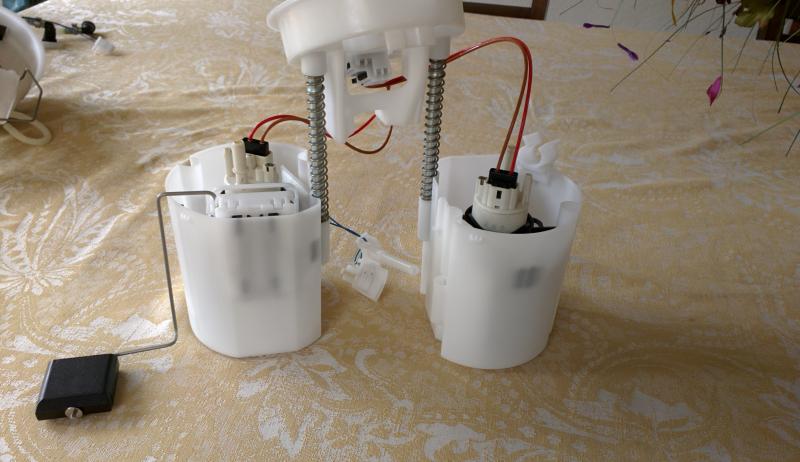

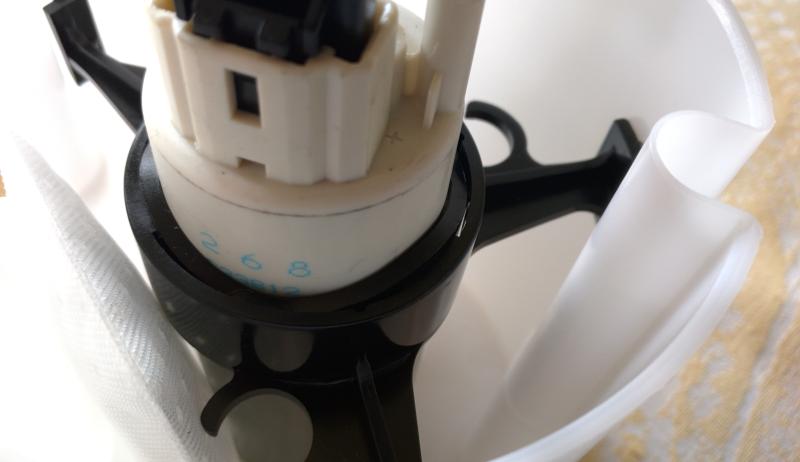
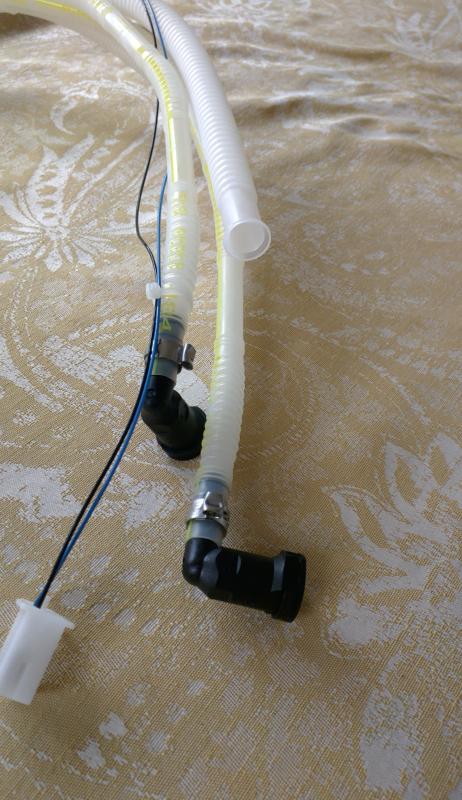

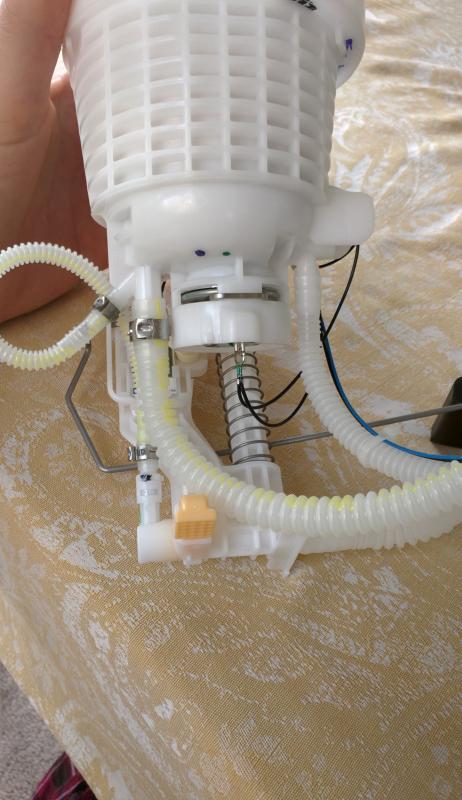
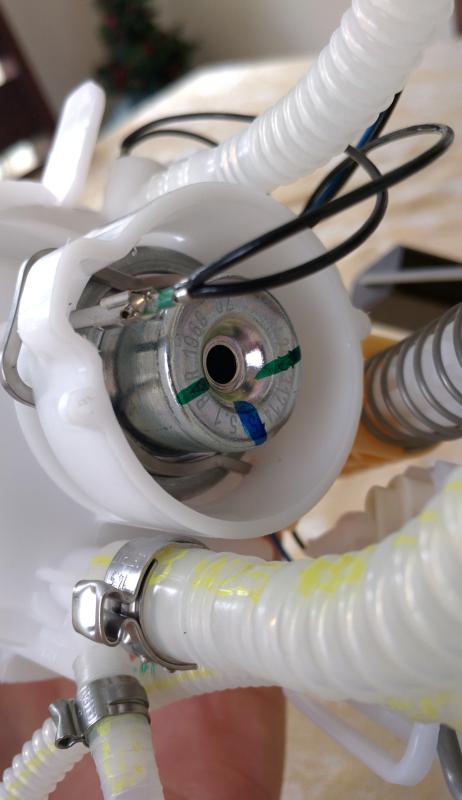
MBWorld Fanatic!
Joined: Mar 2013
Posts: 1,126
Likes: 80
From: SoCal
2006 E55, Various other German and ‘Murican
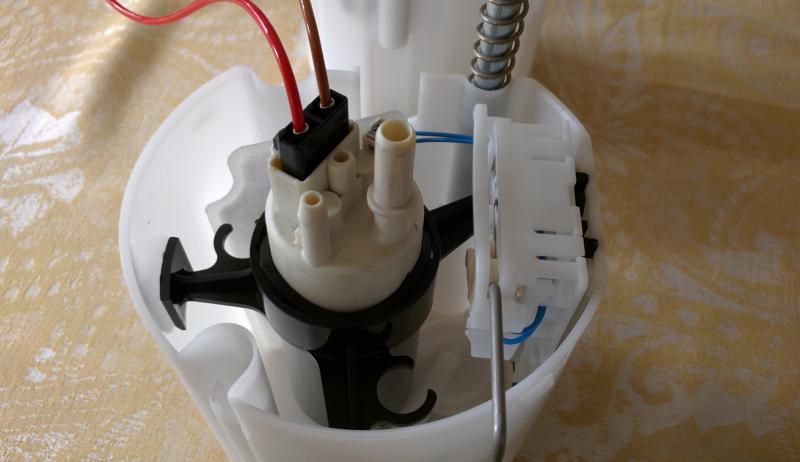
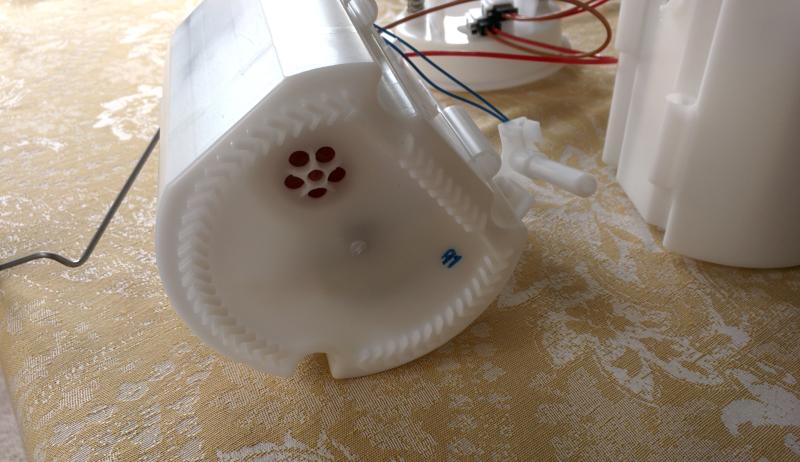
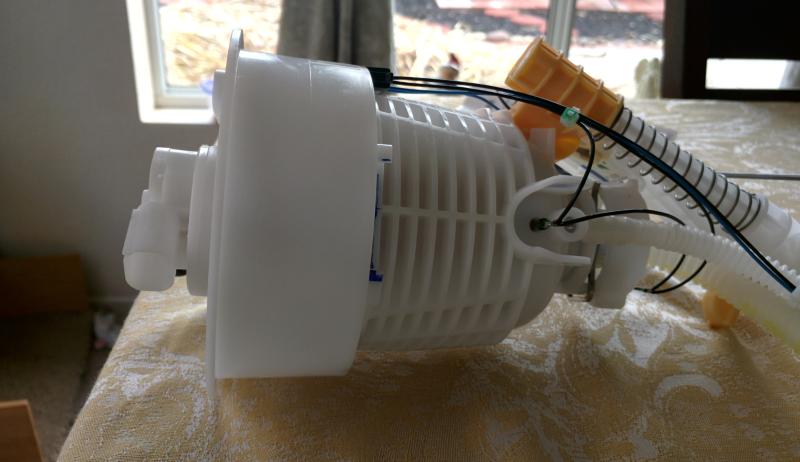
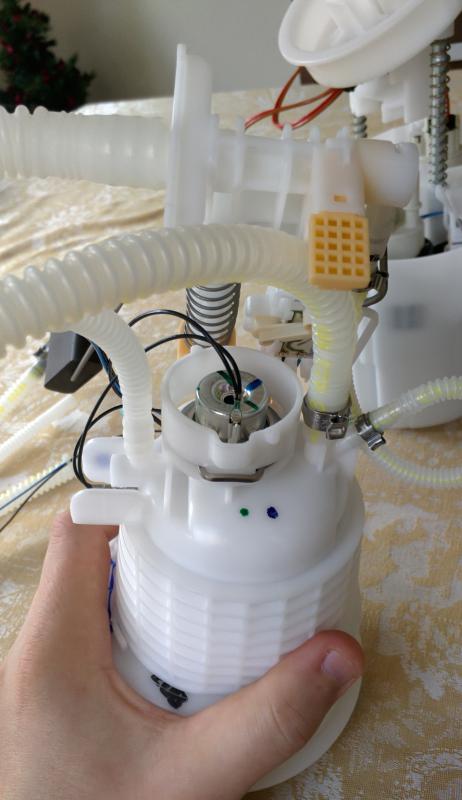
I tried searching for the number that is printed on the metal pressure (what I think is a regulator) - but nothing came back.
It also says "5.1 bar" which is 14.7 * 5.1 = 74.97psi
It also says "5.1 bar" which is 14.7 * 5.1 = 74.97psi
Super Member
Joined: Feb 2013
Posts: 659
Likes: 25
From: SE MI
2005 Mercedes E55 AMG
Cut stock tube > AN compression fitting > external filter > AN compression fitting > cut stock tube
Super Member
Joined: Feb 2013
Posts: 659
Likes: 25
From: SE MI
2005 Mercedes E55 AMG

Senior Member
Joined: Jan 2012
Posts: 318
Likes: 6
From: Johannesburg, South Africa
2006 E55 AMG
My 2 cents worth - I tried the Aeromotives for a while but was experiencing a fuel pressure issue with them installed. I switched to the AEMs but this did not resolve the fuel pressure issue. I then re-installed the stock pumps and doing so proved to be the fix. I don't know why some guys are successfully running the Aeromotives/AEMs while they were problematic on my set up. It may or may not be relevant but my pumps are staged - one runs all the time while the second is triggered only when going into boost. I recall reading somewhere that the pumps on E55s manufactured from Sept 2005 are staged while those on E55s manufactured before then are not.
Member
Joined: Sep 2014
Posts: 190
Likes: 4
Subies
Awesome Pics. Thank you for posting those.
I was hoping for more so that I can use E85 with around 600whp (750 crank) without drastically changing the way the stock system is controlled. It doesn't look that way.
I can now see why so many have had fueling issues on E-85.
(if the pumps are indeed 300lph each) With pump gas, I think the only problem with the stock system is the smallish lines. (Which can certainly be changed with relatively - minimal effort.
Last edited by 95ONE; Dec 18, 2014 at 03:33 PM.
MBWorld Fanatic!
Joined: Mar 2013
Posts: 1,126
Likes: 80
From: SoCal
2006 E55, Various other German and ‘Murican
Sadly what I suspected. No regulator.
Awesome Pics. Thank you for posting those.
I was hoping for more so that I can use E85 with around 600whp (750 crank) without drastically changing the way the stock system is controlled. It doesn't look that way.
I can now see why so many have had fueling issues on E-85.
On pump gas, I think the only problem with the stock system is the smallish lines. Which can certainly be changed with relatively - minimal effort.
Awesome Pics. Thank you for posting those.
I was hoping for more so that I can use E85 with around 600whp (750 crank) without drastically changing the way the stock system is controlled. It doesn't look that way.
I can now see why so many have had fueling issues on E-85.
On pump gas, I think the only problem with the stock system is the smallish lines. Which can certainly be changed with relatively - minimal effort.
The pressure level would need to be higher for it to be an effective pressure relief valve, and the nature of the return inside the tank leads me to believe its an actual FPR - unless this is some sort of one time use blow off valve.
What about the e85 would require more than what exists here unless you are speaking of total flow? Open piped, the fuel from each pump is high volume. I ran one at a time to empty the tank for preparing for this work. BOTH running would be very large flow.
If the computer control of the pump speed exists, and if it is controlling the speed at certain rpms or boost levels, this is just fact based research and time.
If one comes to the conclusion that a return system is really needed, then you take off one of the pumps and separate the plug to power an external pump under the car with a swirl pot (old speak for surge tank for fuel) (A. Graham Bell) and then put a big pump there. The return side seems a bit more complex - where to return. What pressure sensor needs to be tricked?
Member
Joined: Sep 2014
Posts: 190
Likes: 4
Subies
It certainly can be done.
I think my statement was more of a personal one. The electronic control of the system seems very important for the tune. I worry about the can of worms that has to be opened with the higher fuel rate and constant fuel volume in a return system in regards to how the computer wants the fuel to be controlled. Is it just fooling a pressure sensor? Or does the way the computer adjust fuel need to be addressed? I don't know. I'll let you guys figure that out from this point. I guess I'll stick with the Happy 500whp I should be getting when finished rebuilding. I'll hang on to that until this fueling issue is worked out.
But about that stupid fuel filter though.....
I think my statement was more of a personal one. The electronic control of the system seems very important for the tune. I worry about the can of worms that has to be opened with the higher fuel rate and constant fuel volume in a return system in regards to how the computer wants the fuel to be controlled. Is it just fooling a pressure sensor? Or does the way the computer adjust fuel need to be addressed? I don't know. I'll let you guys figure that out from this point. I guess I'll stick with the Happy 500whp I should be getting when finished rebuilding. I'll hang on to that until this fueling issue is worked out.
But about that stupid fuel filter though.....
Last edited by 95ONE; Dec 18, 2014 at 03:49 PM.
MBWorld Fanatic!
Joined: Mar 2013
Posts: 1,126
Likes: 80
From: SoCal
2006 E55, Various other German and ‘Murican
Yeah, you have an engine to rebuild. Sleeved block was fs recently for 3500 or so. That and custom pistons for higher compression, stock supercharger, meth, and ethanol, and that's where I would stop. You want more? Buy a V. And at that point, buy a normal sedan and get a vette. 
Super Member
Joined: Feb 2013
Posts: 659
Likes: 25
From: SE MI
2005 Mercedes E55 AMG
My 2 cents worth - I tried the Aeromotives for a while but was experiencing a fuel pressure issue with them installed. I switched to the AEMs but this did not resolve the fuel pressure issue. I then re-installed the stock pumps and doing so proved to be the fix. I don't know why some guys are successfully running the Aeromotives/AEMs while they were problematic on my set up. It may or may not be relevant but my pumps are staged - one runs all the time while the second is triggered only when going into boost. I recall reading somewhere that the pumps on E55s manufactured from Sept 2005 are staged while those on E55s manufactured before then are not.
Sadly what I suspected. No regulator.
Awesome Pics. Thank you for posting those.
I was hoping for more so that I can use E85 with around 600whp (750 crank) without drastically changing the way the stock system is controlled. It doesn't look that way.
I can now see why so many have had fueling issues on E-85.
(if the pumps are indeed 300lph each) With pump gas, I think the only problem with the stock system is the smallish lines. (Which can certainly be changed with relatively - minimal effort.
Awesome Pics. Thank you for posting those.
I was hoping for more so that I can use E85 with around 600whp (750 crank) without drastically changing the way the stock system is controlled. It doesn't look that way.
I can now see why so many have had fueling issues on E-85.
(if the pumps are indeed 300lph each) With pump gas, I think the only problem with the stock system is the smallish lines. (Which can certainly be changed with relatively - minimal effort.
I don't see this as being definitive. I think a lot of the internet is based upon one guy or another guy saying something "is" and then no one questioning it.
The pressure level would need to be higher for it to be an effective pressure relief valve, and the nature of the return inside the tank leads me to believe its an actual FPR - unless this is some sort of one time use blow off valve.
What about the e85 would require more than what exists here unless you are speaking of total flow? Open piped, the fuel from each pump is high volume. I ran one at a time to empty the tank for preparing for this work. BOTH running would be very large flow.
If the computer control of the pump speed exists, and if it is controlling the speed at certain rpms or boost levels, this is just fact based research and time.
If one comes to the conclusion that a return system is really needed, then you take off one of the pumps and separate the plug to power an external pump under the car with a swirl pot (old speak for surge tank for fuel) (A. Graham Bell) and then put a big pump there. The return side seems a bit more complex - where to return. What pressure sensor needs to be tricked?
The pressure level would need to be higher for it to be an effective pressure relief valve, and the nature of the return inside the tank leads me to believe its an actual FPR - unless this is some sort of one time use blow off valve.
What about the e85 would require more than what exists here unless you are speaking of total flow? Open piped, the fuel from each pump is high volume. I ran one at a time to empty the tank for preparing for this work. BOTH running would be very large flow.
If the computer control of the pump speed exists, and if it is controlling the speed at certain rpms or boost levels, this is just fact based research and time.
If one comes to the conclusion that a return system is really needed, then you take off one of the pumps and separate the plug to power an external pump under the car with a swirl pot (old speak for surge tank for fuel) (A. Graham Bell) and then put a big pump there. The return side seems a bit more complex - where to return. What pressure sensor needs to be tricked?
E85 requires 30% more fuel than standard gasoline, so everything about an E85 system must be larger to support the same power level. When you ran the pump to drain the tank, there was no pressure on the system. When you introduce 65psi base pressure to a fuel system, that flow is drastically reduced. The flow you saw is not representative of the flow the system sees during operation.
To create a return system on a returnless vehicle, one only needs to add ignition power through a relay and to the pumps. Run the pumps to the rails, then to an FPR, and back. Typically, a new larger line is ran for the feed and the original feed can be used as the return.
MBWorld Fanatic!
Joined: Mar 2013
Posts: 1,126
Likes: 80
From: SoCal
2006 E55, Various other German and ‘Murican
E85 requires 30% more fuel than standard gasoline, so everything about an E85 system must be larger to support the same power level. When you ran the pump to drain the tank, there was no pressure on the system. When you introduce 65psi base pressure to a fuel system, that flow is drastically reduced. The flow you saw is not representative of the flow the system sees during operation.
Its not 30% all the time, btw. Sometimes its only a bit more, and at very rich high rpms, it can be 40%.
To create a return system on a returnless vehicle, one only needs to add ignition power through a relay and to the pumps. Run the pumps to the rails, then to an FPR, and back. Typically, a new larger line is ran for the feed and the original feed can be used as the return.
Member
Joined: Sep 2014
Posts: 190
Likes: 4
Subies
Yeah, you have an engine to rebuild. Sleeved block was fs recently for 3500 or so. That and custom pistons for higher compression, stock supercharger, meth, and ethanol, and that's where I would stop. You want more? Buy a V. And at that point, buy a normal sedan and get a vette.
This IS my normal sedan and my "Vette" is the Porsche with an LS6 in my avatar.
I'm over that power level and have not changed how the stock system is controlled. I have replaced the pumps/injectors, and will be upgrading the wiring... that's it.
To create a return system on a returnless vehicle, one only needs to add ignition power through a relay and to the pumps. Run the pumps to the rails, then to an FPR, and back. Typically, a new larger line is ran for the feed and the original feed can be used as the return.
To create a return system on a returnless vehicle, one only needs to add ignition power through a relay and to the pumps. Run the pumps to the rails, then to an FPR, and back. Typically, a new larger line is ran for the feed and the original feed can be used as the return.
Do you have that power level with E-85? Apologies for the lack of search.
So, running a return line is easy.. yes. enough. But how does the computer like it? Can you turn off the sensors to the ECU? Does the tune require a Static fuel pressure like 65psi? or 80 psi? or whatever the heck it wants to see.
I would want a rising rate Fuel Regulator. Could that be worked in? Or will that make tuning the ecu too difficult?
The physical aspect is fairly easy, yes. But what are the Software / tuning consequences in the ecu?
Super Member
Joined: Feb 2013
Posts: 659
Likes: 25
From: SE MI
2005 Mercedes E55 AMG
I'm just going with a used motor for now and will think about building the broken one. I will certainly get the heads ported and use some SLR type cams, but also, very in the future.
This IS my normal sedan and my "Vette" is the Porsche with an LS6 in my avatar.
Do you have that power level with E-85? Apologies for the lack of search.
So, running a return line is easy.. yes. enough. But how does the computer like it? Can you turn off the sensors to the ECU? Does the tune require a Static fuel pressure like 65psi? or 80 psi? or whatever the heck it wants to see.
I would want a rising rate Fuel Regulator. Could that be worked in? Or will that make tuning the ecu too difficult?
The physical aspect is fairly easy, yes. But what are the Software / tuning consequences in the ecu?
This IS my normal sedan and my "Vette" is the Porsche with an LS6 in my avatar.
Do you have that power level with E-85? Apologies for the lack of search.
So, running a return line is easy.. yes. enough. But how does the computer like it? Can you turn off the sensors to the ECU? Does the tune require a Static fuel pressure like 65psi? or 80 psi? or whatever the heck it wants to see.
I would want a rising rate Fuel Regulator. Could that be worked in? Or will that make tuning the ecu too difficult?
The physical aspect is fairly easy, yes. But what are the Software / tuning consequences in the ecu?
Yes, I'm at that power level on E85. There's really nothing to search, I don't post about it very often anymore.
I haven't modified my system to operate returnless so I wouldn't be the expert in what's required on the software side. It's certainly been done, and a retune would be required. Rising rate is probably the safest method on a boosted car, and I believe Craig's FPR is set up for rising rate. Someone else is running 1000cc injectors in a return format, can't think of who off the top of my head

MBWorld Fanatic!
iTrader: (1)
Joined: Jan 2012
Posts: 2,092
Likes: 29
From: Orlando
1967 Pro Touring turbo LSX Camaro
There's not really any problem with running big cams in the 55k heads.(within reason) The problem is that most people don't want choppy race cams in a luxury sedan so the cost per unit is really high unlike a Mustang/Camaro where you'll sell thousands of them.
With my beehive setup (do a search) you could run up to .500 lift, but the lift doesn't mean too much it's the duration and other timing events that will really affect the powerband. The duration is where you'll run into problems with PTV clearance unless you notch the pistons or have a custom set made with valve reliefs.
With my beehive setup (do a search) you could run up to .500 lift, but the lift doesn't mean too much it's the duration and other timing events that will really affect the powerband. The duration is where you'll run into problems with PTV clearance unless you notch the pistons or have a custom set made with valve reliefs.
Unfortunately, the way our heads are designed it's quite difficult to run any cams that would make considerable difference. I wouldn't spend the money, unless you're just doing it for the sound.
Yes, I'm at that power level on E85. There's really nothing to search, I don't post about it very often anymore.
I haven't modified my system to operate returnless so I wouldn't be the expert in what's required on the software side. It's certainly been done, and a retune would be required. Rising rate is probably the safest method on a boosted car, and I believe Craig's FPR is set up for rising rate. Someone else is running 1000cc injectors in a return format, can't think of who off the top of my head
Yes, I'm at that power level on E85. There's really nothing to search, I don't post about it very often anymore.
I haven't modified my system to operate returnless so I wouldn't be the expert in what's required on the software side. It's certainly been done, and a retune would be required. Rising rate is probably the safest method on a boosted car, and I believe Craig's FPR is set up for rising rate. Someone else is running 1000cc injectors in a return format, can't think of who off the top of my head


Super Member
Joined: Feb 2013
Posts: 659
Likes: 25
From: SE MI
2005 Mercedes E55 AMG
There's not really any problem with running big cams in the 55k heads.(within reason) The problem is that most people don't want choppy race cams in a luxury sedan so the cost per unit is really high unlike a Mustang/Camaro where you'll sell thousands of them.
With my beehive setup (do a search) you could run up to .500 lift, but the lift doesn't mean too much it's the duration and other timing events that will really affect the powerband. The duration is where you'll run into problems with PTV clearance unless you notch the pistons or have a custom set made with valve reliefs.
With my beehive setup (do a search) you could run up to .500 lift, but the lift doesn't mean too much it's the duration and other timing events that will really affect the powerband. The duration is where you'll run into problems with PTV clearance unless you notch the pistons or have a custom set made with valve reliefs.
Kleemanns and SLRs have been documented at 15-20rwhp and a tenth in the quarter... I wouldn't really consider those big cams, or worth the investment. I guess if someone is going all out, then they may be worthwhile with the compounding effect but I would still shift my funds elsewhere.
To each their own
MBWorld Fanatic!
iTrader: (1)
Joined: Jan 2012
Posts: 2,092
Likes: 29
From: Orlando
1967 Pro Touring turbo LSX Camaro
Yeah those are super mild grinds, barely bigger than stock 55k cams and smaller than the stock cams in many newer engines. I'm with ya though, to each their own.


